Key details
Date of development: 2015
Cost: £10 million
Who funded it: Brent Council
Case study themes
Service sustainability, community engagement, accessibility
Project summary
In 2009, Brent Local Studies and Archives moved from Cricklewood Library to Willesden Green to rejoin the council’s museum service. Despite the impact of reduced budgets for library services, the council was keen to reinvest in a new arts and community hub which would celebrate the borough’s heritage.
The Library at Willesden Green opened in 2015 and hosts a library, museum and archive service. There is a permanent exhibition space, a heritage object trail and exhibition cases scattered across the building which showcase items from across all the museum and archive collections. Drawing on staff specialisms and lived expertise from volunteers, the team continues to work collaboratively to create a space where residents can see their stories explored.
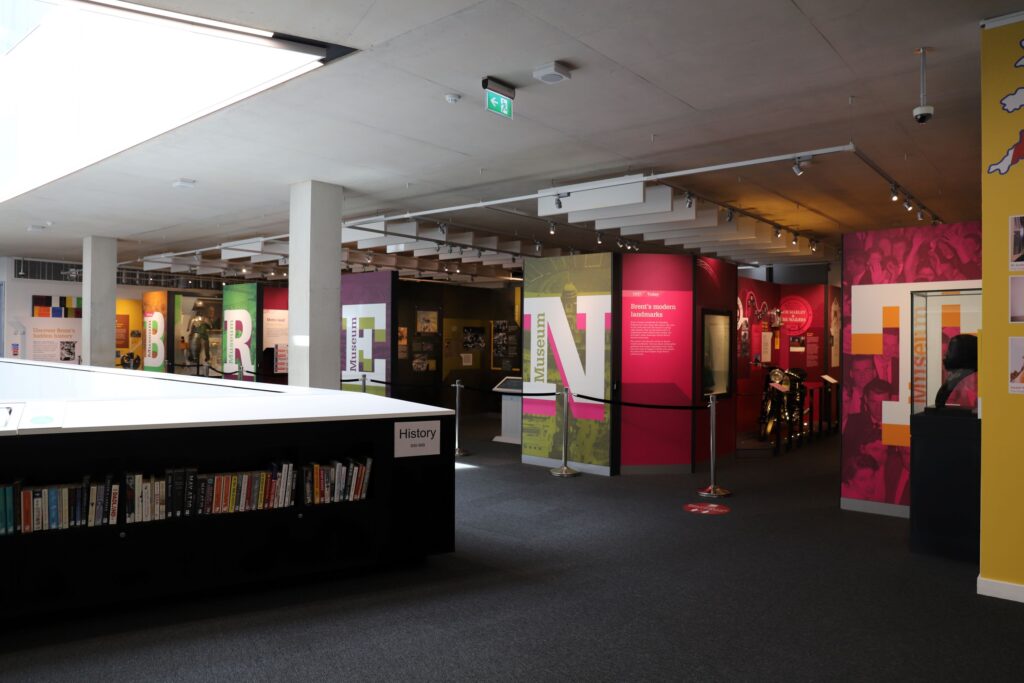
View of the museum gallery at Brent Museum. © Brent Museum and Archives.
Challenges and opportunities
In the original plan, the museum and archive were located on the ground floor with the library on the first floor. This changed during the project and was reversed. Whilst the services are well integrated, the result means that library users may not make it upstairs to the museum and archive. This is particularly an issue with families, who use the children’s library on the ground floor but don’t become museum and archive users. To address this and raise awareness of where the archive is located, family craft sessions have been held in the education room which, like the archive, is upstairs.
Although the premises is a relatively new build, so much has changed over the last ten years that some parts feel dated. For example, subtle signage encourages people to discover and explore the building, but clearer directions would encourage more movement. The galleries and exhibitions are also ready for a refresh to embrace the co-curation methods of exploring and describing collections which have emerged since the building opened.
Outcomes
The space has allowed the team to rethink service delivery. For example, on Mondays and Fridays the search room is open to volunteers whilst on other weekdays is it open to the public. A clear case was made to support these opening hours and it provides an enhanced customer experience. The volunteers value the better quality experience that these designated days provide, and everyone is able to work more effectively.
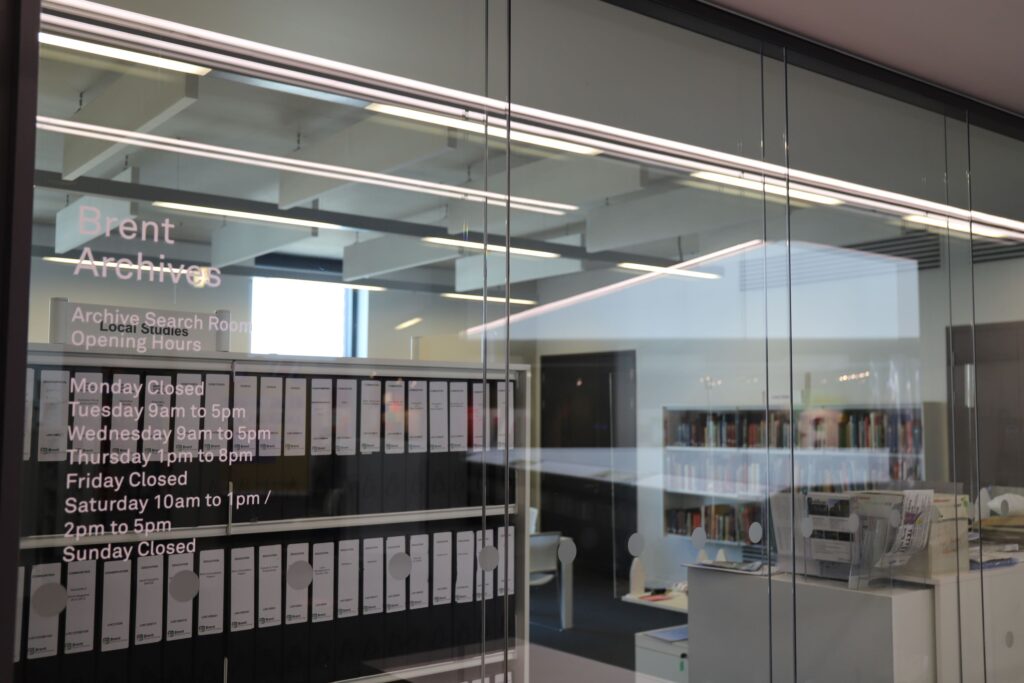
Archive search room, Brent Museum and Archives. © Brent Museum and Archives.
The volunteer days were especially useful during the recent National Lottery Heritage Fund ‘Becoming Brent’ project, which explored the legacies of empire and the development of Wembley Park for the British Empire Exhibition in 1924. Using the dedicated days, volunteers and staff have been able to hold open conversations with a decolonisation consultant. This is a more ethical way of working and has added further narratives to collections. For example, the online catalogue contains information that is more meaningful to researchers, whilst labels next to items on display give more contextual information in a sensitive way.
What did you learn from the process?
The new building brings together the library, archive and museum. There is a real feeling of a holistic collection managed by a specialist team who can support one another.
The building is a real community hub set in a cultural complex. This benefits everyone with a higher footfall than if the services were separated. The building allows ‘heritage by stealth’ to happen, as visitors can engage with archive collections throughout the building without having to do any research.
Around 70% of visitors are residents, but the majority live in the south of the borough. Work has been done to find ways to take collections north through exhibitions and workshops, and this continues through the current ‘Becoming Brent’ project.
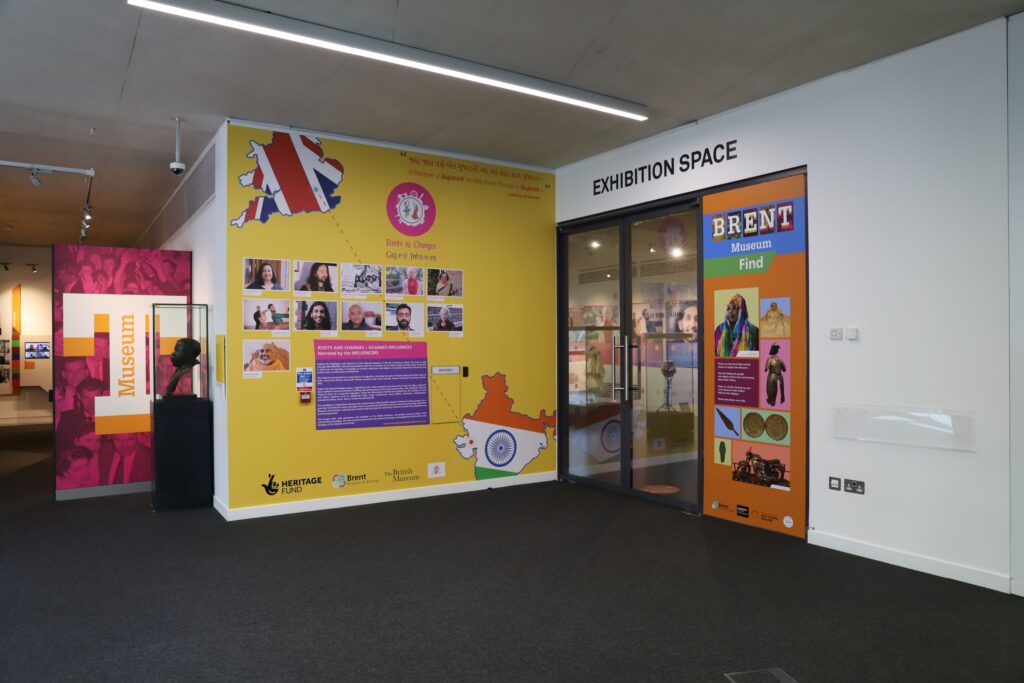
Exhibition space, Brent Museum and Archives. © Brent Museum and Archives.
The gap between a raised profile, greater community engagement and the increase in archive donations (particularly those with digital elements) was not fully explored during the project. This was addressed in 2020 as part of the London Borough of Culture. Preservica, a digital preservation system, was purchased to manage all the digital archives which were produced during Brent’s year as Borough of Culture in 2020. Preservica is now being used to manage all digital archives and access to digital collections is available through the online catalogue.
Although a relatively new build, it initially met provisional rather than full Archive Service Accreditation. For example, security for the building and the archive store (which is across the road) had to be added retrospectively at an additional cost. These significant improvements meant the service moved to full accreditation in 2024.
What is one piece of advice you would give others in a similar position?
Try to future-proof as best you can and think about how you use your spaces. For example, is the layout of your public space flexible enough so you can move furniture and equipment around and still plug it in? Consider whether you have enough future expansion space to store collections and if you need to do any work on them before moving. Projects such as collections audits to help free up space can be done later, but they need time and resources in order to be done correctly and ethically. You may need to make compromises so consult as widely as possible and reflect on all feedback equally.
How will this work be developed in the future?
The ‘Being Brent’ project has provided an opportunity to think about collection priorities and the need to conduct a full collection audit to support future digitisation, engagement, interpretation and collecting opportunities. This will also help in the redevelopment of the permanent galleries, to provide a more rounded story of Brent’s history. Material will continue to be added to Preservica to ensure digital collections remain accessible.
Find out more
Visit the Brent Archives and Museum website