This February we invited families to The National Archives to work with an Aardman Academy animator for the day and create their own films inspired by our collection. BAFTA-nominated writer, director and stop motion animator Zoe Hutber co-delivered the workshop with staff at The National Archives. Zoe even brought along a famous guest, headstrong Molly the chicken, star of Chicken Run: Dawn of the Nugget.
This project was led by our Education and Outreach, and Research, Grants and Academic Engagement teams. It aimed to explore new approaches to engaging young people aged 11 to 15. The research sought to identify how archives might be experienced in more creative, relevant and engaging ways. The event built on our existing young people’s animation programme to examine the value of collaborating with high-profile partners. Our goals were to broaden public awareness, increase engagement and enhance understanding.
Education programmes at The National Archives
The National Archives has a thriving young people’s programme. Every summer, students aged 16 to 19 take part in week of creative workshops focused on a particular theme from our records. Past projects have included creative writing, poetry and illustrating a graphic novel. Our most popular programme has been our annual filmmaking week for students aged 16 and over with professional film-maker Nigel Kellaway. While our successful family programme, The Time Travel Club, is geared towards children up to the age of 11. Currently we do not cater to children aged between 11 and 15. So, we decided to explore a programme for this age group.
Creating a collaboration with Aardman Academy
To begin, we first had to see if Aardman Academy were interested. One of our colleagues had worked with Aardman Academy on English Heritage’s Animated Histories summer tour and film festival. We set up an informative conversation with English Heritage and Aardman Academy, who supported the idea.
Next, we planned a pilot family event that would use stories from our collection to inspire a new generation of animators and researchers. We now just needed the funding to make it happen.
Funding
We applied to the National Archive’s internal Strategic Research Fund to make the pilot project a reality. We pitched for small project funding (£1,000), supplemented by match-funding from the Education and Outreach Department. Our aim was to investigate whether creative digital storytelling could offer new ways of engaging young people aged 11-15 with archival collections.
We aimed to focus on two key questions:
- Could stop motion animation act as an effective interpretive tool, enabling young people to engage with archival records through creativity, storytelling and personal expression?
- Could collaboration with a high-profile cultural partner broaden the reach of archival engagement and attract audiences who might not otherwise engage with our collections?
Underpinning the project was the assumption that some young people see archives as unconnected to their lives. By inviting participants to reinterpret records through animation, we aimed to test whether creative practice could challenge these perceptions.
The pilot also offered the opportunity to establish an evidence base for future work. If successful, it could provide a model for further investment, larger-scale partnerships and new approaches to youth engagement.
The project goes ahead
Once funding was confirmed, we had just four months to plan and deliver the pilot workshop. We had several further meetings with Aardman Academy to identify which archival records would lend themselves to stop motion animation. We narrowed our extensive list of records down to eight documents, with each exploring a different part of history.
A key part of the project design was to build opportunities for families to explore and research the selected records before choosing which document would inspire their animation. This approach was intended to encourage engagement with the historical narratives contained within the records. We also wanted to develop participants' understanding of archival research and the ways in which historical evidence can be interpreted and reimagined. By placing archival material at the centre of the creative process, we hoped to better understand how creative practice could support both historical enquiry and engagement with archives.
The final task was to recruit families to take part in the workshop. It was very popular and applicants were selected via an anonymous ballot. Those who were selected were invited to The National Archives during February half term.
A selection of the original documents used in the session
Image 1 of 3

John Carter’s Literary Machine, 1888. Catalogue reference: COPY 1/391 f.209
Image 2 of 3

Chertsey Abbey, 1432. Catalogue reference: E 164/25 f222
Image 3 of 3
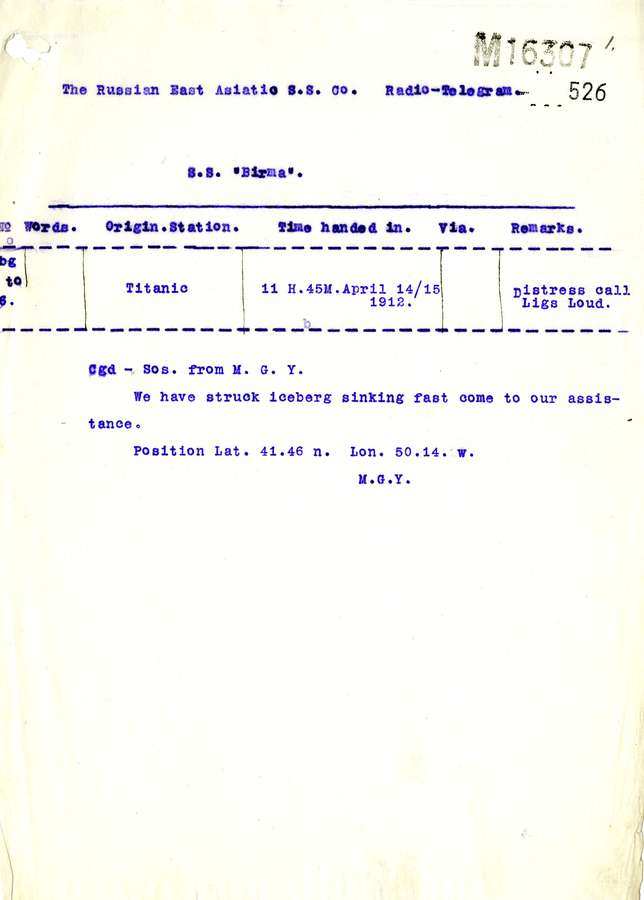
Telegram from the RMS Titanic, April 1912. Catalogue reference: MT 9/920C
The workshop: Researching and bringing our collection to life
The first part of the day involved families learning about the concept of what an archive is and exploring what types of records we hold. They were able to get hands-on with the original documents by researching and looking at the document displays. Members of the Education team guided the group through each record, encouraging the younger participants to share their observations about the documents. Then families were invited to explore the records independently, discussing which stories and themes resonated most strongly with them.
Zoe Hutber led the second part of the morning. She introduced the families to Aardman Academy’s approach to stop motion animation and storyboarding. Participants then began developing their own storyboards.
This stage of the workshop provided an early insight into how families interpreted the records. Some participants focussed on the historical narrative of their chosen document. For example, one family used a telegram sent from the Titanic to create a storyboard depicting the ship's sinking.
Other participants used the record as a creative springboard, developing original stories inspired by a particular theme, image or idea. Inspired by a photograph of a Victorian invention, one family developed a story about a child who invents a robot dog to play table tennis with.
Several groups drew on the document as a starting point from which to explore a broader historical narrative. For example, one family used a medieval map featuring Chertsey Abbey for a retelling of the Dissolution of the Monasteries. The diversity of responses highlighted the flexibility of stop motion animation as an interpretive medium.
Another insight emerged when one participant found that none of the pre-selected records aligned with their interests. Rather than forcing engagement with the available material, staff introduced them to The National Archives' online catalogue and supported them in searching for records. The participant quickly identified a document that resonated strongly with them and used this as the basis for their storyboard. This highlighted the importance of flexibility within the workshop design. Opportunities for self-directed discovery may be just as valuable as carefully curated archival material. It also provided an opportunity to demonstrate the breadth and diversity of material held by The National Archives and how records can be accessed online. For this participant, engaging with the catalogue became as valuable a learning experience as engaging with the record itself.
After lunch, families came back to an afternoon of animating their storyboards. Families had access to an array of different props and materials to create their film sets and characters. This included colourful feathers, large printouts of the archive documents, and various arts and crafts materials. A sense of busyness descended over the group, as families started to work intently on their films.

Setting up a scene for the table tennis animation.
Rosie Morris
The diversity of the final films highlighted that participants did not engage with the records in a single, prescribed way. Instead, they used the material according to their own interests, knowledge and creativity. Stop motion animation offered a flexible interpretive framework, supporting multiple routes into archival engagement while keeping the historical record at the heart of the creative process.
In evaluating the workshop, families stated that they loved ‘…getting to meet real animators, seeing real files from the archives [and] getting to animate’, and that the best thing was ‘…seeing the amazing records’. Participants described this as a unique opportunity and valued the records as an engaging source of inspiration. The archival material was not simply a backdrop to the animation activity but an integral part of the experience. The records provided families with a tangible connection to the past, while also serving as a catalyst for storytelling.
Watch the animations and what the participants thought of the day here.

Participants learn how to use the filmmaking equipment
Rosie Morris
Next steps
While this was a small-scale pilot, the findings were encouraging. The workshop demonstrated that stop motion animation can provide a flexible and engaging framework for young people to explore archival records. Participants approached the material in diverse ways, from historical retelling to imaginative reinterpretation. Creative practice can support multiple routes into archival engagement while keeping the historical record at the centre of the experience.
The project also highlighted the value of partnership working, both in attracting participants and in bringing specialist creative expertise into the interpretation process. At the same time, it raised new questions about how young people engage with archives, the role of self-directed discovery, and the ways in which creative methodologies can support historical enquiry.
Building on these initial findings, we are planning a second event at Discovery Museum, Newcastle, drawing on collections from both Tyne & Wear Archives and The National Archives. We hope that future funding will enable us to test these approaches with a wider range of participants and settings. Watch this space!

The end card for one of the animations.
Rosie Morris