Important information
This article features a record that uses racist language to describe Black people.
The cost of conflict
The American Revolutionary War (1775–1783) was a vicious and costly conflict that drastically changed the lives of people living in North America. A collection of records at The National Archives offer a unique insight into the cost – human and material – of the war that tore an empire apart. They are the American Loyalist Claims records.
American Loyalist Claims records:
-
- From our collection
- AO 12
- Title
- American Loyalists Claims, Series I
- Date
- 1776–1831
-
- From our collection
- AO 13
- Title
- American Loyalists Claims, Series II
- Date
- 1780–1835
-
- From our collection
- T 79
- Title
- American Loyalist Claims Commission: Records
- Date
- 1777–1841
Those same documents are also the only known records of a man named Scipio Handley. Handley was a Black Loyalist whose remarkable journey took him from the shores of South Carolina to a rebel prison, and from the siege of Savannah to an uncertain future in London.
In an effort to undermine the American rebellion and expand its own military forces, Britain offered freedom to any person, enslaved by a rebel American, who escaped and signed up to fight as a ‘Black Loyalist’. Although not enslaved, Scipio also joined the British and became a Black Loyalist.

WHEREAS during the late unhap-
-py dissentions in America many
of your Majesty’s faithful subjects
have in consequence of their loy
-alty to your Majesty and attach-
-ment to the British government
and their obedience to your Majes
-ty’s proclamation and various --
other proclamations and manifes
-toes issued by your Majesty’s com
-missioners generals and gover-
-nors suffered in their rights pro-
-perties and professions insomuch
that several well deserving per-
-sons are reduced from affluence -
to circumstances so straitened as
to require the aid of a temporary
support which has been allotted
to them by the commissioners of
the Treasury by annual allow-
-ances made and occasional --
assistance on sums of money given
to them from the revenues of your
Majesty’s civil list the amount of
which has hitherto been made -
good by Parliament. And your -
faithful commons not doubting -
but that your Majesty’s most --
earnest endeavours will be em-
-ployed for procuring from the -
United States of America restitu-
-tion of or recompence for the -
estates and effects of those who -
have thus unhappily suffered -
and intending to give all due --
aid and assistance to those --
who may return to America for
the recovery of their former posse-
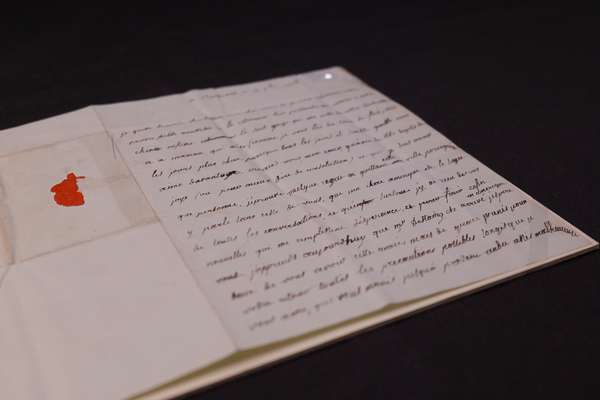
Preamble to the ‘American Loyalists Act’ 1783 (23 GeoIII c.80). Parliament’s Archive Collections, Catalogue reference: YHL/PO/PU/1/1783/23G3n148
Loyalist Claims
Scipio’s story is recorded within the American Loyalist Claims – requests for compensation made by British-American Loyalists, who had remained loyal to the Crown during the rebellion. For many, being on the losing side had profound social and economic consequences.
The American Revolutionary War was formally ended by the Treaty of Paris, 1783, which saw Britain recognise the new United States of America. The treaty contained a provision stipulating that individuals on both sides would be compensated for any lost property. However, the British government was fairly certain that most States had little intention of compensating Loyalists. So, Parliament passed the American Loyalists Act, which set up a 'diligent and impartial enquiry' to review claims of Loyalists’ lost property, and offer financial compensation.
Whereas during the late unhappy dissentions in America, many of your Majesty’s faithful subjects have, in consequence of their loyalty to your Majesty and attachment to the British government […] suffered in their rights, properties, and professions…
American Loyalists Act, Catalogue reference: YHL/PO/PU/1/1783/23G3n148
The claims, submitted by thousands of Loyalists, totalled nearly £5 million at the time – approximately £1.4 million of which the government paid out (worth some £188 million today). Claimants listed their prior property in North America, and provided letters of reference proving their loyal conduct during the American crisis.

This is to Certify to whom it may Concern
that I Ellenor Lister of the Borrough Southwark,
Widdow; do know Scipio Henley from Charles
Town, South Carolina, the Bearer of this. That he
Used the Occupation of a Fisherman & Selling
different kind of Fruits that his Mother followed
the Business of a Pastry Cook. That I frequently
heard some of my Negroes that they was
in a Very Comfortable way of --- Liveing. That
her Son used frequently to go down to Bellan Town
on boar[d] the Cheroquee, Lord Wm Campbell to carry
his Lordship provisions Letters & some time Money.
That the said Scipio Henley was taken prisoner
with two of his Lordships Servants by the Rebell,
and laid up in Prison. That he made his Escape
or it was Supposed he would have been hanged.
That I do believe his being taken & Imprison’d
was the total Ruin of him as he was Obliged
to leave Every thing he had, which was taken
from him by the Enemy. This is to the best of my knowledge
& beliefe.
Witness
Wm Heath
In witness whereof I have
Signed my Name this Thirty
first Day of Janry 1784
Ellenor Lister
No. 4 W.B.
R.L.
Affidavit by Ellenor Lister of Southwark, on behalf of Scipio Handley, 7 January 1784. Catalogue reference: AO 13/119 fo. 433r
Scipio Handley
Scipio Handley was one such claimant. Handley was a fisherman and the son of a pastry cook in Charleston, South Carolina. He was also a free Black man in a British colony that relied heavily on the exploitation of enslaved African labour. By 1770 there were around 100,000 enslaved people in South Carolina, over half of the colony’s population.
When news reached Charleston that the American Revolution had escalated to armed conflict in Massachusetts on 19 April 1775, many British colonists in South Carolina rose up in rebellion against their royal governor, William Campbell. By September, Campbell had retreated offshore aboard HMS Tamar.
In South Carolina, as across the rest of the Thirteen Colonies, the advent of war pushed ordinary subjects to pick a side. Scipio Handley chose to remain a Loyalist. He was not alone. While Scipio was already a free man, thousands of enslaved Black people also decided to fight for the British. Many made the decision following the 1775 Dunmore Proclamation, signed on 7 November, which had offered freedom to any person enslaved by a rebel who might escape and fight for the British. Many white colonists resented this, imagining that it might incite revolts among the colonies’ enslaved (and free) Black population.
In pictures
The causes of the American Revolution
What were the key moments that led to the American Revolution? From the Boston Tea Party to the Declaration of Independence.
Black Loyalists served in a variety of roles for the British during the war, including scouts, spies, engineers, and officers’ staff. Using the skills and resources at his disposal, Handley began running messages for Governor Campbell, who had now retreated offshore to the relative safety of a Royal Navy ship. In his petition to the Loyalist Claims Commission, Handley describes how he used his fishing boat to smuggle letters and information out of Charleston to HMS Tamar, linking the governor to spy networks and dwindling support onshore.

TO the Honorable the Commissioners appointed by
Act of Parliament for Enquiring into the Losses and Services
of the American Loyalists
The Memorial of Scipio Handley of
Charlestown So. Carolina
Humbly Sheweth –
That your Memorialist at the time Lord
William Campbell was obliged to leave Charlestown
on account of the descentions which happened there
in or about the year 1775 – he your Mem.st being
Free Man and followed Fishing he took the oppor-
-tunity of carrying Letters to his Lordship from
Town, & having Performed in such like manner
several times, your Mem.st was at last discovered &
fired on by the Rebels, and your Mem.st endeavouring
to make his Escape he was run on Shore & one of the
Boats men dangerously wounded.
That your Mem.st being taken prisoner
and heavyly Ironed he was put in Cloas Confinement
And your Mem.st hearing that he was to be put to
death for acting against the Congress, your Mem.st
by the hand of a Friend Received a File, with
which he acquitted himself of his Irons and broak
Gaol, and being Two story from the ground leaped
down by which means your Mem.st was so unfortunate
as to get a Rupture.
That your Mem.st making his
Scipio Handley’s petition to the Loyalist Claims Commission. Catalogue reference: AO 13/119/435r
Remaining loyal in such a hotbed of revolution came at a great personal risk. Eventually, Handley’s boat was intercepted and 'fired upon by the Rebels […] endeavouring to make his escape he was run on shore'. Injured, he was thrown into a rebel prison under 'Close Confinement' and sentenced to death by hanging. However, after six weeks of imprisonment awaiting his fate, he made a daring escape. As Scipio described in his petition:
…by the hand of a Friend [he] received a File, with which he acquitted himself of his Irons and broak Gaol; and being Two Story from the Ground leaped Down by which means your Mem[oriali]st was so unfortunate as to get a Rupture.
Scipio Handley, Loyalist Claims Commission, Catalogue reference: AO 13/119
Handley’s journey
Fleeing South Carolina, Handley left behind all his worldly possessions – which he later listed in his compensation claim. Alongside his fishing boat (worth £2 and 2 shillings), he described household furniture (desks, chairs, 'three Beds and Two Mahogany bed Heads') and some £32 in cash, to a total of £97 – a considerable amount. In the end, he was only awarded £20.

Estimate of Losses of Scipio Handley, when
Taken by the Americans in the year 1775
on account of his Loyalty – Vizt.
To one fishing Boat Value
£ 2
2
0
Cash Handley had with him when Taken
3
11
-
Goods to the amount of
1
9
-
Money sent by Handley from a Gent.
in Charlestown to Gent.n on Board my Lords Ship
5
16
-
Household furniture, three Beds and
Two Mahogany bed steads £12, Two
Desks £6 Each, 1 ½ Doz.n Chairs £2..3
Pator, Pots, &c £7, amt. to
33
3
0
To Cash in my House
28
-
-
Two Trunks, and Cloaths Linnen &c
18
-
-
Seven Head of Hogs
8
8
-
Sterling
£ 97
9
0
The Witnesses
Mrs Ellenor Listor to prove property
& Loyalty, in the Burrough
No. 196
[crossed out: Mr Heath to prove]
Estimate of Losses of Scipio Handley, from his compensation claim to the Loyalist Claims Commission. Catalogue reference: AO 13/119 ff. 435v-436r
Handley moved to Barbados, then a British colony, where he remained for some three years. However, upon hearing in 1778 that the British military was making headway in the southern colonies, he travelled back to the mainland to rejoin the fight.
In September 1779, Handley assisted in the British defence of Savannah, Georgia. During the six-week siege he 'was Employed at the Armoury Shop, Running grape shot [ammunition] and carrying them out to the Redoubts and Batteries'. The British defence was successful, but Handley was severely injured by 'a Musket Ball in his right leg', which rendered him 'unfit for Service' and physically disabled.
By the time the American Revolutionary War dragged to a close in 1783, Scipio Handley had already left North America. Scipio was one among thousands of other displaced Loyalists who dispersed around the British Empire. They knew that they would face discrimination and danger if they remained in the new United States. Although the largest proportion moved to Canada, many crossed the Atlantic to arrive in London. Scipio Handley was among them.
Black Loyalists in London
This risk was particularly potent for Black Loyalists. They had been placed in danger by the 1783 Treaty of Paris, negotiated between Britain and the United States. Many of them were formerly enslaved, and the Treaty placed them at risk of re-enslavement. Even free-born Black Loyalists like Scipio Handley were also often required to prove their free status.
Those Black Loyalists who were able to retain their freedom formed a discrete part of the larger Loyalist diaspora. Over 3,000 travelled to Canada, particularly Nova Scotia. At least 400 made their way to London, joining the city’s 10,000-strong Black community.
Although most Black Londoners then lived in the city’s eastern maritime parishes, Scipio’s example shows that Black residents were integrating across the growing metropolis. In his 1784 compensation claim, he described himself living 'near the Queen’s Head, Lambeth Marsh'. The Queen’s Head pub no longer remains, but the location was probably near the Upper or Lower Marsh roads, now beside Waterloo Station.
Lambeth Marsh
Image 1 of 3

Reference to Scipio Handley living 'near the Queen’s Head, Lambeth Marsh'. Catalogue reference AO 12/19
Image 2 of 3

A map showing the area of Lambeth Marsh, from Rocque’s 1746 map of London. Reprinted by John Pine and John Tinney, 1749. Catalogue reference: MPE 1/471
Image 3 of 3

A map of Lambeth today. The Queen’s Head pub no longer remains, but the location was probably near the Upper or Lower Marsh roads, now beside Waterloo Station. Map data from OpenStreetMap
OpenStreetMap
Scipio’s compensation claim, submitted on 20 March 1784, is the last time he appears in our archive. Like many among Britain’s early modern Black population, Scipio Handley proves hard to trace within a record-keeping system that was never really intended to record his experiences.
18th-century lives
Scipio’s story, alongside the other Black Loyalists who appear in the compensation claims, offers an amazing insight into the dynamic lives of Black people living within the world of the British Empire. It highlights the presence of Black lives in London in the late 18th century, and the Black Loyalists' agency in navigating systems of early modern government. They were able to leverage the tools of British governance, such as the Loyalist Claims Commission – even when those tools were not explicitly designed with Black lives in mind.

The Bitterness of Defeat
Thousands of Loyalists, who had bet their livelihoods
on a British victory, now stood to lose everything.
Britain’s Indigenous allies, including the Creek and
Haudenosaunee, faced retribution at the hands of the
vengeful colonists now unrestrained by adherence
to Anglo-Indigenous treaties and agreements. Black
Loyalists, who had seized on the conflict’s opportunities
for self-emancipation, now faced a very real risk of re-
enslavement.
The United States’ liberty had been won with blood, but
their victory would not spell an end to violence in North
America while peace was negotiated.
Scipio Handley as portrayed by Reece, an actor from Time Will Tell Theatre. The performance took place at The National Archives' ArchivesFest in August 2026.
Exhibition
Revolution 250: America's Independence Story 1763–1783

Marking the 250th anniversary of The US Declaration of Independence, this powerful free exhibition charts the emergence of the United States of America.