
The Voyage of the Elizabeth Gunsley
In the first months of 1780, wine trader Mary Parker was busy preparing her ship for departure. After months of planning the Elizabeth Gunsley, a brig of 140 tons, left London for Quebec, the capital of Britain’s colony in Canada.
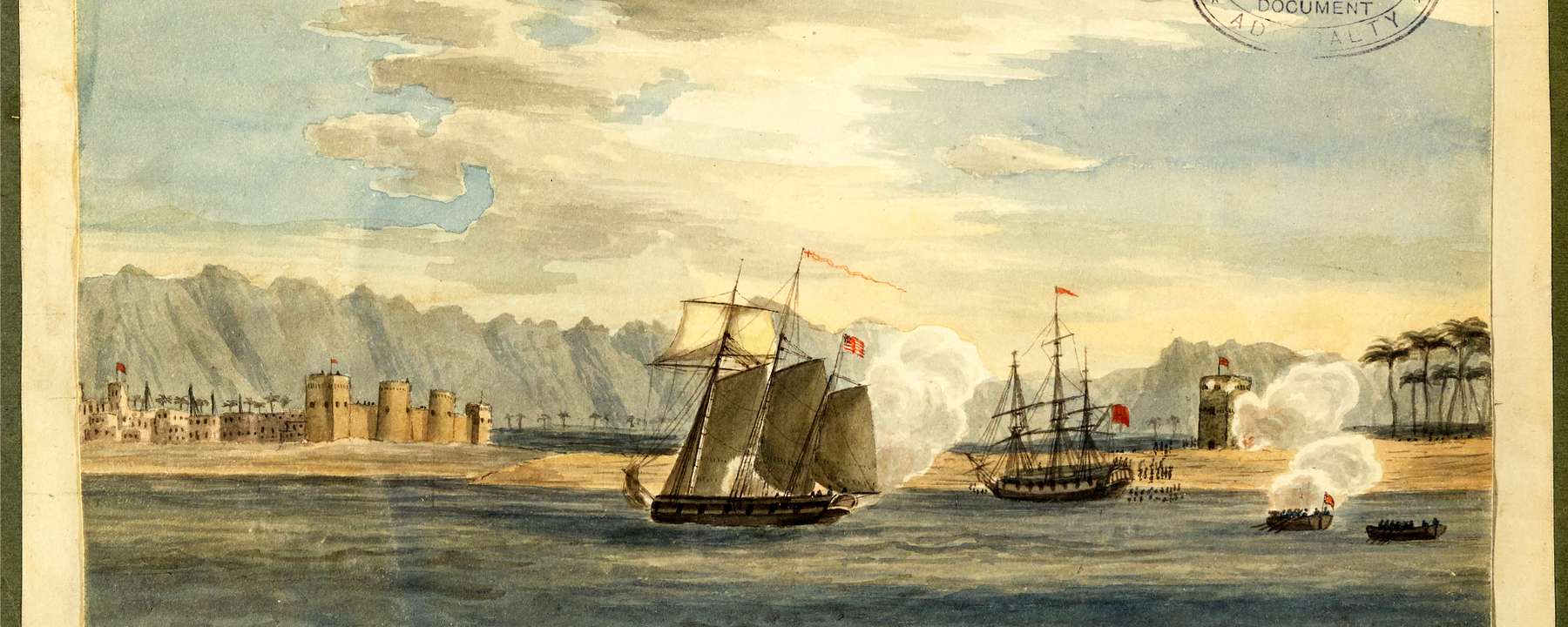
Unfortunately for Mary, the ship had barely reached the Atlantic Ocean before falling into the hands of the French privateer L’Américaine on the morning of 3 June. A privateer is a private person that has government permission to capture enemy ships during wartime. As the French were bringing the Elizabeth Gunsley into Brittany on 10 June, British privateers, commanded by John Tocque and James Neilson, recaptured the ship. Following its second capture within a week, the Elizabeth Gunsley was brought into Penzance, Cornwall, to be claimed as a prize.

A new map of the Province of Quebec in North America drawn from the best authorities, 1764. This map shows Britain’s colony of the Province of Quebec. France ceded (gave) it to Britain by the Treaty of Paris in 1763. The ship Elizabeth Gunsley was bound for Quebec, which is in the middle of the map.
Courtesy of the John Carter Brown Library.
Prize-taking was a normal practice of naval warfare in the 17th and 18th centuries period. States at war would capture enemies’ ships to weaken their economy and military capabilities while strengthening their own. To ensure that a capture was legal, the captors had to bring their prizes in front of a legal court. In Britain, this was the High Court of Admiralty.
When Tocque and Neilson brought in Mary’s ship, the court carefully considered the case. Both the ship and its cargo were condemned (confirmation that the ship had been lawfully captured). This led to all goods aboard the Elizabeth Gunsley being shared between the captors.
The court process involved taking all documents found on board ships, even the smallest scrap of paper, to use as evidence. Due to this, Mary's business letters on the Elizabeth Gunsley never reached their destination. Instead, they were taken into the High Court of Admiralty records as part of the Prize Papers, today held at The National Archives.
In pictures
The Prize Papers

This vast collection of letters, papers and objects came from ships captured around 1600–1860. It is a unique source on seafaring and many other areas of life.
The capture of the Elizabeth Gunsley shows how the American Revolutionary War was fought as intensely at sea as it was on land. In February 1778, two years before the capture of Mary's ship, the Treaty of Alliance between France and the United States of America turned the conflict into a global war. Britain was fighting both its rebel colonies in North America and their new ally in Europe.
Trading across the Atlantic became a much riskier business than usual as naval forces and privateers raided the seas. Merchants in both Europe and America struggled, losing their cargoes to hostile powers while paying increasingly high insurance rates.
It is during these uncertain times that Mary had prepared the Elizabeth Gunsley for its voyage across the Atlantic as she worked to keep her wine trading business afloat.
A female wine merchant
Mary’s business was established in Wapping, in the East End of London. The area was a major hub for commerce. It was also an important centre for supplying food and equipment to the thousands of ships that came up the Thames River every year. Mostly, these ships were bringing commodities from across the British Empire.
Mary’s business papers reveal that she was an ambitious businesswoman in the male-dominated world of transatlantic commerce. Unfortunately, however, we know very little about her outside her work. It appears that she took over her husband’s business after his death, probably in the late 1760s, and ran it with her son, Fell Parker, under the name Parker & Son.
A surviving inventory list of their wine vault shows that they traded in high-quality spirits coming mainly from Spain and Portugal. The mother and son also supplied port, sherry, madeira, brandy and cognac, among others, as well as champagne and a selection of beers, to business partners in North America.

PARKER and SON,
At their Wine-Vaults in WAPPIN, LONDON;
SELL
Old Red and White Port 2 22 the Dozen, 13 Bottles
Lisbon and Vidonia 22 the Dozen
Sherry and Mountain 2 28 13
Rhenish 24 12
French Claret 57 12
Old Hock 84 12
Madeira 2 Guineas per Dozen 12
Canary and Tent 2 Guineas ditto 12
Burgundy 3 Guineas ditto 12
Champagne 4 Guineas ditto 12
Jamaica Rum of the first Quality 16 per Gallon
Antigua and Barbados Spirit 14 ditto
Rum Shrub 14 ditto
Cognac Brandy 14 ditto
Brandy Shrub of the best Brandy 14 ditto
Rotterdam Geneva 16 ditto
Perry 15 the Doz. 12
Old Cyder 10/6 ditto
Old Brown Stout 12 Guineas per Ton
Barrel Porter 2 Guineas ditto
Fine Old Porter 3..5 the Doz. 12
Dorchester Beer & Country Ales 5 Guineas per Hhd.
Taunton Burton and Yorkshire Ale 9 10s Doz. 12
Dorchester Ringwood & Wiltshire Beers 9
Vinegar from 5 Guineas to 16 Guineas per Ton
British Brandy 2s. 2d. per Gallon for Exportation
Best English Gin 2s. 8d. per Gallon for Exportation
Bonded Rum for Exportation the Price agreeable to Quality.
This list shows the great variety of wines and spirits that Mary Parker traded. She usually included a copy of this list in her correspondence with her business partners. Catalogue Reference: HCA 32/319/13/SP 0(1)
Building connections overseas
Within the first three months of 1780, Mary had already sent four ships to Canada. As she wrote to a business partner in Quebec in March 1780, she hoped to dispatch 15–20 ships in the next year and to ‘supply every house in Quebec & Montreal with liquors.'

Mr Edward Watts London 19th March 1780
Dear Sir
I have received your Sundry recommendations to Quebec & Montreal, and have fully Completed every order. Except for some particular Wines which could not be procured, I have wrote each House that when their orders Run’s for Wines or Rum in future must remit first I must desire my good friend Mr Watts to soften this point with them when they want those Articles to do in the same manner as Mr Chevalier did remit a little first. I have now up for Canada four ships, three full by your good friendship. I hope next year to have from 15 to 20 to sail to Canada. You may Assure them will always Endeavour to get the freight out as low as Possible. I have wrote them we never stand to any Complaints of any Liquors as shall always ship with Honor.
Extract of a letter from Mary Parker to Edward Watts, 19 March 1780. Catalogue Reference: HCA 32/319/13/SP 29A
Mary’s extensive business correspondence highlights her role in establishing and strengthening commercial links between Britain and North America.
For instance, New France (which extended from Quebec and Montreal to the Great Lakes and Louisiana) was given to the British Crown in 1763 at the end of the Seven Years' War. After this, many British merchants moved there in pursuit of new financial opportunities. While Quebec was a key entry point for the colony’s Atlantic commerce, Montreal was the main hub for the sale of furs, then the primary export of the colony to Europe.
Edward Watts, a merchant based in Quebec, appears as Mary’s main business partner in North America. Their letters show that they also shared a strong friendship, with Watts acting as a mentor for Mary’s son.
Through introductions from Watts, Mary established contacts with other merchants operating in the colony, significantly expanding her business network. Among them were King & McCord, a Montreal merchant company involved in both the fur and alcohol trades, and Uriah Judah, one of the leading merchants of Montreal and one of the first members of the newly established Jewish community in the colony (Catalogue references: HCA 32/319/13/SP 2 and SP8).

Partial transcript
Importé d’Angleterre par les derniers vaisseaux et à vendre à juste prix
pour argent comptant ou à court crédit par E. WATTS à la Basse-ville
DES Vins de Fyal de Madere et de
Malaga en pipes
Vin rouge de Porte
Do blanc de Lisbonne en bouteilles
Et Claret excellent
Portere de Londres de
Parker Biere de Dor
chester et Cidre en bouteilles
Brown Stout (comme à l’ordinaire) en bar
riques
Cidre d’une excellente qualité en bariques
Vinaigre en bariques et demies bariques
Rhum de la Jamaïque et Esprits
Il a aussi à vendre de gré à gré le Brigantin le Success de Poole, Capitaine William Ford, du port de 180 tonaux plus ou moins, passablement bien garni; c’est un voilier remarquable, prend bien terre et va sans leste; ceux qui souhaiteront en faire l’acquisition sauront les conditions de la vente en s’adressant pour cela
IMPORTED in the last Ships from ENGLAND and to be Sold on
reasonable terms for Cash or short credit by E. WATTS in the
Lower town
Translation
Imported from England on the latest ships, and for sale at fair prices for cash or short credit by E. Watts in the Lower Town.
Wines from Fayal, Madeira, and Malaga in large casks
Red Port wine
White Lisbon wine in bottles
Excellent claret
London porter
Parker’s beer, Dorchester beer, and cider in bottles
Brown stout (as usual) in barrels
High‑quality cider in barrels
Vinegar in barrels and half‑barrels
Jamaica rum and spirits
He has also for sale by private contract the Brigantine Success of Poole, Captain William Ford, 180 tons more or less, being tolerably well-rigged, a remarkably fast sailer, takes the ground well, and shifts without ballast; those who may be inclined to purchase may know the terms and conditions of sale on application.
Imported in the last ships from England and to be sold on reasonable terms for cash or short credit by E. Watts in the Lower Town.
The Quebec Gazette no. 787, 28 September 1780. This extract from The Quebec Gazette shows Edward Watts’ advert for wine and spirits. In comparing his advert with Mary Parker’s wine vault list, we can see that she was his main supplier. The name of Parker also appears in Watts’ advert.
Collections Bibliothèque et Archives nationales du Québec. Public domain
‘Hood, muffs & tippets’
On 22 March 1780, Mary wrote a letter to thank Watts for sending her fur to make a cloak:
I received with pleasure likewise my skin which is very pretty, but must trouble you to match as these is only sufficient for the cloak; with out the hood, muffs & tippets.
Mary Parker writing to Edward Watts
She enclosed in the letter a small sample of the fur Watts had sent her. As it was found within a postbag of letters on the Elizabeth Gunsley, the fur sample was taken by the High Court of Admiralty and never reached Watts.

Fur sample sent by Mary Parker to Edward Watts. Catalogue Reference: HCA 32/319/13/SP 20B
The presence of this fur sample in her papers showcases the significance of the trade into the second half of the 18th century.
Fur represented an important part of Britain’s trade in North America since the founding of the Hudson Bay Company in 1670. The fur trade required traders to travel inland to meet Indigenous nations who played an essential role in the trade as they hunted the animals and provided the furs to British merchants.
Beaver was the main fur export from North America. It was popular due to its water-repellent quality and used to make hats worn by the middle classes and aristocracy. Other, fancier furs were also traded, like mink and marten.
Currently, we do not know which animal Mary’s fur sample came from. Regardless of the animal, the fact that Mary used the fur not for a hat, but for a cloak and its related accessories, gives hints at her wealth, and therefore success, as a businesswoman.
Legacy
Despite her earlier success as a wine merchant, 1780 was a very difficult year for Mary. In addition to the Elizabeth Gunsley, at least two other ships transporting her valuable cargo were captured by privateers (catalogue references: HCA 32/320/11 and HCA 32/332/6). This proved too much for her business, and she appears in the Gentleman’s Magazine list of bankruptcies for the years 1781 and 1782. Despite this, the business recovered. Mary's son later took it over, and his letter to a business partner in Leicestershire shows that it was still active in 1803.
The capture of the Elizabeth Gunsley had the unforeseen effect of preserving Mary’s business letters, allowing us to find her story and the forgotten role of women in the global trade of the late 18th century. Through her remarkable experience as a woman wine trader and shipowner, we can also explore how the American Revolutionary War impacted people thousands of miles away from North America.


