1. Why use this guide?
This is a guide to the various kinds of company and business records held at The National Archives and how to access them. These are predominantly records of dissolved companies.
You may find better sources for the history of a company or business in a local record office or in a company’s own archive, where they exist.
The National Archives does not hold files for Scottish and Northern Irish registered companies. For these, go to the National Records of Scotland and the Public Record Office of Northern Ireland respectively.
For advice on sources of company and business records beyond The National Archives, see our guide to Company records held in other archives.
2. Different types of businesses and companies
The concept of a business is a very broad one whilst, in legal terms, a company is something more distinct. A company is a legal entity with a separate identity from those who own or run it. All companies are businesses but not all businesses, legally speaking, are companies.
There are numerous different types of companies in the UK and to utilise the records we hold it will help to understand the following concepts and distinctions:
2.1 Incorporation
Incorporation is the process by which a new or existing business registers as a limited company, thus acquiring a specific kind of legal status. Before the Joint Stock Companies Act of 1844 incorporation was only possible by Royal Charter or a private act of Parliament. Since then, registration has been the predominant method.
2.2 Incorporation by registration
Registration, under the various Companies Acts since 1844, has become the most common and the most important form of incorporation. Nearly all commercial companies in the UK nowadays are registered companies, though registration is not required of sole traders.
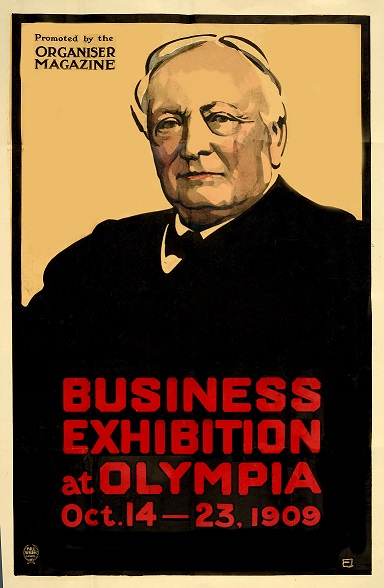
This image (catalogue reference COPY 1/285) was registered with the Copyright Office of the Stationers’ Company. Formed in 1403, the Stationers’ Company was incorporated by Royal Charter in 1557. Purchase a copy of this image from our Image Library.
The 1844 Act established the UK’s first registrar of companies, known as Companies House.
Today, a company can be registered as one of four different types:
- Public limited company (PLC)
- Private company limited by shares (LTD)
- Private unlimited company (UNLTD)
- Private company limited by guarantee
2.3 Incorporation by Royal Charter
Incorporation by Royal Charter, dating back to the medieval period, is now rare, but was once prevalent. It meant that a company’s status was granted by the monarch or the monarch’s representatives.
Chartered companies and organisations still exist, among them the BBC, the Royal Opera House, the British Red Cross and the British Council.
The 1844 Act did not apply to chartered companies.
2.4 Incorporation by Act of Parliament
Companies can still be incorporated by Act of Parliament now but this is rare. They are known as statutory companies.
Statutory companies still operating today include the Port of London Authority, the Post Office and the Independent Television Commission, incorporated by the Broadcasting Act 1990.
The 1844 Act did not apply to statutory companies.
3. What we hold and what we don’t hold
The vast majority of company records held at The National Archives are for dissolved companies which were incorporated by registration. In most cases, they are not a company’s own records but merely the government records of a company’s registration and dissolution.
When a registered company is dissolved, its registration and dissolution files remain at Companies House for twenty years, after which time they are either destroyed or transferred to The National Archives.
Broadly speaking, since the mid-19th century the percentage of company records transferred to The National Archives has steadily reduced to ever smaller proportions of the total as the number of companies registering has increased.
In the main, The National Archives does not hold records created by companies themselves, but there are exceptions to this. In total there are 1,124 companies whose own records can be found in various National Archives departments, mainly:
- former railway companies
- former canal companies
- other transport companies that passed into public ownership
We do not hold many records of chartered companies or statutory companies.

Once a company is registered, a ‘certificate of incorporation’ is issued by Companies House. This confirms the company legally exists and shows the company number and date of formation.
4. Records of live registered companies
The details of live registered companies are held by Companies House. The main responsibilities of Companies House are to:
- incorporate and dissolve limited companies
- register, examine and store company information
- make information available to the public
You can use the Find and update company information service to access basic company information, including:
- the nature of business
- registered office address
- whether the company is live or dissolved
- previous company names
You should contact Companies House for company registrations made under the Limited Partnership Act, 1907 and newspapers registered under the Newspaper Libel and Registration Act, 1881.
All enquiries should be via the Contact Centre tel: 0303 123 4500 or email enquries@companieshouse.gov.uk
5. A company’s own records after it ceases trading
A company’s own records after it is dissolved are often destroyed but may end up as the property of either its creditors or the ex-company directors. Alternatively, they may be sold, inherited by a successor or deposited in an archive, sometimes a local county archive.
When a solvent company is wound up voluntarily by its shareholders or partners, the company’s records remain the property of the ex-company directors.
When a business becomes insolvent and ceases trading its books and papers become the property of its creditors. Registered companies, once insolvent, are legally represented by either a receiver or liquidator. Unregistered partnerships or sole traders are represented by the Official Receiver or trustees appointed by the Court.
6. Online records
None of the records of companies held at The National Archives are available to view online.
However, basic information for live companies is available online through Companies House – see section 4 for more details.
Notices of receiverships, liquidations and bankruptcies appear in the London Gazette, available on The Gazette website.
Browse the University of Leicester’s collection of trade directories for companies and businesses in England and Wales in the 18th, 19th and early 20th centuries.
7. How to trace basic company information and search for original documents
This section provides broad advice on searching for company records in general at The National Archives, as well as suggesting some alternative, easy-to-use sources of basic company information. The subsequent sections of the guide provide advice on more specific record types.
To view almost any of the records of companies held here you will either need to visit us or, where you can identify a specific document reference, order a copy (£). You can use our online catalogue to search for document references.
The registration of companies was first regulated by the Board of Trade and then by its successor departments. These records are found at The National Archives under department code BT. For a sense of the range of documents in the BT department you can browse through the BT divisions and the BT series in our catalogue.
For details of how to search for the records of former railway companies see the Railways research guide.
There are a number of different ways to locate documents for specific companies, some of them explained later in this guide, but the most straightforward ways to perform a broad search are as follows:
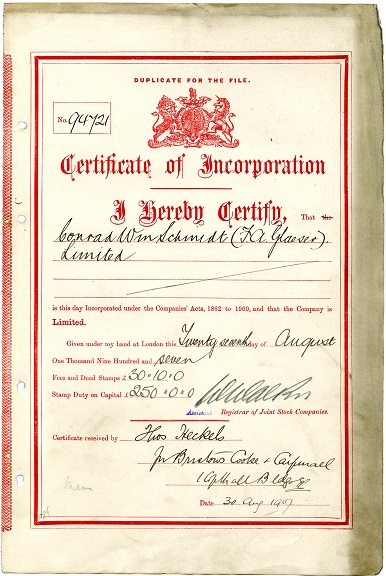
The certificate of incorporation for F A Glaeser Ltd (catalogue reference BT 31/18195/94721), incorporated in 1907. The certificate number (the same thing as the company number) is in the top left-hand corner.
7.1 Search our catalogue by company name
A simple search by the name of a company in our catalogue will often uncover any records we may hold for that company.
7.2 Searching our catalogue by company number
Those records of companies that do not appear in our catalogue under the company name are often identified, instead, by their company number.
When companies register they are issued with certificates of incorporation (see left for an example from 1907), sometimes referred to as certificates of registration. Each certificate has a unique number.
You can find a company’s number either by contacting Companies House (see section 4) or by consulting the printed indexes to company numbers in the reading rooms at The National Archives:
- Indexes of Companies Registered from 17 July 1856 to 30 June 1920 (Volume 1, A-K)
- Indexes of Companies Registered from 17 July 1856 to 30 June 1920 (Volume 2, L-Z)
- Alphabetical Index of Companies on the Register on 30 June 1930
- Alphabetical Index of Companies on the Register on 30 June 1937
The entries in these indexes are arranged alphabetically by the legal title of the company. For example, Joseph Lucas Limited will be under ‘Joseph’ and not under ‘Lucas’.
The date of incorporation is an indication of the range in which a company’s number should appear.
7.3 Use published sources
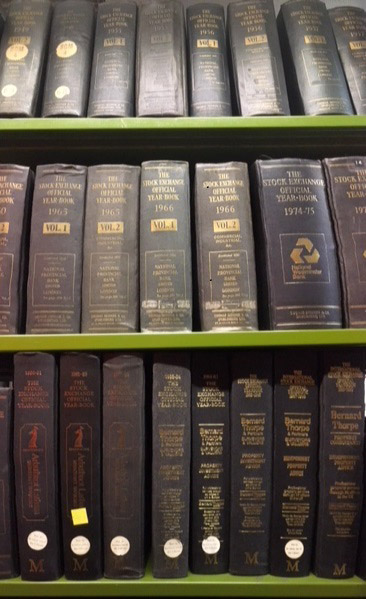 There are several sets of publications, available in The National Archives’ Library, which may prove useful as starting points for tracing the history of some businesses and companies, though none of them provide company numbers. They are:
- The Stock Exchange Official Year-Book, an annual compilation of all companies quoted on the London Exchange (public companies), including statutory as well as registered companies. We have an incomplete collection from 1909-1990. For each company they include:
- date of incorporation
- business address
- the names of its directors
- a brief note on the nature of the business
- The Register of Defunct Companies Removed from the Year-Book (two volumes up to 1960 and up to 1976-1977). Includes, for each company:
- date of incorporation
- date of dissolution
- Trade directories and in particular the Post Office London Directory (for which we have copies dating back to 1822) and Kelly’s Directories for towns, cities and counties in England and Wales (for which we have copies dating from the 19th century to the 1970s). Many local libraries also have copies of historical trade directories.
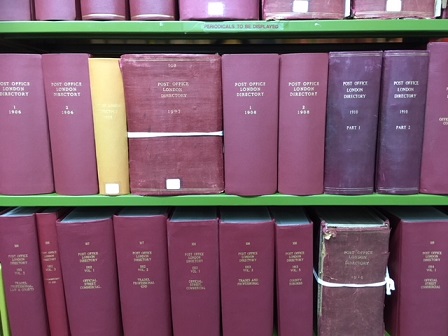
Part of the collection of historical Post Office Directories at The National Archives’ library in Kew.
As well as an alphabetical list of businesses, they contain alphabetical listings of streets, listing all the businesses located on each street. The information for each business is nothing more than:
- business address
- a brief note on the nature of the business
7.4 Search in general correspondence
General correspondence of the Board of Trade covers a broad range of subject matter, some of which relates to individual companies and businesses. There are various records series containing correspondence, which include:
- In-letters, 1791-1863 in BT 1
- Out-letters, 1786-1853 in BT 3
- Correspondence of the Companies Department, 1850-1986 in BT 58
8. Records of companies dissolved after 1860
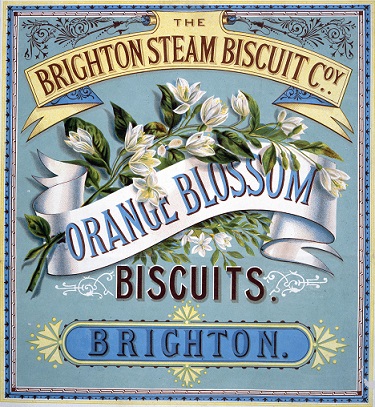
A copyright image (catalogue reference COPY 1/48) of the Brighton Steam Biscuit Company. The dissolution files for this company are in BT 31/2835/15579. Purchase a copy of this image from our Image Library.
Search BT 31 by company name or number for records of companies dissolved since 1860 but before the last 20 years or so. These files do not contain the internal day-to-day business records created by a company itself. Documents are primarily of a legal and procedural nature, usually concerned with the winding-up arrangements prior to the dissolution of a company, and the company’s compliance with the Companies Acts. Documents can include:
- memorandum and articles of association containing particulars of the company’s constitution
- lists and stakes of shareholders
- location of registered office
- register of directors
- annual returns
These files are for a sample of companies only and are not comprehensive. They cover companies dissolved after 1860 and registered since 1856 (in accordance with the Joint Stock Companies Act of 1856).
Whether or not a company appears in these records can depend not only on whether it was selected as part of the sample kept, but on the changes in legislation down the years.
From 1907 some private companies were exempt from a public return of accounts and won’t appear in the records at all. On the other hand, the files for public companies dissolved since 2 July 1960 have all been preserved. For more detail on what is included see the BT 31 series description.
9. Records of companies dissolved before 1860
Search series BT 41 by company name for records of companies dissolved before 1860. The files are likely to include some or all of the following:
- nature of the business
- company address
- names of the company’s promoters and their solicitors
- a prospectus
- details of capital
- issue and allocation of shares
- balance sheets
BT 41 contains the files of all Joint Stock Companies which were registered under the Act of 1844 and dissolved before 1856, and of those re-registered under the 1856 Act and dissolved before 1860.
A sample selection of files for dissolved private companies which were exempt from a public return of accounts have been kept in series BT 95 and are arranged by the date of incorporation and company number ranges. They consist of a set of loose-leaf sheets which include details of the nature of the business.
There is some overlap between BT 41 and BT 31 (see section 8), with about 2,000 companies registered under the 1856 Act appearing in both series.
10. The Register of Business Names, 1917-1982
The Register of Business Names was established in 1916. Its purpose evolved over the years but it was essentially a register of the names of businesses whose trading names differed from that of the business owner or, from 1947, the official company name. This was also the first register in which unincorporated companies such as partnerships and sole traders were listed.
The register was abolished in 1981 but a sample of registration documents for businesses registered in 1916-1917, and every ten years from 1921 until 1981-1982 has been preserved in BT 253.
The nearly 1,300 pieces in the series are arranged in batches of registration numbers and by year. You will need to browse the series to have a hope of finding anything.
11. Records of chartered companies
The only chartered company records held at The National Archives are those of the various colonial chartered companies, such as the British Borneo Company (CO 874), or the Company of Royal Adventurers of England Trading with Africa and successors (T 70). See here for full list.
Search for records by company name in our catalogue and use our guides to records of the Foreign Office and Colonial Office for more in-depth research.
Search HO 45 by company name for records of incorporation by Royal Charter. You can also try searches using ‘charter’ and/or ‘incorporation’ as your keywords. The printed version of our catalogue, available only in the reading rooms at Kew, contains a subject heading ‘Charters’ which includes references to the granting of charters to various societies and associations.
Correspondence concerning chartered companies before 1863 is among the records in record series BT 1 (see section 7.4).
12. Records of mutual societies and assurance companies
12.1 Mutual societies
As they were covered by separate legislation, records of mutual societies, which include building societies, friendly societies and industrial and provident societies, are located in a separate record department at The National Archives, whose code is FS.
Browse the several dozen FS series for a sense of what they cover.
You can use the advanced search to search within the whole of the FS department by name of the society. However, the following series require alternative search methods:
| Record description | Record series | Search by |
|---|---|---|
| Statutory documents of friendly societies removed from the register before 1875 or between 1876 -1912 | FS 1 | County and register number. Use indexes in FS 2 and FS 4 to identify register numbers. |
| Statutory documents of friendly societies removed from the register between 1876 -1912 | FS 3 | County and register number. Use indexes in FS 2 and FS 4 to identify register numbers. |
| Annual returns for loan societies | FS 22 | Year |
| Certificates of Registration for Trade Unions | FS 25 | Registration number. Use indexes FS 25/2, 8 and 9 to identify registration numbers. |
For information on the registrations of mutual societies contact the Financial Conduct Authority which operates a Mutual Society Registration.
12.2 Assurance companies
The Board of Trade was also responsible for the regulation of assurance companies.
Use the advanced search to search by assurance company name in BT.
See ACT 1/104 and ACT 1/632 for returns made by assurance companies to the Board of Trade for the period 1912 to 1968.
13. Records of bankruptcy and liquidation
13.1 Official announcements of the bankruptcy and liquidation of companies
Notices of receiverships, liquidations and bankruptcies appear in the London Gazette, available on The Gazette website.
13.2 Bankrupted companies
Among the numerous departments of the Board of Trade and its successors is a Bankruptcy Department.
For Board of Trade records relating to the bankruptcy of firms, search in:
For more guidance on these and related records see our guide to records of Bankrupts and insolvent debtors.
13.3 Court records of the liquidation and winding-up of companies
For court proceedings leading to the liquidation and winding-up of companies search among the records of the:
Actions for the winding-up of companies, as distinct from bankruptcy action, were heard in the Court of Chancery, then from 1873 in the Chancery Division of the Supreme Court of Judicature and from 1890 in the Companies Court. Records of these proceedings are in C 26 (1849-1910), J 13 (1883-1995), J 137 (1924-1981) and J 14 (1891-1989).
Search BT 34 for liquidators’ accounts for companies dissolved between 1890 and 1932.
Other records of the Companies Court are in J 100, J 107 and J 119.
14. Further reading
The following publications are available at The National Archives’ Library.
Francis Goodall, Bibliography of British Business Histories (Ashgate, 2005)
John Orbell, A Guide to Tracing the History of a Business (Phillimore & Co Ltd, 2009)

1. Why use this guide?
This research guide explains how to access and understand the information within Domesday Book.
For a more detailed introduction to Domesday, and England at the end of the 11th century, when Domesday was compiled, consult our online resource from 2006, Domesday: Britain’s finest treasure (in the UK Government Web Archive, in which some content may no longer work).
The original Domesday Book itself can no longer be consulted except in very rare circumstances. This guide directs you to the excellent printed and online facsimiles and translations.
2. What is Domesday Book?
Domesday Book is a detailed survey and valuation of landed property in England at the end of the 11th century. The survey was ordered by William the Conqueror at Christmas 1085 and undertaken the following year. It records who held the land and how it was used, and also includes information on how this had changed since the Norman Conquest in 1066. It is not a census of the population, and the individuals named in it are almost exclusively land-holders. Domesday is written in Latin, although excellent translations are available (see below).
Domesday is not usually an appropriate source if you are looking for a Norman ancestor. Consult instead A J Camp’s My ancestors came with the Conqueror (Society of Genealogists, 1990) and Katharine Rohan’s Domesday people: A prosopography of persons occurring in English documents 1066-1166 (Vol 1) (Woodbridge, 1999).
Watch our Spotlight On: Domesday video for a brief introduction to Domesday Book.
3. Great Domesday, Little Domesday and the areas covered
The survey does not cover London (city), Winchester, Northumberland and Durham or much of north-west England; the only parts of Wales included are certain border areas.
Most of the returns were entered into Great Domesday. Norfolk, Suffolk and Essex are in a separate volume, known as Little Domesday because of its smaller size. Little Domesday seems to be a survival of part of an earlier and fuller draft compiled from the original returns. For further information, see E 31 in Discovery, our catalogue.
4. The information recorded in Domesday
The Domesday survey was carried out by commissioners holding sworn inquests in local courts, where they asked fixed questions of local men. For each property, each question was asked three times, to cover changes over time. The commissioners asked how land had been held:
- as it had been on the last day of the reign of Edward the Confessor (5 January 1066) – this is abbreviated in Domesday as TRE
- as it had been when it was granted by King William
- as it was in 1086 (when the survey was taken)
The questions included:
|
|
Note that not every piece of information is recorded for every entry in Domesday. There is a glossary of Domesday terms in Domesday: Britain’s finest treasure (in the UK Government Web Archive, in which some content may no longer work).
5. How the original Domesday Book is arranged
Both Great and Little Domesday are arranged by county, and within each county, by landholder. Each new landholder is given a number, written in red in roman numerals at the start of their entry. There is a table of contents at the beginning of each county, which lists the landholders with their numbers, starting with the king, but no index. However, later editors have produced excellent indexes to the online and printed editions which make finding particular entries straightforward.
Please note that modern place names may cover land that belonged to more than one 11th-century manor, and where these manors were held by different people they may appear in more than one Domesday entry. Similarly, if the same person held different manors in different areas, they will appear in more than one Domesday entry.
6. Accessing Domesday online
6.1 The Editions Alecto edition on The National Archives catalogue
Use the box below to search and download (£) colour facsimiles of Domesday, published by Editions Alecto, from our catalogue. Search by name, modern place name, Domesday place name or folio number, using the formula ‘[your keyword] AND Domesday’. For example, search for ‘Elthorne AND Domesday’ or ‘Folio 254r AND Domesday’.
Alternatively, using the same search criteria, try a slightly broader search from the homepage of our catalogue.
You can download both a colour facsimile of the folio on which your entry appears and a translation of all the text on that folio (not just the text of the entry for which you searched). This method of consulting Domesday is ideal if you are looking for a particular person or a specific settlement. Please note that the image and translation will be of either the recto (front) or the verso (back) of the folio, depending on where your entry appears.
As noted above, individual people and places frequently appear in more than one Domesday entry. As there are lots of different entries on each folio, your search results may return multiple entries which are actually on the same folio. Before you download your search results, please make sure that they are on different folios, otherwise you could end up downloading the same folio more than once. The folio number is displayed clearly on the catalogue page for each entry. If your results appear on the same folio, you only need to download it once.
6.2 Open Domesday
Search for images of Domesday by town or postcode on Open Domesday.
6.3 The Prosopography of Anglo-Saxon England database
Search the Prosopography of Anglo-Saxon England (PASE) database. It provides structured information on individual landholders in Domesday, and can be manipulated to provide statistical and geographical information.
7. Accessing printed editions of Domesday
Printed editions of Domesday can provide a convenient way of browsing quickly through the survey.
7.1 The Phillimore editions
The Phillimore editions (Chichester 1975-1992) are arranged by county and have a transcript of the original abbreviated Latin on the left page, facing an English translation on the right page. These volumes do not have page numbers, because as far as possible they use the reference systems found within Domesday itself. To find an entry:
- Select the appropriate county volume
- Find the person or place in the indexes at the back
- Note the last column of entries. This will give you a pair of numbers, for example 12,3; if there is more than one entry for that person or place within that county it will be listed, for example 12,3. 37,16.
- The first number of each pair is the red chapter number for a particular landholder (marked in bold in the top right corner of the translation page). The second number is the section number (found in the left hand margin of the translation – note that these section numbers are not original and are only found in the Phillimore editions).
- Using the numbers, find the correct page in the Phillimore edition. If you wish also to consult a facsimile of the entry, note the county, red chapter number, and the folio number (given at the bottom of the page in the Phillimore editions).
Note that there are separate composite index volumes or persons, places and subjects covering all the counties.
7.2 The Editions Alecto translation and edition
Alternatively, you can use the Alecto translation in Domesday Book: A Complete Translation (Penguin Books, 1992), which is indexed by place; or the printed transcript and translations produced by Alecto in 1986. Both are available in The National Archives’ library.
Editions Alecto has also produced a facsimile edition of Domesday which can be seen in printed form at The National Archives at Kew. This is purely a facsimile, not a translation. To find an entry within it consult the Phillimore volume for the relevant county (or the composite indexes of persons, subjects and places) or the (place) index in Domesday Book: A Complete Translation, and note the folio. Then simply turn to this folio in the facsimile. Note that each folio has two sides – the front (recto) and back (verso).
7.3 Digital images from The National Archives
You can buy colour images of Domesday folios from The National Archives’ image library. To do so, identify the folio numbers that you need (including whether you want the verso or recto of the folio) and contact the image library (image-library@nationalarchives.gov.uk) who will provide you with a quote. The place name, as spelled in the books, can help to confirm the correct page.
8. Citing references from Domesday
If you are citing entries in Domesday from our catalogue you will need to follow these steps:
- Look up the relevant Domesday folio on our catalogue
- From the search results page note the catalogue reference, the folio number and whether the entry appears on the front (recto – marked by an r) or back (verso – marked by a v) of the folio. For example, E 31/2/1/139 is the full catalogue reference for Northgate in Canterbury. The relevant folio is 5r.
For further information on the cataloguing of Domesday, see the series description for E 31.
For further information on citing documents from The National Archives, please see our page on citing records.
9. Related documents held elsewhere
Some early drafts of the questions that were asked by the Domesday commissioners as well as some Domesday returns survive and are held in other archives and libraries. They are:
- the Liber Exoniensis, covering Somerset, Cornwall and most of Devon, held in the library of Exeter Cathedral
- the Inquisitio Eliensis, covering Ely Abbey estates, held in Trinity College, Cambridge
- the Inquistio Comitatus Cantabrigiensis, covering parts of Cambridgeshire, held in the British Library under reference Cotton MS Tiberius A VI
- a survey known as the Boldon Book records the estates of the Bishop of Durham in Durham and Northumberland in 1183 (this was published as part of the Phillimore editions of Domesday – see above)
Extracts are printed in English Historical Documents, Volume II, c.1042-1189, ed. D C Douglas (London, 1953). The returns themselves were written up into Domesday Book.
10. Further reading
There is an enormous amount of secondary material on Domesday, and the list below is not exhaustive.
Some or all of the recommended publications below may be available to buy from The National Archives’ shop. Alternatively, search The National Archives’ Library to see what is available to consult at Kew.
A J Camp, My Ancestors came with the Conqueror (Society of Genealogists, 1990)
H C Darby and G R Versey, Domesday Gazetteer (Cambridge, 1975)
H C Darby, Domesday England (Cambridge, 1977, 1986)
Domesday Re-Bound, Public Record Office Handbook (HMSO, 1954)
R W H Erskine and A Williams (eds), Story of the Domesday Book (Phillimore, 2003)
E M Hallam, Domesday Book through Nine Centuries (London, 1986)
E M Hallam and D Bates (eds.), Domesday Book (The History Press, 2001)
S Harvey, Domesday: Book of Judgement (Oxford, 2014)
J Morris (general ed.), Domesday Book (Chichester, 1975-1992) – the ‘Phillimore editions’
D Roffe, Domesday the Inquest and the Book (Oxford, 2000)
D Roffe, Decoding Domesday (Boydell, 2007)
A Williams and G H Martin (eds), Domesday Book: A Complete Translation (Penguin, 2003)
1. Why use this guide?
This research guide provides advice on finding and understanding the different types of documents that exist for common land. It highlights some of the principal sets of records held at The National Archives and flags up others held elsewhere. Broadly, the records held here provide information of the following kinds about common land:
- the tenure and use of land, including records which may contain information which has a bearing on historic rights of common in particular places
- the preparation, passage and implementation of legislation regulating common lands, mainly dating from the mid-19th to the mid-20th centuries
- government policy in regard to common land
This guide is not a statement of law and The National Archives cannot provide legal advice or offer any legal interpretation of the information contained in the records.
2. What is common land and who owns it?
Common land is land subject to rights enjoyed by one or more persons to take or use part of a piece of land or of the produce of a piece of land which is owned by someone else – these rights are referred to as ‘rights of common’. Those entitled to exercise such rights were called commoners.
It is a popular misconception that common land is land owned by the general public and to which everyone has unrestricted right of access. All common land is private property, whether the owner is an individual or a corporation. Historically, the owner of the common was normally the lord of the manor. Today many commons are owned by local authorities, the National Trust and other bodies for the public benefit, but not all commons offer total access to all comers. Under the Countryside and Rights of Way Act 2000 (popularly known as ‘CRoW’), there is a new right of public access to open country and registered common land, subject to certain defined restrictions.
3. Historical rights of common
Historical rights of common were usually of five kinds, although there were others:
- of pasture: the right to graze livestock; the animals permitted, whether sheep, horses, cattle and such, were specified in each case.
- of estovers: the right to cut and take wood (but not timber), reeds, heather, bracken and the like.
- of turbary: the right to dig turf or peat for fuel.
- in the soil: the right to take sand, gravel, stone, coal and other minerals.
- of piscary: the right to take fish from ponds, streams and so on.
These rights related to natural produce, not to crops or commercial exploitation of the land. They were almost always subject to limitations on quantities (usually enough for the domestic needs of the commoner) and sometimes subject to seasonal restrictions (such as during game-breeding periods).
In modern times, rights have been defined in less tangible terms, including access to light, air, recreation and so on.
4. Getting started: search tips and key records
This section describes how you can search for records at The National Archives and in which sets of records it might be worth focussing your searches. Other useful record series and departments are highlighted in sections 5 to 9 of this guide.
4.1 How to search using keywords
Searches begin in our catalogue, which contains short descriptions of the records and a document reference for each – you will need the document reference to see the record itself. You can search the catalogue using keywords and dates. Use the advanced search option or the series searches to restrict your search results to records of a specific government department (and its predecessors) – departments are identified by a letter code (see section 4.2 for some of the most useful departments for records of common land and for links to series searches).
Searches with the following keywords will return catalogue results – combine any of these terms with a place name (county, city, town, district, parish) to hone your results:
- common land
- rights of common
- commons or common
- common land survey
- common land registration OR register
You can also try:
- Royal Commission of Common Land
- common land policy
4.2 Key records
The most substantial quantities of records in The National Archives relating to common land are among the records of the Agriculture, Fisheries and Food Departments (MAF). Within the MAF department is a division of records of land tenure, enclosure copyhold and tithes, and land use and improvement. This division contains many of the primary series for records of common land, including those listed below.
Click on the series reference to search within the records of that series (for the ranges of multiple series, click on the range and then on ‘Details’ to search any series):
- MAF 25 – the principal series of registered files relating to commons; many of these files include accounts of the history of particular commons, draft orders, maps and so on.
- MAF 24 – these are claims made to valuers by landlords and other parties claiming rights of common and the valuers’ awards themselves. Many commons were defined or affected by enclosure awards. For more information on this subject see our Enclosure awards guide.
- MAF 145 to MAF 149 and MAF 157 to MAF 182 – these are records of the divisional offices of the Ministry of Agriculture, Fisheries and Food and may include files about commons.
There are also some papers about commons among the records of the Treasury Solicitor (TS).
5. Surveys of common land
Use the following keyword combinations to search our catalogue for records of common land surveys:
- common land AND survey
- commons AND survey
- common land AND Royal Commission
- common land AND report
Several surveys of common lands were made for Parliament. The most important of the surveys was the so-called Common Lands Census of 1873-1874 which was published as House of Commons Sessional Papers 1874 lii 383.
The 1865 Survey of Commons and Open Spaces within a 25-Mile Radius of London was published as House of Commons Sessional Papers 1865 xlvii 757. The original returns submitted for this survey are among the records in series OS 25, an Ordnance Survey series split into seven pieces by county in our catalogue. The maps annexed to these returns are very fragile and will not be available until conservation work has been carried out.
6. Common land in manorial records
You may find information about common land in manorial records. The National Archives holds large quantities of records, covering many centuries, relating to the estates of the Crown as well as some records of privately-owned manors submitted as evidence in equity proceedings, particularly in the Court of Chancery.
The Manorial Documents Register, maintained by The National Archives, records the whereabouts of manorial records (excluding title deeds). For more advice, see our guide to Manorial documents and lordships and how to use the Manorial Documents Register.
7. Common land requisitioned for war
Many areas of common land were requisitioned for agricultural or military use during the Second World War. A schedule of such lands is in MAF 143/49.
Files about general policy and individual cases are in AIR 2, MAF 48, MAF 145-149, MAF 157-182 and WO 32.
8. Common lands in forests
The records of the Forestry Commission include many references to common lands in forests. The New Forest Claims Act 1854 provided for the registration of common rights in the Forest. The registers created under the Act are in LRRO 5/20 and LRRO 5/23; a printed version is at F 24/107.
Not until the passing of the New Forest Act 1949 were maps made to show the lands subject to common rights. These plans are 1:2,500 Ordnance Survey maps, marked up in manuscript. Similar plans were later made relating to the areas added to the Forest by the New Forest Act 1964. All these plans are in MPO 1 (formerly in F 2).
Series WORK 9 contains records of the commissioners appointed under the Epping Forest Act 1871 to enquire into rights and claims over the forest, and some records of the arbitrator appointed to settle disputes arising from the provisions of the Epping Forest Act 1878. As the individual pieces in this series are not described in much detail, it’s best to browse this series rather than search with keywords.
Statutory copies of the maps made under the New Forest Acts 1949 and 1964 are held by Clerk to the Verderers in Lyndhurst, Hampshire.
9. Records of regulation, legislation, registration and policy
Files about general policy affecting commons are in MAF 48.
9.1 Legislation from the mid-19th to the early-20th centuries
A long succession of Acts of Parliament governed the regulation of commons between the mid-19th and the early-20th centuries. The most important series of records held at The National Archives in relation to these acts, are:
- Awards of regulation under the Enclosure Acts 1845 to 1899 in MAF 1
- Schemes regulating the use of common land in metropolitan areas under the terms of the Metropolitan Commons Acts 1866 to 1898 in MAF 4
- Commons Acts 1876 and 1899: schemes of regulation in MAF 30, HLG 65 (after 2 February 1959), and BD 3 (Wales after 1964)
- Corporation of London (Open Spaces) Act 1878: bye-laws in WORK 16
- Commonable Rights Compensation Act 1882: records in MAF 2
- Law of Property Act 1925: declarations and limitations in MAF 3, HLG 59 (after 2 February 1959) and BD 1 (Wales after 1965)
There were also numerous local Acts. Most Local Acts of Parliament from 1797 are online on legislation.gov.uk. For more information see our research guide on Original Acts of Parliament and Royal Assent.
There may also be plans deposited in association with Local Acts in the House of Lords and House of Commons. The Lords set was preserved as Parliament’s record set but some Commons plans also survive. These can be found using advance search including the name of the locality, and under references using YHL/PO/PB/3 (House of Lords) and YHC/CL/PB/6 (House of Commons).
9.2 The 1955 Royal Commission on Common Lands and the 1965 Commons Registration Act
The confusion created by this slew of national and local acts led in 1955 to the setting up of a Royal Commission on Common Lands. The records of the Commission are in MAF 96. They include a substantial number of files of evidence which often contain information about the history of individual commons as well as material on general issues relating to commons.
The Commission’s report led to the Commons Registration Act 1965 which provided for the registration of common land and of town and village greens. The registers were to be maintained by county councils. Registration began on 2 January 1967. The Commons Registration (Time Limits) Order 1966 provided that registration should take place by 31 March 1970; this was extended by an Amendment Order to 31 July 1970. These registers are now normally in local record offices.
9.3 The Countryside and Rights of Way Act 2000
In addition, the Countryside and Rights of Way Act 2000, (CRoW) requires the Countryside Agency and the Countryside Council for Wales respectively to prepare for England and Wales maps showing all registered common land and all open country. These maps, to be produced in draft, provisional and conclusional stages, are or will be held by local authorities.
Information about the CRoW Act 2000, with links to the online text of the Act and to a variety of information research guides and guidance notes is available on the website of the Department for Environment, Food and Rural Affairs (DEFRA).
Information about mapping under the Act, undertaken by the Countryside Commission, is available on the Natural England website, run by the Commission.
9.4 Official notices and announcements
Official notices of intent to regulate, register and the like were usually published in the local press and the London Gazette.
10. Other sources of information
Interest groups and dispensers of general advice on common land issues include:
- The Open Spaces Society
- The Foundation for Common Land
- Association of Commons Registration Authorities – the Commons Commissioners was a statutory body comprising expert lawyers in commons law who were appointed to adjudicate disputed applications to register common land and greens under the Commons Registration Act 1965. The body was abolished in September 2010. The website features a section on Commons Commissioners’ Decisions, organised by county
- The London Archives – holds records relating to acquisition and subsequent management of Epping Forest and other open spaces by the Corporation of London under the City of London (Open Spaces) Act 1978
Sometimes commoners sold or otherwise disposed of their rights. Such transactions were usually private agreements and as such are not usually among records held in The National Archives.
11. Further reading
A useful, if now somewhat outdated general book on the history of common land is Dudley Stamp and W G Hoskins, The Common Lands of England and Wales (Collins, 1963).
Other publications held at The National Archives library covering common land include:
J M Neeson, Commoners: Common Right, Enclosure and Social Change in England, 1700-1820 (Cambridge University Press, 1993)
Edward Carter Kersey Gonner, Common Land and Inclosure (Macmillan and Co, 1912)
G D Gadsden, The Law of Commons (Sweet and Maxwell, 1988)
1. Why use this guide?
This guide will help you to find letters, minutes and documents known as ‘case files’, kept and compiled by the Admiralty, the body in charge of the Royal Navy. In particular, it is a guide to finding letters received by the Admiralty. These letters date, in the main, from 1793 onwards and most are filed in The National Archives record series ADM 1.
The key to finding these letters, minutes and related files are the indexes and digests in record series ADM 12 and this guide will reveal exactly how you use ADM 12 to access the documents in ADM 1 and various other related record series.
The Admiralty files discussed in this guide can be very difficult records to penetrate. Admiralty codes and abbreviations and a filing system that underwent countless changes over the years mean that a single set of search instructions covering the whole of ADM 12, and the related record series, is impossible. The instructions in this guide may not always prove applicable and much depends on the date of the document you are looking for.
Over the years, countless letters that were at first kept by the Admiralty have subsequently been disposed of, especially from the mid-19th century onwards. Therefore, even when a reference to a letter exists in the ADM 12 indexes and digests, this is no guarantee that the letter survives. However, sometimes a digest entry in itself reveals a significant amount about the contents of a letter (see section 5.3).
None of the documents discussed in this guide have been digitised. Though you can view their arrangement in Discovery, our catalogue, you will have to visit us at The National Archives at Kew to view the documents themselves.
2. Some key terms
The following key terms are used in this guide:
- Admiralty – the body in charge of Royal Navy operations
- Admiralty in-letters – letters received by the Admiralty
- Admiralty out-letters – letters sent by the Admiralty
- cases – related letters and other papers on a particular subject collected together to form a single file (also referred to as case files)
- indexes – a basic alphabetical key to correspondence linking to the correspondence itself or to a digest entry
- digests – summaries of information in documents that can also be used as indexes to those documents
The ADM 12 indexes and digests are sometimes referred to in our catalogue as the Index and the Digest, respectively.
3. ADM 12: the basics
ADM 12 consists, predominantly, of large bound volumes of indexes and digests but they do not all refer to the same record series.
The indexes and digests are used predominantly as a means of accessing documents in:
- ADM 1 (Admiralty correspondence 1660-1976), the principal record series for letters received by the Admiralty. Many of these letters were sent by officers on ships, at naval stations and elsewhere but any letter received and retained by the Admiralty, whoever sent it, is included. The letters cover every aspect of Admiralty business.
The largest section of ADM 12 (ADM 12/56-1518) indexes Admiralty in-letters received between 1793 and 1913, filed in ADM 1.
However, some ADM 12 indexes can be used to access documents in:
- ADM 2 (Admiralty out-letters)
- ADM 3 (Admiralty minutes 1657-1881)
- ADM 7 (Admiralty miscellanea, amongst which are case files indexed in ADM 12)
- ADM 13 (Supplementary Admiralty records 1803-1917)
- ADM 116 (Admiralty Record Office cases 1852-1965)
- ADM 137 (records used to compile the official history of the First World War)
The indexes and digests in ADM 12 should not be confused with those in ADM 106 which refer to in-letters kept by the Navy Board, as opposed to the Admiralty. The Navy Board was responsible for the dock yards and issues of supply, unlike the Admiralty which was responsible for the fleet and naval operations.
4. ADM 1: the basics
The records in ADM 1 are split into a number of groups, each one covering a different range of years. Within these year ranges, letters and reports are grouped together according to various other criteria, including the following:
- the rank of the author
- first letter of the surname of the author (often in letter ranges, for example, A-F)
- part of the world the letter sent from
- naval station letter sent from
These groupings do not remain consistent and vary according to different periods.
Searching ADM 1 using ADM 12 is not always straightforward, because document descriptions in our catalogue vary so much. You may sometimes find it easier to browse through the year ranges.
5. ADM 12 indexes and digests for 1793-1913: content and arrangement
The correspondence in ADM 1 from 1793 to 1913 is indexed and digested in ADM 12/56-1518. There are indexes and digests for each year. The indexes are arranged alphabetically and the digests are arranged by subject.
5.1 What do the indexes contain?
The indexes list the following:
- authors of letters to the Admiralty
- people referred to in the content of letters and reports
- ships (naval and merchant vessels, and foreign ships as well as British – the names of Royal Navy ships are generally shown in red ink and merchant vessels in black ink)
These authors and the people referred to in the letters and reports could be:
- naval officers, warrant officers or ratings
- marine officers
- ‘persons of distinction’
- anyone writing to the Admiralty
5.2 How are the indexes arranged and what do they look like?
Each index volume in ADM 12 covers a range of letters (for example, A to F or O to Z).
Each index page is divided into three or four main columns:
- until the end of 1859 there are four main columns, none of which have headings but which list, from left to right: ‘Marines’; ‘Ships’; ‘Naval Officers and Ratings’; and ‘Promiscuous’ (that is, miscellaneous)
- from 1860 three main columns, with the headings now shown as ‘Naval and Marine Officers’; ‘Ships and Persons of Distinction’; and ‘Promiscuous’
- a few years later the third column sometimes shows the heading ‘Paymasters’ or ‘Warrant Officers’ and there are sometimes whole pages with the one heading ‘Promiscuous’
These main columns are each split into three smaller columns. The headings in these three smaller columns were altered periodically but on the whole they are:
- date column, headed ‘Date of the letter from or concerning the party’ (the date of the origin of the correspondence)
- ADM 1 reference column, headed ‘How and where to be found’ (a reference to the search terms needed for a search in ADM 1)
- subject column, headed ‘Subject – but in case the letter is marked for the digest, insert only the figures thereon’ (this will either be a short, often one-word description, or a digest number/s. The key to the digest numbers is the Alphabetical Index to Admiralty Digest Headings – see section 5.4, below. Sometimes, there are several numbers, indicating that a letter appears in the digests under several headings)
From about 1840 the practice grew of building up files of correspondence, which included drafts or copies of out-letters kept with the in-letters.
From 1860, an extra column was included in the pages of the ADM 12 index volumes to show the date of execution of correspondence generated by in-coming letters and reports. This column also gives the code-letter of the Admiralty branch taking such action, and these references can be a help in indicating that there could be copies of out-letters surviving in ADM 13 or ADM 1.
5.3 What do the digests contain?
A digest entry consists of a summary of the contents of a letter or report.
Because a considerable amount of the original correspondence in ADM 1 has been destroyed, these summaries can often be the only surviving record.
5.4 How are the digests arranged and what do they look like?
The digest volumes are arranged by subject. Each subject has been assigned a number code. The key to these codes is the Alphabetical Index to Admiralty Digest Headings, a set of tables available in the reading rooms at The National Archives at Kew.
The codes were revised several times over the years and there are separate tables for 1800, 1843, 1909, 1935 and 1963.
The number codes are shown cut into the right hand edge of the pages of each digest volume and thus each such numerical section is known as a ‘cut’. The subject heads are given at the top of each page.
6. How to use the ADM 12 indexes for 1793-1913 to find an ADM 1 document
To use the index you will need to know the name of a ship or the name of a crew member on a ship, usually one of the senior officers.
Watch this video which shows how to search for letters sent from HMS Dee in 1835.
Example: A search for letters sent from HMS Dee in 1835
Step 1: Browse through ADM 12/56-1518 in our catalogue to the appropriate index for the year/s and person or ship in question.
Example: Appropriate index for letters sent from HMS Dee in 1835 is Index D-G, 1835, reference ADM 12/303
Step 2: Order and view the original ADM 12 document at The National Archives at Kew.
Example: Order and view ADM 12/303
Step 3: Find the entry or entries in the index for the person or ship in question.
Example: Find entry for HMS Dee in the index
Step 4: Note the abbreviation/s (sometimes just a single letter), usually followed by a number, in the ‘How and where to be found’ column.
Example: Under HMS Dee, the codes in the ‘How and where to be found’ column include ‘Cap R6’
Step 5: Use the Table of Abbreviations in this guide to interpret the abbreviation. This will be your keyword or phrase for Step 6.
Example: The Table of Abbreviations tells us that Cap R6 is the 6th captain’s letter from 1835 and that the captain’s surname begins with R
Step 6: Use the search box contained within ADM 1, searching by the keyword or phrase established in Step 5 (often including the first letter of the surname of the author) and restricting your search to the relevant years. You may need to experiment with your keywords, often by shortening them to a single word (for example, search for “Commander-in-Chief Jamaica” by using “Jamaica”).
Example: Search within ADM 1 using the terms “captain” and “R”, restricting search to 1835; this returns the reference ADM 1/2435
Step 7: Order and consult the original ADM 1 document if it survives.
Example: Order and consult ADM 1/2435
7. How to use the ADM 12 indexes for 1793-1913 to find an entry in the digests
The ADM 12 index volumes contain cross-references to the digest volumes, where you can usually find a summary of the correspondence in question. There is often enough information in the digest volumes to make a consultation of the actual correspondence in ADM 1 unnecessary.
Follow Steps 1-3 in section 6, above.
Step 4: Note the number or numbers found in the subject column.
Step 5: Browse through ADM 12/56-1738 in our catalogue to find the digest volumes for the relevant year. The volumes are arranged in ranges of numbers. Find the range that includes the number established in Step 4.
Step 6: Order and view the original ADM 12 digest volume at The National Archives at Kew.
Step 7: Find the entry (sometimes referred to as a ‘cut’) in the volume which corresponds with the number established in Step 4.
Step 8: There can be a number of digest entries within each cut. You can identify the precise digest entry by matching the dates and the ADM 1 reference that you will have found at Step 3.
8. How to use the ADM 12 digests for 1793-1913 to find an ADM 1 document
You can use the digest volumes as a subject index to ADM 1, allowing you to bypass the indexes altogether. There is no guarantee, however, that the ADM 1 document to which the digest refers actually survives.
Sometimes the summary of the ADM 1 document found in the digest may provide enough information to make consulting ADM 1 unnecessary.
Step 1: Look up a subject in the Alphabetical Index to Admiralty Digest Headings (see section 5.4, ensuring you use the codes revised closest to the year in question) and make a note of the number code.
Step 2: Browse ADM 12 in our catalogue to find the appropriate digest volumes for the number code established in Step 1 and the years you are interested in.
Step 3: Order and view the original ADM 12 digest volume at The National Archives at Kew.
Step 4: Find the entry (sometimes referred to as a ‘cut’) in the volume which corresponds with the number established in Step 1.
Step 5: There can be a number of digest entries within each cut. You can identify the precise digest entry by matching the dates and the ADM 1 reference that you will have found at Step 3.
9. How to use the ADM 12 indexes and digests to find First World War letters and papers
9.1 How are the records for this period arranged?
The index and digest volumes for the years 1914-1919 are found within the reference range ADM 12/1519-1624B. From 1915 onwards there are two sets of every index and digest, with catalogue references ending in A and B. These begin at ADM 12/1531A. You will need to consult each of these to be sure of gaining maximum information on a particular name or subject.
For this period, many ADM 12 references refer to documents in record series ADM 137. ADM 137 consists of records originally compiled by the Admiralty Historical Section, a branch of the Admiralty charged with writing the official history of the First World War. The volumes now in ADM 137 were accorded HS (Historical Section) numbers by the Admiralty record office.
9.2 How to find letters and papers
Before consulting ADM 12, search for ADM 1 and ADM 137 documents from this period by keyword in our catalogue. An increasing proportion of ADM 137 can be searched in considerabe detail by keyword thanks to an ongoing project.
If you cannot find the person or subject you are looking for with a keyword search, you will have to consult ADM 12. Follow these steps:
Step 1: Browse through ADM 12/1519-1624B in our catalogue to the appropriate index or digest for the year/s and person or ship in question. You will need to consult the Alphabetical Index to Admiralty Digest Headings (see section 5.4) to decide on the appropriate digest code.
Step 2: Order and view the original ADM 12 document at The National Archives at Kew.
Step 3: Find the entry or entries in the index for the person or ship in question.
Step 4: Note the appropriate reference. References found in ADM 12 during this period take one of three forms:
- references to ‘Admiralty titled papers’, usually a letter and number code, for example Sa 208
- case numbers, many of which will be found in ADM 116
- Admiralty date references where the date is given in full, for example ‘Admiralty 4 July 1916’
Step 5: What to do at this stage depends on the type of reference you have found:
- for ‘Admiralty titled papers’ references, go to Step 6
- for case numbers, go to section 11.3
- for Admiralty date references, go to ADM 1
Step 6: Look for your ADM 12 reference (our example is Sa 208 in 1917) in the ADM 137 Key to find the equivalent HS volume number. The ADM 137 Key is found with the printed version of the catalogue in the reading rooms at The National Archives at Kew (it is headed ‘Titled papers bound in H.S. volumes’). The key is divided by year, with the ADM 12 references for each year in alphanumeric sequence (our example, Sa 208 in 1917, provides us with HS volume number 1426).
Step 7: Using the advanced search in our catalogue, search by HS number in the ‘Any of these references’ field (in the format “HS 1426”). This should return the correct ADM 137 piece number, usually the same as the HS volume number (for example, HS volume 1426 returns piece number ADM 137/1426).
Step 8: Order the ADM 137 piece to consult the original document.
10. How to find Admiralty correspondence and other papers after 1919
The ADM 12 index and digest volumes continue until 1974. However, from 1922, when the system of providing references to Admiralty papers in ADM 12 was changed, the indexes becomes less useful as finding aids.
From 1922:
- use the ADM 12 indexes, from reference ADM 12/1657 onwards, to find case numbers for case files kept in ADM 116 (see section 11.3 for more guidance on case files)
Until around 1938:
- search ADM 1 by keyword in our catalogue (towards the end of this period the series is rather muddled and includes some late nineteenth and early twentieth century documents as well)
For the Second World War period:
Consult documents in ADM 199 by:
- finding War History (WH) case numbers in the ADM 12 indexes and digests for this period and using the key in the printed version of ADM 199 (available only in the reading rooms at The National Archives at Kew) to locate the appropriate ADM 199 piece number (there are other references to ADM 199 in ADM 12 but as the original references have not been translated into National Archives references, locating the appropriate ADM 199 piece number is almost impossible)
- consulting the subject indexes in the printed version of ADM 199 (available only in the reading rooms at The National Archives at Kew) to locate an ADM 199 piece number
Consult documents in ADM 1 by:
- searching by keyword in our catalogue
- using the subject indexes found with the printed version of ADM 1 (available only in the reading rooms at The National Archives at Kew)
- finding Admiralty code numbers in ADM 12 for the years 1938-1945 and searching within ADM 1 in our catalogue, using the code number as your keyword
- finding piece numbers by using the keys in the printed version of ADM 1 for these years (this will not always work)
After 1938, and until 1952, ADM 1 documents are arranged into Series I and Series II. Series 1 uses the 1963 Alphabetical Index to Admiralty Digest Headings and Series II the 1935 version (see section 5.4). Copies of these indexes are with the printed version of ADM 1.
ADM 116 for this period is also arranged by the same system of Codes using the 1935 and 1963 Digest Tables.
From 1952:
- ADM 1 is arranged chronologically in yearly batches in accordance with the Admiralty Branch registry designations. A key to the Admiralty Branches, and the registry codes used, is given at the front of the appropriate volume of the printed version of ADM 1.
11. How to find other records referenced in the ADM 12 indexes and digests
11.1 Minutes
For entries in the ADM 12 index volumes with the reference ‘Minutes’, search ADM 3 within the appropriate dates.
11.2 Out-Letters
Consult ADM 2 and ADM 13/1-69 for out-letters, which were often in response to the in-letters in ADM 1.
From 1869 the out-letters (often the originals returned to the Admiralty Record Office) are included with the ADM 1 files.
11.3 Cases
In about 1847 the practice began of collecting together and binding up all the papers (in-letters, out-letters, minutes and so on) on a particular subject, thereby creating what was known as a ‘case’. Each case was given a number.
Case numbers are usually shown in the ADM 12 index volumes (for example, “Case 491”), though this was rarely done for the 1840s and 1850s.
A case often contains documents that extend over a considerable number of years but there may be only one year in index entries that provides the case number.
There is often no digest entry for papers made up into cases.
Most case files are kept in the following record series:
- ADM 116 (Admiralty cases 1852-1965)
To find a case file, you will need to find the case number in the “Key to Admiralty cases”, found with the printed version of ADM 116, only available in the reading rooms in The National Archives at Kew, which will provide you with the appropriate piece number.
If you cannot find a case number reference from ADM 12 in ADM 116, the papers might have been placed in one of the following series or part series:
- ADM 7/597-629 (Admiralty miscellanea)
- ADM 7/765-766 (Admiralty miscellanea)
- ADM 137 (Admiralty Historical Section records 1860-1937)
A “Key to Admiralty cases” is also kept with the printed version of ADM 7, only available in the reading rooms in The National Archives at Kew.
For ADM 137 the key is kept in a separate folder. Alternatively, you can search by subject using the subject indexes filed with the printed version of the series.
However, an increasing proportion of ADM 137 can be searched in considerable detail by keyword in our catalogue thanks to an ongoing project.
Note: from 1911 all Courts Martial records are held in record series ADM 156, Naval Courts Martial records. These records are closed for 75 years.
12. Further reading
The following publication, available in The National Archives library, includes example searches using ADM 12:
Bruno Pappalardo, Tracing Your Naval Ancestors (2003, Public Record Office) – this title is also available from our shop
13. Appendix 1: Table of abbreviations
Numbers
Numbers were used to indicate where in a sequence of letters a particular letter belongs. Sequences were reset at the end of each year. For example, B32 in an index for 1835 indicates letter number 32 in the correspondence with the Commander-in-Chief for Plymouth sent in 1835.
Letters
| Abbreviation | Short for |
|---|---|
| A | Commander-in-Chief Portsmouth |
| Academy | Royal Naval Academy, Portsmouth (to 1840) |
| Acct, Acct Genl | Accountant General |
| Admty | Admiralty |
| A G | Accountant General |
| App | Appointments |
| Arch | Architect (to 1882) |
| Army Off | Army Officers |
| AU | Admirals Unemployed |
| B | Commander-in-Chief Plymouth |
| Bd of Revis | Board of Revision (1803-1809) |
| Ber Yd | Bermuda Dockyard |
| B of T | Board of Trade |
| Brit Cons | British Consuls |
| Brit Mus | British Museum |
| C | Commander-in-Chief Nore or Sheerness |
| Ca | Commander-in-Chief Chatham (1812-1814) |
| Cap (followed by a letter) | Captains’ Letters (first letter of the surname of captain who wrote the letter) |
| Cases | Cases (from 1847) [See ADM 116] |
| Cha Commr | Commissioner of Chatham Dockyard |
| Cha Commt | Commandant of Marines, Chatham |
| Cha Div | Chatham Division, Royal Marines |
| Cha Yd | Chatham Dockyard |
| CN | Controller of the Navy (1904-1912) |
| C of V | Comptroller of Victualling (1832-1870) |
| Co Gd | Coast Guard Office |
| Coll of Surg | Royal College of Surgeons |
| Col Off | Colonial Office |
| Commr | Commissioners of Home Dockyards |
| Commr Ab | Commissioners of Dockyards Overseas |
| Compr st | Comptroller of Steam Machinery (1837-1849) |
| Comp Vit | Comptroller of Victualling (1832-1870) |
| Cont | Controller of the Navy (1860-1870) |
| C O P | Commissioners of Out Ports |
| Coun Off | Privy Council Office |
| CP | Contract & Purchase Branch (1877-1921) |
| C S C | Civil Service Commission (from 1855) |
| Ct Gd | Coast Guard Office |
| Ct Mar | Courts Martial |
| Custom Ho | Board of Customs |
| D | Commander-in-Chief North Sea (to 1815) |
| D | FO Particular Service Squadron (to 1878) |
| D | Naval Manoeuvres (1887-1890) |
| D | FO Reserve Squadron (1892-1894, 1896-1902) |
| D | FO Flying Squadron (1895) |
| D | Commander-in-Chief Home Fleet (1903-1904) |
| D | Commander-in-Chief Channel Fleet (1905-1909) |
| D | Dockyard Branch (1870-1903, 1914-1915) |
| Deal Yd | Deal Dockyard |
| Dept Commr | Commissioner of Deptford Dockyard (to 1869) |
| Dept Yd | Deptford Dockyard (to 1869) |
| Devon Yd | Devonport Dockyard |
| D G M | Medical Director-General (from 1843) |
| D G N O | Director-General of Naval Ordnance (1866-1868) |
| D N O | Director of Naval Ordnance (from 1868) |
| Doc Com | Doctors’ Commons |
| D of W | Director of Works (from 1883) |
| Dover | Dover Packet Station (1837-60) |
| Drs Comm | Doctors’ Commons |
| DS | Director of Stores (from 1877) |
| DT | Director of Transports (from 1832) |
| DV | Director of Victualling (from 1870) |
| DW | Director of Works (from 1883) |
| D Yd Comm | Commissioners of Home Dockyards |
| DYDS | Director of Dockyards (from 1886) |
| E | FO Downs (to 1815) |
| EI Ho | East India Company (to 1858) |
| Elec Tel | Telegrams |
| F | Second-in-Command, North Sea (to 1815) |
| Falmo | Falmouth Packet Station (1837-1860) |
| Field Off | Marine Field Officers |
| FO | Foreign Office |
| For Cons | Foreign Consuls |
| For Off | Foreign Office |
| For Yds | Overseas Dockyards |
| G | FO Yarmouth (to 1814) |
| G | Gunnery Branch (1881-1916) |
| G Coll | Royal Naval College, Greenwich (from 1873) |
| Gib Yd | Gibraltar Dockyard |
| Gov of Pl | Governors of Plantations |
| Gr Hosp | Greenwich Hospital |
| H | FO Leith (To 1824) |
| Ha | Commander-in-Chief Baltic (To 1814) |
| Commander-in-Chief Particular Service Squadron (Baltic) (1854-1856) | |
| Haul Yd | Haulbowline Dockyard |
| Hobbs Pt | Hobbs Point Packet Station (1837-1860) |
| H of Com | House of Commons |
| Holyhd | Holyhead Packet Station (1837-1860) |
| Home Off | Home Office |
| Horse Gds | Commander-in-Chief Army |
| Hosp | Naval Hospitals |
| HPS | Home Packet Service (1837-1860) |
| HSA | Historical Section ‘A’ (1914-1920) [See ADM 137] |
| HSB | Historical Section ‘B’ (1914-1920) [See ADM 137] |
| Hydrog | Hydrographer |
| I | Commander-in-Chief Channel (to 1815) |
| India Bd | Board of Control (to 1858) |
| India Ho | East India Company (to 1858) |
| Insp Genl | Inspector-General of Naval Works |
| Insp Sht | Inspection Sheets |
| K | FO Guernsey (to 1815) |
| Keyham Yd | Keyham Steam Factory, Plymouth |
| L | FO Cork (to 1902) |
| L | Commander-in-Chief Particular Service Squadron (1844-1847) |
| L | Commander-in-Chief Ireland (1902-1922) |
| L ABC etc | Lieutenants’ Letters |
| Law Off | Law Officers’ Opinions |
| Lloyds | Lloyds |
| LOO | Law Officers’ Opinions |
| L’pool | Liverpool Packet Station (1837-1860) |
| M | FO Dublin (to 1815) |
| Ma | FO Lisbon (to 1839) |
| Ma | Commander-in-Chief Particular Service Squadron (1848-1849) |
| Ma | Commander-in-Chief Western Squadron (1854-4) |
| Ma | F.0. Fast Service Squadron (1896) |
| Malta Yd | Malta Dockyard |
| Mar Cap | Marine Captains’ Letters |
| Mar Ct Mar | Marine Courts Martial |
| Mar Fd Off | Marine Field Officers |
| Mar Lt | Marine Lieutenants’ Letters |
| Mar Off | Marine Office (from 1859) |
| Mar Paymt | Paymaster of Marines |
| Mar P Off | Marine Pay Office |
| Mar Pro | Marine Promiscuous |
| Mar Town Comm. | Commandant of Marines in Town (1804-1831) |
| M Arty | Marine Artillery |
| MDG | Medical Director-General (from 1843) |
| Min | Board Minute [See ADM 3] |
| Misc Off | Miscellaneous (Government) Offices |
| N | Commander-in-Chief Mediterranean |
| Nav Hosp | Naval Hospitals |
| N Bd | Navy Board (to 1832) |
| N Off | Navy Board or Naval Officers (ie Navy Board Officials) (to 1832) |
| NP Off | Navy Pay Office (to 1836) |
| NS | Naval Stores Branch (from 1870) |
| O | Commander-in-Chief North America (to 1815) |
| O | Commander-in-Chief Halifax (1816-1830 |
| Ord in Cl | Orders in Council |
| Ord Off | Ordnance Board (to 1855) |
| P | Commander-in-Chief Jamaica (To 1872, 1874-1886, 1891-1902) |
| P | Commander-in-Chief North America & West Indies (1873, 1887-1890, 1903-1912) |
| Palace | Palace |
| Passage Ret | Passage Returns |
| Paymastr | Paymaster of the Navy |
| Paym Genl | Paymaster-General |
| Pem Yd | Pembroke Dockyard |
| Petitions | Petitions |
| Phy | Physician |
| Pkt St | Packet Service (1837-1860) |
| Ply Commd | Commandant of Marines, Plymouth |
| Ply Commr | Commissioner of Devonport |
| Ports Commr | Commissioner of Portsmouth Dockyard |
| Ply Div | Plymouth Division, Royal Marines |
| Ply Yd | Devonport Dockyard |
| PN | Purchase Naval Branch (1870-1877) |
| Police Off | Admiralty Police Office |
| Portpk | Portpatrick Packet Station (1837-1860) |
| Ports Commd | Commandant of Marines, Portsmouth |
| Ports Commr | Commissioner of Portsmouth Dockyard |
| Ports Div | Portsmouth Division, Royal Marine |
| Ports Yd | Portsmouth Dockyard |
| Post Off | General Post Office |
| Precepts | Precepts |
| Pro ABC etc | Promiscuous Correspondents |
| PS | Packet Service (1837-1860) |
| Pt Serv | Packet Service (1837-1860) |
| PV | Purchase Victualling Branch (1870-1877) |
| Q | Commander-in-Chief Leeward Islands (to 1821) |
| Qa | Commander-in-Chief Brazils (& Pacific to 1844) (to 1902) |
| Qa | Commander-in-Chief South Atlantic (1903-1904) |
| Qa | F.0. 2nd Cruiser Squadron (1905-1908) |
| Qa | Commander-in-Chief North America, West Indies (from 1915) |
| R | Commander-in-Chief Cape of Good Hope |
| Reg Off | Regulating, or Rendezvous Office |
| Register Off | Register Office of Shipping and Seamen (1837-1851) |
| Rt Cl Vic Yd | Royal Clarence Victualling Yard, Gosport |
| RMO | Marine Office (from 1859) |
| RN Coll | Royal Naval College, Portsmouth (to 1873) |
| RN Coll | Royal Naval College, Greenwich (from 1873) |
| R of C | Registrar of Contracts (1864-1869) |
| R Off T | Regulating or Rendezvous Office |
| Roy Vic Yd | Royal Victoria Victualling Yard, Deptford |
| Russ Sq | FO Russian Squadron (1795-1800) |
| R Wm Yd | Royal William Victualling Yard, Plymouth |
| RWV Yd | Royal William Victualling Yard, Plymouth |
| S | Commander-in-Chief East Indies (to 1860) |
| S | Commander-in-Chief China (from 1860) |
| S | Ships Branch (1870-1903, 1912-1915) |
| SA | Air Finance Branch (1914-1915) |
| Sa | Commander-in-Chief East Indies (from 1860) |
| Sec St | Secretary of State |
| Sc H Bd | Sick and Hurt Board (to 1806) |
| Sheer Yd | Sheerness Dockyard |
| Solor, Solr | Solicitor |
| Southampton | Southampton Packet Station (1837-1860) |
| SS | Secretary of State |
| Stat Off | HM Stationery Office |
| Storek Genl | Storekeeper-General 91832-1869) |
| Surg Hall | Royal College of Surgeons |
| Surv | Surveyor (1832-1860) |
| Sc Wd Bd | Sick and Hurt Board (to 1806) |
| T | Commander-in-Chief Newfoundland (to 1824) |
| T | Transport Department (from 1862) |
| T Bd | Transport Board (1794-1817) |
| Tel | Telegrams |
| Town Com | Commandant of Marines in Town (1804-1831) |
| Trans Off | Transport Board (1794-1817) |
| Treasy | Treasury |
| Trinity Ho | Trinity House |
| Trs Bd | Transport Board (1794-1817) |
| V | F.0. Detached Squadron (to 1856, 1868-1870, 1872-1873, 1876) |
| V | F.0. Particular Service Squadron (1857) |
| V | Commander-in-Chief Channel Squadron (1858-1863, 1865-1867, 1871, 1874-1875, 1877-1900) |
| V | Commander-in-Chief Atlantic Fleet (1864) |
| V | Commander-in-Chief Channel Fleet (1905-1909) |
| V | Victualling Branch (from 1870) |
| Va | FO Flying Squadron (1869-73, 1876-7) |
| Va | FO Detached Squadron (1874-1875, 1880-1882, 1886-1900) |
| Va | FO Cruiser Squadron (1904) |
| Va | FO 1st Cruiser Squadron (1905-1911) |
| V Bd | Victualling Board (to 1830) |
| VD | Victualling Branch (from 1870) |
| Vg Bd | Victualling Board (to 1830) |
| W | Commander-in-Chief Woolwich or Thames |
| War Off | War Office |
| Waymo; Weymt | Weymouth Packet Station (1837-1860) |
| Wool Commd | Commandant of Marines, Woolwich |
| Wool Commr | Commissioner of Woolwich Dockyard (To 1869) |
| Wool Div | Woolwich Division, Royal Marines |
| Wool Yd | Woolwich Dockyard (To 1869) |
| X | Commander-in-Chief West Africa (from 1830) |
| X | Commander-in-Chief Home Fleet (1907-1913) |
| X | Commander-in-Chief Grand Fleet (1914-1919) |
| Y | Commander-in-Chief Pacific (1845-1905) |
| Z | Commander-in-Chief Australia (1859-1913) |
14. Appendix 2: Further indexes and other means of reference to ADM 1
14.1 Miscellaneous indexes and registers of the Admiralty and Secretariat Papers
Many of these indexes, found in ADM 12/1-55, refer to documents dating earlier than 1793 when the Admiralty and Secretariat Index and Digest begins.
Some of these indexes were experimental, compiled in the search to develop the best possible Index and Digest. The references they provide cannot, therefore, now be related directly to the arrangement of the documents in ADM 1.
14.2 Name index to the writers of captains’ letters 1693-1792
This index volume in ADM 10/8 has at the front a key to the location of the captains’ letters found in ADM 1/1435-2733.
14.3 Indexes to captains’ letters 1793-1815
The index to captains’ letters is continued for the period 1793-1815 in four volumes, only available in the reading rooms at The National Archives at Kew. However, the index extends only to the letter P and, for that letter, only to 1812. It provides full references to the original documents in ADM 1.
14.4 Miss E H B Fairbrother’s Indexes and Lists
These unpublished lists and indexes compiled by E H B Fairbrother in 1928, which include some officers’ names, are only available at The National Archives library at Kew. They are a little haphazard but consist of indexes to:
- admirals’ despatches from the Leeward Islands (1779-1787) in ADM 1/312
- letters from unemployed admirals (1693-1804) in ADM 1/577-580
- letters from officers of marines (1804-1839) in ADM 1/3246-3357
- letters from the Custom House (1694-1839) in ADM 1/3863-3877
- letters from the Transport Department (1704-1839) in ADM 1/3729-3774
- letters Relating to Ireland (1691-1806) in ADM 1/3988-3991
- letters from the Register Office of Merchant Seamen (1696-1715) in ADM 1/3997
- letters from Secretaries of State (1689-1694) in ADM 1/4080
- letters from the College of Surgeons (1718-1816) in ADM 1/4280-4281
- letters from the Treasury (1698-1744) in ADM 1/4283-4285
- miscellaneous letters and reports (1686-1839) in ADM 1/5114-5124
- petitions (1793-1839) in ADM 1/5125-5137
- Orders in Council (1673-1805) in ADM 1/5138-5168, ADM 1/5170-5181, ADM 1/5189-5190, ADM 1/5198 and ADM 1/5201
- copies of Orders in Council (1660-1805) in ADM 1/5246-5252
14.5 Various indexes in the printed version of The National Archives’ catalogue
These indexes, found in the printed version of the National Archives’s catalogue at Kew, include:
- letters from the College of Surgeons (1718-1816), indexing names of officers and warrant officers appearing in the correspondence
1. Why use this guide?
This is a brief guide to researching newspapers and the history of the press. It will tell you where to start if you are looking for:
- newspaper collections
- archival records that shed light on the history of the press
2. Online newspaper collections
It is always best to start online if you are looking for newspapers. A growing number of websites provide access to digitised newspapers.
Search British and overseas newspapers online, for example:
- London, Belfast and Edinburgh Gazettes on The Gazette website
- The Times Digital Archive (£), provided by Gale Cengage
- British Newspaper Archive (£)
- 17th and 18th century Burney Collection newspapers (£) and 19th century British Library newspapers, provided by Gale Cengage (£)
- Internet Library of Early Journals
- Australian newspapers on the National Library of Australia’s Trove website
- Chronicling America
- ProQuest Historical Newspapers (£)
- Time Magazine Archive
- Welsh Newspapers Online
Some of the sites are free, but many are subscription-based (£) and offer subscriptions only to institutions, not to individual people.
You can access some of the sites in research libraries. Contact a library such as the British Library or The National Archives’ Library to ask whether they have an institutional subscription.
3. Where can I find newspaper collections that aren’t online?
Some libraries and archives have newspaper collections.
Find regional newspaper collections in:
- British Library Newspapers – the main British copyright collection
- The National Library of Wales
- National Library of Scotland
- Belfast Central Library
- National Library of Ireland
Use the Find an archive tool to find the contact details of other libraries and local archives that hold newspaper collections.
4. Does The National Archives have newspapers?
The National Archives is not the best place to start if you’re looking for newspapers, but we do have some newspaper collections.
4.1 Government gazettes
The National Archives has government gazettes – the official newspapers of former British colonies and British dominions.
To find colonial or dominion government gazettes, search Discovery, our catalogue, using the name of the territory and the phrase ‘government gazettes’.
Examples include:
They have not been digitised, but the originals are held at The National Archives at Kew. They all have the letter codes CO (Colonial Office) or DO (Dominions Office).
Mandy Banton, Administering the Empire 1801-1968: a guide to the records of the Colonial Office in the National Archives of the UK (Institute of Historical Research 2008) lists newspapers and Gazettes within the Colonial Office correspondence.
If you want to search the London Gazette it’s always best to look on The Gazette website first, but The National Archives also holds an archived copy (1665-1986) in ZJ 1.
4.2 Transport-related newspapers
The National Archives also has a large number of transport-related newspapers, magazines and journals. Try searching for the title in our catalogue, within the following departments:
There is also a card index compiled by British Transport Historical records (BTHR) in the reading rooms at The National Archives at Kew. Use the index to find references to all original documents and publications (including some references to overseas railways) up to 1972.
5. Researching the history of the press
Always start with published histories. Useful books and directories include:
- Encyclopedia of the British press by Dennis Griffiths (Macmillan, 1992)
- Read all about it! A history of the British newspaper by Kevin Williams (Routledge, 2009)
- Benn’s media (1975-present)
- Willing’s press guide (1928-present)
- Mitchell’s newspaper press directory (1846-1907)
You can use The National Archives’ library catalogue to find more histories of the press. Many books have been published on individual newspapers, journals and publishers.
Search the Scoop! database (£) to find out about British and Irish journalists, 1800-1960.
6. Archival records relating to press history
Parliamentary collections held at The National Archives include:
- The papers of the press magnate Lord Beaverbrook. For advice on accessing these records, consultant guide to Beaverbrook Papers.
- YPRG – Papers of the Parliamentary Press Gallery
Papers of political journalists, including:
Search Discovery, our catalogue, to find records from The National Archives and over 2,500 archives across the UK. You can search for a journalist, business or other keyword and your search results will display details from a range of archives. You can then refine your results.
Where the keywords you searched for appear in the description of a record, the search results are displayed under the ‘Records’ tab.
Where the keywords you searched for appear in the name of the institution or person that originally created the record (often not the same as the institution or person that currently holds the record), the search results are displayed under the ‘Record creators’ tab.
Archives holding relevant records include:
- The Stationers’ Company
- British Cartoon Archive
- Scottish Archive of Print and Publishing History Records (SAPPHIRE)
The National Archives may also hold records relevant to your research – try searching for keywords such as ‘newspaper’. You can also find whole newspapers, newspaper articles and cuttings which have been inserted into The National Archives’ records. These have not always been catalogued, but it is possible to discover them by accident.
For further tips on searching see our Discovery help pages.
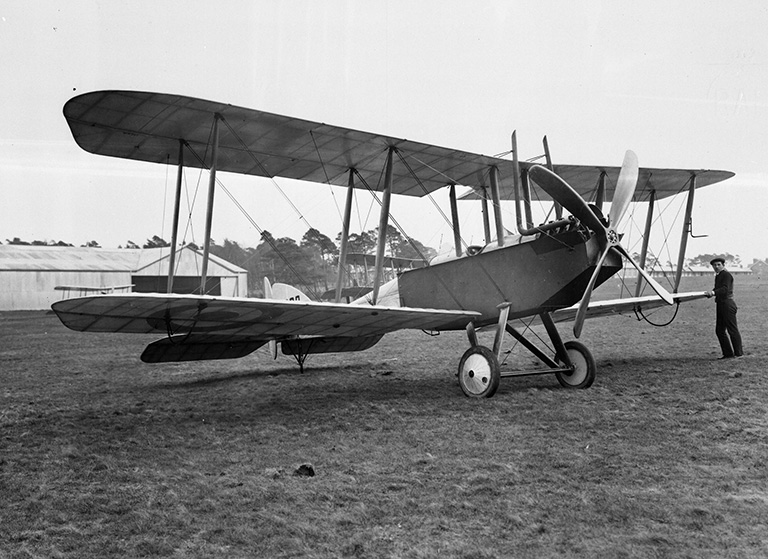
What are these records?
These are service records of officers who served in the Royal Air Force (RAF) during the First World War (1914-1918). This collection in series AIR 76 consists of the records of over 99,000 men.
The records were created from the inception of the RAF in April 1918. However, they include retrospective details of earlier service in the Royal Flying Corps or Royal Naval Air Service, where appropriate.
How do I search the records?
You can search the records in Discovery, our catalogue, by filling in the form below.
You don’t need to complete every field to find a record.
- The date of birth was not always recorded, so try leaving this out if you don’t get any results. Where there is no date of the birth, the record description will say ‘1918-1919’
- The way officers’ names were recorded varies. Try searching by first initials if you don’t get any results by first name
- Your download might contain the records of several individuals with the same name. This is because the nature of these documents sometimes makes it hard to distinguish between the records of officers with the same name
What information do the records contain?
The records usually provide the following information:
- full name
- date and place of birth
- next of kin
- occupation
- date of commission
- subsequent promotion(s)
- the units the officer served in (including the dates he joined and left the units)
- the date the officer relinquished his commission, his date of death or his retirement date
The records may also contain the following information:
- details of specialist courses attended
- information about the type of aircraft flown
- details of any honours and awards and the dates they were announced in the London Gazette
- next of kin (although the relationship may not always be specified)
In the case of aircrew, the record will note any Royal Aero Club certificate numbers and the dates they were granted.
What do the records look like?
Look at the service records below of officer James Francis Mason (AIR 76/338/38) or officer Philip Young (AIR 76/567/11), which show what a typical service record looks like.
Service record of James Francis Mason (PDF, 0.48MB)
Service record of Philip Young (PDF, 0.50MB)
The records, in the form of double-sided sheets, were originally arranged in alphabetical order. In many cases there is more than one sheet for an officer.
Many of the sheets are pre-printed with the references MGPRI or AM60. MGPR probably refers to the Department of the Master-General of Personnel, which held the forms before it became the Directorate of Personnel within the Department of the Chief of Air Staff by June 1919.
This is a guide to tracing historical passport records. If you are looking for information about a current issue with your own passport, please contact the Passport Office.
Old passports themselves have been kept in only very small samples, for illustrative purposes, and you are extremely unlikely to find an old passport for a particular individual in our collection. You are more likely to find registers and indexes of passport applications but even these records have been kept in relatively small proportions. In general, it is not unusual for there to be no trace of a passport or a passport application in our records.
What do I need to know before I start?
Before the First World War it was not compulsory for someone travelling abroad to apply for a passport. Possession of a passport was confined largely to merchants and diplomats, and the vast majority of those travelling overseas had no formal documents.
Online records
Indexes of British passport applicants (1851-1903)
Search and download indexes of names of passport applicants between 1851-1856, 1858-1862 and 1874-1903 (FO 611/1-19) on findmypast.co.uk (£).
There are no indexes at all for 1857 or for 1863 to 1873. The indexes for 1858 are missing the entries for A-G.
Later indexes often only provide the name and date of issue, but earlier indexes can provide:
- the name of the bearer of the passport
- the passport number
- the date the passport was issued
- any observations (rare) that may have been noted during the application
Records available only at The National Archives in Kew
To access these records you will either need to visit us, pay for research (£) or, where you can identify a specific record reference, order a copy (£).
Indexes of British passport applicants (1904-1916)
Search the indexes of names of passport applicants between 1904-1916 in FO 611/20-25. The indexes are not in strict alphabetical order but are listed chronologically by initial letter of surname.
Registers of British passport applications (1795-1948)
Browse the registers of British passport applications in FO 610, which are arranged by date and by passport number. They generally contain little more than the information in the online indexes and sometimes even less, but provide a longer, unbroken run of years.
Passports (1802-1961) and case papers (1916-1983)
The National Archives holds a very small collection of passports, in series FO 655, dating from 1802 to 1961. These passports have been archived to illustrate the many different types of passport that have been issued during this period, not as a record of the people who they were issued to. There are less than a dozen passports preserved for most years.
Similarly, we hold a representative selection of Passport Office documents illustrating the variety of application procedures and form types. Though these records, in series FO 737, date between 1916 and 1983, the records from the 1980s are blank forms and there are no more than a few hundred records from any one decade, in most cases far fewer.
Use the search box below to search both series by name. Narrow your search by using quotation marks to find a person’s full name, such as “John Williams”
Alternatively, search each series separately from the catalogue description pages for FO 655 and FO 737.
Entry books of passes issued by Secretaries of State (1674-1794)
Browse entry books of passes issued by Secretaries of State to people travelling into and out of Britain. These records cover the date ranges 1674-1784 (SP 44/334-413) and 1748-1794 (FO 366/544). Some of the information is included in Calendar of State Papers Domestic and Calendar of Home Office Papers.
Other records of the Passport Office (1795-1983)
Browse or search the various record series within the records of the Passport Office (FO Division 17), some of which are covered in this guide, above, and include Passport Office correspondence 1815-1974 (FO 612).
Colonial passports (1796-1818)
Correspondence seeking permission for foreign nationals to travel to British colonies can be found in the Colonial Office General Correspondence series at CO 323/97-116. Applications are in the form of letters from employers or sponsors and usually give the name of the traveller, their destination and the ship they intend travelling on.
Records in other archives and organisations
Records held elsewhere
The National Archives’ catalogue contains collections and contact details of local archives around the UK and beyond. To locate these records, search our catalogue with keywords and refine your results to ‘Other archives’ using the filters.
Passport Office
Contact HM Passport Office for more information about recent records on passports as these records have not yet been transferred to The National Archives.
Other resources
Books
Search The National Archives’ shop to see whether any of the publications below may be available to buy. Alternatively, look in The National Archives’ library catalogue to see what is available to consult at Kew.
Roger Kershaw, Migration Records (The National Archives, 2009)
Martin Lloyd, The Passport: the History of Man’s Most Travelled Document (Sutton, 2003)
Read Original Lists of Persons Emigrating to America, 1600-1700 by J C Hotten (Chatto and Windus, 1874), which contains information from The National Archives’ registers of licences to pass beyond the seas (E 157).
1. Why use this guide?
The National Archives has records of patents of invention for England and Wales dating from between 1449 and October 1852, as well as related records including technical specifications. For patents from October 1852 onwards, all enquiries should be directed to the British Library.
Up to October 1852 the Court of Chancery was responsible for safe-guarding intellectual property rights in England and Wales, issuing and recording patents of invention and the related records. The National Archives holds the records of Chancery, where the original enrolments of patents of invention (see 2.1) and their technical specifications (see 2.2) are stored separately on rolls of parchment. This guide explains how to find the records of original, enrolled patents and their specifications, which sometimes include colour drawings.
To find and use these records it will be necessary to visit the National Archives. The records themselves are on rolls of parchment and locating them depends on using a number of index volumes in our Map and Large Document Reading Room.
Consult our guide to registered designs for advice on design copyright protection, a process which was used for protection of utility designs.
Use our guides to research and development in the Army, Royal Navy or Royal Air Force for advice on finding other records of military inventions and technical research.
The National Archives or the British Library?
The British Library holds copies of the patent records held at the National Archives, and indexes to them, which were created when the Patent Office took over responsibility for registering patents in October 1852.
The Patent Office printed and published patents from 1617 up to 1852, along with typed transcriptions and engraved drawings of any specifications .
The indexes created provide a reference number and date leading to copies of patents and specifications. At the British Library, these can be searched on an electronic database.
The indexes at The National Archives identify the roll of parchment which contains either the patent, or its specification, but do not always identify where on the roll it may be found. Regnal years are used for the date of the close rolls until 1837, from 1838 calendar year is used. The rolls themselves are quite large and difficult to handle, so it may be a lengthy search to find the patent you are looking for and a separate lengthy search to find the specification.
If you are not committed to finding the original record of a patent, it is a great deal easier to find the 19th century copies of patents at the British Library than among Chancery records at The National Archives.
See the British Library help page Find early British patents for more information.
Read the blog Patently obvious: Tracing the inventions of William Henry Fox Talbot, photography pioneer to see a step by step example of a search among records at The National Archives.
2. The patenting process and the records it produced
Inventors can get an exclusive right to manufacture their own inventions for a limited period. The state issues ‘letters patent of invention’ and enrols them to record this right. Initially, the inventions were enrolled but not described in much detail. Later, they came to be described in increasing detail until this became routine. From 1617, specifications (providing full working details of the invention) began to be enrolled in a different place, after the issue of the patent. By 1734, patentees were obligated to submit a specification but this could be up to several months after a patent was granted. Patents could be enrolled by any of a number of officials of Chancery but were recorded on Patent Rolls (C 66). Specifications were submitted to one of three Chancery offices and were enrolled in Chancery Close Rolls (C54), Rolls Chapel Specification Rolls (C 73) or Petty Bag Office Specification Rolls (C 210).
2.1 Patents of inventions
The patent itself contains the formulaic text for the application of patents of invention. Typically this records:
- Name of inventor
- Monarch granting the letters patent
- A short description of the invention
- A declaration that it is unique
- Where the patent applies
- How long it is valid for (14 years)
- An assurance that the Patent protects the grantee
The National Archives holds the original enrolments on parchment. For instructions on finding them, see section 3.
The National Archives does not hold the parchments given to English patentees at grant.
2.2 Specifications of inventions
The specifications contain manuscript descriptions of the invention and sometimes illustrations engraved on vellum. They were also enrolled, but separately to letters patent. The illustrations are often detailed, with shading and colour.
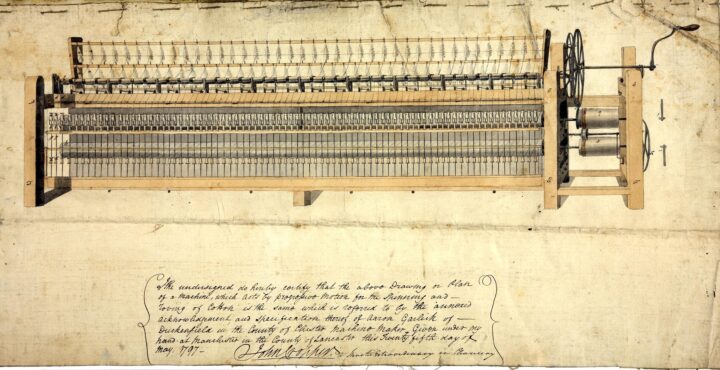
Drawing from a patent specification submitted by Aaron Garlick for a machine for spinning and roving cotton (1797). Catalogue reference: C 210/54
3. Finding patents of invention 1449-October 1852
Step 1: Find an entry in the published indexes
To identify records, you will need to find the patent’s number (called ‘progressive number’ in the Bennet Woodcroft index) and year in printed indexes held at The National Archives, the British Library and in several reference libraries. These indexes were first published in 1854 by Bennet Woodcroft, the first clerk to the commissioners of patents, as a six-volume work called Patents of Invention: from March 2, 1617 (14 James I) to October 1, 1852 (16 Victoriae).
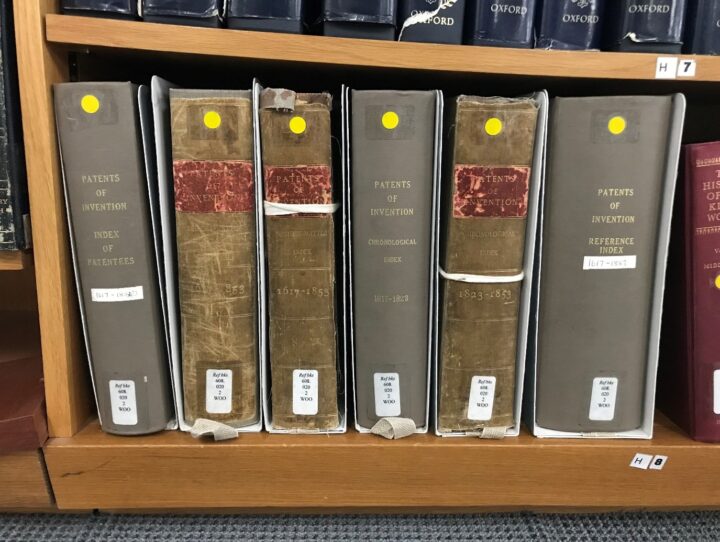
Bennet Woodcroft’s printed indexes to patents of invention in The National Archives Reading Room.
The indexes are arranged in four sequences:
- Index of patentees
- Subject-matter index (in two volumes)
- Chronological index (in two volumes)
- Reference index
Having found the patent number and the year (for example, ‘Electric batteries’, patent number: 12,697, year: 1849), you can search for the original documents held at The National Archives or a printed version at the (for advice on this you will need to contact the British Library itself).
Step 2: Move from the published indexes to the printed indexes (in C 274)
Consult the printed annual calendars (arranged by regnal years) held in the reading rooms at The National Archives. They are identified by the series reference C 274.
Search for the year you found in the published indexes at Step 1 (you may need to convert the year and month to a regnal year) and then, in the respective year, search for the inventor’s name. The calendars usually have a kind of index at the back, or the entries are arranged by initial letter of surname.
Step 3: Convert the printed index reference (in C 274) to a patent roll reference (in C 66)
Patents of invention are enrolled, along with many other types of letters patent, in the patent rolls in C 66.
Most of the entries in the printed indexes in C 274 have been marked up with the modern C 66 reference. If not, you will need to search in C 66 in our online catalogue for the ‘part number’ noted in C 274. This will provide the C 66 reference with which you can order the respective patent roll.
4. Finding specifications for patents granted up to October 1852
Specifications were enrolled separately to letters patent and could be enrolled some months after the patent. They continued to be enrolled in Chancery records up to October 1852 when the Patent Office took over. The Enrolment Office continued to enrol specifications on close rolls up to 1853, for patents registered before October 1852.
Until 1734, there was no obligation for patentees to submit a technical description or drawing to accompany their application. From this date onwards, specifications were required and patentees had several months to submit these after the patent was sealed. They could be enrolled in any one of three Chancery offices:
- Enrolment Office
- Petty Bag Office
- Rolls Chapel
Each office has its own separate finding aids and search instructions. To search for a specification, you will need to consult the Bennet Woodcroft indexes (detailed in section 3.1) and indexes and calendars in the reading rooms at The National Archives.
Start by consulting the Bennett Woodcroft ‘Index of Patentees’ (Alphabetical Index). This has been marked up with the modern references for some specifications. If so, you can search for these references in our catalogue.
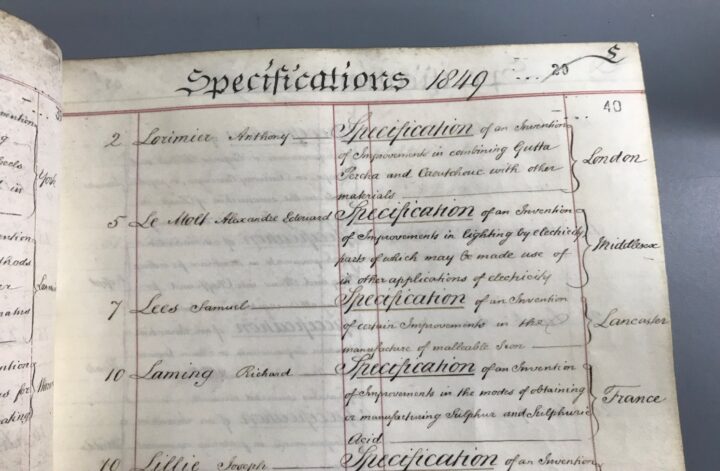
Specifications listed in index labelled ‘Refers to C 54, vol 161’, Specifications 1848-1853, Enrolment Office, Chancery (C 275/207)
4.1 Specifications, 1617-1852
If you do not find a reference annotated in the ‘Index of Patentees’, take the number in bold print from the ‘Index of patentees’.
Look for this number in the Woodcroft ‘Reference Index’. This will give you the name of the office of Chancery the specification was enrolled in.
Use the instructions for each office below, which refer to indexes and calendars in the reading rooms.
You will also see other publications listed alongside the name of Chancery Office. Specifications were circulated in various technical magazines and periodicals, often in an abridged form. These publications are not stored at The National Archives. They can be found at reference libraries and sometimes online. It is also noted where specifications were not enrolled.
4.2 Enrolment Office, 1617-1853
Specifications continued to be enrolled in the Enrolment Office until 1853, they are found on the Close Rolls in record series C 54.
On the open shelves in the reading rooms, consult the three indexes labelled C 275/209-211 which list specifications with the year, type number and division letter of the Close Roll on which they were enrolled. They are arranged in three volumes:
- C 275/209 – 1617-1826
- C 275/210 – 1826-1845
- C 275/211 – 1846-1853
Each volume is arranged chronologically by year and alphabetically by first letter of the surname of patentee within each year. Specifications were enrolled after the patent, so you may need to look at entries under later years. Depending on the date of the specification, search in Discovery in series C 54 and in the relevant year, using the details from the relevant entry:
- From 1617-c.1675 – search for the part number (P)
- From c.1675-1842 – search for the number (type number) and division letter
- From 1842-1849 – search using ‘specification’ and the ‘P’ number (corresponds to ‘type number’ in Discovery)
For example, the entry in the image below for Fred A Glover, has the type number 12, division E and year 1840, a search gives this result, the Close Roll reference is C 54/12315.
For more information about the letter codes in the C 275 index and in C 54, see appendix 1.
Specifications listed in C 275/210, Enrolment Office index (1826-1845). Some entries in the indexes have the progressive number marked up in pencil. The letters in the penultimate column denote geographical divisions that applied to the enrolment of Close Rolls.
4.3 Petty Bag Office, 1709-1852
Specifications enrolled in the Petty Bag Office are found in record series C 210.
The alphabetical index has been marked up with all the modern references to C 210.
Specifications are also listed by date in two volumes labelled ‘Refers to C 210, vols 1-2’. Volume 2 contains an index of names (alphabetical, by first letter only) in three sequences to match the three sections (‘calendars’) of the lists. Put C 210 in front of the ‘part’ number to get a modern reference.
4.4 Rolls Chapel
The ‘Reference Index’ lists ‘Rolls Chapel’ for specifications enrolled in the Rolls Chapel but also for some that were enrolled on the Close Rolls (because these were housed in the Rolls Chapel).
Specifications listed as ‘Rolls Chapel’ in the index are therefore found in records of the Master of the Rolls and Rolls Chapel, in C 73, and records of the Enrolment Office, in C 54. Follow the procedure under Indexed as “Rolls Chapel”.
If you see ‘Rolls Chapel Reports’ listed, note the number of the report and page number and follow the procedure under the heading Roll’s Chapel reports.
Indexed as “Rolls Chapel”
If you find ‘Rolls Chapel’ listed next to a patent in the ‘Reference Index’, consult the volume in C 275 labelled ‘Refers to C 54 etc., vol 160’. The volume is divided into two parts and you may need to look within both:
- Pages 2-77 refer to specifications on the Specification Rolls (C 73)
- Pages 78-259 to specifications on the Close Rolls (C 54)
If you find the entry in the Specification Rolls section, put C 73 in front of the part number to get the modern reference, e.g. C 73/127 . The number in the first column indicates the order of the specification on the roll.
If you find the entry in the Close Rolls section, search in C 54 using the part and date to find the reference. Again, the number in the first column shows where the specification appears on the roll.
Some drawings have been extracted from C 73 – see references: C 73/81/1 and C 73/81/2
Specifications listed in index labelled ‘Refers to C 54, vol 160’, Specification and Close Rolls: Rolls of Chapel 1635-1848, Vol 1(IND 1/29432)
Indexed as “Roll’s Chapel reports”
For 1712-1802, lists of specifications in C 73 and C 54 were printed in the appendices of the Deputy Keeper’s reports, VI-VIII (1844-1846). The ‘Reference Index’ refers to the lists as ‘Roll’s Chapel Reports’.
A volume of lists compiled from the Deputy Keeper’s reports is on the open shelves in the reading room, labelled ‘Refers to C 54 etc., vol 163’ (red cover). Look for the relevant report number and page number within the volume.
Specifications printed in appendix II of the Deputy Keeper’s report VIII and reproduced in the volume ‘Refers to C 54 etc., volume 163’
The volume has been arranged in two parts according to whether the specification appears in series C 73 or C 54. Specifications in C 73 have the modern reference written in red. C 54 entries must be converted, using the following steps:
- Note the old reference from the end of the description of the specification. It will look like this: ‘53. Geo. III, p.10, No.1’
- Note the date (including day and month) the specification was enrolled which is the second date in the margin
- Search in C 54 using the part number (p) and the year (you may need to convert from the regnal year)
- In your search results, check the date of the specification falls within the date range in your results
- The last number in the old reference format refers to the order of the specification on the roll
5. Other patent records
You can find other types of records relating to patents before October 1852 at The National Archives. Search our catalogue with keywords such as ‘patent’ or ‘invention’, restricted to departments BT, HO and SP.
Records include:
- Petitions for patents before 1782, with law officers’ reports, in State Papers Domestic. Search State Papers Online or use the entry books in SP 44
- Petitions for patents from 1782 onwards in HO 42, HO 44 and HO 45, with entry books in HO 43
- Warrants to law officers to draft patents of invention for 1783-1834 in HO 89
- Some reports by law officers, applications by patent agents and disputed cases, 1839-1885, in LO 1
6. Early patents of invention, with no specification
Most early patents give few details about the precise nature of the invention.
Try SO 7 from 1661. These bills, which authorised the issue of letters patent, sometimes include drawings of inventions.
Use the reference index (see section 3), which has an appendix giving abstracts from some early (1617-1745) applications for patents, where no separate specification was enrolled.
7. Records after October 1852
The National Archives generally does not hold patents or specifications after 1852. However, we hold many records relating to patents which include:
- Registered designs and trademarks
- Patent policy (BT 209)
- Some disputed patents (LO 4, J 99, J 105)
- Patents of interest to government departments such as the Admiralty (ADM 245) and the National Physical Laboratory (DSIR 10, DSIR 17)
- Disclaimers of specifications for 1857-1867 (C 54)
You can search these records in our catalogue using keywords. Most Patent Office records have the Board of Trade (BT) department code.
You can also browse the Patent Office division in our catalogue.
8. Scottish patents up to October 1852
Scotland had its own separate registration system for patents before 1853. Go to the National Records of Scotland for the records. However, we do hold some records of Scottish inventions in:
9. Irish patents up to October 1852
Ireland had its own separate registration system for patents before 1853, but the records no longer survive. However, you can find some records at The National Archives which refer to Irish patents in:
10. Further reading
‘British Patents of Invention, 1617-1977: A Guide for Researchers’ (British Library, 1999) by Stephen Van Dulken
Neil Davenport, ‘The United Kingdom Patent System: A Brief History’ (Kenneth Mason, 1979)
Sean Bottomley, ‘The British Patent System during the Industrial Revolution 1700-1852: From Privilege to Property’ (Cambridge, 2014)
Christine MacLeod, ‘Inventing the Industrial Revolution: The English Patent System, 1660-1800′ (Cambridge, 1988)
Appendix 1: Division codes in C 54
From the reign of Elizabeth I, the close rolls were divided into four, on a geographical basis, the B, Y, E and N divisions. The origins of this were probably related to the division of fees. The divisions were:
- B – Anglesey, Brecon, Cornwall, Carmarthen, Caernarvon, Devon, Glamorgan, Middlesex, Somerset, Surrey and the City of London.
- Y – Bedford, Chester, Derby, Dorset, Hertford, Lincoln, Nottingham, Northumberland, Oxford, Rutland, Stafford, Suffolk, Sussex, Warwick, Westmorland and Berwick upon Tweed.
- E – Berkshire, Buckinghamshire, Cardigan, Denbigh, Essex, Hampshire, Hereford, Kent, Monmouth, Pembroke, Wiltshire and Haverfordwest.
- N – Cambridge, Cumberland, Durham, Flint, Gloucester, Huntingdon, Lancaster, Leicester, Merioneth, Montgomery, Norfolk, Northampton, Radnor, Shropshire, Worcester and Yorkshire.
Appendix 2: Finding aid locations in the Map and Large Document Reading Room
The table lists the various finding aids with their National Archives’ references; the label on their spine, which gives the reference of the records they refer to; and the number of the shelf on which they can be found.
| Finding Aid | Label on spine | Shelf number |
|---|---|---|
| Bennett Woodcroft Patents of invention (6 volumes) | Ref bks 608.0202 WOO | H 8 |
| Close Rolls Charles I Surrender Rolls (IND 1/16938) | Refers to C 54 Vol 159 | D 1 |
| Specification and Close Rolls: Rolls of Chapel 1635-1848, Vol 1(IND 1/29432) | Refers to C 54 Vol 160 | D 1 |
| Specification 1848-1853, Enrolment Office, Chancery (C 275/207) | Refers to C 54 Vol 161 | D 1 |
| Specification 1853 and Disclaimers 1854-1866, Enrolment Office, Chancery (C 275/208) | Refers to C 54 Vol 162 | D 1 |
| Calendar of Specification Rolls (Rolls Chapel) 171 and Specifications (Close Rolls) 171 (red book) – compiled from Deputy Keeper’s Reports | Refers to C 54 Vol 163 | D 1 |
| Enrolment Office, Index 1617-1826 Vol 1 (C 275/209) | Refers to C 54 Vol 164 | D 1 |
| Enrolment Office, Index 1826-1845 Vol 2 (C 275/210) | Refers to C 54 Vol 165 | D 1 |
| Enrolment Office, Index 1846-1853, specifications; 1854-1858, disclaimers; Vol 3 (C 275/211) | Refers to C 54 Vol 166 | D 1 |
| Chancery Petty Bag Office, Specifications (IND 1/16941) | Refers to C 210 Vol 1 | D 23 |
| Chancery Petty Bag Office, Calendar of Specifications and Surrenders (IND 1/16942) | Refers to C 210 Vol 2 | D 23 |
The majority of inward passenger lists from 1878 to 1960 and outward passenger lists from 1890 to 1960 have survived (see below). There are very few records in The National Archives of passengers before 1878.
What do I need to know before I start?
UK passenger lists do not record travel within Europe unless a ship called at more than one European port before travelling further afield.
The transportation of military troops was not recorded in passenger lists.
Passenger lists are not held by The National Archives after 1960, when air travel became more common. No air passenger lists have survived. For records of passengers after 1960 it may be worth contacting the relevant shipping line.
Your search will be made easier if you can find out:
- the name and year of birth of the passenger
- the name of the ship they travelled on
- the ports of departure and/or arrival
Online records
Incoming passenger lists (1878-1960)
Search and download lists of passengers arriving in the UK on ships that departed from ports outside Europe and the Mediterranean, though lists include passengers who joined ships at European and Mediterranean ports en route to the UK, between 1878 and 1960 (BT 26) on the Ancestry.co.uk (£) website and also on Findmypast.
Outgoing passenger lists (1890-1960)
Search and download (£) lists of passengers boarding at UK and Irish ports and travelling to places such as America, Canada, India, New Zealand and Australia between 1890 and 1960 (BT 27) on the findmypast.co.uk website and also on the Ancestry.co.uk website. These lists do not include passengers who joined ships en route.
Certificates of alien arrivals and returns and papers (1810-1869)
Search and download certificates of alien arrivals (HO 2) and returns and papers (HO 3) on ancestry.co.uk (£). The records can be searched by name of alien, date and port of arrival and country/place of origin.
Aliens’ entry books (1794-1921)
Browse aliens’ entry books, 1794-1921, including indexes to certificates of alien arrivals (HO 5/25-28) on ancestry.co.uk (£).
Records available only at The National Archives in Kew
To access these records you will either need to visit us, pay for research (£) or, where you can identify a specific record reference, order a copy (£).
Records of the Children’s Overseas Reception Board (1940-1959)
Search Discovery, our catalogue, in DO 131 by name for case histories of all the CORB children evacuated overseas during the Second World War.
Records in other archives and organisations
Passenger lists and records in overseas libraries and archives
Contact libraries, archives and other organisations in the country where the person travelled to or from – many have copies of original material. Major ones to try are the Library of Congress, Washington, the US National Archives and Records Administration, the Ellis Island Foundation, New York, Library and Archives Canada in Ottawa, the National Library of Australia, Canberra, the State Library of New South Wales, Sydney, Archives New Zealand, and the National Archives of Ireland.
Hamburg passenger lists 1850-1934
Search and browse passenger lists of ships leaving Hamburg in Germany on Ancestry.com (£). Although most passengers travelled beyond Europe, a significant number sailed to the UK. The records are sourced from Hamburg State Archive and are in German.
Other resources
Websites
Look at the Ships List website on the Internet Archive for some information about passenger lists to Canada, USA, Australia and South Africa, as well as immigration reports and newspaper records.
The National Archives does not hold records of adoptions but this guide will point you towards some of the organisations that do. There are no adoption records, registers or indexes available to see online.
Formal adoption, as we now know it, did not exist in England and Wales until 1927. Before then, adoptions were usually informal. In a few cases there was some legal documentation, but no central register.
Where to go for records and advice
Consult the General Register Office for information about tracing a birth record if you were adopted in England or Wales and for advice on how to add yourself to the Adoption Contact Register.
Consult the National Records of Scotland for information about adoption in Scotland.
Consult the General Register Office for Northern Ireland for information about adoption in Northern Ireland.
For adoptions before 30 December 2005 see the Adoption Search Reunion website, which provides information for adopted people, birth relatives and adoptive parents in England and Wales.
Consult the CoramBAAF website and their advice for adults who were adopted or in care. CoramBAAF is the successor organisation to the British Association for Adoption and Fostering (BAAF).