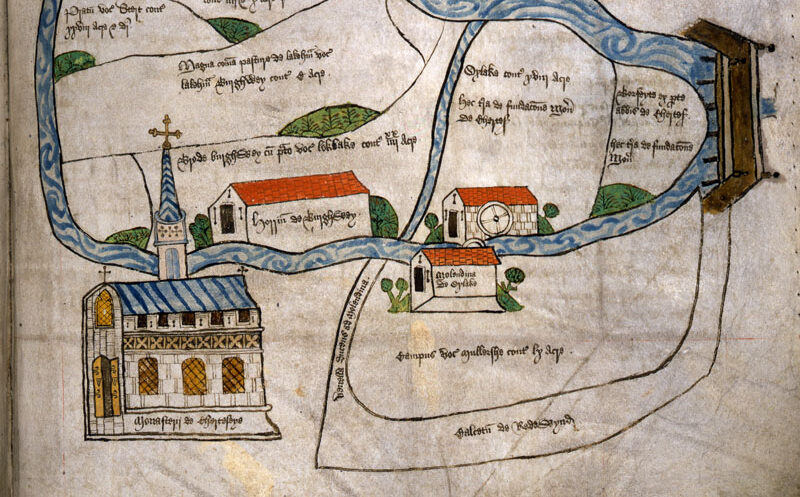
The National Archives and The University of Exeter are running a collaborative CPD project for teachers in and around the area of Chertsey, Surrey.
The project will explore the history of Chertsey Abbey, particularly its dissolution in 1537 and its related historical records. We are keen to work with teachers to explore how they can be used as a local history case study in schools for KS2 – KS5. As such, we are looking for teachers with an interest in teaching local history or Tudors through the lens of Chertsey Abbey to take part between November 2023 – March 2024.
The project will launch as a Twilight CPD session on Wednesday 8th November, with two available sessions:
- 4-5 pm Online via Zoom
- 6-8 pm Onsite at The National Archives. (This session can also be attended virtually, though we would recommend attending onsite if possible.)
These sessions will include advice and activities for teaching the Dissolution and the Reformation, a document display of relevant historical material, and a chance to discuss and share ideas with fellow teachers on the project.
Follow-up sessions and support will then be available throughout the winter and spring terms, during which time teachers should explore the topic with their students in either classwork or a history club, with a feedback session planned for March 2024.
A small amount of funding is available on application for transport costs to The National Archives for those wishing to attend the evening session. To apply please email education@nationalarchives.gov.uk after signing up for the project.
To sign up visit our Eventbrite page.
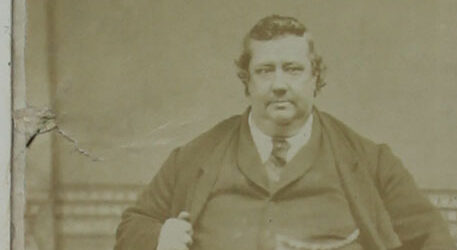
Teaching the Voices of the Victorian Poor
The National Archives and the In Their Own Write project are planning an AHRC funded Teacher Scholar Programme to produce online resources for teachers to support the teaching of the Victorian Era.
Using our collection of letters and materials examined by the In Their Own Write project, the Teacher Scholar Programme will provide support and guidance to 10 teachers to produce teaching materials for Key Stages 2-5. There is no requirement to teach a specific subject or age range.
Teachers will carry out their own research into the materials provided by The National Archives and In Their Own Write, drawing on a series of online seminars and using ArcGIS maps of the data to aid their studies.
COVID permitting, the teachers will come together for an initial Seminar weekend at The National Archives and a trip to Southwell workhouse to experience the context of the workhouse and the poor law commission.
All of the participants’ expenses for the course will be paid, including travel and accommodation for the seminar days and the study weekend, as well as the cost of a supply teacher to cover the Fridays. Many aspects of the course will be delivered through Microsoft Teams. This and ArcGIS will be freely available to participants to use with support provided by The National Archives Education Service.
What we are looking for
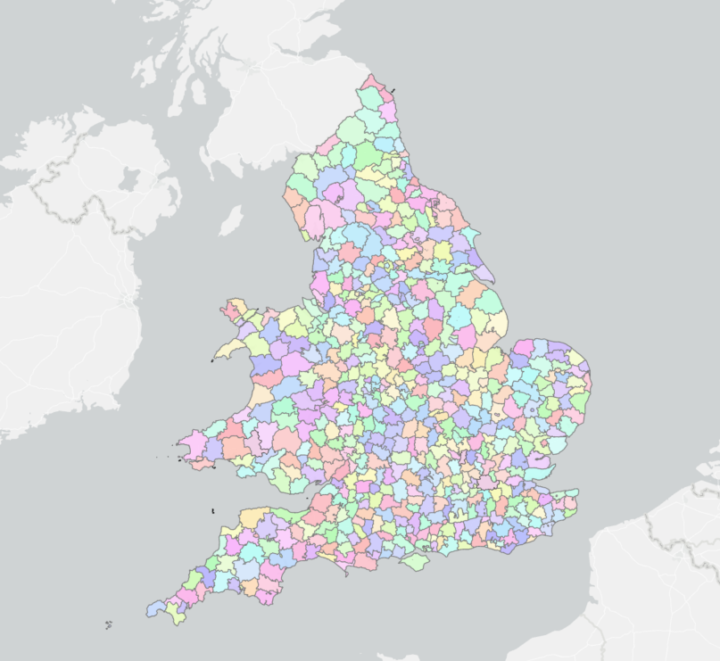
The Poor Law Unions of England and Wales
A high level of commitment is required from participants: they are expected to listen to all lectures, contribute regularly to the Teams channel, attend both days of seminars at The National Archives and create well researched resources in their own time.
We want to recruit people who are excited about the opportunity to work collaboratively with researchers and keen to extend the partnership beyond the duration of this project. We believe participants’ teaching practice will be invigorated by the activities, and hope that they will seek opportunities to share their learning with colleagues within their school and beyond.
We are keen to hear from primary and secondary school teachers of History as well those of other subjects including English, Politics and Citizenship to make this unique collection accessible to as many students as possible.
How to apply
Fill in the application form and email it to education@nationalarchives.gov.uk by midnight on Friday 11th February.
Person Criteria
Essential
- Qualified teacher status
- Teaching in a primary or secondary school
- Able to attend the seminar days at The National Archives
- Commitment to producing new resources through work on the programme
- Enthusiasm for working in partnership with researchers
Desirable
- Experience of developing new teaching resources
- Knowledge of some of the debates surrounding the place of evidence in history
- Experience of contributing to the teaching of others (for example through creating resources that others have used, planning for department or year group, leading INSET, presenting teaching ideas to others)
- Confidence to give presentations in front of colleagues and share ideas through web forums
- Strong written communication skills
Programme Activities:
- Introductory seminar at the National Archives, 11th-12th March*, led by In Their Own Write researchers and The National Archives Education Service team members. Teachers will work with datasets and original documents, reflecting on how to design classroom activities which draw on the content of the seminars.
- A residential weekend including a field study tour of a workhouse, 25th-27th March*.
- A six week programme of online seminars and activities.
- Resources will be submitted to the editorial board in the summer term.
*All dates TBC and Covid permitting
N.B. All copyright is transferred to The National Archives by participants
In Their Own Write
In Their Own Write was an AHRC-funded project using letters from paupers and other poor people, and associated manuscript material such as petitions, sworn statements and advocate letters (those written on behalf of paupers) to investigate the lives of the poor between 1834 and 1900.
The materials show that even the very poorest members of society were literate, understood the poor laws, regulations and rules, and were able and willing to resist or contest the power of the national and local state. The letters explain their situations in their own words, providing an invaluable insight into the lives of everyday Victorian citizens whose thoughts and opinions are often considered ‘lost to history.’ The collection itself contains letters from across England and Wales providing the opportunity for local history study as well as an overview of the national story.
Teaching the Voices of the Victorian Poor now seeks to open this database of materials to teachers to inform their teaching practice and to develop resource materials to support other teachers in topics related to the Victorian poor.
Workhouse Voices
Workhouse Voices is The National Archives Education Service’s themed collection offering a glimpse into the collection explored by In Their Own Write. Teachers can explore over 45 letters written by the poor and paupers to New Poor Law officials after 1834. The themed collection provides prospective Teacher Scholar Programme applicants with an idea of the types of documents they will work with on the scheme.
https://www.nationalarchives.gov.uk/education/resources/workhouse-voices/
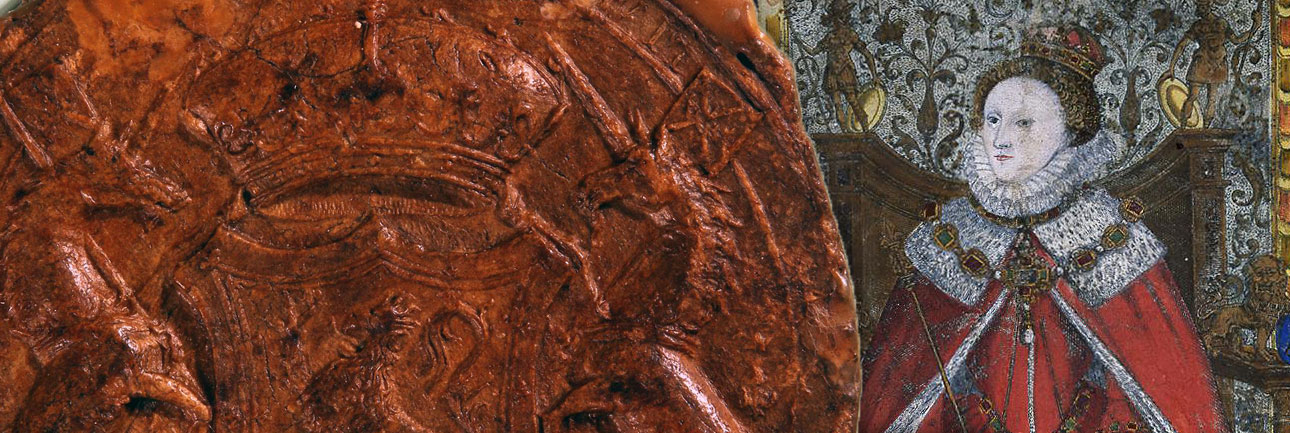
We are delighted to offer A-Level students an opportunity to combine a workshop on Tudor history with a special visit to the British Library’s major exhibition Elizabeth and Mary: Royal Cousins, Rival Queens. This exhibition explores the turbulent relationship between Elizabeth I and Mary Queen of Scots and features spectacular documents relating to these queens, including from The National Archives. This special day is for KS5 students.
At The National Archives in Kew students will get the opportunity to handle fascinating Tudor documents on one of these themes:
- Enquiring into Elizabeth I: What can we learn about Elizabeth I’s ruling style from her letters and speeches?
- Crisis in the Reign of Mary I: How far can Mary I’s reign be considered a time of crisis?
- Tudor Rebellions: How seriously did they challenge the authority of the crown?
At the British Library students will enjoy an exclusive visit slot in the exhibition, exploring key themes and encountering the incredible items on display. This session is led by Learning Facilitators.
We have three dates available:
- Thursday 13 January – Morning session at The National Archives, afternoon session at The British Library.
- Thursday 20 January – Morning session at The National Archives, afternoon session at The British Library.
- Tuesday 1 February – Morning session at The British Library, afternoon session at The National Archives.
Contact educationbookings@nationalarchives.gov.uk for bookings. Please indicate which date and workshop you want to book.
We are experts in the teaching of history through original sources.
We believe that school students should be given the same access to original documents as professional historians. This deepens their understanding of how knowledge about past events is constructed. It shows them how historians ‘make’ history and it empowers them to undertake their own research, question received opinion and learn how to distinguish between conflicting interpretations in a 21st century media society.
The Education team combine their years of history teaching experience and knowledge to produce and deliver exciting, inspiring and fun taught sessions, both on site at Kew and online. We also deliver a professional development programme to help teachers integrate some of our work into their practice.
In addition, we run some actor-led sessions at fixed times during the year which are delivered online. Find out more about our sessions or make a booking.
We deliberately do not provide ‘the answers’ to the questions we ask on the site or online. Our preferred aim is to help students develop a greater understanding of the concept of evidence and the limits of knowledge.
Our online resources aim to cover as much of the National Curriculum as we can using our collections for Key stage 1 to Key stage 5. Our resources make it easy for teachers to access original documents of known provenance and we suggest approaches for using them. We have also introduced some SEND resources for the history classroom which we hope to add to in time.
Our online resources can used across the curriculum where appropriate. Some can be used to support PSHE topics or aspects of the English curriculum, and TEFL courses. The sources themselves could offer a wonderful opportunity to inspire creative expression within the Art curriculum.
Finally, we have a student section on the website to help students work with primary sources and there is a guide on how to carry out independent research at The National Archives. Students can also find out about our Summer Young Peoples’ Projects and the competitions we run annually.
Awards
We’ve been nominated for or won various awards, including:
2023 – Learning Outside the Classroom Quality (LOtCQ)
2014, 2019 – Sandford Award for providing outstanding heritage education
2013 – Learning Outside the Classroom Quality (LOtCQ)
2012 – Shortlisted for Educational Initiative Award in Museums + Heritage Awards for virtual classroom
2010 – Best Content Provider, Schools Videoconference User Awards
2010 – Sandford Award for providing outstanding heritage education
2010 – Learning Outside the Classroom Quality (LOtCQ) Badge
2009 – Learning Outside the Classroom Quality (LOtCQ) Badge
2008 – Focal International Award for Best Use of Footage in Non-Broadcast Platform – Focus on Film
2008 – BETT Award for Best Secondary Content – Focus on Film
2008 – Shortlisted for the BAFTA Award for Children’s Learning – Secondary, for Focus on Film
2007 – Jodi Award for web accessibility – Prisoner 4099
2007 – e-Government Awards Finalist
2006 – Shortlisted by The Times Higher Awards for the most imaginative use of distance learning
2006 – e-Government Awards Finalist
2005 – e-Government Awards Finalist
2000 – Pricewaterhouse Coopers Overall Winner Award for Innovation and Risk Management
2000 – Pricewaterhouse Coopers ‘Wow’ Award for Innovation and Risk Management
The education service is happy to arrange in-service training days for groups of teachers and PGCE students.
These can take place at a time to suit you, with morning, afternoon or early evening sessions possible, subject to availability. The content and length of the session can be structured to suit your needs and interests.
To view our facilities or talk about what is on offer, please contact the education officer on +44 (0) 20 8392 5365 or email education@nationalarchives.gov.uk.
The INSET will usually consist of an introduction to The National Archives, a tour round the reading rooms and behind the scenes, and an introduction to the education service and the resources we provide for schools. There will be time to try out activities from the workshops on offer for the appropriate key stage, a discussion about how we use original documents with different key stages and ability levels, an introduction to videoconferencing and a demonstration of our education website for schools, with time for you to explore it yourself.
You may also wish to register for a reader’s ticket, and spend extra time here in the shop, museum, or upstairs in the reading rooms.
INSET is free of charge.
Our professional development programme gives teachers access to our unique collections and supports them in developing new source based activities.
You can now download The National Archives Education Service’s Resource and Workshop catalogue free of charge:
Download The National Archives Education Service Schools Guide (PDF)
Sessions we teach
Our taught sessions for schools are offered free of charge. They are very popular and need to be booked in advance.
Our sessions are delivered by a team of education officers and costumed interpreters, and can be run in two ways:
- on site workshops at The National Archives, Kew
- online workshops in your classroom through a single screen
Our taught sessions are designed by qualified teachers to complement the National Curriculum for History or relevant exam specifications syllabi. They are delivered by teachers or, in some cases, by costumed interpreters.
Our programme caters for students from key stages 1-5, SEN students and undergraduate groups. We also offer CPD for history teachers. Find out what type of session would suit your group best:
Workshops
All workshops take place in our Education Rooms at The National Archives in Kew; pupil-friendly, welcoming, purpose-built classrooms, equipped with a SMARTboard, iPads, audiovisual equipment and an induction loop. Using documents from the collection, our enquiry-based sessions aim to deepen students’ understanding of evidence and develop their skills of analysis. Our SEN programme is designed specifically for pupils with severe learning difficulties and profound and multiple learning disabilities, and use multi-sensory and interactive activities to engage students. We also run actor-led workshops.
We accommodate group sizes of between 8-35 students. All groups must be accompanied by at least 2 adults.
Find out about visiting The National Archives.
Select a workshop.
Online Workshop
Too far to Kew? Join us for a live online workshop and we’ll come to you! Our sessions are free, fun and interactive. Students can explore high quality digital images of original documents with the guidance of an Education Officer. They will make their own interpretations about the past using evidence and investigate a historical enquiry.
We carry out our online taught sessions using Zoom.
How do online workshops work?
Your class will connect with us through one computer linked to a large whiteboard at the front of the classroom. You only need a microphone, webcam and whiteboard screen to take part.
In advance of a session (normally the week before) a member of the Education Team will carry out a test link connection with you, to ensure that everything runs smoothly on the day!
All of our Zoom sessions are password-protected and we will send you a secure link to access the online lesson and to share with your students. This restricts the session to authorised attendees only.
Select an online workshop.
If you are based in the North East of England, we can now offer sessions closer to you thanks to The National Archives and North East Museums Partnership.
Classroom resources
The National Archives produces a range of online resources for you to use in the classroom. All of our resources follow an enquiry-based approach and use records from our collections at The National Archives. These include lessons, which you can print out or present on a whiteboard. We have now introduced some SEND resources for the history classroom which we hope to add to in time. We have added a series of document based History Hook video starters to some of our lessons.
We offer themed document collections based on different topics or time periods. Each collection is introduced by a historian of the period and contains teachers’ notes with suggested ways on how to use them in the classroom. You can download all documents and transcripts which are copyright-free for use in the classroom.
Our online resources can be used across the curriculum where appropriate. Some can support PSHE topics or aspects of the English curriculum, and TEFL courses. The sources themselves could offer a wonderful opportunity to inspire creative expression within the Art curriculum.
Finally, we have a student section on the website to help students work with primary sources and there is a guide on how to carry out independent research at The National Archives.