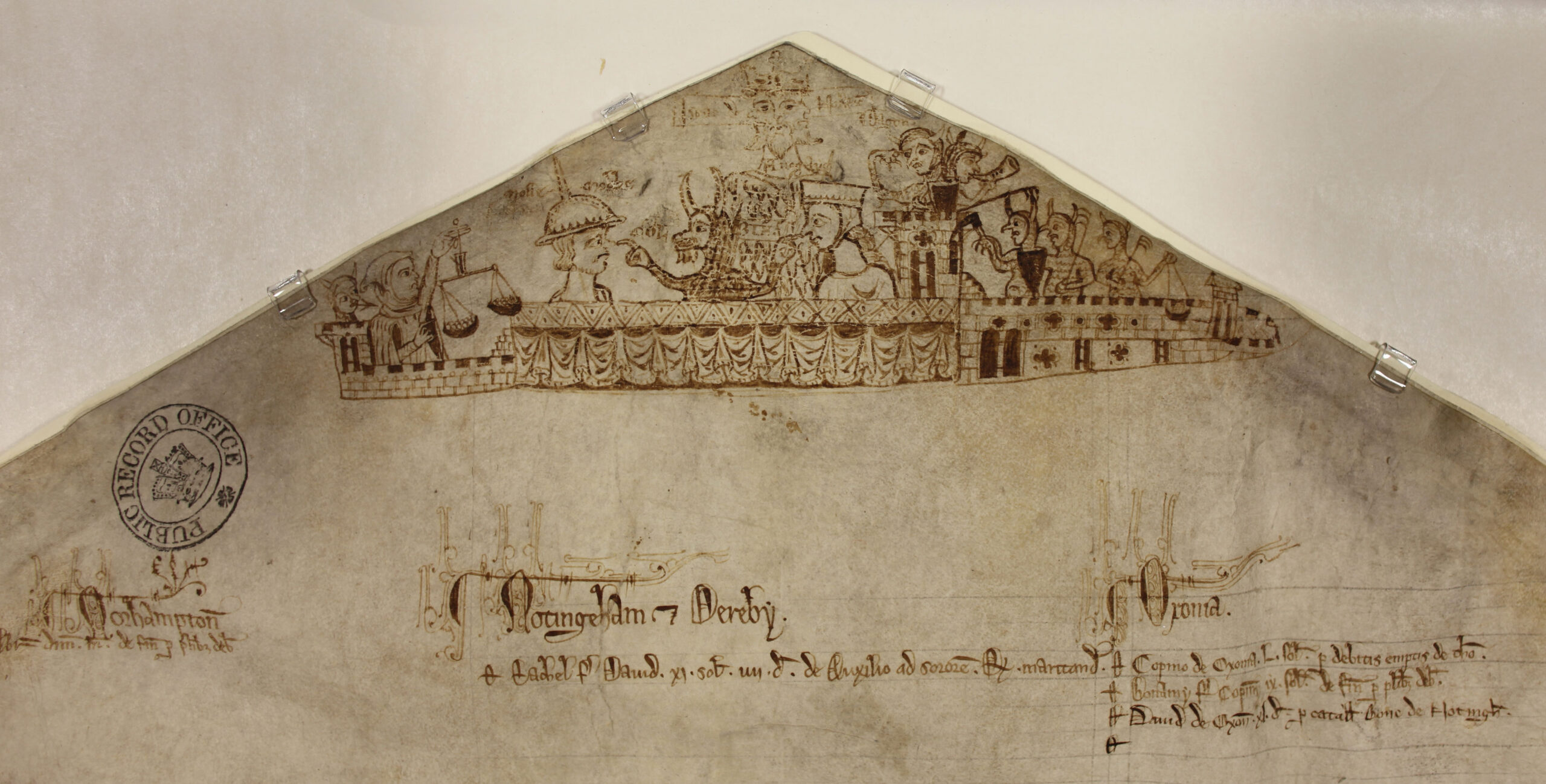
Satirical illustration of the Norwich Jewish community, Catalogue Ref: E 401/1565.
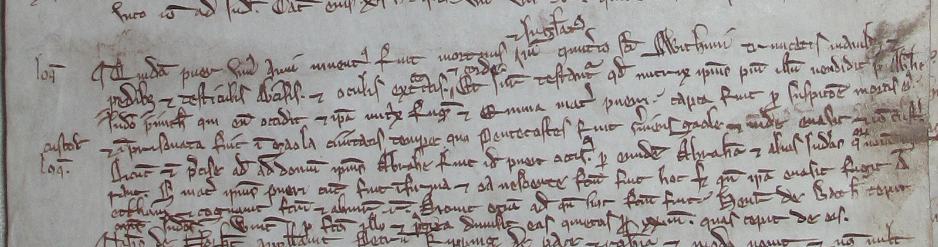
Extracts from a court case accusing Jews of the murder of a Christian child in Winchester brought before the Hampshire Eyre, c. 1232 (Catalogue Ref: JUST 1/775, m. 20)
During the 1230s, the relationship between Christian and Jewish communities became increasingly tense. Lesson (1) showed that accusations of Jewish violence especially the murder of Christian children had circulated in England since the 1140s. However, from the 1230s onwards, these cases were finding themselves before the king’s law courts for the first time. These accounts were most likely made up but were being taken seriously by the law. The extract below is taken from one such case in 1232 when it was recorded on the Hampshire Eyre roll that a one-year-old boy, named Stephen, was found strangled near St Swithun’s Priory, in Winchester. According to those who found the body, it had been dismembered (hands and feet removed), castrated, and its eyes and heart taken out. The case reveals that Abraham Pinche, a member of the Jewish community, was named by the jury as the perpetrator of the murder.
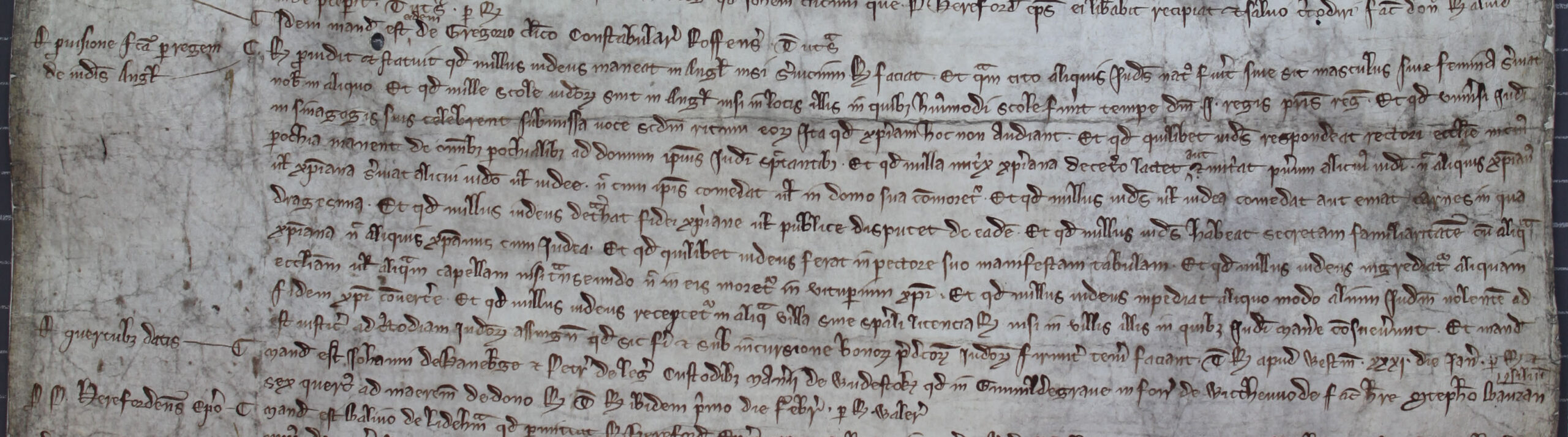
The Statute of the Jewry (the provisions made by the King for the Jews of England), dated 31st January 1253, Catalogue Ref: C 54/66, m. 18)
In 1253, King Henry III enforced a series of new laws (known as articles) to tighten control over Jewish life. This was known as the Statute of Jewry. A statute was a new law introduced by the highest authority. Many historians believe that this marked a new phase in the deterioration of Christian-Jewish relations in England as the king’s new rules attempted to segregate and isolate Jews in their local communities.
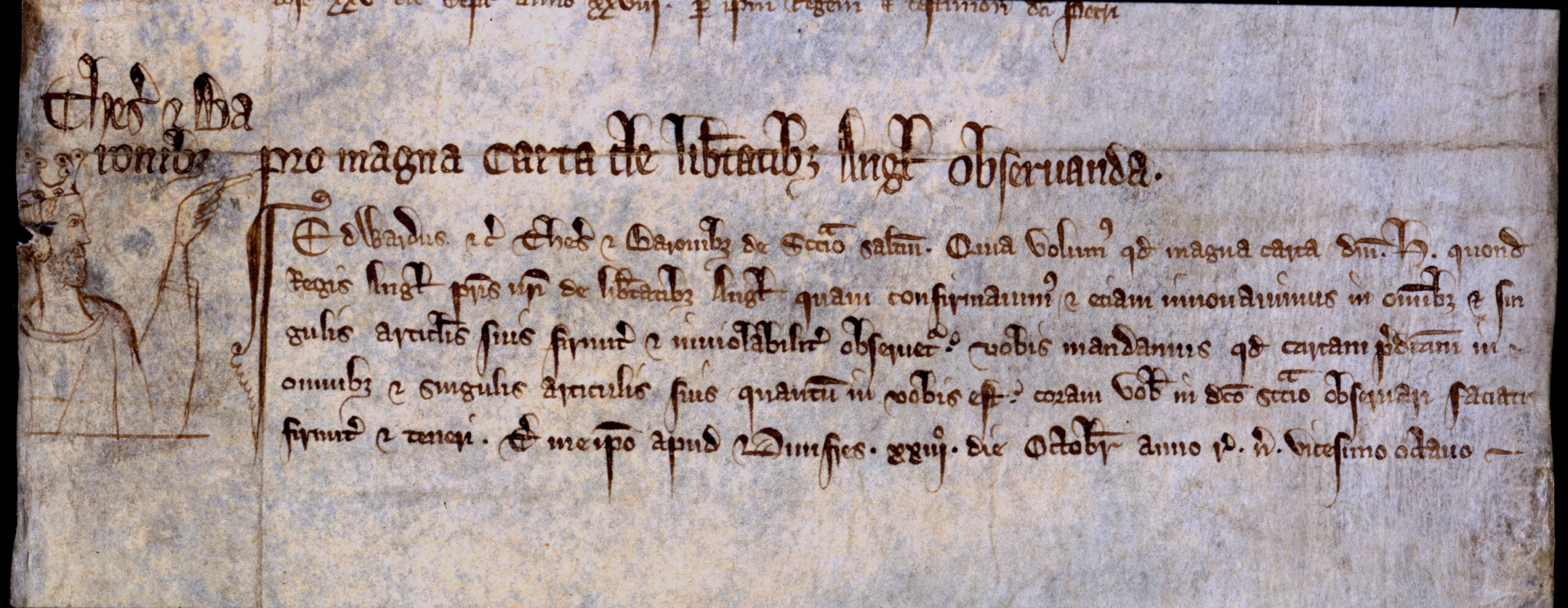
Following almost two centuries of Christians and Jews living alongside each other, King Edward I expelled England’s entire Jewish population in the autumn of 1290. As the previous two lessons have shown, Jews had once been prominent in national finance and local trade at key regional centres like York, Lincoln and London, yet by the end of the thirteenth century, Jewish individuals were no longer able to reside ‘freely and honourably’ in England nor enjoy the same ‘liberties and customs’ as their predecessors. They were expelled from the realm as perfidious (faithless) men.
The reign of King Edward I (1272-1307) witnessed a heightening of tensions between the Christian and Jewish populations in England. Before relations between the two faiths had been occasionally difficult, subject to prejudice around crusading propaganda and the varying levels of debt owed to Jewish moneylenders but horrific outbursts, such as the attack on York’s Jewish population in March 1190, were few and far between. Edward, however, placed new emphasis on the status of Jews in England. The Statute of Jewry c. 1275 outlined that Jews had to live in specific areas of the king’s towns; those aged over seven had to wear a badge that visually identified them as being Jewish; all aged over twelve years were to pay a tax of 3 pence each Easter; and Jews could only sell property or negotiate debts with the king’s permission. New rules paired with heavy taxation and growing suspicions surrounding the coin-clipping events in the late 1270s led to mounting pressure on Christian-Jewish relations. By the late 1280s, Edward could only secure parliament’s grant of further taxation to aid his war with France by making sacrifices. The expulsion of the Jews was the price he agreed to pay.
This lesson explores the worsening relations between Christians and Jews in the latter half of the thirteenth century. Use the sources to investigate the religious, economic, and social factors that led to the Jews being expelled from England in c. 1290. Could this extreme royal tactic have been avoided?
Why did Edward I expel the Jews in 1290?The Statute of the Jewry c. 1275 saw a series of new regulations placed upon the Jewish community by King Edward I. Building on the earlier, loosely enforced restrictions issued by his father, Edward placed new, stricter controls on Jewish individuals, most notably outlawing the practice of usury (lending money at interest). The Statute also outlined that Jews had to live in specific areas of the king’s towns; those aged over seven had to wear a badge that visually identified them as being Jewish (the double tabula – the shape of stone tablets); all aged over twelve years were to pay a tax of 3 pence each Easter; and Jews could only sell property or negotiate debts with the king’s permission. England’s Jewish population were entitled to earn a living as tradesmen or farmers, but were not allowed to be part of guilds (groups of craftsmen or merchants) or to own farmland. As a result of these new laws, many Jewish families became poor and the king could no longer collect taxes from them: hundreds were arrested, hanged or imprisoned.
The 1270s also marked escalating tensions elsewhere. The accusation most commonly brought against Jews in court was neither homicide (murder) nor theft, but the act of coin-clipping; trimming pieces of silver off the rims of coins, melting them down, recasting the silver into plates, and selling these to a goldsmiths or other metalworkers for money. Various arrests took place over the course of the thirteenth century, but there was much worse to follow. On 17th November 1278, it was record that all the Jews of England were simultaneously arrested “for clipping of money” and imprisoned while their houses were searched. Although Christians were also accused of these crimes, it was clear that England’s Jewish community were targeted as the key suspects. Coin-clipping was punishable by death and, by 7th May 1279, it was recorded that 269 Jews had been executed in London.
Just over a decade later, England’s Jewish community was unrecognisable compared to its size and so-called ‘prosperity’ in the early 1200s. By 1290, the gradual deterioration of Christian-Jewish relations in England came to a head when King Edward could only secure parliament’s grant of further taxation of his people to aid his war with France by making sacrifices. The expulsion of the Jews was the price he agreed to pay. On 18th July 1290, Edward I issued what came to be called the Edict of Expulsion. The same day that the Edict was proclaimed writs (letters) were sent to his sheriffs advising that all Jews in their counties had until 1st November to leave the realm. Any Jews remaining after this date were liable to be seized and executed. It was also ordered that Jewish houses would be forfeited to the crown, but Jews could take with them what they could carry, including any money and valuables. The letter also urged the sheriffs to protect the Jews and ensure they were not injured in their exit from the kingdom. Not all Jews, however, made the journey safely. One famous account recorded by Walter of Guisborough reveals that Jews sailing from London were persuaded to disembark for a walk on a sandbank while the tide was out, and then left to drown there when the water returned.
Altogether, it is estimated that around 3,000 Jews were forced to leave England. In return for the expulsion of Jews from England, Parliament granted Edward a tax of £116,000. Edward’s Edict to banish his Jewish community was followed by his fellow Christian monarch in France, Philip le Bel sixteen years later. It was not until 1656 that Oliver Cromwell allowed Jews back into England. In the interim, Jews were required to obtain a special license to visit the realm, though it seems very likely that some Jews remained or resettled in England while keeping their religion secret.

‘Rebels in the records’ is a series of film combining puppetry, model-making and animation created by young people in July 2021. They explored people/groups who have stood up for what they believe in, campaigned for change or lived in a different way to their contemporary society. The young people created, animated, scripted and recorded their films due to the Covid-19 pandemic.
The young people took part in document and filmmaking workshops virtually, staying in the Zoom call to create a collaborative atmosphere, whilst working independently at home.
They considered what the word ‘rebel’ means, how you become a ‘rebel’ and examples of historical and contemporary rebels. In their document workshops they explored examples from the archives collection, using digital facsimiles of records under the guidance of the Education team. The young people reflected on the legacies of their rebels and used these considerations in their films. The resulting films show great ingenuity and empathy for the people whose stories they interpreted.
The series of films can now be used by teachers and students as brief overviews, introductions of interest points for the themes explored within the films.
The following questions can be asked of each film:
- What types of documents are shown that inspired the film?
- What do the documents reveal about the person/group?
- What did they do?
- What were they rebelling against?
- Why did they do this?
- What is their legacy and how are they perceived today?
- Why are these documents kept at The National Archives?
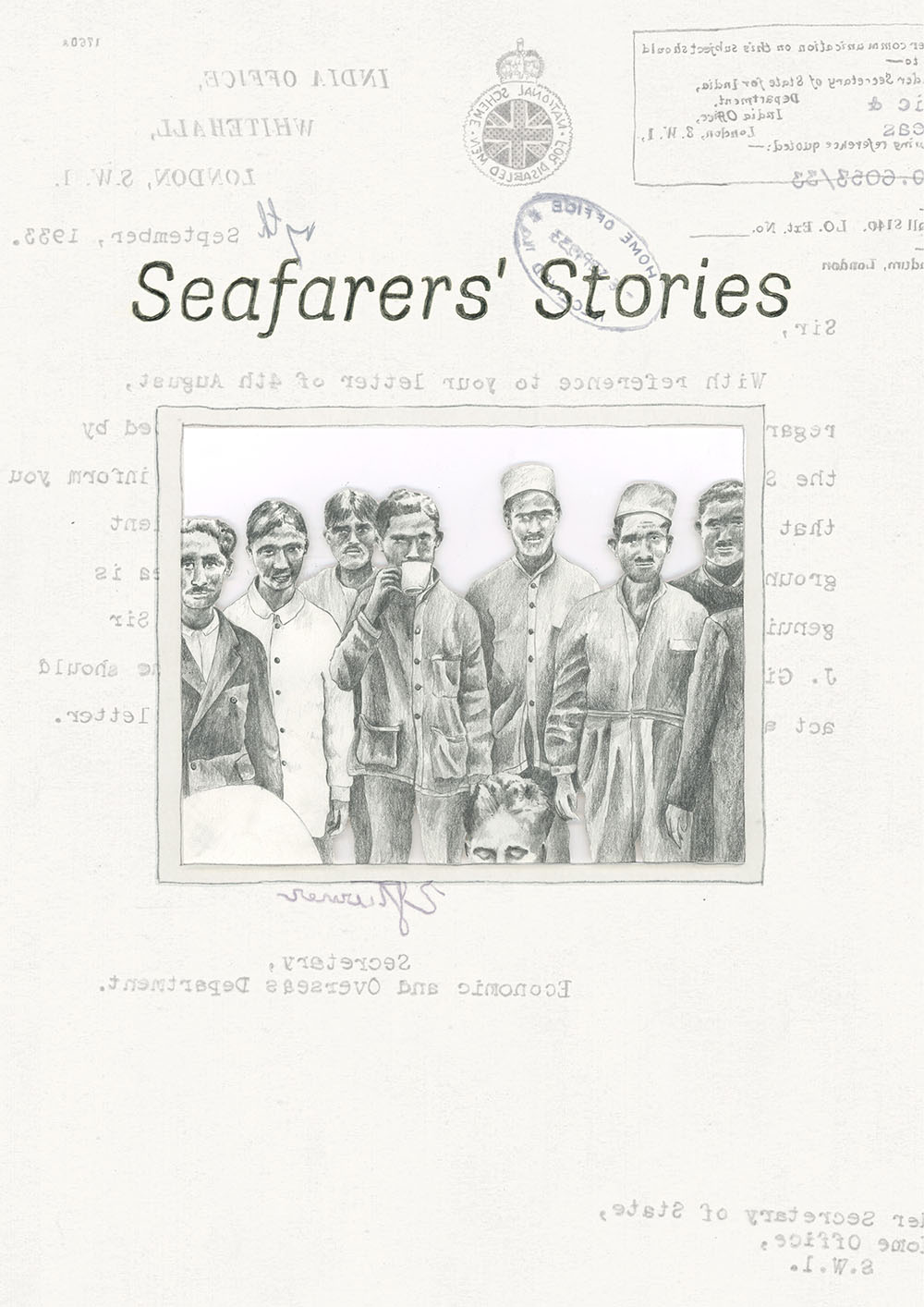 How can we tell the stories of the Mirpuri, Bengali and Panjabi seafarers who travelled to Britain in the 1920s-30s?
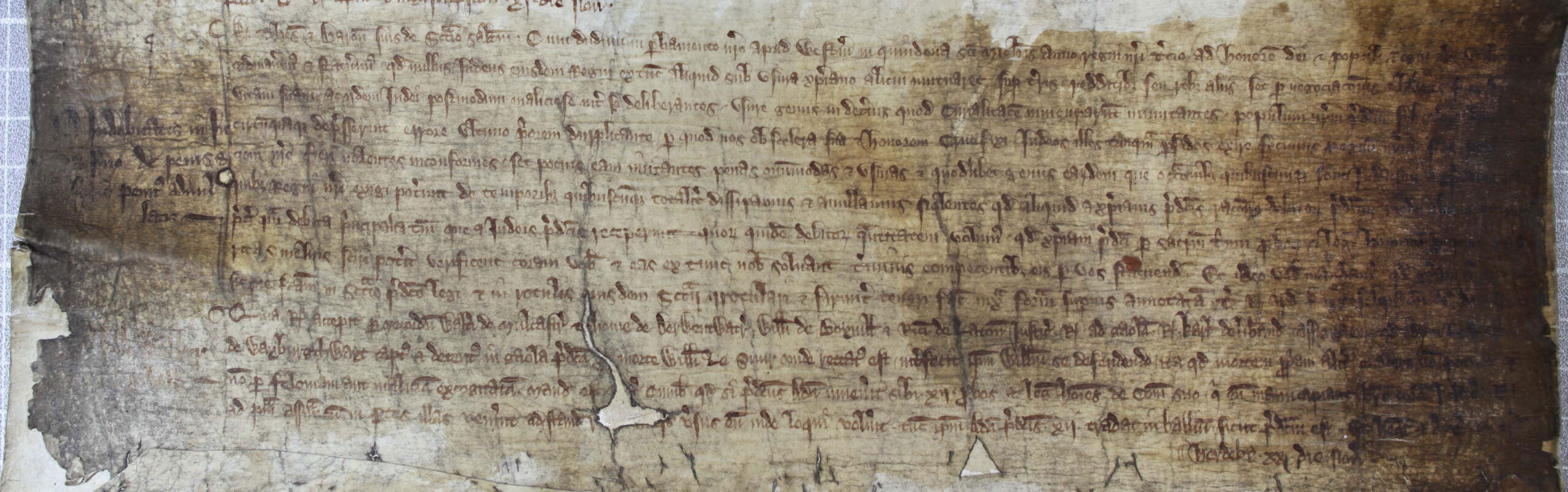

Letter from King Edward I to the Sheriff of Gloucester, dated 18th July 1290 – Catalogue Ref: C 54/107, m. 5.
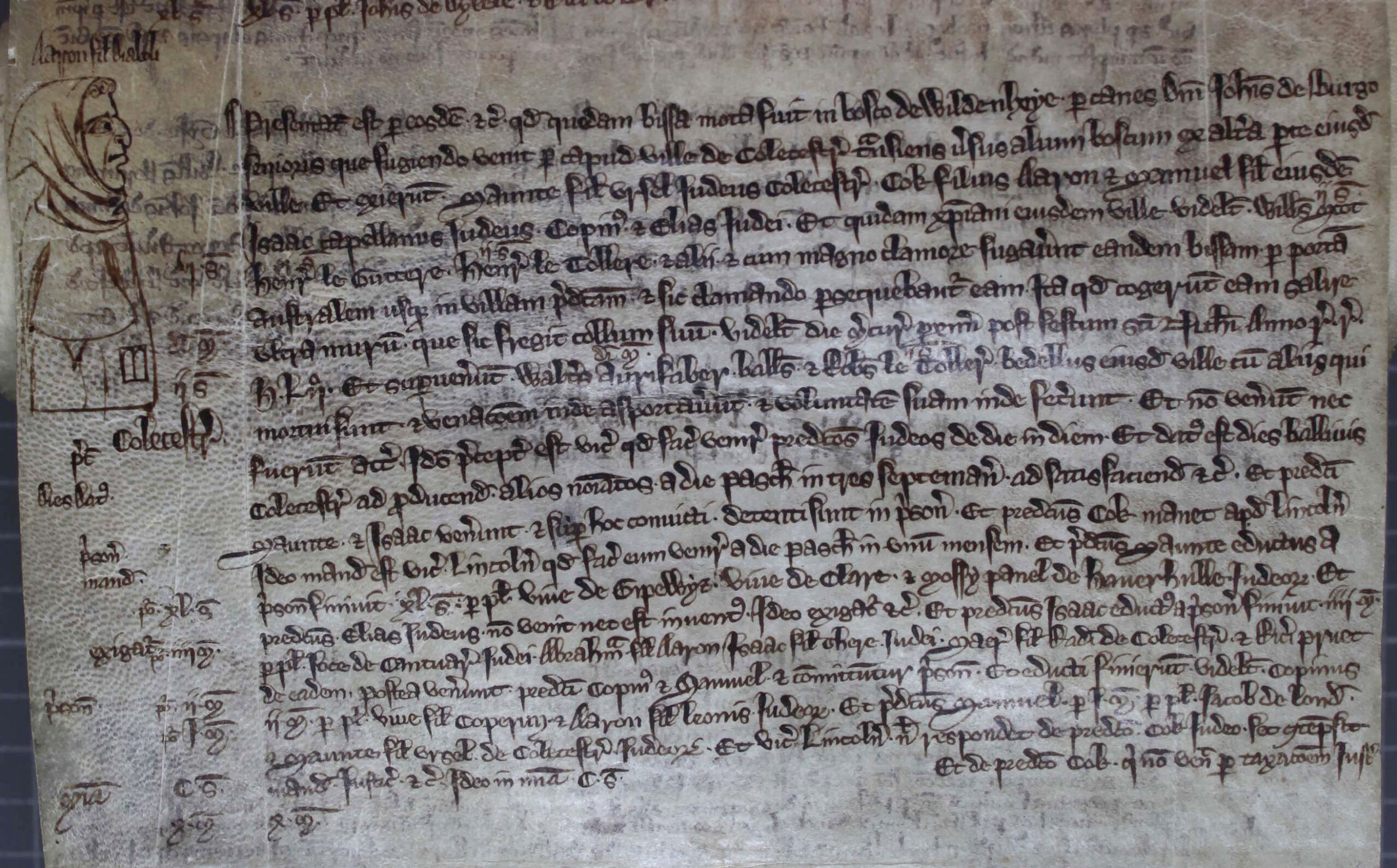
Despite the tightening restrictions on England’s Jewish community, Jews and Christians continued to interact with one another. They are even recorded to have committed crimes together in select court cases. For example, in court case recorded before the forest court in 1277, it was reported that two of Aaron of Colchester’s sons, amongst other Jewish men, were part of a mixed-faith gang tried for illegal deer hunting in Colchester, Essex. This case is particularly curious as a caricature of Aaron was drawn next to record and labelled ‘Aaron, son of the Devil’ in Latin.
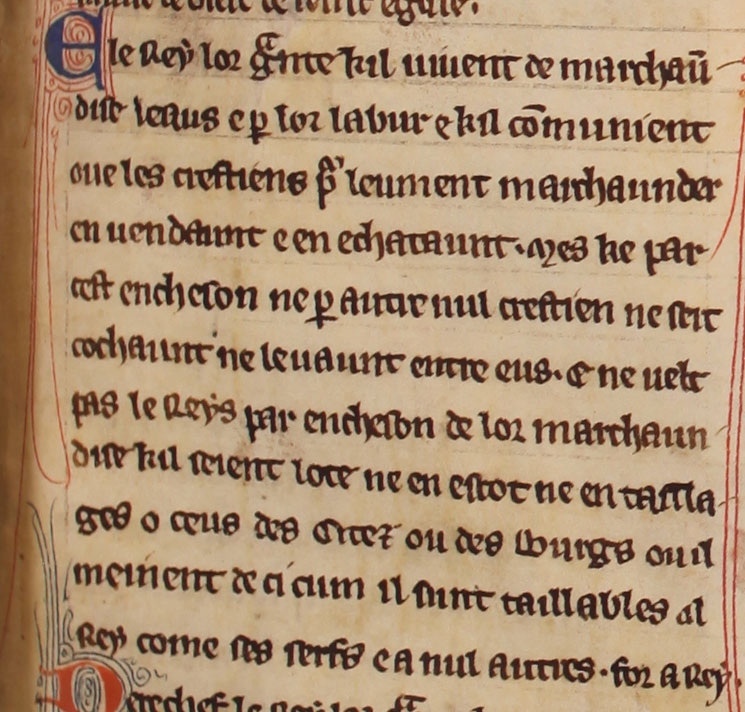
Extract (c) of the Statute of Jewry, c. 1275. Catalogue ref: E 164/9, fol. 31d.