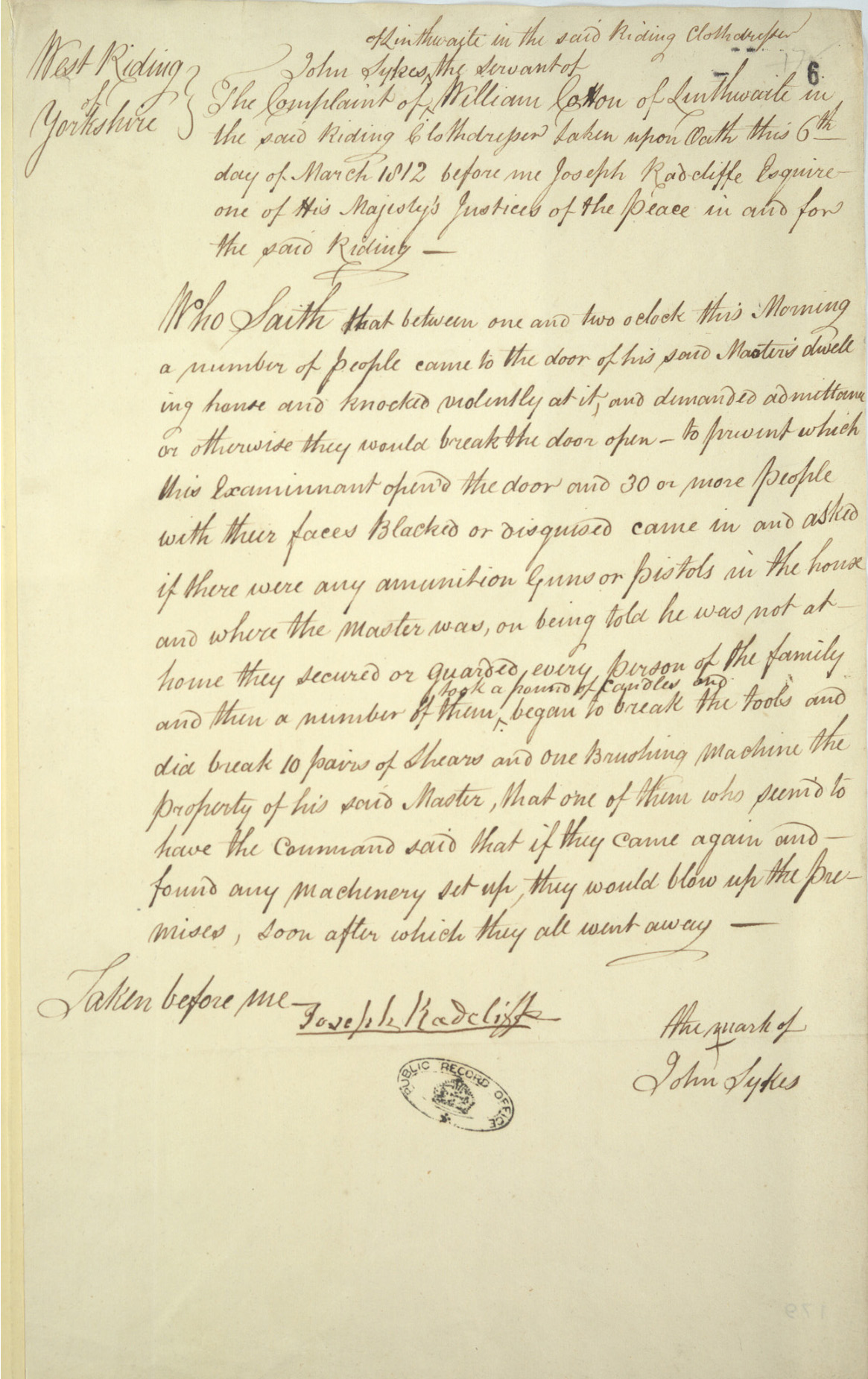
An account of machine-breaking at Linthwaite, Yorkshire, March, 1812. Catalogue ref: HO 40/1/1, part 2, f.6
This is evidence given by a servant called John Sykes to the local Justice of the Peace.
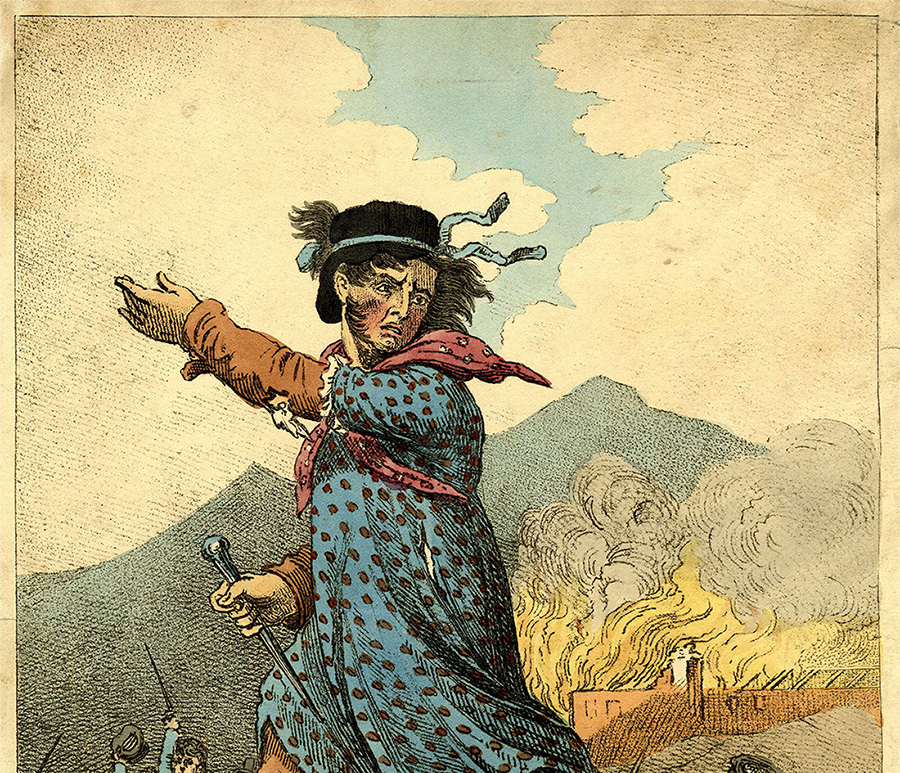
The machine-breaking disturbances that rocked the wool and cotton industries were known as the ‘Luddite riots’. The Luddites were named after ‘General Ned Ludd’ or ‘King Ludd’, a mythical figure who lived in Sherwood Forest and supposedly led the movement.
They began in Nottinghamshire in 1811 and quickly spread throughout the country, especially to the West Riding of Yorkshire and Lancashire in 1812, and also to Leicestershire and Derbyshire. In Yorkshire, they wanted to get rid of the new machinery that was causing unemployment among workers. Hand loom weavers did not want the introduction of power looms. In Nottinghamshire, they protested against wage reductions.
Workers sent threatening letters to employers and broke into factories to destroy the new machines, such as the new wide weaving frames. They also attacked employers, magistrates and food merchants. There were fights between Luddites and government soldiers.
Using the original documents in this lesson, find out how the Luddites protested against changes affecting their working conditions. How did the government respond?
Political reform in 19th century BritainTo catch the machine-breakers, men were engaged to guard the factories and rewards were offered for information. The government sent thousands of troops to the areas where there had been trouble. In 1812, machine-breaking became a crime punishable by death and 17 men were executed the following year. The Luddites were very effective, and some of their biggest actions involved as many as 100 men, but there were relatively few arrests and executions. This may be because they were protected by their local communities.
The disturbances continued for another five years. The crisis was made worse by food shortages as the price of wheat increased, and by the collapse of hosiery and knitwear prices in 1815 and 1816. Various attempts were made to find a compromise, but problems remained until the middle of the nineteenth century, by which time the woollen industry had moved away from hand-production.
The Luddites were not the first group of workers to face problems at the beginning of the nineteenth century. Some of the country’s economic difficulties were put down to the Napoleonic War (1802-1812), which disrupted trade between countries.
The Luddites have been described as people violently opposed to technological change and the riots put down to the introduction of new machinery in the wool industry.
Luddites were protesting against changes they thought would make their lives much worse, changes that were part of a new market system. Before this time, craftspeople would do their work for a set price, the usual price. They did not want this new system that involved working out how much work they did, how much materials cost, and how much profit there would be for the factory owner.

What can archives reveal about people’s lives in the 1920s?
This resource was created as a result of 20sStreets, a project designed to bring local history to life for students. The National Archives collaborated with four local archives: Tower Hamlets, Lancashire, West Yorkshire and Kresen Kernow, to help children explore life in one local street 100 years ago. This education resource includes eight selected case studies from this project. Each case study focuses on a different household in the 1920s, firstly through the 1921 census, then a range of documents from archival collections. The locations explored are Tower Hamlets, Accrington, Wakefield and Falmouth. Students are encouraged to be history detectives, investigating people’s lives using documents as clues. This helps pupils gain a deeper understanding of what life was like 100 years ago, what people’s jobs were, how they had fun and what their houses might have looked like. This resource can also open up a discussion about what information archives contain and how they can help us find out about ordinary people’s lives. It is suggested that students are divided in to groups focusing on different case studies. There are also creative activities included to extend student’s learning.
Watch our film about the project created by Postcode Films.
Find out more about the 20sStreets project
Download the PDF resource pack (22.6MB)
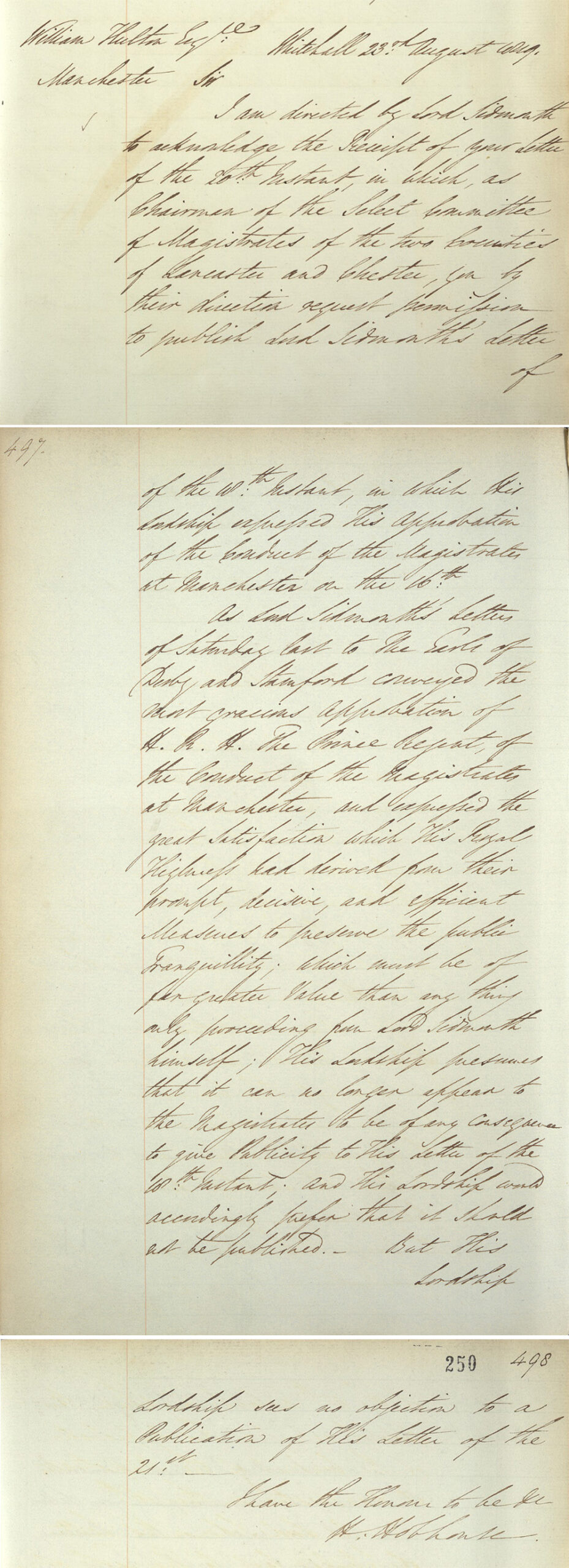
Letter from the Home Office on the conduct of the Manchester magistrates, 23 August 1819, Catalogue ref: HO 41/4 f.496
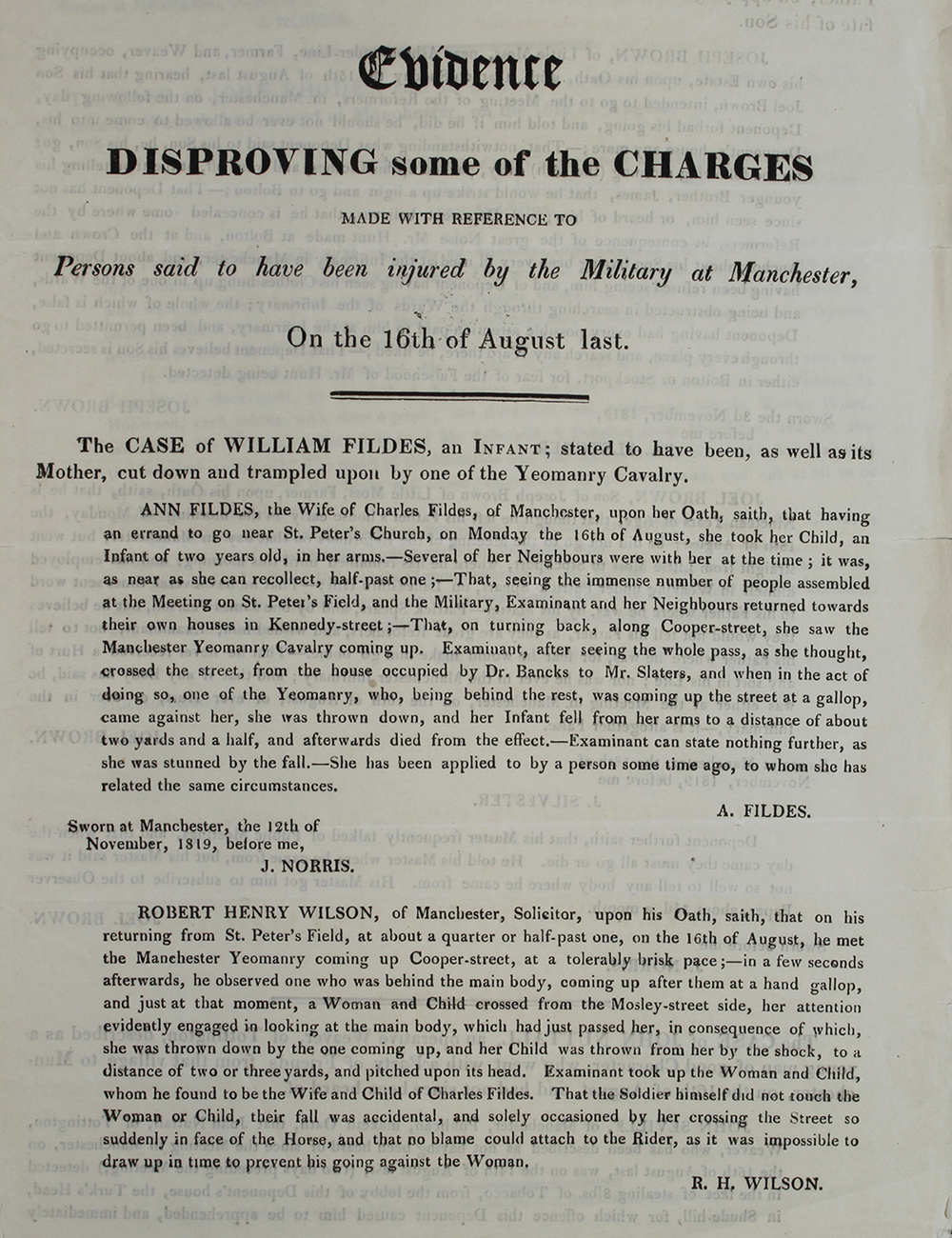
Extract from a printed paper called ‘Evidence disproving some of the charges’: an attempt to explain away the death of a child called William Fildes at ‘Peterloo’.
This was a move by the authorities to justify their actions, and provide a summary of the various inquests carried out by the Manchester authorities. They were happy to admit that a child was trampled to death in the Yeomanry charge, and blame the mother for letting go of her child when startled by the charge. Catalogue ref: HO 42/199 f217.
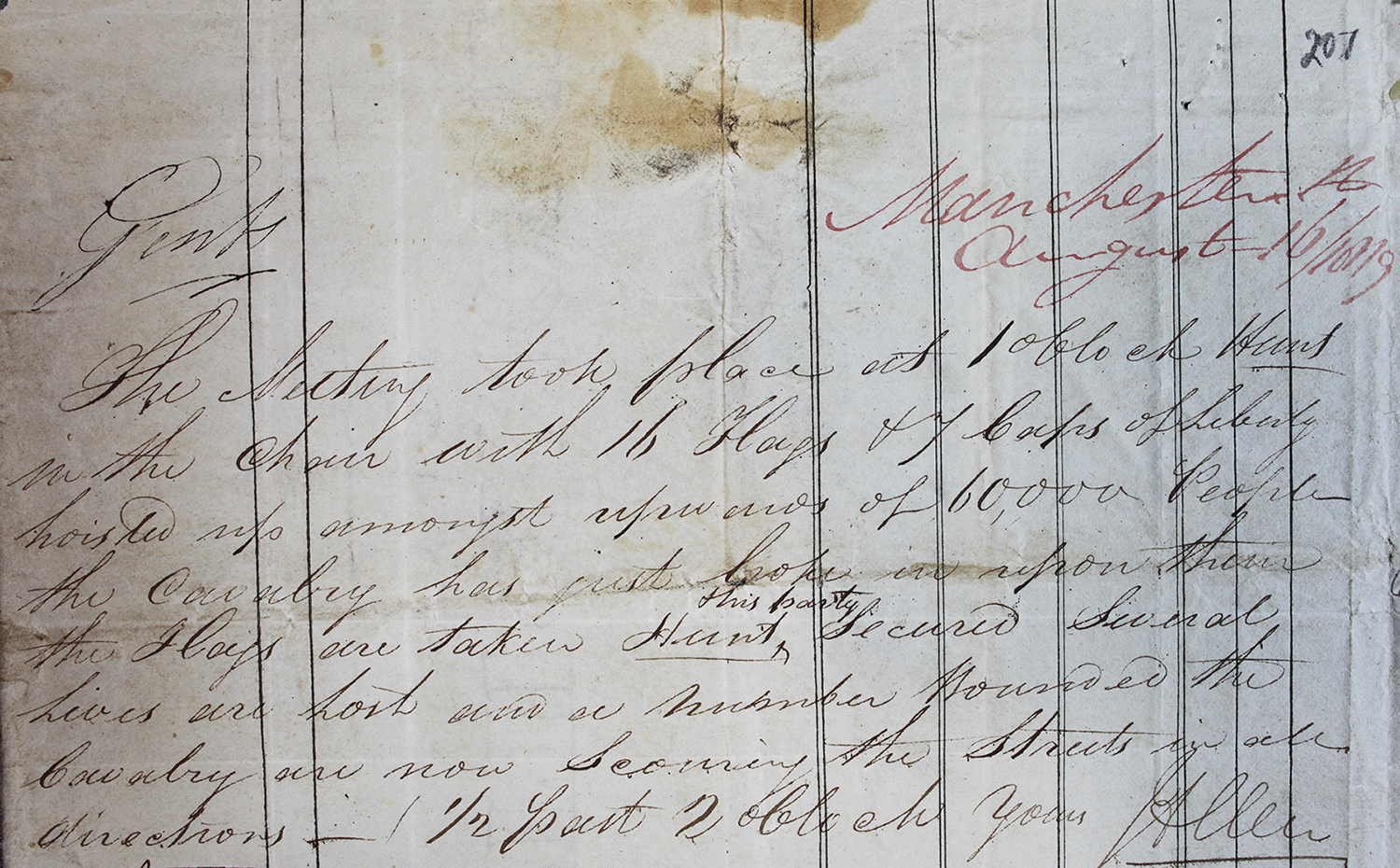
A scrap of paper giving account of events at St. Peter’s Fields in Manchester shows that few expected the Yeoman Cavalry to be used to break up the crowd. This brief, vivid, immediate account is said to be our earliest report of ‘Peterloo’, 16 August 1819. This information was received in London the following day and sent to the office of Lord Sidmouth. Catalogue ref: HO 42/192 f207
The Liberty cap has been a symbol of freedom since at least Roman times. It was worn during the American Revolution and was adopted during the French Revolution. In Britain in 1819, the ‘Cap of Liberty’ was also the name of a radical weekly newsletter.
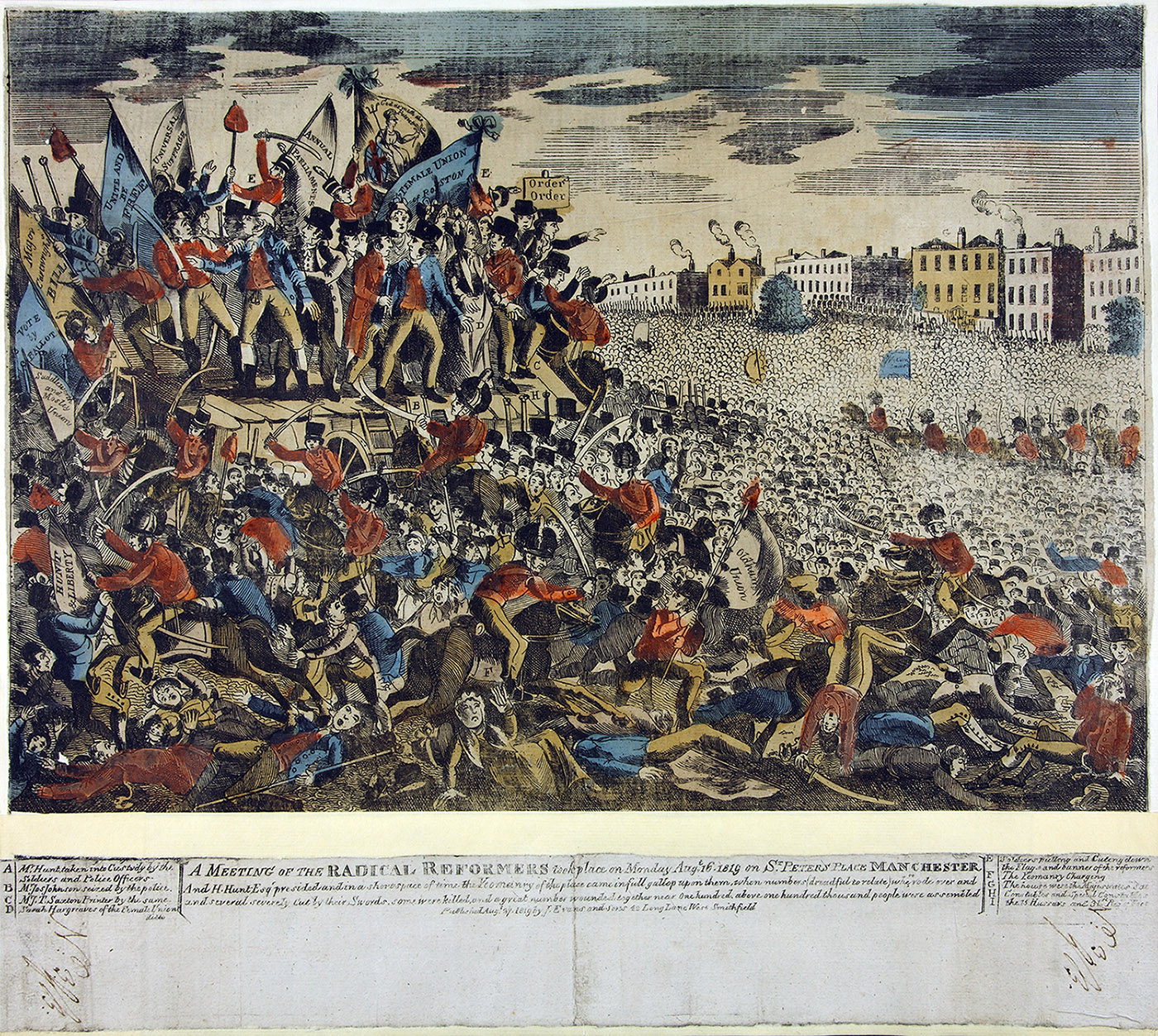
Engraving showing events at St Peter’s Fields on 16 August 1819 in Manchester. Catalogue ref: MPI 1/134
The engraving shows how events at ‘Peterloo’ soon became used as radical propaganda. This picture was purchased by John Jenkins, an ex-weaver and ex-Royal Marine, who ‘by the aid of a magnifying glass [made the figures] appear as large as life’ while he described what happened. In November 1819 Jenkins had been exhibiting the picture at Chudleigh, in Devon, when his activities came to the attention of Gilbert Burrington, vicar of Chudleigh and magistrate. Burrington sent Jenkins to the Exeter House of Correction as a vagrant and passed information of his seditious conduct to the Home Secretary.
House of Correction: a place where those who had committed minor offences and considered capable of reformation were confined.
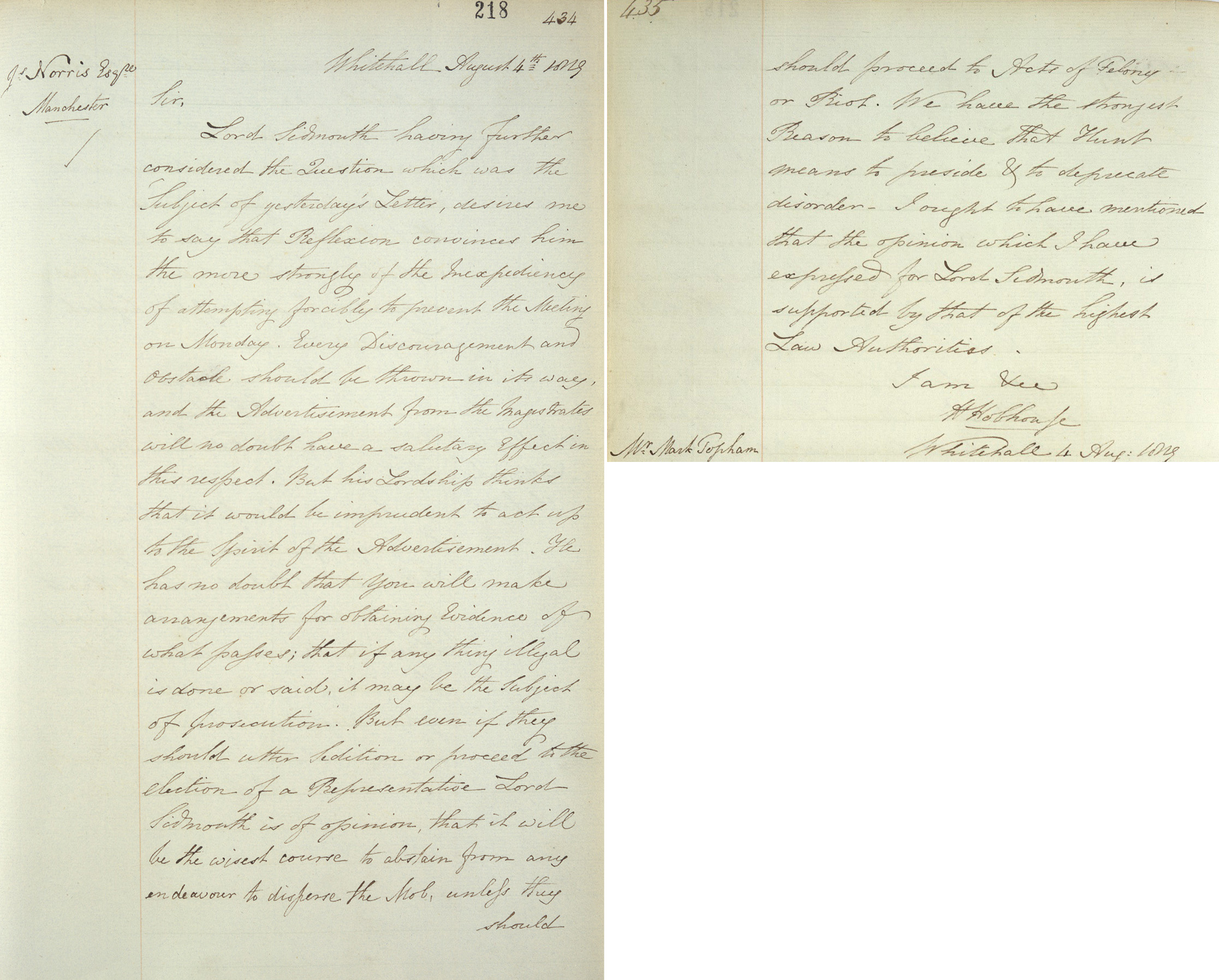
A letter sent to authorities in Manchester on behalf of Lord Sidmouth, Home Secretary, 4 August 1819. Catalogue ref: HO 41/4 f.434
This letter advised on steps to be taken before the meeting happened in St Peter’s Fields in August, 1819.
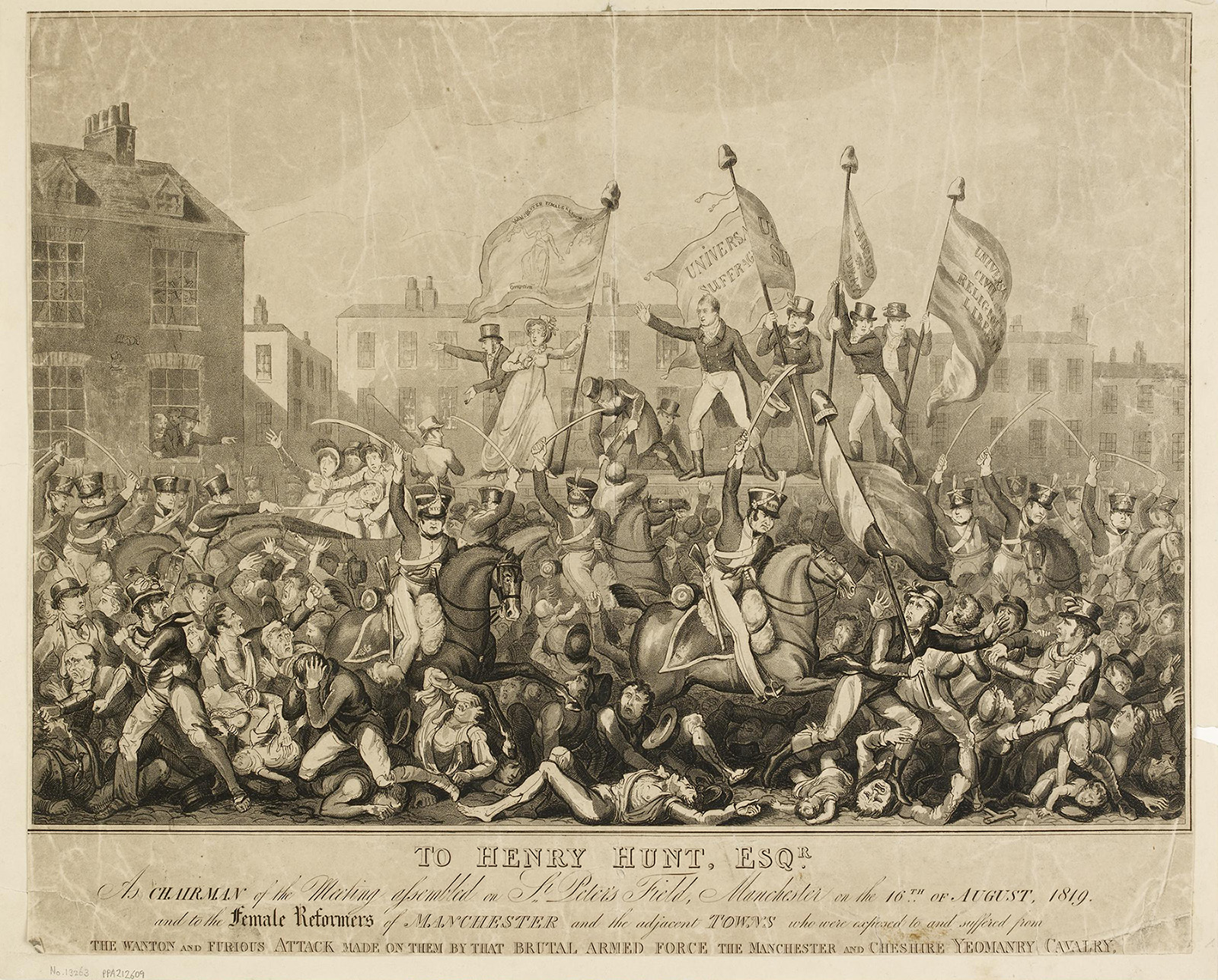
Between 1815 and 1819, there were a series of disturbances in Britain. Political meetings were held to protest against the government and demand reform. The climax came in 1819, when 60,000 people gathered at St. Peter’s Fields in Manchester. The main speaker at the meeting was Henry Hunt, a leading political reformer. The crowd gathered to hear Hunt speak about parliamentary reform.
However, the Manchester magistrates chose to arrest Hunt. They used the local yeomanry (amateur cavalry) to seize him. In the chaos that followed, 11 people died and many were injured. This event soon became known as ‘Peterloo’, after the recent Battle of Waterloo in 1815.
After these events some people blamed the magistrates; others cited the violence of the crowd. Many attacked the behaviour of the yeomanry, saying they were guilty of overreacting because the meeting was peaceful. However, the government chose to defend the magistrates and the yeomanry and promptly introduced new laws to restrict political rights.
Using the original documents in this lesson, find out about events at ‘Peterloo’ and the response of the authorities.
Political reform in 19th century Britain‘Popular radicalism’ was based on democratic ideals and was critical of government corruption. After the French Wars, there was a return to public political meetings and riots. The Spa Fields riots were incidents of public disorder resulting from the second of two mass meetings held at Spa Fields, Islington in London, 1816. There was a rising at Pentrich in Derbyshire in 1817. A few months before these events, a demonstration was held in Manchester by radical weavers known as the ‘Blanketeers’. They planned to march to London and present a petition to the Prince Regent about the depression in the textile industry in Lancashire and the suspension of Habeas Corpus (making it possible for people be imprisoned unlawfully). This so-called ‘March of the Blanketeers’ was broken up violently and the leaders imprisoned.
Perhaps the best-known demonstration for political rights at this time is known as the ‘Peterloo Massacre.’ The reform meeting at St Peter’s Field in Manchester in August 1819 followed two years of revived interest in the radical press, mass petitioning and trade unionism, still illegal at this time.
It has been estimated that perhaps 60,000 men, women and children met at St Peter’s Field to hear Henry Hunt and others speak in favour of political reforms and rights for the poor. For several weeks beforehand, the reformers practised military drills with those planning to attend to ensure order on the day. However, local magistrates believed the reformers were preparing for armed rebellion; they declared the meeting illegal and warned people to stay at home. The meeting went ahead and started peacefully. However, when Hunt arrived, the Manchester and Salford Yeomanry (the amateur cavalry) were sent by the magistrates to arrest him. They slashed their way through the crowd, killing 11 people and resulting in 400 people being injured. The 15th Hussars on standby, who had previously fought at Waterloo, came in to support the yeomanry and cleared the field. Out of contempt for what happened, the disaster soon became referred to as the ‘Peterloo’.
Mr W. R. Hay, a Lancashire magistrate, justified the position of the local authorities when he wrote to Lord Sidmouth, 16 August 1819 to say: ‘the whole bore the appearance of insurrection; that the array was such as to terrify all the king’s subjects, and was such as the magistrates had felt a decided conviction that no legitimate purpose could justify’. He goes on to describe the flags at the hustings which can be seen in the engraving showing the event: ‘The flag on which was “Equal Representation or Death,” was a black one; and in addition, on the same side, had “No borough mongering – Unite, and be Free;” at the bottom, “Saddleworth, Lees, and Morley Union;” on the reverse, “No Corn Laws; – Taxation, without Representation, is unjust and tyrannical.” On the Middleton flag was, “Let us die like men, and not be sold like slaves;” reverse, “Liberty is the birth right of man.”’
However, others reported events differently. The radical ‘Manchester Observer’ and ‘The Times’ of London commented on the deaths and hundreds of casualties caused by the cavalry, which the authorities tried to discredit by referring to individual cases, as shown by one of the sources in this lesson.
There were further protest meetings resulting in arrests as news of events spread. The government, which had supported the actions of magistrates after ‘Peterloo’, introduced new laws to prevent any future disturbances. The ‘Six Acts’ were aimed at suppressing any meetings for the purpose of radical reform. They meant that drilling for military exercises was forbidden and warrants were issued to search for arms. Far more repressive was the extension of stamp duty to more newspapers, increased powers for magistrates to seize seditious literature, and powers to prevent meetings designed to present petitions.
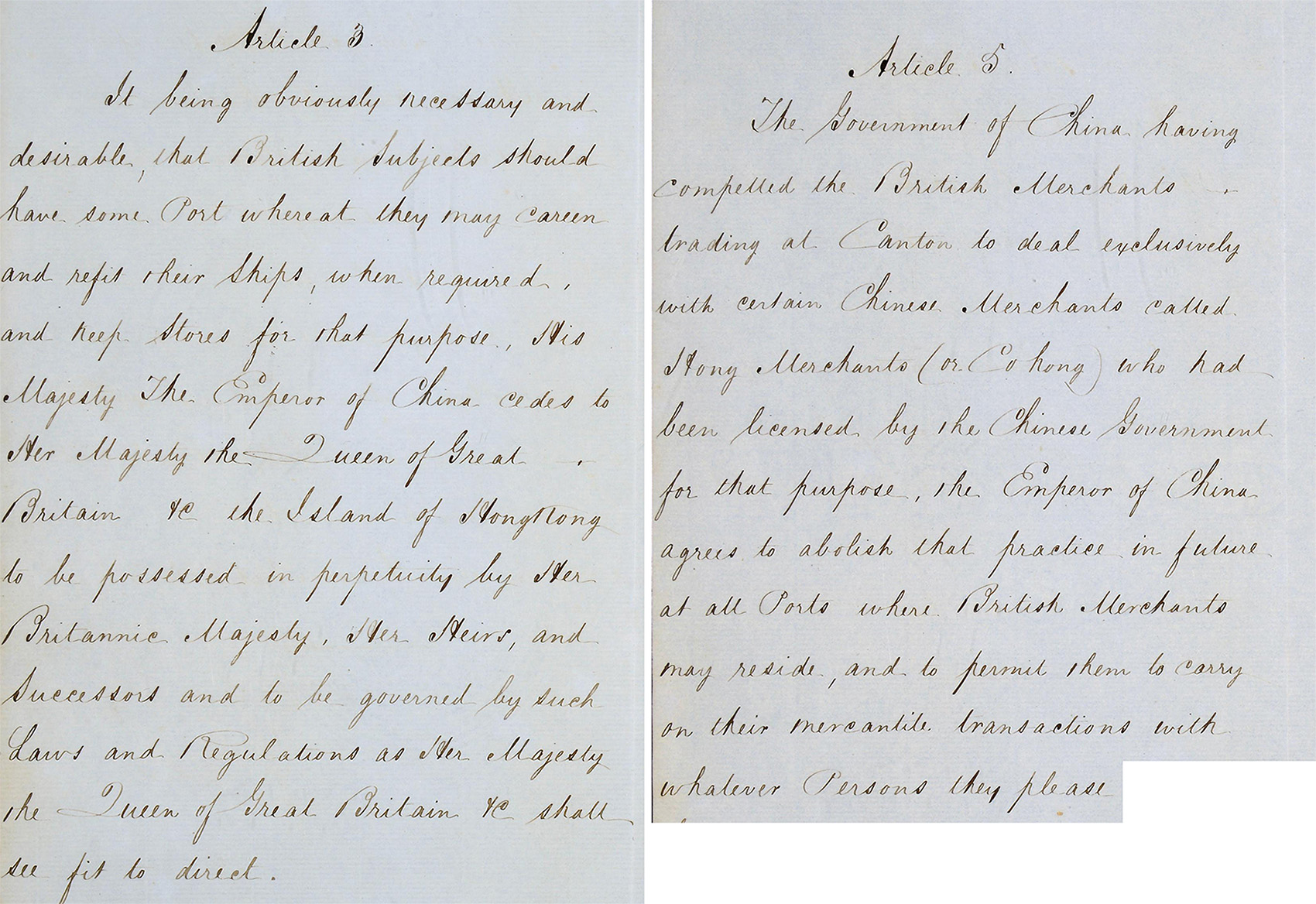
Treaty of peace and friendship, commerce, indemnity (Treaty of Nanking), 1842. (FO 93/23/1b (5))