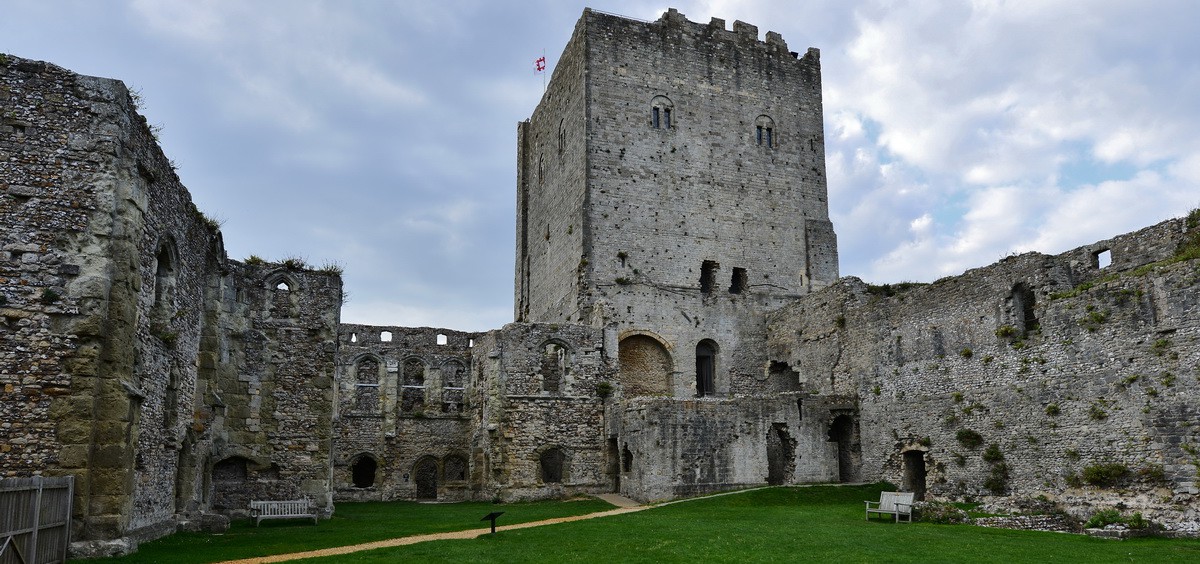
The castle as we know it today was introduced into England in 1066 during the Norman invasion led by William the Conqueror. After their victory at the Battle of Hastings, the Normans settled in England. They constructed castles all over the country in order to control their newly-won territory, and to pacify the Anglo-Saxon population. These early castles were mainly of motte and bailey type. The ‘motte’ was made up of a large mound of earth with a wooden tower on top, while the ‘bailey’ was a large ditch and bank enclosure which surrounded the motte.
These timber castles were quite cheap and very quick to build. However, the timber castles did have disadvantages. They were very vulnerable to attacks using fire and the wood would eventually start to rot. Due to these disadvantages, King William ordered that castles should be built in stone. Many of the original timber castles were replaced with stone castles.
Over time, stone castles were built in different architectural styles as builders experimented with castle-building techniques. In their infancy, castles were primarily military fortifications used to defend conquered territories from attack. The strategic location of the castle was paramount. However, once the Normans began to consolidate their control over England, castles began to take on a variety of different roles. Castles could serve as a centre for local government, administration and justice. They were also used by powerful lords to display their wealth and power through lavish architectural styles and decoration. Castles were not only built and used by the crown. In fact, the majority of castles were granted by the king to his loyal lords and nobles along with large areas of land. In return for these grants, the king expected his nobles to control and administer these lands on his behalf. The castle itself also represented a whole group of people who contributed to its function from constables, masons, blacksmiths and servants to name a few.
Use this lesson with original documents to find out more about the role of Framlingham, Portchester, Stokesay, Berwick, Alnwick, and Pevensey castles in medieval society.
What was their purpose and significance?
This document pardons a woman, who had been accused of stealing cloth and jewels from a merchant. The crime didn’t take place in Framlingham castle, but it does reveal how people born in the castle might move away. The precise details of the alleged theft and the reasons that the woman was accused in the first place remain a mystery.
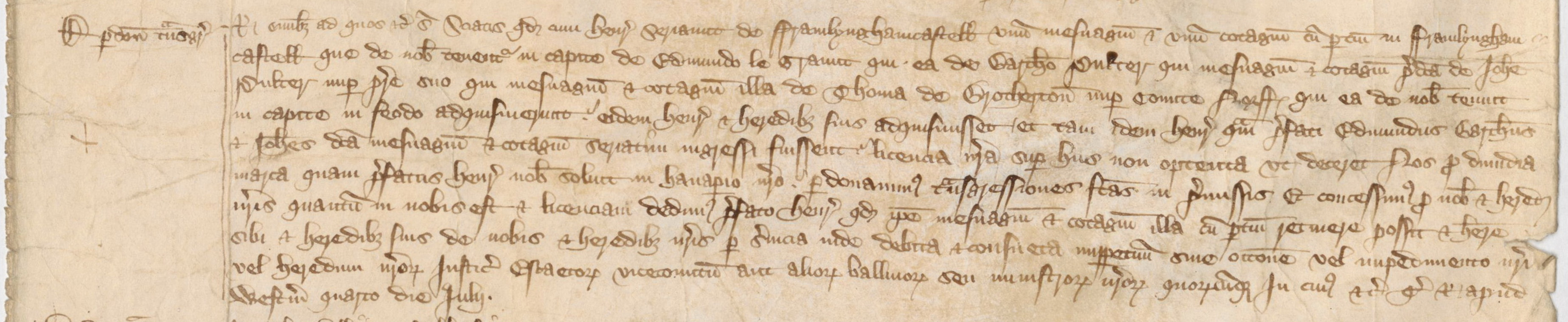
Henry, Sergeant of Framlingham Castle purchased a cottage inside Framlingham Castle which came with a messuage (dwelling house and the land occupied by it).

Whilst Roger Bigod was away fighting in Wales in service of Edward I, thieves stole deer and hares from his park (a protected area for rich lords to retain deer and other animals for hunting) at Framlingham.
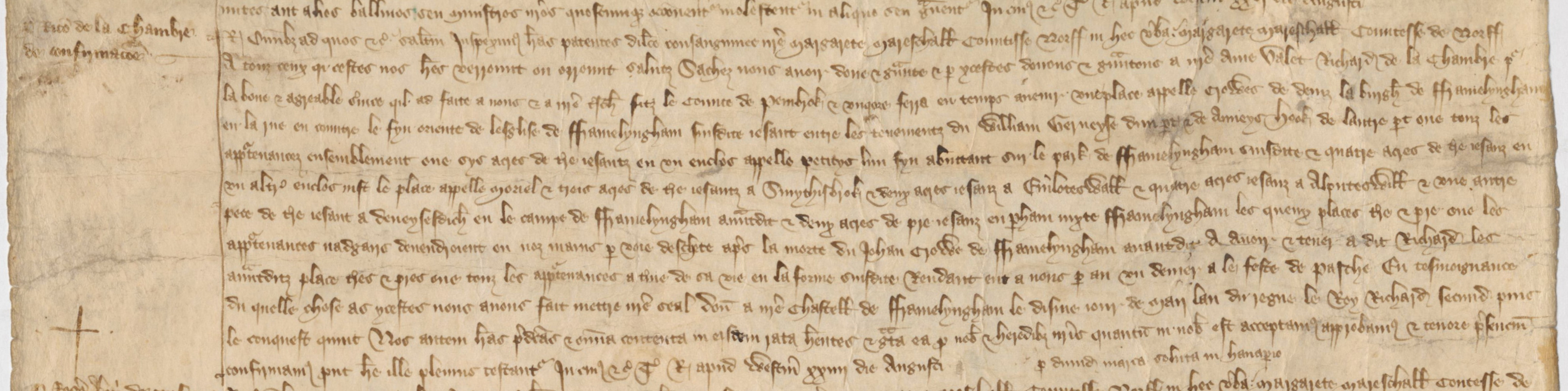
In this document, we find rare evidence that a castle, such as Framlingham, was owned by a woman, the Countess of Norfolk, during the reign of Richard II. She granted land to one of her yeomen (wealthy farmers).The grant was recorded in a letter patent (a type of legal document) at Framlingham Castle.

In this document, King Edward III confirmed or gave official royal recognition to, a legal document issued by the Earl of Norfolk during the reign of Edward II. The clerks responsible for such documents often varied in their spelling of place-names note the spelling of Framlingham castle in this source.

Here, the king ordered the exchequer to pay two petitioners owed money by Walter de Mouncy, Constable of Framlingham Castle. Walter had borrowed money from them to repair and provision [stock with food and equipment] Framlingham castle. He died before he could pay the money back. The document is valuable as it tells us how castles were managed and maintained.

In 1175 a group of carpenters and masons, led by Alnoth the engineer, travelled Suffolk to dismantle Framlingham Castle on royal orders. King Henry II ordered the castle to be knocked down because Earl Hugh Bigod had rebelled against the Crown.

Framlingham Castle is located in the market town of Framlingham in Suffolk. It was built by Roger Bigod, a knight, after the Norman Conquest of England in 1066. At this time the Normans sought to assert their control over the Anglo-Saxons, and Framlingham was probably fortified with a castle to intimidate the local population. Initially, the castle was built out of wood, with the building work taking place sometime between 1066 and 1107. Stone buildings were constructed later at the castle after 1150.
In 1157, Framlingham castle was confiscated from the powerful Bigod family by King Henry II. The castle remained in his possession until 1165 when Hugh Bigod, 1st Earl of Norfolk and the son of Roger Bigod, paid a huge sum of money to regain the castle.
In order to understand why Henry II seized Framlingham castle, we first need to recognise how castles were used during the reign of Henry II’s first cousin, once removed, King Stephen. During the reign of King Stephen, England was torn apart by a long and gruelling civil war. Barons rebelled against the king and used castles as their headquarters, ruling the surrounding villages as if they were kings themselves. This meant that many barons got used to running things their own way. When Henry II succeeded Stephen to the throne, he felt that the barons were far too powerful and unwilling to submit to his authority. Therefore Henry II took over their castles.
The king dared them to oppose him. The barons knew that if they attempted to resist, Henry would raise an army and take their castles by force. So, the barons backed down and then tried to buy their castles back at a later date. This happened to Hugh Bigod, who lost Framlingham Castle to the king in 1157, and bought it back eight years later in 1165.
Bigod later rebelled against Henry II in 1173. As punishment, he was exiled and in 1175, Henry II ordered Hugh Bigod’s castle at Framlingham to be dismantled by an expert team of masons and carpenters, which is revealed in our first document below.
When the Bigod family regained possession of their castle in 1189 under King Richard I, they had to rebuild it. The stone curtain wall that survives today was the result of this reconstruction. It is thought that the work was completed by 1213, as Roger Bigod II entertained King John at Framlingham castle that year.
Roger Bigod II was one of the leading barons who forced King John to grant Magna Carta. During the civil war which followed, King John successfully besieged and took control of Framlingham castle, but it was returned to the Bigod family when the civil war ended. Framlingham remained in the hands of the Bigod family until the fourteenth century when it passed to the Brotherton family, who were cousins of the king. The Howard family inherited the castle in 1483 and set to work on a large-scale refurbishment project. By the end of the sixteenth century the castle had fallen into ruin.
Use this lesson to find out more about Framlingham Castle and its functions using original sources.
What was the primary function of Framlingham Castle in the ‘Middle Ages’?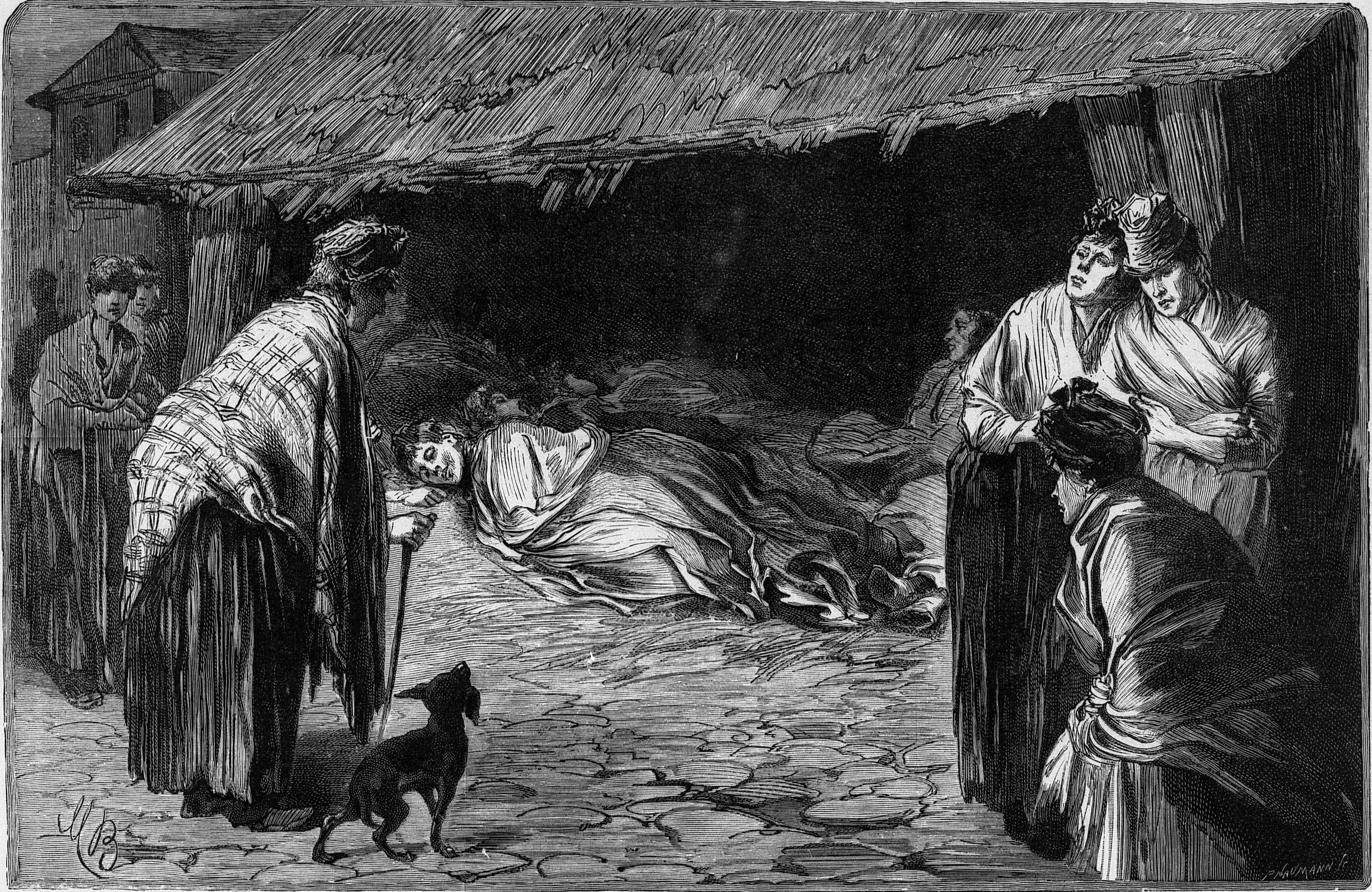
Students will investigate this question, posed by Queen Victoria in November 1888, using a range of original documents. They will analyse original census records to draw out lines of enquiry about the area of Whitechapel in the 19th century. In addition students get to follow up on their enquiry by selecting a further useful document. These will include original press photographs of East London, plans for slum clearances and police reports on immigration. This workshop encourages students to develop their skills in assessing the usefulness of sources and introduces them to the wide range of documents held at the National Archives.
Connections to the curriculum:
- EDEXCEL GCSE History (9-1) Crime and Punishment Through Time
- OCR GCSE History B (9–1) Schools History Project: Crime and Punishment, c.1250 to present
All activities must be booked in advance.
Tel: +44 (0)20 8392 5365
Fax: +44 (0)20 8487 9202