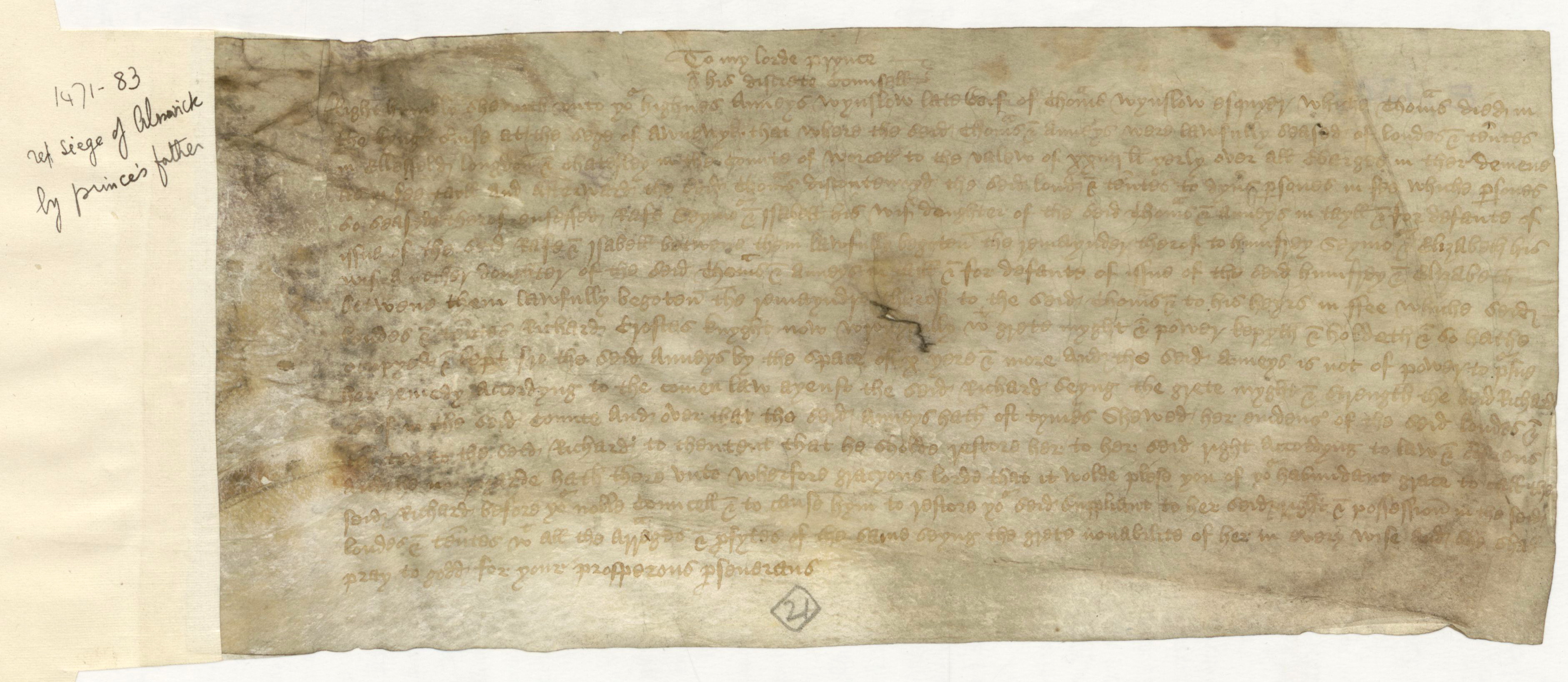
Following the death of her husband at the siege of Alnwick, lands that belonged to Anneys Wynslow’s family were taken forcibly by a man called Richard Croftus, who then held the lands for ten years. In this document, Anneys asks the Prince of Wales to use his legal power to intervene on her behalf and help her family regain her lands.
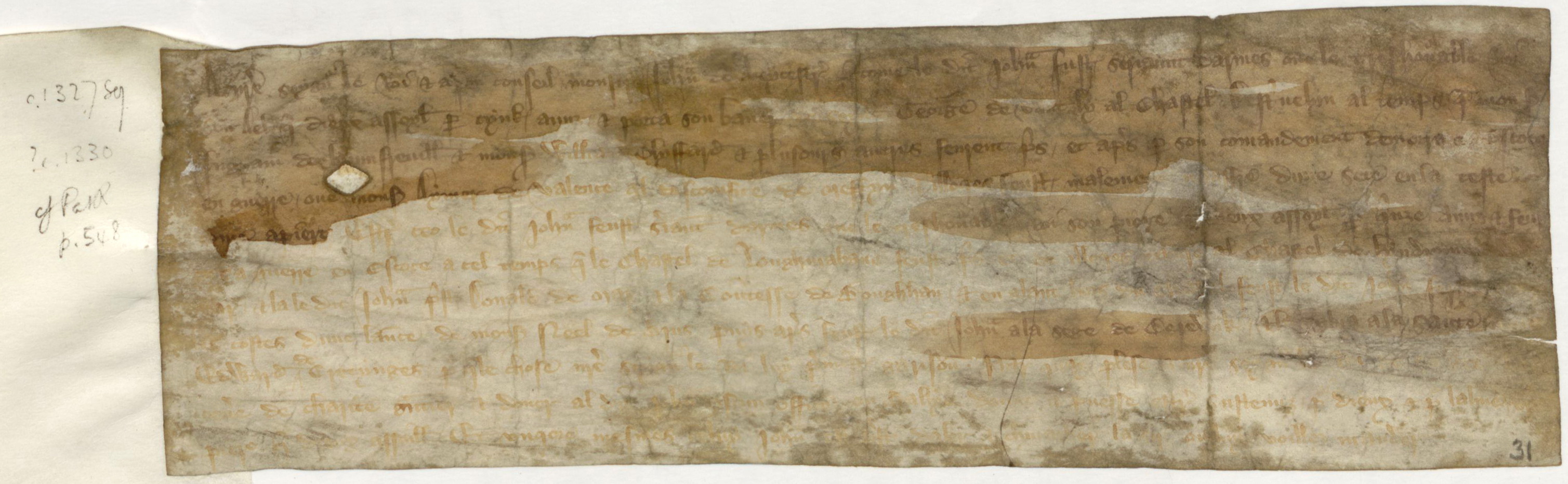
John de Leycestre asks the king to follow up on his promise to reward John for his service in the king’s army during the siege of Berwick.

William Perheved asks to be pardoned for murder because he served in the king’s army at the sieges of several castles.

The wool merchant Laurence of Ludlow, who had become one of the richest men in England, was granted a licence to fortify his home with a stone wall and ‘crenellations’ [rectangular gaps at intervals along the wall that allowed defenders to shoot arrows/missiles from within the castle].

This document reveals that those given the responsibility of overseeing the repair and expansion of Portchester Castle struggled to find craftsmen and labourers to work on the project. The King gave them the authority to ‘arrest’ people and force them to work on the castle. If anybody who was arrested refused to work on the castle, they were to be imprisoned.
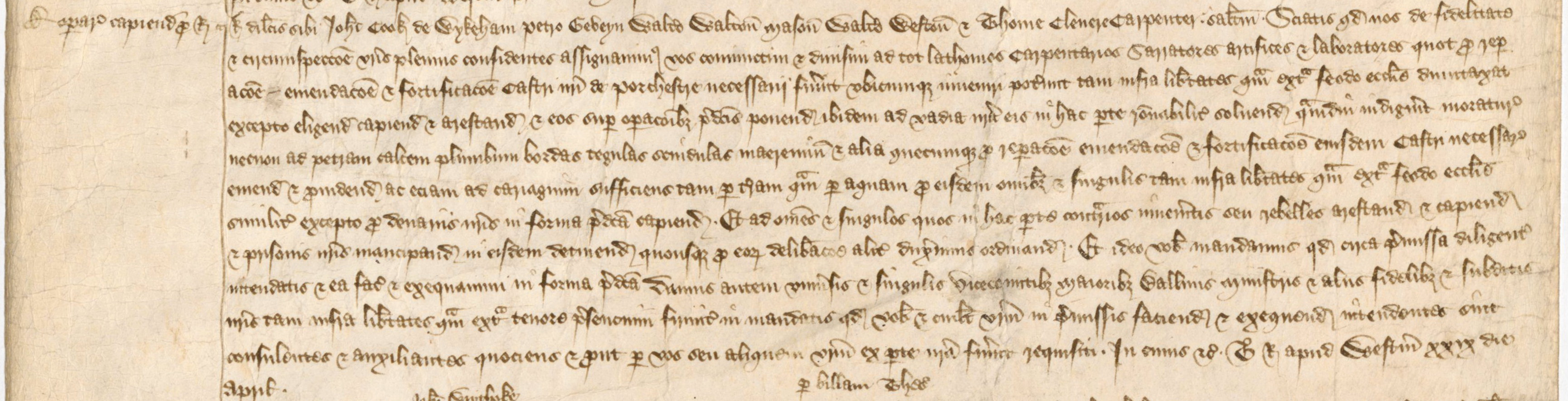
This document records that, during the last three years of the reign of King Richard II, at lot of building work took place at Portchester Castle. A new range of domestic buildings – hall, kitchen, chambers and offices – was constructed.

King Edward II ordered that Portchester Castle should be garrisoned with soldiers if there was any sign that England might be invaded by forces from abroad.
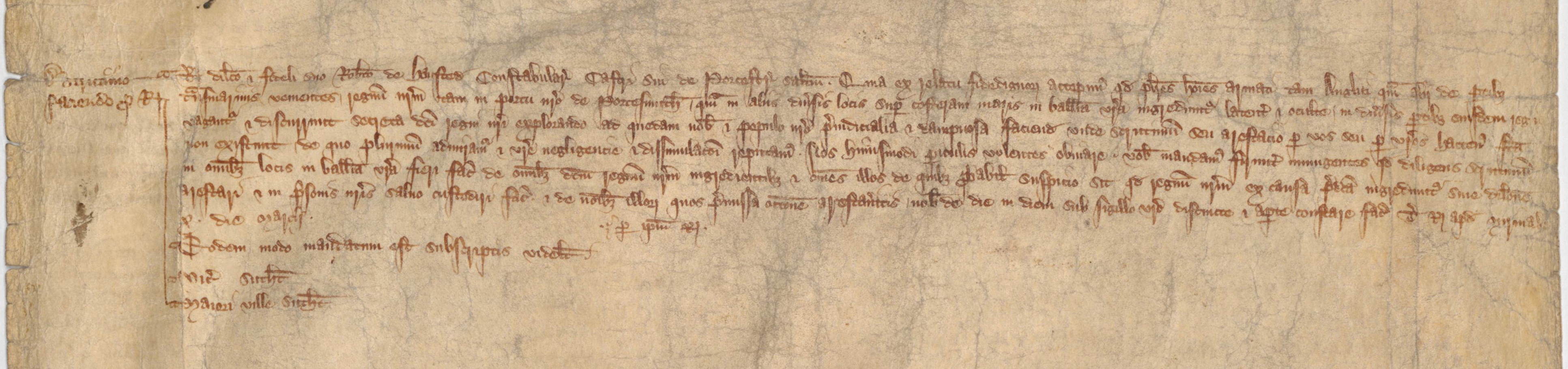
This document reveals that King Edward II ordered that Portchester Castle should be garrisoned with soldiers if there was any sign that England might be invaded by forces from abroad. If this were to happen, any people who were suspected of being spies within the castle were to be arrested.
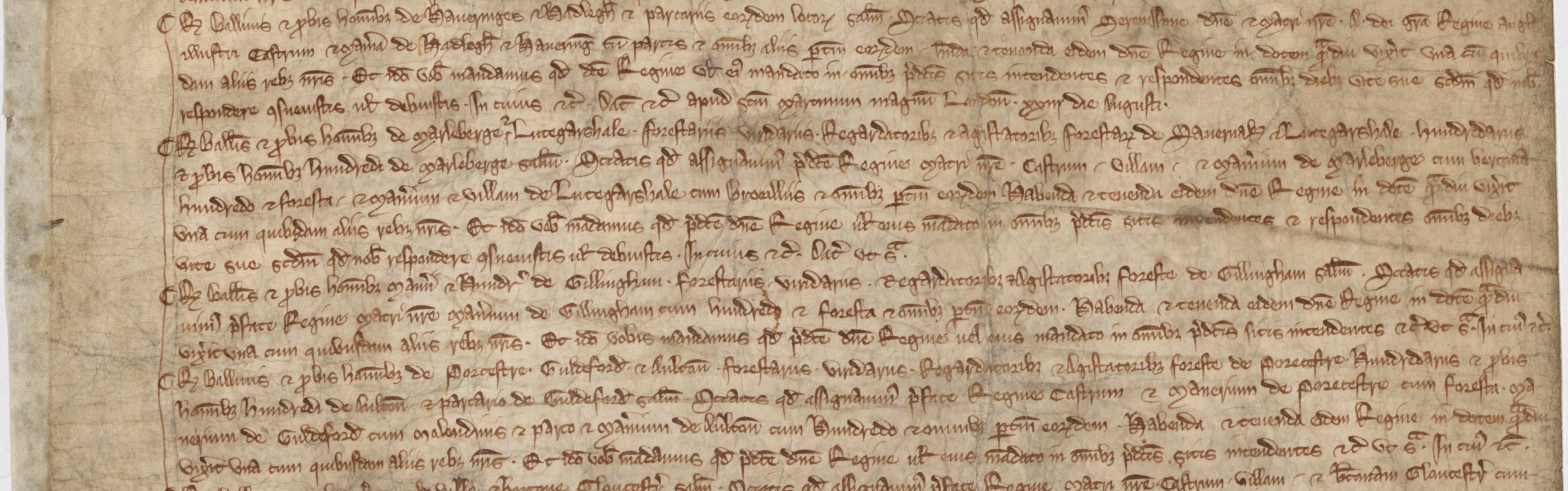
In 1273, King Edward I gave Portchester Castle to his mother.

In 1175 a group of carpenters and masons, led by Alnoth the Engineer, travelled to Suffolk to dismantle Framlingham Castle on royal orders. King Henry II ordered that the castle should be knocked down because Earl Hugh Bigod had joined a rebellion against his rule.