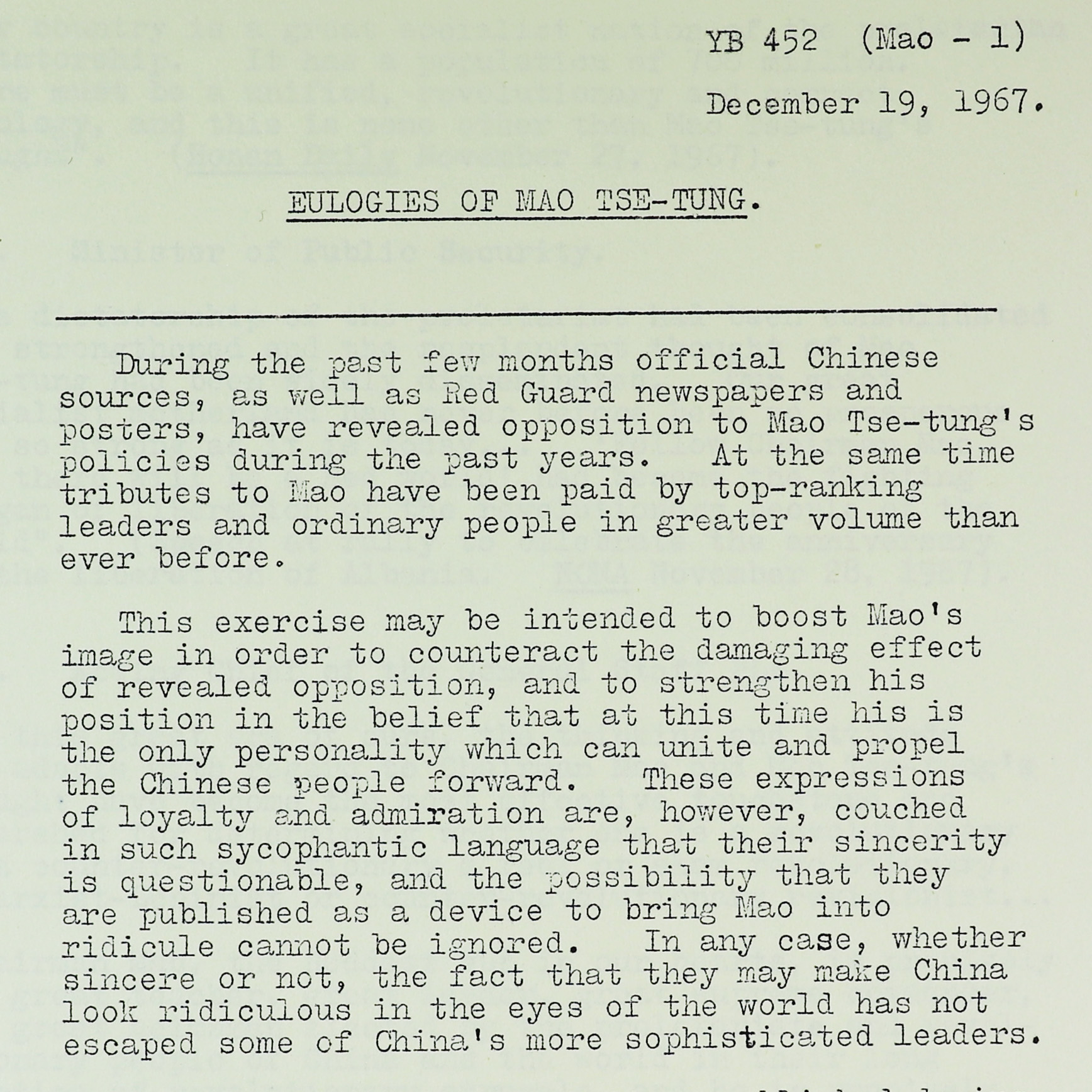
Introduction from report titled ‘Eulogies of Mao Tse-Tung’, published 19 December 1967. This is a selection of quotations compiled over the previous six months by British officials, taken from various sources. Catalogue ref: FO 1110/2319
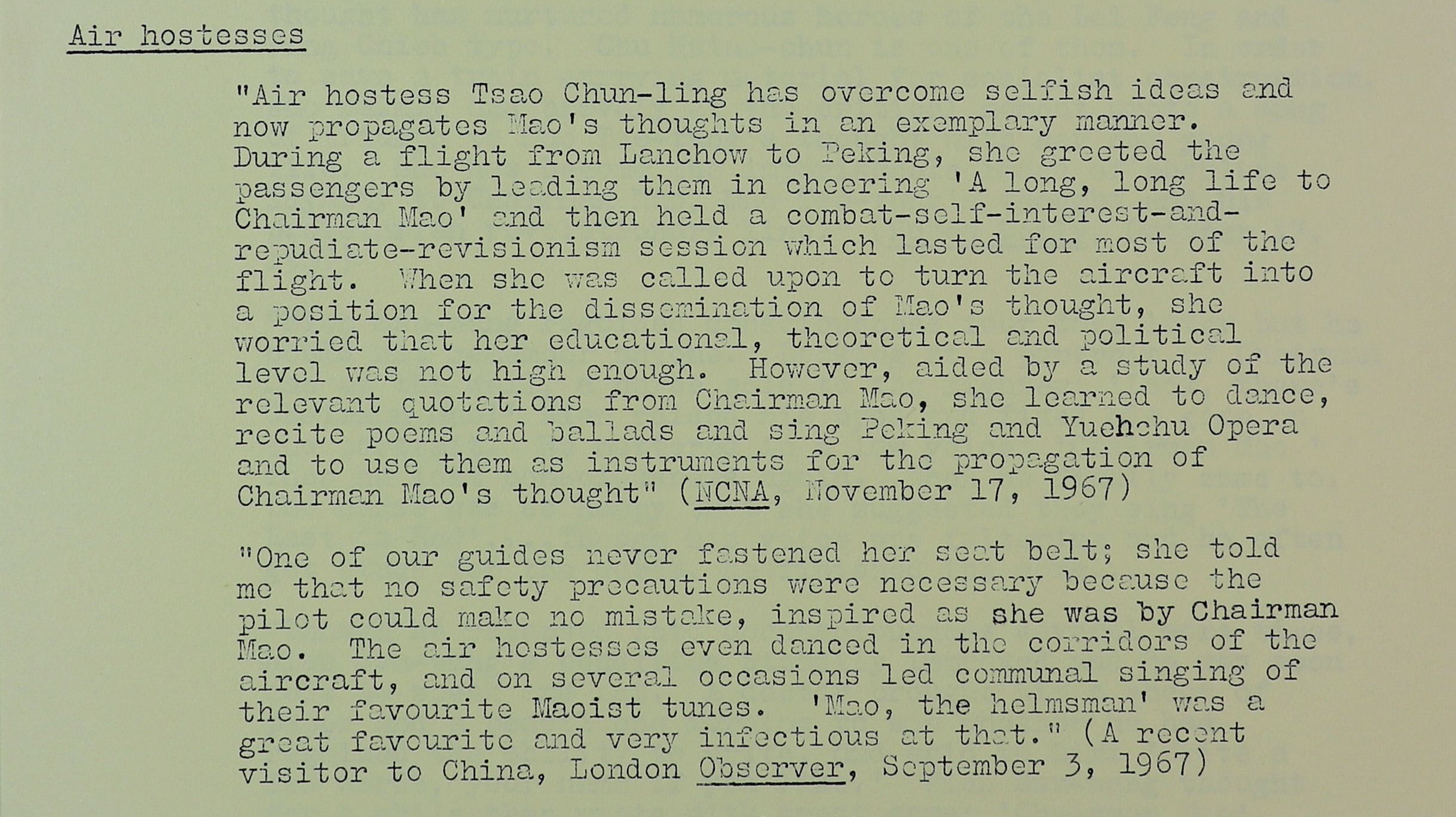
Extract from report titled ‘Eulogies of Mao Tse-Tung’, published 19 December 1967. This is a selection of quotations compiled over the previous six months by British officials, taken from various sources. Catalogue ref: FO 1110/2319
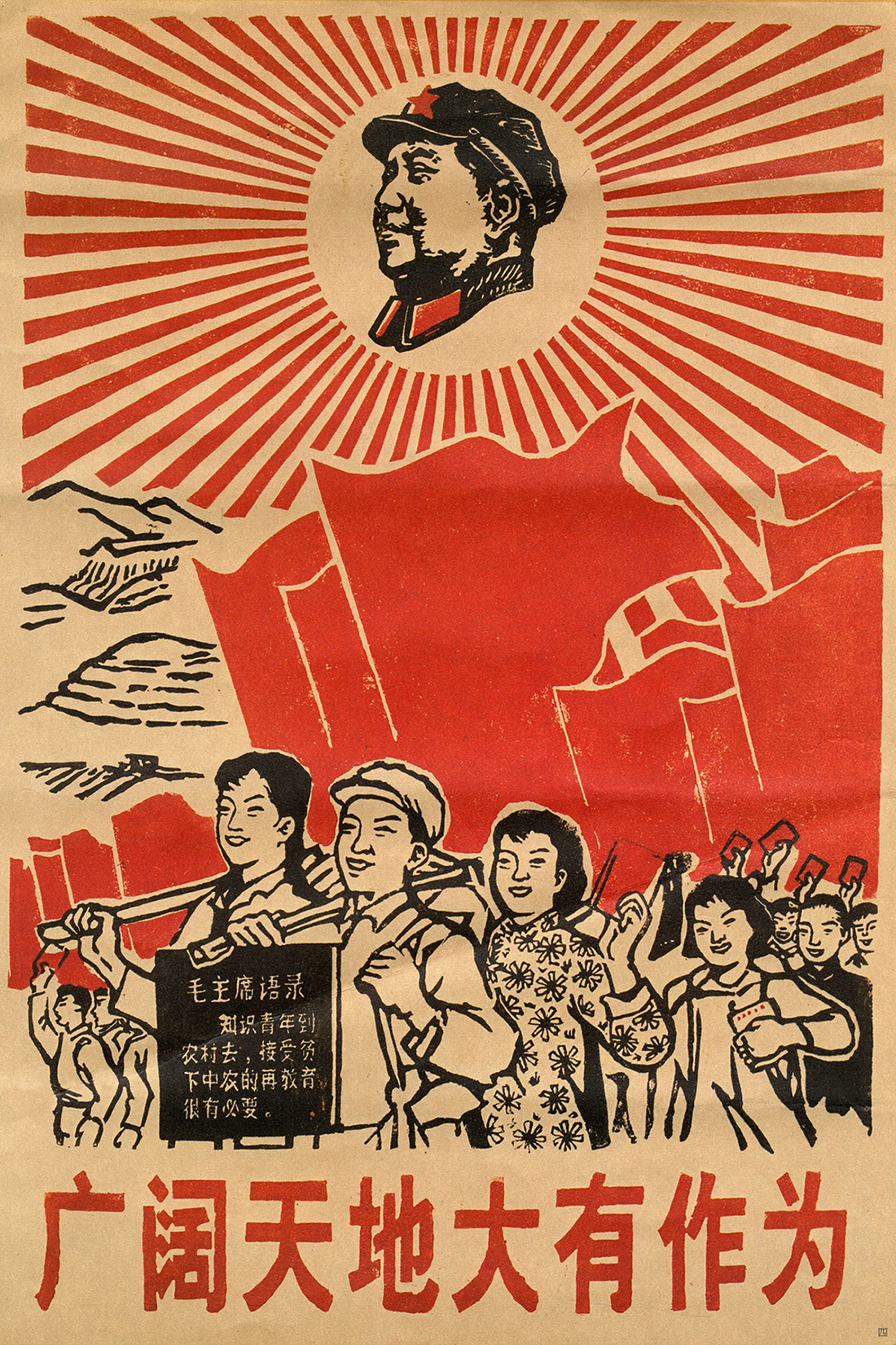
Cultural Revolution poster from the People’s Republic of China. Chronicle / Alamy Stock Photo
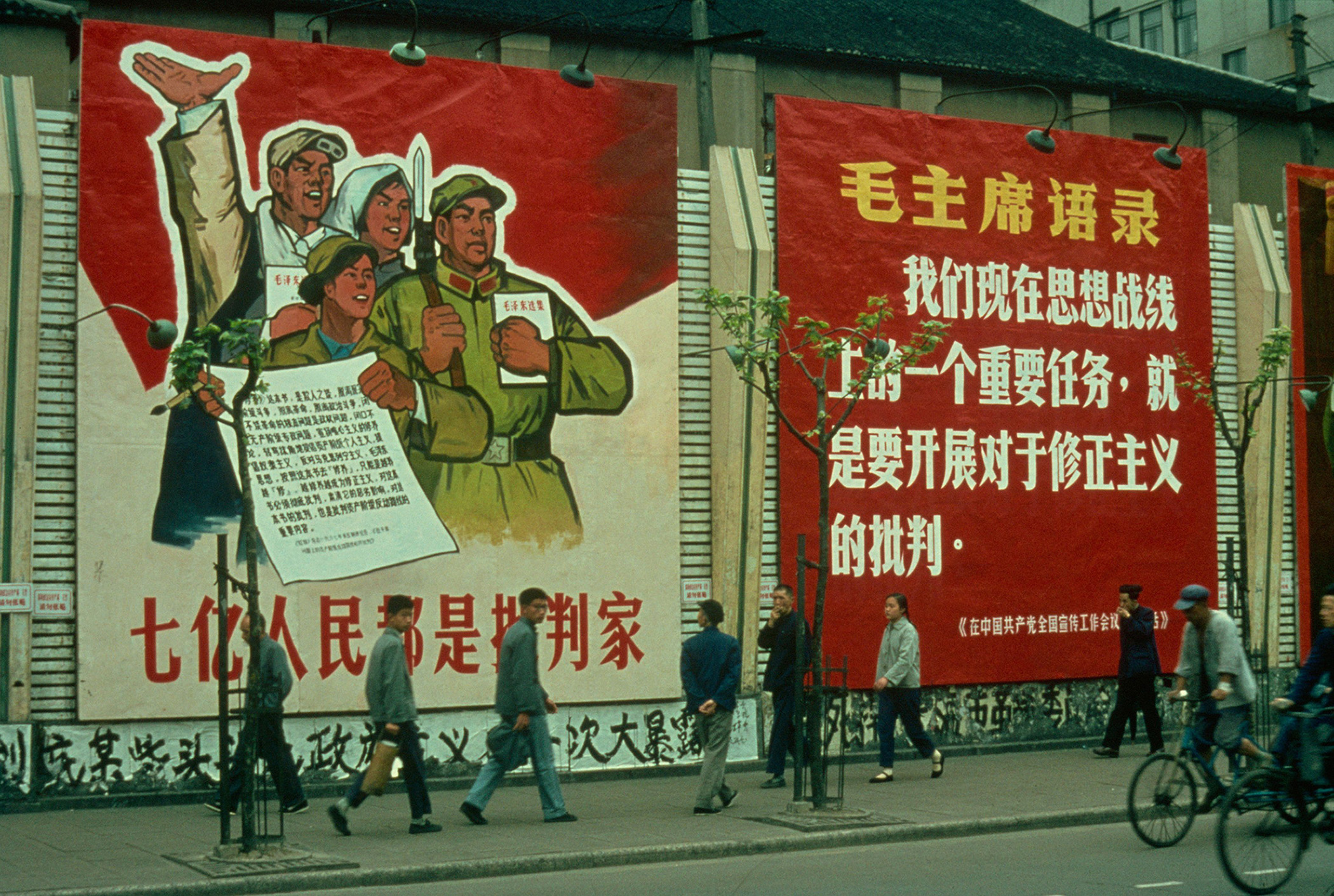
Photograph taken of posters along the Nanking Road during the Cultural Revolution in 1967, Shanghai, China. robertharding / Alamy Stock Photo
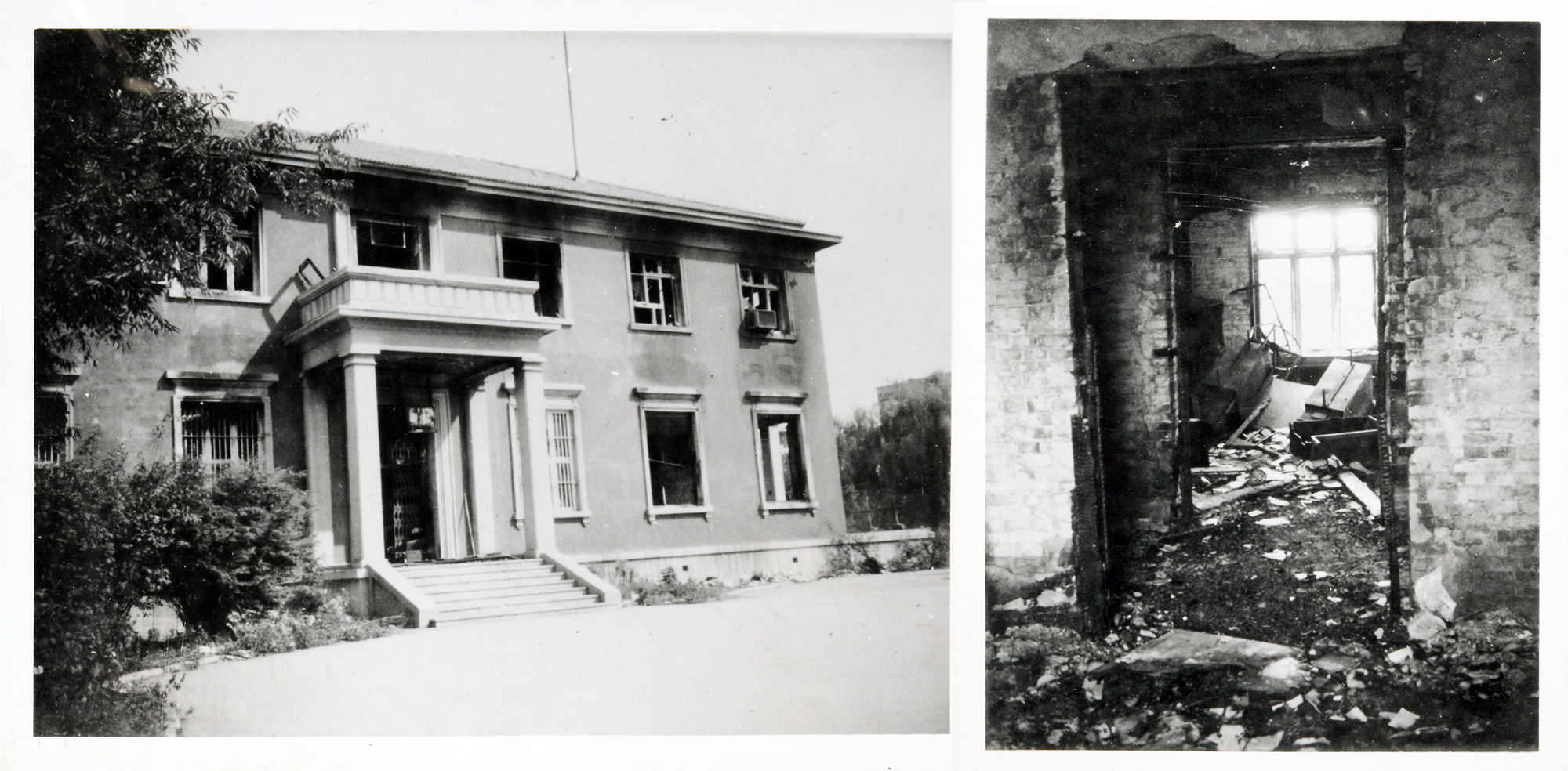
Photos of the aftermath of the burning of the British Legation in Beijing by Red Guards, 23 August 1967. Catalogue ref: FCO 78/13 (10)
In August 1967, the British Legation in Beijing – the precursor to the British embassy – was stormed by an angry crowd. Crowds had been gathering regularly outside of the compound with messages opposing British imperialism. During this time, Britain still held on to the colony of Hong Kong, which had been ceded by China in the 19th century (learn more in our lesson on Hong Kong and the Opium Wars). In 1967, Hong Kong was rocked by anti-government protests, which the British government had been suppressing through mass arrests and newspaper shutdowns. On August 20 1967, the crowd outside the legation issued an ultimatum for the British government in Hong Kong to release detained Chinese journalists.
Two days later, a crowd of thousands stormed the legation. They set fire to the cars outside and smashed furniture and windows. The staff inside, sustaining injuries from the crowd but no casualties, were eventually able to escape with the help of the People’s Liberation Army.
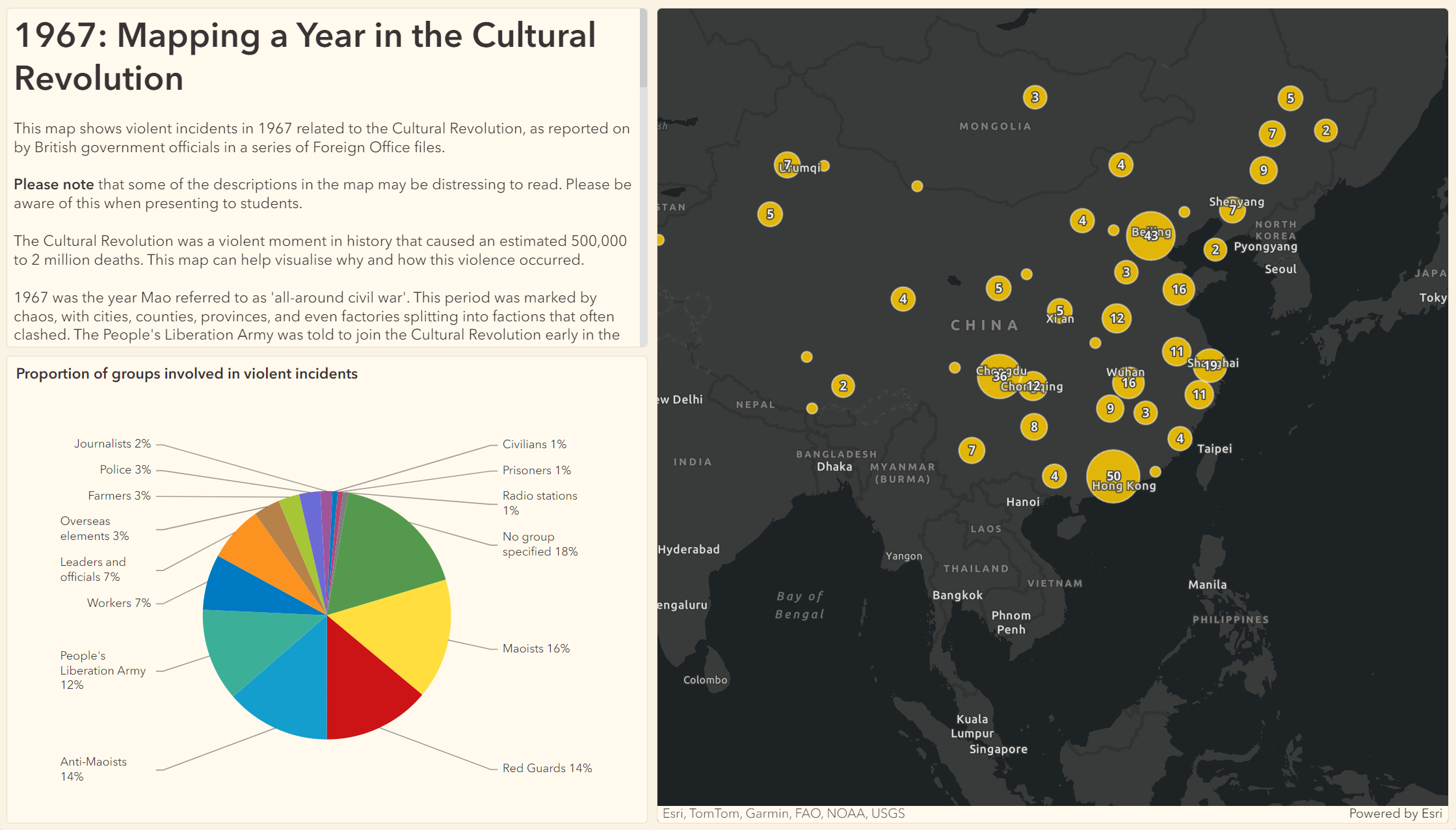
This map shows violent incidents in 1967 related to the Cultural Revolution, as reported on by British government officials in a series of Foreign Office files.
The interactive version of this map is hosted on an external site that does not yet meet our criteria for accessibility. In the meantime, we provide an accessible spreadsheet of all events featured on the map.
View the interactive map of the Cultural Revolution.
Please note that some of the descriptions in the map may be distressing to read. The descriptions contain references to death and injury, often on a large scale. Please be aware of this when presenting to students or other users.
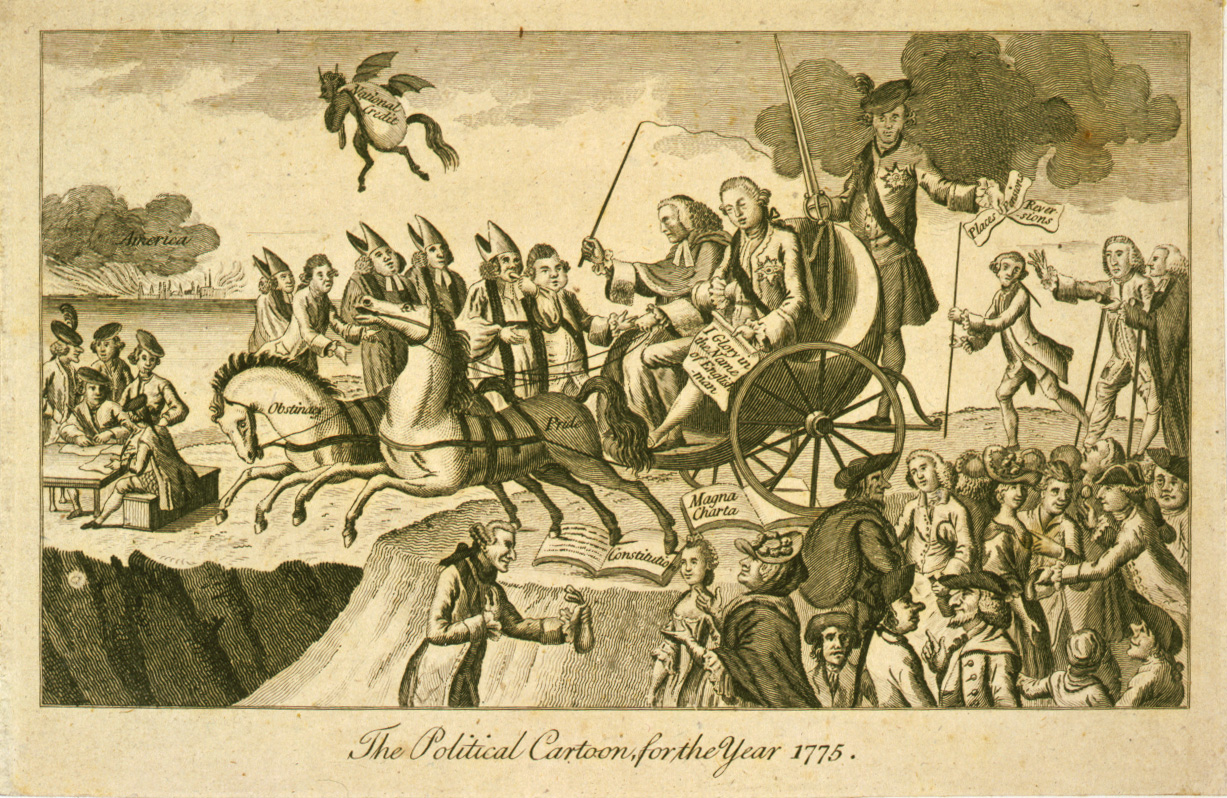
Cartoon engraving entitled ‘The Political Cartoon for the year 1774’ from the ‘Westminster Magazine’. Artist unknown. The ‘Westminster Magazine’ was printed in London, England by T. Wright, Essex Street, Strand, and sold by J. Bew, Paternoster-Row; and other booksellers in Great-Britain and Ireland, 1776-1783. Image courtesy of Library of Congress, Prints and Photographs Division, Cartoon Prints, British.
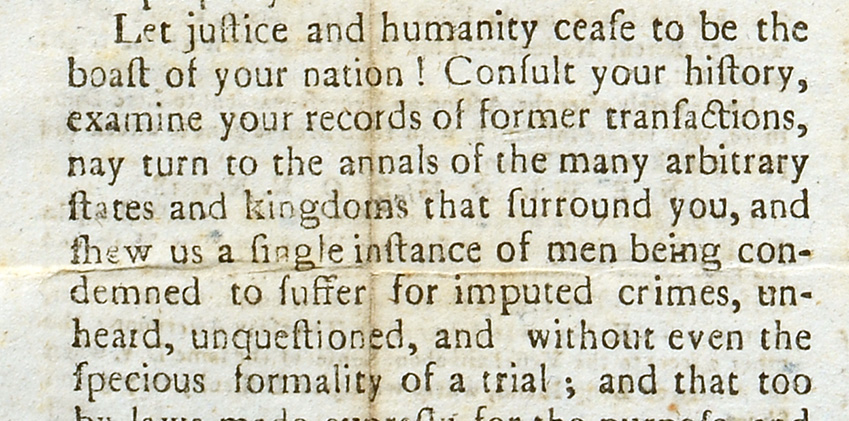
Extract from The New Hampshire Gazette, entitled ‘Continental Congress to People of Great Britain’, 2 December 1774. Catalogue ref: CO 5/939 (2 of 4)

Extract from the Boston Evening Post, 28 October 1765. Catalogue ref: CO 5/755 f.391
The Glorious Revolution mentioned in this source officially began with the reign of James II in 1685. William of Orange successfully invaded Britain and James II abdicated from the throne in 1688. The Glorious Revolution (1688–89) permanently established the role of Parliament and marked the move from absolute to constitutional monarchy.

Extract from the Declaration of Independence, 4 July 1776. Catalogue ref: EXT 9/76
On the 4 July 1776, the American colonies issued a joint Declaration of Independence, written by Thomas Jefferson. This laid down their desire to gain independence from Great Britain.