
A proclamation from Sir James Wright, Captain General, Governor and Commander in Chief, of His Majesty’s Province of Georgia, 1774. Catalogue ref: CO 5/663 f.156
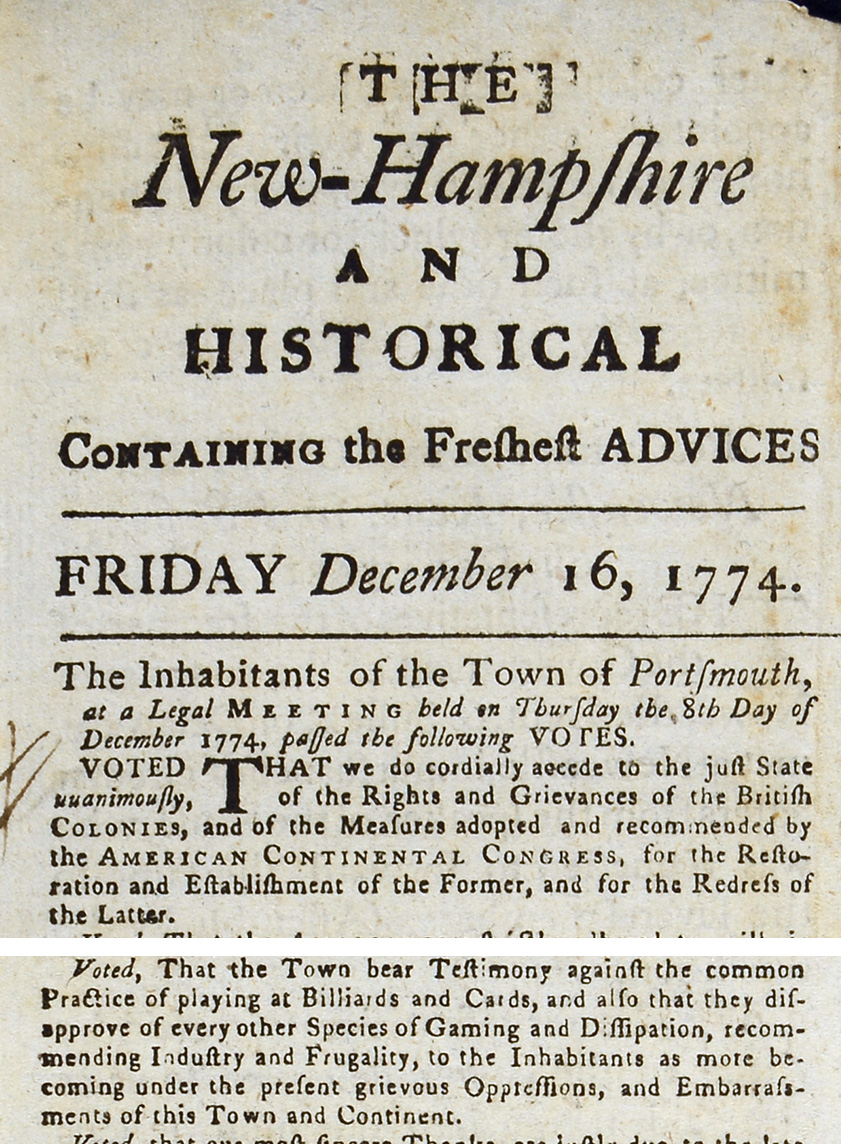
Extracts from the New Hampshire Gazette, 16 December 1774. Catalogue ref: CO 5/939 (1 of 4)
A meeting of the town of Portsmouth, New Hampshire concerning their grievances.
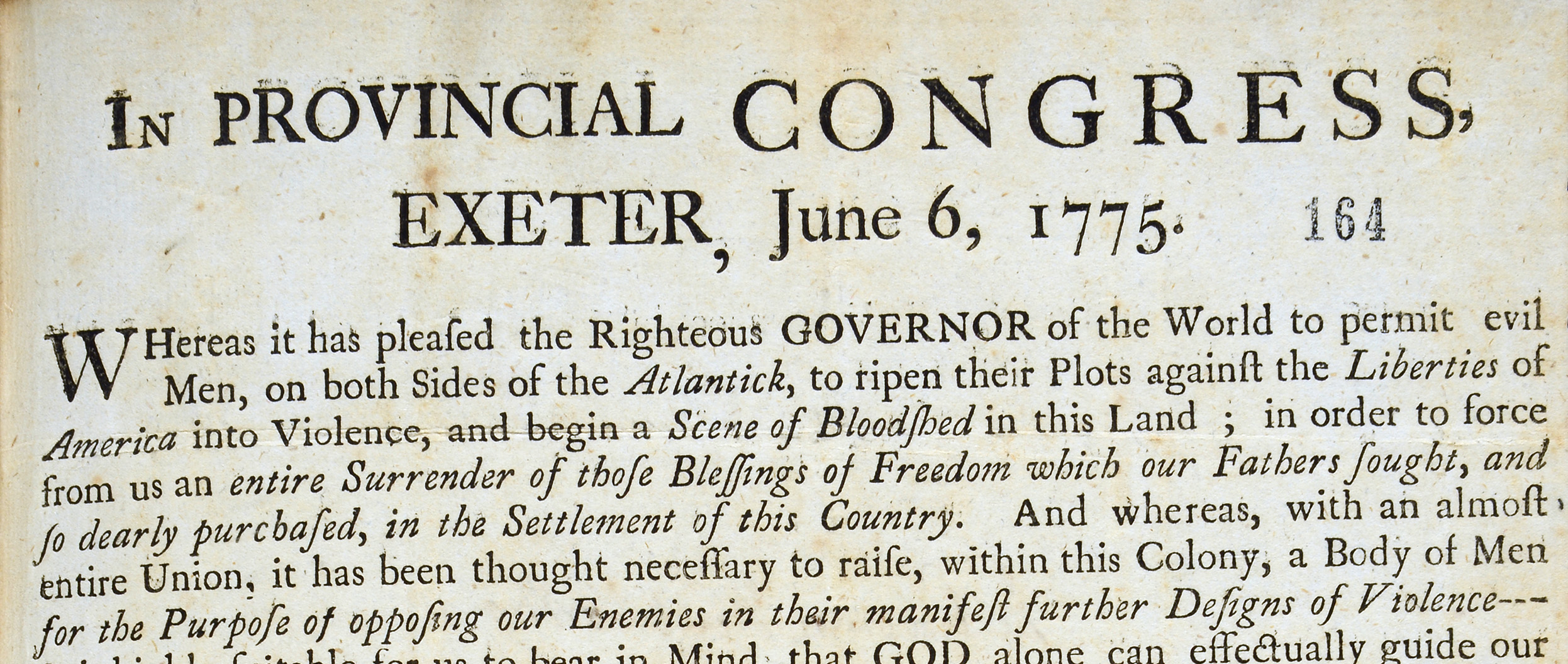
Extract from ‘In Provincial Congress, Exeter, New Hampshire, 6 June 1775’ by Matthew Thornton, President. Catalogue ref: CO 5/939 f.164
These resolutions were passed by the provincial congress of New Hampshire, in the town of Exeter.
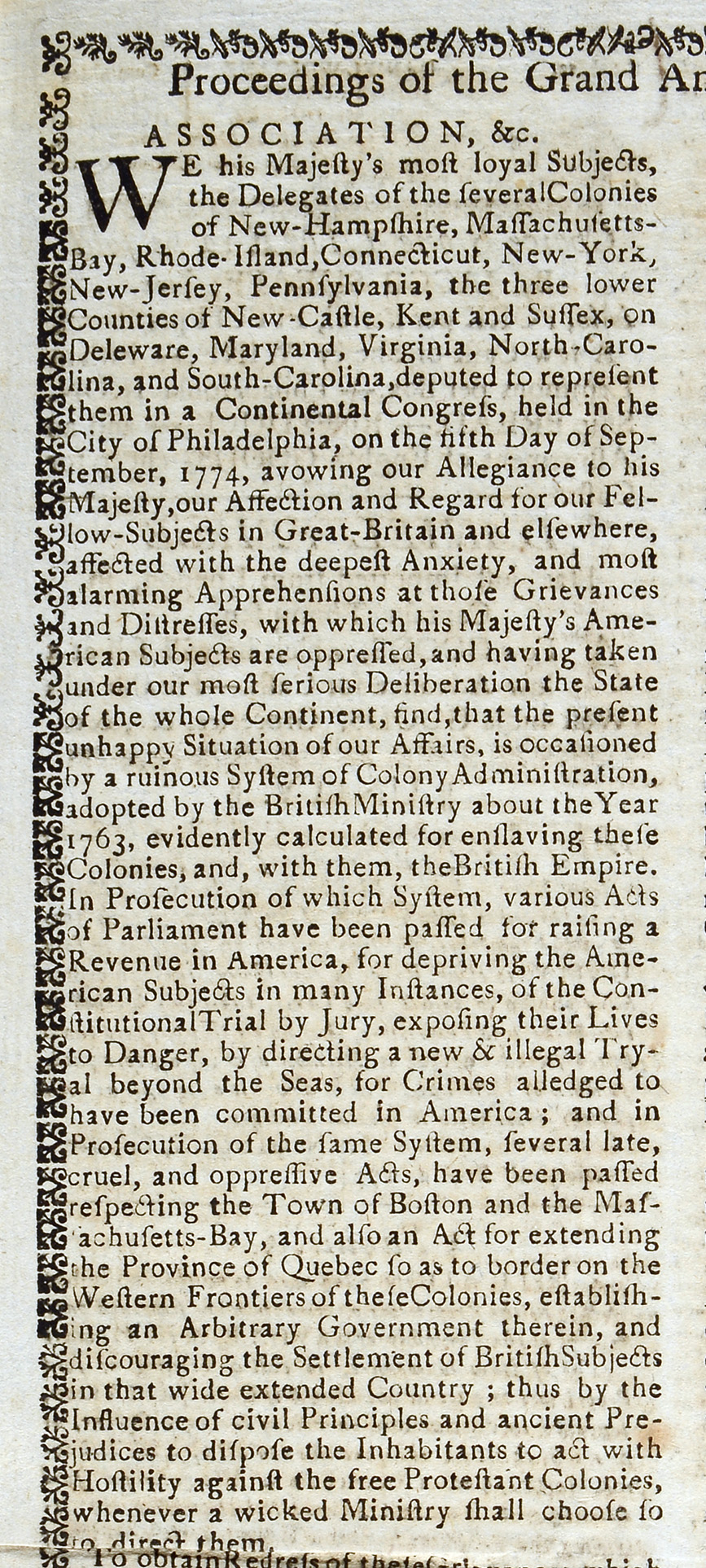
Extract from the ‘Proceedings of the Grand Continental Congress’, 5 September 1774. Catalogue Ref: CO 5/939 (3 of 4)
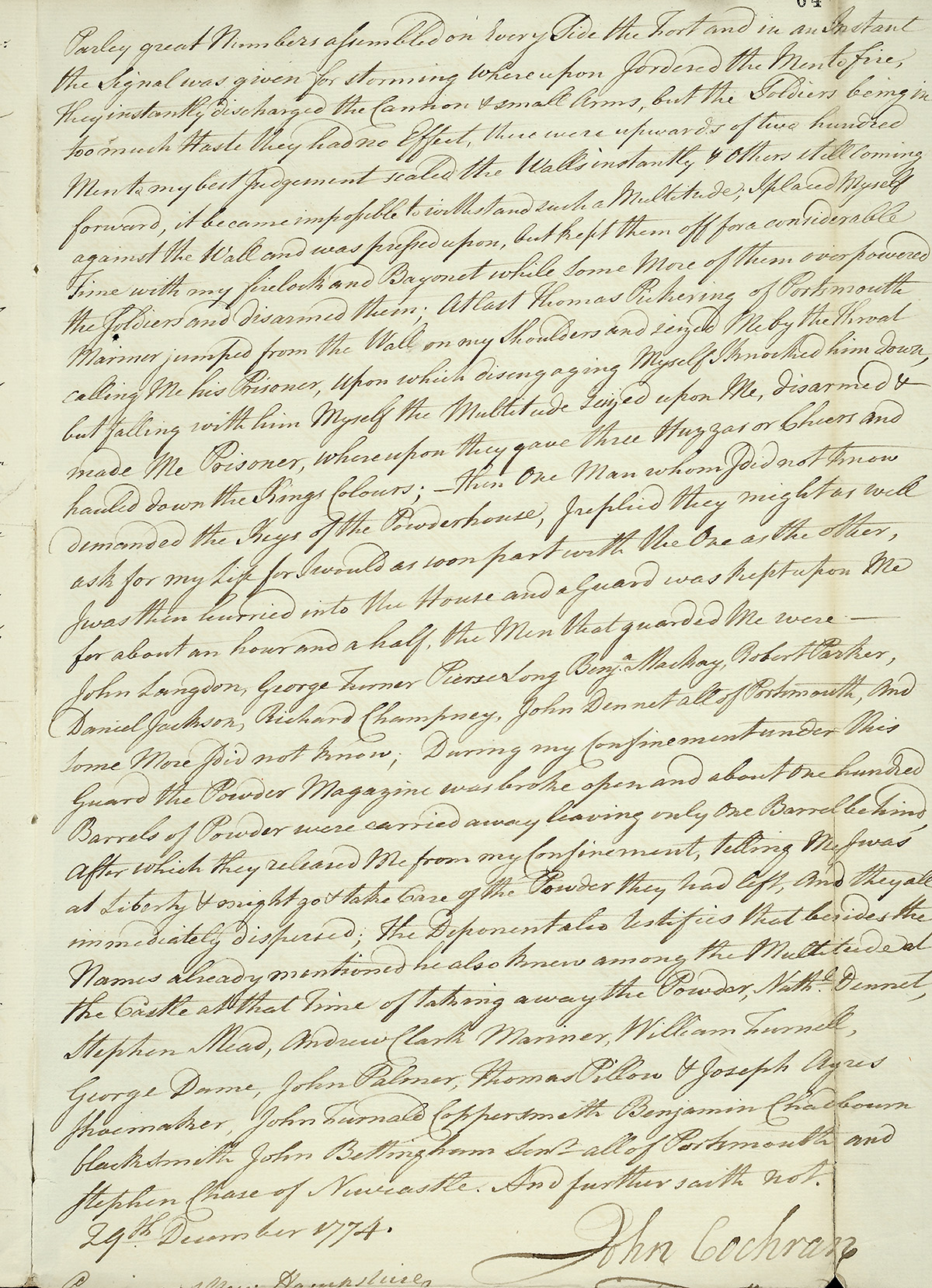
Extract from a Deposition [statement made by order of the Governor] by John Cochran concerning the attack on Fort William and Mary in New Castle, New Hampshire, 29 December 1774. Catalogue ref: CO 5/939 f.64
Captain John Cochran was assigned to the fort in 1771 and was originally from Londonderry. He was a Loyalist and defended the fort when attacked.
In 1774, the British Parliament passed four acts, which became known as the ‘Intolerable’ or ‘Coercive’ Acts. These closed Boston’s Port, dissolved the Massachusetts Assembly, moved trials in Massachusetts to Britain, and made provisions for British soldiers stationed on the continent. In response to these acts, colonists across America came together in a series of Continental Congresses to discuss how best to act next.

Extract from an eight-page inventory of lost and damaged property from the house of Thomas Hutchinson. Lieutenant Governor of Massachusetts Bay, 26 August 1765. Catalogue ref: CO 5/755 f.373
Hutchinson wrote to the Secretary of State with an inventory of his goods to request compensation for his losses, totalling, according to the Colonial Society of Massachusetts, £2,218. This source covers part of his claim for goods and furniture.

Extract from an article published in the Boston Evening Post, 28 October 1765, criticising the introduction of the Stamp Act. Catalogue ref: CO 5/755 f.391
The Stamp Act, passed by the British Parliament in March 1765, stated that paper goods in the colonies must carry a royal stamp. Its purpose was to raise revenue to pay for the cost of defending the colonies in the Seven Years War against France, which had ended two years earlier. The colonists saw this as a tax that they had not consented to and was passed without consideration from their colonial assemblies. Therefore, in anticipation of the first stamps arriving in the colonies in November, the colonists rioted against the law.


Map description
The map shows the southern coast of England and the northern coast of France. A box around the coast near Bayeux reflects a zoomed-in box in the cover of the map, showing close-ups of the beaches. The beaches are labelled Utah, Omaha, Gold, Juno and Sword.
Dotted lines show where troops were coming from and which beaches they landed at. A line labelled “American troops en route to Utah and Omaha beaches” goes from Falmouth, Fowey, Plymouth, Dartmouth, Torquay, Exeter, Weymouth and Poole to the Utah and Omaha beaches. A line labelled “British troops en route to Gold beach” goes from Southampton to Gold Beach. A line labelled “Canadian troops en route to Juno beach” goes from Portsmouth to Juno beach. A final line labelled “British troops en route to Sword beach” goes from Newhaven to Sword beach.
