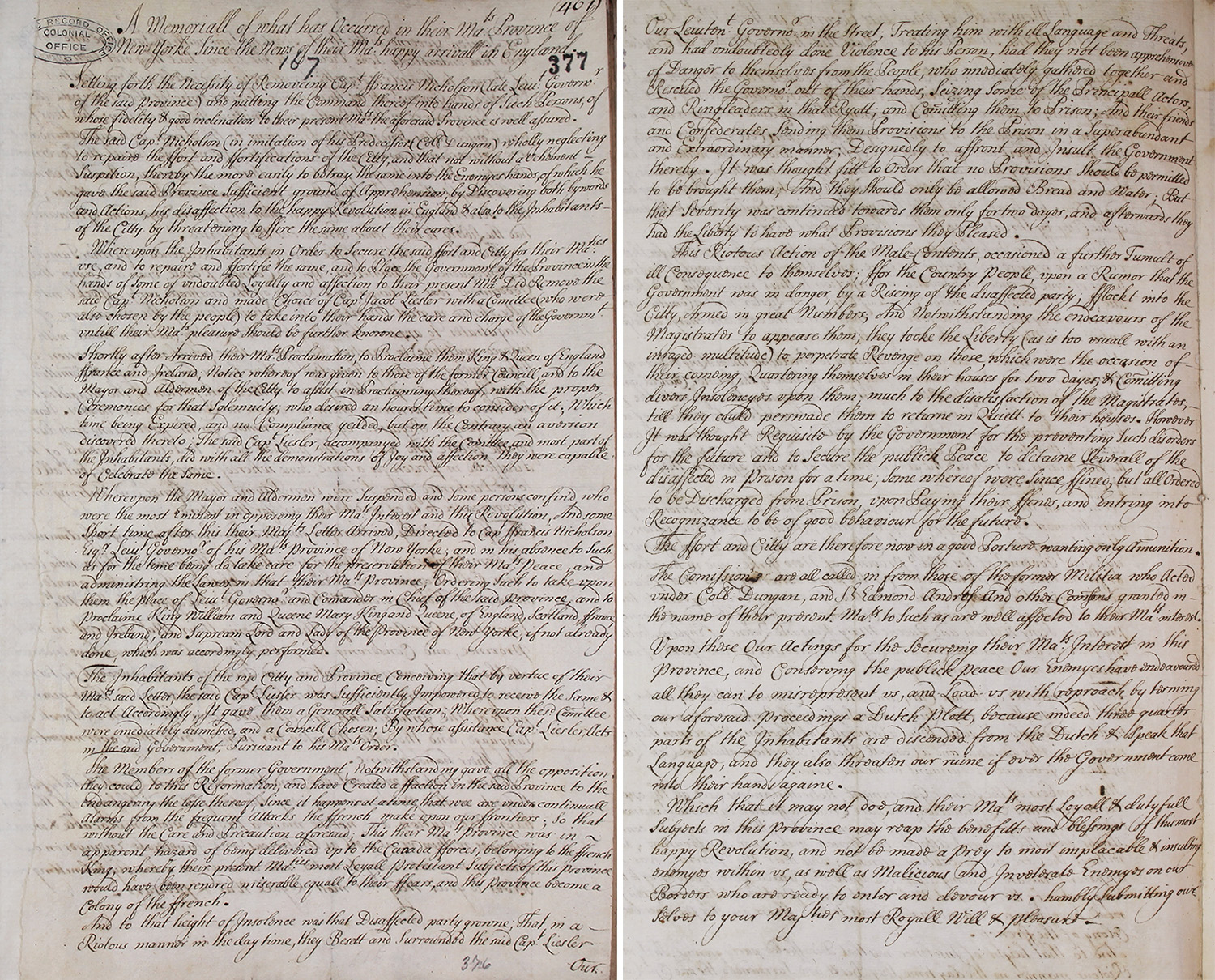
Document entitled: ‘Memorial from New York on the replacement of Governor Nicholson with Governor Leisler’, June 1690. Catalogue ref: CO 5/1081 f.377-8.
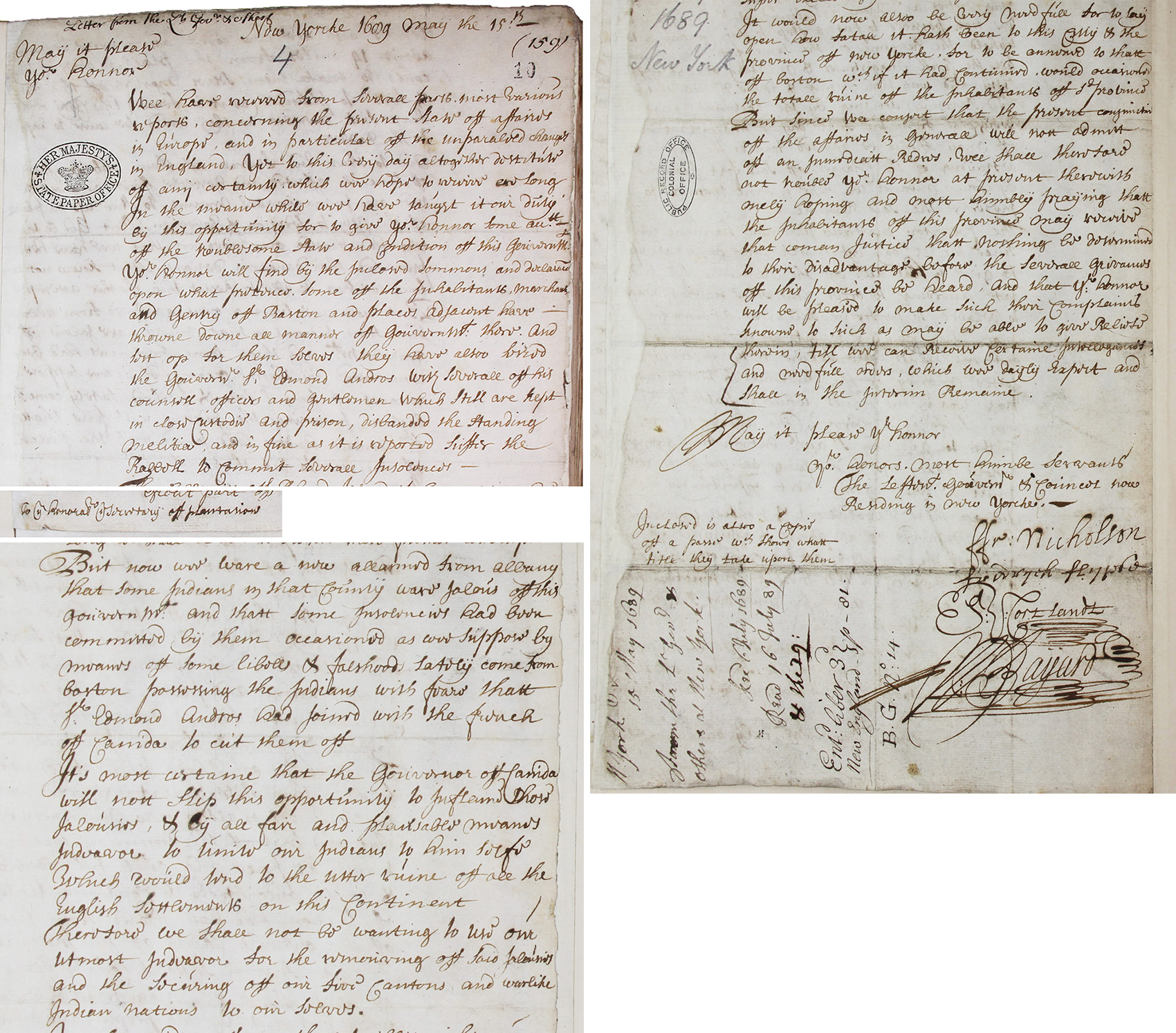
Extracts from a ‘Letter concerning responses to the Glorious Revolution and the unrest in the colonies’, May 15 1689. Catalogue ref: CO 5/1081 f.10-11
Events in England impacted the colonies in the Americas. The consequences of the Glorious Revolution varied in each colony from a peaceful transfer of power to civil war, as royal governors previously appointed by James II were replaced by new representatives who were loyal to William III. This letter is written by the governors in New York who had been loyal to James II.
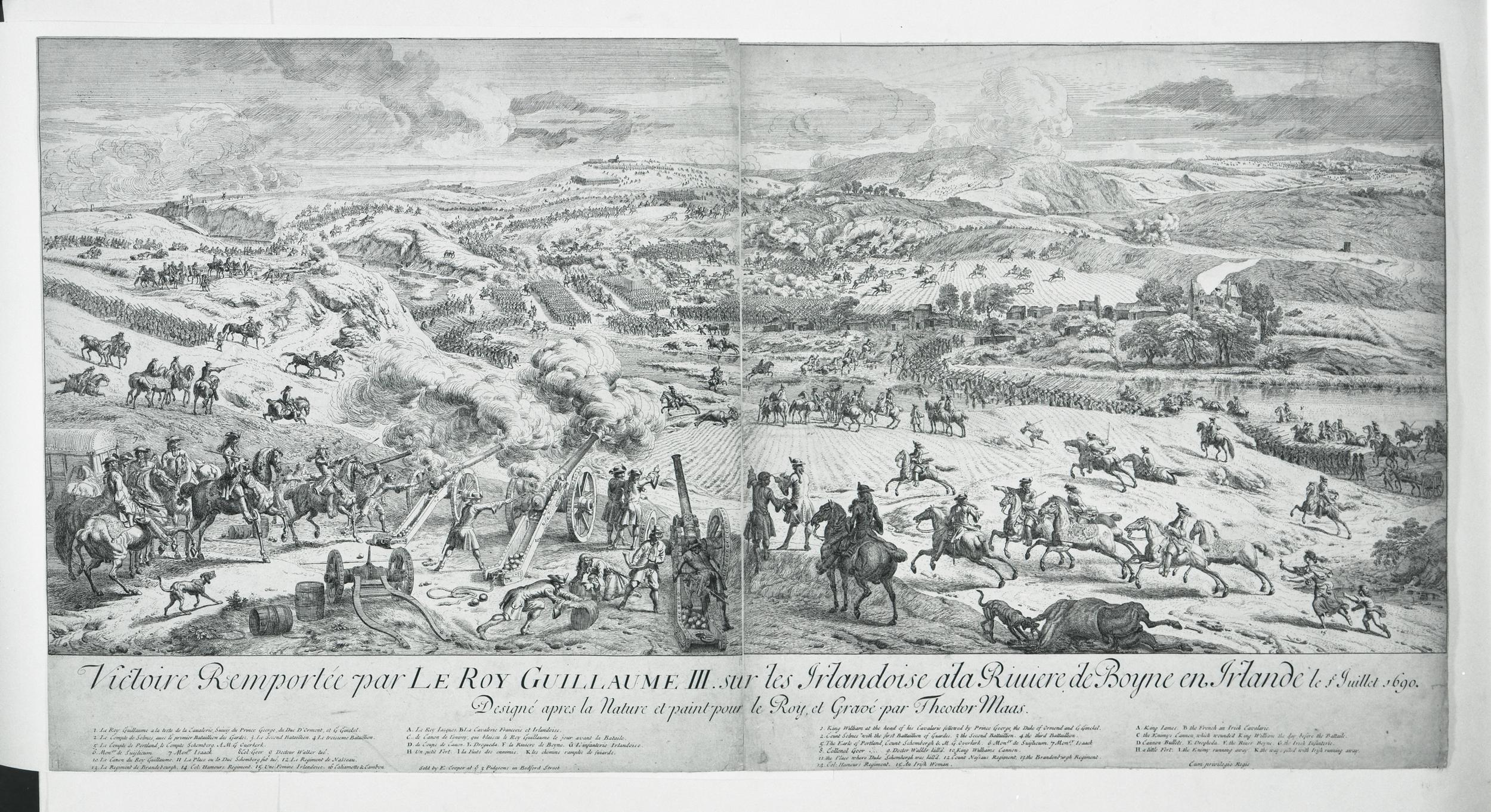
Source 5b: Panoramic view of the Battle of the Boyne, and the victory of King William III, 1691, etching. Catalogue ref: MPHH 1/34.
This etching was made by Dirck Maas, William III’s official Dutch battle painter, who was present with William at the Battle of the Boyne. Published by Edward Cooper, 1791.
© The Trustees of the British Museum. Shared under a Creative Commons Attribution-NonCommercial-ShareAlike 4.0 International (CC BY-NC-SA 4.0) licence.
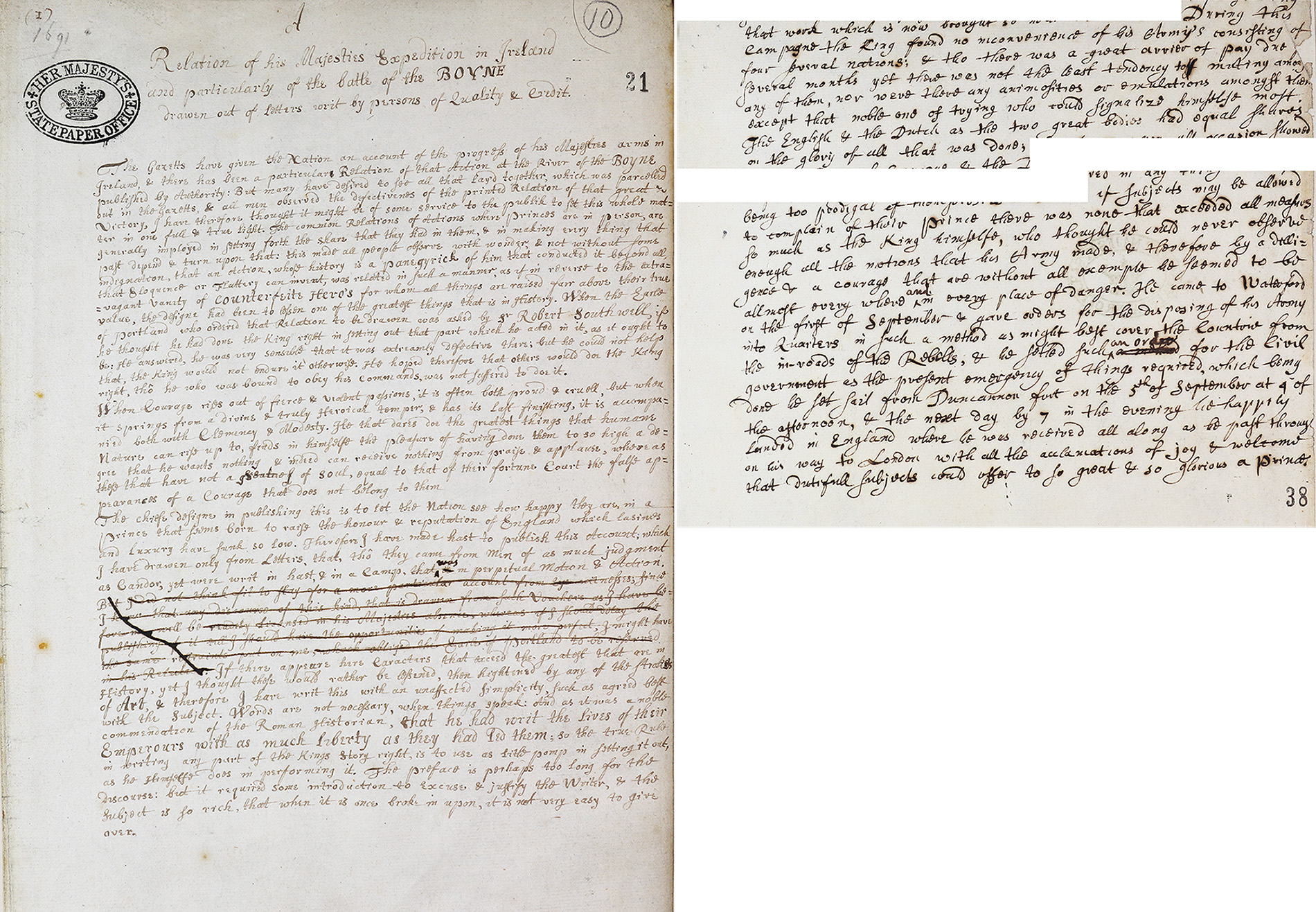
Extracts from a report entitled ‘Relation of his Majesty’s Expedition in Ireland and particularly of the Battle of the Boyne drawn out of Letters writ by ‘Persons of Quality’. Catalogue ref: SP 8/11/11 f21& f39
This document provides a substantial account of William of Orange’s expedition in Ireland and the Battle of the Boyne on 1 July 1690. When William arrived in England in 1689, James II fled to France. However, he was determined to take up the conflict in Ireland, arriving in the country in March 1689. James II was supported by a population who were largely Catholic. An army sent by William III arrived in Ireland in August 1689 to regain control. Fighting ensued until the Battle of the Boyne, after which James fled from Ireland, and William consolidated his rule there in the following twelve months. Historically, the Battle of the Boyne has been seen as a decisive moment in Irish history that secured the domination of Anglican Protestantism in Ireland.
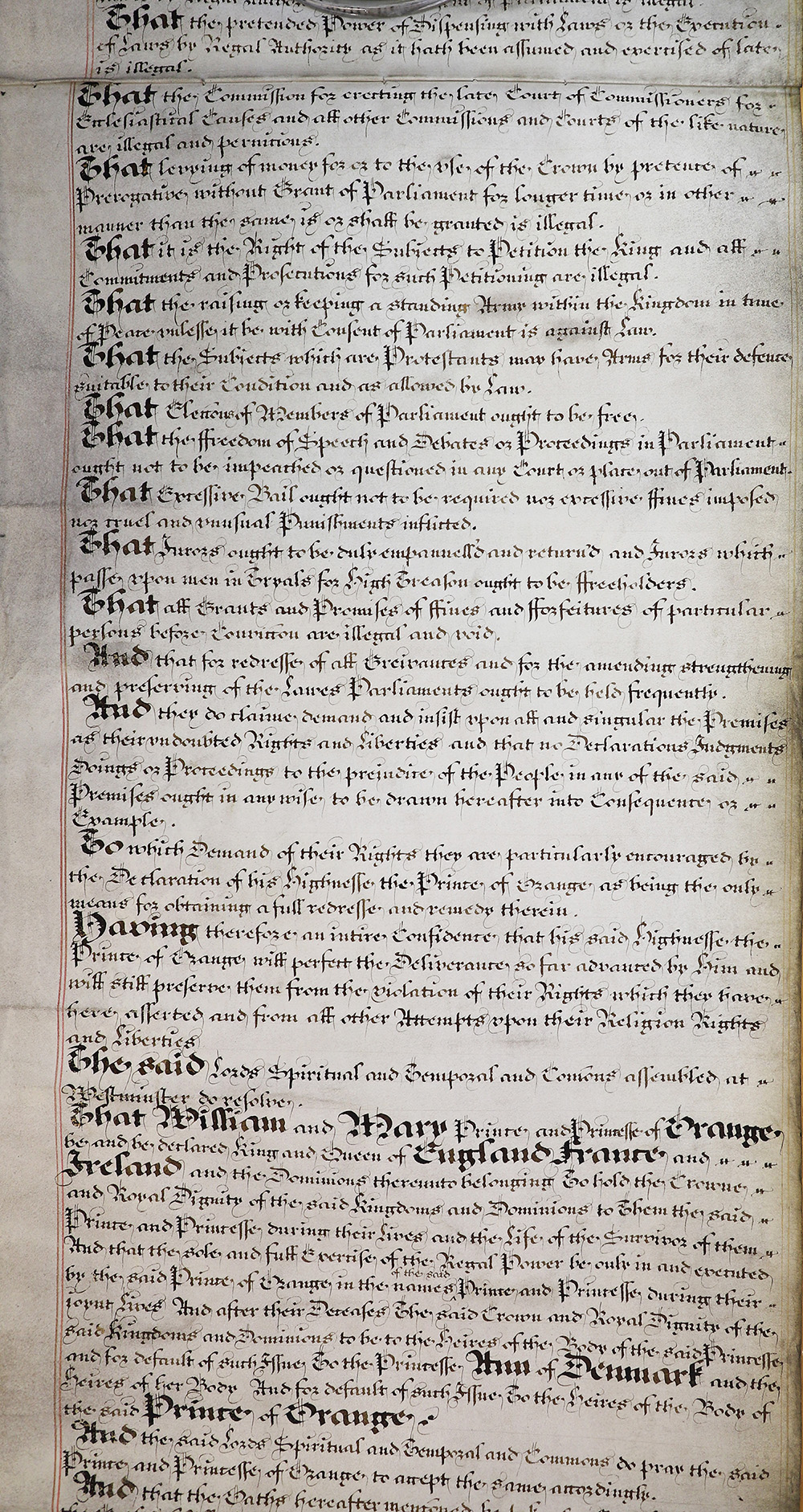
Extract 3: Enrolment of the Declaration of the 12 February of the Lords Spiritual and Temporal and Commons [the ‘Declaration of Rights’], with the king’s answer. Catalogue ref: C 212/18/1
This document is the Declaration of Rights, also known as the Bill of Rights, which was created by the English Parliament in February 1689. It established the rights of the English citizens and the responsibilities of the monarchy.
The Ecclesiastical Commission was an English court of enquiry set up by James II in July 1686. It was given jurisdiction over the governance of the Church of England and allowed to try offences punishable under church law. It was designed to remove any opposition to James II’s religious policy favouring a return to Catholicism.
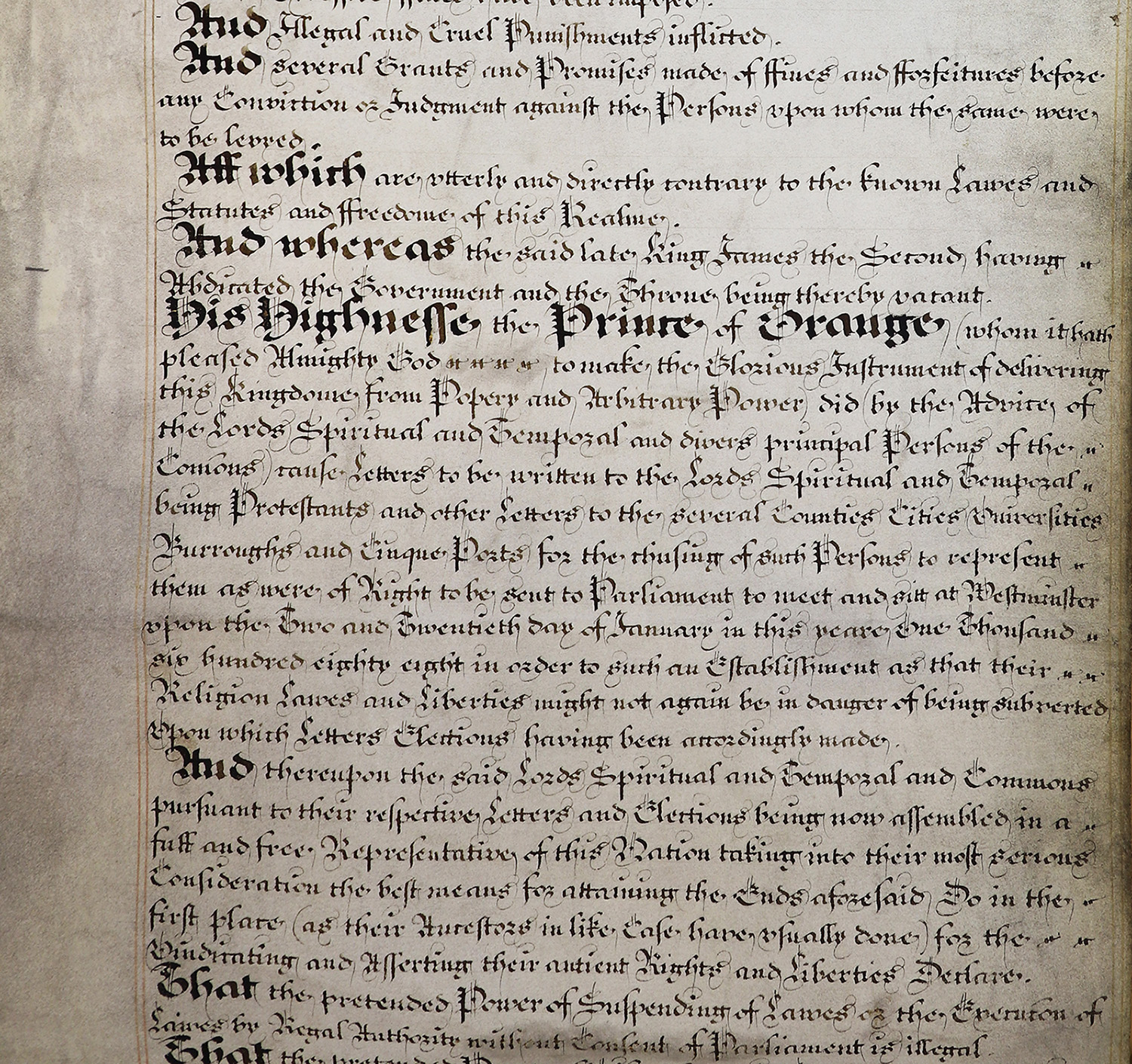
Extract 2: Enrolment of the Declaration of the 12 February of the Lords Spiritual and Temporal and Commons [the ‘Declaration of Rights’], with the king’s answer. Catalogue ref: C 212/18/1
This document is the Declaration of Rights, also known as the Bill of Rights, which was created by the English Parliament in February 1689. It established the rights of the English citizens and the responsibilities of the monarchy.
The Ecclesiastical Commission was an English court of enquiry set up by James II in July 1686. It was given jurisdiction over the governance of the Church of England and allowed to try offences punishable under church law. It was designed to remove any opposition to James II’s religious policy favouring a return to Catholicism.
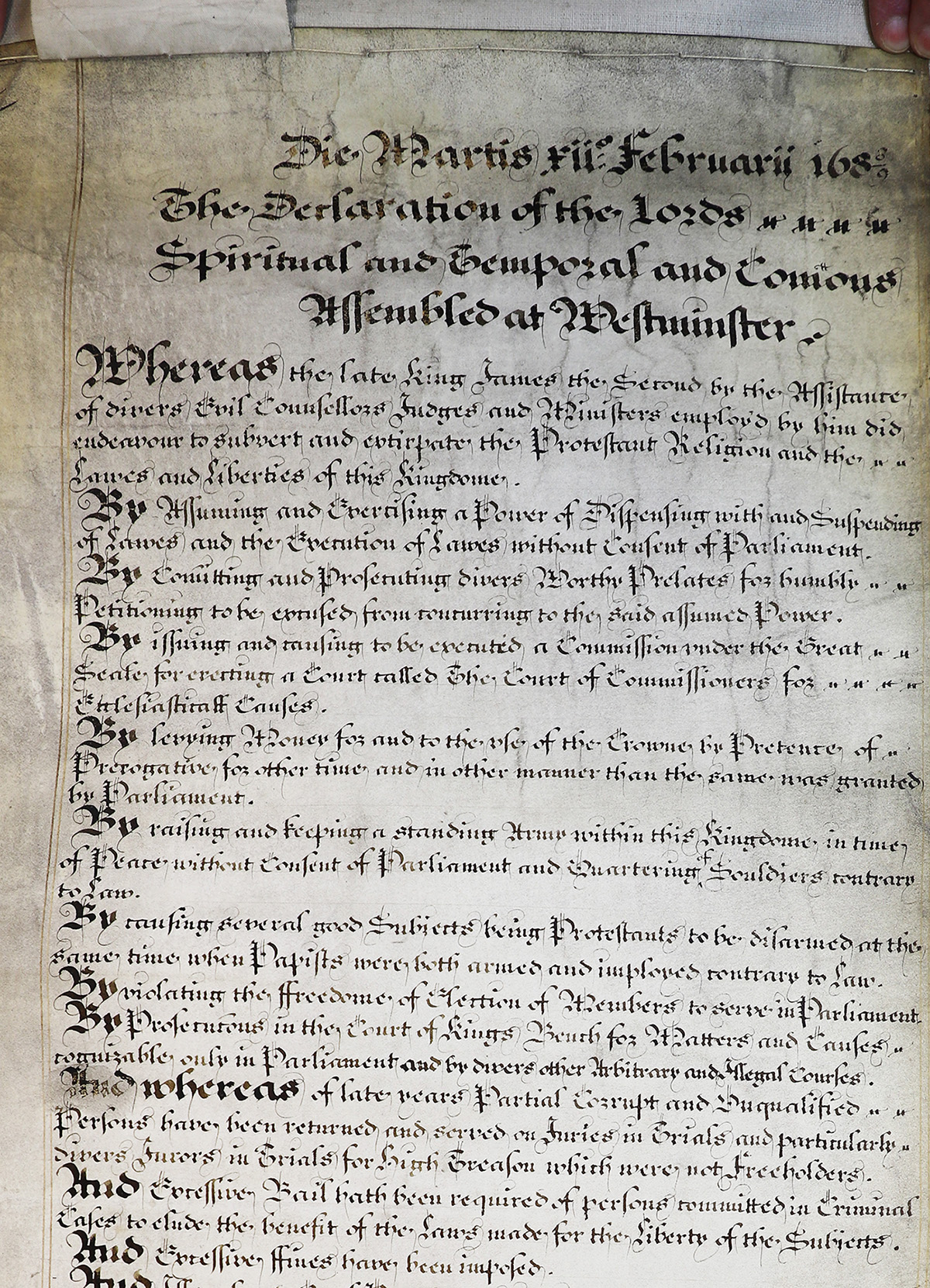
Extract 1: Enrolment of the Declaration of the 12 February of the Lords Spiritual and Temporal and Commons [the ‘Declaration of Rights’], with the king’s answer. Catalogue ref: C 212/18/1
This document is the Declaration of Rights, also known as the Bill of Rights, which was created by the English Parliament in February 1689. It established the rights of the English citizens and the responsibilities of the monarchy.
The Ecclesiastical Commission was an English court of enquiry set up by James II in July 1686. It was given jurisdiction over the governance of the Church of England and allowed to try offences punishable under church law. It was designed to remove any opposition to James II’s religious policy favouring a return to Catholicism.
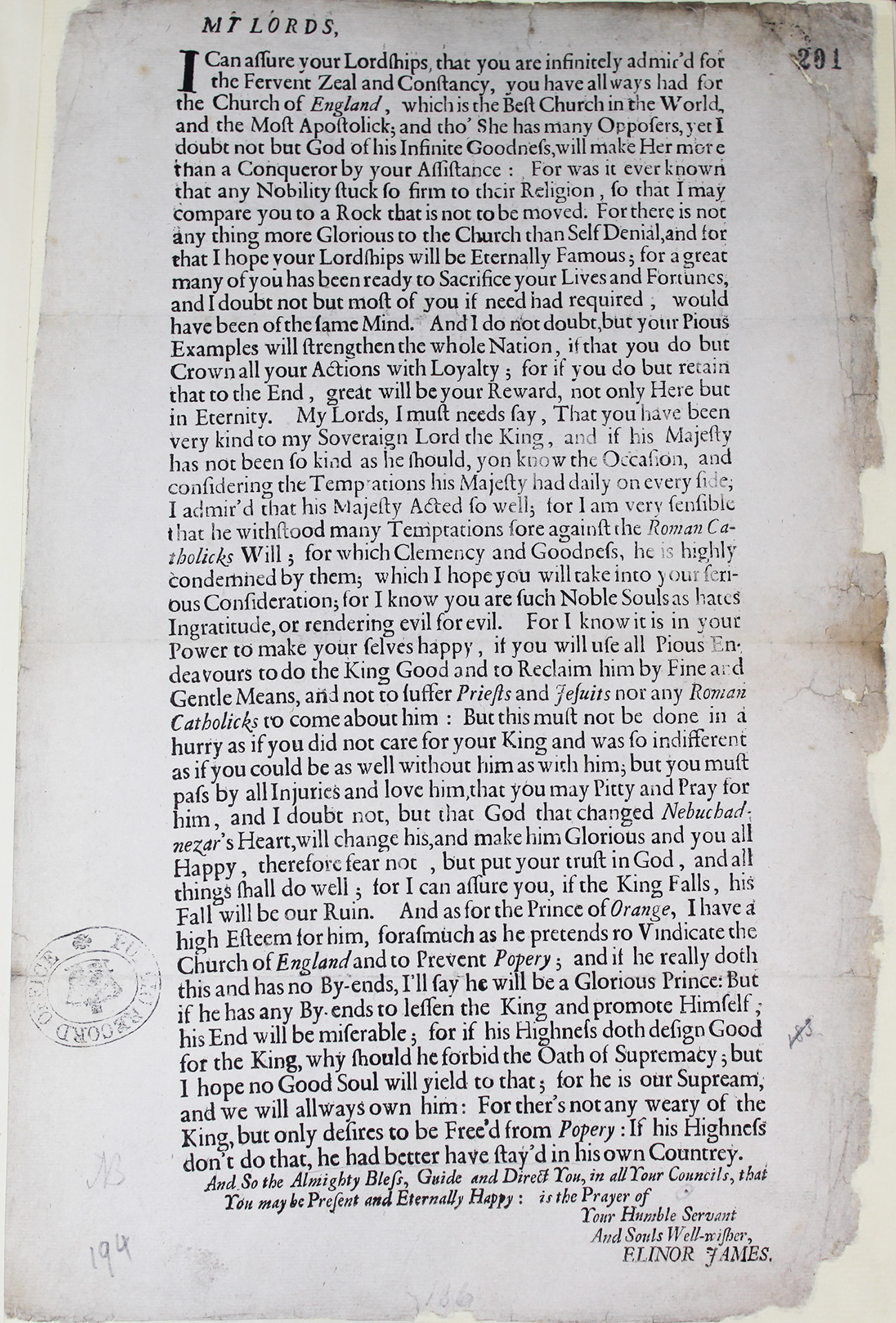
An untitled, printed pamphlet by Elinor James c1645-1781), November 1688. Catalogue ref: SP 31/4/201
This pamphlet, published in late 1688, is an Address to the House of Lords.
Elinor James wrote over ninety pamphlets on different political, religious or commercial matters. She commented on the Glorious Revolution, the Union of England and Scotland in 1707 and the Jacobite uprising of 1715. She opposed the coronation of William III. She was imprisoned and fined in 1689 for publishing a pamphlet declaring his reign to be illegitimate.
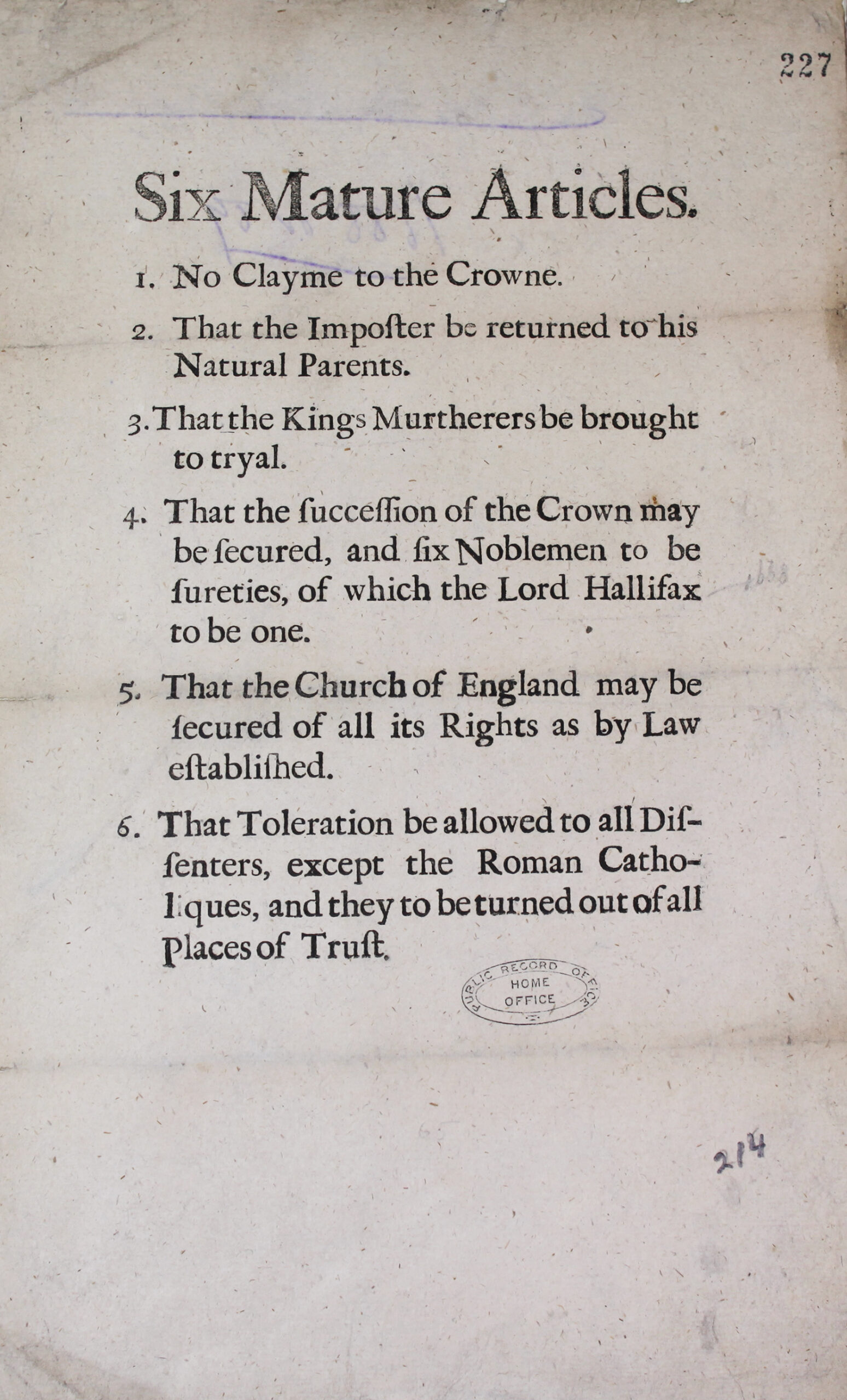
A printed handbill entitled: ‘Six Mature Articles’, Dec 1688-Jan 1689. Catalogue ref: SP 31/4/217
This document outlines William’s motives for coming to England, and the specific object of his expedition.
James Francis Edward Stuart (1688-1766) was born to James II (1633-1701) and his second wife, Mary of Modena (1658-1718) on 10 June 1688. His birth was a subject of national controversy.
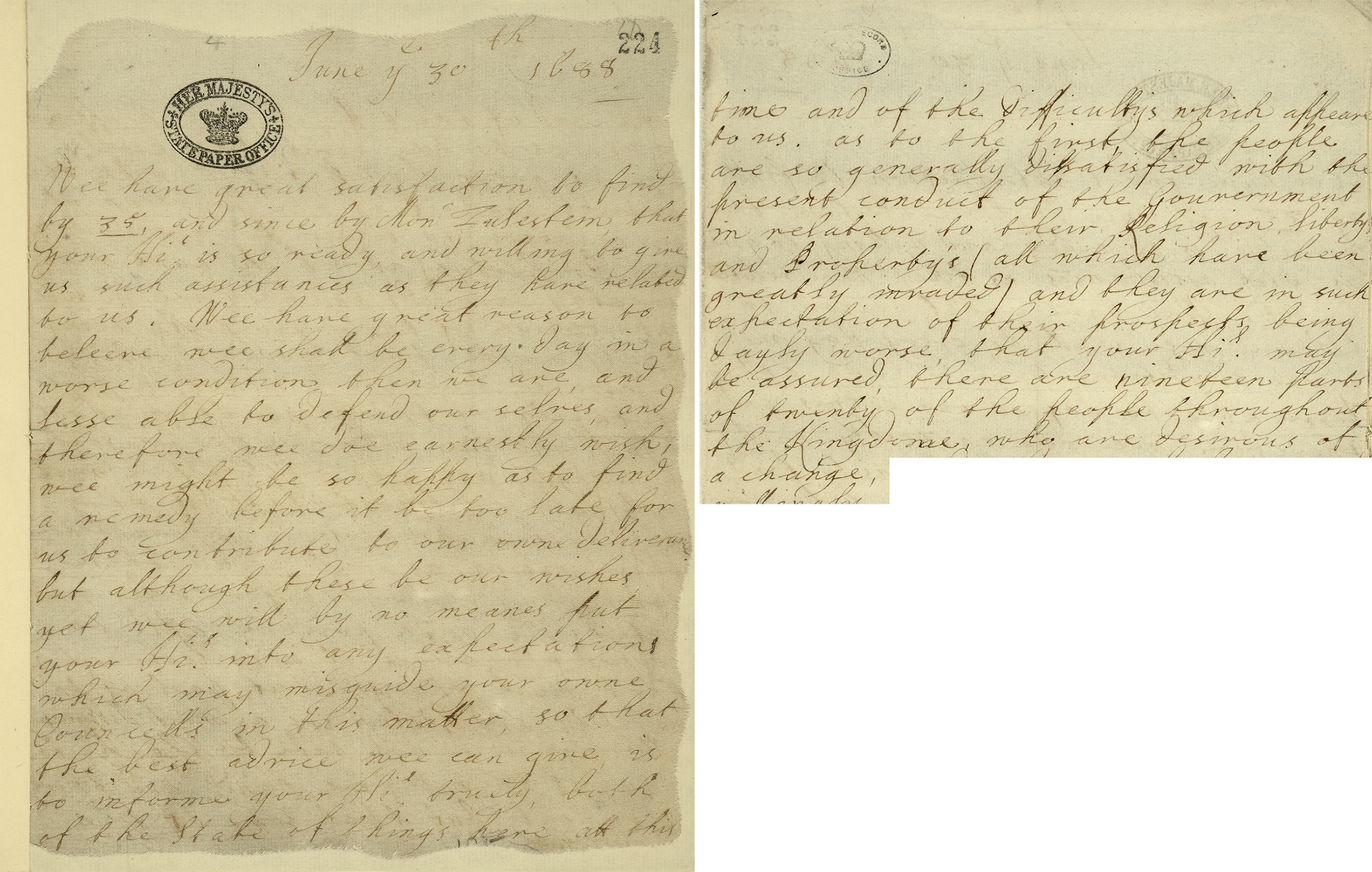
An extract from a letter sent from the ‘Immortal Seven’ to the Prince of Orange inviting him to become King of England, 30 June 1688. Catalogue ref: SP 8/1/224.
This extract comes from a document that was written in June 1688. This letter was written by a group that later became known as the ‘Immortal Seven’. This included: Edward Russell, Henry Sidney, Lord Richard Lumley, Henry Compton, Bishop of London, Charles Talbot, Earl of Shrewsbury, William Cavendish, Earl of Devonshire, and Thomas Osborne, Earl of Danby. In this letter, they invite William of Orange to invade England and promise that they will support him when he arrives.