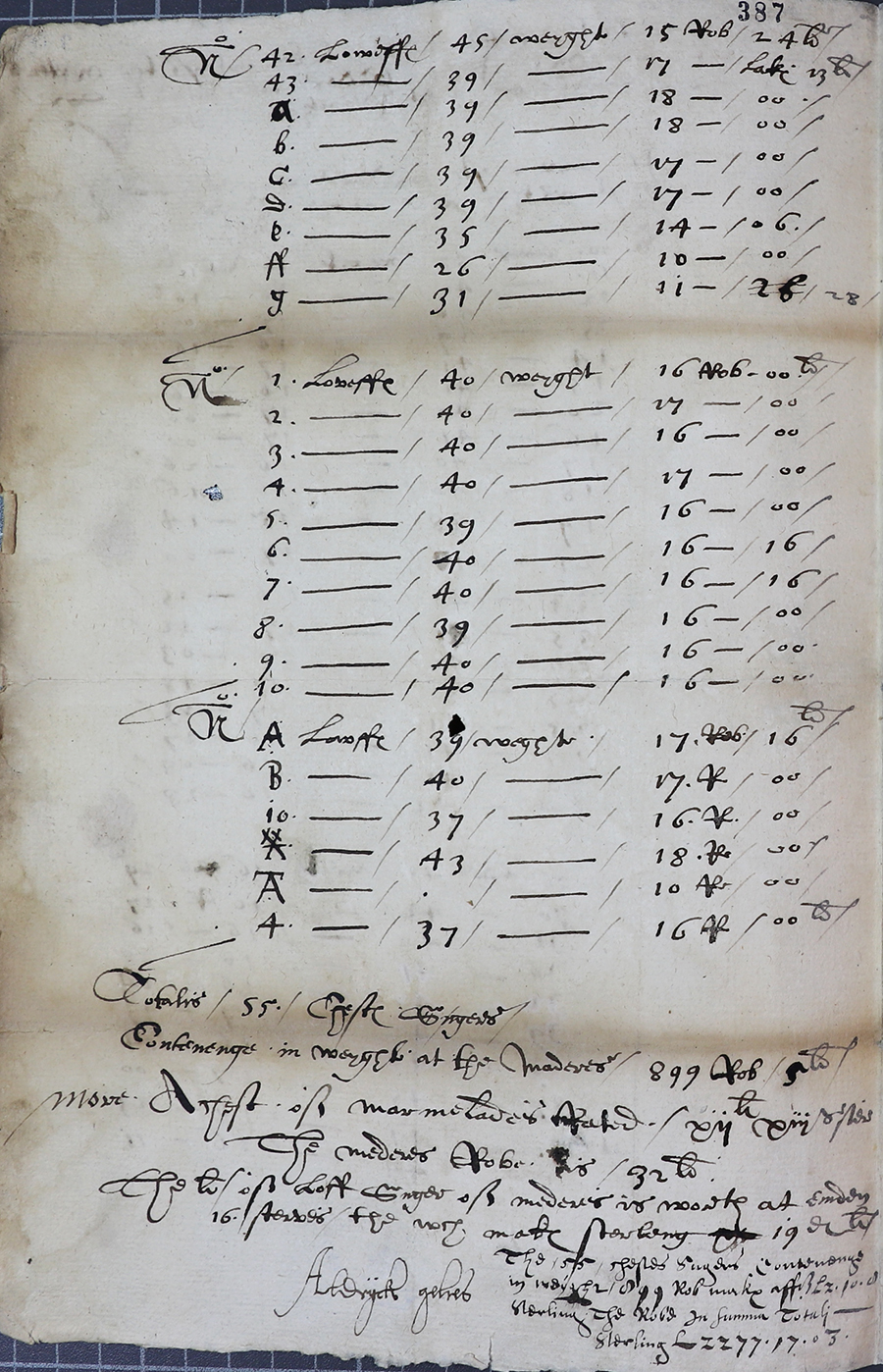
Extracts from an inventory of goods taken from the Neptune of Emden by Sir John Hawkins, 1590, Catalogue Ref: HCA 30/840/171 f.386-389.
Take a look at this list of goods, also known as an inventory. This inventory was used in the High Court of Admiralty as part of a collection of papers called the Prize Papers.
The Prize Papers are a collection of documents that were found on ships immediately after they were captured by an enemy during wartime. These include documents such as bills, inventories, and accounts. These would be used as evidence in the Admiralty Court to determine whether the ship and its goods were ‘lawful’ prize that could be kept by the people who captured it, or whether it had to be returned to its enemy.
Sir John Hawkins was a famous English trader and was son of the famous slave trader and explorer, who went by the same name. John Hawkins took many Spanish ships as Prize during England’s War with Spain (1585-1604). Many of these Spanish ships contained cargoes of goods which had been grown in Brazil. These goods were then taken back to England. This document concerns the Prize goods that were taken from the ship The Neptune by an English captain Sir John Hawkins.
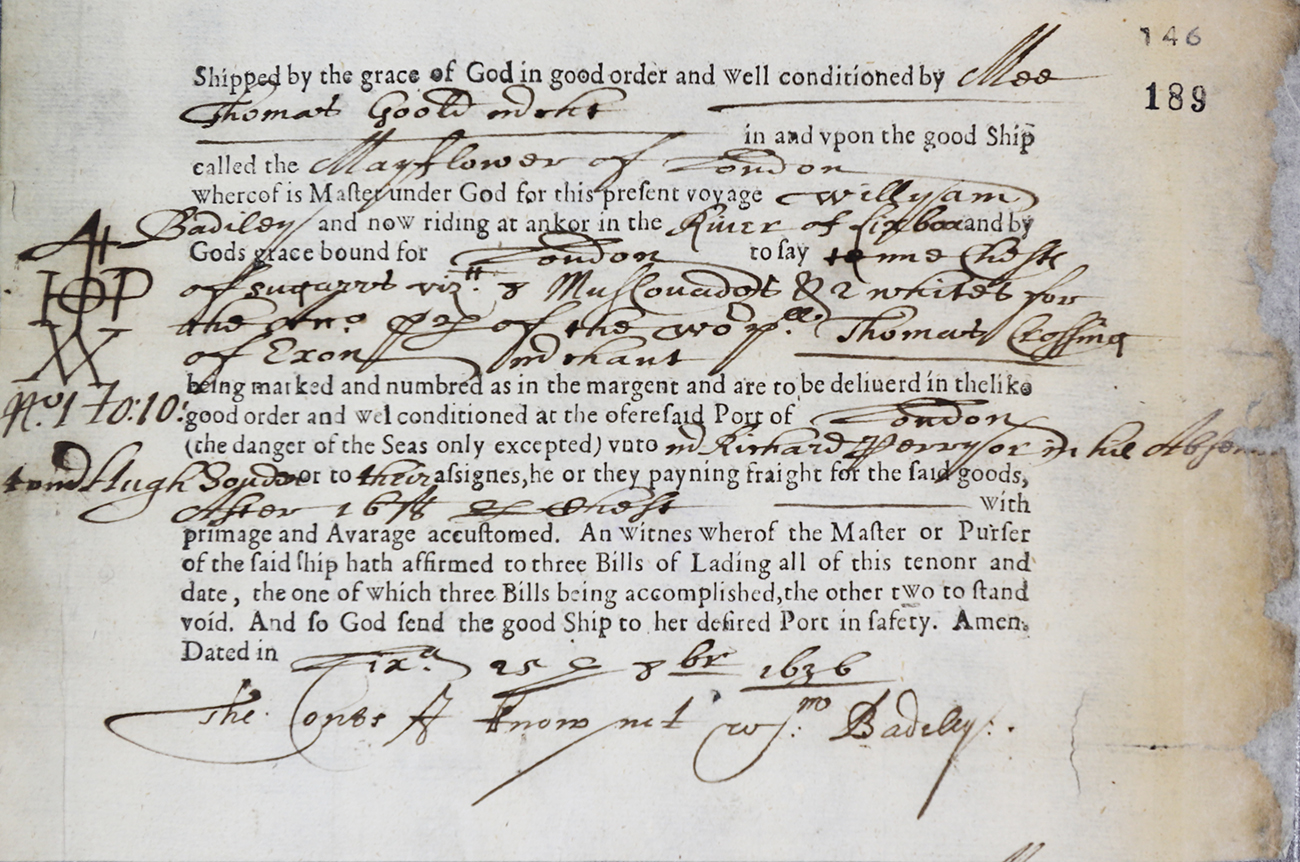
‘Bill of Lading’ for sugar for Thomas Crossing in the Mayflower of London (Master William Badeley), Oct 6. 1636. Catalogue Ref: HCA 30/840/79 f.189.
A ‘Bill of Lading’ was a receipt given by the master of a merchant ship to the person taking their goods. The master of the ship was responsible for the safe delivery of the goods. It was a way of stopping goods from being stolen and sold on to others.
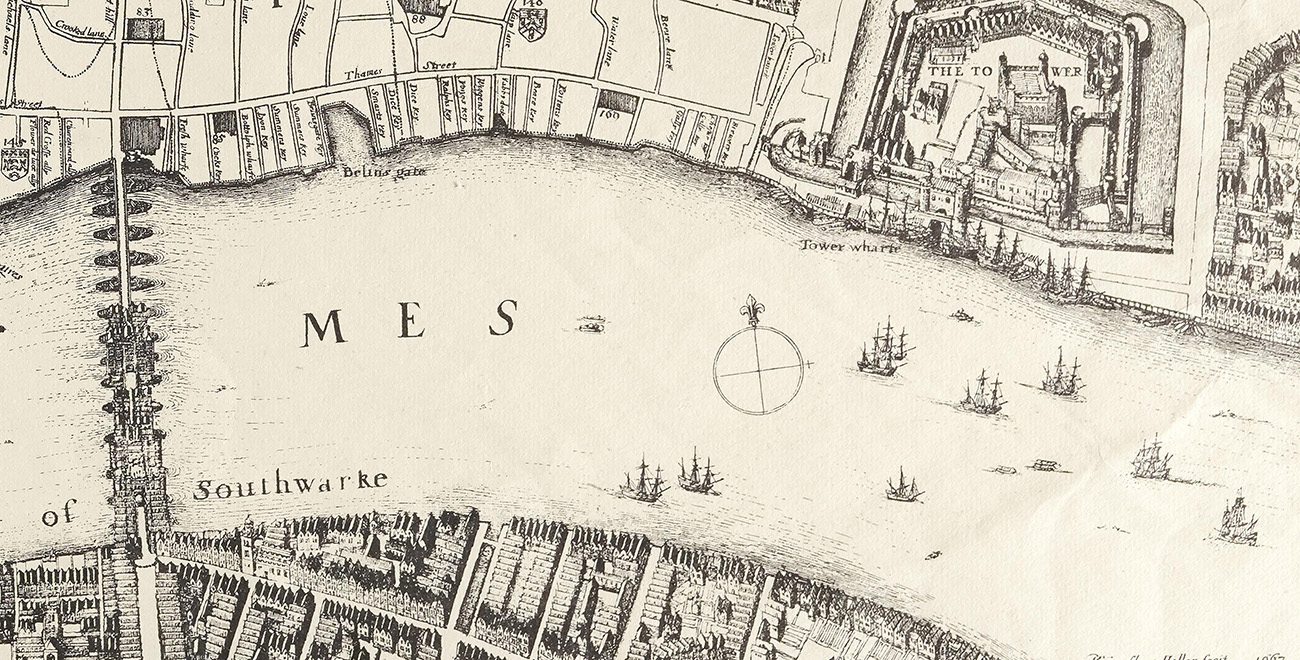
Close-up of the docks. Map drawn by Wenceslaus Hollar, entitled ‘Survey of the City of London’, 1667, Catalogue Ref: ZMAP 4/18
Take a look at this map of London, which shows some of the areas of the river Thames where trading ships would dock to unload their cargoes of sugar.
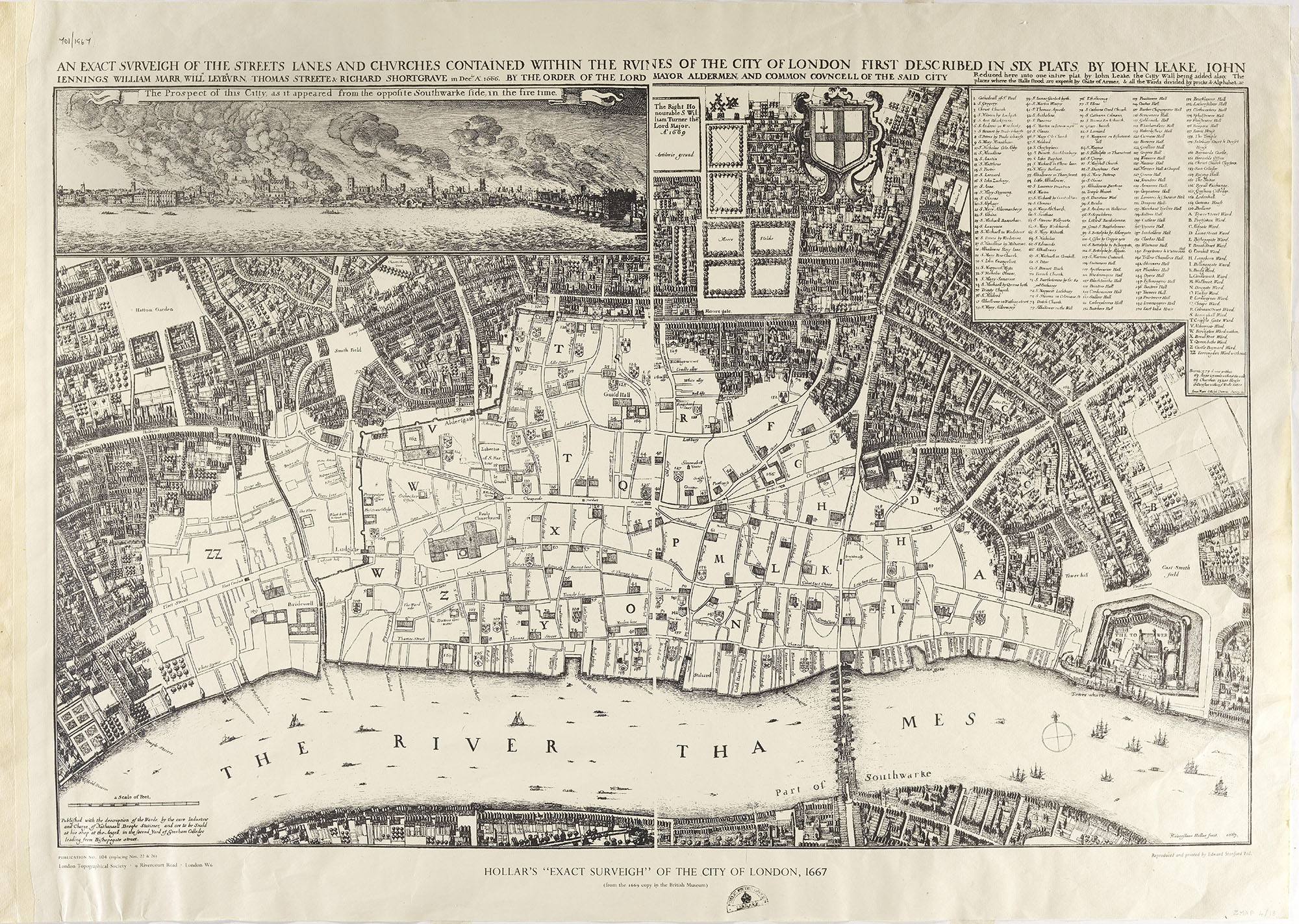
Map drawn by Wenceslaus Hollar, entitled ‘Survey of the City of London’, 1667, Catalogue Ref: ZMAP 4/18
Take a look at this map of London, which shows some of the areas of the river Thames where trading ships would dock to unload their cargoes of sugar.
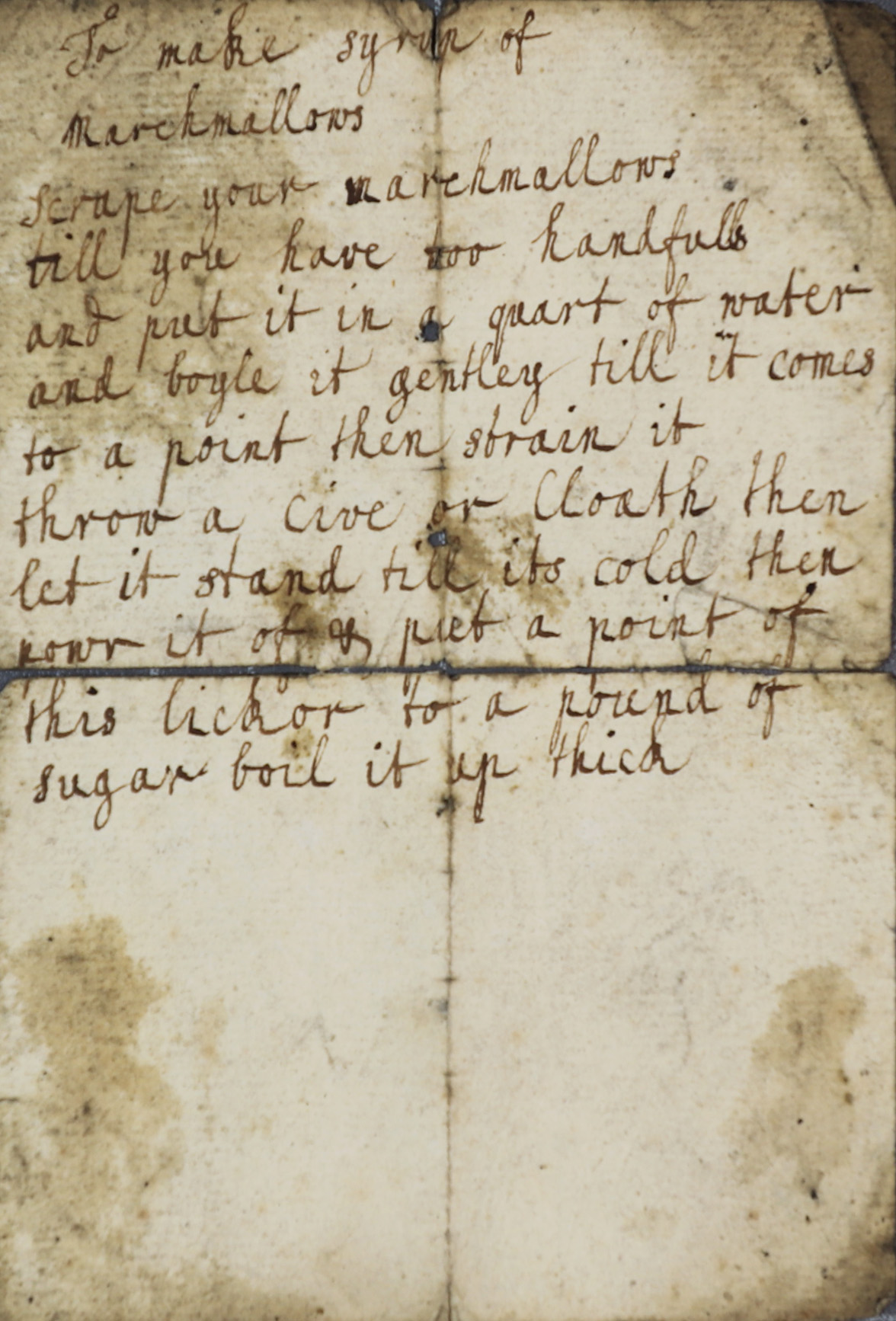
‘A recipe for marshmallow syrup’, Ship: Abraham of London, or perhaps not (master Andrew Hardie), 1633-1637. Catalogue Ref: HCA 30/636/7.
Take a look at this recipe, which was found with other documents from an English ship called Abraham of London, which was involved in trade in Barbados in the 1630s. These marshmallows were not the white fluffy sweets we think of today. ‘Marshmallow’ also means a white flower which was sometimes used in early modern medicine.
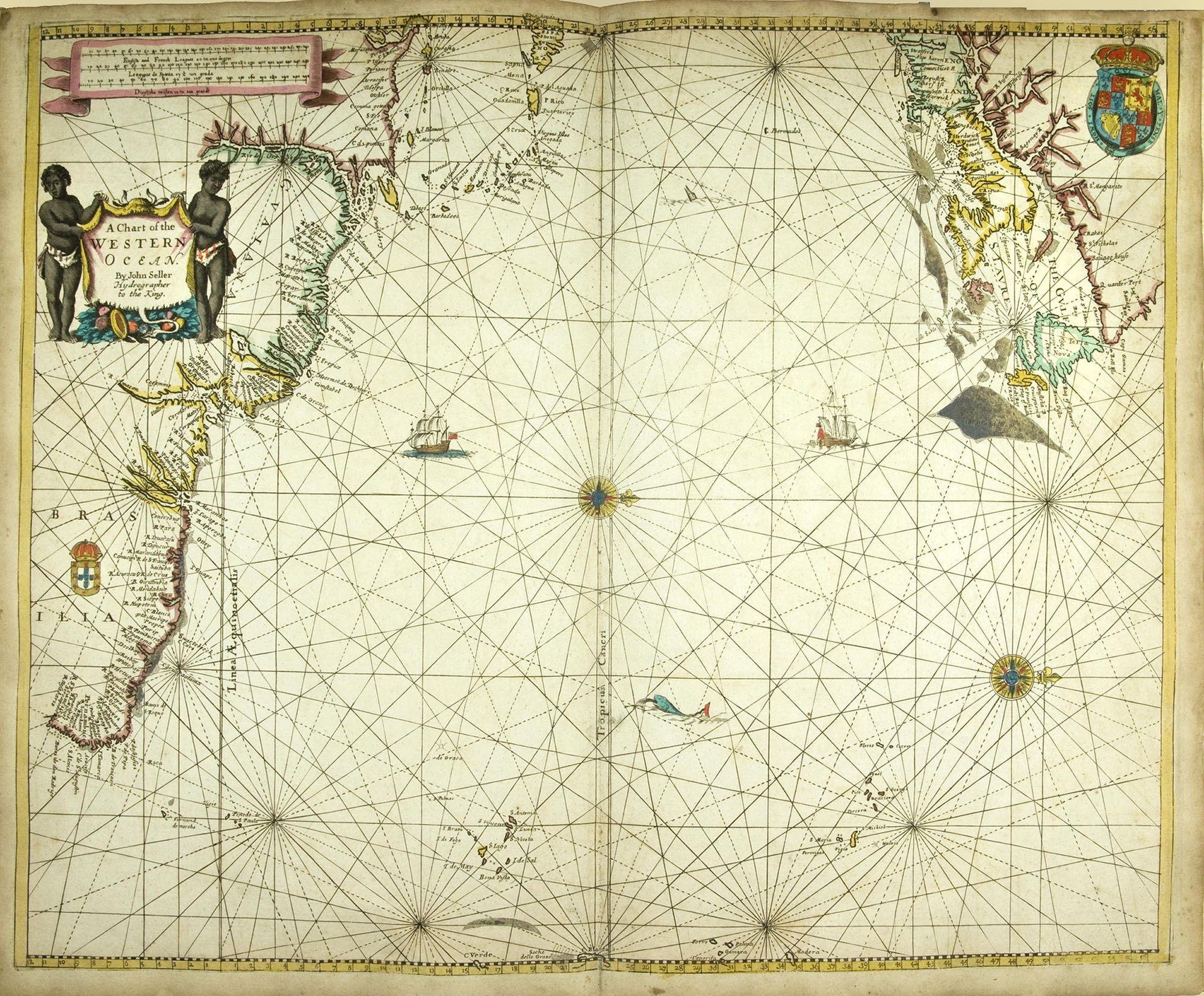
Map that shows the coast of Brazil in South America. Catalogue Ref: FO 925/4111 f.29.
From the sixteenth century there were plantations in Brazil that were growing sugar, which was then transported by ship to European ports.
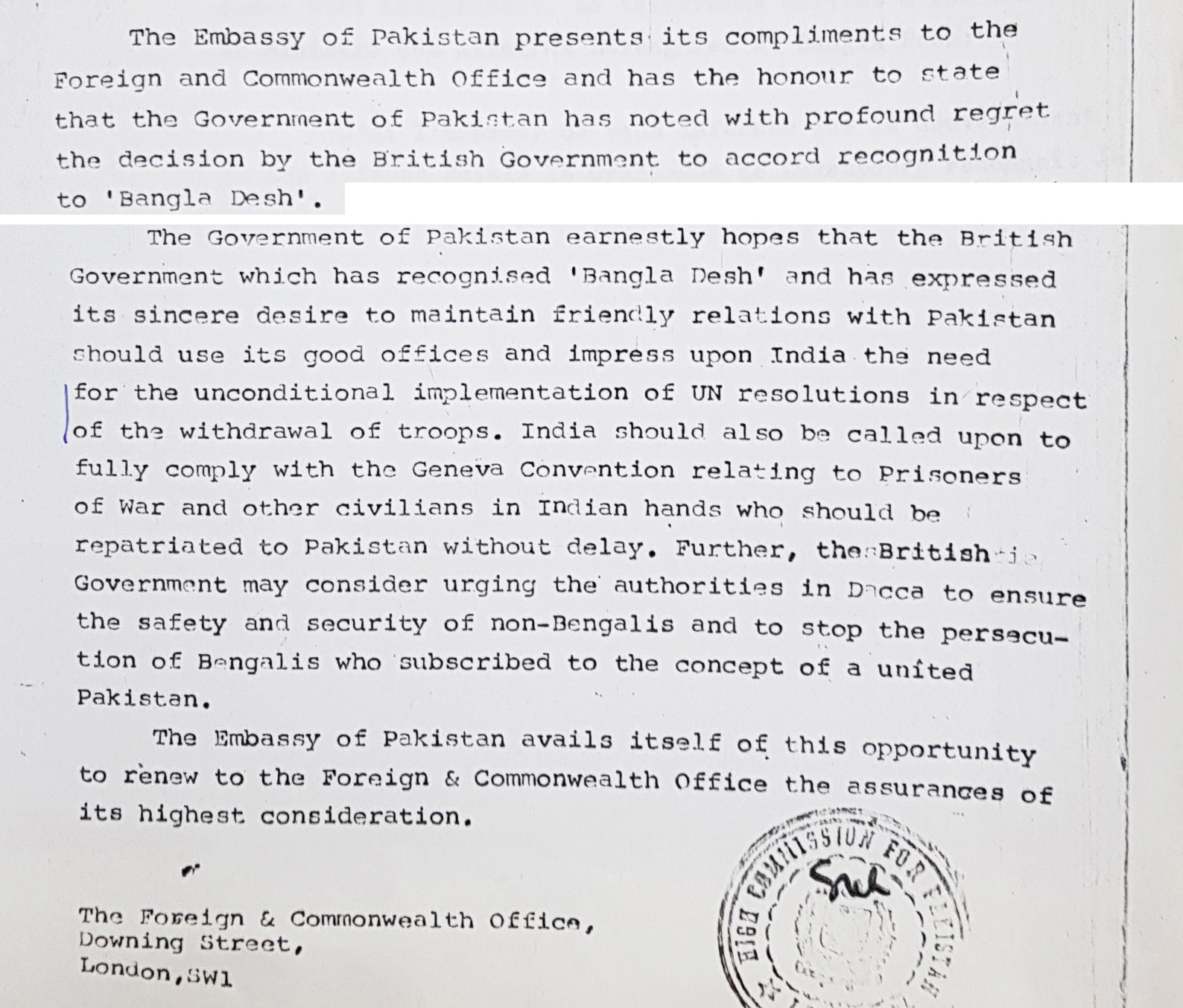
This is a letter from the Embassy of Pakistan sent after Britain officially recognised Bangladesh as a country.
Letter from Embassy of Pakistan to Foreign & Commonwealth Office, 15 February 1972. Catalogue ref: FCO 37/1025
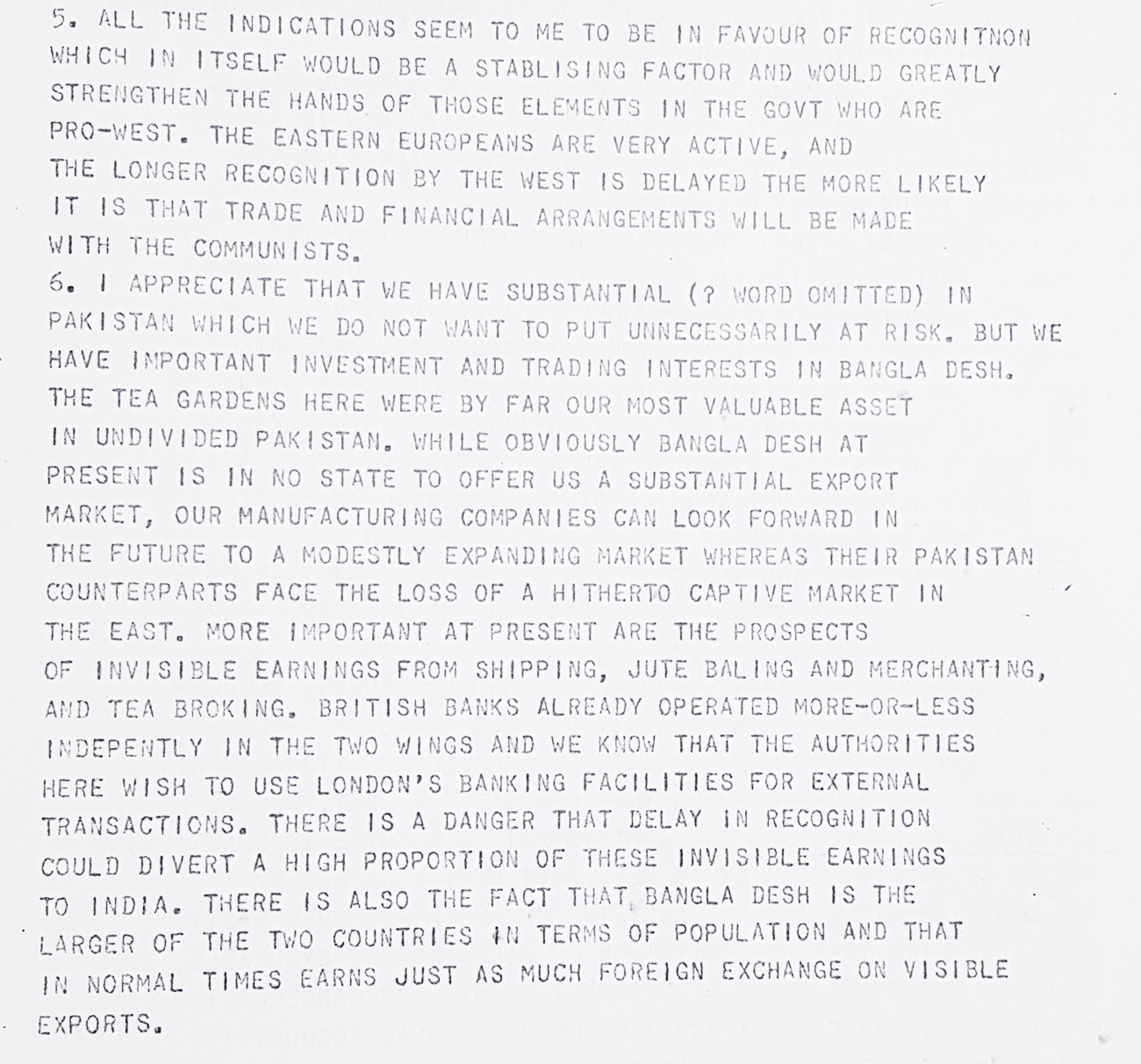
Britain recognised Bangladesh as an independent country on 4 February 1972. There was a lot of internal discussion before this date on the advantages and disadvantages that might come with recognition. Britain wanted to maintain good relationships with both Bangladesh and Pakistan.
This telegram shows British political and financial interests in the 1971 conflict.
Telegram on the recognition of Bangladesh for distribution within the Foreign & Commonwealth Office. 6 January 1972. Catalogue ref: FCO 37/1019
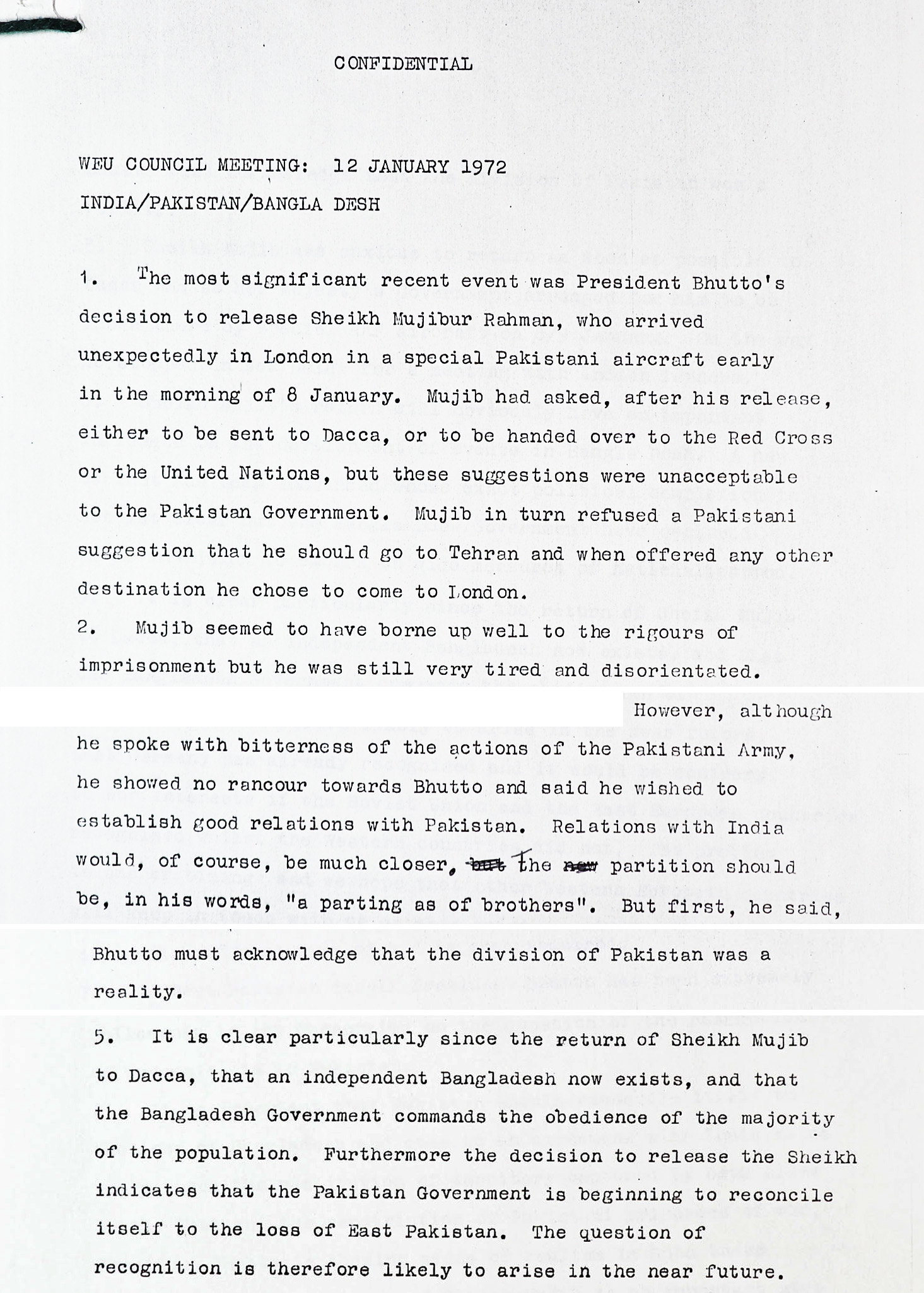
This report shows Sheikh Mujibur Rahman’s surprise appearance in London in January 1972 after being imprisoned by West Pakistan during the war.
WEU Council Meeting notes, 12 January 1972. Catalogue ref: FCO 37/1019
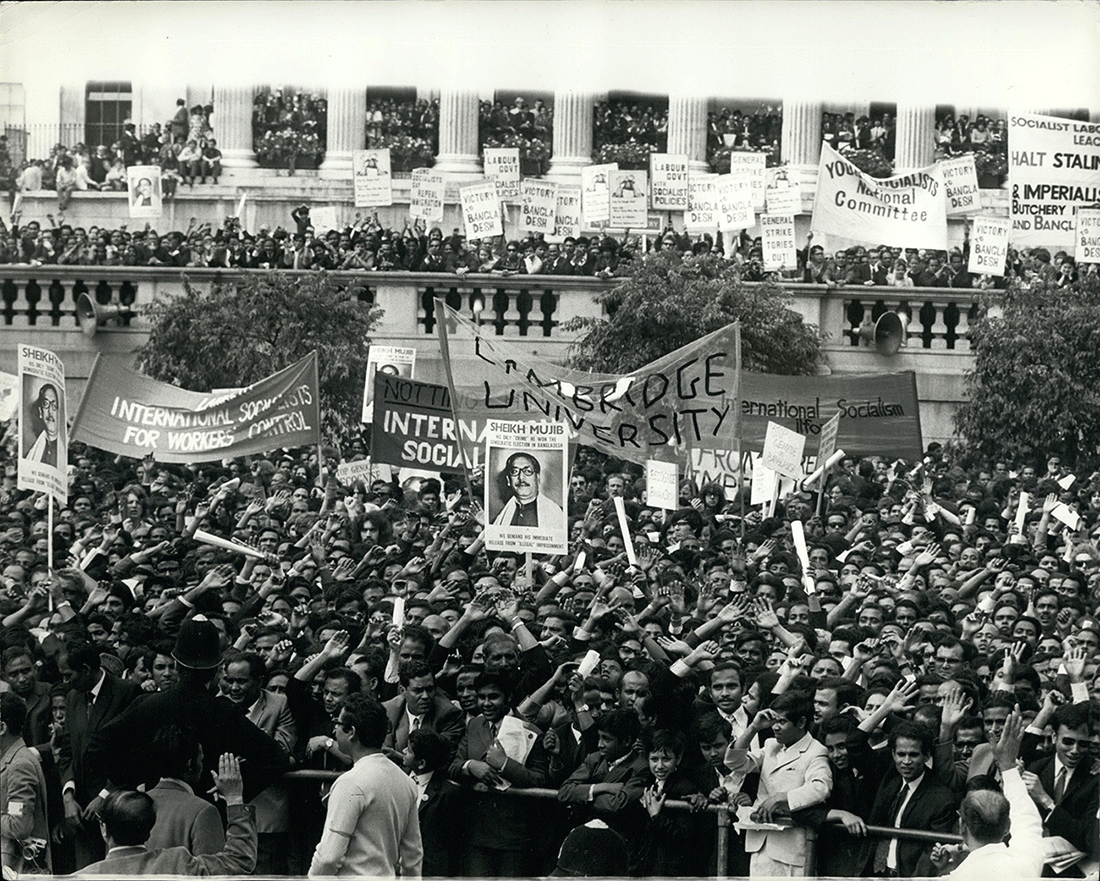
Source 5a is a photograph of the ‘Recognise Bangla-Desh Rally’ in Trafalgar Square, 8 August 1971. Source: Keystone Press/Alamy