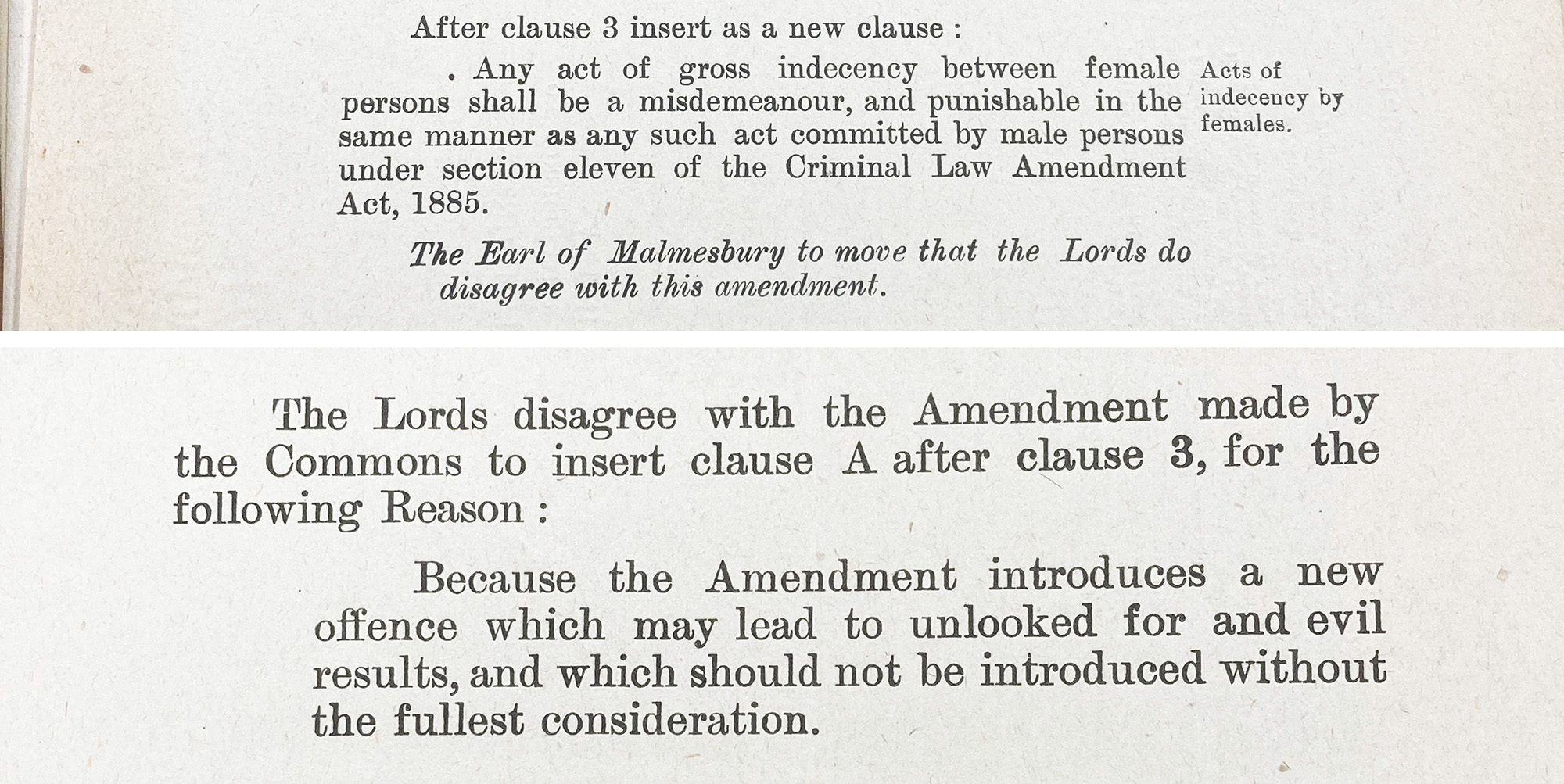
1921: This text shows the discussion around a clause that was proposed to be added to the Criminal Law Bill in 1921. Catalogue ref: LCO 2/469
The clause would criminalise female same-sex relationships, similar to how male same-sex relationships were criminalised. This source shows how it was ultimately rejected by the House of Lords.
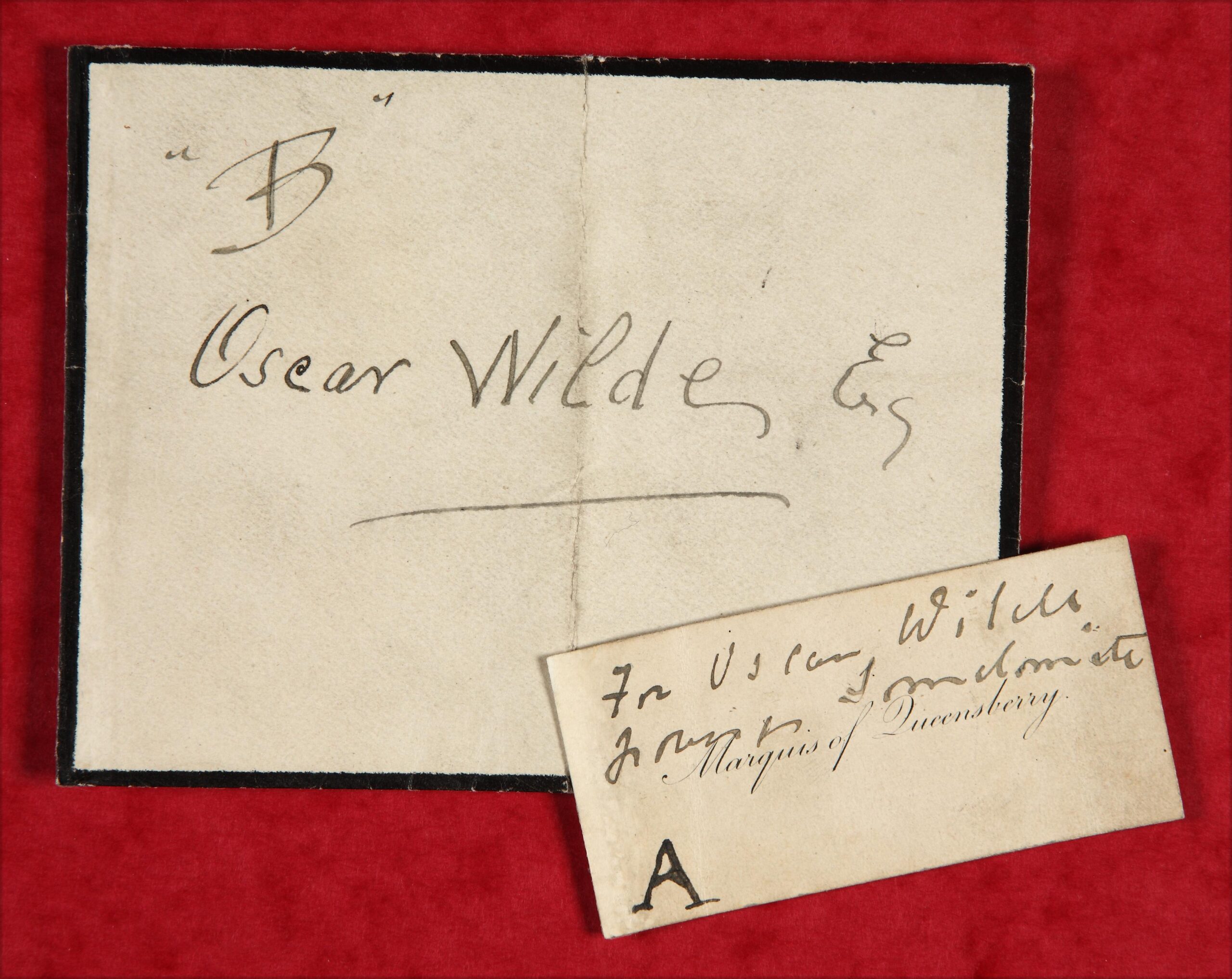
1895: This is the calling card left by Marquis of Queensbury calling Oscar Wilde a ‘posing somdomite’ (presumably intending to spell ‘sodomite’). Catalogue reference CRIM 1/41/6
The ‘Labouchere Amendment’ of the Criminal Law Amendment Act 1885 made it illegal for any man to commit an act of ‘gross indecency’ with another man. Sexual acts no longer had to be proven. Oscar Wilde was convicted under this act in 1895.
On 18 February 1895 the Marquis of Queensbury – also known as Sir John Sholto Douglas – left his calling card at the Albemarle Club, labelled ‘For Oscar Wilde posing Sodomite’ (misspelt as ‘somdomite’). He took issue with Wilde’s ongoing relationship with his son Alfred. Wilde accused Lord Queensbury of libel. However, during the ensuing trial, evidence was brought up that eventually got Wilde convicted for ‘gross indecency’. Witness statements from male sex workers, for example, were forwarded to the crown prosecution and resulted in his trial for gross indecency.
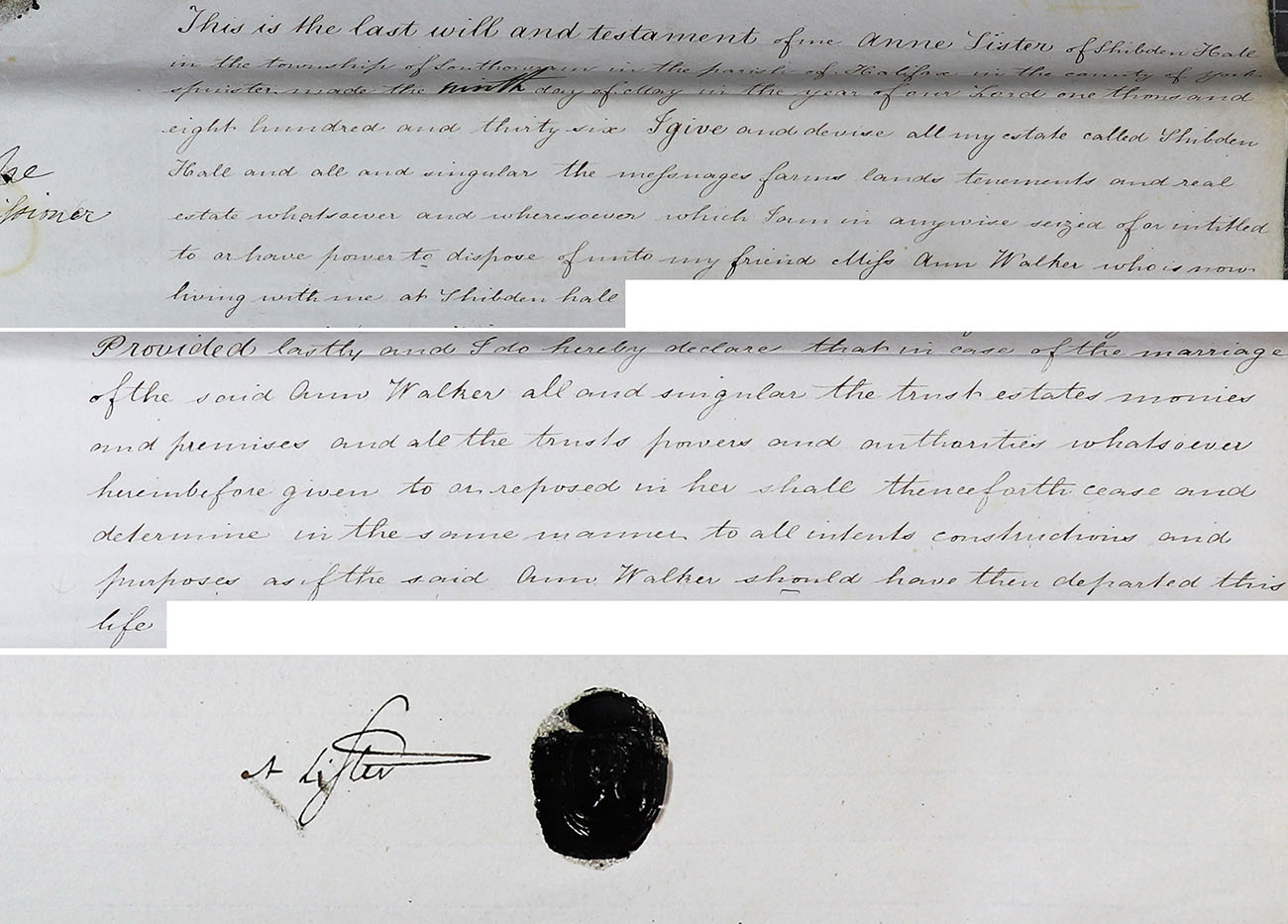
1841: Anne Lister’s will, in which she leaves her estate, Shibden Hall, to her wife Ann Walker. Catalogue ref: PROB 10/6000
Anne Lister is famously known as ‘the first modern lesbian’, due to the extensive diaries she left behind detailing her relationships with women. She married Ann Walker in 1834. However, this wasn’t an ‘official’ marriage in the eyes of the law. This wouldn’t be possible for same-sex couples until 2013. Both women inherited estates from wealthy families, allowing them some freedom in living their lives.
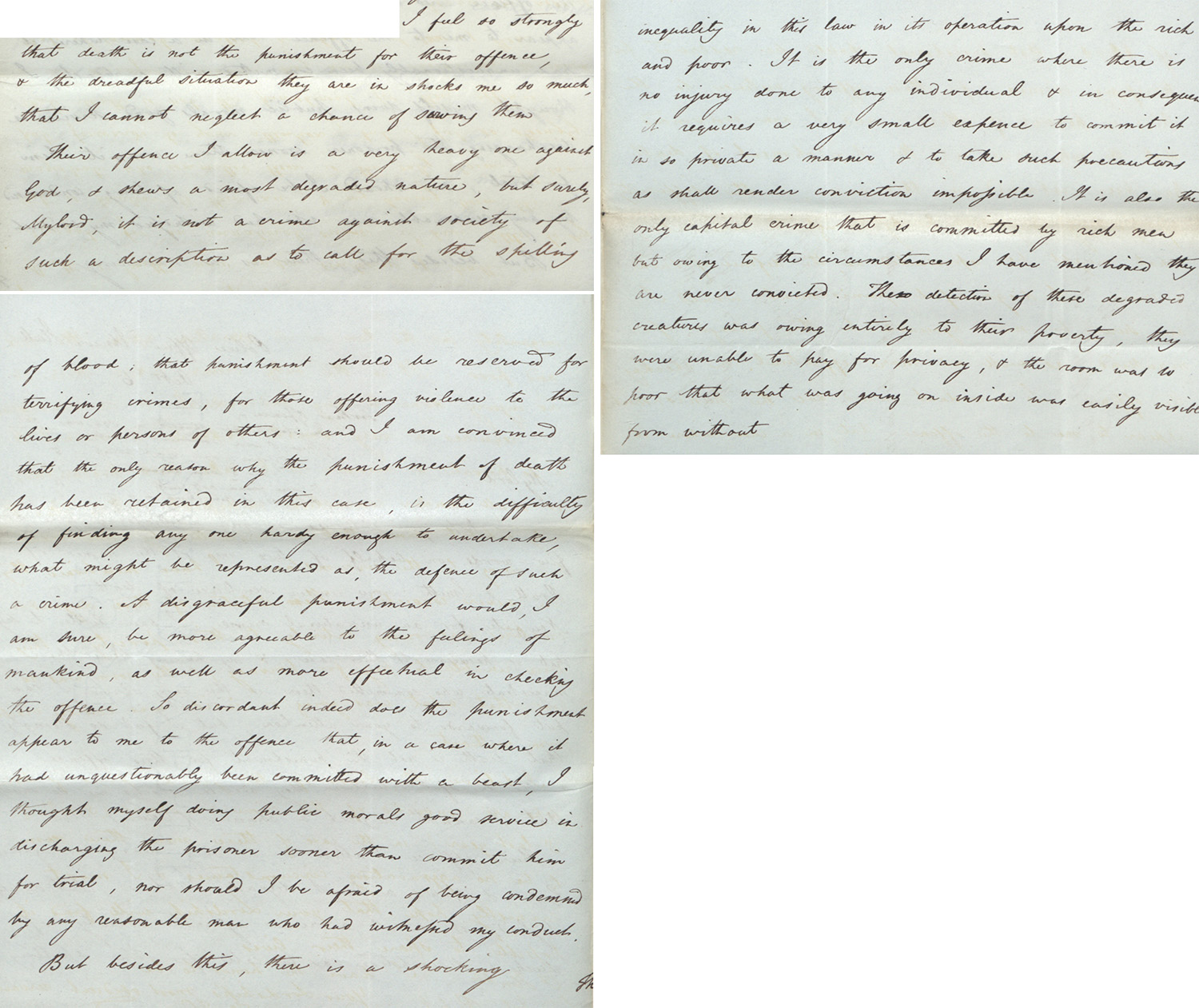
1835: Letter from police magistrate Hensleigh Wedgwood to the Home Secretary Lord John Russell about two prisoners condemned to be executed for having had sexual relations with each other. Catalogue ref: HO 17/120/60
The prisoners were called James Pratt, aged 30, and John Smith, aged 40. They were the last two Englishmen to ever be executed for sodomy. A sodomy law is a law that defines certain sexual acts as crimes.
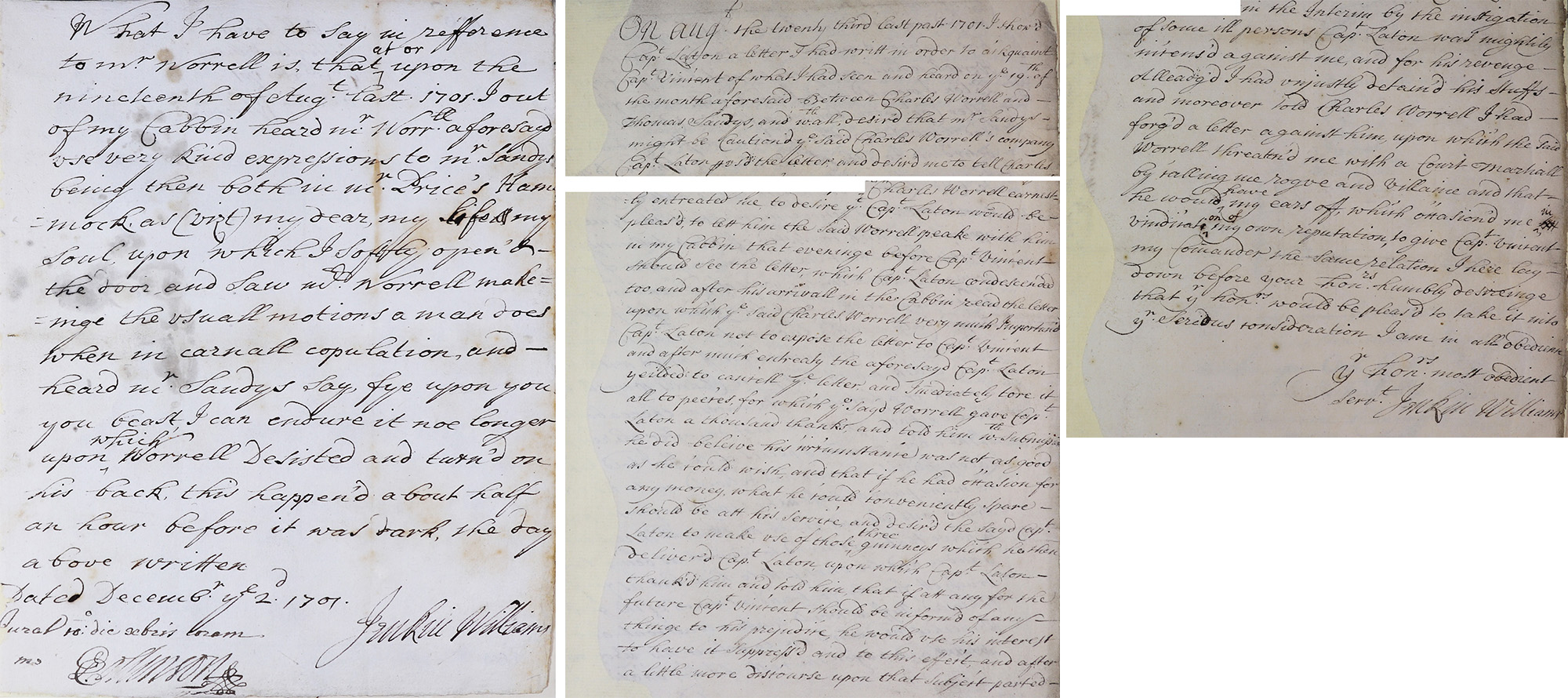
1701: Papers related to trial of Charles Worrell for sodomy. Catalogue ref: ADM 1/5262/169 ff. 164-168
Charles Worrell was a crew member on ship. He was spotted by another crew member, Jenkin Williams, having sexual relations with another man. This document shows how he survived through blackmailing his captain.
Note: A sodomy law is a law that defines certain sexual acts as crimes.