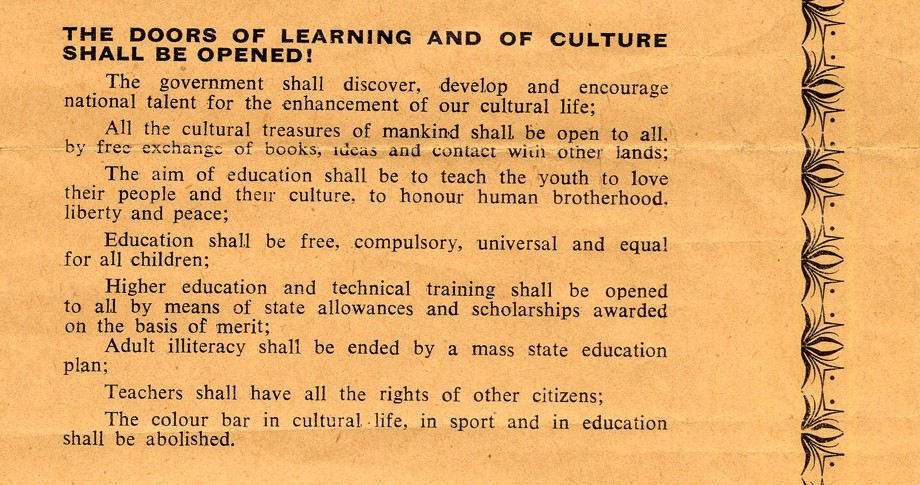
Extracts on the subject of education from the Freedom Charter © Courtesy of Historical Papers Research Archive, University of the Witwatersrand Library, South Africa.
The Freedom Charter was a charter of universal rights based on the wishes of the people. It meant a fundamental restructuring of South African society and outlined a list of freedoms and ideals in opposition to the apartheid government. In June 1955 the Freedom Charter was adopted by the Congress Alliance, the African National Congress (ANC), the South African Indian Congress (SAIC), the South African Coloured People’s Organisation, and the South African Congress of Democrats.
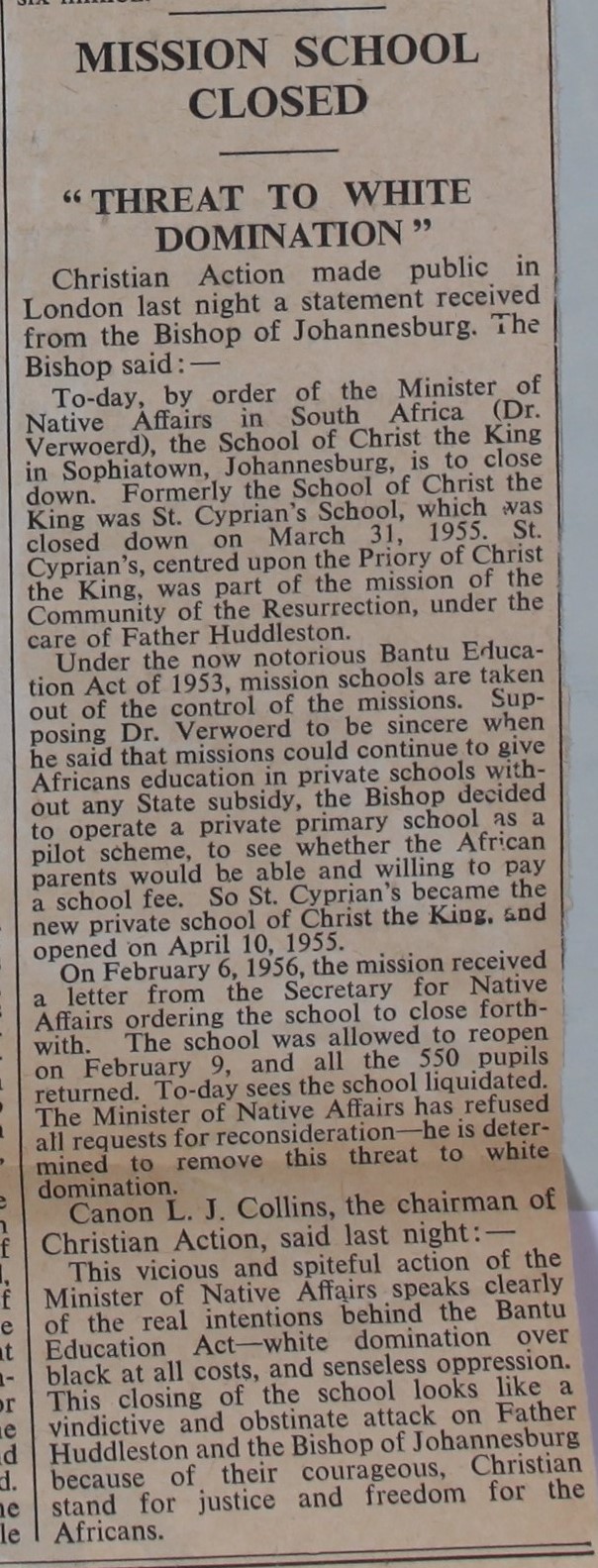
Extract from an article entitled ‘Plans for new S. African Black Communities’ from ‘The Times’, 28 March 1956, Catalogue Ref: DO 35/4382
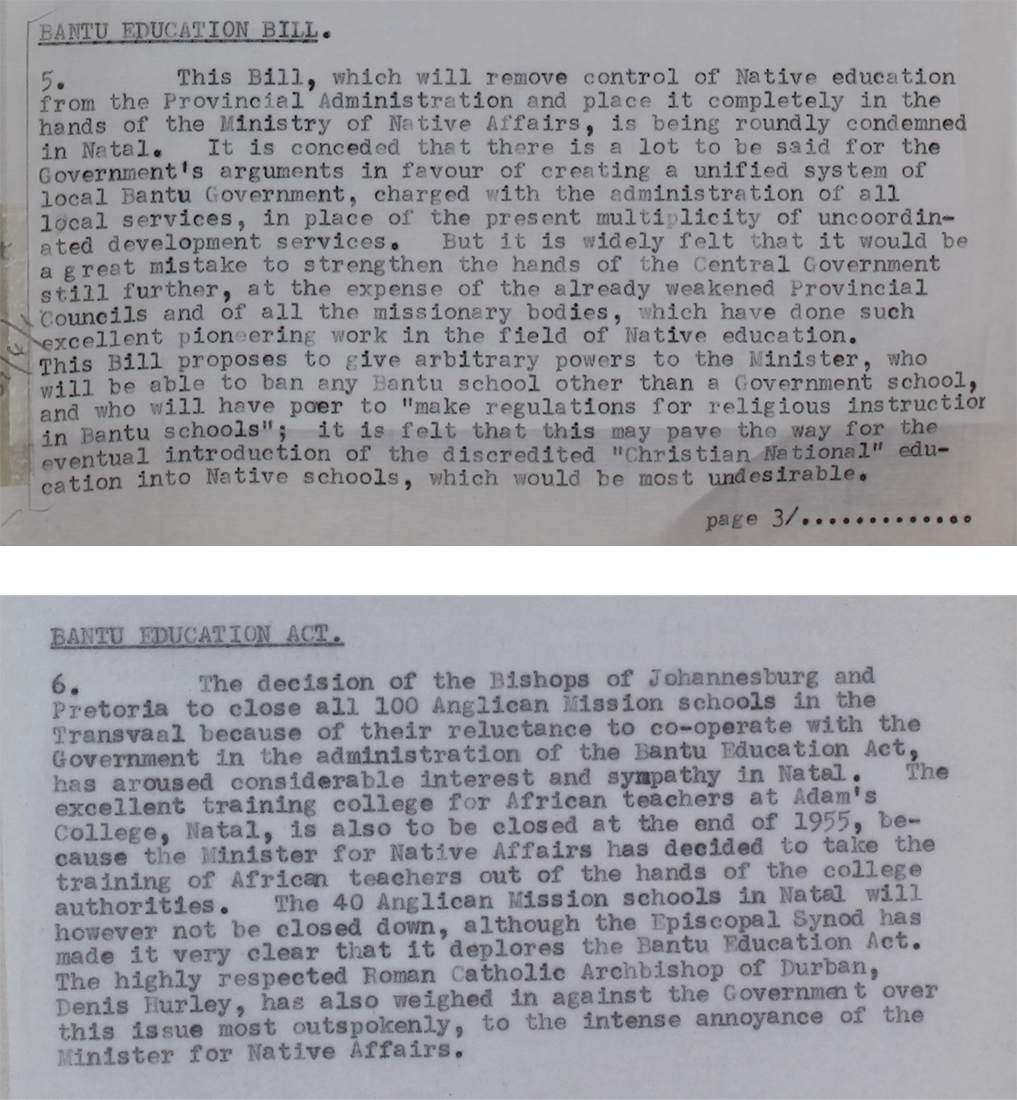
Extract from High Commissioner’s Report No.24 on the education Bill, 7 August 1953, Catalogue Ref: DO 35/6716
Extract from High Commissioner’s Report No.31 on the education Act, November 1954, Catalogue Ref: DO 35/6716
In 1949 Hendrick Verwoerd, Minister for Native Affairs and the Eiselen Commission investigated African education. This formed the basis of the later Bantu Education Act which enforced apartheid and created a limited vocational curriculum for African pupils. It meant complete separation of educational facilities for white, Black, ‘Coloured’ (mixed-race), and Indian populations, creating a huge divergence of opportunity.
African education was now controlled by the Minister for Native Affairs, not the Ministry of Education. Mission schools were no longer state funded and large numbers forced to close.
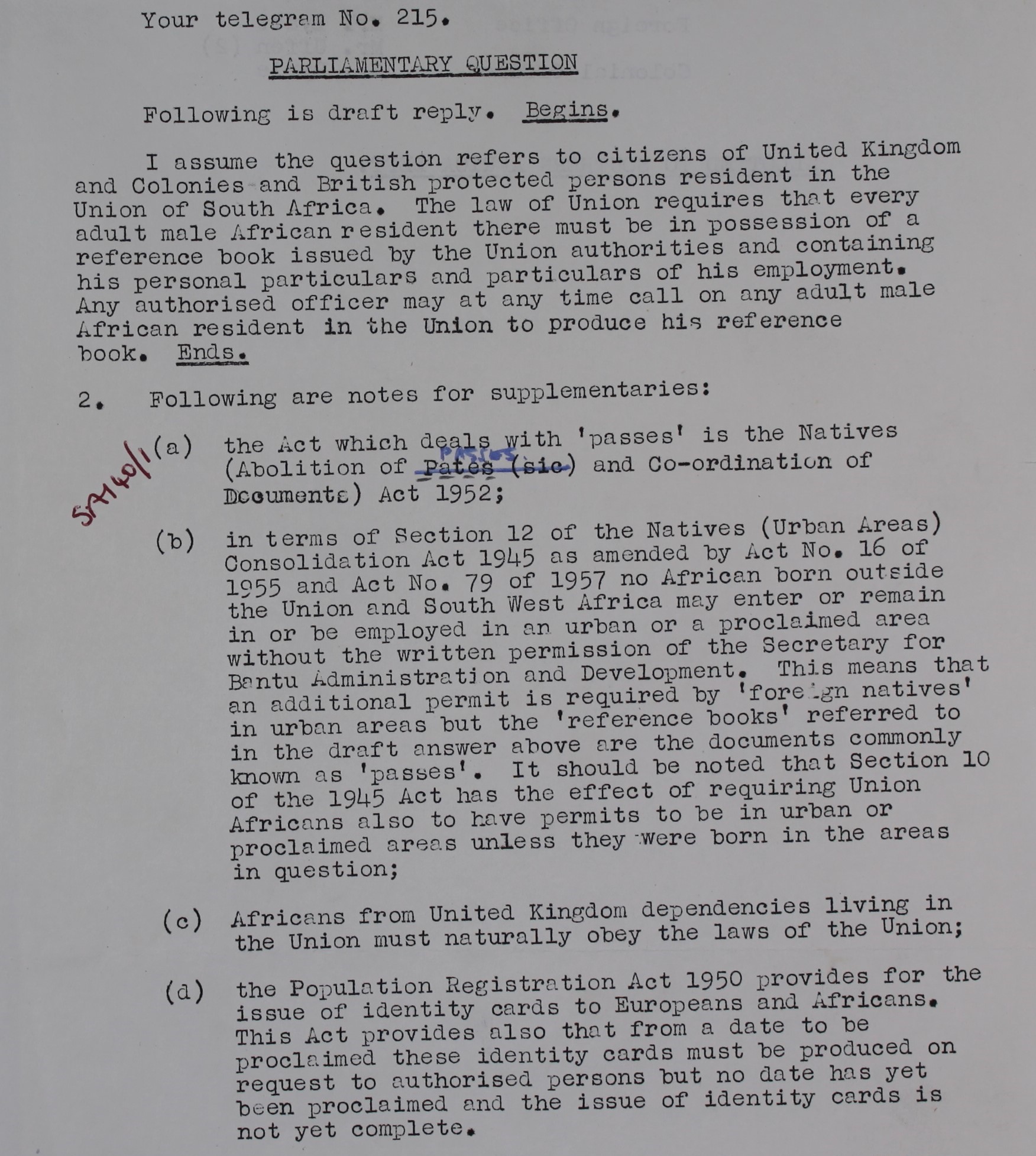
Parliamentary question in the House of Commons UK with supplementary notes, 26 March 1960, Catalogue Ref: DO 35/10578
The document refers to a question that was asked in the House of Commons about ‘citizens of United Kingdom and Colonies and British protected persons living in the Union of South Africa’. The document points out that the pass laws applied to adult male African residents and provides some ‘supplementaries’, or extra notes on the pass laws.
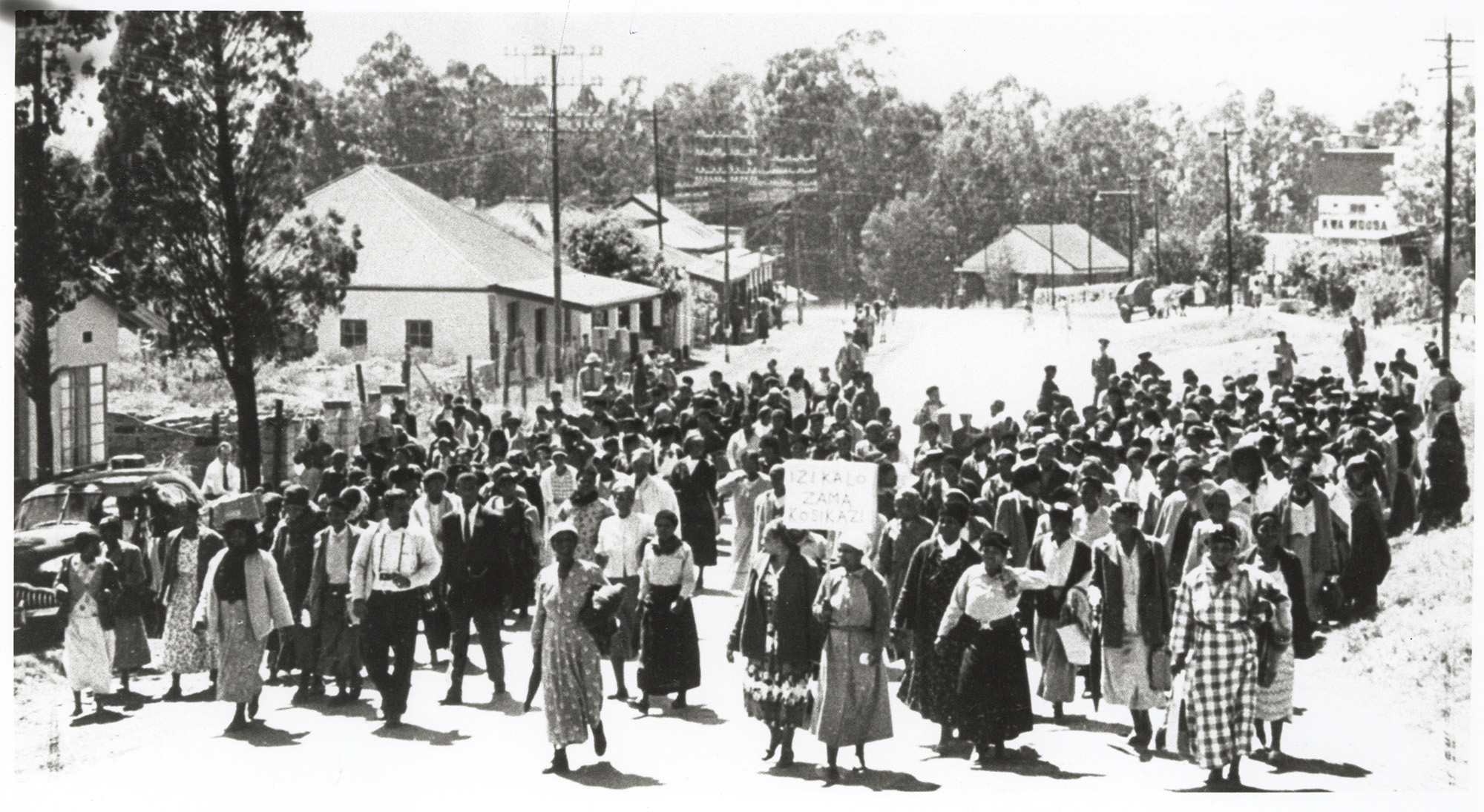
Photograph shows Women’s March of 1956 organized by the Federation of South African Women (FEDSAW). The march of around 20 000 women to the Union Buildings in Pretoria, Transvaal, South Africa, was in protest of the introduction of pass laws by the apartheid government. Eli Weinberg, ANC Archives © African Pictures Image Number: APN753315
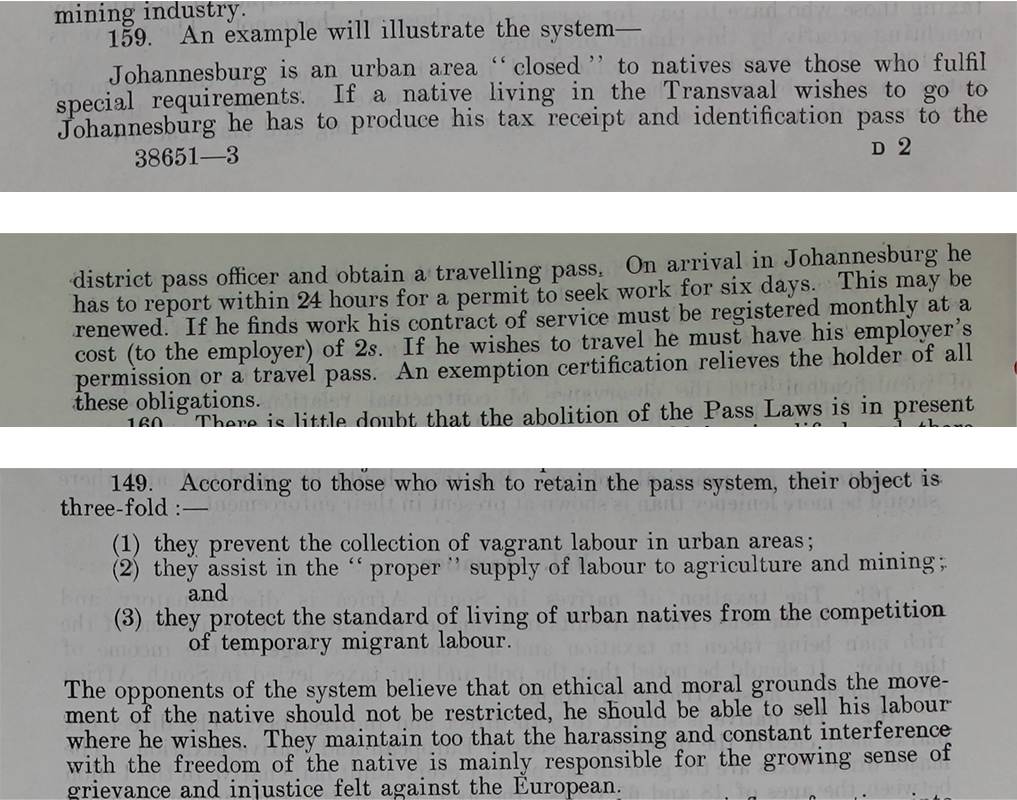
Extract of a memorandum entitled ‘The development of Union Native Policy since 1935’, 1950 Catalogue Ref: DO 35/ 4326
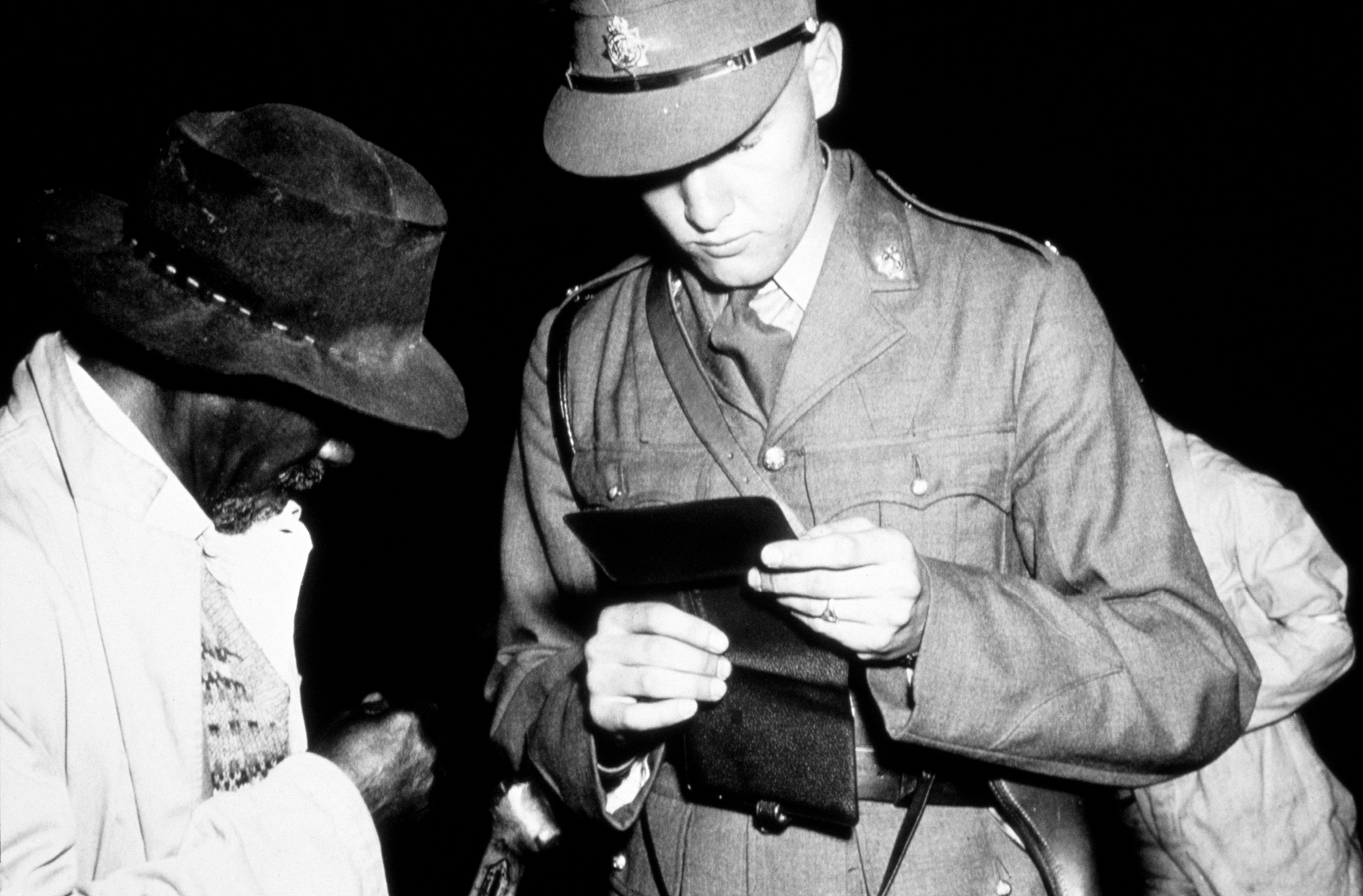
Photograph showing a South African Police officer checking the ‘dompas’ of a man. Such passes were used as a means of controlling the movement of the majority of South Africans within urban areas. According to apartheid ideology, Black people were only allowed to be in the cities and towns if they carried such pass books. This was part of the ‘Grand Apartheid’ scheme of ‘Influx Control’. Black workers were required to always carry their ‘dompas’ and were subject to spot checks. Date, unknown. © African Pictures: ref: APN754096, ANC Archives.
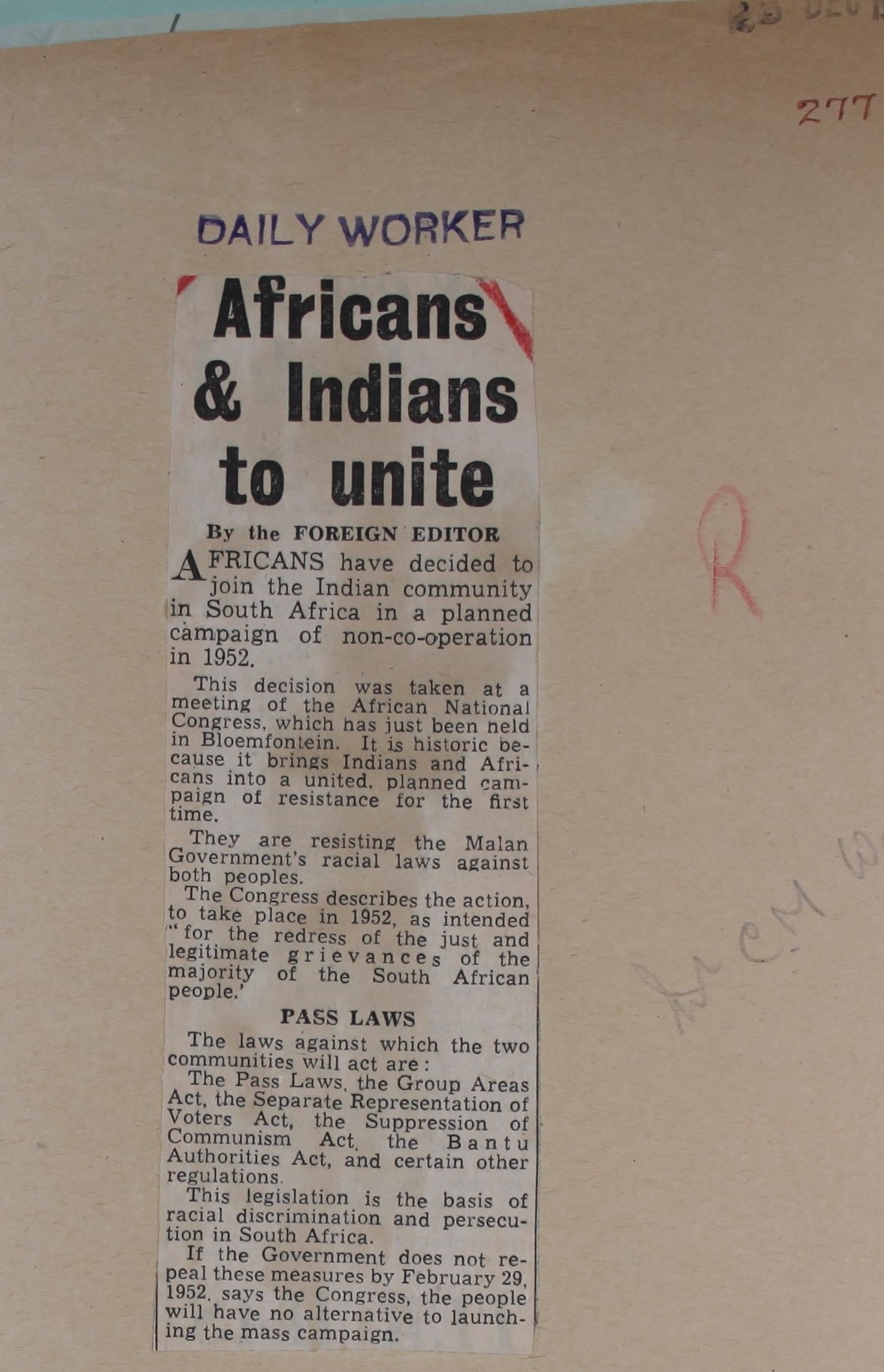
An article from the Daily Worker entitled ‘Africans & Indians to Unite’, 23 December 1951, Catalogue Ref: DO 35/3837
The African National Congress (ANC) is a political party in South Africa. At the time of this newspaper the African National Congress was a liberation movement founded to support rights for Black South Africans before the First World War. By 1948 it worked to oppose apartheid in South Africa through a Defiance Campaign against Unjust Laws and other civil disobedience actions.

Extracts from booklet entitled ‘Apartheid: Racial Discrimination’ published on behalf of the Indian Government by the Foreign Relations Society of India, circa 1951, Catalogue Ref: DO 35/3837
The extract describes the terms of the law and comments on its legality.
The government later used the Suppression of Communism Act in December 1956 to arrest 156 individuals and charged them with high treason, beginning a five-year legal struggle.
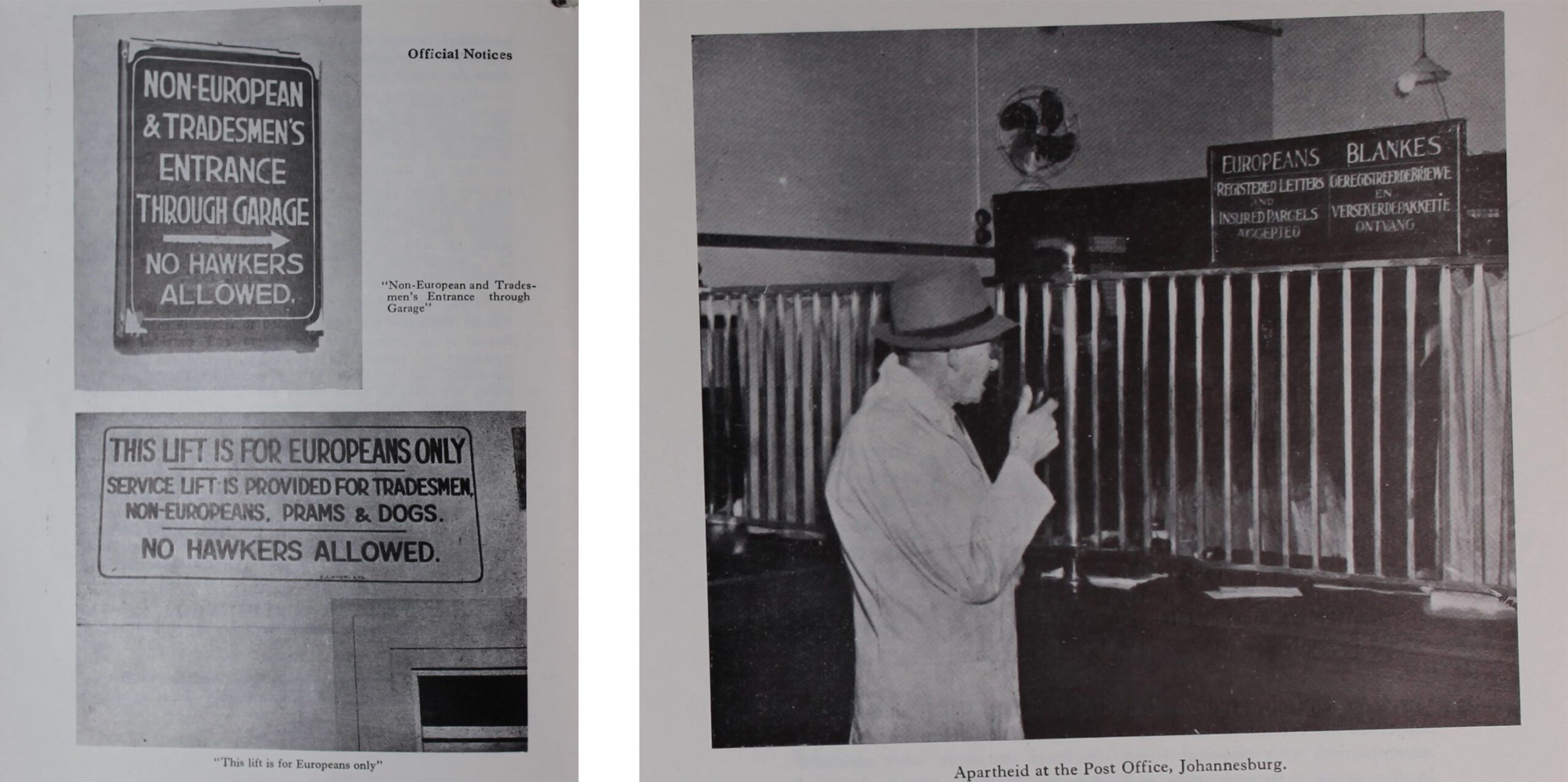
Photographs showing official notices used in entrances for public buildings and photograph of man in a post office entitled ‘Apartheid at the Post Office Johannesburg’ from a booklet entitled ‘Apartheid: Racial Discrimination’ published on behalf of the Indian Government by the Foreign Relations Society of India, circa 1951, Catalogue Ref: DO 35/3837
Hawker: a person who travels about selling goods.