
Extracts from a letter from General Thomas Gage, Commander-in-Chief, North America to the Earl of Dartmouth, 22 April 1775. Catalogue ref: CO 5/92 f134-135.
From 18 and 19 April 1775, the battles of Lexington and Concord broke out, which were the first clashes between British and American fighters in the War of Independence. The British attempted to disperse Massachusetts militiamen who had assembled around Boston to protect the harbour from being seized. For the British, Boston with its access to the sea was essential for the re-supply of men and munitions however difficult, by the threat of American ships.
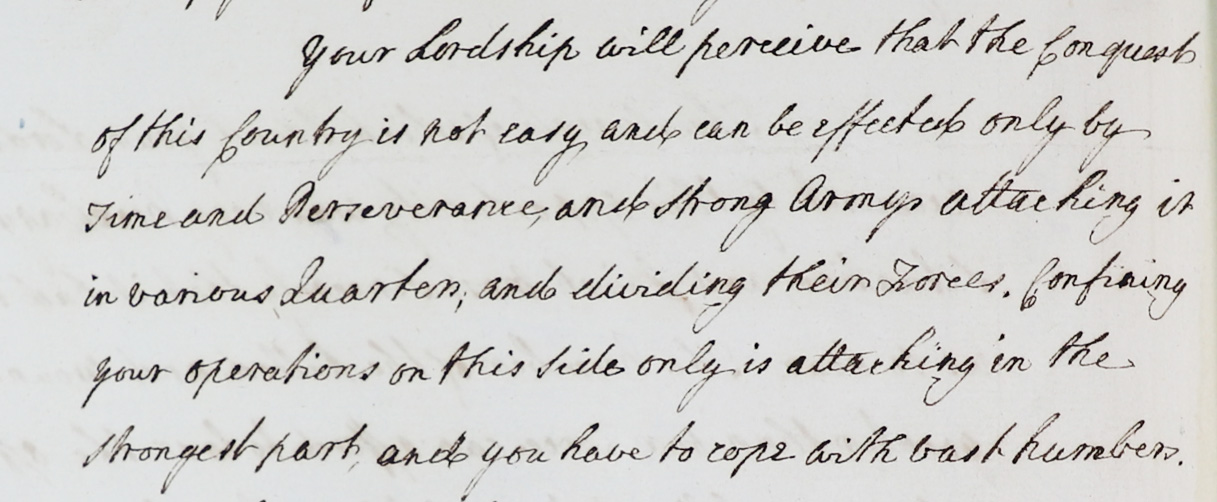
Extract from a letter from General Thomas Gage, Commander-in-Chief, North America to the Earl of Dartmouth, 25 June 1775. Catalogue ref: CO 5/92 f.187d.
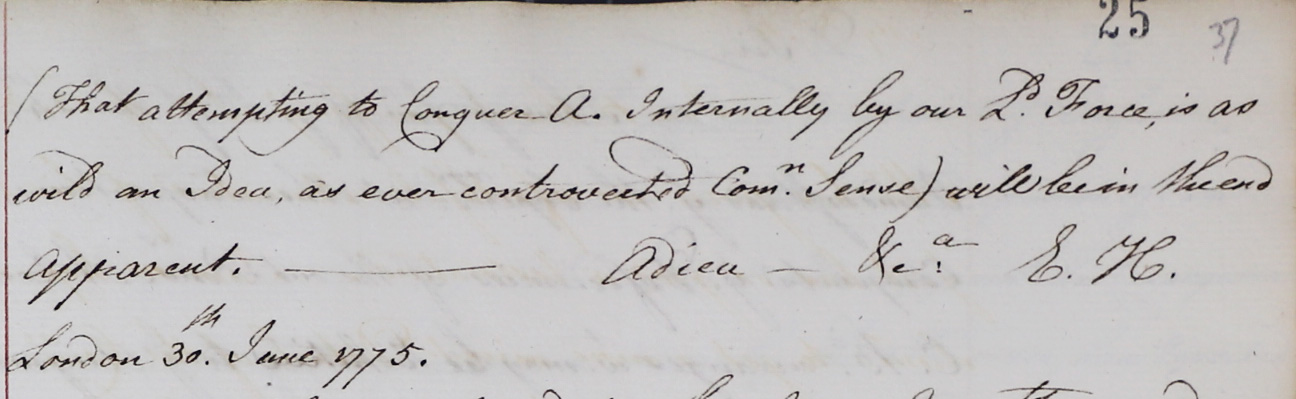
Extract from a letter from Edward Harvey to John Irwin, 30 June 1775. Catalogue ref: WO 3/5 p.37
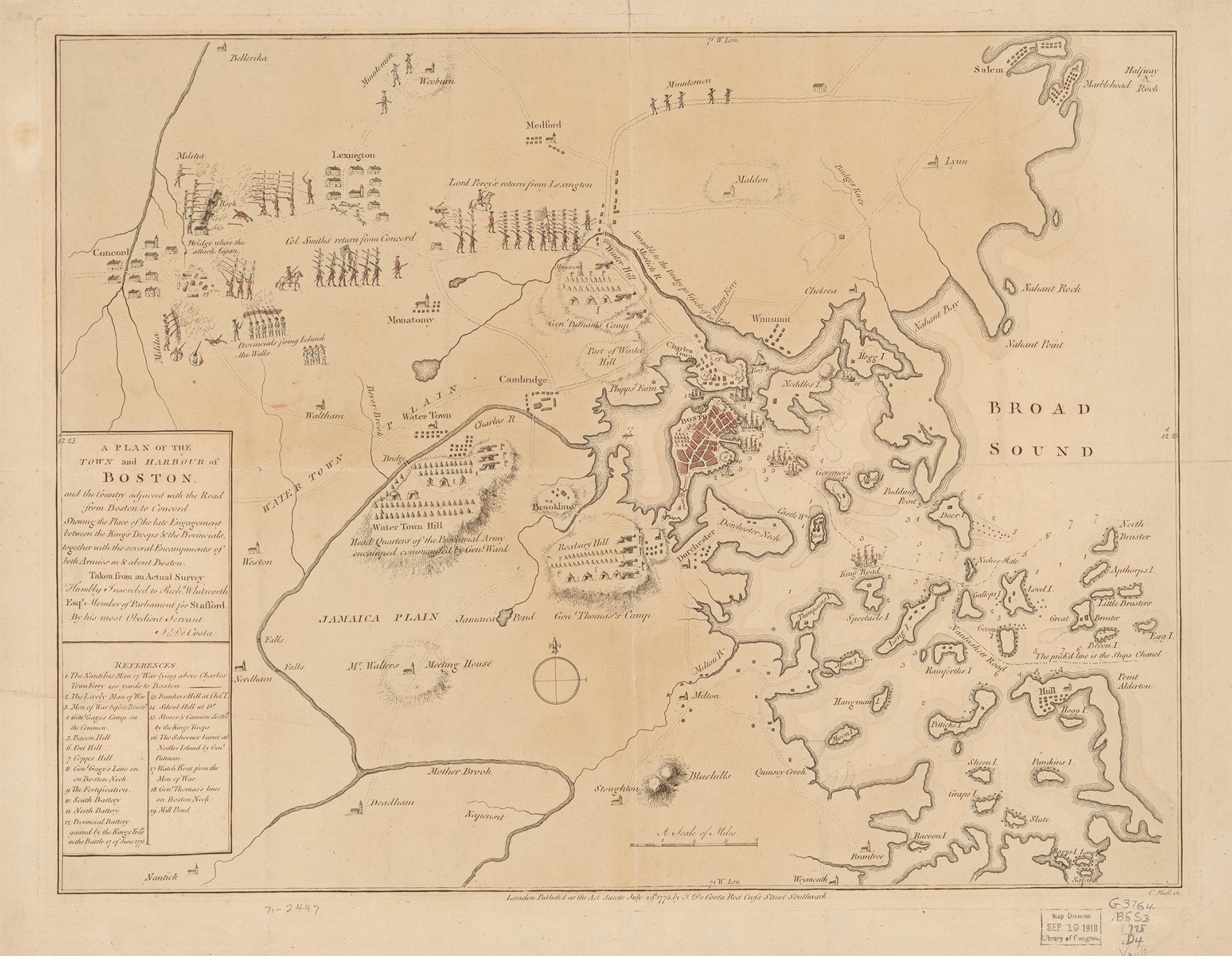
Map showing ‘A plan of the town and harbour of Boston’, John De Costa, Charles Hall, 1775. Credit: Library of Congress Prints and Photographs Division, Washington, D.C.
The American Revolution was fought across many different terrains. In the early battles, guerrilla warfare was used, with the colonists taking advantage of the fact that they knew their way around the hilly, rough terrain of the countryside. This took the British by surprise, making it far more difficult to suppress the rebellion than initially expected.
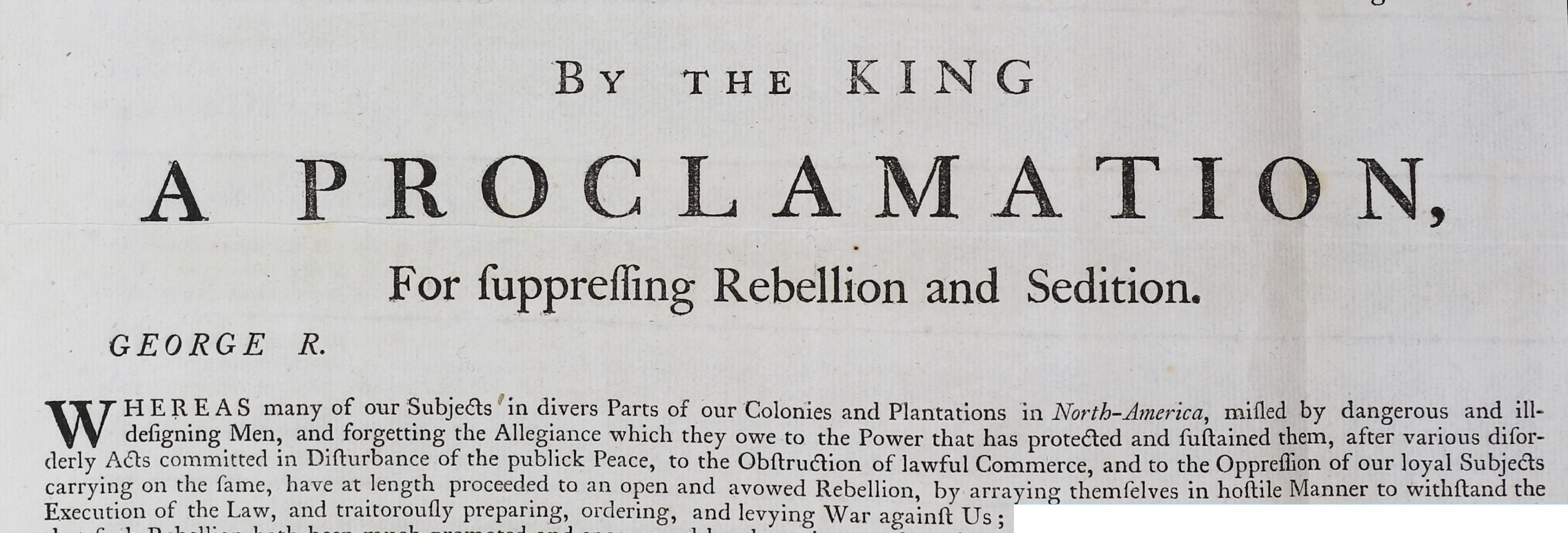
Extract from a proclamation issued by King George III on the 23 August 1775, Catalogue ref: CO 5/993 f.7
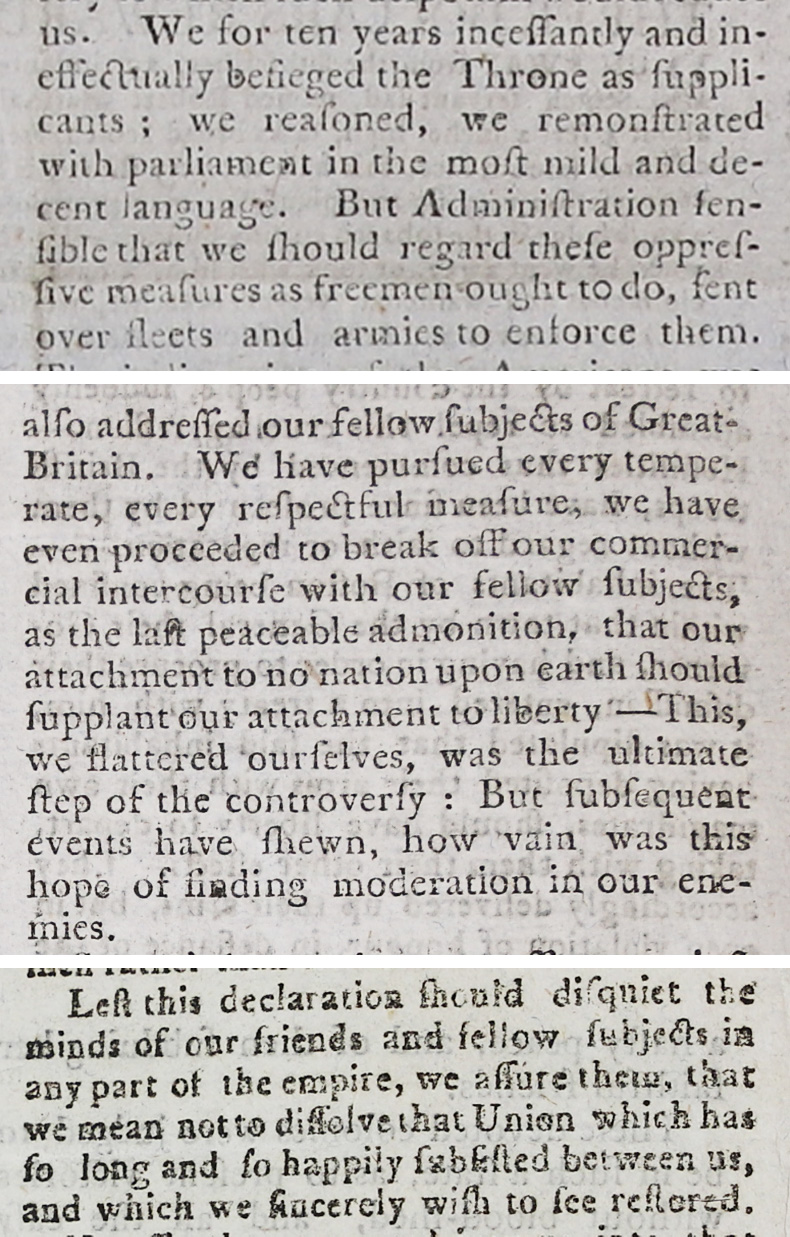
Extracts from a ‘Declaration agreed to by the General Congress in Philadelphia’, on the 6 July 1775. This established “the Causes and Necessity of their taking up Arms”. It was printed in a New Jersey newspaper on the 2 August 1775. Catalogue ref: CO 5/992 f161-162.
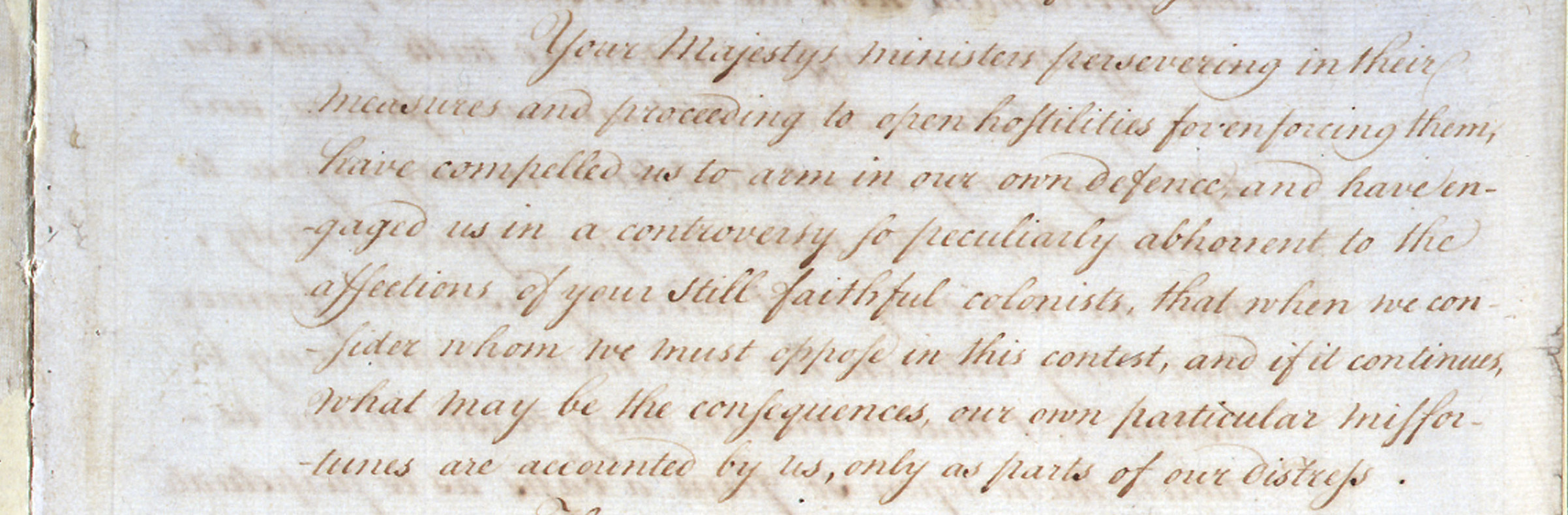
Extracts from the Olive Branch Petition, 5 July 1775 issued 8 June, Catalogue ref: CO 5/76 f.253
Following the outbreak of hostilities at Lexington and Concord in June 1775, the Second Continental Congress assembled to debate how best to respond to ongoing British hostilities. In July, they issued two documents, addressed to King George III of Great Britain. Firstly, on 5 July, they signed the Olive Branch Petition to prevent the growing hostilities and show George III that they were still loyal. This was sent to the King on 8 July. On 6 July they also issued a Declaration of Rights and Grievances, justifying their reasons for taking up arms against the British and outlining the grievances that they wanted to be addressed. The King did not respond directly to these petitions, but issued his own proclamation in August, criticising the colonists for their rebellion and treason. This led them to believe that there was no potential for reconciliation, and ultimately independence became the only course of action.
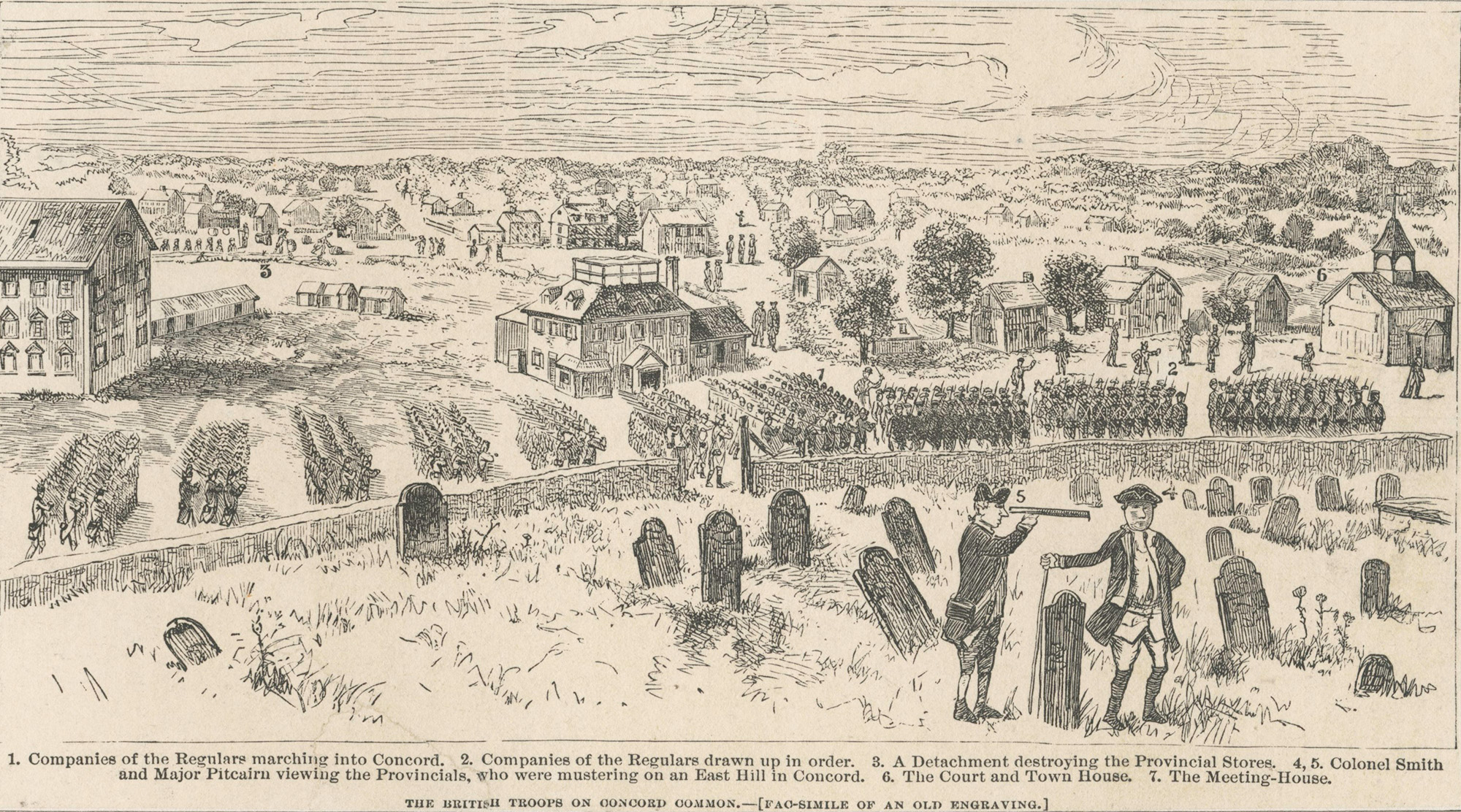
The first battles of the American Revolution took place on the 18 and 19 April 1775, at Lexington and Concord near Boston in Massachusetts, in what later became known as a ‘shot heard round the world’. Despite attempts at reconciliation by the colonists, conflict continued throughout 1775 and 1776.
This lesson explores the skirmishes that happened before the Declaration of Independence was issued on 4 July 1776. Use documents from The National Archives’ collections to consider why war broke out in 1775 and why hostilities continued until the colonies declared independence from Great Britain.
Why did war break out between American colonists and British forces during 1775-6?Following the introduction of the Intolerable Acts in 1774, representatives of each of the colonies assembled in Philadelphia in what became known as the Continental Congress to debate how best to respond to British actions. They suggested non-importation agreements to pressure the British into repealing the legislation.
At the same time as their representatives were attempting a peaceful resolution, colonists across the continent were also gathering arms and ammunition in anticipation of an escalation of the conflict. It was in Massachusetts that these tensions first descended into open fighting. The Intolerable Acts of 1774 had dissolved the Massachusetts Assembly and led to an increase in soldiers stationed in the colony, which had caused ongoing friction between the British soldiers and the American inhabitants. The colony was a powder keg ready to explode.
The British saw the gathering of munitions as a direct threat to the preservation of order. On the 18 April 1775, 800 British soldiers moved from Boston to destroy a supply of munitions being held at Concord. However, they were blocked on the way by the Lexington militia. Somewhere in the crowd, the first shot was fired. This encouraged British soldiers to open fire on the Lexington militia, pushing through the crowd and ultimately destroying the munitions at Concord. However, they faced further attacks on their return to Boston, and required reinforcements from a relief column close by.
After news of these skirmishes at Lexington and Concord, colonists across New England moved to besiege Boston and help protect the harbour from British occupation. On 17 June 1775, British soldiers attacked those colonists that had occupied a hill overlooking the city. Whilst they successfully dispersed the militias, they suffered significant casualties in what became known as the Battle of Bunker Hill, creating concerns that the war would not be an easy victory. Whilst certainly the site of many of the early conflicts, the fighting was not exclusive to Massachusetts: in May, rebels had captured Fort Ticonderoga in New York, and they pushed forward into Quebec to put pressure on the British forces.
Much like the first meeting of delegates in 1774, however, the Second Continental Congress, convening from May 1775, attempted to pursue peaceable methods even after fighting broke out. On the 5 July, they signed the ‘Olive Branch Petition’, in a last attempt to prevent war and assure George III that they remained his loyal subjects. This was accompanied by a ‘Declaration of the Causes and Necessity for Taking Up Arms’, which justified to a broader audience the need for armed resistance. However, this was met with a declaration by George III on 23 August, asserting that the colonies were in open rebellion and therefore no longer protected as British subjects. The colonists realised that reconciliation would not be possible and began to move closer to independence.
 What do the documents reveal about its significance?
The Belfast (Good Friday) Agreement (BGFA) of 10 April 1998, is the most significant attempt, since partition in Ireland, to address division in Northern Ireland.
It was the third agreement between the United Kingdom and Ireland (following the Sunningdale Agreement of 1973 and the Anglo-Irish Agreement of 1985) focused on securing a solution to divisions and an end to the campaign of violence in Northern Ireland and, at times, across the two countries, particularly since 1969, although there had been occasional violent campaigns since the Fenian bombing campaign in the UK in the nineteenth century. The violence in Northern Ireland had endured for centuries involving the native Irish and descendants of British colonists who had arrived with the Plantation in the seventeenth century, thus as long in Ireland as Europeans in North America.
The Sunningdale Agreement of 1973 was negotiated between the UK and Irish governments as well as the then government in Northern Ireland and the main opposition party. It failed to secure broad support from the unionist community and collapsed the following year in 1974.
The Anglo-Irish Agreement of 1985 was between the two governments alone. It endured until the Belfast Good Friday Agreement in 1998 and secured the right of the Irish government to have an input on issues in Northern Ireland, a right underpinned by international law through the registration of the Agreement with the United Nations.
The BGFA differed in a number of important respects from the earlier agreements, not least its far-reaching nature, seeking to address all the dimensions of division.
Firstly, in terms of inclusion, it was close to comprehensive. The two governments, as well as all political parties bar one, the Democratic Unionist Party, were involved. That inclusivity meant that, for the first time, subject to strict conditions on non-violence and eventually on putting all weapons beyond use, representatives of paramilitary groups, which had been engaged in violent campaigns, were involved in the negotiations.
The second way in which the BGFA differed from earlier agreements was in external arbitration, the appointment of an experienced outsider, United States Senator George Mitchell, as the Chair of the talks. His presence, as a respected outsider with no prior engagement on Ireland, together with his wide experience as a senior member of the US Senate (Majority Leader 1989-1995), helped keep the focus on the issues.
The BGFA, as mentioned, embraced a wide agenda, dealing with issues like sovereignty, discrimination, the disbandment and disarmament of paramilitary groups, reform of justice and policing, self-government in the province, the release of prisoners. It established two institutions in Northern Ireland – the Assembly and the Executive – and three North-South institutions – North-South Ministerial Council, the North-South Inter-Parliamentary Association and the North-South Consultative Forum. Three institutions were set up to facilitate interaction between the UK and Irish governments – British–Irish Intergovernmental Conference, the British–Irish Council and the British–Irish Interparliamentary Body.
Thus, by creating this broad system of interaction, the Agreement provided institutional mechanisms for cooperation on a broad level and for dealing with divisive issues as they arise.
Importantly, the BGFA addressed the consent principle in a fundamental way.
Through two referendums on the 22 May, 1998, held simultaneously in both Ireland and Northern Ireland – thus, island-wide – it secured agreement to there being no change in the sovereign status of Northern Ireland until and unless a majority there so voted. But, equally and no less importantly, by gaining a significant majority for the Agreement in Northern Ireland (70%), implicitly it secured, for the first time since partition, the consent of a significant nationalist minority to being part of Northern Ireland. Moreover, because of the island-wide referendums, the BGFA has a huge majority mandate of support from the people of Ireland.
This project, From Conflict to Peace, aims to acquaint students at secondary school level (GCSE and A level) with the BGFA, to demonstrate the enormous benefits of the Agreement to society in Northern Ireland and to sensitise them to the fact that their generation is one of the first to go through school and live in peace, with no intrusive security industry impinging on their daily lives, and, importantly, without ever hearing the sound of a gunshot or an explosion.
Moreover, the Agreement has created the drivers which offer the prospect over time of a blurring of communal and traditional identity and a greater degree of finding common social cause across communities. Equally, the Agreement’s emphasis on parity of esteem and fair employment, as well as its reforms in law enforcement, removes the impulse to see challenges in communal, sectarian terms and shifts the focus to the same drivers as in a settled, unified community.
Obviously, there is no guarantee that the BGFA will hold and not be threatened by the actions of the minority still committed to violence. Yet, as demonstrated by this project, there is a dramatic and popular contrast in society post-BGFA and the divided society which preceded it.
The historically strong popular mandate given to the Agreement in 1998 needs bolstering, not least through projects like From Conflict to Peace which remind the generations which follow of the division which went before and of the huge benefits of an Agreement involving all the main elements of society. The current generation of young people have the opportunity to bed down the Agreement further and continue the process of helping social division to wither.
Frank Sheridan is a retired Irish Government Diplomat who participated in the Peace Process
Welcome to History Mysteries!
Watch the 2026 livestream here:
Submit your questions on our Slido.
Slido.com #2278967
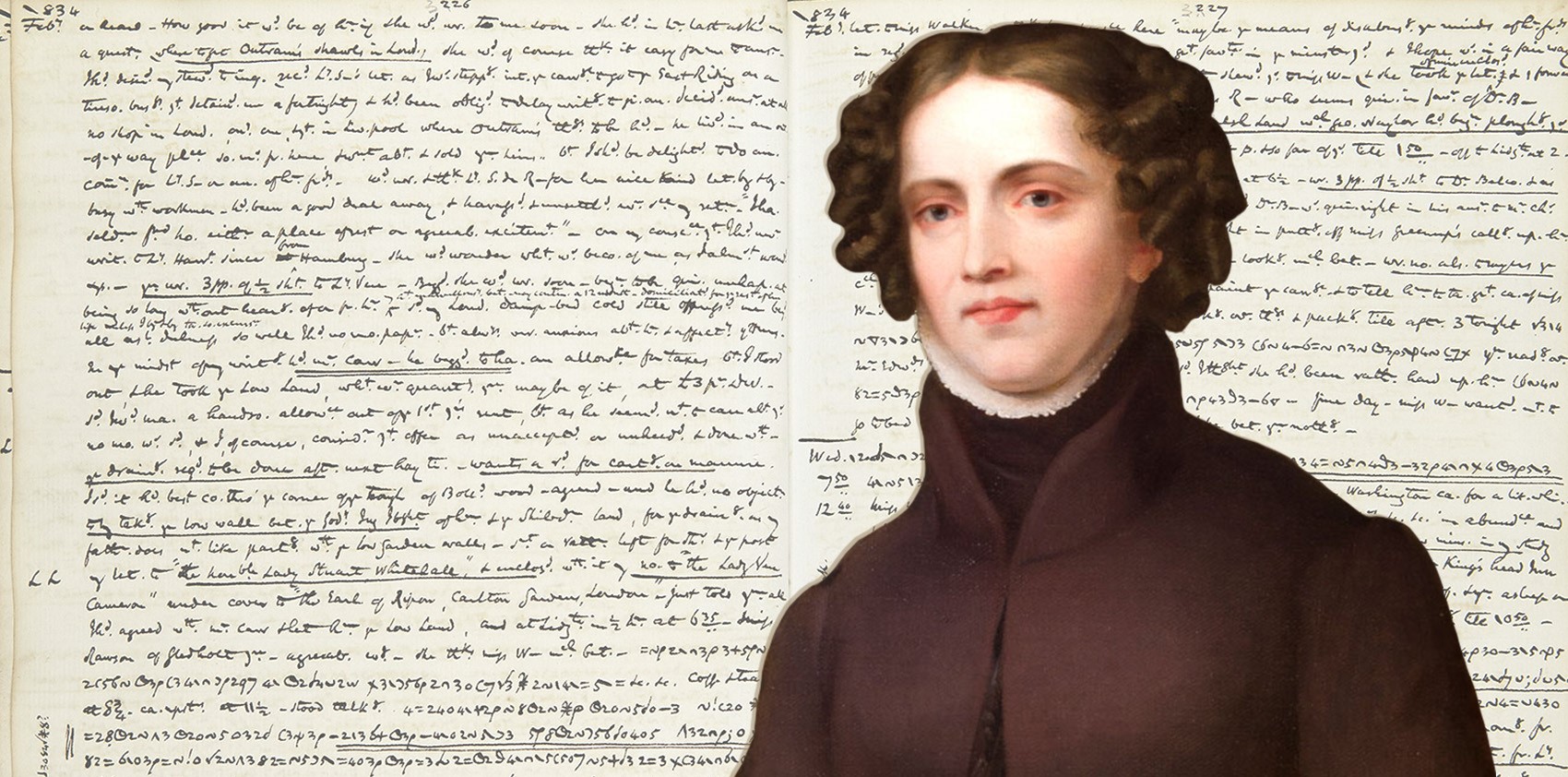
This broadcast uncovers the mystery behind the Victorian diarist, Anne Lister. In a pre-recorded video, we chat with specialists from The National Archives, visit Anne Lister’s home at Shibden Hall, and even get our hands on her famous secret diaries with the West Yorkshire Archives Service! We then also present a Q&A with record specialist Vicky Iglikowski-Broad that streamed live for schools.
Download the resource pack here.
Time: Video 15 minutes, Q&A 15 minutes.
Suitability: Key Stages 3 & 4
Who was Anne Lister?