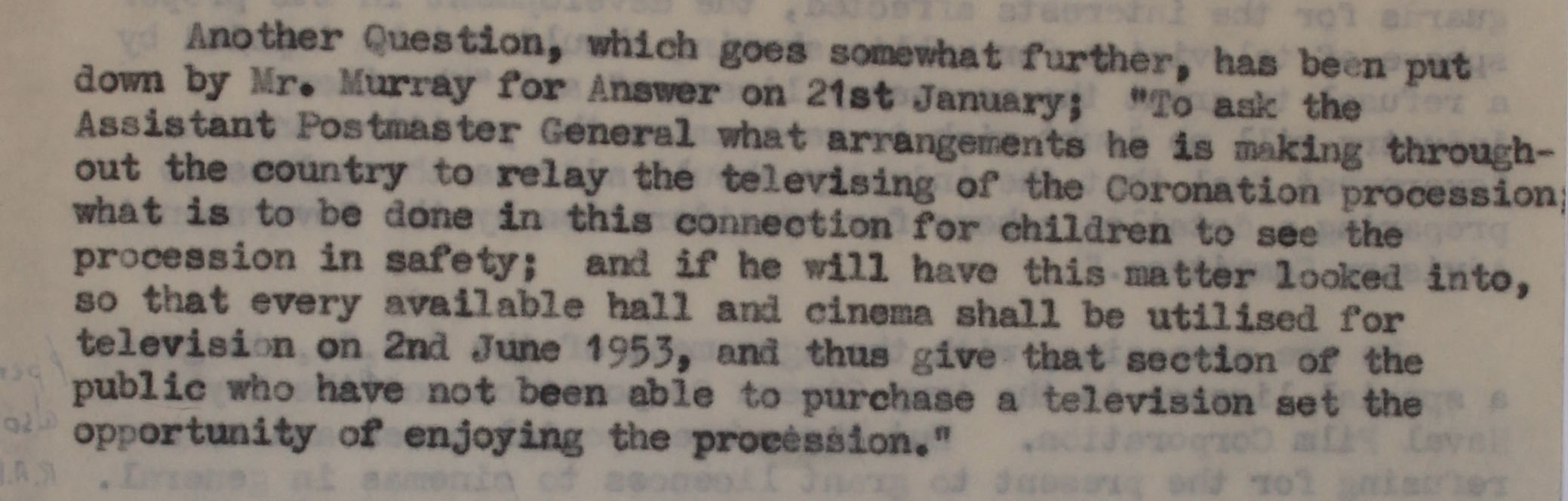
Letter to the BBC, December 1952 Catalogue Ref: HO 256/232
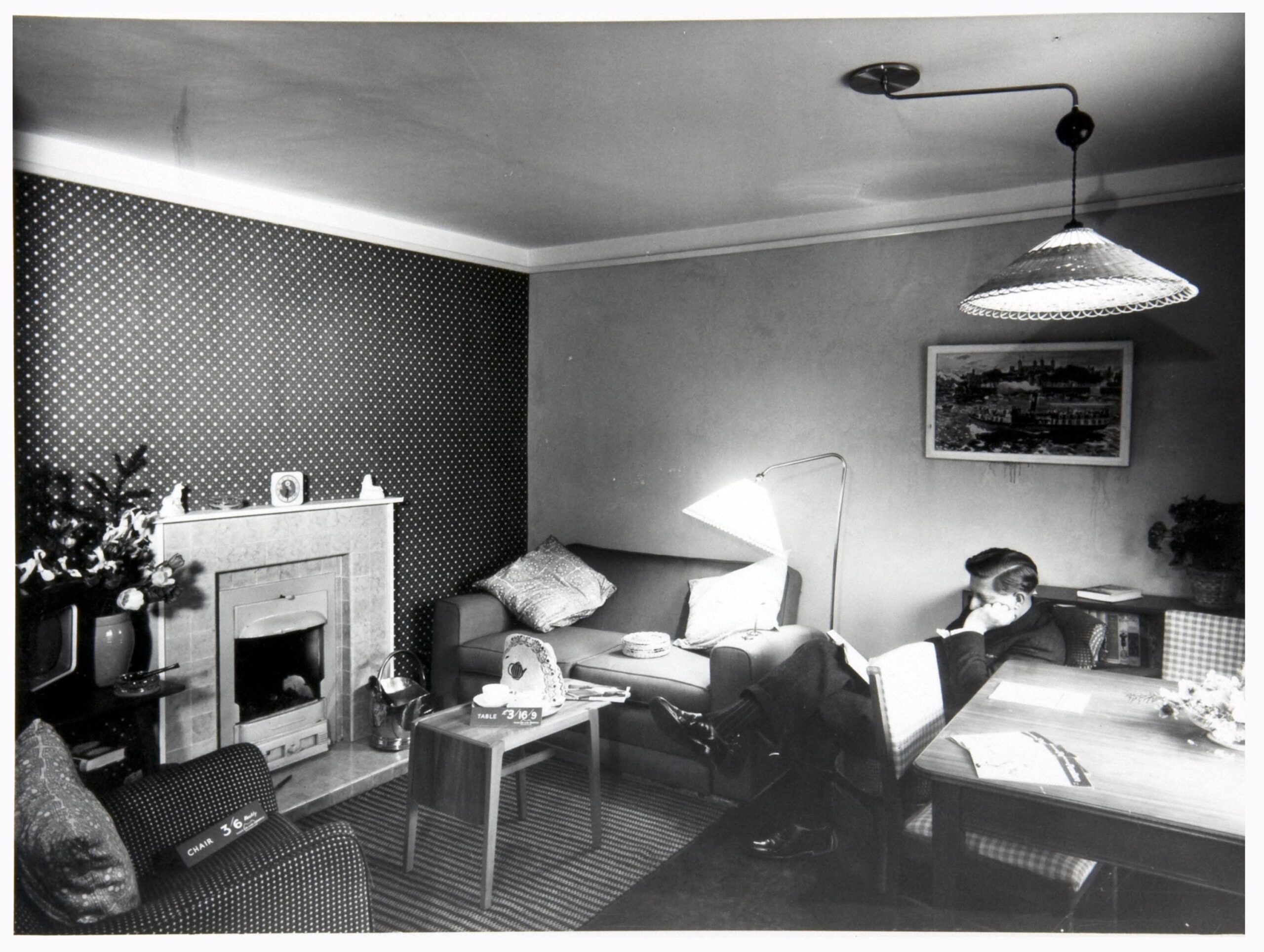
‘Living room in show home, Poplar, 1951, Catalogue ref: WORK 25/209/3872
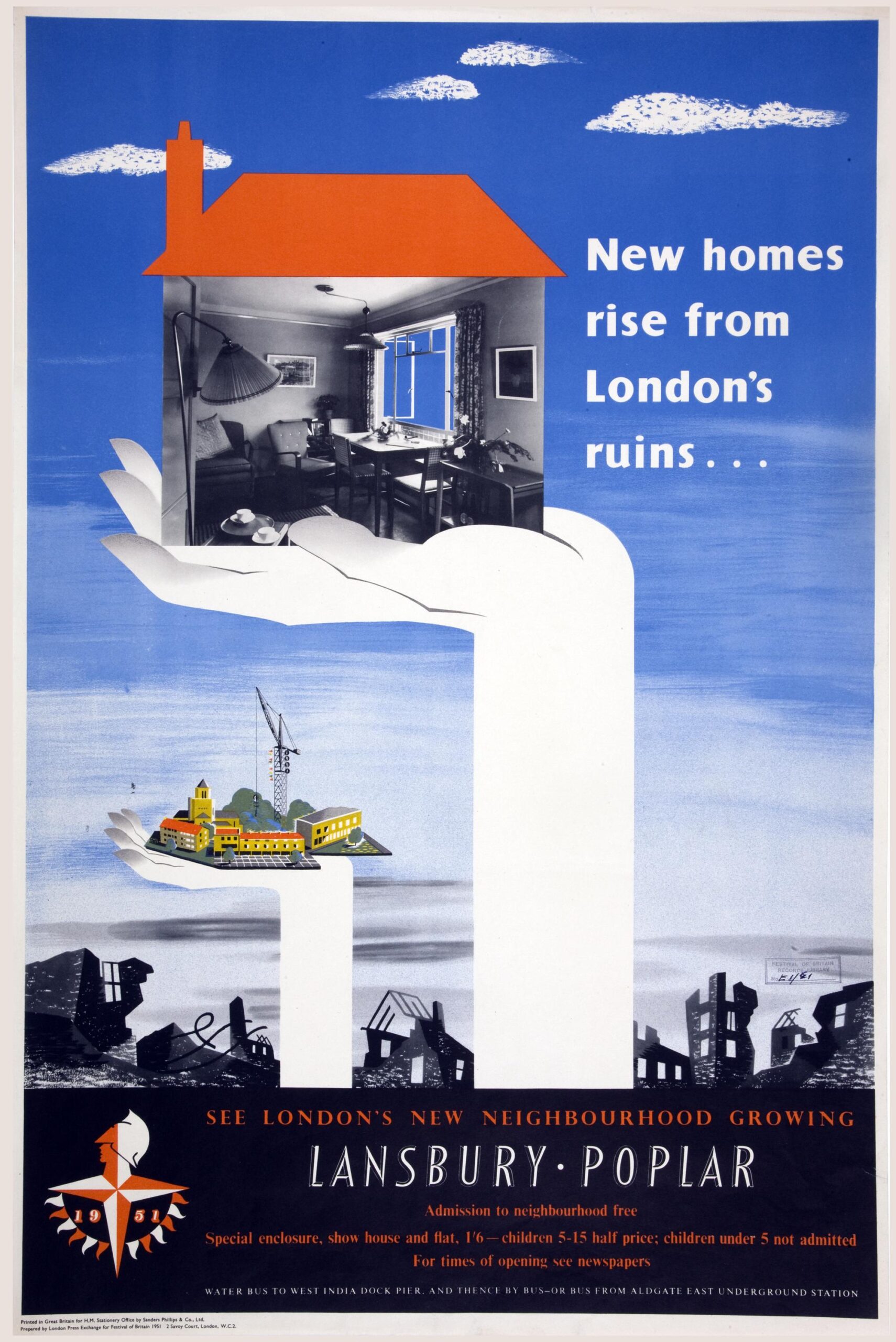
‘New homes rise from London’s ruins’ Catalogue ref: WORK 25/234 E1
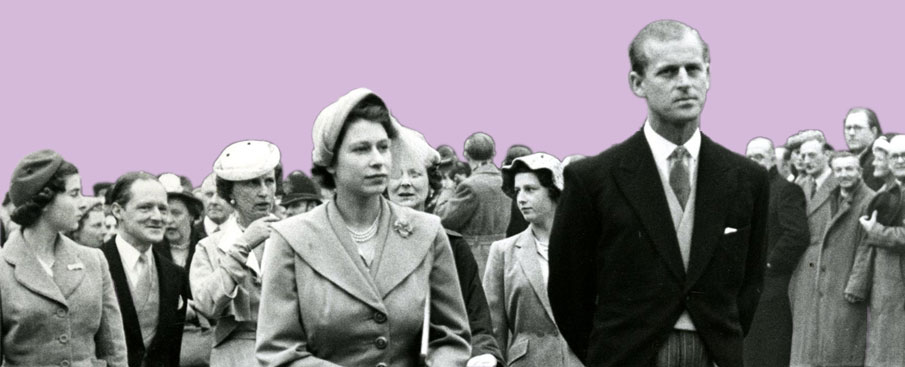
Focus:
To encourage pupils to use original sources to find out about the past in the first decade of the reign of Queen Elizabeth II.
Part 1: Pupils engage with the starter source, a poster relating to Britain’s recovery after the Second World War with prompt questions for discussion. A second source expands discussion and encourages pupils to think about change and the differences between past and present.
Part 2: Building on this approach, pupils study 4 sources which reflect different examples of technological and social change in the decade: television; motorways; holidays; tinned foods.
Part 3: Three suggested creative activities:
- Create a new of invitation card for Queen Elizabeth II’s coronation in June 1953 based on an original from the time.
- Work in pairs/small groups to design your own Coronation game based on an original chart to show the route of the coronation.
- Create an illustrated timeline for the decade using our resource timeline.
Teachers may prefer to use any of the original sources here to create their own resources and activities or adapt the activities provided here for use in their schemes of work.
What can we find out about life in 1950s Britain using documents from the time?
This lesson shows us how we can use photographs, with examples from the Victorian period and more recent times, to uncover the past.
The National Archives has over 5 million photographs in its collections. They have been taken for many different reasons by different people working for the government. They include photographs from the Ministry of Information during the Second World War, photos from the Foreign and Colonial Offices or those held in police files. The largest collection of photographs, however, can be found in a collection called COPY 1. This is a collection of photographs and pictures that artists and photographers have chosen to copyright. This means they have recorded their right to control the copying or sharing of their work.
Use this lesson to see what you can discover about past lives from five different photographs from collections at The National Archives.
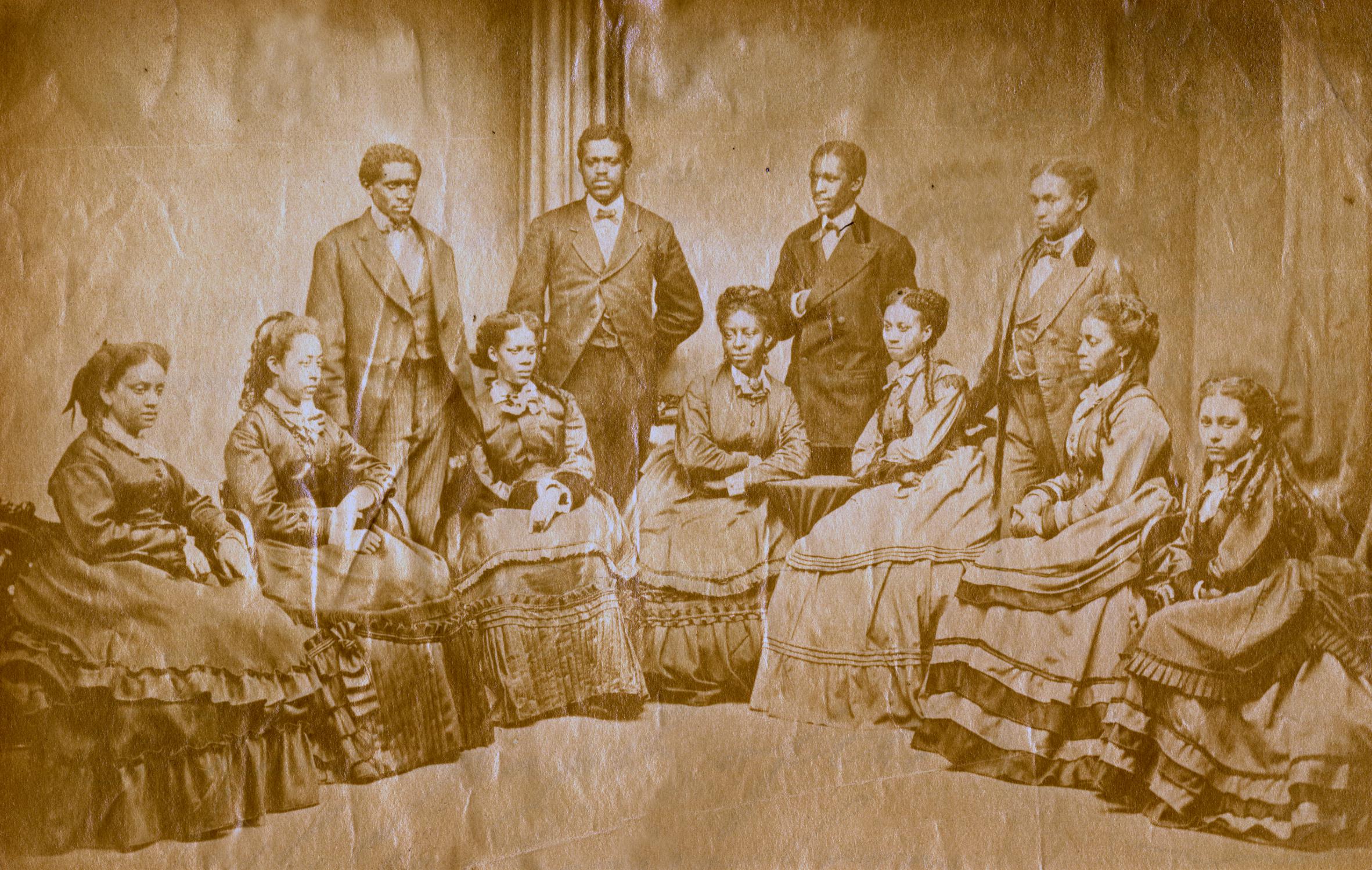
How can we use photographs to find out about the past?The Fisk Jubilee Singers performed in London in May 1873 for Queen Victoria. This was the start of their tour in Britain. It was a significant musical event. George L. Cole was the musical director of the group, a white ex-soldier from the American Civil War and who does not appear in the photograph shown here. Fisk University in Nashville, Tennessee was founded in 1866 by the American Missionary Association. The University aimed to educate freed African Americans after the abolition of slavery in 1865. The Jubilee Singers grew out of an early singing class held at the University aimed at fund raising for the college. The youngest was 14-year-old Minniver Tate. From the start their musical repertoire was wide ranging and included popular songs as well as classical compositions. They went on to incorporate slave songs and black spiritual music which audiences loved.
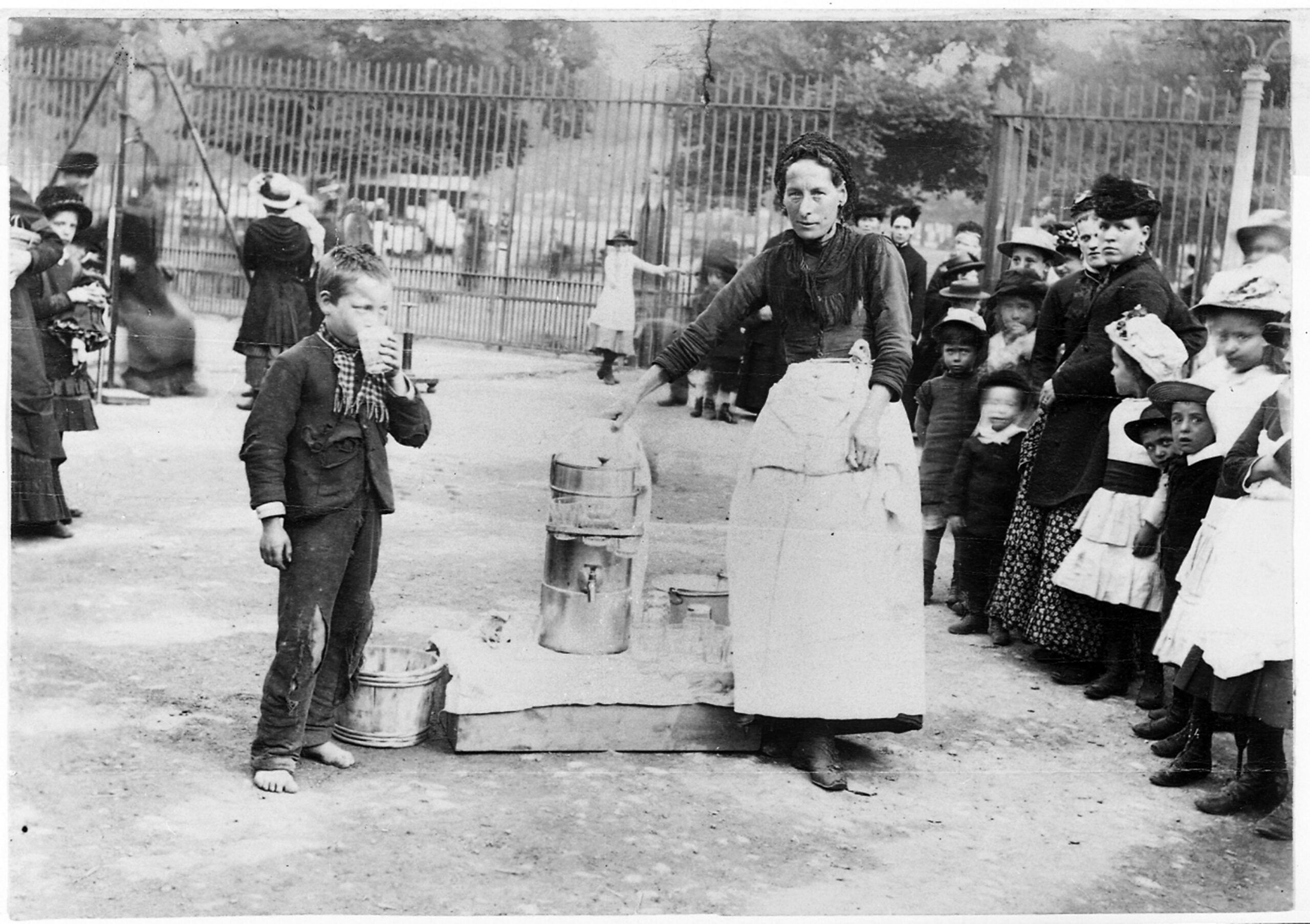
The photograph of the lemonade seller provides some information about the daily lives of adult street sellers. It was commissioned by Charles H. Spurgeon, a Baptist minister who wanted to create lantern slides of working people for his sermons. In the 1880s, there were roughly 30,000 street sellers or costermongers in London. It is possible to find out more about the lives of street sellers in the Victorian period from ‘London Labour and the London Poor’ by contemporary investigative journalist Henry Mayhew. His four-volume collection of interviews and engravings captures the lives of London’s working classes in the mid-19th century.
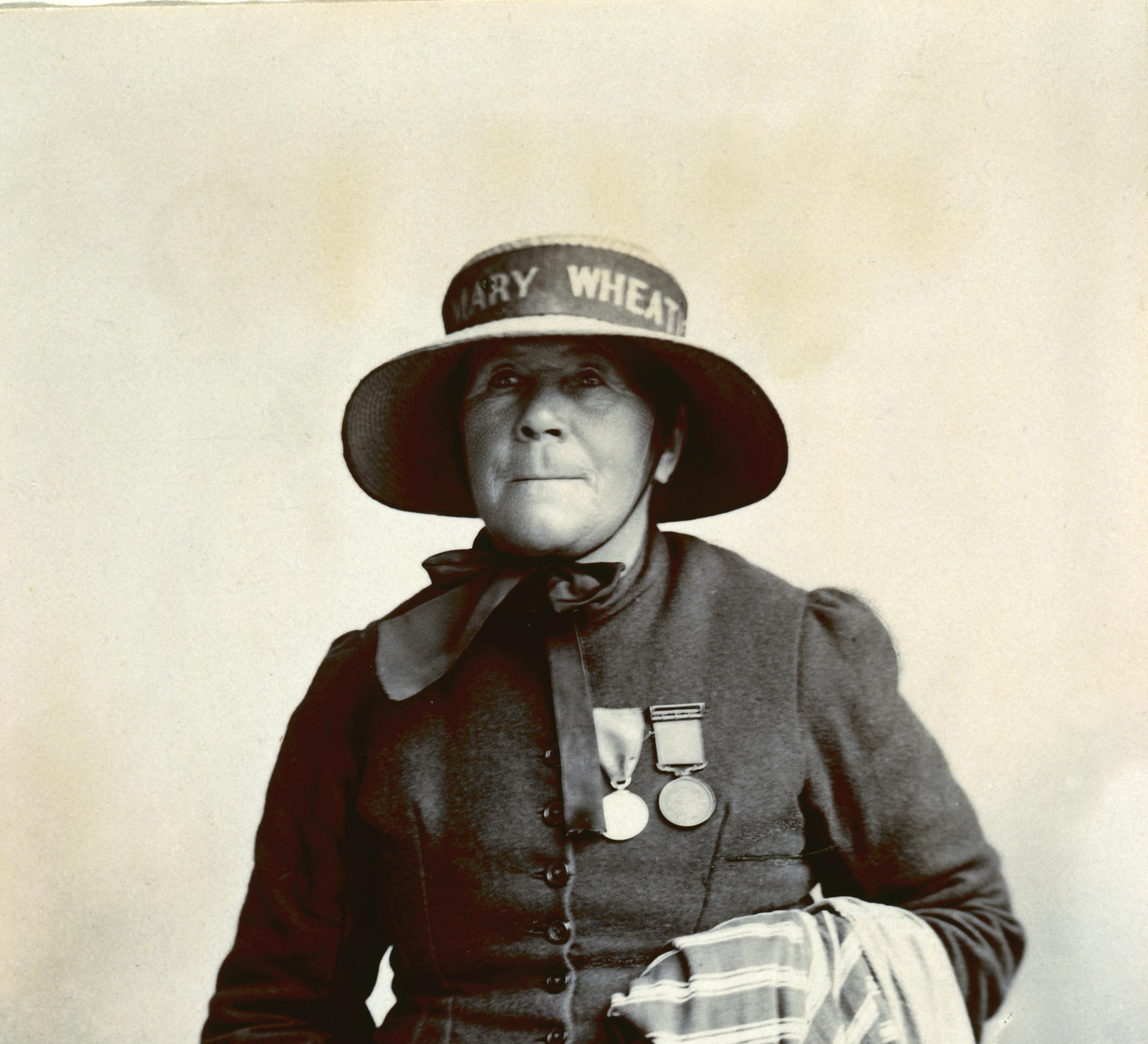
Another image of Mary Wheatland, shown in this lesson, can be located online at the National Portrait Gallery and local photographs of the town at Bognor Local History Museum. A Blue Plaque is planned to remember Mary Wheatland on Bognor Regis Pier. The Royal Humane Society is a charity that grants awards for acts of bravery in the saving of human life and for the restoration of life by resuscitation. The society awarded Mary Wheatland her bronze and silver medals.
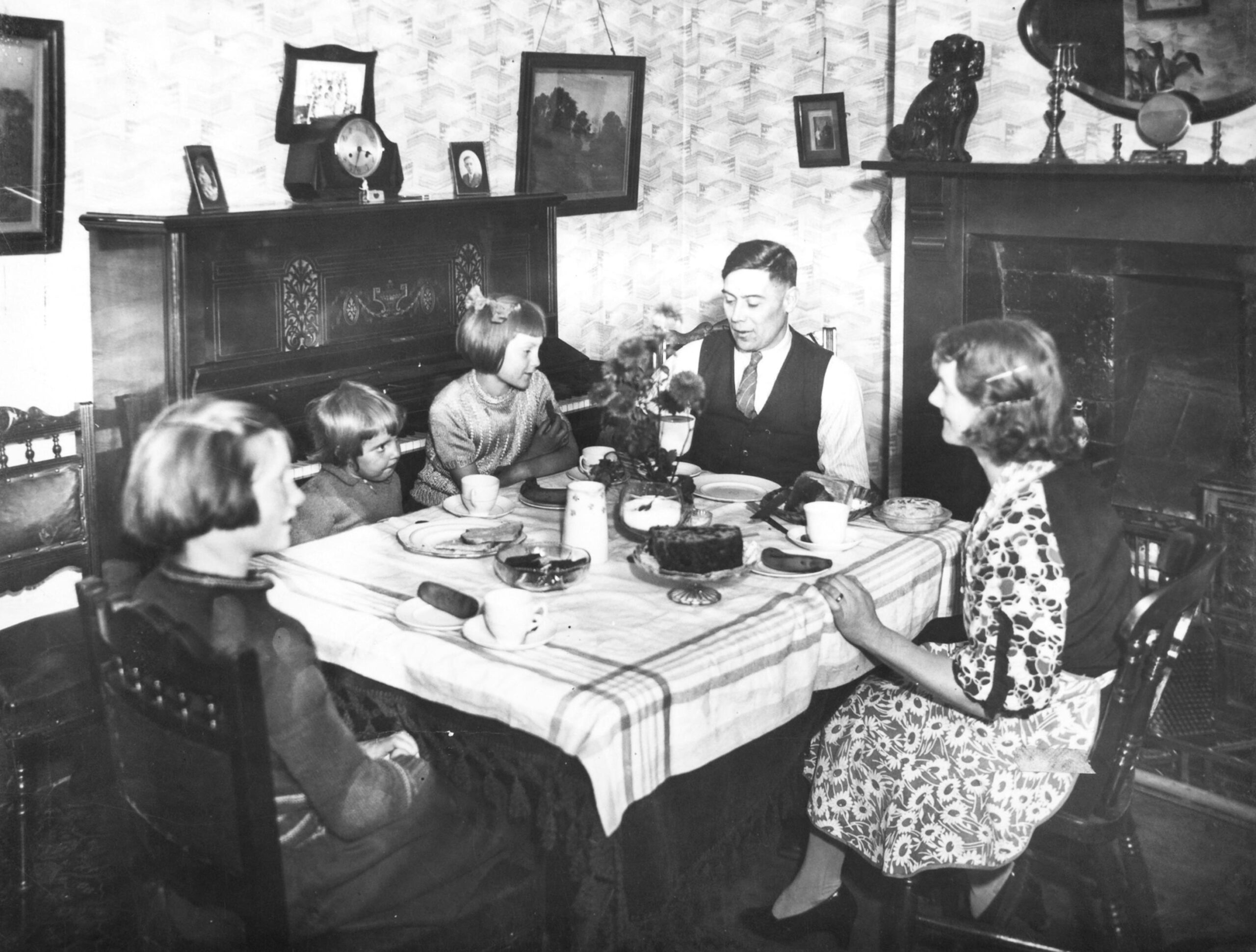
The photograph of the mining family in 1938 having a teatime meal comes from the National Coal Board collection of photographs and albums relating to all aspects of the British coalmining industry which included housing and living conditions. The first pit head baths in North East Derbyshire were opened at Grassmoor Colliery in 1929. According to the National Coal Mining Museum, by the end of the Second World War, pithead baths were available to 63% of the workforce an important improvement for mining families. Before baths were provided at the coal mine, miners went home dirty from their work. They washed in a tin bath in front of the fire or outside in the back yard. Everyday their wives had to boil heavy buckets of water for these baths and wash the miners’ work clothes. This was an exhausting job.
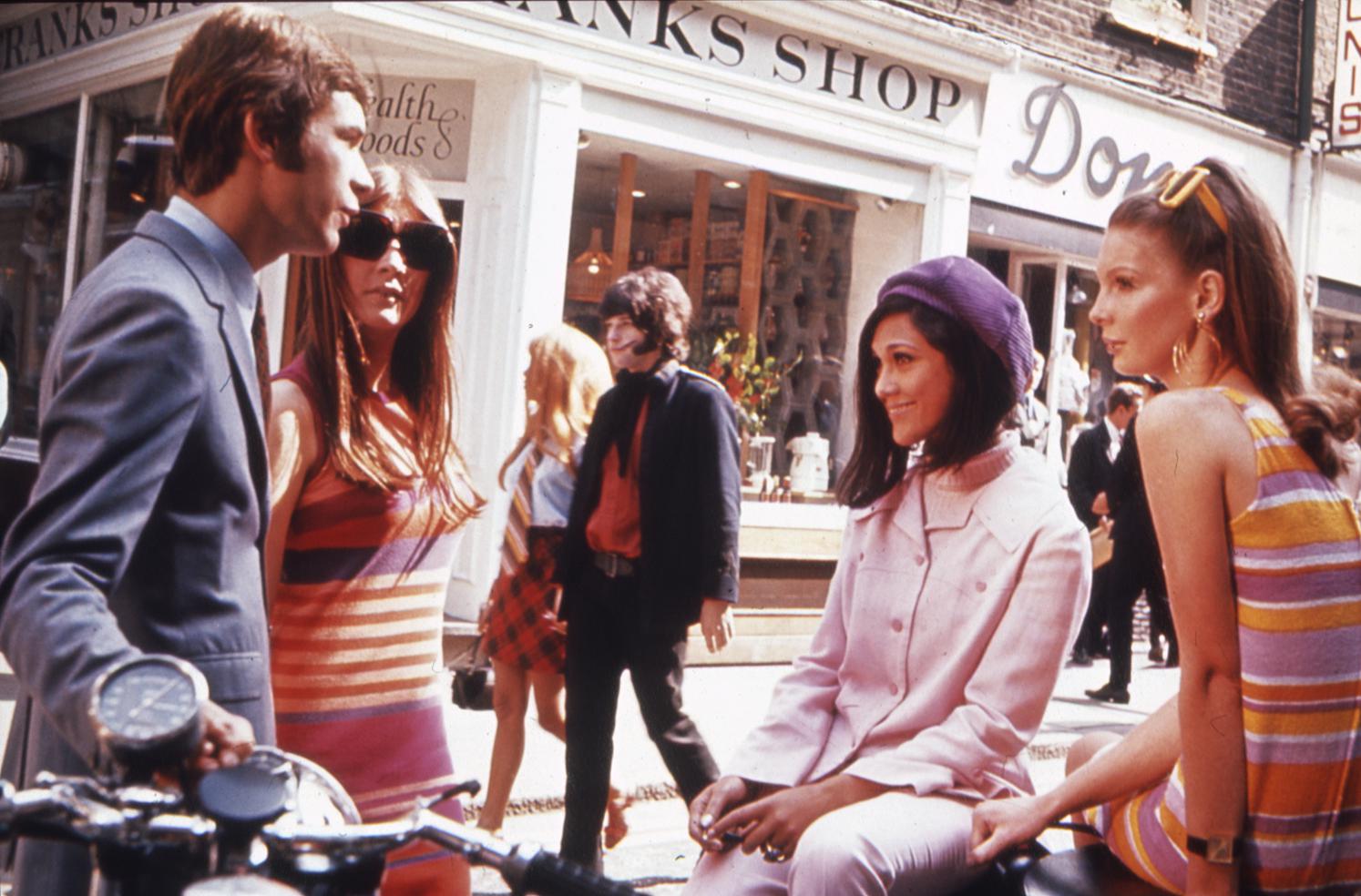
The final photograph belongs to a collection (1939-1979) from the Publications Division for the Ministry of Information and Central Office of Information. Selected official photographs were used to for publicity material issued by this government department. This photograph was part of a series covering shopping streets in London, including Oxford Street and showed its fruit and flower sellers and department stores, Orchard Street, New Bond Street and Carnaby Street which was described as ‘the headquarters of the world famous “mini” in this collection.