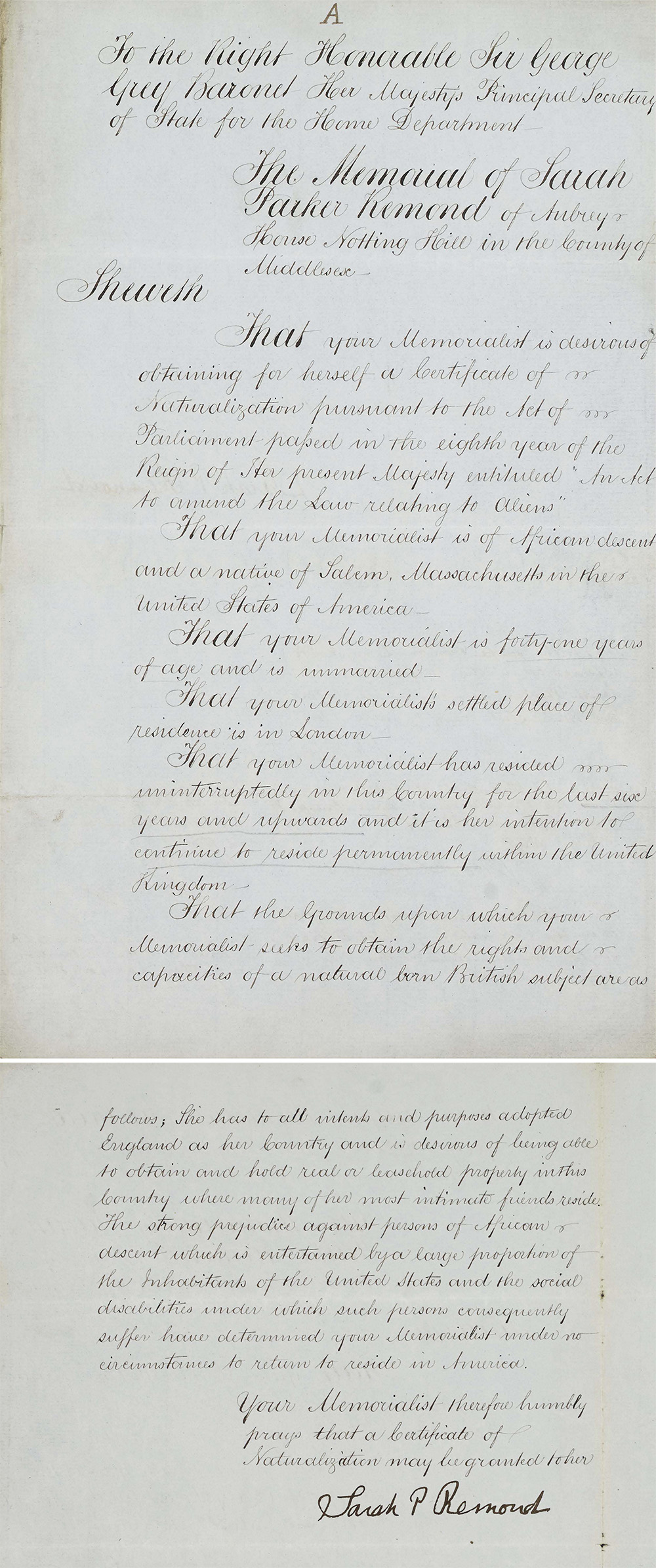
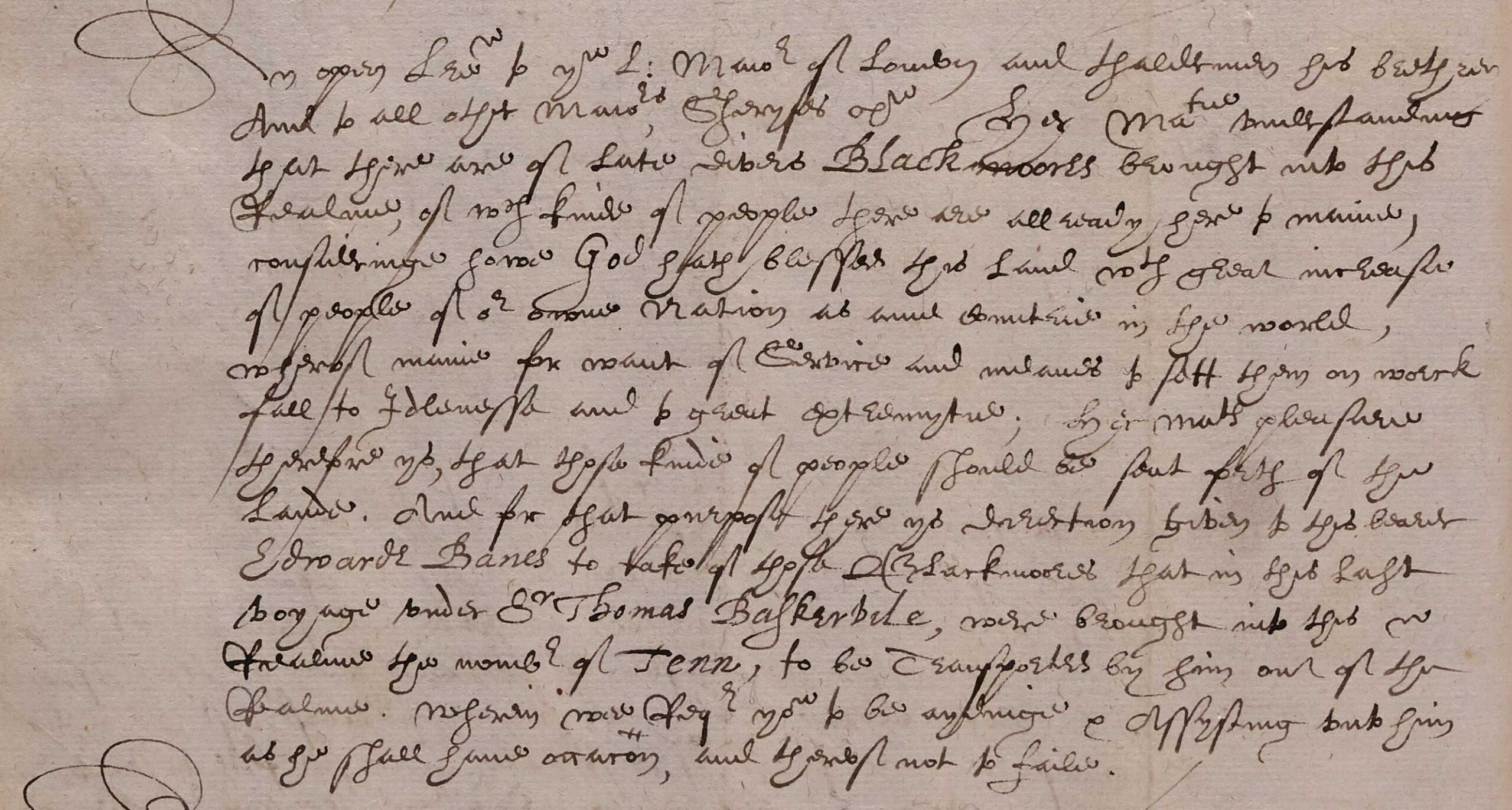
Before you share this source with pupils, please be aware that it uses language that is inappropriate and unacceptable today.
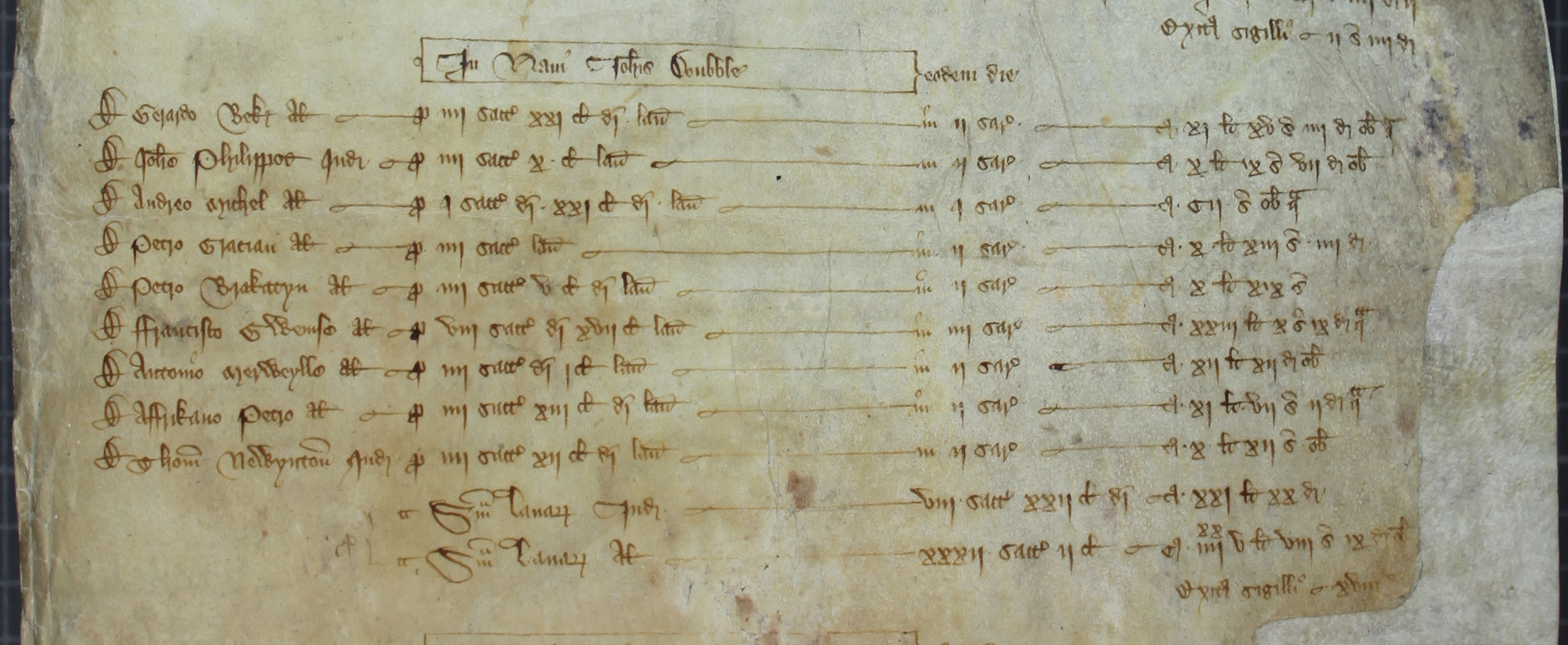
John Blanke’s wage slip Catalogue ref: E 36/214 f.109.
Transcript
Item to John blanke the blacke Trumpet for his moneth wages of Novembre last passed at viij d the day –
Item to Sir Rice ap Thomas’ servant that brought metheglee to the king for his reward xx s [20 shillings] and for the cariage of the same xx s [20 shillings]
Summa parles lx s. [60 shillings]
S[u]m totals of this wek aforesaid Lix li iiijs vijd[£59, 4 shillings, 7 pence]
Task
- What can you see?
- Do you think this is a modern document? Why/ why not?
- Can you make out any of the words?
- Who is John Blanke and what is his job?
- How much is he paid?
- Why do you think he has been described as ‘John Blanke the blacke’?
Follow-on questions:
- John Blanke played at the royal court; what does this tell us about his ability as a musician?
- Why do you think reference has been made to the colour of Blanke’s skin?
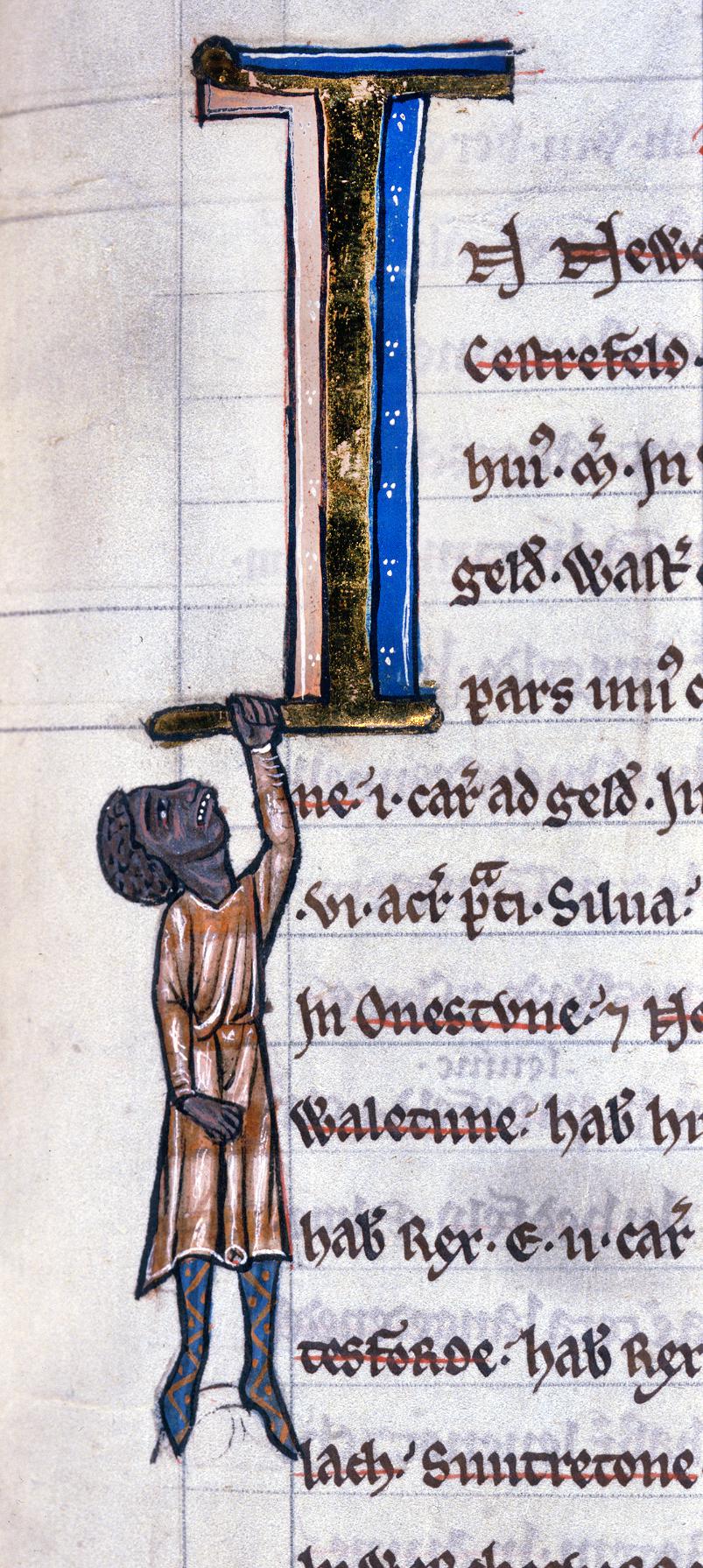
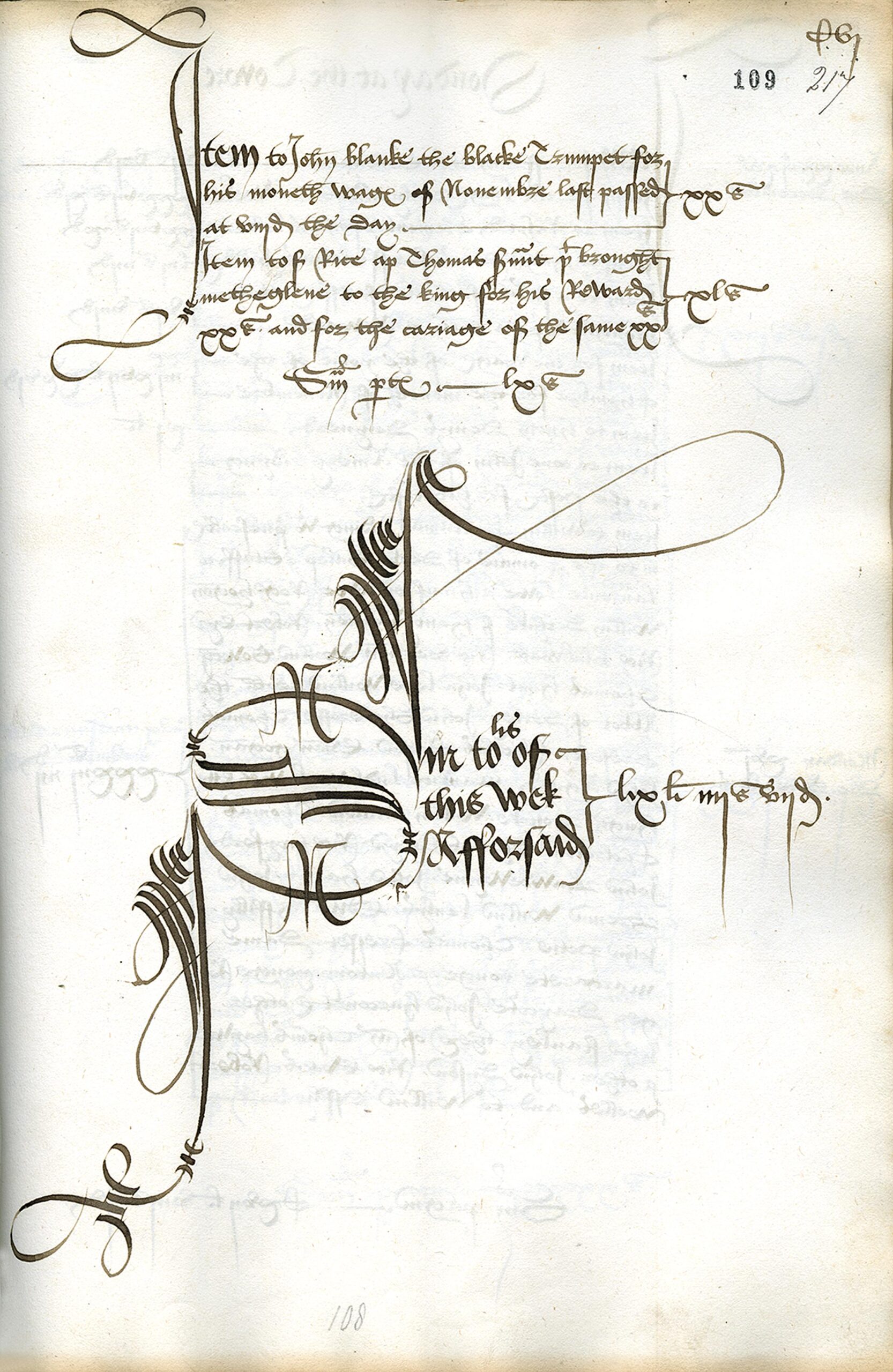
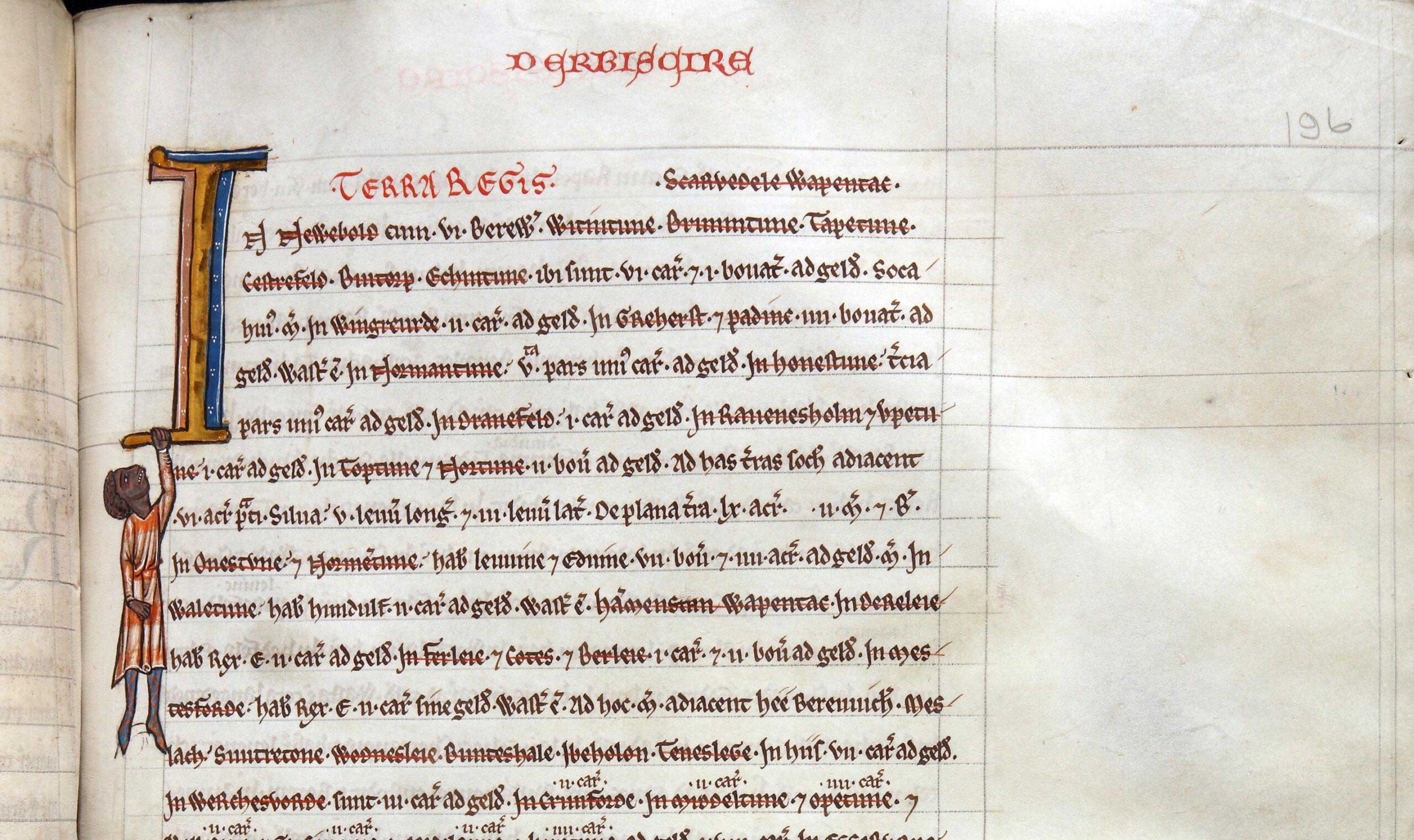
Black figure on illuminated initial from Abbreviato of The Domesday Book Catalogue Ref: E36/284 f.19
This document was made in the thirteenth century, to help officials of the King’s Exchequer when consulting the original Domesday Book.
Discuss the following questions:
- Describe what can you see in this source.
- When do you think it was made? Why do you think this?
- Who do you think the man is?
- How is he dressed?
- Do you think he is important? Why/ why not?
- Why might the person who created this source, have drawn a Black man on this page? What can it tell us about the people living in Britain at this time?
Black people have lived in Britain for over two thousand years. Some came to Britain with the Roman invasion in 43 AD and they became an important part of British society throughout the medieval ages and beyond. Evidence shows that Black people joined the armed forces, married in parish churches, made significant contributions to art and writing, and resisted and challenged the repressive laws of the day. We cannot tell the history of Britain without including their stories.
In the early years of the First World War, many Caribbean men bought tickets to sail to Britain to join the army. The British West Indies Regiment was created, playing an important role in the conflict. Men from Nigeria, the Gold Coast, Sierra Leone, the Gambia and other parts of Africa, also fought for Britain. At the end of the war, many African and Caribbean soldiers decided to stay in Britain to make it their permanent home. Race riots broke out in parts of the country during the early months of 1919, as some white communities blamed black people for the shortage of work and housing caused by the war.
During the Second World War, black people from across the Commonwealth fought for Britain once more. Some were soldiers, whilst others came to support work on the Homefront such as factory production and nursing.
After the war, Britain needed to be re-built. By 1948, the Nationality Act was passed; allowing people from British colonies the right to live and work in Britain if they wanted. Other people from Europe were also invited to Britain. Many people from the Caribbean left their homes to begin a new life in Britain, bringing with them a wide range of skills. They filled jobs in the transport system, postal service and health service, helping Britain to re-build and recover.
These people are often called the ‘Windrush Generation’, named after the ship ‘The Empire Windrush’ that docked at Tilbury in June 1948. Windrush was not the first ship to bring Caribbean migrants to Britain; the Ormonde and Almanzora had arrived in Southampton the year before.
Between 1947 and 1970, nearly half a million people left their homes in the Caribbean to live in Britain.
What do the sources reveal about an early Black presence in Britain?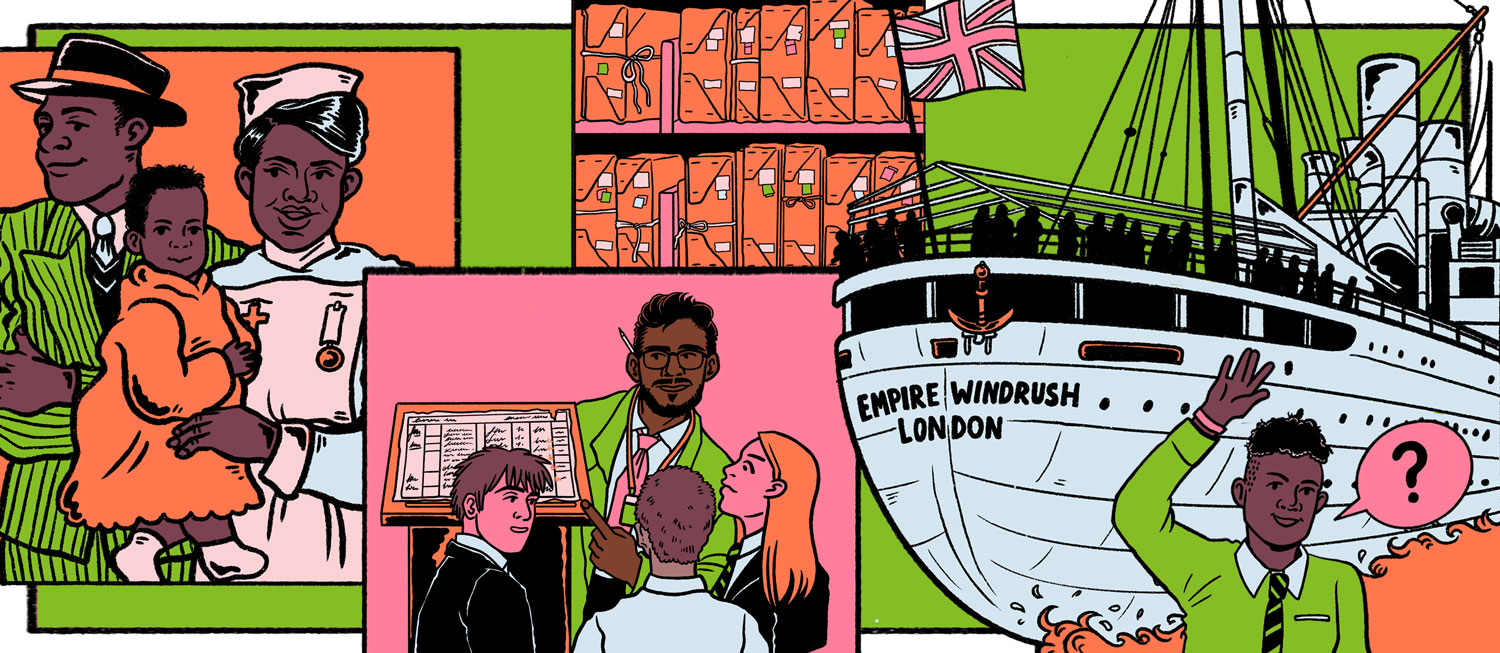
Learning about the story of the Empire Windrush
The National Archives has created some resources for you to use in your classroom with our video to remember the story of the Windrush generation.
In the video, pupils take a historical journey from early times to the 1960s. They start with evidence of a Black presence in Britain from earlier migrations and explore the story of the Empire Windrush with other documents from The National Archives. Why did people leave their homes in the Caribbean to come to Britain? What was it like when they arrived? How were they treated then and in the years that followed? Historical sources also include music and some original footage from the period. We hope that the commentary and documents will encourage your pupils to explore the past and ask questions about how this Caribbean immigration changed life in Britain.
Before watching the video, we advise teachers discuss the meaning of such terms as: blitz, immigrant, commonwealth, British Empire, colony, colour prejudice, inequality, discrimination, and colour bar.
Please note that some of the language and terms used in the documents in video are not appropriate or acceptable today. The documents cover sensitive subjects. We suggest that teachers look at the material carefully before introducing to pupils.
In April 2017 the British Government apologised for its treatment of the Windrush generation. Some people were told that they lived here illegally and faced deportation from the country. There was widespread shock at the impact on the lives of many Black Britons, and this became known as the Windrush Scandal.
Watch the video on YouTube here: https://www.youtube.com/watch?v=GoxfWYuQ4QE
Approach of Video
In such a short video it is not possible to present a detailed account of the Windrush story and its impact. Therefore, we highlight the story through four key documents, these include extracts from a government information pamphlet about Britain created for a Caribbean audience, a telegram about the passengers on the ‘Empire Windrush’, extracts from a housing report in the 1960s and a photograph of the Notting Hill Carnival. We hope teachers will explore the topic further using our lessons with original documents and activities to deepen understanding of events raise questions for discussion and consider the nature of evidence.
Resources:
All resources include teacher’s notes, background information, document captions, transcripts, and some have simplified transcripts.
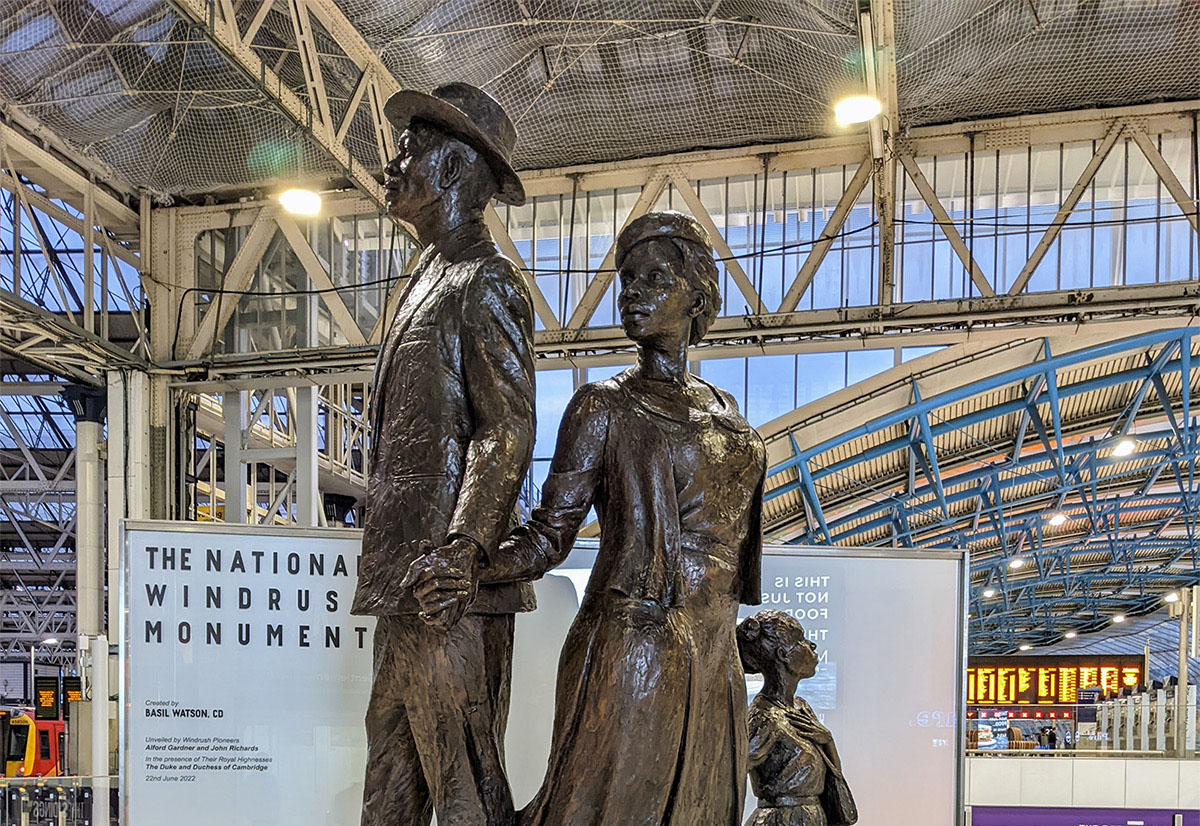 What was the context and impact of migration in modern Britain?
Commonwealth migration to Britain
Migration from the Caribbean to Britain, symbolised by the arrival of the Empire Windrush, hides the fact that there had already been a long tradition of men and women emigrating from islands such as Jamaica to work in Central and South America and the United States. The Caribbean economy, heavily reliant on the export of agricultural products, was an economy where labour was cheap and unemployment rates high, so seeking seasonal work, particularly in the US, was normal. After the Second World War, there was a dramatic reduction in the requirement for Caribbean labour in the US, and this was an important push factor for the arrival of Caribbean men and women to Britain from the late 1940s and early 1950s. In addition, there was more familiarity with Britain, as during the Second World War people from the Caribbean had come to serve in the war. In the wake of the arrival of the Empire Windrush, consideration was given by British officials to restrict further arrivals; however, there was resistance, most notably from the Governor of Jamaica, who could see the tough economic conditions people were operating under and acknowledged that people were British subjects and had only recently contributed to the war effort.
British cities needed rebuilding after the devastation of five years of bombing. Britain also had to recruit a huge number of workers to support the newly founded Welfare State and to rebuild its infrastructure.
There was a significant demand for labour which came not only from the Caribbean but also from mainland Europe, Ireland, India, and Pakistan. However, it was opposition to Commonwealth and empire immigration that stood out, with a reluctance for example to accept skilled Caribbean labour. While wanting to allow entry to white people from the old Commonwealth, the government did not want to appear racist in any plans to restrict immigration from elsewhere in the empire and Commonwealth as governments of the newly emerging black Commonwealth took offence at moves to restrict movement to Britain from their respective countries while not applying the same rules to those from the white Commonwealth.
European Volunteer Workers Scheme and Polish resettlement
There was also the question of European migration. Polish troops who fought alongside the western allies chose not to return to Poland. In 1946, the British Foreign secretary announced that the Polish Resettlement Corps was to be formed as a body of the British Army whereby any Pole who served under the British would be discharged from the Polish Army and could enlist as a British soldier until demobilization. Wives and dependents were brought to Britain to join them. The Polish Resettlement Bill was drawn up in 1946 and the Act was passed in 1947. It was the first ever mass immigration legislation passed by Parliament in Britain and allowed over 200,000 Poles to remain in the United Kingdom.
The Polish Resettlement Corps was disbanded in 1949. During its short-lived existence, it brought about the reunion of families and integration into British society for displaced Poles. It was these Poles who established the Polish communities throughout the United Kingdom.
Over 84,000 or so European Voluntary Workers (EVW) arrived in Britain from 1947-1949. The Displaced Persons (DPs) who were brought to England as EVW to supplement Britain’s workforce were East Europeans who were taken as forced labour by the Germans, being held after the war in the military zones in Germany.
Arrival of the Empire Windrush and beyond
Before the much-publicised Empire Windrush docked at Tilbury Harbour in June 1948, earlier ships arrived at UK ports carrying West Indian labourers . The Ormonde, for example, docked at Liverpool in March 1947 with 108 migrant workers from Bermuda, Trinidad and Tobago, and Jamaica. At the end of that year, the Almanzora arrived at Southampton with a similar number of mainly ex-service men from the West Indies who had fought alongside Britain and her allies.
Many migrants travelled alone, leaving behind their families while they settled in. There was an acute shortage of housing, particularly in big cities, to accommodate the growing number of migrants and many endured racist abuse and were denied access to hostels. The problem was so severe in London that many were housed in a deep underground shelter at Clapham Common. The British Nationality Act 1948, which came into force on 1 January 1949, made it much easier for Commonwealth migrants to settle in Britain as it created the opportunity for all to register their British Nationality.
By June 1948, a variety of Government Departments including the Home Office, the Ministry of Labour, the Assistance Board, and the Housing and Local Government Board were becoming more co-ordinated in preparing for future influxes of Caribbean migration across the United Kingdom. The 1950s would see the arrival of tens of thousands of workers and their families as Britain continued its policy to nationalise key industries, such as transport and energy, and with it demand more labour.
Nearly 70 years after the arrival of the Windrush, it emerged in 2017 that hundreds of Windrush generation migrants had been wrongly detained, deported and denied legal rights, despite having lived in the UK since before 1973. In March 2020, Home Secretary Priti Patel apologised for the scandal and the harm inflicted upon families.
Experience of the first arrivals in the 1950s and 1960s
The Empire Windrush (BT 26/1237) as well as the Ormonde, Almanzora, and many other ships’ passenger lists reveal a diverse range of skills and professions amongst the migrants, including accountants, chemists, carpenters, and more. However, as a result of the colour bar in Britain, many could only find employment in the least desirable areas of the economy, in work that was typically semi- and unskilled, with low wages and poor conditions. Indeed, a study by the sociologist Ruth Glass carried out between 1958-91 showed that 55% of Caribbean migrants experienced job downgrading after their arrival.
In housing, many of the West Indians’ initial stays in the air raid shelters underneath Clapham South underground station (HO 205/253) only served to delay their confrontation with landlords reluctant to let rooms to Black people, with the now infamous ‘no blacks, no dogs, no Irish’ signs displayed in lodging house windows.
This hostility would grow throughout the 1950s, culminating in the Nottingham and then Notting Hill (West London) riots of 1958, which largely consisted of gangs of Teddy boys attacking the new arrivals. The following year, Kelso Cochrane, a carpenter from Antigua, was brutally stabbed to death in West London. These events would lead to increased calls for immigration control, resulting in the 1962 Commonwealth Immigrants Act, leading many to argue that the migrants were being blamed for the prejudice directed towards them.
Racism was, however, always met with resistance. The Caribbeans, for instance, downed tools and walked away, and petitioned and organised against discriminatory practices in the workplace (even where unions weren’t supportive). They developed ‘pardner’ or ‘sou-sou’ schemes to raise money for down payments on homes (as banks would frequently refuse to lend to Black people), and mobilised against racist attacks in the streets. Claudia Jones emerged as a key activist in this period, founding the West Indian Gazette Newspaper and, following the Nottingham and Notting Hill riots in 1958, organised the UK’s first Caribbean-themed carnival in St Pancras Town Hall, London.
1 Glass, Ruth (1960) Newcomers: The West Indians in London Harvard University Press, p.31, cited in, Hiro, Dilip (1992) Black British, White British: A History of Race relations in Britain Paladin, p26.
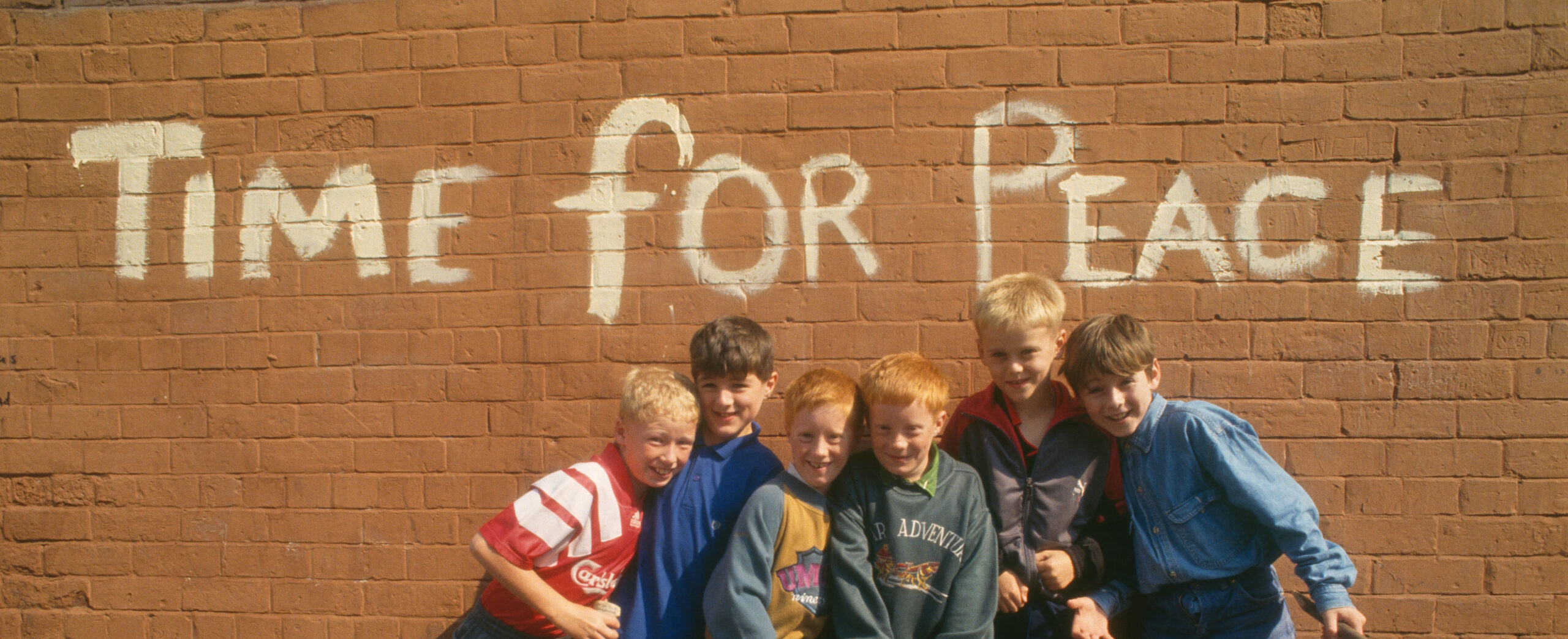
This presentation is for use in secondary level school assemblies to mark the 25th anniversary of the signing of the Belfast or Good Friday Agreement which ended the conflict in Northern Ireland. It is accompanied by a 7-minute video which gives an overview of the conflict and the peace process that brought it to an end, plus details about what the Agreement did and the results of it.
The total presentation should take around 15-20 minutes depending on the amount of time allowed for discussion at the beginning about what students know already about Northern Ireland and the Agreement.
There are additional resources designed to embed knowledge about the Agreement and support student discussion about how it successfully brought an end to the violence and established a new era of peace in Northern Ireland.
View the Assembly Speaker Notes
Download the Assembly presentation
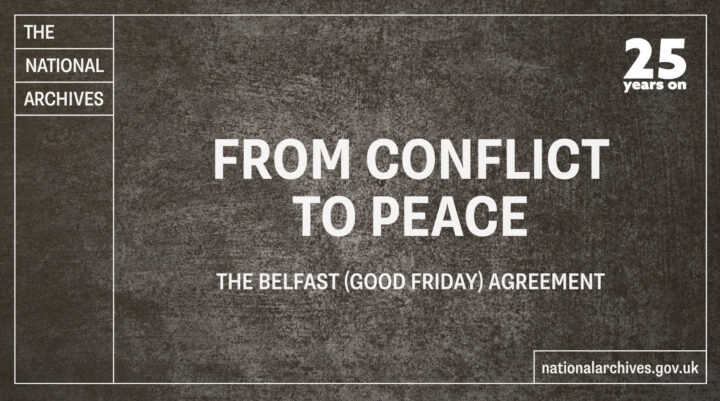
This discussion pack accompanies the secondary level school assembly resource to mark the 25th anniversary of the signing of the Belfast or Good Friday Agreement which ended the conflict in Northern Ireland. It is designed to promote follow-on discussion about the Agreement and how it brought about an end to the conflict and led to a successful peace. It provides an opportunity for students to re-watch the video and then to analyse and discuss what issues caused conflict and how specific terms in the Agreement addressed these. There are additional slides at the end giving more historical background to Northern Ireland which you may wish to include at the beginning of this discussion activity to provide students with more supporting knowledge.
There is a suggested final activity to encourage students to demonstrate their understanding of the Agreement and promote it as an example of a successful peace agreement.
The student workbook can be printed as individual activities or as a full booklet for students to work through. The final few pages have been left blank as overflow space and for student notes outside of the activities; these can be printed at the teacher’s discretion.
From Conflict to Peace - 25 Years OnHere is some additional information if you are interested in learning more about the historical background to Northern Ireland and its relationship to the United Kingdom and to Ireland.
British Rule in Ireland
England, and later Britain, ruled over part or all of the island of Ireland for nearly 800 years and during that time there had, to varying degrees, always been some form of resistance to that rule. This was either demonstrated through violence, or through politicians taking up issues in Parliament. In 1798 there was a major rebellion against British rule led by Wolfe Tone and the Society of United Irishmen. The rebellion was overthrown and the Irish Parliament in Dublin was closed down. Ireland was made a formal part of the United Kingdom of Great Britain and Ireland in 1801.
Home Rule for Ireland
By the late 19th Century there were two political viewpoints in Ireland. Irish nationalists, most of them from the majority Catholic population, tried to get Home Rule (or self-government) for Ireland, and this idea gained more and more support in Parliament and became a real possibility during the last decades of the 19th century. MPs in the Irish Parliamentary Party, led by Charles Stewart Parnell and later by John Redmond, had support from many in the British Liberal Party and two attempts at passing an Irish Home Rule Bill nearly succeeded in 1886 and 1893. At the same time there were militant nationalist groups known as republicans, such as the Irish Republican Brotherhood, who used violence to try and overthrow British rule.
There was also a large Protestant minority in Ireland, located largely in the north-eastern province of Ulster, who believed that Ireland should remain a part of the United Kingdom. These Unionists actively resisted calls for Home Rule, fearful that, as a Protestant minority, should Home Rule be granted, they would be ruled by a Catholic majority. Militant unionist groups known as loyalists also formed to use violence against the threat of Home Rule. Both sides reached the brink of civil war by 1914. Private armies known as the Irish Volunteers and Ulster Volunteers were prepared to fight for and against the idea of Home Rule for Ireland.
From Home Rule to War 1914-21
In 1914 the Third Irish Home Rule Bill was passed by Parliament, but its introduction was suspended because of the First World War. In 1916 there was an uprising in Dublin by militant Irish Nationalists who declared Ireland to be independent. The Easter Rising was put down but demands for independence continued. Sinn Fein, an Irish Nationalist party that demanded full independence from the U.K., won most of the Irish seats at the 1918 General Election. They declared Ireland to be an independent republic and established their own Parliament in Dublin in January 1919 and began to fight a war of independence against the British Army. Violence also broke out between republicans (militant nationalist) and loyalists (militant unionists) in the North. To try and stop Ireland breaking away the U.K. Parliament passed the Government of Ireland Act in 1920 to create separate parliaments for Northern Ireland and Southern Ireland, but the war continued until December 1921.
The Partition of Ireland 1922
In December 1921 Patrick Collins and Arthur Griffiths of Sinn Fein, negotiated a treaty with the U.K. government to end the war. It created the Irish Free State, which was a self-governing country within the British Empire and eventually it became the Republic of Ireland in 1949. However, 6 of the 9 counties in Ulster, which had Protestant majorities, had already elected The Parliament of Northern Ireland on 24th May 1921 and these six counties formed Northern Ireland and remained part of the United Kingdom. The three counties of Ulster that had Catholic majorities joined the Free State. Ireland was now partitioned but a large minority of the population in Northern Ireland were Catholic and retained their wish to be part of an independent Ireland.
Northern Ireland Before “The Troubles”
From 1921 until the 1960s Northern Ireland was relatively peaceful but tensions between the two historic communities remained. The Protestant Unionist community wanted to protect their traditions and ensure they maintained control of the government in Northern Ireland which was dominated by Unionists. The voting system was changed from proportional representation, so nationalists had less representation in the parliament and on local councils.
RUC police were mostly Protestant, and the Special Powers Act of 1922 allowed them to ban meetings, parades and newspapers that they considered dangerous. This law was used mainly against members of the Catholic Nationalist community.
Catholics also felt discriminated against in jobs, housing and education. Nationalists began to protest against their unfair treatment. When violence broke out between protestors and the police, this became the beginnings of “The Troubles”.
“The Troubles”
In the 30 years before the Agreement was signed, violence between the two historic communities grew and armed groups known as paramilitaries attacked each other and members of the police and army. Groups such as the Irish Republican Army, the IRA, wanted to force Northern Ireland to become united with the rest of Ireland, while those such as the Ulster Volunteer Force, the UVF, fought for it to remain part of the U.K. The government of the U.K. sent troops to try and maintain peace, but they became the focus for many attacks as their presence was seen as a form of repression. Over 3,500 people were killed, communities attacked and businesses continually damaged. Paramilitaries even sometimes attacked members of their own communities. Attempts to stop the fighting and find a peaceful solution were unsuccessful until 1998 with the signing of The Belfast (Good Friday) Agreement.