resettlingthecoloniallens.wordpress.com
Explore the project blog
This project examines how photography shaped, challenged, and continues to re-frame the history of forced resettlement during the Malayan Emergency, bringing together governmental and vernacular images in an open-access archive to explore their contemporary reinterpretation in Malaysia.
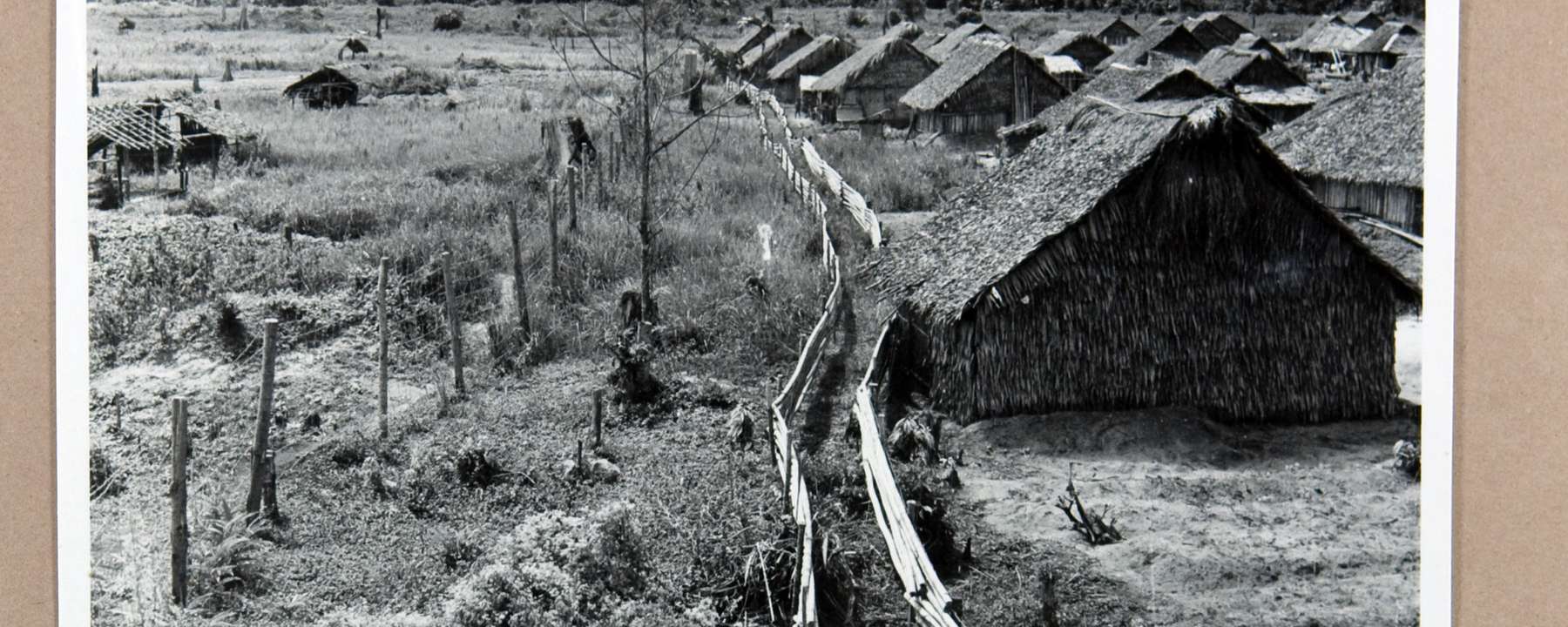
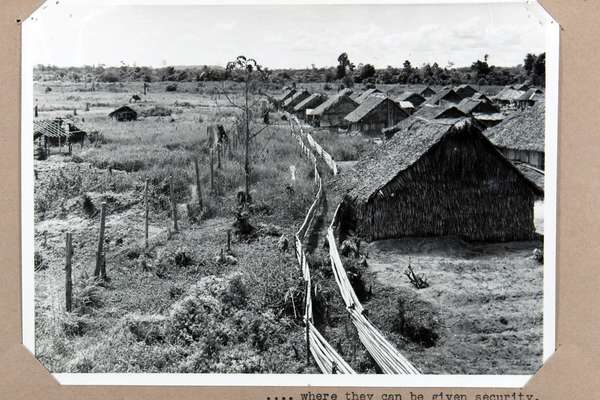
Picture of a 'new village' from the album 'Campaign in Malaya' AIR 20/10664 . Original caption '...where they can be given security'.
January 2025–December 2027
The project is led by Professor Jeremy Taylor University of Nottingham, with co-investigators at De Montfort University, the University of Malaya, and in partnership with Imperial War Museums, and the International Council on Monuments and Sites, Malaysia.
Photography was a key medium through which the British colonial state documented the Malayan Emergency (1948–60). This was mainly used for resettlement. Under this counterinsurgency scheme, almost half a million rural residents of colonial Malaya, most of them of Chinese ancestry, were forcibly moved into hundreds of resettlement camps. These were later re-labelled ‘new villages’ (NVs) in an attempt to undermine support for the Malayan Communist Party (MCP).
This project asks: what role has photography as a medium played in documenting, critiquing and re-writing the history of resettlement in late-colonial Malaya?
It will critically engage with institutional, commercial and amateur photography and bring together a range of this material in an open-access database. At the same time, it will explore the ways in which that photography has been re-used and interpreted in Malaysia. It will also consider how it is emerging as a means of confronting histories of resettlement today.
resettlingthecoloniallens.wordpress.com