In the first of a two-part series of On the Record, we turn the map around and explore the revolution through the records kept by the British at The National Archives.
How did decisions made in Westminster fuel rebellion three thousand miles away? What does an appeal to the king reveal about Britain's ambitions for its North American empire? And what do private letters tell us about a war that divided families and communities?
Dan Gosling and Sean Cunningham, historians and records specialists at The National Archives, guide us through the American Revolution from this side of the Atlantic.
Listen to the episode
Listen
The American Revolution (part 1)
Audio transcript for "The American Revolution (part 1)"
Chloe: January 1774. Whitehall, London.
Over thirty men are jammed into a cramped government chamber known as the Cockpit, where one of the most famous men of his age is standing before the Privy Council…
Across from him, the Solicitor General is on his feet… hurling accusation after accusation
The packed room watch, as for the best part of an hour, the tirade continues.
Benjamin Franklin says nothing.
In two years time Franklin will become a Founding Father of the United States. But at this moment he’s still a loyal British subject.
And although he was born in Boston, he’s spent much of the last two decades in London, building the relationship between the North American colonies and the British crown.
Now something is beginning to shift.
On the other side of the Atlantic, revolution is brewing…
And as he faces another dressing down in the privy council, Benjamin Franklin, begins to see any hope of compromise slip away
I'm Chloe Lee, a historian and records specialist at The National Archives in Kew.
This is On The Record. And over the next two episodes, we are going to tell the hidden half of one of history's most iconic stories: The American Revolutionary War.
I'm joined by historians and record specialists Dan Gosling and Sean Cunningham based here at the National Archives. They’ve both brought along documents from the archives that will help us bring this chapter of history to life.
You might have heard quite a bit about the Revolutionary War recently because 2026 marks the 250th anniversary of the most famous document of that era: The Declaration of Independence, first published in 1776. But we're going to look at that period through a slightly different lens.
The Revolutionary War is often looked at primarily from the American perspective. But this isn't just a tale about the foundation of America, it's also an important chapter of Britain's colonial and imperial story.
Sean, I want to start with you.
You've spent the last few years curating an exhibition for the National Archives looking at this conflict through British documents, the other side of the story, so to speak.
Has this shaped the story you thought you knew?
Is there something unique that British sources reveal?
Sean: I think the value is really that these are British people in America. These are people who've lived in America for maybe a hundred and fifty years as colonists and settlers, and the idea of an American population doesn't really exist. They are British subjects in America, uh, loyal to the king. This is partly the crux of the problem. Their status as subjects of the king eventually is not seen to be upheld by the king and the government. So they're resisting Britain's overreach and pressure, but actually all they want is to be recognised as British subjects.
So I think in that sense, um, the British records really gets into that story of what it was like to be a, a British subject living in America at this time of frontier risk. And I think how Britain tries to deal with that on a, on a big scale across hundreds of thousands of, of acres of land, which with very few people in it. And I think the research for the exhibition really put it into this bigger perspective of how America sits in the heart of this developing empire and what Britain is going to do to protect and sustain that bit of empire.
Chloe: Interesting, I mean, that kind of American identity looms large in our imaginations today, but what you're talking through to me feels very much like this is a time where everything's to play for, everything's kind of in motion
Okay, let's take a bit of step back
In this episode we're looking at the events that lead to the breakdown of British colonial rule in North America in 1775...
So, why don't we start from the beginning - Dan, when did the British arrive in North America? And where did they settle?
Dan: The English had been colonising America since, around about 1607 is when they first arrived. That's James I and VI’s reign. That's 150 years before we even get into these disputes. As Sean was saying, these people see themselves as English and British, but equally many of them would never have set foot in England, in Britain.
Chloe: I see. Okay. That changes things slightly, doesn't it?
Dan: Yeah. This is generations of people, of Americans, but they are also seeing themselves as English, as British subjects. So this colonisation has been happening for 150 years, but only largely on the eastern borders. That's where the European colonists are arriving from, and they're moving inwards, inland. I mean the main thing to remember is this isn't the USA we know today, which spans, you know, the east to the west coast. So there's no Louisiana, no Texas, no California. It's much less populated, as you would expect, and yet it's hugging that eastern border. Vast territories. In most places, the British reach didn't extend more than about 100 miles, inland from the eastern coast.
Chloe: And I’m assuming that’s practical right?
Dan: Yes, absolutely. When you land, you need to have the resources, you need to have the infrastructure to move inwards. They weren't the only people that were there. They're not colonising sort of unpopulated land, and the Indigenous peoples are there in America. They are staying on sort of the west side and the central side, and it involves a lot of diplomacy between the colonists and these Indigenous peoples about where the colonies are going to develop up, where the Indigenous peoples are going to remain and stay. But it's not just the British. There's a number of European nations that are spreading out into North America. The main, the main sort of cast at this stage are the British, France and Spain. They're all colonising different areas of North America. But we also have the Thirteen Colonies, so those British subjects that are living in America, so they're Americans, but they're also British subjects, and we have the Indigenous nations.
Chloe: Right ok, that is a pretty complex picture…
And those competing European interests really come to the fore in 1756 when a big conflict brings all these players - the European colonists, the Indigenous nations, the settlers -
Sean, what was the Seven Years’ War?
Sean: Yeah, it's a global conflict in the long history of fighting between Britain, and France, and really in America it was the fight for New France, which was Canada.
But really having protected the trade out of the West Indies through the naval fighting and thrown the French out of Canada, Britain is now, in America certainly, in a real ascendant position. France's ally, Spain, is also forced to cede Florida and also because the French have had this massive Louisiana territory, which was basically the delta and the basin of the Mississippi River. That's also taken out of their hands and part of it's given back to Spain, part to, to Britain. So the French are totally taken out of the picture in America.
Chloe: I see. So the Seven Years' War is really Britain asserting its control over America as we know it at this point in time, but going on in the background, there's still these imperial ambitions that are still very much alive.
Sean: That's right. At the biggest level, this is a continuation of a very long history of conflict between European powers for control over bits of the world. But America has become a land of opportunity for this high-level kind of influence to be exercised because it's such a vast amount of land. And the resources it contains have barely been explored or tapped in terms of what Europeans want to achieve. Never mind the Indigenous people who are still there and how they fit into that pattern of ambition. So it's a continuation of an old story, but it becomes a real point of friction because pouring settlers into this territory creates all these points of friction.
Chloe: So, Britain has really won this very convincing victory and are now the dominant European power in North America... there’s a sense of untapped opportunity.
I think this brings us to our first document actually... a memoriam to the King written at the end of Seven Years’ War in 1763 by a board of British Merchants.
Sean, can you tell us a bit more about it? What does this reveal about British ambitions for the American part of their empire?
Sean: Yes, it's a fairly plain sheet of paper in that it's produced by leading merchants and it's really just, in the form of a petition that's sort of filtered up through government. These economically active and very wealthy people, and wealthy men, I suppose, are asking the king, in this small document, to consider these points about their thinking about how the Americas can now be exploited by Britain.
It really gets to the heart of why the British are interested in putting resources of people and money into preserving this territory. Because if you think about receiving Florida from the Spanish and then all the way up the American coast and into Canada, the whole of that territory is now Britain's responsibility. Britain's claiming that land even though practically it can't control it, but it's an opportunity of the highest level for Britain to exploit. So it's the opportunities for, for wood, but also things like rum and sugar in the West Indies and the tobacco-growing. Already a system of plantations in the southern colonies, and more manufacturing and smaller towns in the north, but it's to develop the level of output that the colonies can offer the British Empire. And so it's to put America into the center of this network of trade, which funnels itself through London and the financial capital that the city of London was already becoming. But then it's expanding right across the world through naval power, and it needs to be strengthened because with the French out of America that global threat is still there in terms of maritime policy and maritime threat. So I think they're looking to find ways to protect this territory from potentially resurgent European enemies. And that means they need to set in place a system that the king backs to basically secure this land through settlement and exploitation again.
Chloe: So securing America is really a cornerstone of empire… to its sustainability and legacy. Is that right?
Sean: I think at this stage, this is the key empire outpost. We haven't really got a West African empire yet. Australia doesn't become a factor until after this revolutionary war's finished. So America and the Caribbean are really the places where Britain feels it has already established a trading link, and that sugar and rum manufacturing and exportation to Britain is a really powerful financial kind of incentive. This whole volume of papers from which this letter comes is all about how do you discuss and agree on what to do next with this land. So all of the governors of the Thirteen Colonies are writing letters to each other and writing letters back to England saying we've got this chance now to really accelerate how we control this territory, but we need more people, we need more resources. We need your backing to make sure that Britain is pushing itself into this territory.
But obviously, that's against this balance of Indigenous power, which Britain's relied on in the Seven Years' War, just as it’s relied on the militia of the settlers, the colonists, to defend the frontier and their own sort of homesteads and territories. So it sets up a kind of mesh of interests which Britain is hoping to roll over because of its economic power.
But in the colonies themselves, you've got people who want to defend the little plots they've carved out and try to resist the kind of pressure that Indigenous nations already feel they're under because Britain is on the horizon, on the hilltop, looking over to the next valley to see if they can settle it.
Chloe: Interesting. So there's already signs of trouble ahead, Dan, can you tell us about these early tensions brewing in the Thirteen Colonies? In the early
1760s when it came to North America, what were Britain's biggest headaches?
Dan: So one of the main ones was now that Britain is pretty much the only sort of colonial power in town, they're looking to expand out into the rest of North America. So that means expanding out west. But what that does mean is they're going to be coming into conflict with the Indigenous peoples. These were their allies during the Seven Years' War, so that's going to cause some conflict there. There was actually a royal response to the petition, um, sent by the Americans by King George III, and that proclamation drew a line saying that the British are not going to expand out more than the Appalachians. So they were saying yes, we are going to expand, now we can but we're only going to expand to this point, allowing Indigenous nations to keep their own land.
Chloe: Okay, so that was a bit of the king trying to kind of compromise, satisfy both parties?
Dan: A little bit, yeah. It's saying to the merchants and the sort of the colonial expansionists, yes, you can move out, but you can only expand up to this point. But there is still the sort of the very thorny matter that the war debts for the Seven Years' War need to be repaid, and that's the real main headache that is going to sort of develop and escalate.
Chloe: And this is war debts that Britain have accumulated, is that right?
Dan: Yes. War debts that Britain has accumulated during the fighting of the Seven Years' War
Chloe: So that does provide impetus to keep pushing west despite their former agreements, relationships with Indigenous nations.
Dan: Absolutely. And yeah, if, if the debts become high enough, they might be tempted to push forwards and onwards.
Chloe: So those war debts are central. Britain won the Seven Years' War, but it was expensive, and now somebody has to pay, and this brings us onto our
second document. Dan, what is it, and why does it end up being so
controversial?
Dan: So one of the things that the British think they can do is what they've done domestically for hundreds of years by this point
Chloe: I think I know what you're going to say
Dan: They love to tax people. Tax the people, tax them whatever you can. Um, but what they learn pretty rapidly is that if you're trying to tax people that are hundreds of miles away - how do you enforce that taxation? How do you collect? So the tax that we are talking about for the North Americans following the Seven Years' War is the notorious Stamp Act. So that's in 1765, the British Parliament enact that, and what that basically is, it's a tax on every single kind of printed paper you can think of. So that's letters, legal documents, newspapers, even playing cards. Anything that is written or printed on paper, you have to suddenly pay a tax to the British government.
Chloe: And how did this go down with the colonists?
Dan: Not very well, as you can imagine. I mean, the British government didn't see what the problem was. They were saying, well we tax our subjects all the time. But the American colonists were saying, well this is a huge amount of money to be paying on everything, legal documents, like the amount of documents
created just in everyday use.
Chloe: And this is how information's traveling at this point in time.
Dan: Exactly. So it went down very poorly. The British government argued, well, you were involved in the Seven Years' War as well. We were protecting you as British colonies from the French. So you have to pay your way. But the English colonists in America, they were saying. Well, you can't just pass an act in the British Parliament where we have no representation. And this is where this famous phrase, no taxation without representation, comes from. Because they say it's not necessarily just about the tax. It's the fact that they had no say in the creation of that tax. So they are saying, Well, we need to rethink this. The Stamp Act is not good enough for us. We need to rethink how we pay taxes. Are you going to give us representation in Parliament, or are we going to discuss things a different way?
Chloe: And Britain, do they end up repealing the act?
Dan: So they do back down. I think they're quite surprised by the harsh reaction in North America. And in fact, we will see this again and again as they move into conflict. It's the British government not quite realising the extent of the problem of the feeling in North America against these sort of acts. So they do repeal the Stamp Act, yes, which is seen initially as a victory for those North American colonists.
Chloe: So is it a turning point then? Going forwards, what do the British do about their tactics around taxation?
Dan: Well they basically say okay, the Stamp Act went too far. We get that. We've repealed that. A year later, so 1766, they pass what's called the Declaratory Act, and what that says is the British government has the authority to tax the colonies basically however they so wish. So they go, Yeah, Stamp Act, no, but we're now passing an act to say we can do this in future if we wish because you are part of the British Empire, and we can tax you how we see fit in the British Parliament.
Chloe: And I'm sure that provokes rebellion, protest.
Dan: It absolutely does. So that initial Declaratory Act is unpopular but doesn't necessarily lead to immediate protest because all it is stating is we can do this in future, but it doesn't immediately sort of clamp down low taxation. But as we move into the later 1760s into the early 1770s, we get these acts which are taxing different commodities in North America and the other colonies. I think the most famous one is probably the 1773 Tea Act.
Chloe: So they move on from things like paper, move on to resources, commodities, things that people want every day
Dan: Yeah. Commodities that people are using, people are buying, and they're saying, Well, if people are buying it, then we can take a bit off the top as tax. Uh, the Tea Act is a little bit more complex because it's also bringing in the East India Company. So the East India Company is producing tea, and basically at this point, it's very sort of closely aligned with, uh, the British economy.
Dan: So the Tea Act is sort of giving the East India Company a monopoly on trading in the Americas. So it's saying you have to buy East India tea, and you have to pay a tax on that. So what that leads to is a lot of smuggling of non-East India Company tea in North America, but also this sort of riots and rebellions against specifically East India tea, and that's what leads into the Boston Tea Party in 1773. So that's when, uh, the people of Boston, Massachusetts went onto ships holding East India tea and they threw three hundred and forty two chests of tea into the harbor.
Chloe: Mm. So the Boston Tea Party is a real flashpoint as tensions rise between Britain and the Thirteen Colonies. There's far more to that story, and Dan, you featured in a whole episode of the podcast dedicated to digging into the causes and characters behind it.
But for now, I want to turn back to how all of this is landing on the British side of the pond. What's Britain's kind of mindset around this at the moment? Are they going to change tack? Are they underestimating the colonies?
Dan: Um, I think the short answer is yes, they absolutely are. This is sort of unprecedented. I think one of the things they really struggle with is how far away the North American colonies are from the British Parliament. And that's one of the big complaints they're getting from North America is like no taxation without representation. They are not, they don't have representatives in the British Parliament. But equally, the British government are trying to treat North Americans like a domestic…
Chloe: Like they're just down the road?
Dan: Like they're just down the road. They're going, oh yes, you want to prosecute these people for committing crimes? Go ahead and do that without thinking you actually need to send the justices out there or find a way to bring them back to Britain to prosecute them. Similarly, collecting taxes, what do you do when people don't pay the taxes? They can't just send people down the road to do it because it's so far away. So I think that's one of the, the key things in terms of underestimating the North American colonies is the British government haven't quite considered how you would administer the empire in the way they're just trying to do the things they've done before domestically.
Chloe: So the British are really seeing this as a fair, equitable way to treat your subjects. But obviously on the American side, we're feeling that this is increasingly punitive, in terms of the kind of, um, measures being taken against people.
Which brings us to the man we met at the very beginning, Benjamin Franklin. He's in Britain as a representative of the Thirteen Colonies. Sean, while these tensions escalate in Boston, what's Franklin's experience in London?
Sean: He's been in London a long time representing Pennsylvania, but now that he's a Boston man, uh, Massachusetts is now really the focus for Britain's anger - because they've effectively risen in rebellion with the Boston Tea Party, damaging the property of the empire. And, high-value property as well. This effectively is worth millions in today's money. So Franklin is trying to manage the British response, especially the parliamentary response, 'cause we've seen Britain is determined to use acts of Parliament and legislation to clamp down on Massachusetts.
So Franklin is trying to, um, mitigate this response, and he knows a lot of people. He's been in London for a long time. He knows politicians. He's got access to the colonial governors. He can speak to the Superintendents of Indian Affairs when they're over in Britain. So knows everybody, and he's really someone who can work both ways. So he represents the American colonies. He can present petitions and letters from, uh, leading people in the colonies, but he also has the ear of very senior people in London.
So the only issue he has is that communication is slow. Um, it's weeks and weeks to send and receive letters. So in a way, he's always behind the curve when it comes to the information that's going to America and receiving back the responses of people he knows in Massachusetts especially. So lobbying is important. Franklin is a printer. He's been printing newspapers in the colonies for a long time, so he knows the power of print and he knows how you can get into people's heads through mass circulation of ideas.
Chloe: I mean, he sounds to me like a real skilled diplomat.
Sean: He's an amazing character because he's shouldering all this responsibility, and people recognise his skill, and so he takes on more and more effort to kind of represent not only Massachusetts, but eventually the response broadens out into the rest of the Thirteen Colonies. And so he's taking on this role as agent for a load of British people in America who want to stay British at this stage.
Chloe: But things do eventually escalate right, and Franklin’s position does change…
Dan, can you tell us a bit more about that moment where negotiation is no longer possible?
Dan: Yeah so 1774 is a real turning point for Benjamin Franklin. With December 1773 is when we have the Boston Tea Party. Uh, news of that doesn't actually arrive in Britain until January 1774, because they have to send it across the ocean.
And the first thing they do, so January 1774, the Privy Council bring Benjamin Franklin and other people that were apparently witness, witnesses at the Boston Tea Party before them to just work out what's going on because they don't know.
They've only sort of heard hearsay. Um, they know that Benjamin Franklin was corresponding with some of the potentially the sort of
Chloe: The agitators…
Dan: The key agitators, the leaders in Massachusetts. So one of the things that they're asking Benjamin Franklin is, What have you actually been telling the people in Massachusetts? Have you been being a good British subject and trying to get them to stand down, or have you been encouraging their actions? So it's a real dressing down. He's not treated very well. He's being sort of, it's very accusative. All these questions. How much did you know? How involved were you? And sort of shortly after this dressing down in the Privy Council, that's when we get the, the British legislative response to the Boston Tea Party, which are the so-called Intolerable Acts. And these were acts that were specifically focused at Boston and Massachusetts and essentially punishing them
Chloe: So they're targeted harsh laws on those specific colonies.
Dan: They are targeted harsh laws. They actually close down the Port of Boston.
They say until you've paid back the money, and they tell all sort of the officers that are working there to move to Salem, just down road. Um, so they close down the port. These are really, really harsh measures the like of which hasn't really been seen before against any of the British colonies, and that seems to be what really changes Franklin's mind in terms of how he negotiates with the British government going forwards.
Chloe: I see. And what's happening across the other colonies at this time?
Sean: So the Congress has already been established in the autumn of '74. And it's trying to find a way to synthesize and coordinate the issues that all colonies are facing.
Because they can obviously see down the road that what's happening to Massachusetts will eventually, if it's not already happening to them, but it will come to, to their door as well. So Franklin, in his correspondence back, is trying to get the colonies to join together…
Chloe: Trying to draw people together
Sean: Join or die. So this is basically you need to be a united front because this is a, a tidal wave of British governmental pressure coming your way.
Chloe: I mean to me it sounds like the writing is really on the wall at this stage. Franklin decides to leave London in March 1775, arriving back in America two months later, to find the first shots of the Revolutionary War have already been fired at the battles of Lexington and Concord in April. Sean, that must have been quite a homecoming!
Sean: So he's traveling on the ocean while the first shots are fired, lands back in America to find the military clampdown is actually a full-scale military war now, effectively a civil war, to crush these rebels in America and to assert British government. So how he fits into this, the only thing he can do is to use his intellect and his abilities to make Congress a powerful force politically as a coordinator of what America can offer to resist the British. So that split between British and American-British people is beginning to happen. Americans are starting to develop this identity as independent people because they're having to resist the pressure and the power of Britain itself.
Chloe: Right so, it's Spring 1775, the first shots have now been fired, fighting really has begun. We’ve heard a lot about the thinkers and politicians at the forefront of the rebellion. People like Benjamin Franklin. But many more people are about to be embroiled in this conflict. Sean, how much do we know about how the early stages of fighting and how it unfolded in towns and villages. How quickly did people begin to pick sides?
Sean: One of the great things about our archive here is that it's the papers of the British system in America, so it's picking up very high-level, governor level information, but also the governors are picking up from their own colonies what people are thinking.
So there's an element of that in the correspondence, that they're finding lists of Loyalists in particular counties in, in the colonies, just as they're beginning to assemble lists of families who might want to rebel. So you can already see that communities are splitting.
Chloe: Right. So you see, like, a level of surveillance over the colonists, and that information is being sent back to the centre in Britain.
Sean: That's right, and they're already from November '75, they're starting to intercept the packet boats coming back from North America. So at Falmouth in Cornwall, they set up a station which opens all the correspondence, extracts the text, which looks interesting in terms of this alignment of people's ideas and their loyalty or rebellious intent, and it begins to, um, create this sense of how ideas are changing in America. So it's really the government trying to get a feel for what is the likely response from the colonists. Are they going to join this rebellious momentum which the assembly level, the leaders of the assemblies have kind of generated through their drive to kind of unite and resist Britain. But can the population get behind this? Is there a sense that they'll all switch sides and set up the defenses against Britain? So the government needs to know, does it need to put more troops into America? Does it need to take troops out of Canada or the Caribbean? Um, it's very much getting a sense of how dangerous this is for Britain and the empire network in general.
Chloe: Is there anything that you can draw on from the documents to kind of illustrate that?
Sean: Yeah, we've got a couple of intercepted letters, from merchants in New York or in Philadelphia who are basically writing to their brothers who are still in England.
So again, you've got these split families, these…And basically saying, I'm a loyal British subject, but, um, I can't stand by and watch my country undermined by this, this British, you know, reaction. A lot of people in America are buying Thomas Paine's pamphlet, Common Sense, which in New York and Boston is a best seller, and that's really fermenting these ideas that we can... In America, we can govern ourselves. We don't need a king. The people can set up their own view of how they're best governed. So in the mix of all of this kind of information exchange and communication, Britain is trying to figure out how quickly and comprehensively it can crush this rebellion. At the same moment, the Americans know they need more numbers to actually challenge and resist, so it's almost two forces pulling apart very quickly in the final months of 1775.
Chloe: Okay, so we're starting to see these different sides really crystallize. We're starting to see people pick sides, at a very kind of granular community level.
There’s a document, Sean, that tells us more about the tactics that the British use to build support on their side... can you tell us a bit about it?
Sean: Yes, this gives us a sense of the very stretched resources and difficulties that the colonies have. So this is the Dunmore Proclamation, which is John Murray, Lord Dunmore, in November 1775, in response to what is now happening in his colony. He's basically in Virginia finding that having unleashed war, um, he's got his own struggles against rebels. He's got a frontier war on the west of his colony, where settlers are already wanting to push into the Native American areas, which have been protected so far, but the emergence of war is kind of shaking…
Chloe: I can imagine that makes the whole situation increasingly fragile when it comes to those agreements.
Sean: So he's losing control and he’s facing many problems, and he's not a very good Governor. And so naturally, he's basically writing his letters from a ship in the middle of the Potomac River because he's had to abandon the land because it's too dangerous for him. One of his responses to this crisis is this proclamation where he, um, offers freedom to enslaved people of rebel owners if they can escape and get to the British lines. They will be allowed to fight for the British, and then their freedom will be guaranteed when the British are victorious against these rebel Americans. Very cynically, it mentions nothing about the enslaved people of British owners or Loyalist owners because they're already compelled to fight in the British cause, presumably. So this is a bit hypocritical but very cynical and it is an assumption of victory. So people are taking a huge risk in escaping from their existence on plantations or in farmsteads, trying to get across to the British lines and then offering their services to British troops.
Chloe: And Sean, can you kind of give us a bit of sense of scale here?
So, in the late 18th century, how many enslaved people are there?
Sean: I guess across the whole of the Thirteen Colonies, it might be as much as a quarter.
I mean, the population's sort of I guess two million maybe in the colonies, but maybe 400,000 enslaved people.
Chloe: Okay, so a huge amount of people, and now this proclamation really kind of unsettles the hierarchy of society in that way.
Sean: It's extremely controversial because it undermines the economic pattern and system which is already there because that labour force is now being set free. And it creates that friction because it's only one half of the dispute that's allowed this opportunity. So in that sense, it's a very tricky situation. He's probably, in his sort of extreme measures here in passing this proclamation. It doesn't happen until a bit further on in the war with the Philipsburg Proclamation where it's extended to all Thirteen Colonies, so this is his personal response. And we've got some good records of what happens. You know, the, um, there’s a regiment he sets up called the Ethiopian Regiment and the Black Pioneer Regiment. We've got a muster list for that later on in the war. So thousands of people do take this opportunity. It will cause difficulty for them at the end of the war because obviously with Britain not winning the conflict, their bid for freedom has to be renegotiated in the peace process, but that's another story. At this particular moment, it gives you a sense of how difficult and dangerous an enslaved life was if you're willing to take this risk to join the fighting. To fight for your freedom.
Chloe: And I, uh, it brings up for me, you know, here the British are offering, let's say, freedom to enslaved people in exchange for service in the war effort. But how much of a choice is that really when it comes to people's agency? That feels extremely contested, um, bearing in mind the context you've just described.
Sean: Yes. This is no, um, no step towards abolition. This is very much, um, a cynical move to generate troops for the fight. So it's within that network of slavery, which is still going to persist for fifty years. But at this moment, there's still transatlantic slavery coming into the colonies in the south. There's, um, people being moved between Caribbean islands and the southern plantations. So in terms of the British system, this is very much, um, a dependent labour force that keeps the machinery of the colonies turning over. So you can't see this as a step to, um, offer people really a chance for freedom. This is kind of a calculated risk on both sides, but much more so for the people who are going to literally be killed if they get this choice wrong.
Chloe: Sure. It's definitely making me reflect more widely on how people were experiencing revolution, um, where they were at, and certainly the balance of power and the different players, um, that are involved.
Dan, can you just situate us a little bit in time? We're not actually that far away from the Declaration of Independence at this stage.
Dan: No, we're really not, and remember we said we started sort of 1763.
We have a decade of rising tensions and sort of failed negotiations, failed attempts to stop this from escalating. Lexington and Concord is only earlier in 1775. It's only a little over a year after Lexington and Concord that the Declaration of Independence is. This is November 1775, so we're now only what, eight, nine months off of the Declaration of Independence. So we see sort of after a decade of escalating tensions, we get our flashpoint at Lexington and Concord, and naturally things start to happen very quickly then as people are choosing sides and leading up to this sort of declaratory document saying the Thirteen Colonies are now independent from Britain, from King George III.
Chloe: Mm. And from what we've been talking about today, it feels like a lot of the kind of decade before the declaration was this stacking up of dominoes, and then suddenly they all fall. After the Dunmore Proclamation, does it feel like there is only one way for this to go now?
Dan: I think after the Dunmore Proclamation, after the Proclamation of Rebellion by King George III earlier in 1775, that's when George III essentially took sides with the British government, said that all of you American rebels are traitors, and therefore that is George III firmly choosing sides. I think after that point it is now a matter of, well, even if we surrender now, we are going to be punished as traitors. It's no longer a negotiation. So I think certainly from 1775, that is the point of no return. But in the ten years before that, you see so many chances, so many what if moments of, oh, what if the British government listened a bit more or allowed North Americans representation? What if North Americans sort of discussed the taxation more? There's so many sort of what if moments in that decade before, but yeah by 1775, I think we are at the point of no return.
Chloe: Eight months after the Dunmore Proclamation, a document is published that will define the revolution, marking the birth date of a nation for centuries to come.
The Declaration of Independence will enshrine ideas we have come to see as foundationally American - life, liberty, and the pursuit of happiness.
But in the next episode, we will explore how documents from this time reveal a much more international story than you might expect.
It is a story that starts not in the hallowed halls of the Continental Congress, but deep in the Atlantic Ocean, in the midst of a seven-hour cat and mouse chase.
You can hear that episode right now.
Thank you to National Archives historians and record specialists Sean Cunningham and Dan Gosling.
As I mentioned earlier, we also have a whole episode about the Boston Tea Party in our feed, if you'd like to dig deeper.
You can see many more documents related to the American Revolution in our exhibition: Revolution 250: America’s Independence Story: 1763–1783 at The National Archives. It’s here in Kew, London until the 29th of November 2026. You can check out our website for exhibition highlights and more.
You can find links to everything I’ve just mentioned in our episode description.
I'm Chloe Lee, your host, a historian and record specialist here at The National Archives in Kew.
Thank you for listening to On the Record.
You can subscribe wherever you are listening, so you don't miss new episodes, which are released throughout the year.
And you can share your feedback or suggestions for future series by emailing us at OnTheRecord@nationalarchives.gov.uk.
This episode was produced by Em Whalley and Peggy Sutton at Reduced Listening for The National Archives.
This podcast from The National Archives is Crown copyright. It is available for re-use under the terms of the Open Government License.
Records featured in this episode
-
- From our collection
- CO 5/65
- Title
- Letter from the Board of Trade to the King
- Date
- 1763
-
- From our collection
- YHL/PO/PU/1/1765/5G3n11
- Title
- The Stamp Act
- Date
- 22 March 1765
-
- From our collection
- CO 5/1353
- Title
- Dunmore Proclamation
- Date
- 7 November 1775
Explore more
Podcast
The American Revolution: A global war (Part 2)

In the second of our two-part series on the American Revolution, we zoom out to explore the conflict through records held at The National Archives.
Exhibition
Revolution 250: America's Independence Story 1763–1783

Marking the 250th anniversary of The US Declaration of Independence, this powerful free exhibition charts the emergence of the United States of America.
In pictures
The causes of the American Revolution
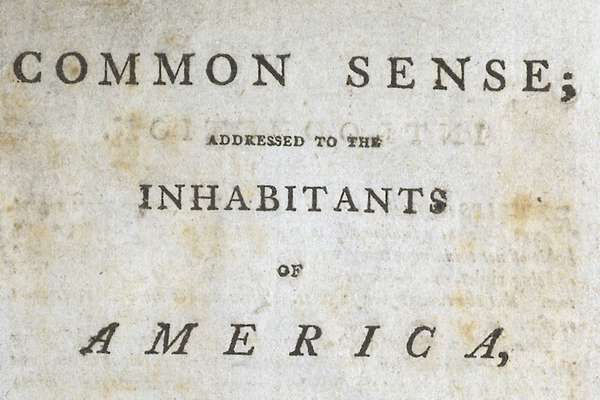
What were the key moments that led to the American Revolution? From the Boston Tea Party to the Declaration of Independence.
Subscribe to On the Record
pod.link
Find the podcast on
On the Record is available wherever you get your podcasts.
Tell us what you think
smartsurvey.co.uk
Fill in our survey
Listeners, we need your help to make this podcast better! We need to know a bit more about you and what themes you’re interested in.
Copyright
If you wish to re-use any part of a podcast, please note that copyright in the podcasts and transcripts in some cases belongs to the speakers, not to the Crown.