youtube.com
Ugandan Events: The National Archives Panel Discussion
Watch the panel event on YouTube. Supported by: Jasani Foundation Uganda
On 4 August 1972, Ugandan President Idi Amin ordered the expulsion of all Asians from Uganda. Just over 28,000 men, women and children came to the UK, making them one of the largest groups of displaced people to enter the country.
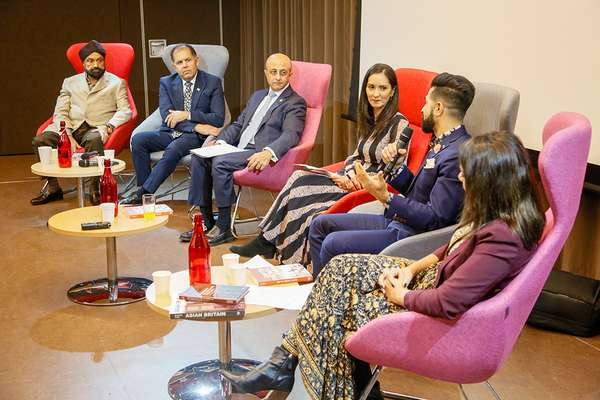
50 years later, in 2022, The National Archives worked with partners British Ugandan Asians at 50 to host a commemorative panel debate headed by leading British Ugandan Asians from the fields of media, medicine, politics and business.
youtube.com
Watch the panel event on YouTube. Supported by: Jasani Foundation Uganda
Lord Jitesh Gadhia is an investment banker and businessman. He was Senior Managing Director at Blackstone before being appointed to the House of Lords in 2016. He currently serves on the Boards of Rolls-Royce and Taylor Wimpey and is Chair of The British Asian Trust, a charitable foundation established by HRH The Prince of Wales. Jitesh was born in Uganda and arrived in the UK with his family in 1972.
Sukhpal Singh Ahluwalia is one of the country’s most successful Ugandan Asian entrepreneurs. He founded Euro Car Parts and grew it to over £1.2 billion in revenue. Today, he is Non-Executive Chairman of property developer Dominvs Group. Passionate about India and his long-awaited return, he founded the Ahluwalia Family Foundation to support children’s causes. His family was accommodated at Greenham Common resettlement camp, and he remembers with affection the shepherd’s pie and apple tart he ate on visits to a local family.
Professor Akbar Vohra was born in Uganda and arrived with his family at Stansted Airport on 27 September 1972. He spent an initial two weeks at Stradishall camp before moving to Peterborough. He trained in medicine in Manchester and became a consultant in cardiac anaesthesia and intensive care, managing his department for five years. In this role he looked after more than 15,000 patients; dealt with the AIDS and Covid epidemics; taught students, nurses, paramedics, soldiers and doctors from around the world. He is still looking for the magnet and blue marble that he brought in his pocket from Uganda.
Dr Shezan Muhammedi is an Adjunct Research Professor in History and Researcher in Residence at Carleton University, Ontario. He also serves as a policy analyst at Immigration, Refugees and Citizenship Canada. His mother and her family came to Canada from Uganda in 1972, fuelling his passion as an advocate for those who have been forcibly displaced. His recently published book Gifts from Amin: Ugandan Asians Refugees in Canada includes over 50 oral histories with Ugandan Asians. Carleton University is hosting an academic and community-based conference titled ‘Beyond Resettlement: The History of the Ugandan Asian Community in Exile’ from November 14-16th 2022.
Dr Maya Parmar leads the social enterprise Hadithi C.I.C. Her Ph.D in literary, cultural and postcolonial studies explores the way in which culture and identity is represented, having been displaced twice, from India to East Africa to Britain. In 2019 she published her book Reading Cultural Representations of the Double Diaspora: Britain, East Africa, Gujarat. She now directs ‘Hidden Heritages Cambridgeshire’, an intergenerational oral history project, supported by the National Lottery Heritage Fund. The daughter of twice migrants, Maya often visits her parental home to be welcomed by a plate of the Indian-East-African favourite chilli mogo.
Babita Sharma is an award-winning Author, Journalist and Broadcaster. Babita is the author of the award-winning book The Corner Shop and she has collaborated with the National Trust and The Migration Museum for two major projects about corner shop life in Britain. Babita has also spent more than a decade covering major news stories for BBC News and is a well-known face on TV and radio, presenting several television documentaries, including her landmark BBC Two series Dangerous Borders: The Story of India & Pakistan that charted the history of the Partition of India.
youtube.com
Listen to the real stories of displacement and arrival first hand in this playlist of oral histories collected as part of the project.
Archived page
This lesson, designed for Key Stage 4 and 5 students, uses original documents and video testimonies to explore the expulsion of Ugandan Asians and their experience as refugees in Britain.
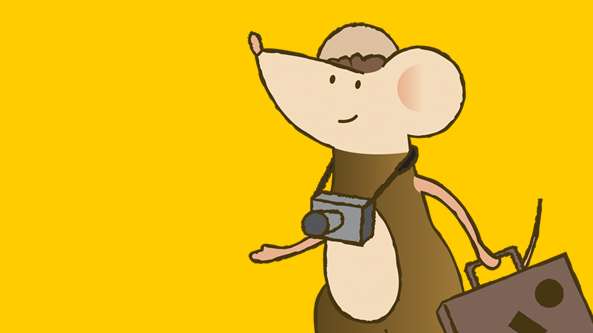
The National Archives’ Time Travel Club for families created a special video called The Yellow Bicycle. Watch Chandrika Joshi as she narrates a story about what it was like to live through this time.
 Watch The Yellow Bicycle on YouTube
[bright music with vocalisations]
EMILY: My name is Emily, and I work at The National Archives a huge building in Kew in West London. At The National Archives we look after lots of special things called documents.
These documents have been made by kings and queens and governments from the past 1,000 years, and they can help us to learn about history and about people like you and me.
50 years ago, 28,000 Ugandan Asian people came to live in the UK.
At the National Archives, we have documents which can help us learn about what happened to the Ugandan Asian people during this time.
In this film, we are going to hear a story from a lady called Chandrika Joshi, who was born in Uganda, in Africa.
Chandrika’s parents had moved to Uganda from India when they were younger. Around the time that both countries were under British rule.
Chandrika has written this story based on her experience of leaving Uganda in 1972.
When Chandrika was 14, the president of Uganda a man called Idi Amin, told all of the Asian people that they had to leave their homes in Uganda forever.
Chandrika and her family had to leave very quickly.
They traveled by aeroplane to the UK, where they moved to a resettlement camp in Tonfanau in Wales.
After that they moved nearby to Penrhys in the Rhondda Today, Chandrika lives in Cardiff.
She is a Hindu priestess and a storyteller.
Mimi fundi ya chalani (I am an expert tailor) Na shona teteyi, na gomesi (I sew dresses and gomesi (long dresses)
Kila siku ya sabiti, apana fikiri (every evening of the week, there is nothing to worry) Otunda kyi, otunda kyi (What are you selling , what are you selling) ntunda mandazi (I am selling mandazi)
CHANDRIKA: In the country known as the Pearl of Africa, there is a town called Iganga.
It is a bustling town but in 1972 it was a quaint little town.
On Old Market Street lived a young boy. His name was Kamal.
Kamal was 11 years old.
He had a sister called Naina and she was nine and he had a brother called Jugho who was six.
Kamal’s father, who they called Babuji, was in Jinja, a town which was 40 kilometers away from Iganga.
It was situated at the Bank of the River Nile the longest river in the world.
Babuji worked as a sales representative for nine breweries and his job meant that he was often away from home.
Kamal's mother who the children called Ba, took care of the house, and Ba had employed a young African man about 16, called John to help her with the household chores.
On his 11th birthday, Kamal had been given a yellow bicycle.
Kamal loved his yellow bicycle.
Every day after school he would take his bicycle out, meet his friend Jayesh and the two of them would cycle around the town.
Naina loved making dolls.
She would sneak out of the house, go to the main road and on the veranda of the shops
the fun days the tailors would be sitting at their sewing machine making new long African dresses or gomesi.
Naina would crawl on the floor around the fundi's feet and pick up remnants of fabric
that had been discarded and bring them home and turn them into little dolls who she called Bibi dolls.
Jugho was not allowed to go too far away from the house so Jugho and his friends would play in the alleyway they called gulley and they would dig a hole in the red earth and they would play with marbles.
Jugho had quite a collection of marbles. His favorite one was a dark green one.
He loved it because it had two waves light waves inside like the wings of a bird.
On August 4th on a Friday in 1972, Kamal had been riding his bicycle.
He brought it home and he put it where he always put it inside the ironing room.
Kamal heard some singing coming from the courtyard.
He ran to the courtyard and there was John singing with his brother and his sister.
John was teaching them an African song. Kamal knew the song.
He'd learned it at school, so Kamal went and joined them and together they sang: [singing] Mimi fundi ya chalani (I am an expert tailor)
Na shona teteyi, na gomesi (I sew dresses and gomesi (long dresses) ) Mimi fundi ya chalani (I am an expert tailor) Na shona teteyi, na gomesi (I sew dresses and gomesi (long dresses) )
Kila siku ya sabiti, apana fikiri (every evening of the week, there is nothing to worry) Otunda kyi, otunda kyi (What are you selling , what are you selling)
ntunda mandazi (I am selling mandazi) Otunda kyi, otunda kyi (What are you selling , what are you selling) ntunda mandazi (I am selling mandazi)
Mimi fundi ya chalani (I am an expert tailor) Na shona teteyi, na gomesi (I sew dresses and gomesi) [talking] They stopped singing when Kamal’s mother asked John to do the ironing.
In the ironing room John took the iron, opened the lid filled it up with the red hot charcoal and closed the lid.
He put the iron on the trivet and he waited for it to heat up From the corner of his eyes he could see the yellow bicycle.
John looked around made sure no one was looking and touched the bicycle which was the colour of sunshine.
He ran his finger around the round bell and he so wanted to ring the bell.
[hiss]
The iron hissed.
John jumped and went back to ironing.
Since it was Friday it was John's pay day.
Ba had paid John his wages and John had put his thumb in the ink pad and made his mark in the account book.
Later on Kamal said to Ba, “why can't John sign his name?” “I mean, it's so easy.”
“Kamal John doesn't read or write.” “Well, he can go to school can’t he?
To learn to read and write,” Kamal said.
“John can't even afford a pair of shoes.” “Have you seen how poor John is?” Ba had said.
Kamal felt a sense of shame.
That night Babuji came home unexpectedly.
The first thing he said to Ba was, “Have you heard?” “Heard what?” she said.
“Well Idi Amin, the president is giving us three months
notice to leave the country.” “Must be a joke,” said Ba.
“Well, that's the rumor,” he said.
A month later they realised it was not a joke it was not a rumour.
Idi Amin had given the Ugandan Asians three months notice to leave the country.
They were not allowed to take any of their money and they could only take a suitcase each in terms of possessions.
Babuji had resigned from the job. The schools were closed.
Babuji had bought five suitcases blue in colour and left them at home and gone to Kampala to make arrangements for them to leave.
“Where are we going to go Ba?” Kamal had asked.
“We’re going to the UK, we're going to Britain,” Ba had said. “Well, we are Indian we can go to India, can’t we?”
“We can,” said Ba, “but we are not.” “We have a British passport, we are British citizens and we will go to the UK.
Will you help me with the packing?” Ba had said.
The next day they started packing their bags. Ba said “The UK is cold,” so they packed the first bag with blankets.
They packed the second bag with bedding and linen and towels.
Ba said, “In the UK you may not get spices that we use to cook there."
So the third suitcase, they had packed it with Ba’s kitchen spices turmeric, coriandercumin, mustard seeds, jeera seeds cloves, cinnamon.
Ba had put her favourite saucepans in the suitcase.
She had put spoons, bowls, glasses plates.
Ba said “We will need our Gods in the UK.”
So the fourth suitcase they had packed all the murtis, the Gods that they had in their shrine: Shiva Lakshmi, Vishnu, Krishna.
They were all packed in the suitcase.
Ba had also asked Kamal to take all the books down from the bookshelf, and there were two packed in that suitcase.
Ba said “We will take our photographs to remember what Uganda was like.” So the black and white photographs were also packed in the suitcase.
That left only one suitcase for clothes.
“We are not taking any old clothes. Only the new ones.” Once the suitcase was packed Ba told them that they could only take one toy each.
Naina took her turquoise doll, her favourite and put it in the case.
Jugho took seven marbles the colour of rainbow and put them in the case.
Ba looked at Kamal and said, “I'm so sorry beta we cannot take the yellow bicycle.” “I understand,” he said.
Once the suitcases had been packed Kamal asked Ba if he could go and see Jayesh.
“Can I take my bicycle?” “No. It is dangerous nowadays.
I don't want you to be riding your bicycle.” Kamal walked to Jayesh’s house and when he got there he saw the car and he saw the car being loaded.
Jayesh was sitting in the backseat. Kamal ran to the car and said to Jayesh, “Are you leaving?
Are you leaving? Are you going to the UK?” Jayesh whispered “My brother has been shot in Kampala.
He’s okay, he's okay but he’s been shot.” Kamal just watched as the car drove away and then when he went home he burst out crying.
He told Ba that Jayesh’s brother, who was 16, had been shot in Kampala. “What if... they shoot Babuji? What are we going to do?” Ba held Kamal close and said “It will be ok don't think like that.
Come on,” she said.
“We'll light a diva and we’ll fold our hands and pray.” So Kamal and Ba prayed to God that Babuji would be safe. That night, Ba told them a story.
16:10
16 minutes, 10 seconds
Once upon a time there was a tree in a jungle. On that tree lived a flock of pigeons.
The head of the pigeons was called Papa Pigeon Papa Pigeon was a very old pigeon.
His beak was no longer sharp.
His eyes had become cloudy and his feathers were no longer shiny.
But Papa Pigeon was a wise pigeon.
One day a hunter came to the forest and he scattered grains all under the tree.
And he went and hid behind another tree and watched. The pigeons looked at the grains.
And when they thought the coast was clear
[whoosh]
they flocked down and they started pecking at the grains, watching with their orange beady eyes.
And then
[whoosh]
the hunter threw a net and they were trapped underneath the net. The pigeons started stamping their feet and flapping their wings and pushing this way and pushing that way until Papa Pigeon spoke: “Stop. Stop. We have to work together as a team. Now, listen to me. When I give a signal, I want you to jump and then you flap your wings all together and then let us see what happens.”
So when Papa Pigeon gave the signal, the pigeons all jumped together and they flapped their wings in harmony and they soared. They started flying, carrying the net with them.
The hunter chased them, but they went high, high, high.
And they lost the hunter.
They flew over the forest and then they came into a clearing and when they came into the clearing Papa Pigeon said, “Now let's go down.”
So they landed on the ground and then Papa Pigeon started cooing, “coo coo coo coo coo coo coo coo coo.”
“Papa Pigeon? Is that you?” And it was a little mouse with big pink ears and a small mouth.
“Yes Mushcu it is. We’re in trouble. Will you help us, please?” Mushcu the mouse came and started gnawing through the net and within seconds he set the pigeons free.
The pigeons thanked Mushcu the mouse.
And then they flew away to look for another tree, to call it home.
“Just like the pigeons,” said Ba “We too will fly away to safety.” And Ba was right because a few days later, Babuji came home.
He had brought their tickets. He had got the passport stamped.
Everyone opened the passports and had a look. And then Jugho started crying. “Why are you crying Jugho?
We are all so happy.” “Because I don't have a passport,” Jugho said.
“What if they don't let me go?” “Jugho, You have your school identity card.
You carry that with you.” That made Jugho happy.
On the day when they were leaving the bags were packed, the taxi was waiting. The taxi was loaded.
John had come to work.
The children took John by the hand and took him in the house and said, “John look, you can have anything you like.”
John looked at them with his mouth wide open, his eyes glazed.
He said nothing for quite a while and then he walked to the ironing room.
Kamal went after him hoping John would take the bicycle but John put his hands on the clothes, the bundle of clothes that he had ironed the day before.
Just then Ba said, “Get in the car, we are going.” Kamal rushed in, went in the car and the taxi drove off.
Babuji told them that there were four checkpoints, army checkpoints between Iganga and Kampala, and they have to be very careful because sometimes the soldiers are quite nasty.
When they came to the first checkpoint, Kamal looked at the soldiers standing three of them.
One of them shouted “Give me the passports.” Babuji wound down the window and gave the passports to him.
Kamal looked at the soldier.
He looked at his hands which was holding a long rifle.
His face was taut, his eyes were angry.
Just then Jugho started winding down his window and Ba said "Stop Jugho. Stop. What are you doing?’ By this time Jugho wound down the whole window.
He went into his breast pocket and he took out his identity card and passed it on to the soldier.
The soldier opened it and looked. He looked at the photograph. He looked at Jugho.
His face changed.
He had a small smile on his face and he passed it back to Jugho and said to Babuji “Quick, quick.
Off you go.” Babuji was so relieved.
Kamal hugged Jugho and Babuji said “Jugho there are three more checkpoints.
Will you do the same every time?” “Yes,” he said.
Meanwhile, on Old Market Street, Iganga John was walking barefoot towards his village.
He had the packet of second hand clothes but he had tied them on the back of the yellow bicycle.
Mimi fundi ya chalani (I am an expert tailor) Na shona teteyi, na gomesi (I sew dresses and gomesi (long dresses) )
Kila siku ya sabiti, apana fikiri (every evening of the week, there is nothing to worry) Otunda kyi, otunda kyi (What are you selling , what are you selling) ntunda mandazi (I am selling mandazi)
EMILY: Hello again. Did you enjoy listening to Chandrika? Were you able to imagine the village of Iganga? What did it look like and sound like and smell like?
On the web page there were some creative activities which you can do to help you imagine what it might be like to leave your home forever and move to a new place.
Thank you for watching.
[music with heavy drums]
This video can also be viewed on YouTube with optional closed captions. Watch "The Yellow Bicycle" on YouTube.
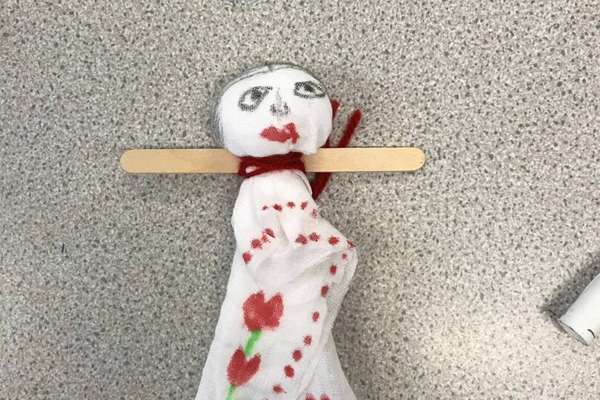
After watching Chandrika’s story, you can take part in some creative activities to help you explore the themes from the video further.
Archived page
The full resource is available in the UK Government Web Archive.