

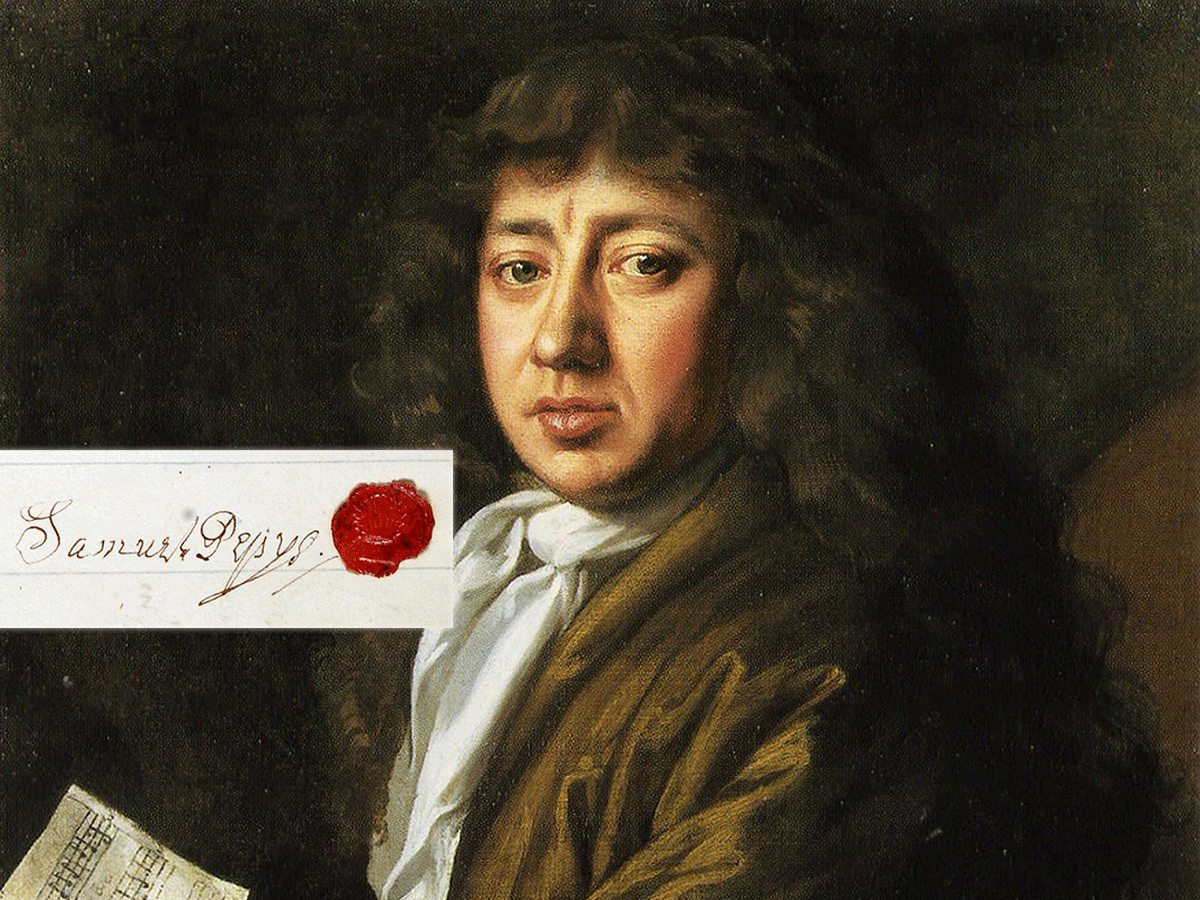
The purpose of this lesson is to explore some extracts from the will of Samuel Pepys made in 1701 and later added to in 1703. You may have already ‘met’ Samuel Pepys whilst finding out about the Great Fire of London in 1666 and read his descriptions of the fire in his famous diary.
The National Archives has a huge collection of wills and they are important sources for finding out about people in the past. A will is a legal document in which a person records their wishes as to how their possessions and property are to be disposed of after their death. The document always names a particular person to ensure that people listed in the will receive what is due to them.
Through this lesson you will discover more about Samuel Pepys and the different features that make up a will.
What does his will reveal?Samuel Pepys wrote his famous diary between 1660 and 1669. The diary is very interesting for historians as a source to find out about how people lived in the 17th century and about some major events in the past. In it he famously described the Great Fire of London and the coronation of Charles II.
Pepys was also an important administrator for the Royal Navy. He made the Navy much more efficient and professional and reported on his work both to the King and to Parliament.
Pepys’ final will was written many years after his diary ends, but he first made a will in 1660 and may have written many different versions in the time in between. In March 1660, he wrote, ‘So into London by water, and in Fish Street my wife and I bought a bit of salmon for 8d. [8 pence] and went to the Sun Tavern and ate it, where I did promise to give her all that I have in the world but my books, in case I should die at sea.’ He tore that will up during an argument with his wife in 1663.
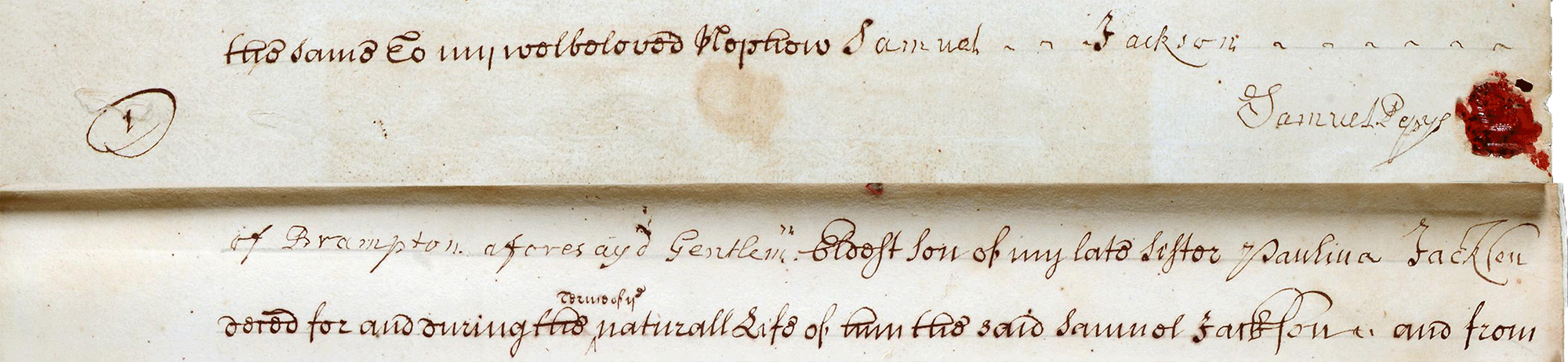
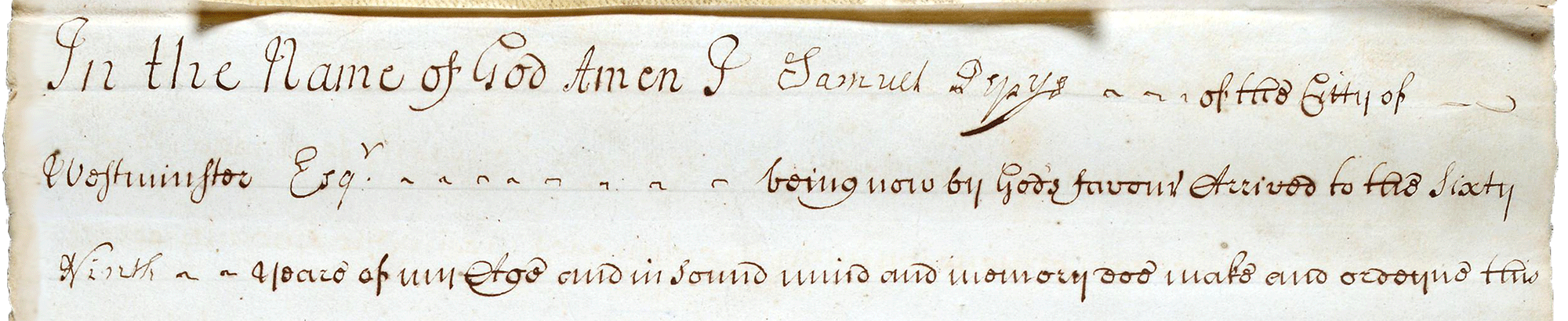
The main text of his final will was written by somebody else, probably a clerk working for Pepys or for his legal advisers. The opening phrase is clearer and larger as it is the first phrase in the document and because it is a prayer to God. The clerk has left spaces in the document for Pepys to insert his name and position, the names of the people to whom he left his land and property, and various sums of money. The remaining blank spaces have been filled with dashes to prevent anybody adding any extra names or amounts.
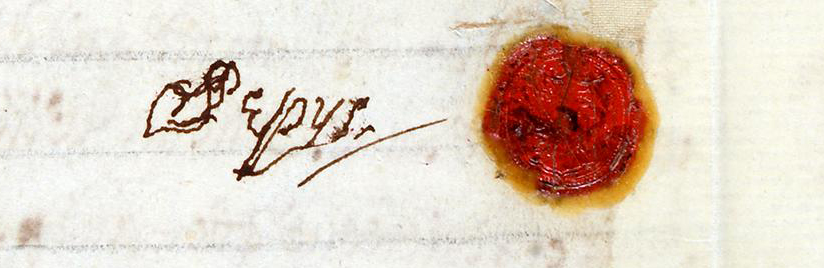
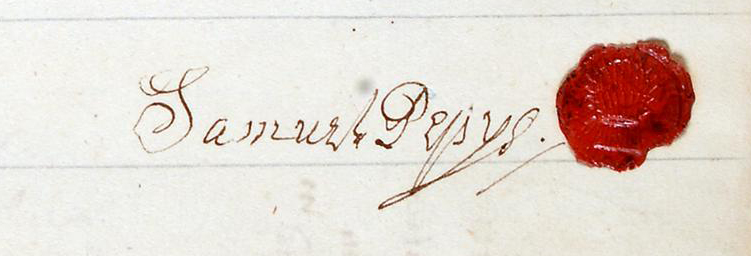
The red wax is a personal seal of Samuel Pepys, probably created by melting sealing wax and impressing it with his signet ring. It was another way of confirming his identity, reinforcing his signature. Pepys lived to a good age (70) for the period. He was born on 23 February 1633 and died on 26 May 1703 and it is likely that his handwriting worsened in the period before his death as he became more physically frail.
According to his will, Samuel Pepys left his library of books and papers to his younger nephew, John Jackson. Pepys also wanted Jackson to complete the collection according to his wishes. The library was to be kept together and all his books numbered and catalogued to help ensure that they could be found. There were 3,000 books and manuscripts in total. Pepys made these requests because he had put so much work into building his collection and wanted them kept for posterity and so his memory would live on. On the death of his nephew, he stated in his will that the library should then be kept by one of the colleges at either Cambridge or Oxford University.
Today, Pepys’ original diaries, books and papers are housed in the Pepys Library at Magdalene College, Cambridge, where Pepys studied law as a young man. The library is open to members of the public and scholars alike. These items are still kept in the original bookcases designed by Pepys in 1666.