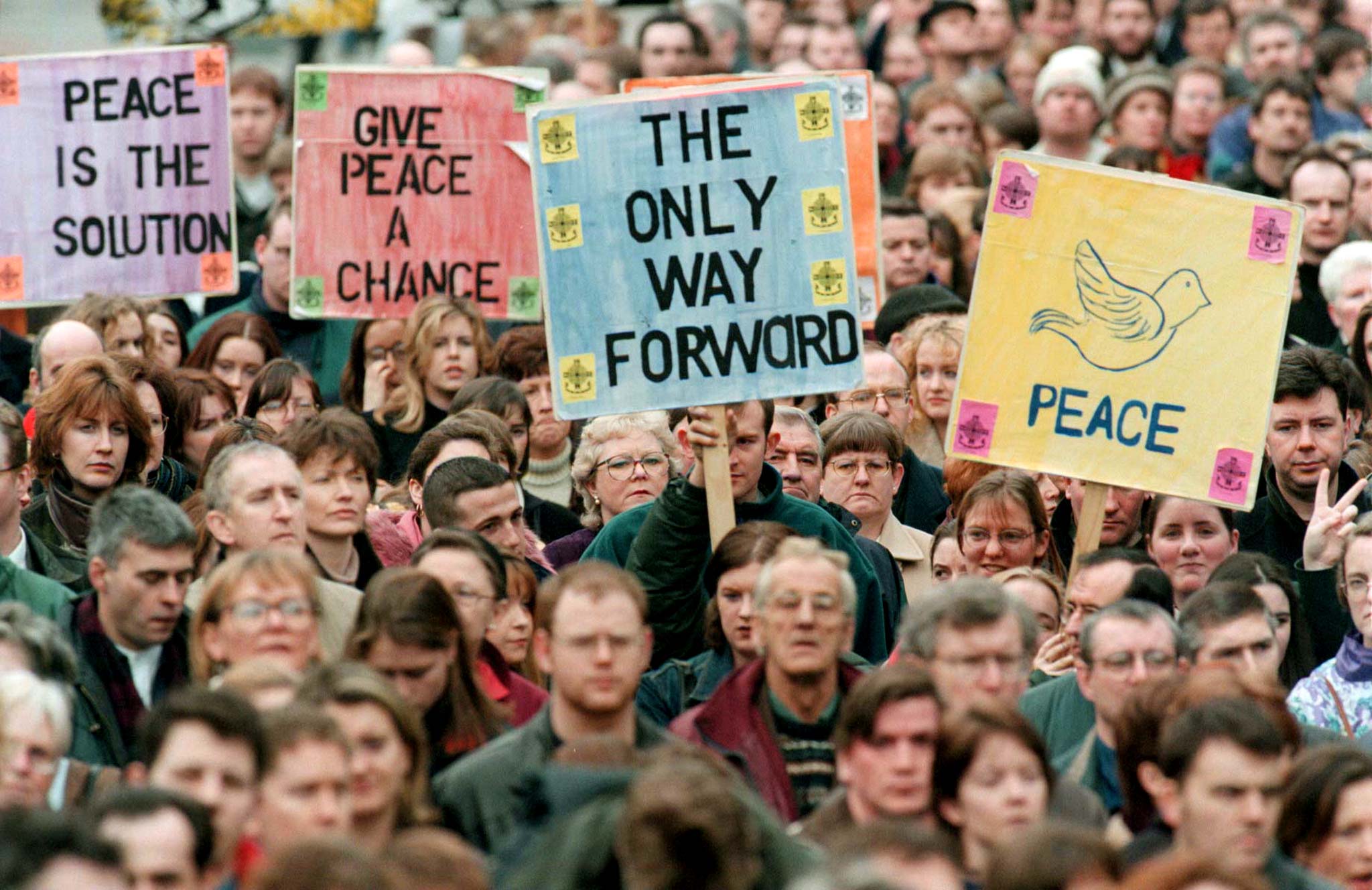
This discussion pack accompanies the secondary level school assembly resource to mark the 25th anniversary of the signing of the Belfast or Good Friday Agreement which ended the conflict in Northern Ireland. It is designed to promote follow-on discussion about the Agreement and how it brought about an end to the conflict and led to a successful peace. It provides an opportunity for students to re-watch the video and then to analyse and discuss what issues caused conflict and how specific terms in the Agreement addressed these. There are additional slides at the end giving more historical background to Northern Ireland which you may wish to include at the beginning of this discussion activity to provide students with more supporting knowledge.
There is a suggested final activity to encourage students to demonstrate their understanding of the Agreement and promote it as an example of a successful peace agreement.
The student workbook can be printed as individual activities or as a full booklet for students to work through. The final few pages have been left blank as overflow space and for student notes outside of the activities; these can be printed at the teacher’s discretion.
From Conflict to Peace - 25 Years OnHere is some additional information if you are interested in learning more about the historical background to Northern Ireland and its relationship to the United Kingdom and to Ireland.
British Rule in Ireland
England, and later Britain, ruled over part or all of the island of Ireland for nearly 800 years and during that time there had, to varying degrees, always been some form of resistance to that rule. This was either demonstrated through violence, or through politicians taking up issues in Parliament. In 1798 there was a major rebellion against British rule led by Wolfe Tone and the Society of United Irishmen. The rebellion was overthrown and the Irish Parliament in Dublin was closed down. Ireland was made a formal part of the United Kingdom of Great Britain and Ireland in 1801.
Home Rule for Ireland
By the late 19th Century there were two political viewpoints in Ireland. Irish nationalists, most of them from the majority Catholic population, tried to get Home Rule (or self-government) for Ireland, and this idea gained more and more support in Parliament and became a real possibility during the last decades of the 19th century. MPs in the Irish Parliamentary Party, led by Charles Stewart Parnell and later by John Redmond, had support from many in the British Liberal Party and two attempts at passing an Irish Home Rule Bill nearly succeeded in 1886 and 1893. At the same time there were militant nationalist groups known as republicans, such as the Irish Republican Brotherhood, who used violence to try and overthrow British rule.
There was also a large Protestant minority in Ireland, located largely in the north-eastern province of Ulster, who believed that Ireland should remain a part of the United Kingdom. These Unionists actively resisted calls for Home Rule, fearful that, as a Protestant minority, should Home Rule be granted, they would be ruled by a Catholic majority. Militant unionist groups known as loyalists also formed to use violence against the threat of Home Rule. Both sides reached the brink of civil war by 1914. Private armies known as the Irish Volunteers and Ulster Volunteers were prepared to fight for and against the idea of Home Rule for Ireland.
From Home Rule to War 1914-21
In 1914 the Third Irish Home Rule Bill was passed by Parliament, but its introduction was suspended because of the First World War. In 1916 there was an uprising in Dublin by militant Irish Nationalists who declared Ireland to be independent. The Easter Rising was put down but demands for independence continued. Sinn Fein, an Irish Nationalist party that demanded full independence from the U.K., won most of the Irish seats at the 1918 General Election. They declared Ireland to be an independent republic and established their own Parliament in Dublin in January 1919 and began to fight a war of independence against the British Army. Violence also broke out between republicans (militant nationalist) and loyalists (militant unionists) in the North. To try and stop Ireland breaking away the U.K. Parliament passed the Government of Ireland Act in 1920 to create separate parliaments for Northern Ireland and Southern Ireland, but the war continued until December 1921.
The Partition of Ireland 1922
In December 1921 Patrick Collins and Arthur Griffiths of Sinn Fein, negotiated a treaty with the U.K. government to end the war. It created the Irish Free State, which was a self-governing country within the British Empire and eventually it became the Republic of Ireland in 1949. However, 6 of the 9 counties in Ulster, which had Protestant majorities, had already elected The Parliament of Northern Ireland on 24th May 1921 and these six counties formed Northern Ireland and remained part of the United Kingdom. The three counties of Ulster that had Catholic majorities joined the Free State. Ireland was now partitioned but a large minority of the population in Northern Ireland were Catholic and retained their wish to be part of an independent Ireland.
Northern Ireland Before “The Troubles”
From 1921 until the 1960s Northern Ireland was relatively peaceful but tensions between the two historic communities remained. The Protestant Unionist community wanted to protect their traditions and ensure they maintained control of the government in Northern Ireland which was dominated by Unionists. The voting system was changed from proportional representation, so nationalists had less representation in the parliament and on local councils.
RUC police were mostly Protestant, and the Special Powers Act of 1922 allowed them to ban meetings, parades and newspapers that they considered dangerous. This law was used mainly against members of the Catholic Nationalist community.
Catholics also felt discriminated against in jobs, housing and education. Nationalists began to protest against their unfair treatment. When violence broke out between protestors and the police, this became the beginnings of “The Troubles”.
“The Troubles”
In the 30 years before the Agreement was signed, violence between the two historic communities grew and armed groups known as paramilitaries attacked each other and members of the police and army. Groups such as the Irish Republican Army, the IRA, wanted to force Northern Ireland to become united with the rest of Ireland, while those such as the Ulster Volunteer Force, the UVF, fought for it to remain part of the U.K. The government of the U.K. sent troops to try and maintain peace, but they became the focus for many attacks as their presence was seen as a form of repression. Over 3,500 people were killed, communities attacked and businesses continually damaged. Paramilitaries even sometimes attacked members of their own communities. Attempts to stop the fighting and find a peaceful solution were unsuccessful until 1998 with the signing of The Belfast (Good Friday) Agreement.
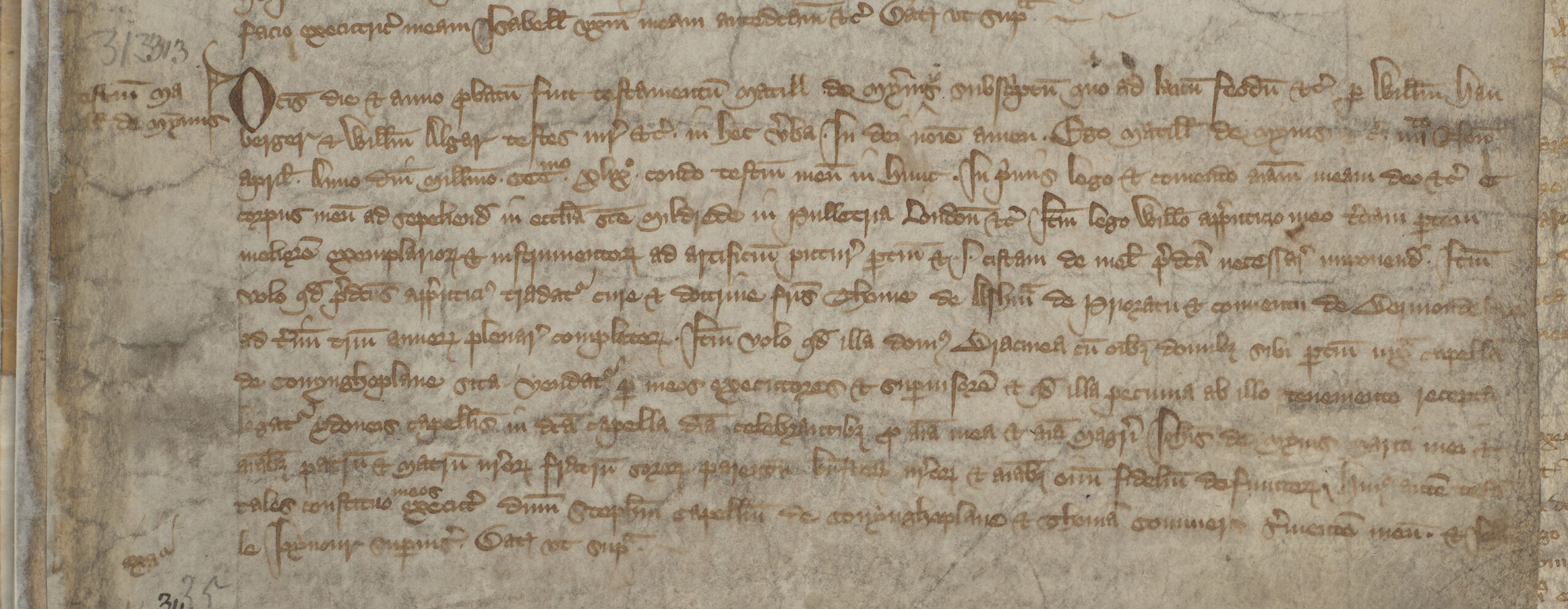
This is a will from a woman in 1349 who has an apprentice. It is printed in R.R. Sharpe, Wills enrolled in the Court of Hustings London I (London, 1899), p. 106]. The original is in the London Metropolitan Archives Catalogue ref: CLA/023/DW/01/076
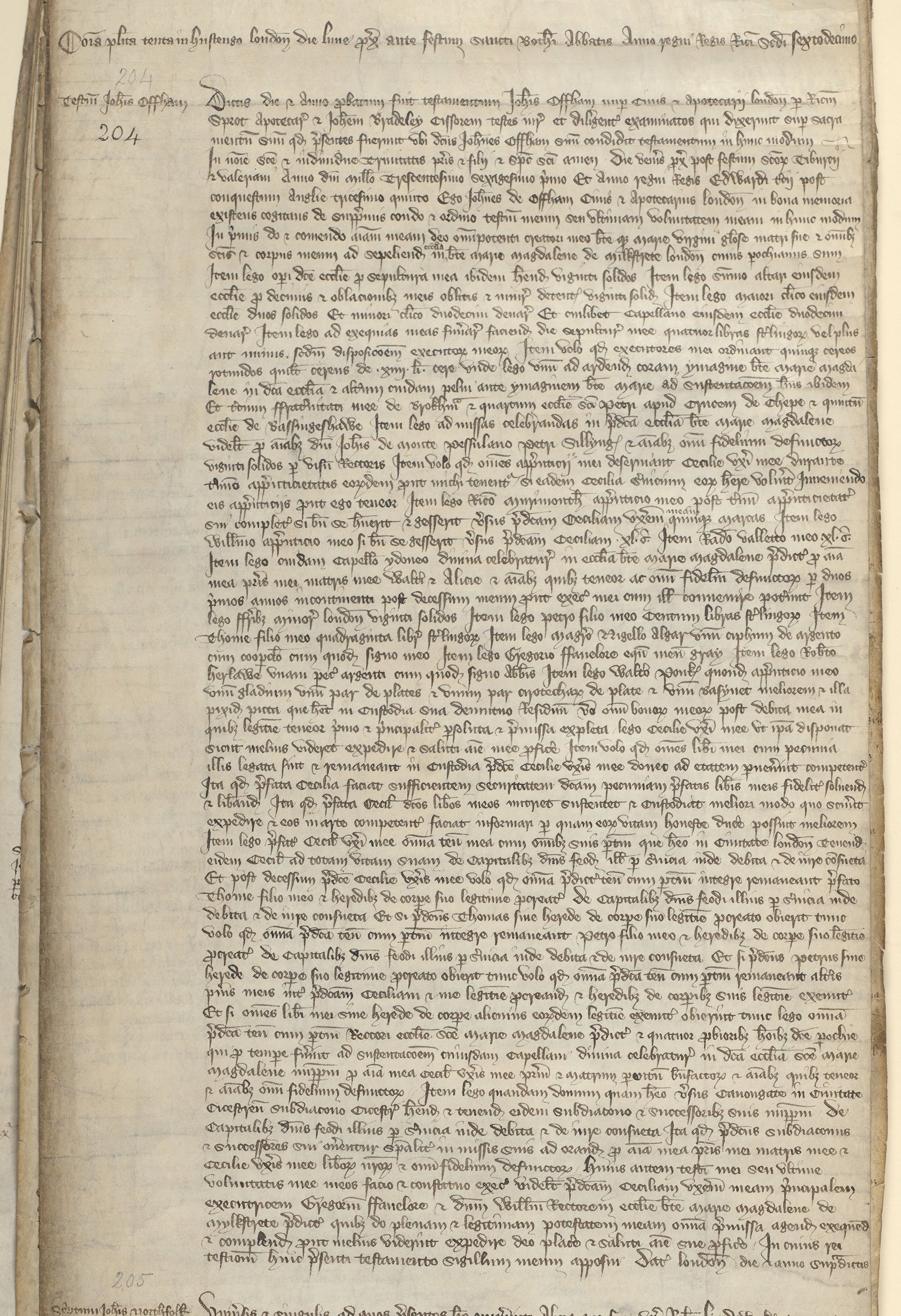
This is a will from an apothecary in the City of London. An apothecary prepared and sold medicines and drugs. He leaves his wife Cecilia in charge of his apprentices [those learning the trade] and also leaves her his houses in the city. [Printed in R.R. Sharpe, Wills enrolled in the Court of Hustings, London II. (London, 1890) p. 299]. The original is at London Metropolitan Archives Catalogue ref: CLA/023/DW/01/120
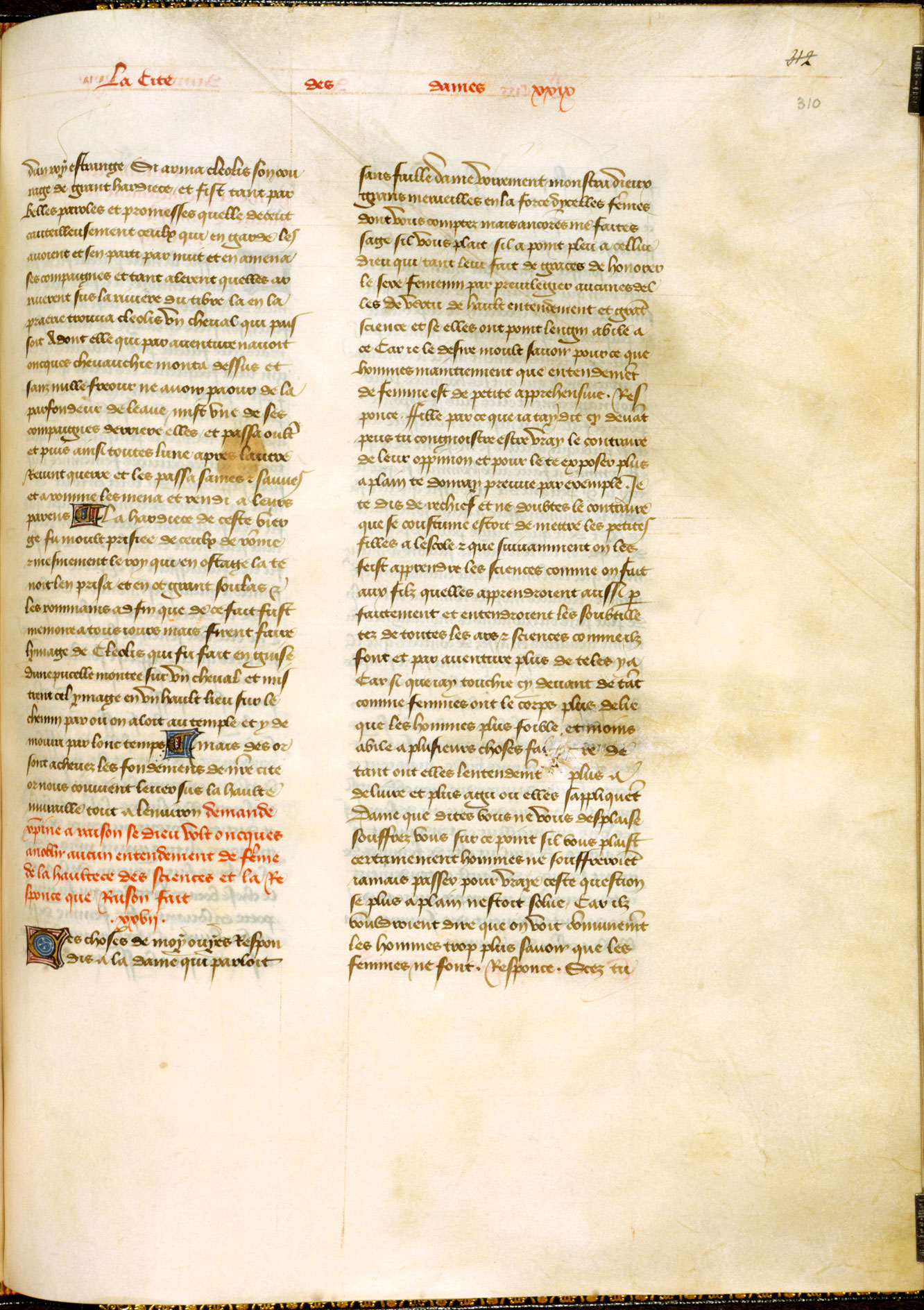
Christine de Pizan was the most famous female author of the middle ages. She was Italian and wrote in France in the late fourteenth and early fifteenth centuries about politics, women’s lives and history. One of the manuscripts of her work is in the British Library, which has a picture of Christine working in her study. This text is from an early translation into English of Christine’s most famous work, The Book of the City of Ladies (Tempe, Arizona; 2004) I.27.

This source is an example of a fourteenth-century will [printed in R.R. Sharpe, Wills enrolled in the Court of Hustings, London I (London, 1889), p. 445.] The original is in the London Metropolitan Archives Catalogue ref: CLA/023/DW/01/068
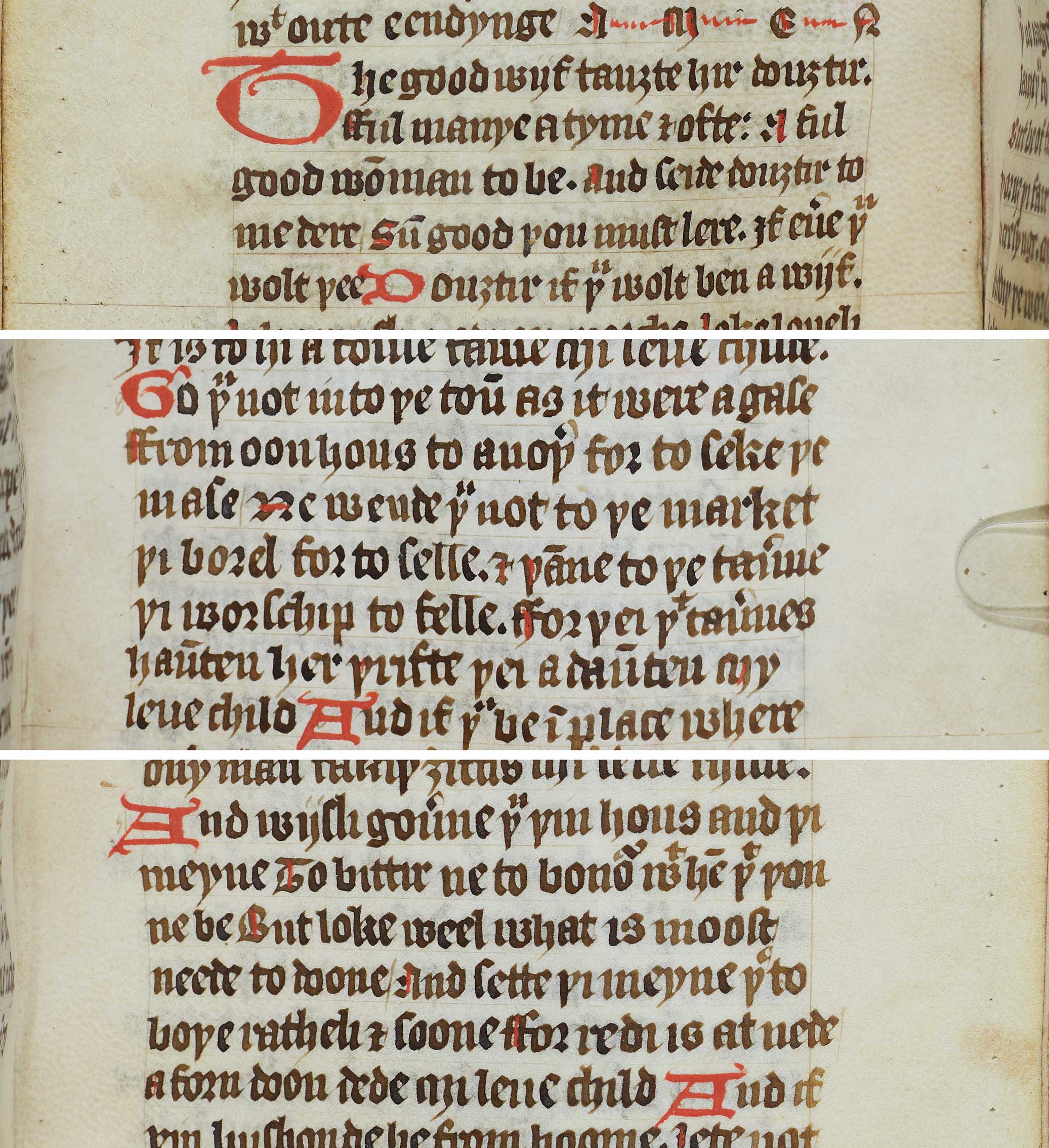
This is an extract from a fourteenth-century poem, ‘How the Good Wife taught her daughter’ from ‘Women in England c1275-1525 : Documentary sources, translated and edited by P. J. P. Goldberg (Manchester, Manchester University Press, 1999), pp. 97-103. One of the manuscripts is London, Lambeth Palace Library MS 853 (image).

This is an extract from the Parliament Roll of 1406. It was published in ‘The Statutes of the Realm: a collection of the Acts of the Parliament of England from earliest times until 1707’. Catalogue ref: C 65/68 m. 2.

This is an indenture, a rental agreement between Agnes Allesley, the Prioress of Catesby Abbey and the family of John Horewood of Staverton, in Northamptonshire. March 1457, Catalogue ref: E 326/8274.
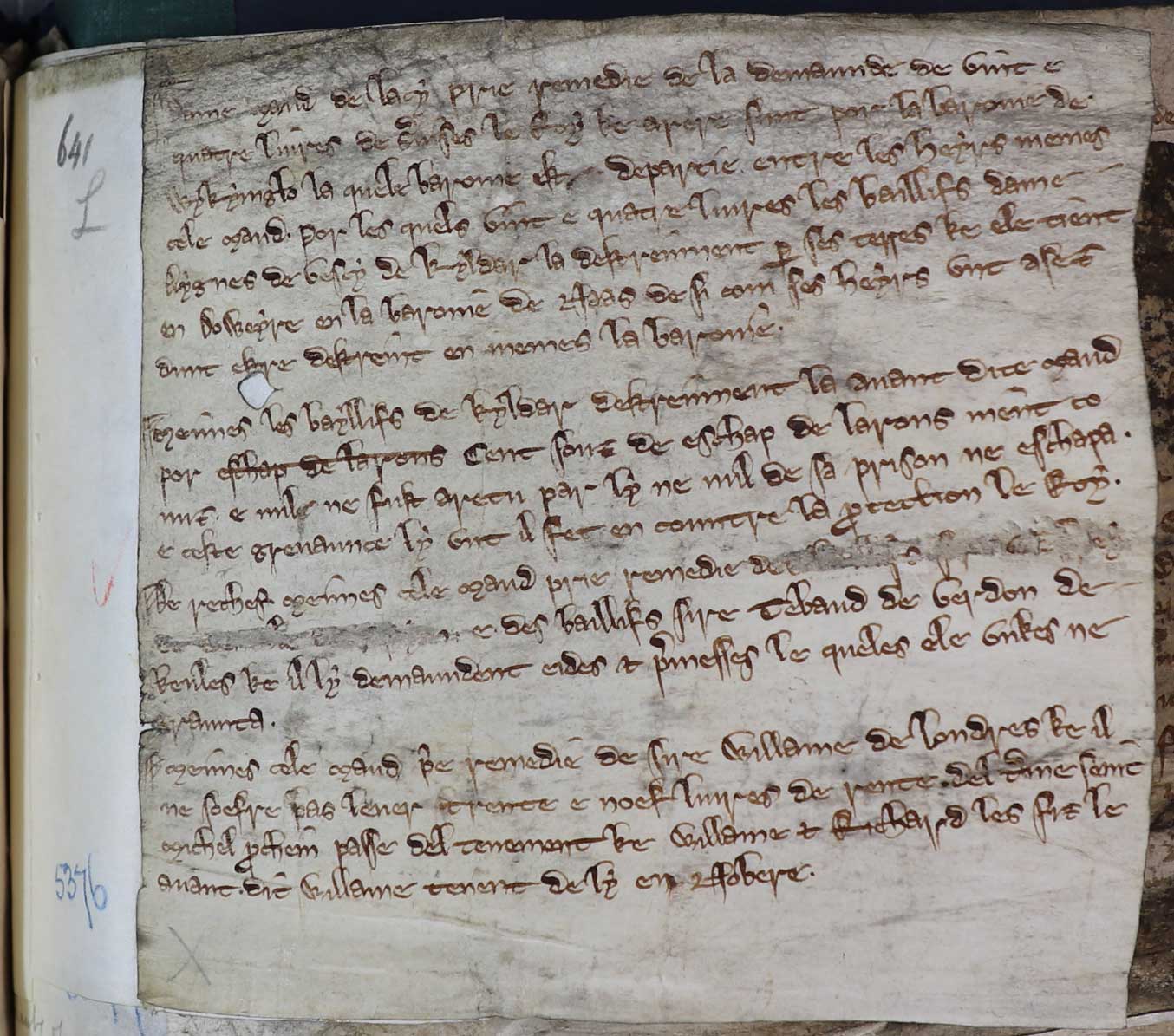
This is a petition from Maud de Lacy’s cousin, Agnes de Vescy dated between 1272 and 1283, Catalogue ref: SC 8/124/6174.
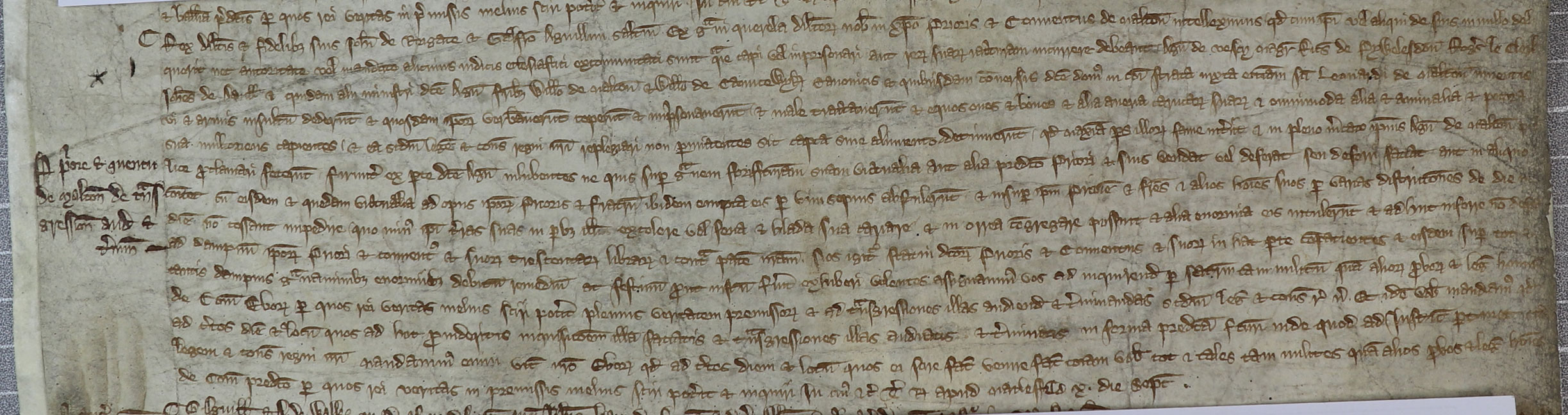
This document from September 1283 shows that Henry III appointed two men to look into what Agnes de Vescy had done in Yorkshire. Catalogue ref: C 66 /102 m. 10 from 1283