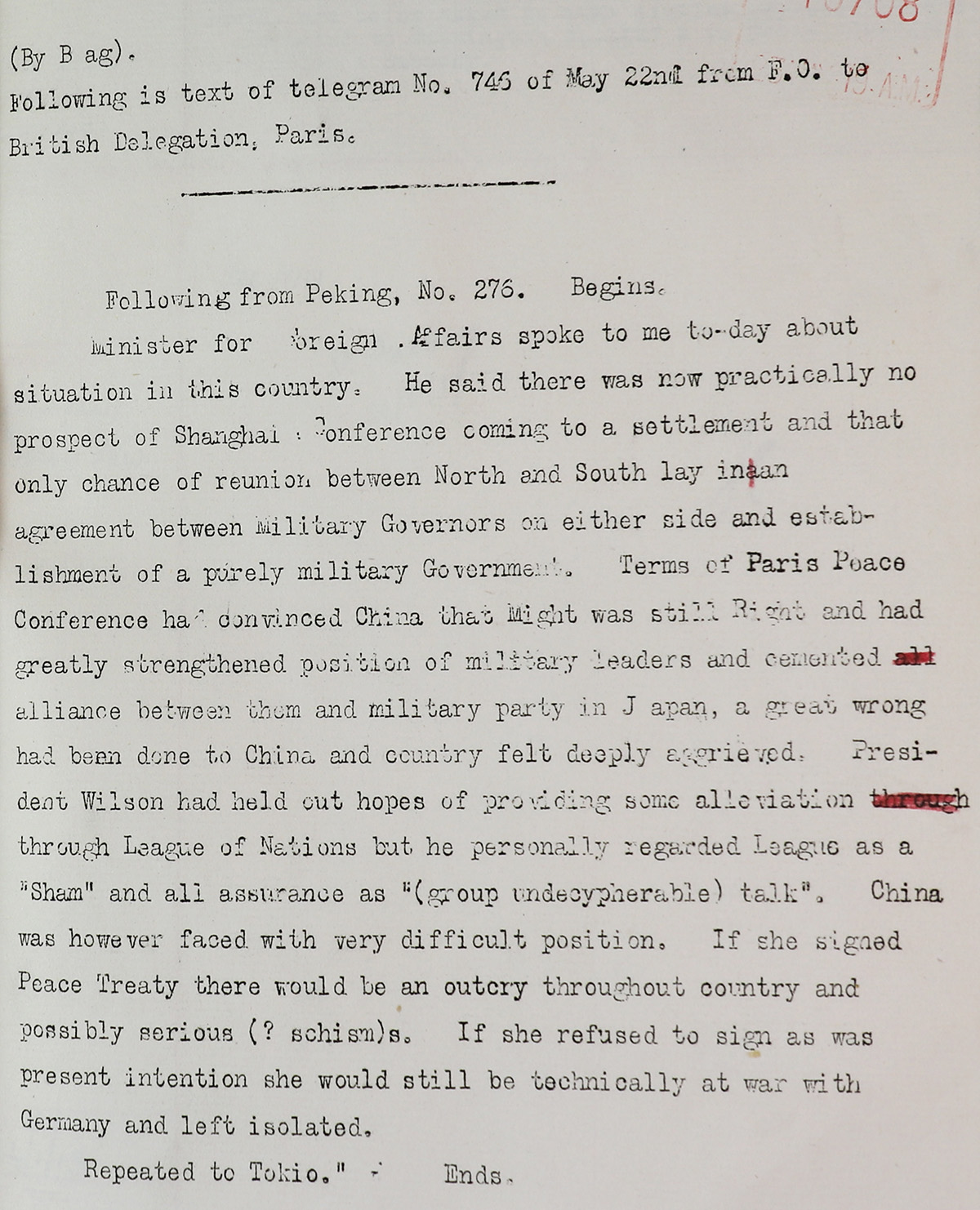
Telegram from the British Foreign Office to the British delegation at the Paris Peace Conference, 22 May 1919. Catalogue ref: FO 608/210/3
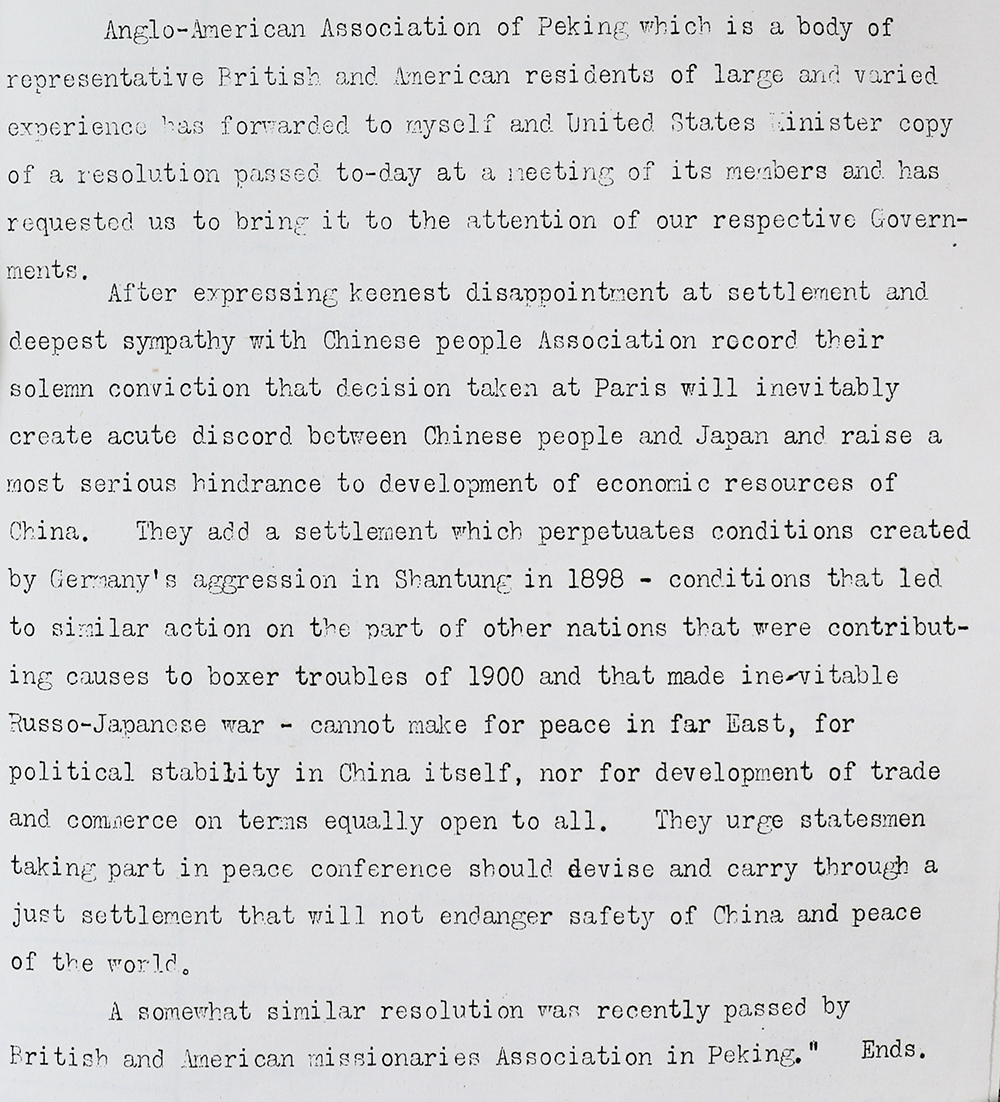
Extract from a telegram from Lord George Curzon to Lord Arthur James Balfour, 16 June 1919. Catalogue ref: FO 608/210/3
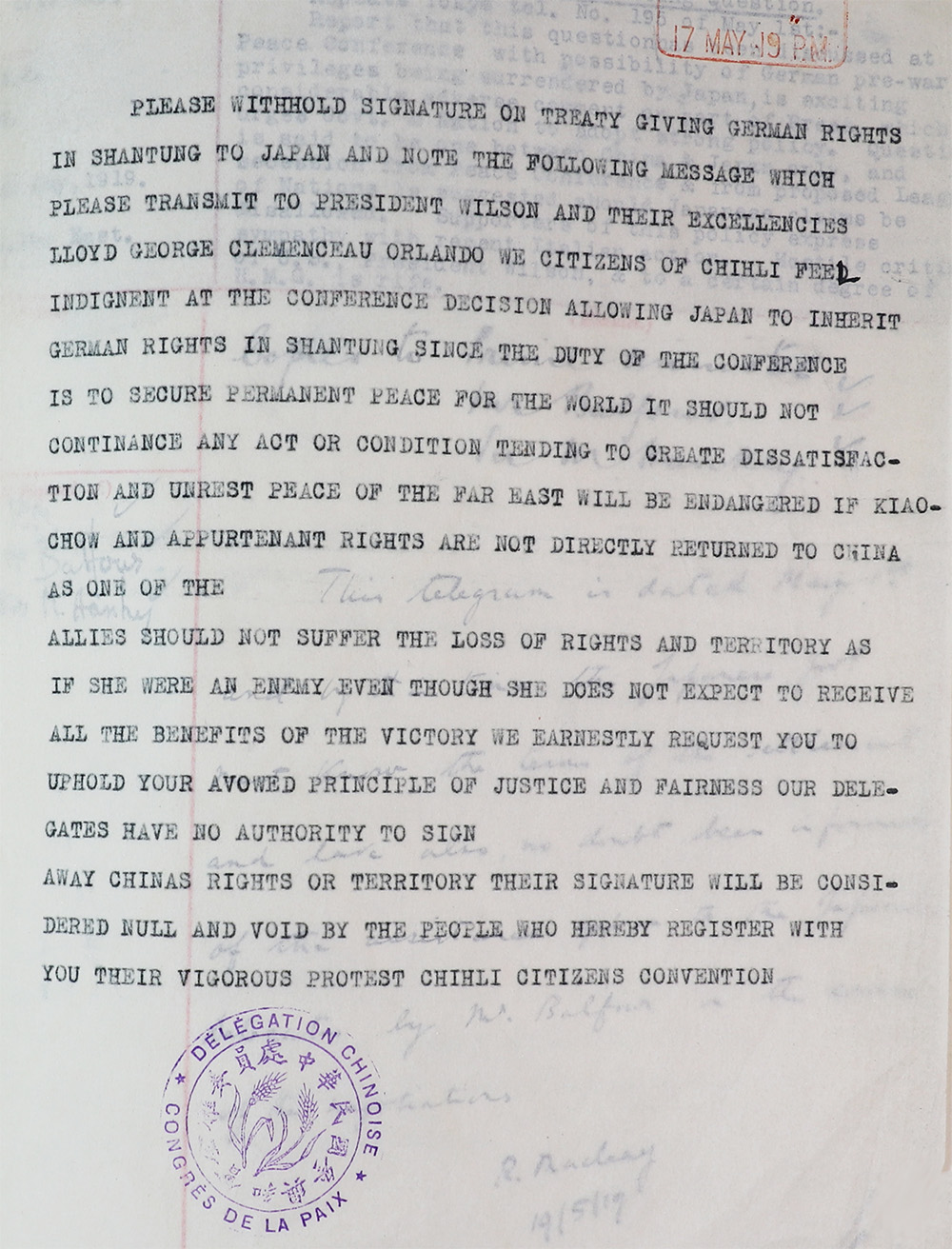
Telegram from the Chihli Citizens’ Convention to the Chinese delegation at the Paris Peace Conference, 17 May 1919. Catalogue ref: FO 608/210/3
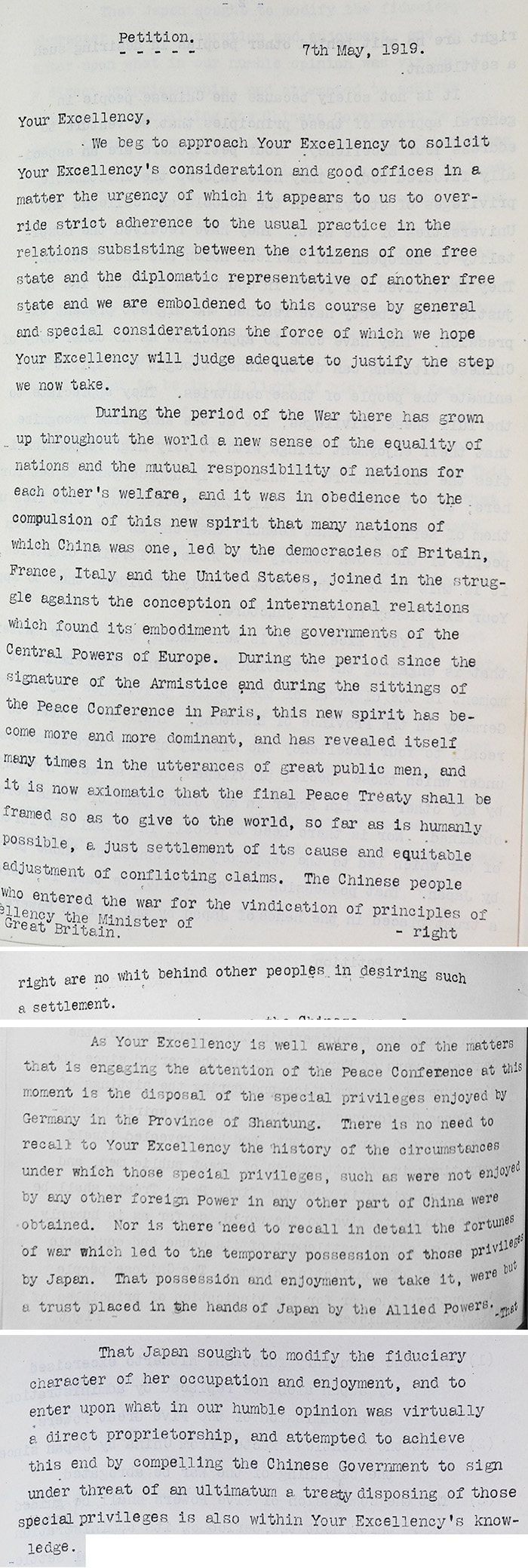
Extracts from a message from Chinese students who studied overseas to the Minister of Great Britain, 7 May 1919. Catalogue ref: FO 608/210/3
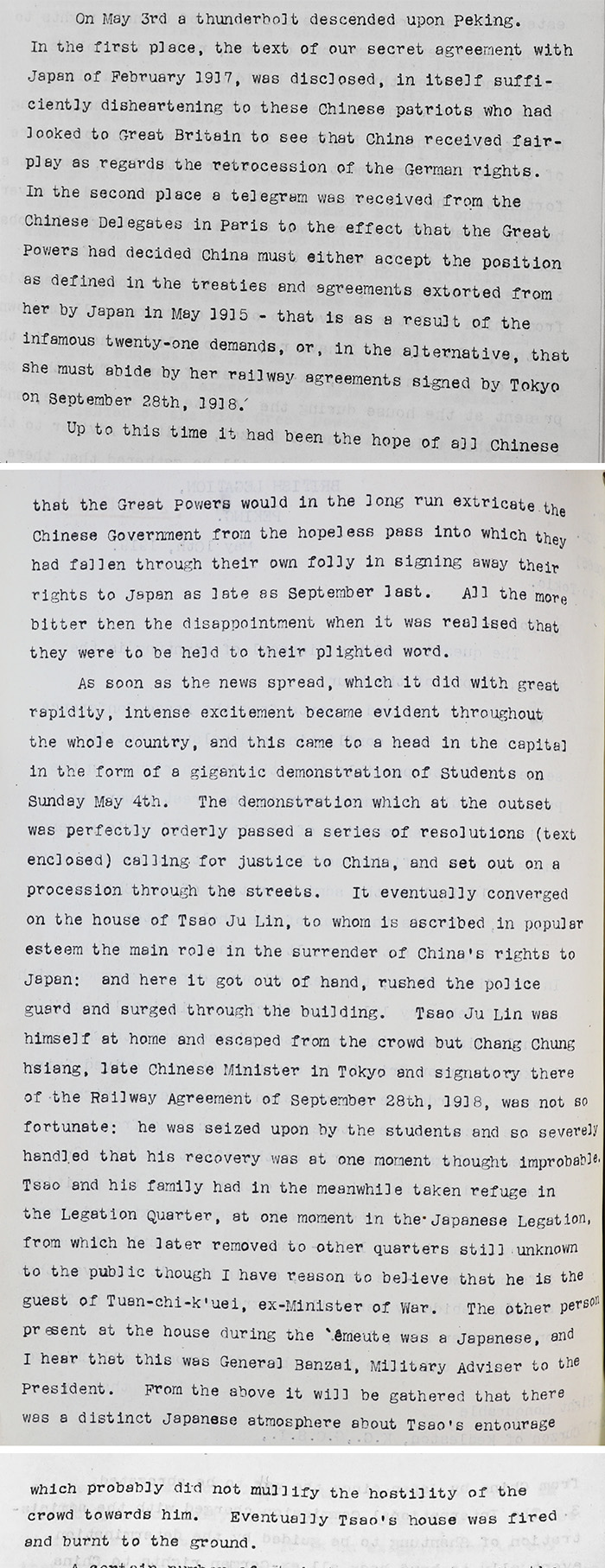
Telegram from Sir John Newell Jordan to Lord George Curzon, 10 May 1919. Catalogue ref: FO 608/210/3
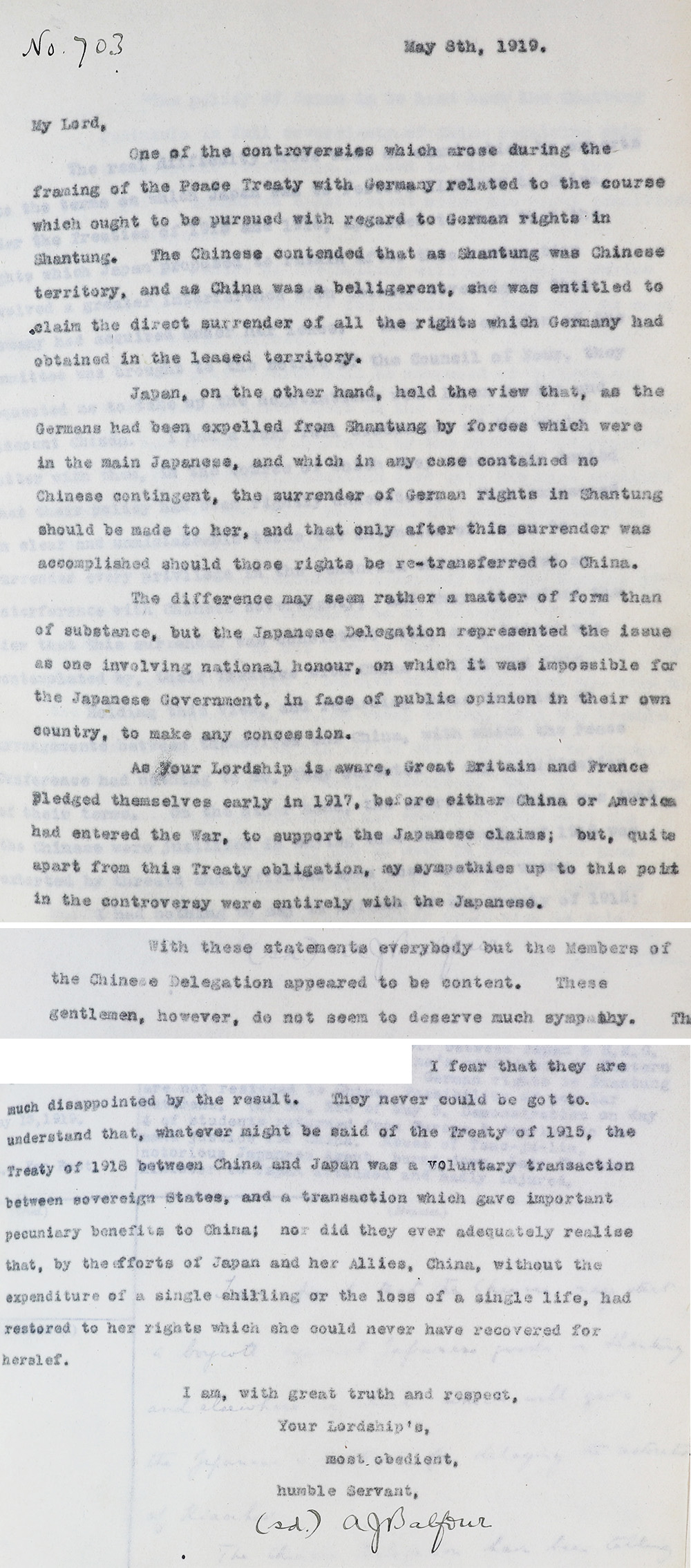
Telegram from Lord Arthur James Balfour to Lord George Curzon, 8 May 1919. Catalogue ref: FO 608/210/3
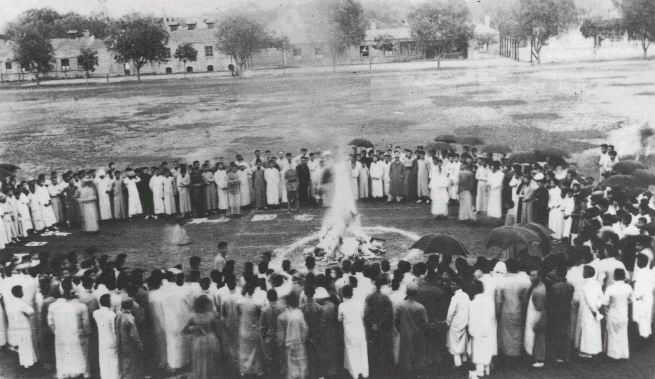
Students burning Japanese goods during the May Fourth Movement, Tsinghua School, Beijing. Wikimedia Commons, public domain.

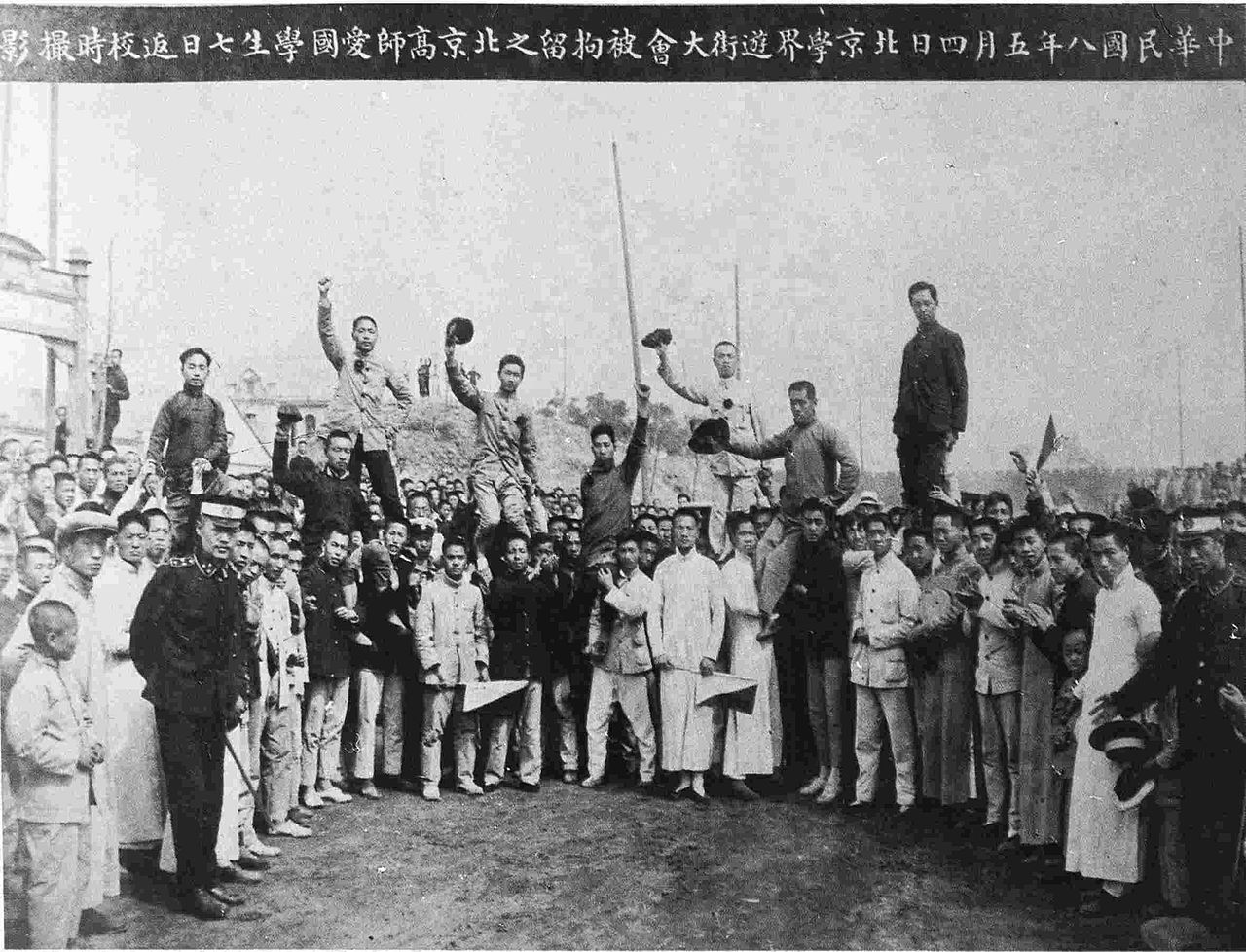
Students of Beijing Normal University returned to campus on May 7th, 1919 after being detained during the May Fourth Movement. Wikimedia Commons, public domain.

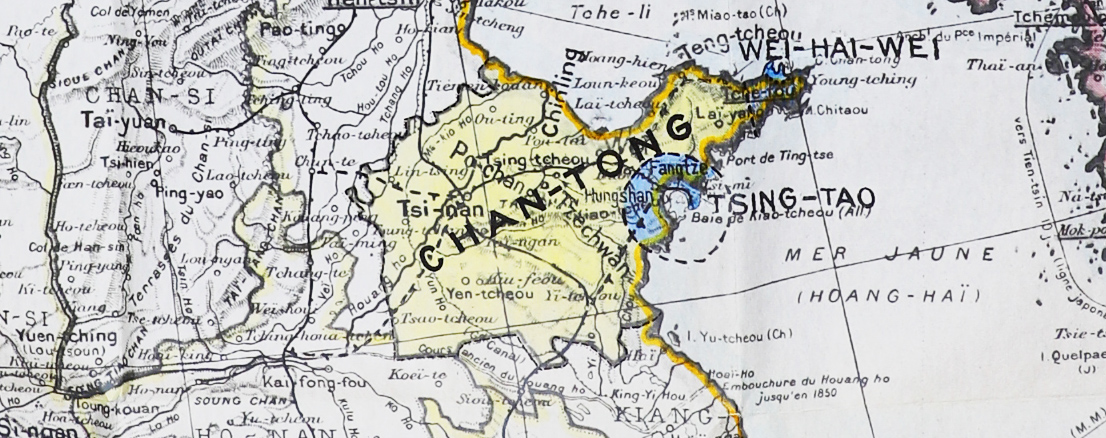
In 1897, Germany colonised a part of China called Qingdao (also spelt Tsingtao) in the Shandong region.
At the start of the First World War in 1914, Japan joined Britain in fighting against Germany as part of the Anglo-Japanese alliance. Japanese troops occupied the German territory in China during the Siege of Tsingtao.
After the end of the war, the Paris Peace Conference met to decide the terms of the Versailles Treaty. The conference began on 18 January 1919, and the peace treaty was signed on 28 June 1919. At the conference, Chinese delegates insisted on having the occupied region returned to China.
On 3 May 1919, a telegram from the Chinese delegates revealed that the ‘Great Powers’ (Britain, France, Italy, Japan, and the United States) had decided that Japan would be allowed to keep the occupied territory in Shandong. A secret agreement between Britain, France, Italy, and Japan was also revealed to have been made in 1917, giving Japan the territory in exchange for military aid.
This agreement sparked a mass protest on 4 May 1919 in Beijing, mainly led by university students. The students passed resolutions, sent correspondence to the peace conference, and targeted Chinese politicians who were seen as having failed the people. The protests developed into a mass movement across China, including general strikes and boycotts. As result, the Chinese delegates refused to sign due to the public pressure.
The May Fourth Movement was a turning point for China and its relationship to the West. What do British government documents tell us about how Britain and the other Great Powers viewed Chinese demands?
Why did the Paris Peace Conference lead to a mass protest movement in China?In China, the First World War brought about an intense transformation that led to national self-determination. It also gave rise to the forces that would ultimately lead to the Cultural Revolution 47 years later.
The First World War marked a turning point in the national history of many Asian countries. It gave rise to various political expectations in those countries: hopes for a new world, hopes for the ending of colonial exploitation and, most of all, hopes for being able to take part in the international democratic process.
When war broke out in Europe in 1914, China faced serious internal challenges and foreign pressure. With the Qing dynasty’s humiliating defeat in the first Sino-Japanese War (1894-95), regional dominance had moved from China to Japan. Japan’s ambitions in China expanded due to its decisive victory in the Russo-Japanese War (1904-5), which guaranteed Japanese presence in south Manchuria and Korea. The 1911 Revolution had brought an end to the Qing dynasty and started the Republican era in China. However, China remained susceptible to pressure from Western powers.
In August 1914, Japan declared war against Germany as an ally to Britain based on the Anglo-Japanese alliance formed in 1902. Under that alliance, Japan invaded Kiaochow, the German leasehold in the Shandong province of China.
In 1915, Japan presented a set of twenty-one demands to the Chinese government to gain greater control over China and its territories. These demands included territorial concessions, control over railways, and extraterritorial rights for Japanese nationals in China. The central government in Beijing was powerless and financially bankrupt, so regional fragmentation had increased. They were unable to resist Japanese pressure and agreed to most of the demands. This caused widespread anger and resentment among Chinese intellectuals and the broader population.
The Chinese government sought to fix this situation and regain control over Shandong Province. In 1917, they offered to send Chinese labourers to assist the Allies in the Western Front. They hoped that the Allied powers would then put pressure on Japan to return Shandong to China after the war.
After the Armistice, the Paris Peace Conference began in January 1919. The Chinese government sent a delegation to Paris to regain Shandong. They also wanted to discuss the abolition of extraterritorial rights [foreign citizens not being subject to Chinese law], the revision of customs and tariffs, and the withdrawal of Japanese troops from China.
However, these demands were not met. Judging China’s contribution to the war as minimal, the Allies confirmed Japan’s colonial rights and privileges gained in China. This news was revealed in a telegram from the Chinese delegates at the conferences on 3 May 1919. The reveal triggered mass protests in Beijing the next day, followed by demonstrations in cities all over China. This is known today as the May Fourth Movement of 1919.
During the May Fourth Movement, protesters rallied around the principles of science, democracy, and nationalism and called for a complete overhaul of Chinese society. The movement emphasised the need for modernisation and Westernisation to create a strong, independent China. Many intellectuals and students who participated in the movement went on to become leaders of the Chinese Communist Party and played a significant role in the Chinese Communist Revolution.
The May Fourth Movement is considered a significant turning point in modern China’s political and intellectual history. It dramatically changed the country’s political trajectory. At this moment, China went from a feudal, introspective society subject to semi-colonial rule by imperial powers, to a more open, forward-looking civilisation ready for social revolution and political independence. The movement emphasised a growing sense of China’s national unity and the awakening of Chinese nationalism.

Source 1b shows the ‘1914-15 Star’, ‘British War’ and ‘British Victory’ medals from the First World War. [CC BY-SA 3.0, Europeana 1914-1918 project via wikimedia commons].
This First World War Medal guide says that the medals were nick-named after animal characters in a comic strip in the Daily Mirror newspaper. The popular cartoons featured Pip the dog, Squeak the penguin and Wilfred the rabbit.