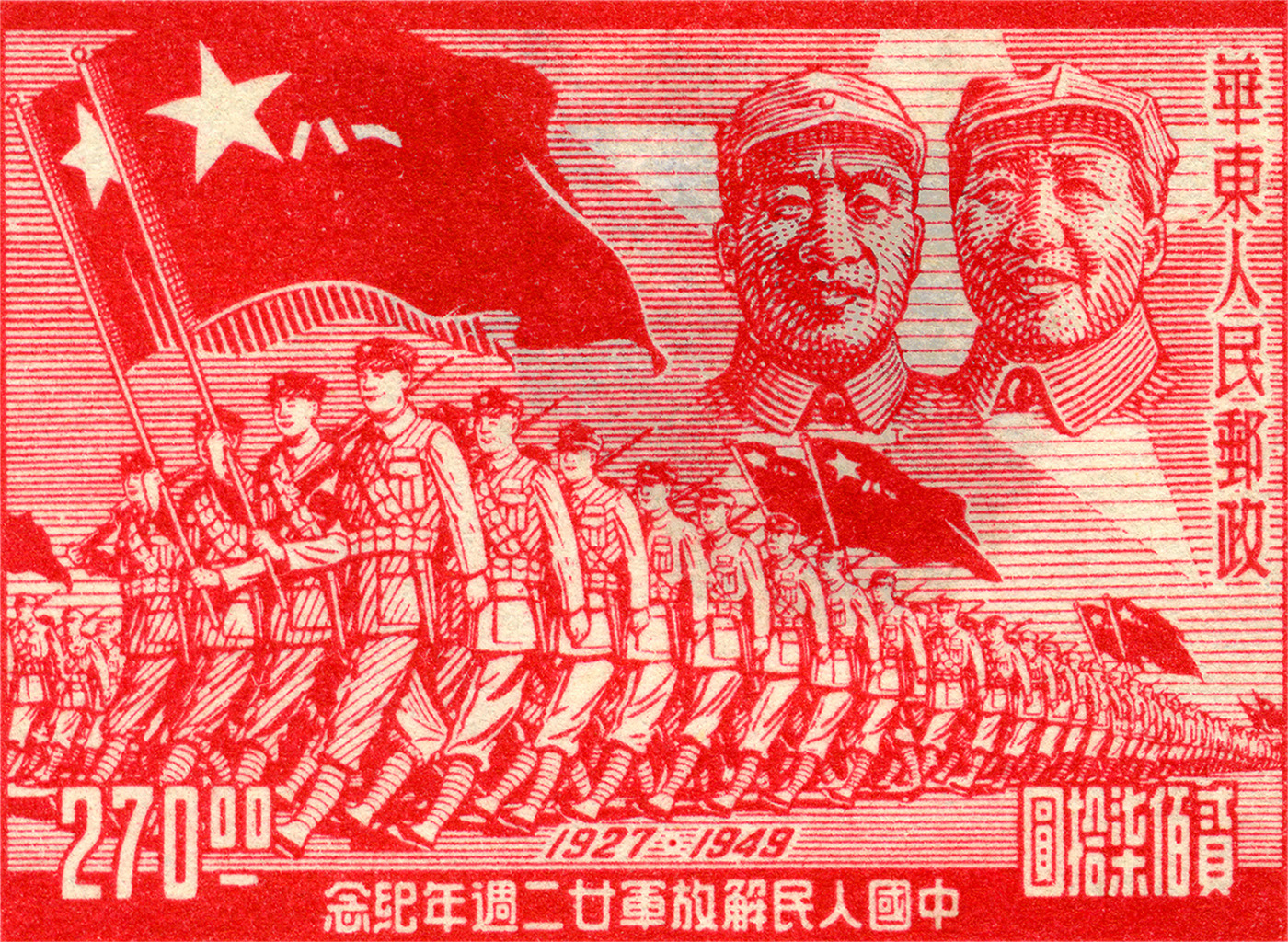
In 1940s China, two parties were fighting for power. On one side was the ruling nationalist Kuomintang (KMT) party, led by Generalissimo Chiang Kai-shek. On the other was the opposing Chinese Communist Party (CCP), led by Mao Zedong.
During the Second World War, both parties banded together to fight off Japanese occupation. However, after the war, peace talks between the two quickly broke down. The fighting between the two parties became ongoing before escalating into civil war.
The civil war was eventually won by the CCP in 1949. Mao declared the founding of the People’s Republic of China on 1 October 1949. Chiang Kai-shek, meanwhile, fled to the island of Taiwan, where he continued to rule.
Use the British government sources in this lesson to explore the complicated reasons behind the war and its outcome, including party ideology, propaganda, fighting tactics, and power struggles.
Why did the fighting between the Kuomintang and Chinese Communist Party happen?The Chinese Civil War in the period from 1945 to 1949, was a monumental conflict between two major political forces in China: The Chinese Communist Party (CCP) and the Nationalist Party, also known as the Kuomintang (KMT). This was a post-war clash that eventually led to the establishment of the People’s Republic of China.
This prolonged struggle for control over China’s future emerged after the Second World War, when the Chinese Communist Party (CCP) and Nationalist Party – or Kuomintang (KMT) – had temporarily united to prevent Japanese occupation. The ideological differences and power struggles between the parties that had existed before the war soon resurfaced, leading to intense confrontation. Following the war, the weak alliance between them crumbled, and both sides resumed hostilities with the aim of establishing their dominance over China. The United States, which had provided substantial support to the KMT during the war, made efforts to mediate between both sides, hoping to prevent an all-out conflict. Nevertheless, the deep-seated differences and longstanding grievances between the CCP, led by Mao Zedong, and the KMT, led by Chiang Kai-shek, proved insurmountable.
The Chinese Civil War can be divided into three distinct phases.
Stage one (1945–1946): The start of large-scale military operations. During this period, the CCP launched successful offensives in various regions, based on support from the peasantry and rural areas. However, the KMT faced internal challenges, including corruption, inflation, and a loss of popular support. These factors contributed to the CCP’s early advances.
Stage two (1947–1948): This period saw a major shift in the balance of power. The CCP launched a strategic offensive, employing guerrilla warfare tactics [defined below] and encircling major cities held by the KMT. The CCP’s military successes during this period, combined with its effective mobilisation of the population, drove the party’s rise and further weakened the KMT’s position.
Stage three (1948–1949): This phase marked the CCP’s decisive push toward victory. The CCP launched a series of offensives, capturing key cities and regions such as Shenyang, Jinan, and Chengdu. By late 1949, the CCP had effectively established control over most of mainland China, prompting Chiang Kai-shek and the remains of the KMT to retreat to the island of Taiwan.
There are different perspectives on the causes of the Civil War between the KMT and the CCP.
For example, the KMT strongly opposed the ideology of communism adopted by the CCP. They viewed communism as a dangerous and subversive ideology that threatened social stability, private property, and individual freedoms. The ruling groups that controlled the KMT included the old landlord class and existing officials who were often accused of corruption. They feared that the CCP’s ultimate goal was to establish a communist state and eradicate their influence.
The CCP, meanwhile, gained significant support from the rural population, particularly peasants. They promised land reform, improved living conditions, and a voice for the marginalised rural masses. The CCP’s agricultural policies appealed to much of the population in agrarian China.
The fall of the Nationalist government led to the establishment of the People’s Republic of China (PRC) on October 1, 1949, with Mao Zedong as its leader. Meanwhile, the KMT government in Taiwan continued to claim legitimacy as the rightful government of China, establishing the Republic of China there.
The Chinese Civil War had far-reaching consequences for China’s political, social, and economic landscape. It resulted in the expulsion of the KMT from mainland China and the division of the country into the PRC and the Republic of China in Taiwan. The conflict also marked a turning point in China’s foreign relations, as the PRC pursued a different path from the KMT-led government in Taiwan. The Chinese Civil War left an indelible imprint on the history of modern China and continues to shape its trajectory to this day.
Guerilla Warfare: operations carried on by small independent forces, generally in the rear of the enemy, with the objective of harassing, delaying, and disrupting military operations of the enemy.
On 4 August 1972, General Idi Amin, leader of Uganda declared his intension to expel all Asian passport holders from Uganda. This was regardless of whether they were British nationals. He argued that since they had all been British subjects at some point, he was right to include even those who had taken out Ugandan citizenship.
What was the impact of this decision on the lives of Ugandan Asians? What did it mean to become stateless? What was Amin’s motivation for this policy? How did the British Government respond to his actions? What was the reaction of the British public?
Use this lesson to find original documents and video testimonies which explore the expulsion of Ugandan Asians and their experience as refugees in Britain.
This lesson has been developed with the support of the British Ugandan Asians at 50, a programme of the India Overseas Trust. We are grateful for their generosity in supplying the video testimonies included in this lesson.
Following a miliary coup in 1971, General Idi Amin became leader of Uganda. However, it was his decision to expel Asians that was to stun many across the world when he announced on 4 August 1972 that all Asian passport holders needed to leave Uganda. Later in the month, Amin announced that he wanted all Asians expelled, regardless of whether they were British nationals or not. He argued that since they had all been British subjects at some point, he was right to include even those who had taken out Ugandan citizenship. The net result was to create a category of person who was neither British nor Ugandan, but stateless.
General Amin was in a line of African leaders who wanted to promote Africa-first policies. However, he took this to new and unprecedented lengths with his announcement to expel Asians in 1972. Many Ugandan Asians were descended from merchants and workers brought over during the period of British rule and had become very successful businesspeople who were contributing to the economy. Ugandan Asians were also the target of resentment because of their success or because of their treatment of other ethnic Ugandans. Amin had already voiced his view that Ugandan Asians had benefited from colonial rule while at the same time being disloyal to Uganda. At the time of his announcement, the Conservatives were in power in Britain, led by Edward Heath. The Heath government were quick to respond and take up the responsibility to accept Ugandan Asians with British nationality despite the strong anti-immigrant views of the public at the time. Amin’s announcement came at a particularly difficult time for the British government. This was a period of heightened anti-immigrant sentiment fuelled by politicians like Enoch Powell.
The British government wanted wider international support by making the expulsion a humanitarian and refugee issue. They encouraged other countries to host Asians who were expelled from Uganda, and this paid off to some degree as various offers from different countries came in. The Conservative government also tried to capitalise on the effort it had made to welcome the Ugandan Asians, highlighting its humanitarian values. The government set up a Ugandan Resettlement Board to organise the reception of new arrivals and their dispersal to specially kitted out centres. Apart from meeting the needs of new arrivals for food and accommodation, classes were provided about living in Britain.
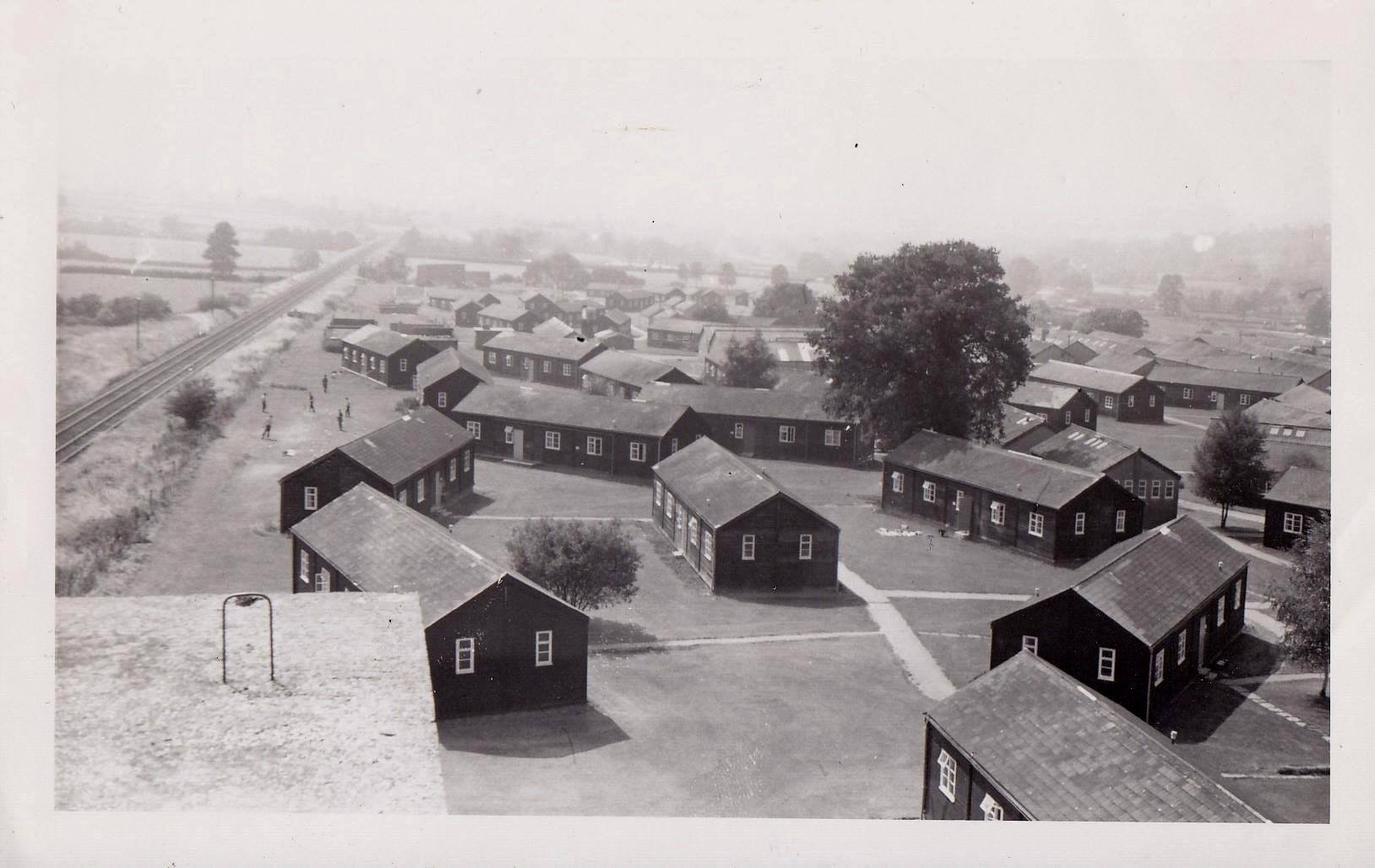
The first evacuation flights to the UK, organised by the UK government landed at Stanstead airport on 18 September 1972. Over the course of September and November 1972 many of those arriving were resettled in 16 temporary settlement centres managed by the Uganda Resettlement Board. These were people who had nowhere else to go and were housed by the Board in disused Army and RAF bases. Conditions in the camps were poor and they were often situated in isolated locations. The armed forces and voluntary organisations played a key role in in helping to prepare the camps. The Board had also identified ‘Red Areas’ where it discouraged Asians from settling due to high concentrations of Commonwealth immigrants, preferring to encourage people to go to ‘Green Areas’ where they would receive assistance with housing and finding work.
Were they refugees, subjects or foreigners? By framing the crisis in terms of refugees, the British government tried to maximise the support it could get internationally, however, this fed confusion particularly in the press who referred to Asians from Uganda as refugees. Those Asians made stateless by taking on Ugandan citizenship found that while Britain resisted accepting them, some countries were willing to assist them. As a result, some people found themselves in a state of limbo, for example living in a European country, uncertain of their futures. Typically, a wife might have a British nationality and be able to stay in Britain while her husband would be stateless, and living elsewhere, because he had taken Ugandan citizenship. The crisis created a diplomatic headache for Britain which had to rein in the excesses of Amin by appealing to African and other world leaders for help, while at the same time ensuring that it did not lose its position of access and influence with Amin.
Books for further reading
Bharti Dhir: “Worth. An inspiring True Story of Abandonment, Exile, Inner Strength and Belonging” Hay House UK Ltd. 2021. ISBN: 9781788174855
Giles Foden: “The Last King of Scotland” Orion Publishing Co. 2021 ISBN: 9781474624275
Lucy Fulford: “The Exiled: Empire, Immigration and the Ugandan Asian Exodus”, Coronet, 2023. ISBN: 9781399711173, 1399711172
Mahmood Mamdani: “From Citizen to Refugee: Ugandan Asians Come to Britain” Pambazuka Press, 2011. ISBN: 9781906387570
Manzoor Moghal: “Idi Amin”. Author House, 2010, ISBN: 9781449039745
Shezan Muhammedi: “Gifts from Amin: Ugandan Asians in Canada (Studies in Immigration and Culture) University of Manitoba Press. 2022. ISBN: 9780887552830
Noreen Nasim: “Expelled from Uganda”, Amazon Digital Services LLC – KDP Print US, 2021. ISBN: 9798501109124
Urmila Patel: “Out of Uganda in 90 days”. CreateSpace Independent Publishing Platform, 2014. ISBN: 1500774294
Neema Shah: “Kololo Hill”, Pan Macmillan, 2022, ISBN: 9781529030549
Nikesh Shukla: “The Good Immigrant” Publisher: Unbound, 2017. ISBN: 9781783523955
Hafsa Zayyan: “We are all Birds of Uganda”, Cornerstone. 2022. ISBN: 9781529118667
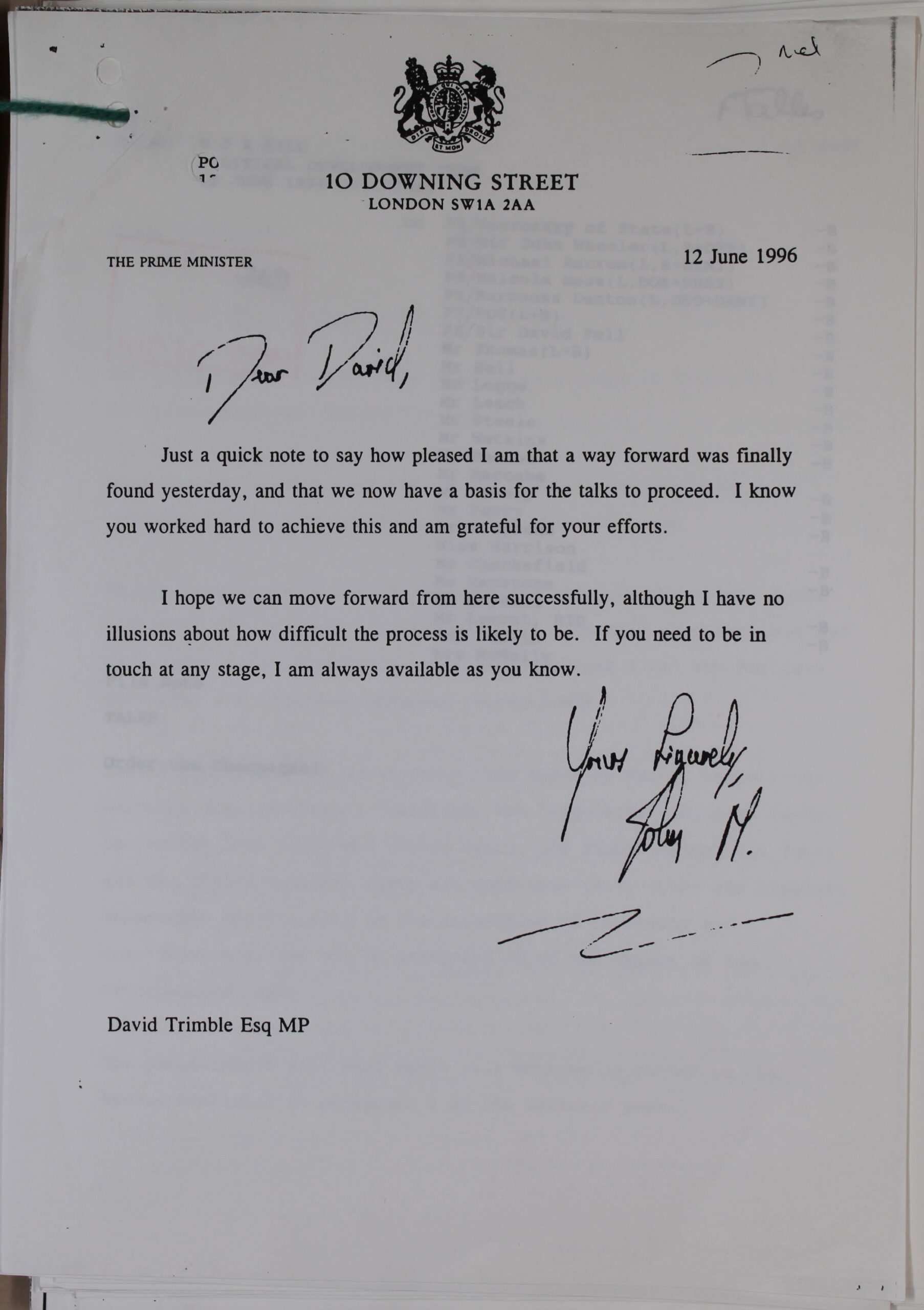
TNA Catalogue Ref: CJ4/12228
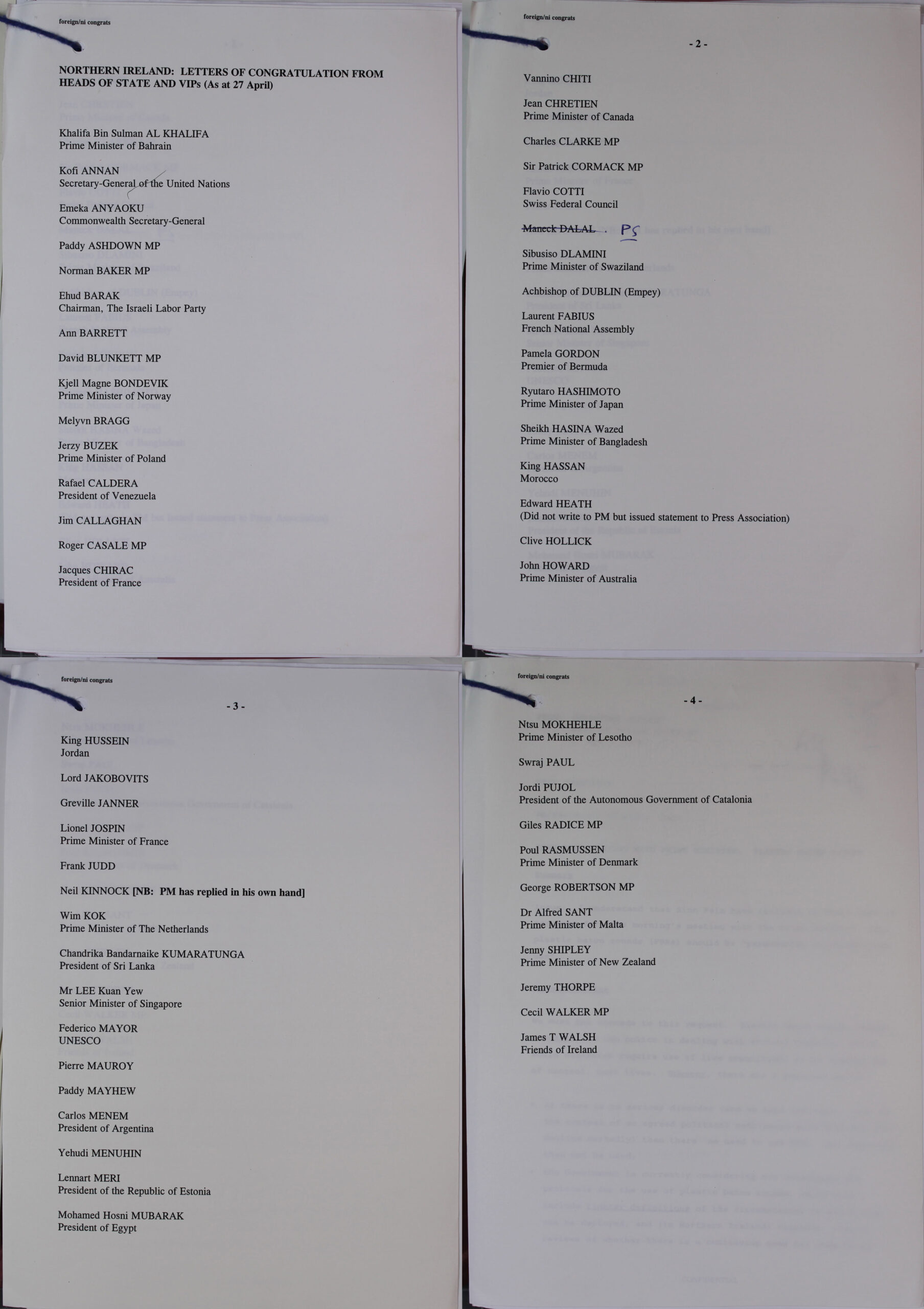
TNA Catalogue Ref: PREM 49/412
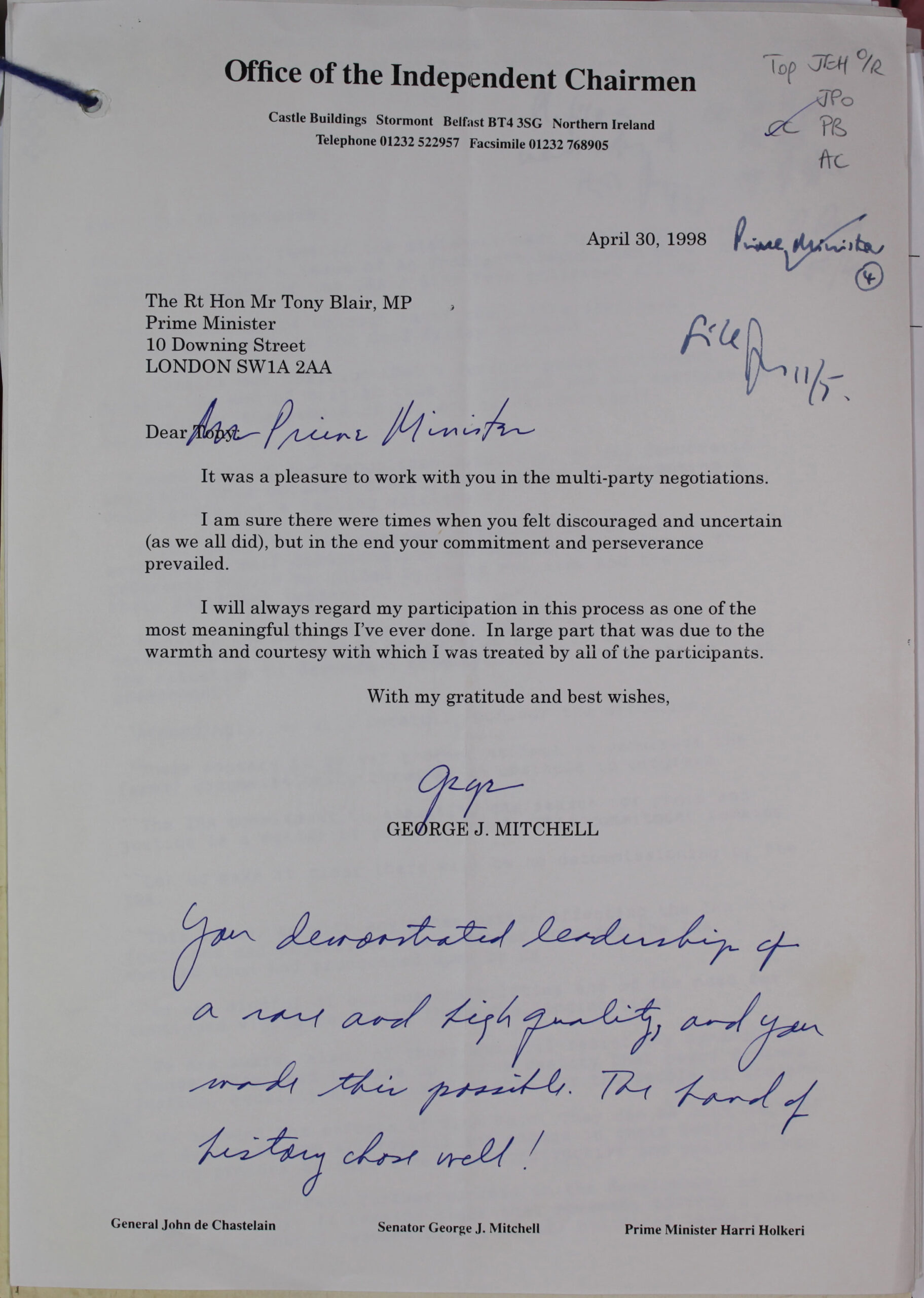
TNA Catalogue Ref: PREM 49/412
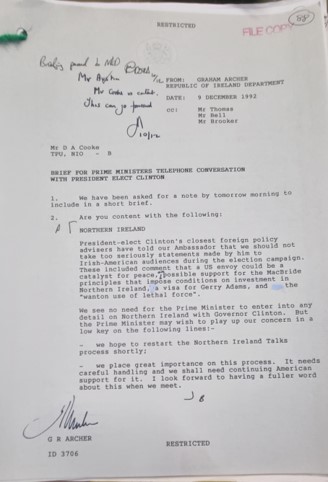
TNA Catalogue Ref: FCO 87/3596
A letter from US Senator George Mitchell to UK Prime Minister Tony Blair on 30 April 1998, soon after the signing of the Agreement.
Context notes
Mitchell was a US Senator who had a deep interest in Northern Ireland. President Clinton appointed him as US Special Envoy in 1995 to be an independent figure in the Northern Ireland peace process. He became the Co-Chairman of the Northern Ireland Peace Talks, an important figure in the talks which eventually led to the Agreement. His job was to be an independent and impartial individual who could help to resolve disputes. He was best known for his work in negotiating the decommissioning of paramilitary forces. However, he also worked with the political parties, persuading them to accept the Mitchell Principles. These were a set of limits on political parties, the most important of which was that unless they renounced violence they would not have any role in any of the talks or negotiations. The letter was written a few days after the Belfast (Good Friday Agreement) was agreed.
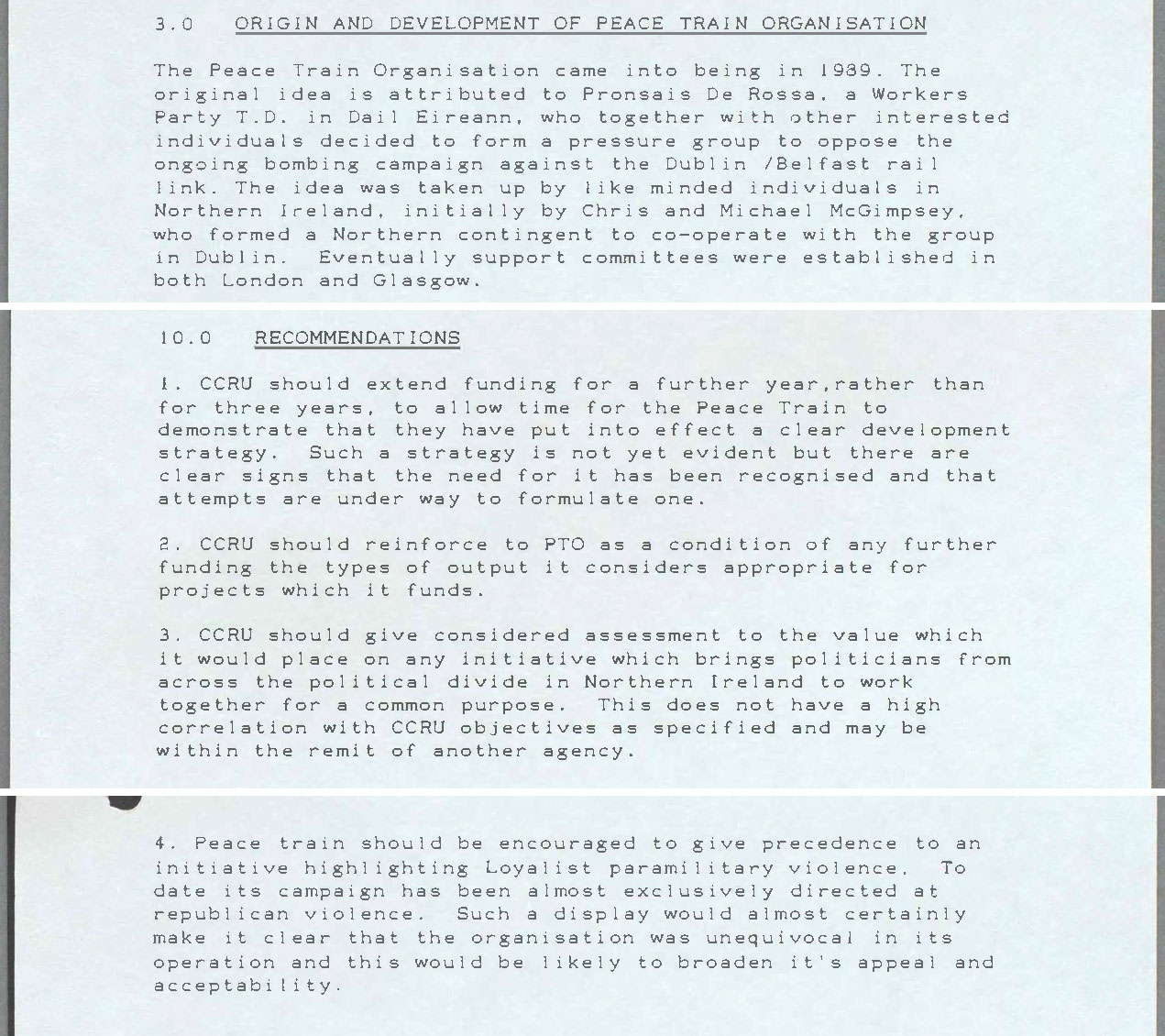
A report on the Peace Train Organisation (PTO) produced in May 1993. The report was commissioned by the Central Community Relations Unit, part of the Northern Ireland Civil Service.
Context notes
This report was commissioned by the Central Community Relations Unit (CCRU). The Central Community Relations Unit was established in 1987 to advise the Secretary of State on all aspects of the relationship between the different parts of the Northern Ireland community. The Unit, is part of the Northern Ireland Civil Service. The Unit’s role is to make policies on issues of equality and improve community relations. The purpose of this report was to decide whether the Northern Ireland civil service should continue to provide financial support to the Peace Train Organisation.
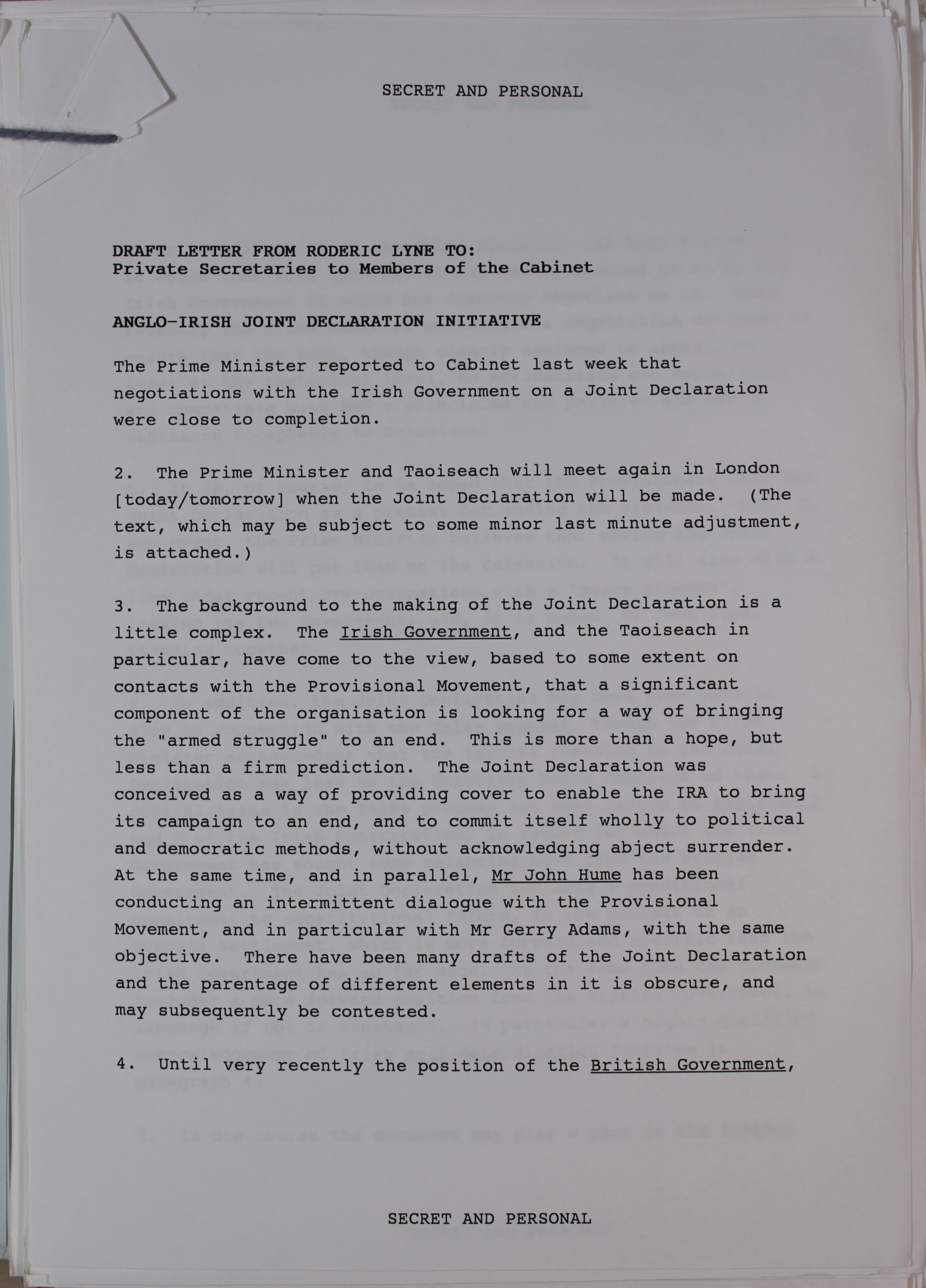
Briefing notes sent to senior civil servants explaining the proposed Downing Street Declaration December 1993
Context notes
This document was written by a senior adviser to the Prime Minister. The document was sent to the Private Secretaries of the members of the Cabinet. Private Secretaries are senior civil servants in government departments and work closely with ministers. The document was designed to alert these officials that the Prime Minister and the Taoiseach would be announcing the Downing Street Declaration and to provide officials and minsters with some important background information and advice on possible questions from the media.
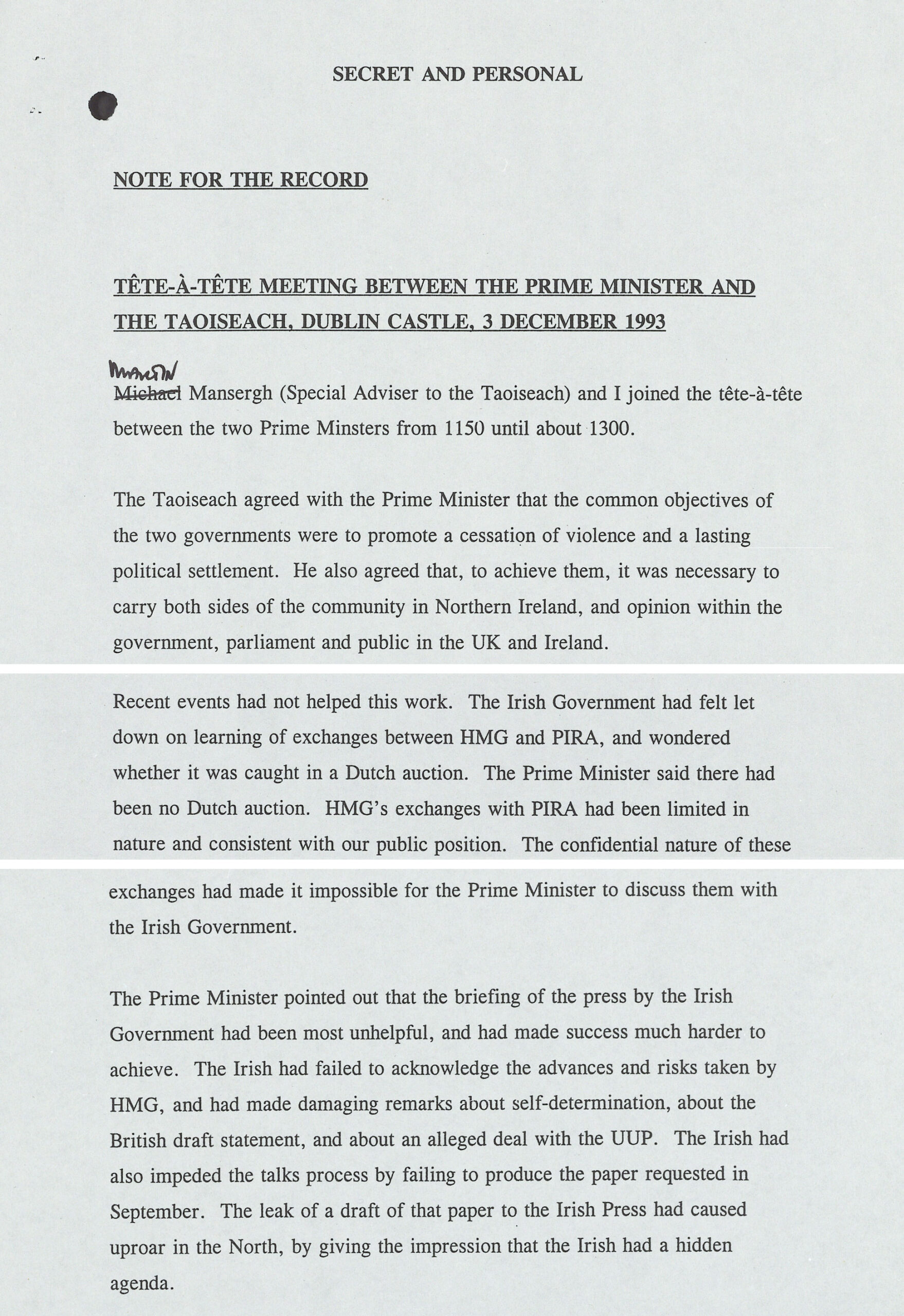
Record of a meeting between the UK Prime Minister and the Irish Taoiseach December 1993
Context notes
This meeting took place a short time before the Downing Street Declaration was issued. There was constant dialogue between Her Majesty’s Government (HMG – i.e. the British government) and the Irish Government. Sometimes, as in this case, they were tense. In this instance the Irish government discovered that HMG had been holding talks with the leaders of the PIRA. This had been carried out using go-betweens such as Catholic priests, Northern Ireland business-people and also some British Intelligence officers.