
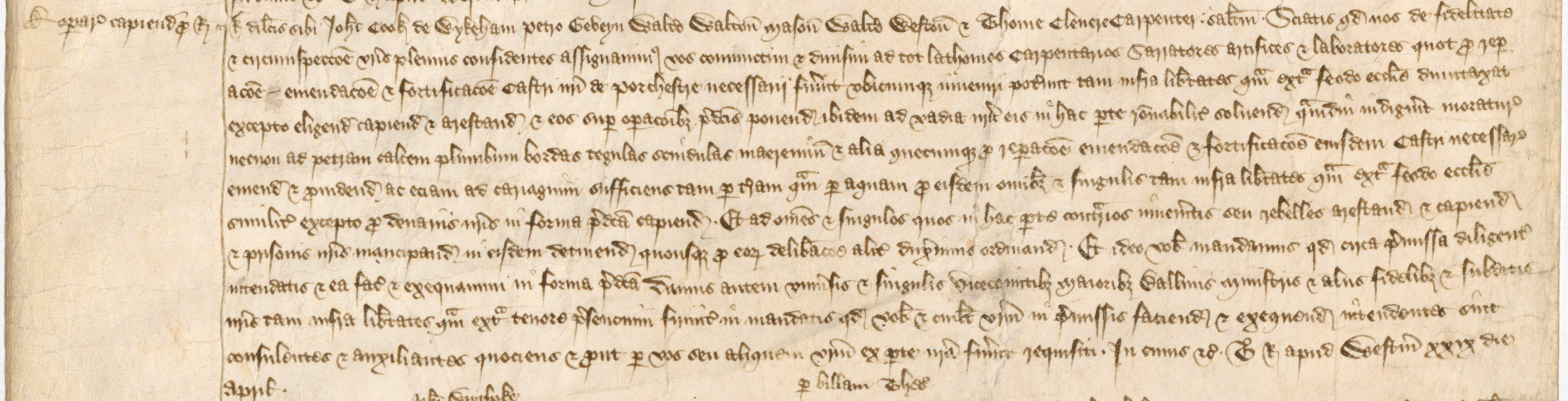
This document reveals that those given the responsibility of overseeing the repair and expansion of Portchester Castle struggled to find craftsmen and labourers to work on the project. The King gave them the authority to ‘arrest’ people and force them to work on the castle. If anybody who was arrested refused to work on the castle, they were to be imprisoned.
This document records that, during the last three years of the reign of King Richard II, at lot of building work took place at Portchester Castle. A new range of domestic buildings – hall, kitchen, chambers and offices – was constructed.

King Edward II ordered that Portchester Castle should be garrisoned with soldiers if there was any sign that England might be invaded by forces from abroad.
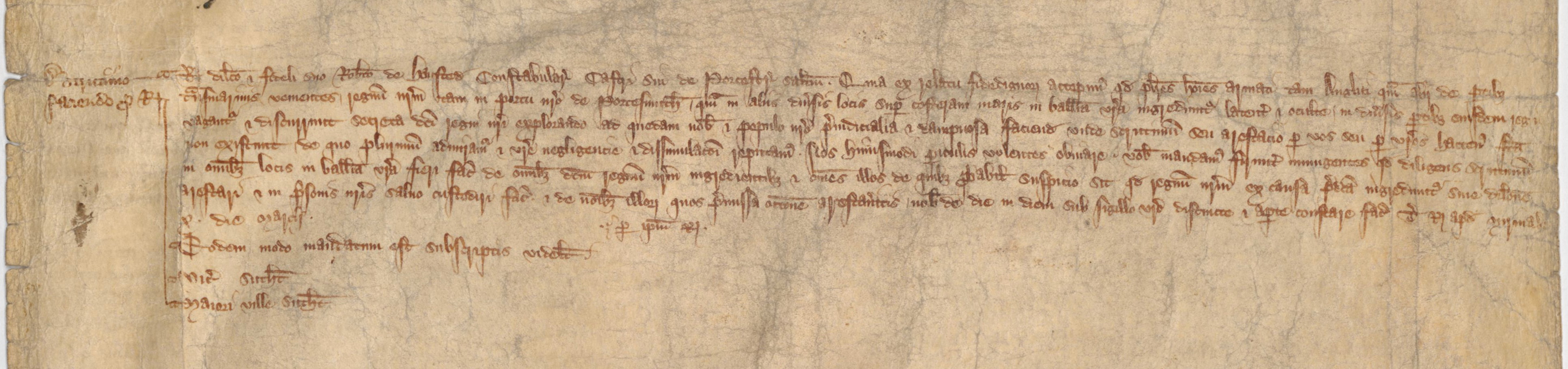
This document reveals that King Edward II ordered that Portchester Castle should be garrisoned with soldiers if there was any sign that England might be invaded by forces from abroad. If this were to happen, any people who were suspected of being spies within the castle were to be arrested.
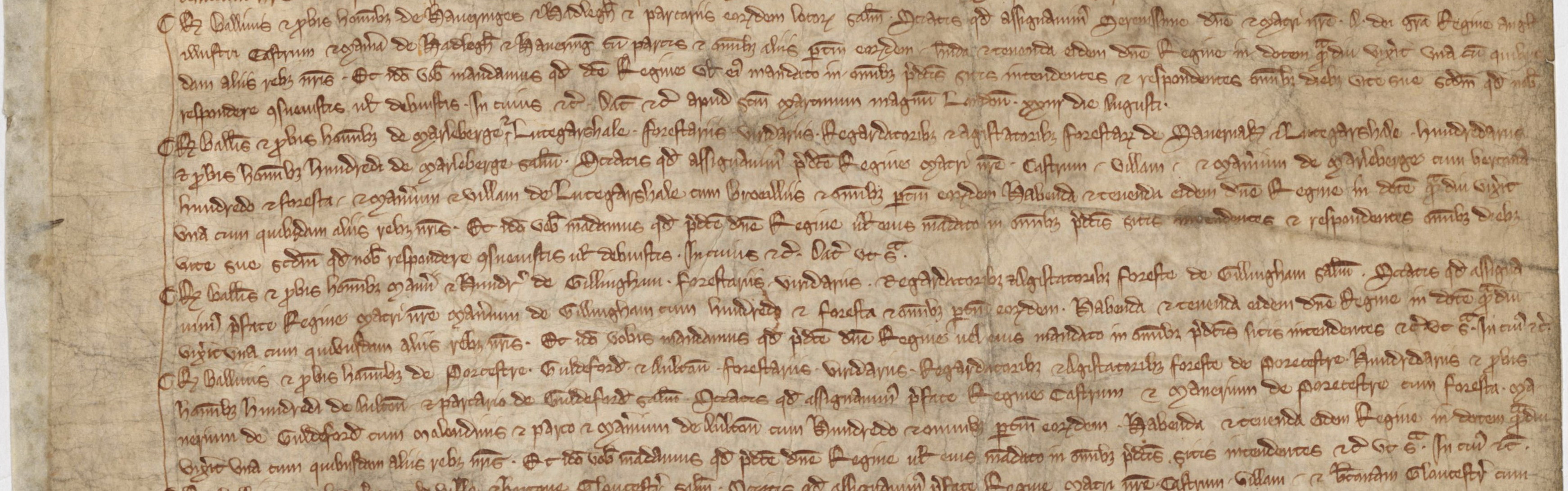
In 1273, King Edward I gave Portchester Castle to his mother.

In 1175 a group of carpenters and masons, led by Alnoth the Engineer, travelled to Suffolk to dismantle Framlingham Castle on royal orders. King Henry II ordered that the castle should be knocked down because Earl Hugh Bigod had joined a rebellion against his rule.

This document pardons a woman, who had been accused of stealing cloth and jewels from a merchant. The crime didn’t take place in Framlingham castle, but it does reveal how people born in the castle might move away. The precise details of the alleged theft and the reasons that the woman was accused in the first place remain a mystery.
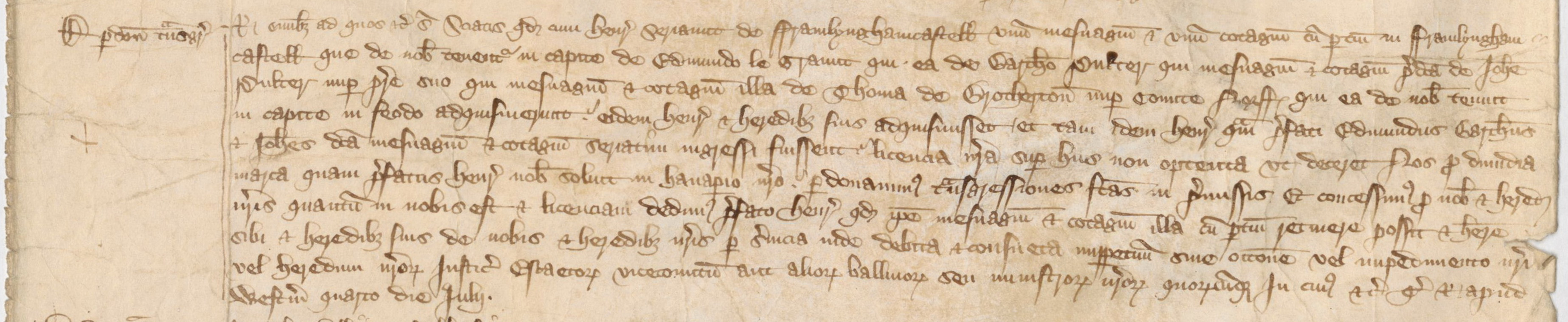
Henry, Sergeant of Framlingham Castle purchased a cottage inside Framlingham Castle which came with a messuage (dwelling house and the land occupied by it).

Whilst Roger Bigod was away fighting in Wales in service of Edward I, thieves stole deer and hares from his park (a protected area for rich lords to retain deer and other animals for hunting) at Framlingham.
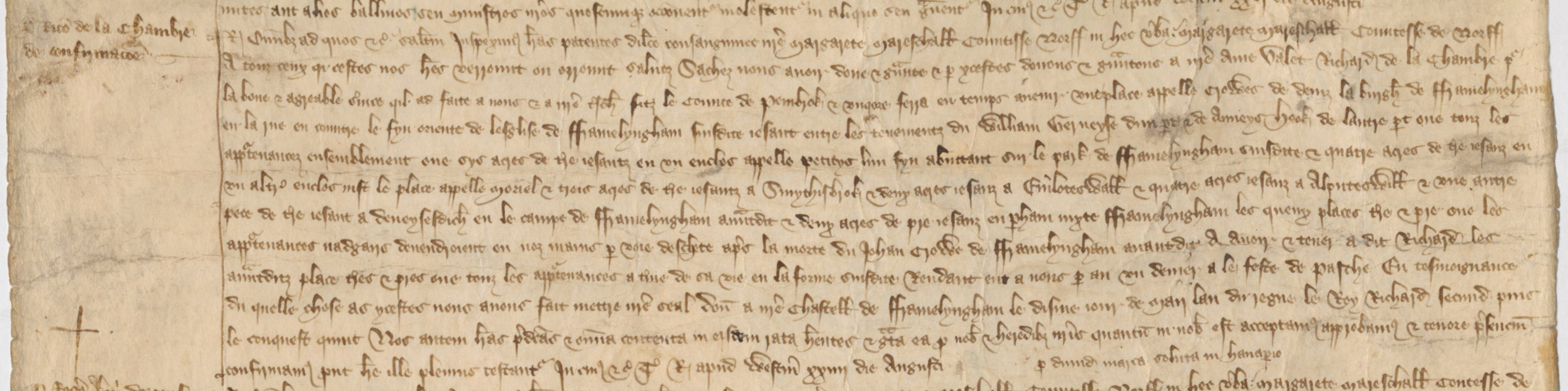
In this document, we find rare evidence that a castle, such as Framlingham, was owned by a woman, the Countess of Norfolk, during the reign of Richard II. She granted land to one of her yeomen (wealthy farmers).The grant was recorded in a letter patent (a type of legal document) at Framlingham Castle.