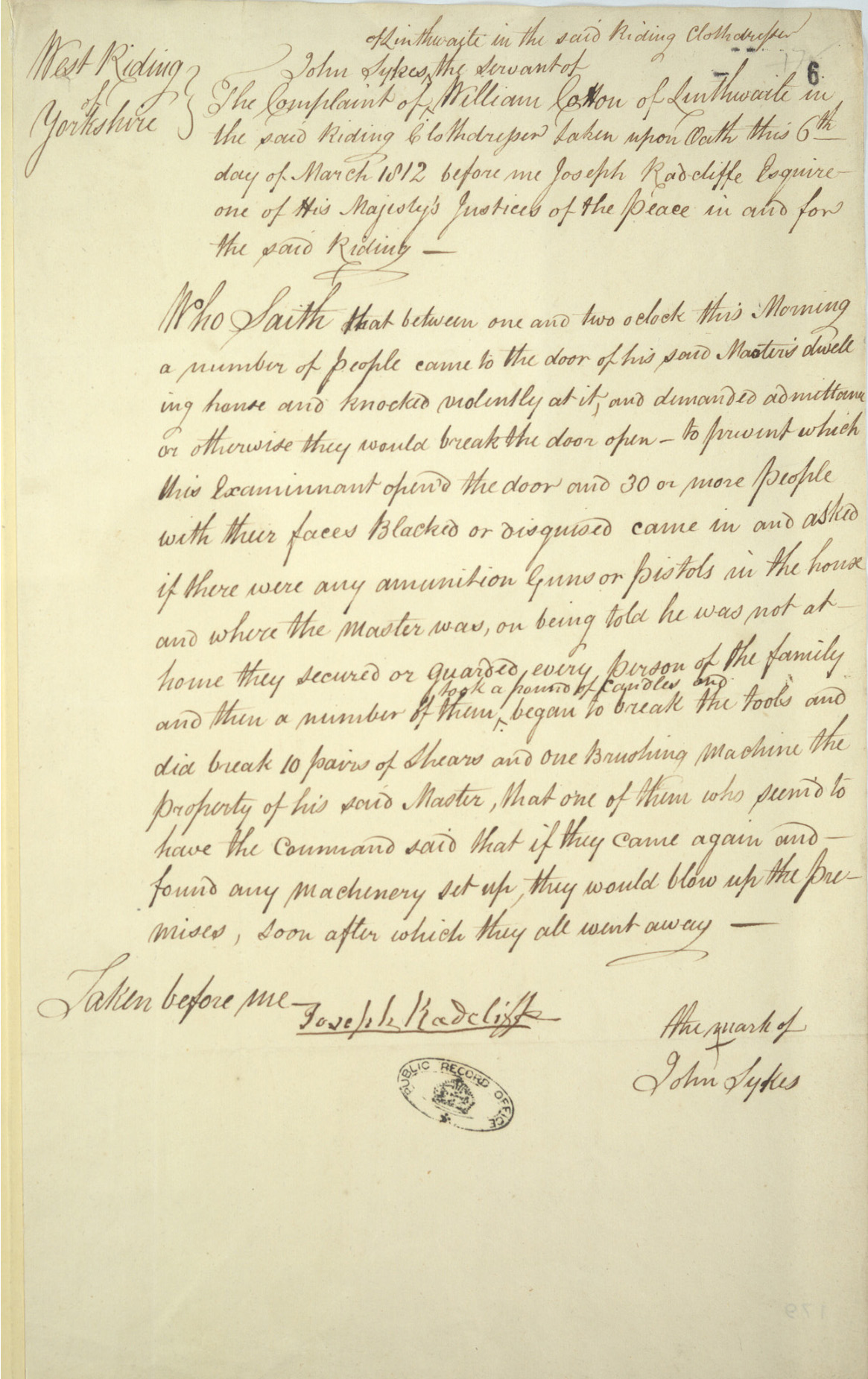
An account of machine-breaking at Linthwaite, Yorkshire, March, 1812. Catalogue ref: HO 40/1/1, part 2, f.6
This is evidence given by a servant called John Sykes to the local Justice of the Peace.
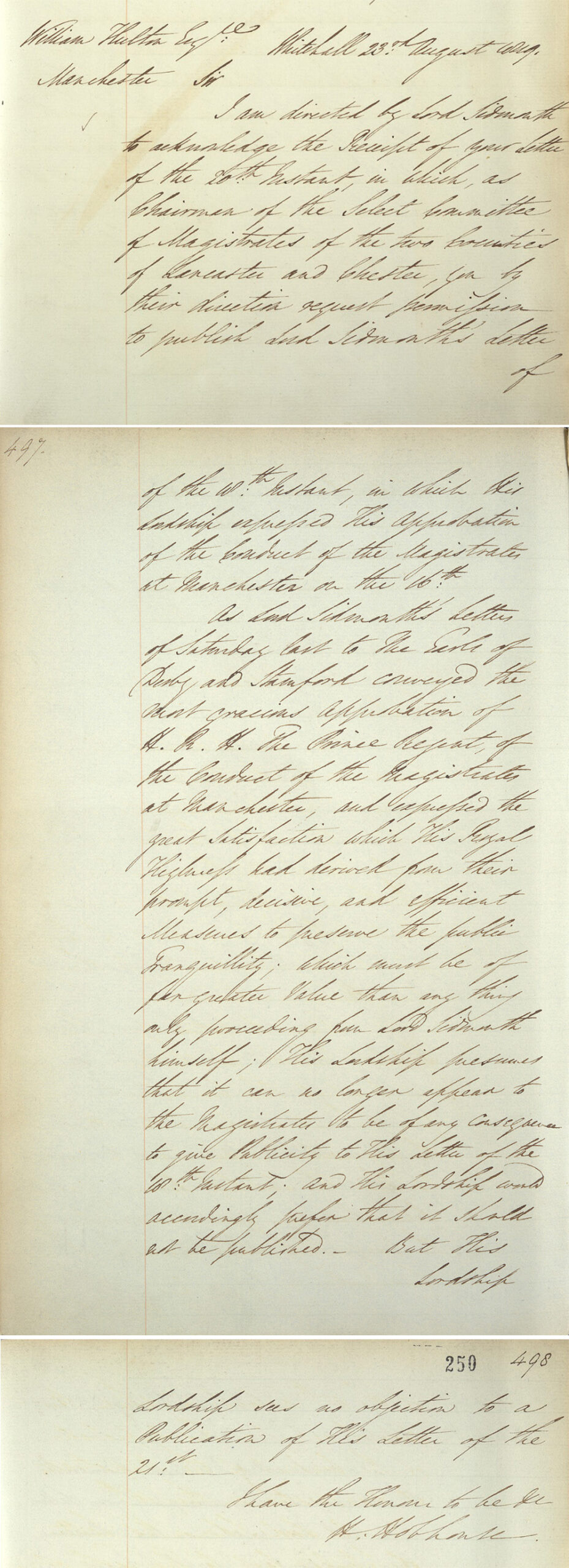
Letter from the Home Office on the conduct of the Manchester magistrates, 23 August 1819, Catalogue ref: HO 41/4 f.496
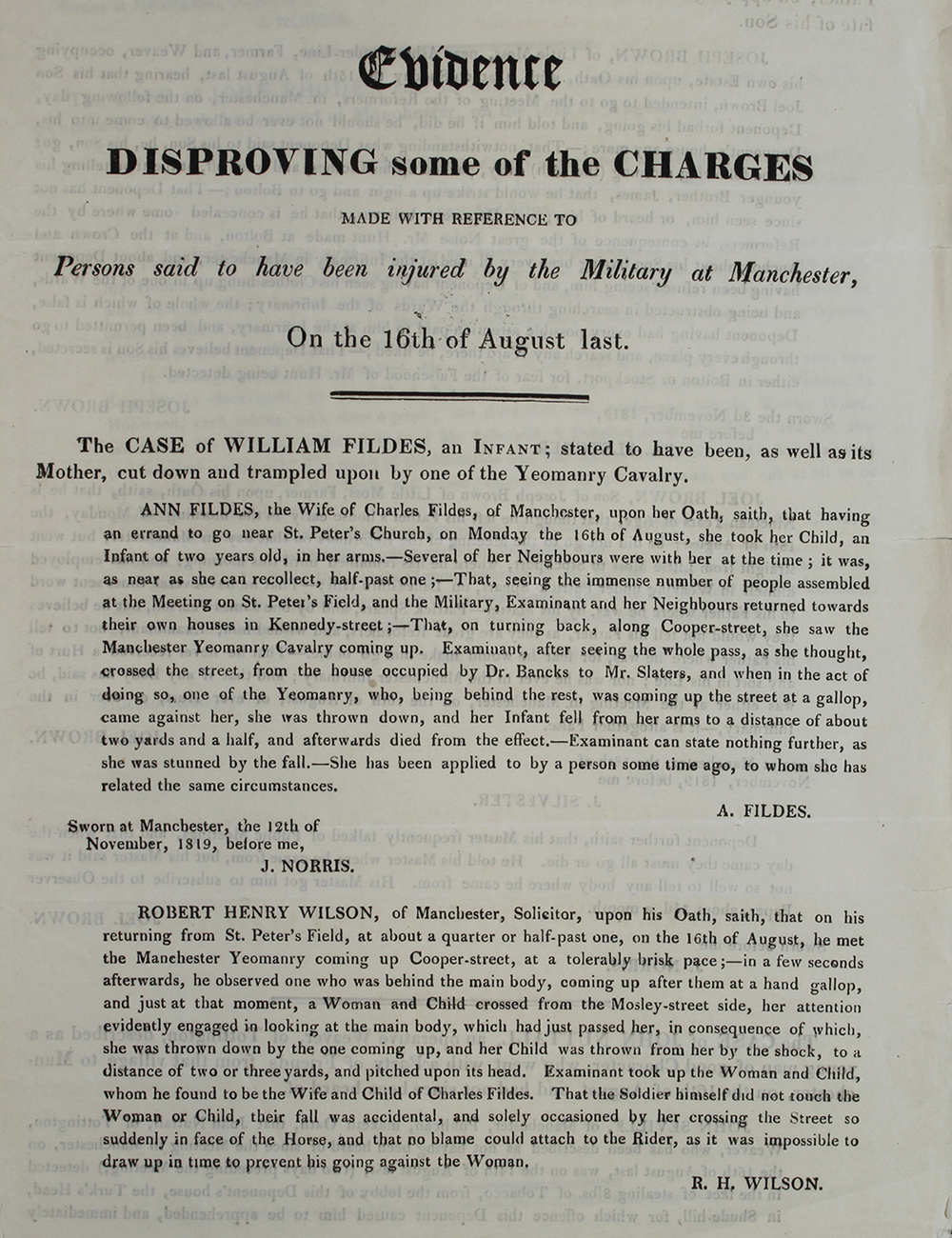
Extract from a printed paper called ‘Evidence disproving some of the charges’: an attempt to explain away the death of a child called William Fildes at ‘Peterloo’.
This was a move by the authorities to justify their actions, and provide a summary of the various inquests carried out by the Manchester authorities. They were happy to admit that a child was trampled to death in the Yeomanry charge, and blame the mother for letting go of her child when startled by the charge. Catalogue ref: HO 42/199 f217.
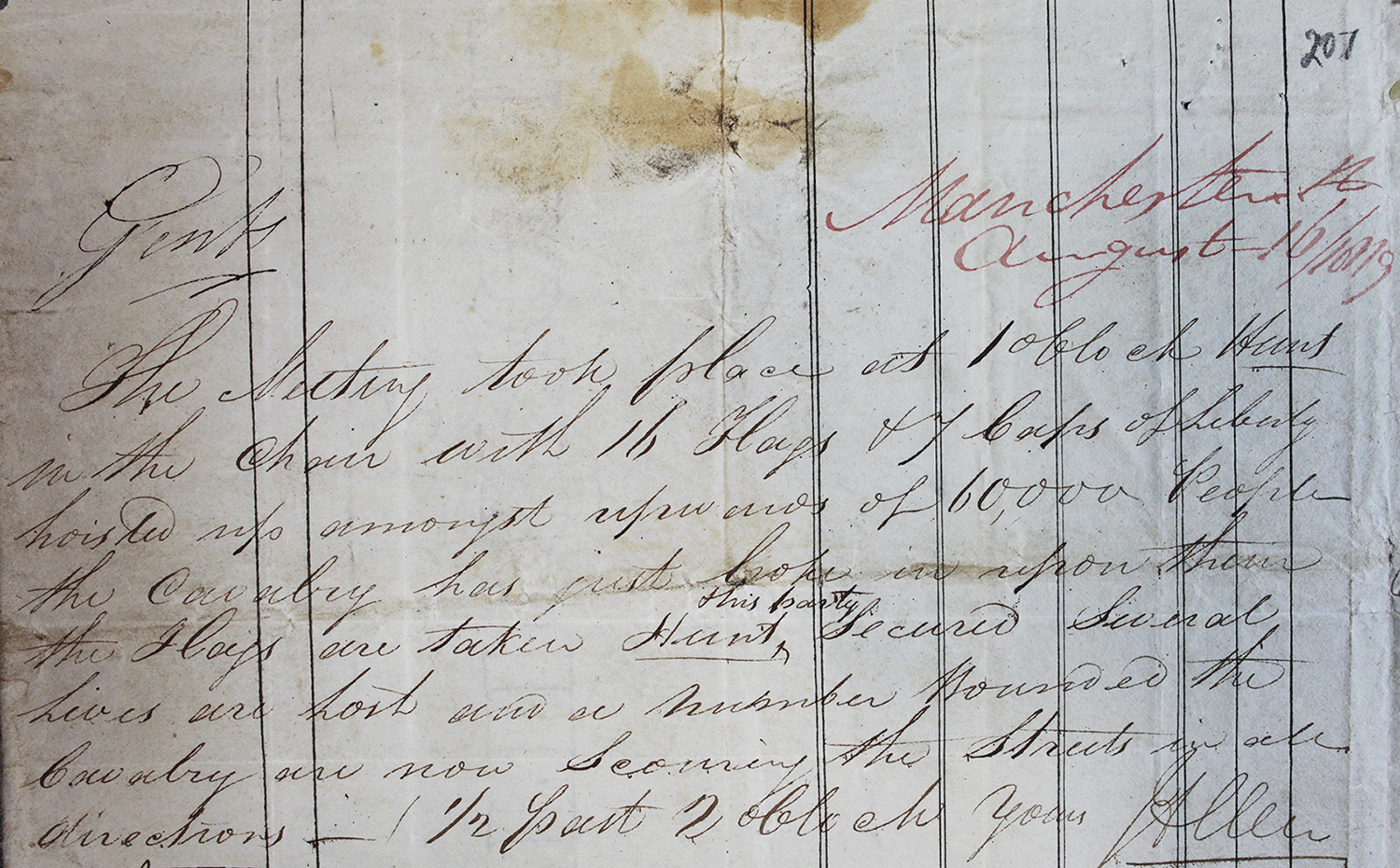
A scrap of paper giving account of events at St. Peter’s Fields in Manchester shows that few expected the Yeoman Cavalry to be used to break up the crowd. This brief, vivid, immediate account is said to be our earliest report of ‘Peterloo’, 16 August 1819. This information was received in London the following day and sent to the office of Lord Sidmouth. Catalogue ref: HO 42/192 f207
The Liberty cap has been a symbol of freedom since at least Roman times. It was worn during the American Revolution and was adopted during the French Revolution. In Britain in 1819, the ‘Cap of Liberty’ was also the name of a radical weekly newsletter.
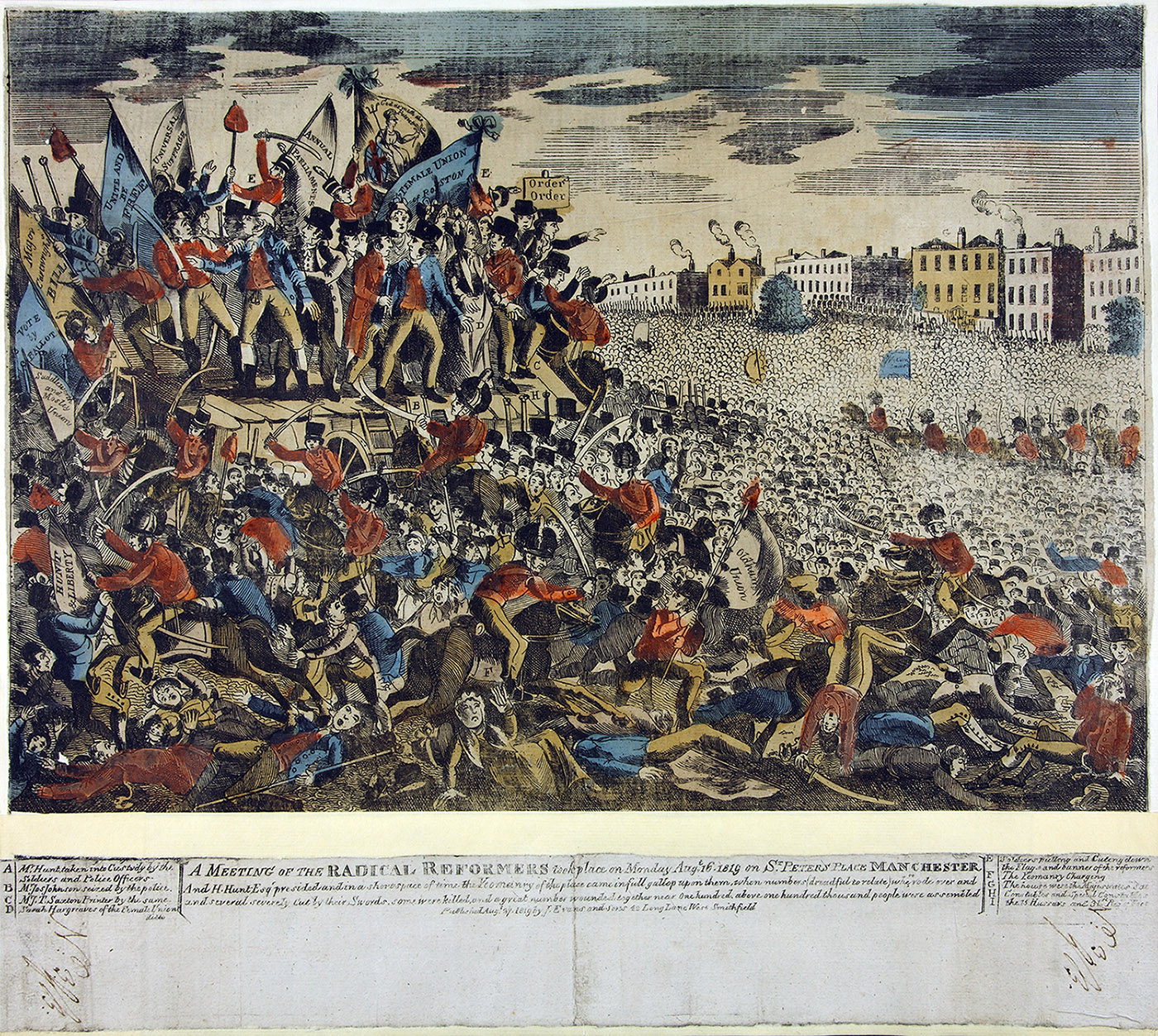
Engraving showing events at St Peter’s Fields on 16 August 1819 in Manchester. Catalogue ref: MPI 1/134
The engraving shows how events at ‘Peterloo’ soon became used as radical propaganda. This picture was purchased by John Jenkins, an ex-weaver and ex-Royal Marine, who ‘by the aid of a magnifying glass [made the figures] appear as large as life’ while he described what happened. In November 1819 Jenkins had been exhibiting the picture at Chudleigh, in Devon, when his activities came to the attention of Gilbert Burrington, vicar of Chudleigh and magistrate. Burrington sent Jenkins to the Exeter House of Correction as a vagrant and passed information of his seditious conduct to the Home Secretary.
House of Correction: a place where those who had committed minor offences and considered capable of reformation were confined.
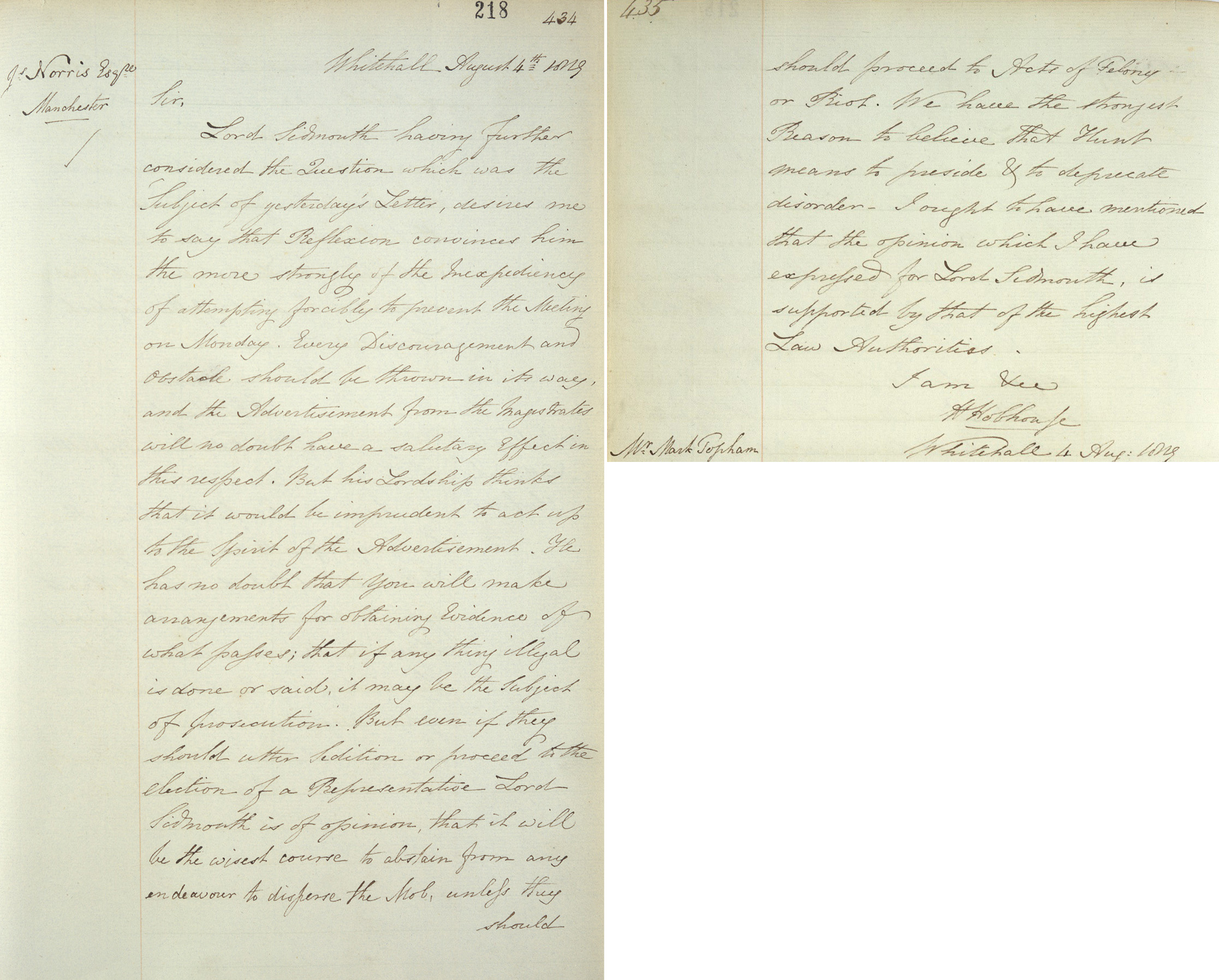
A letter sent to authorities in Manchester on behalf of Lord Sidmouth, Home Secretary, 4 August 1819. Catalogue ref: HO 41/4 f.434
This letter advised on steps to be taken before the meeting happened in St Peter’s Fields in August, 1819.
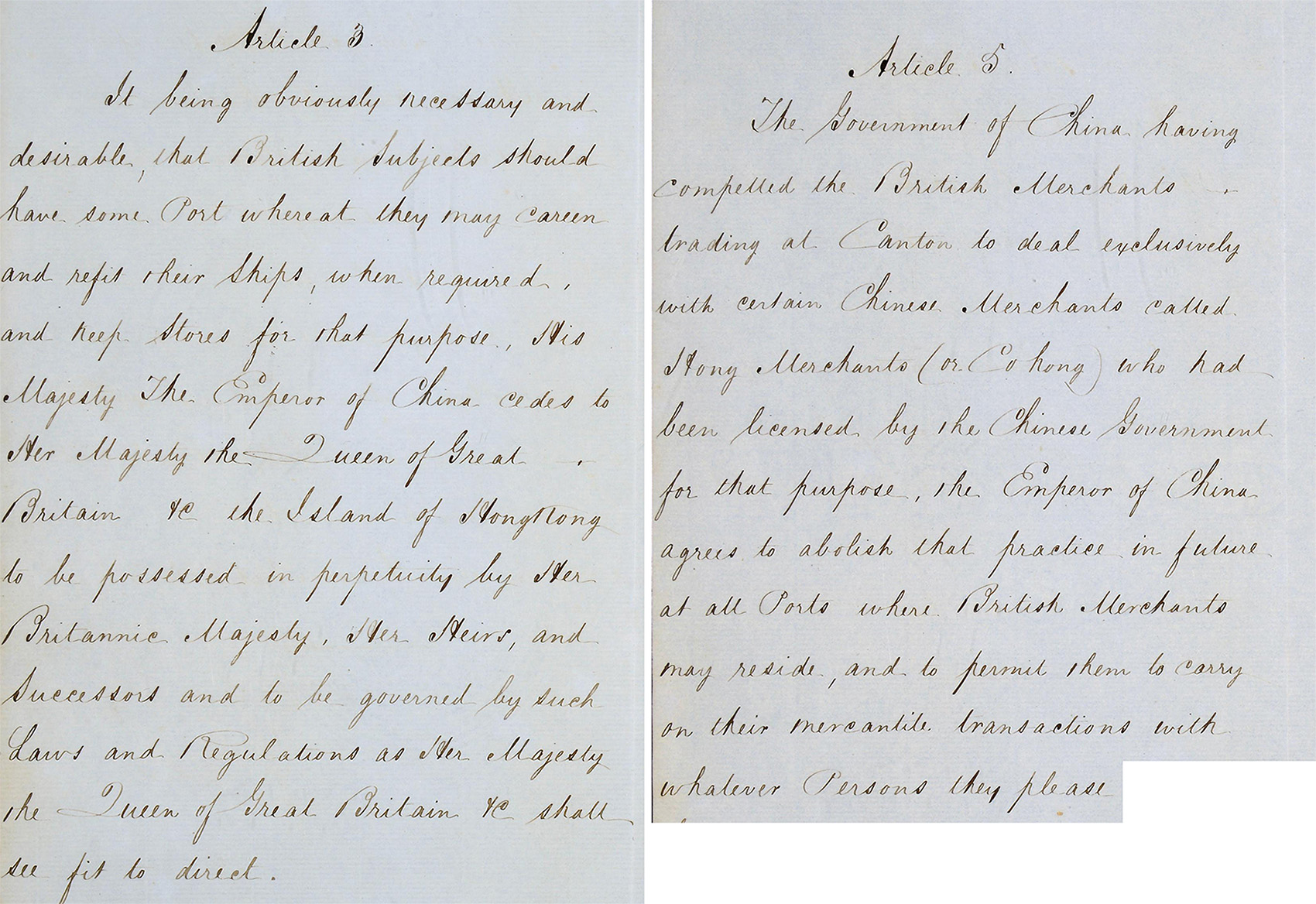
Treaty of peace and friendship, commerce, indemnity (Treaty of Nanking), 1842. (FO 93/23/1b (5))
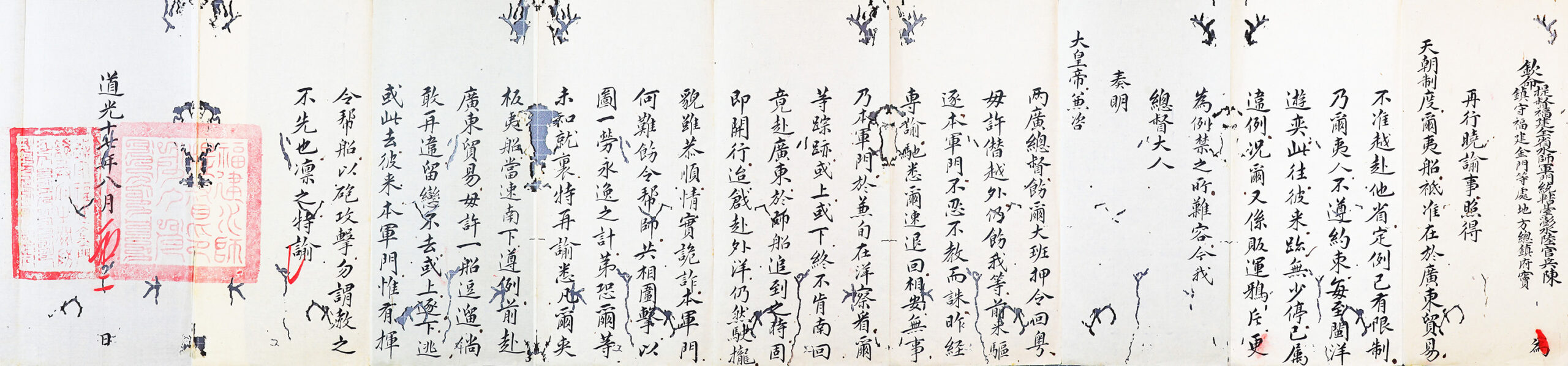
Letter to British representatives in China from Chen Huacheng, Commander-in-Chief of the naval forces in Fukien [province on the southeast coast of China] and of the troops of Formosa [former name for the island of Taiwan], and Dou Zhenbiao, Commander in Kinmen and surrounding areas. 1 September 1837. (FO 682/2462/41)
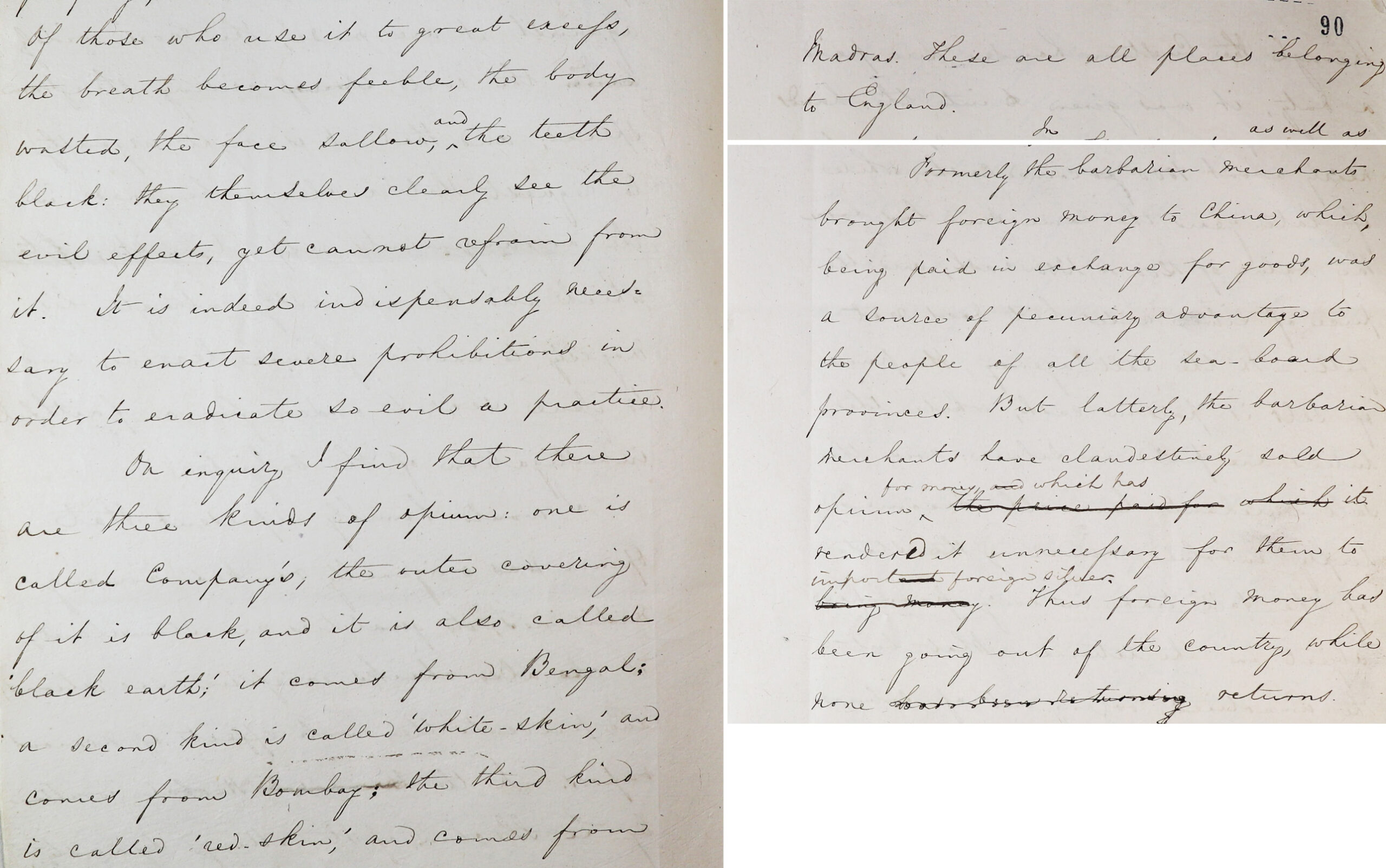
Chinese translations on opium, 1836 (FO 228/4)
This passage is introduced with the text: ‘Heu Naetse, vice-president of the Sacrificial Court, presents the following memorial [statement] to show, in regard to opium, that the more severe the interdicts [prohibitions] against it are made, the more widely do the evils arising therefrom spread…’
This was presented to the Emperor of China as part of a debate on whether to ease the prohibitions on opium or enforce them even more harshly. Both sides wanted to improve the situation that China was in. The Emperor heard arguments presenting the pros and cons of each side and eventually decided to make the prohibitions even stronger.
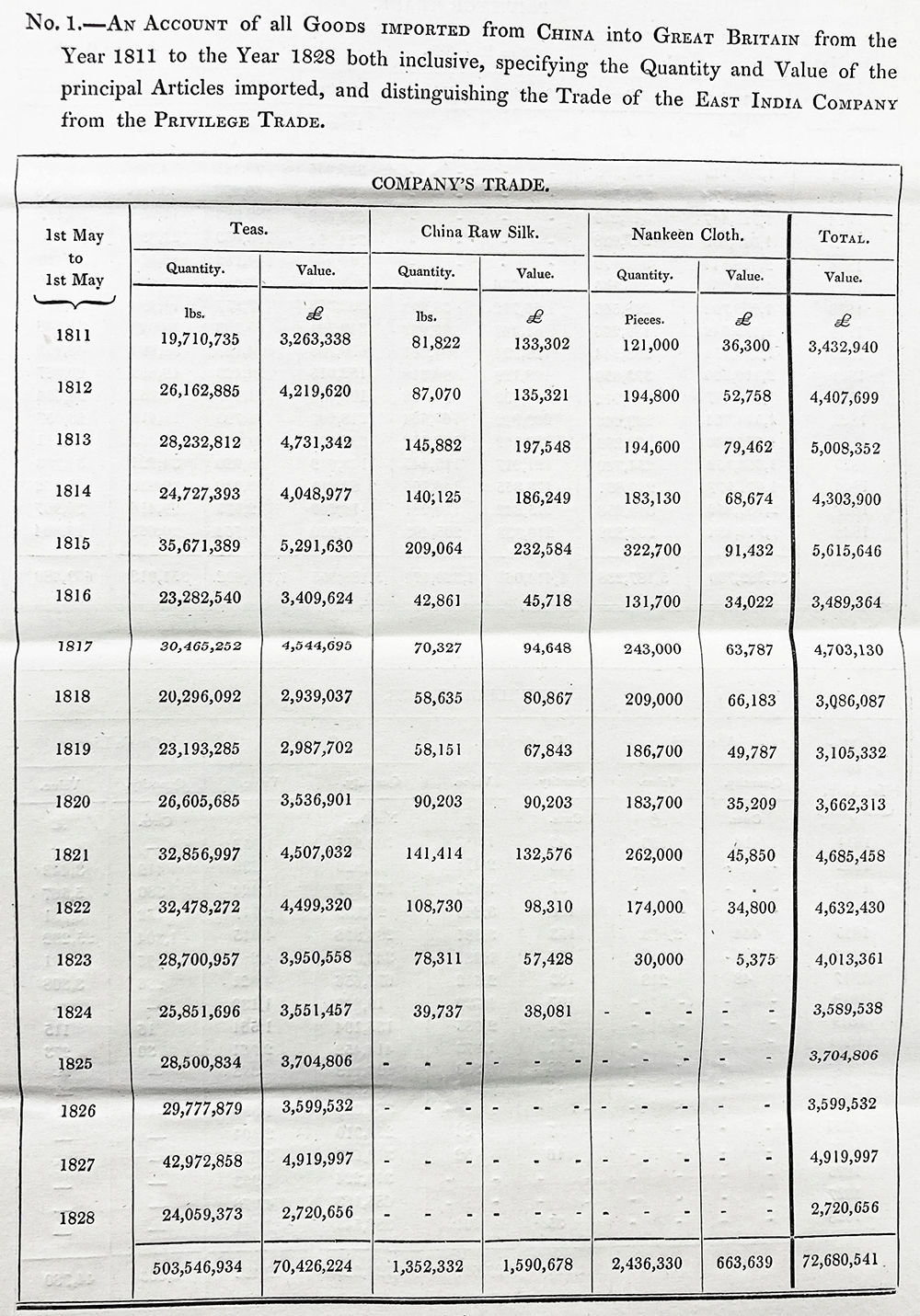
Printed Accounts, etc. of the East India Company’s China trade, 1830. (PRO 30/9/4/38)