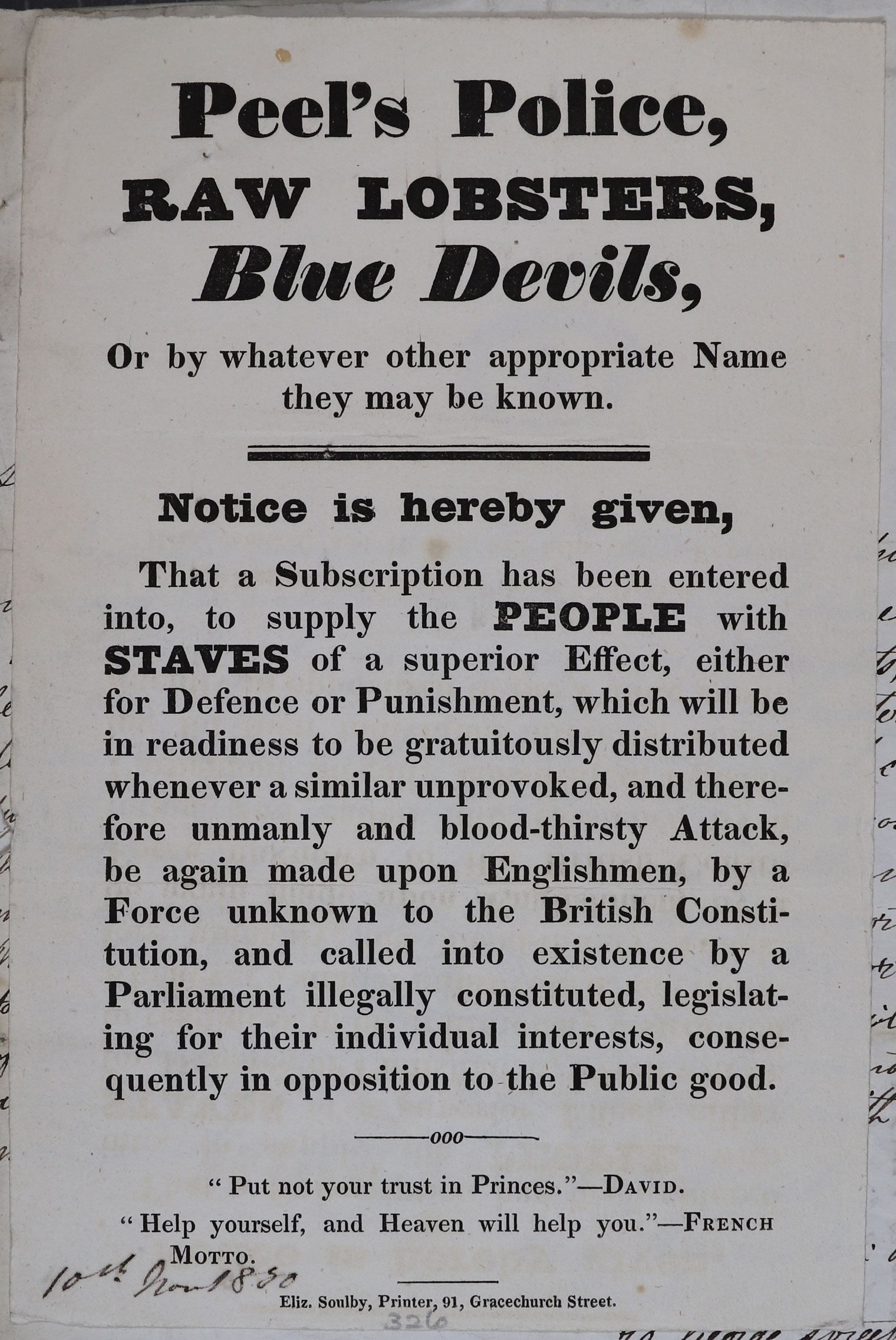
Anti-police handbill, 1830. Catalogue Ref: HO 44/21, f.326
This handbill was written a year after the establishment of the Metropolitan Police.
Lobsters are blue when raw, but when they are heated or exposed to volatile conditions, they turn red, the colour not of police uniforms, but of army uniforms.
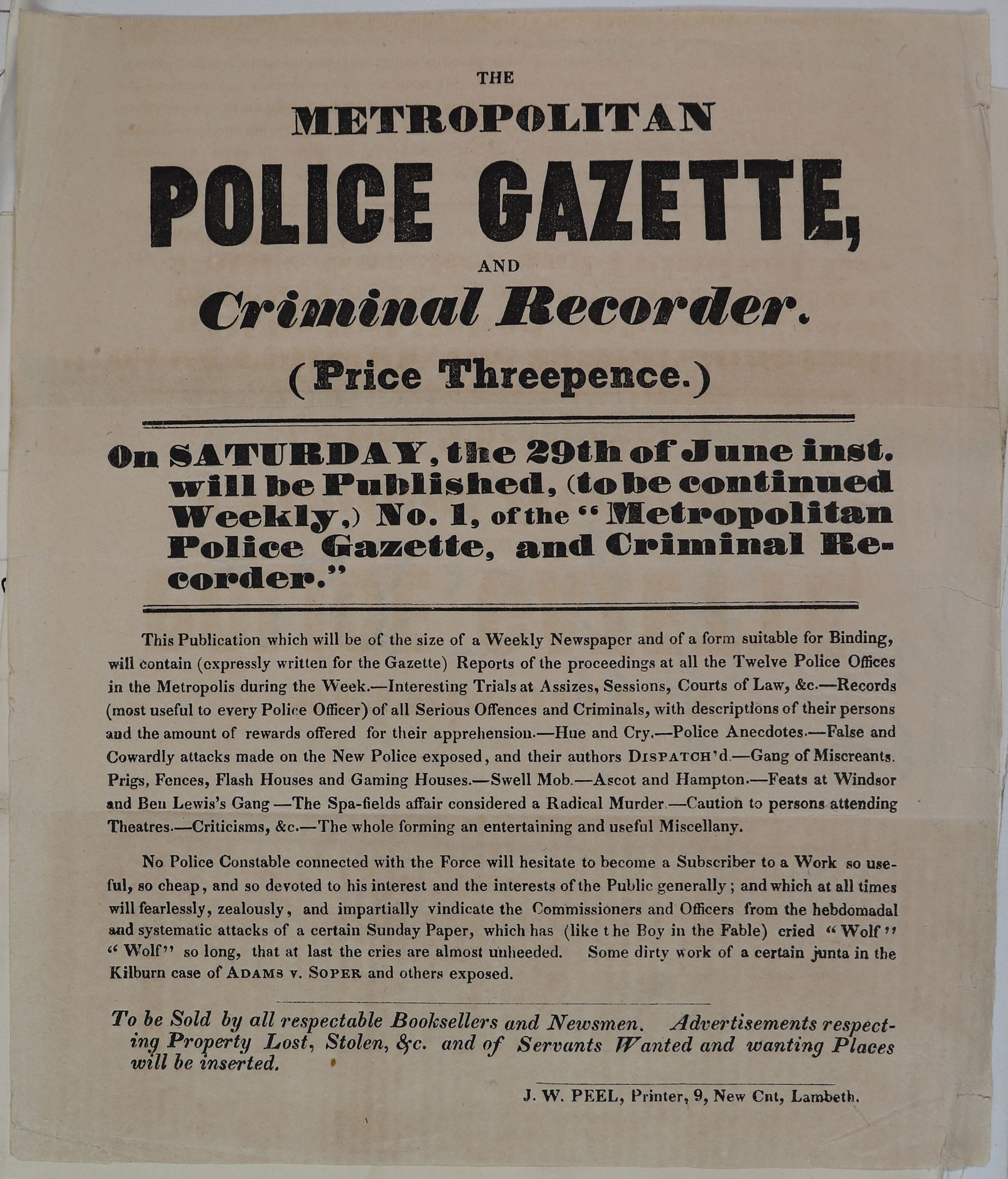
‘The Metropolitan Police Gazette and Criminal Recorder’. 1829. Catalogue Ref: HO 61/9
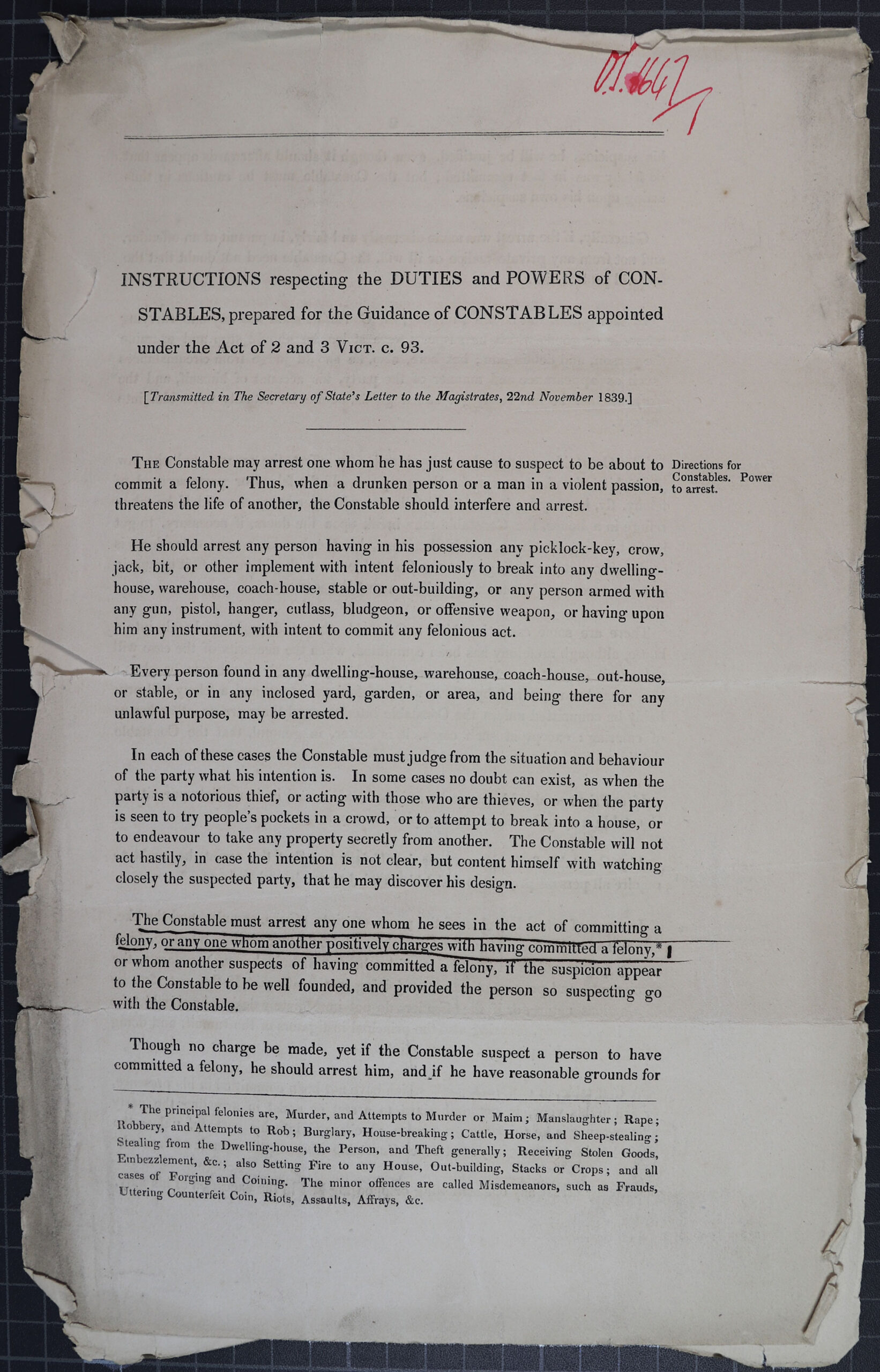
‘Instructions respecting the Duties and Powers of Constables’, 1839. Catalogue Ref. HO 45/6647
This was one of the first attempts to describe the powers of a police constable.
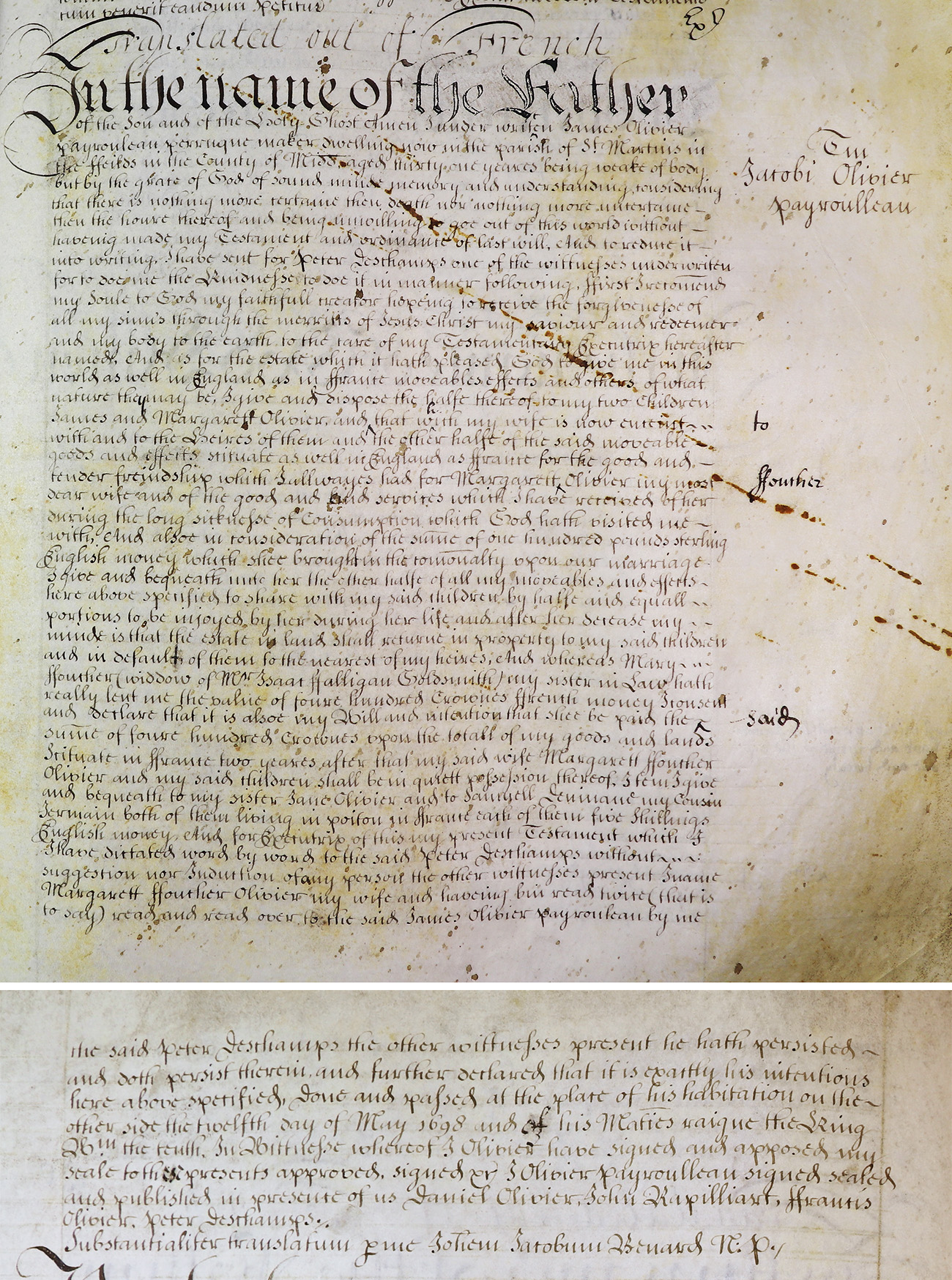
Will of James Olivier Payroulleau, Peruke Maker of Saint Martin in the Fields, Middlesex, 22nd June 1698. Catalogue ref: PROB 11/446/158.
This source is the personal will of James Olivier Payroulleau, a Huguenot refugee from west-central France, a geographical area that had been a stronghold of Protestant resistance in the early seventeenth century.
A peruke, also called periwig, was a man’s wig, popular from the seventeenth to the early nineteenth century. It was made out of long hair, often with curls on the sides, and was sometimes drawn back of the neck.
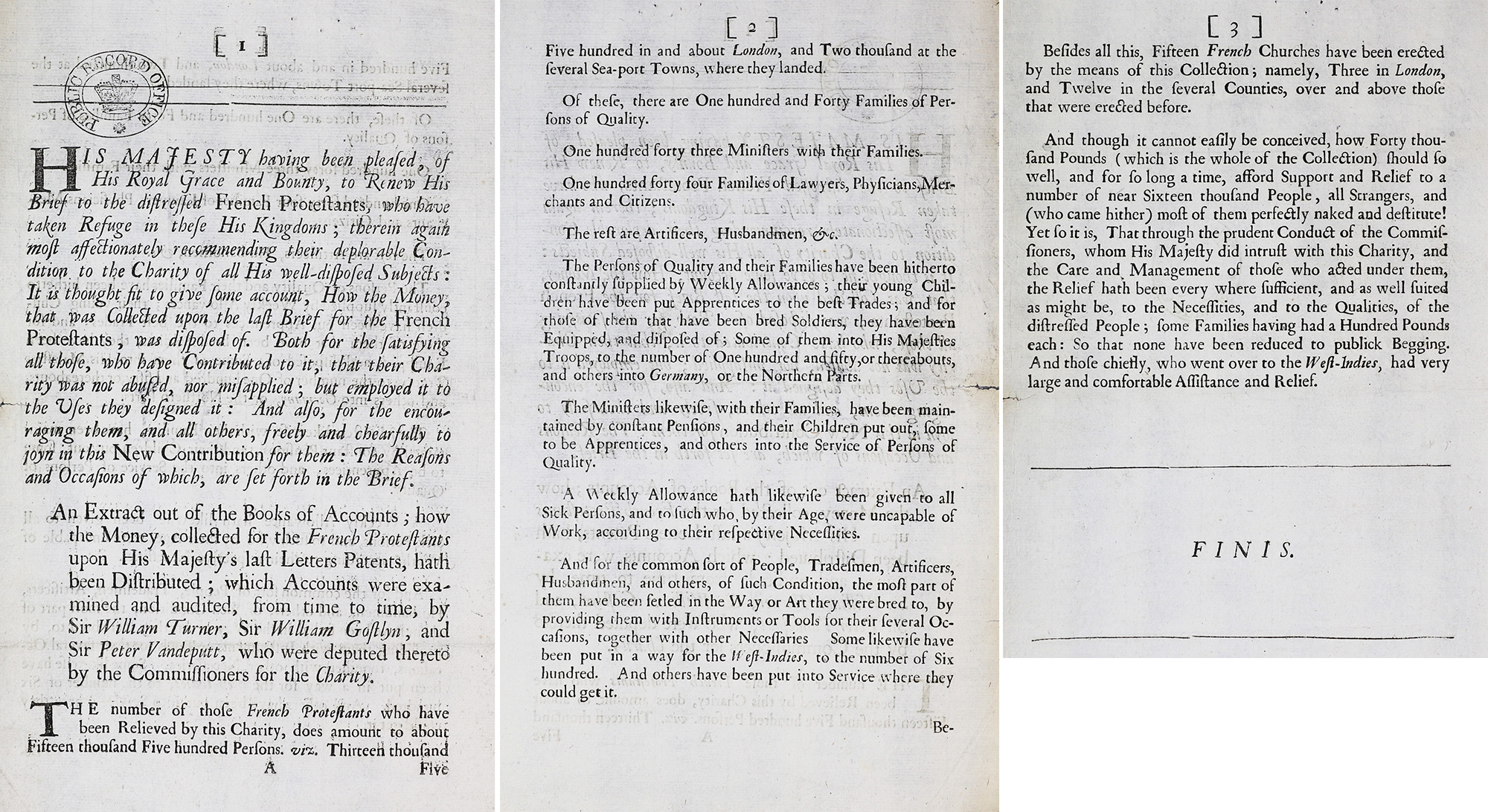
‘A printed tract, an audit of money contributed to a charity to relieve distressed French Protestants’. (c.1685-1688). Catalogue Ref. SP 32/11/203 f.347-8.
This printed tract from the reign of James II (1685-1688) provides a detailed account of how charitable donations from the English have helped Huguenot refugees.
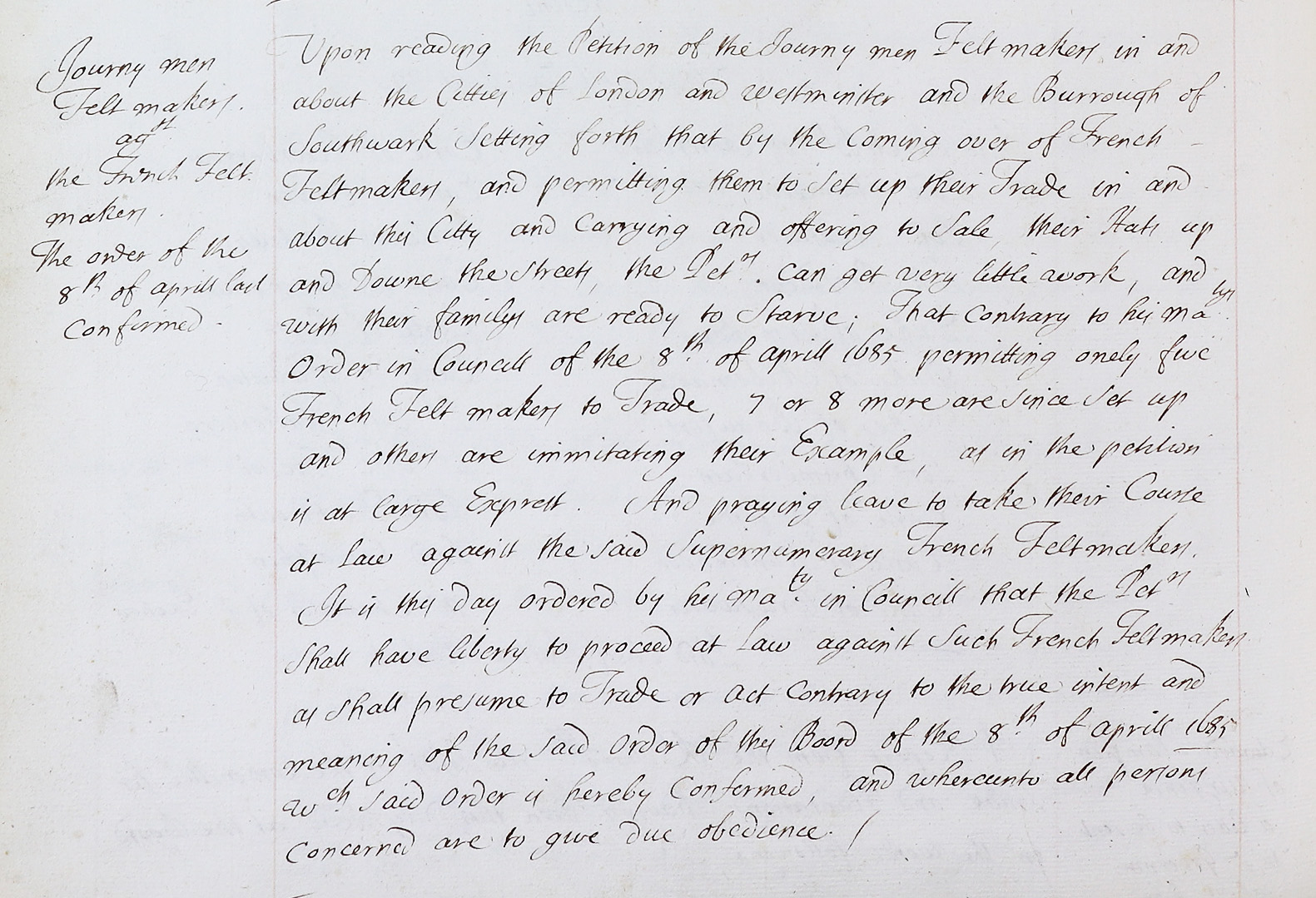
‘Privy Council: Registers. James II.’ Vol 1: 18 December 1685. Catalogue Ref: PC 2/71.f.91v
The registers of the Privy Council consist of the minutes or notes of its proceedings, its orders, some proclamations, committee reports and their papers.
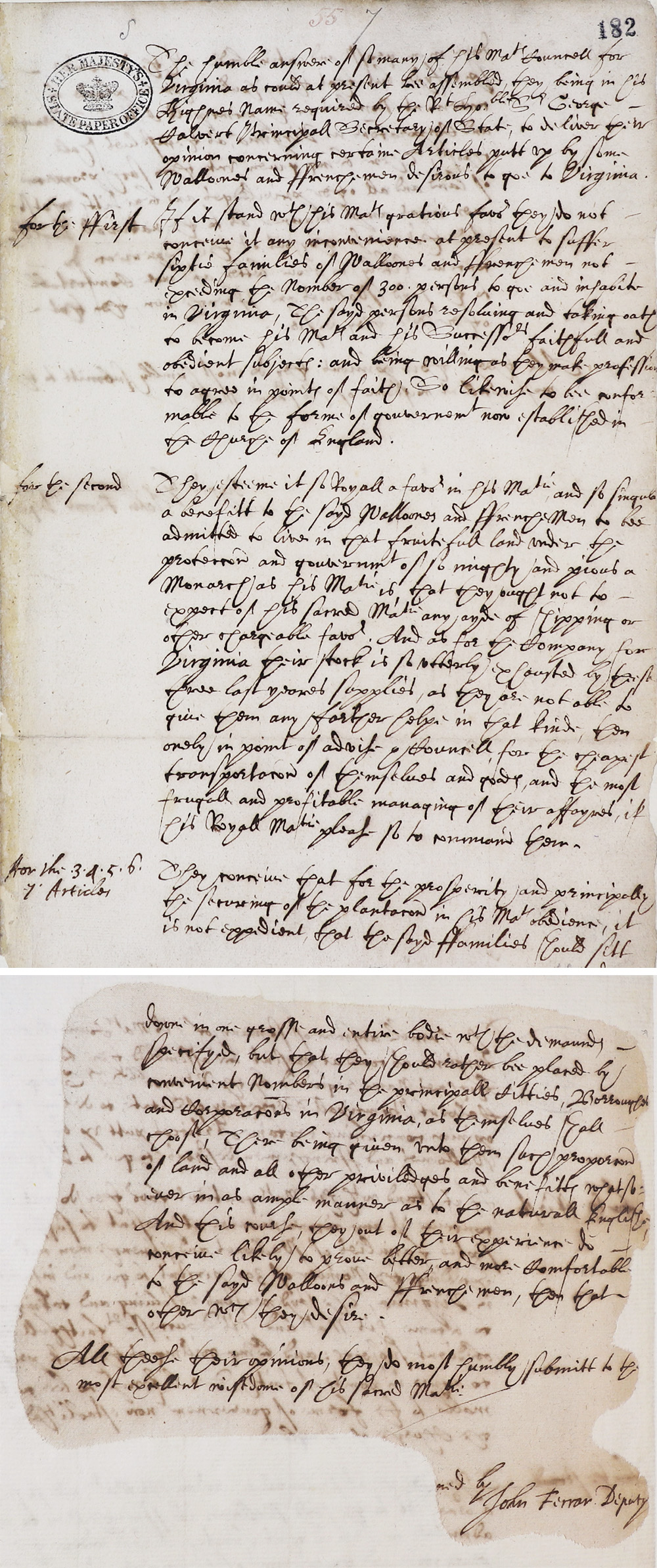
A document entitled: ‘The humble answer of so many of his majesties Councell…their opinion concerning certain Articles putt up by some Walloons and French men desirous to goe to Virginia’, 1621. Catalogue Ref: CO 1/1 f.182-3.
This is a decision from the King and his council to a request from Walloons and Frenchmen who wanted to settle in Virginia in 1621.
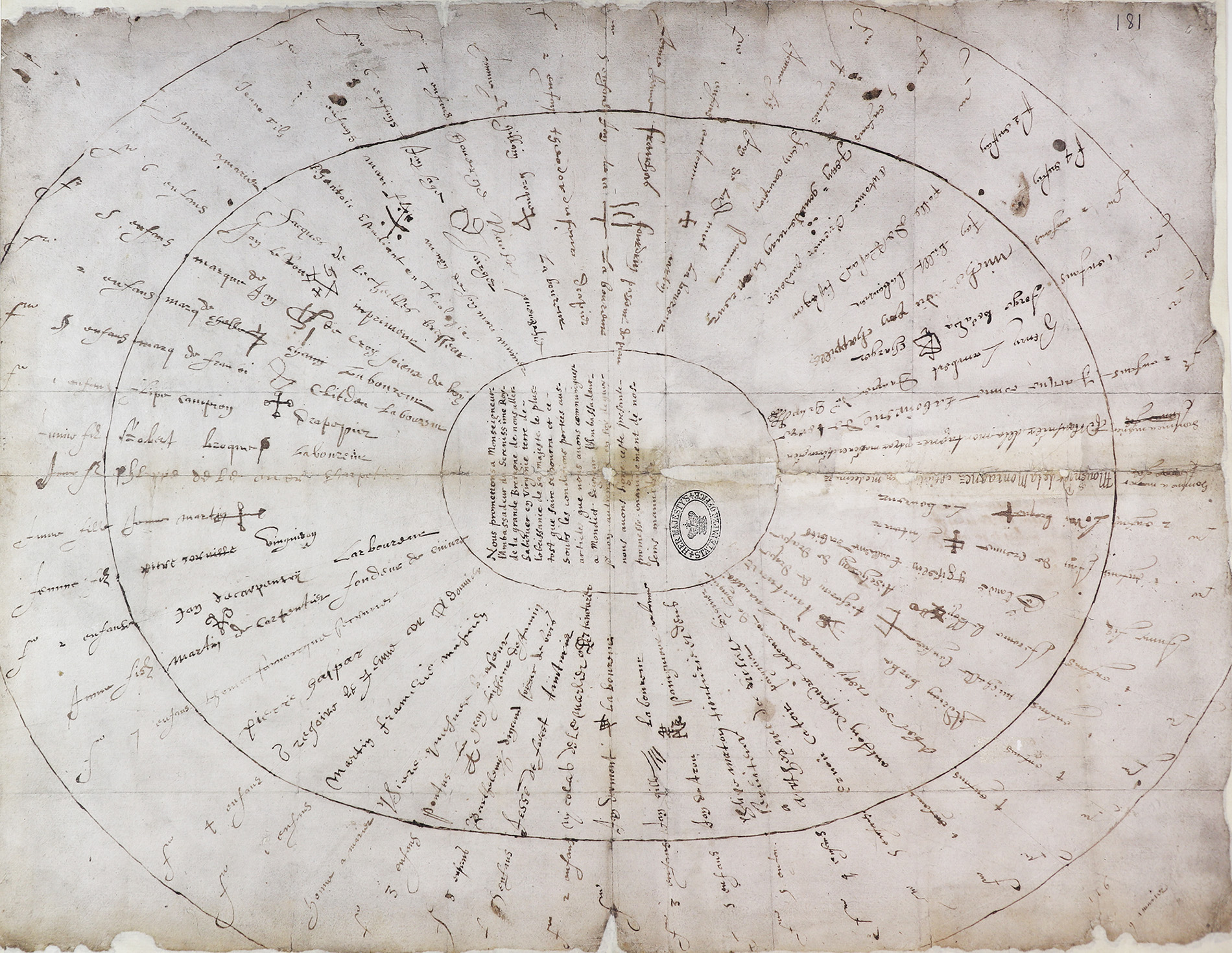
A ‘round robin’ from Walloon emigrants. Catalogue Ref: MFQ 1/565
A round robin was a document written in circular fashion to disguise the order in which it was done. This document is a promise by certain Walloons and French to go and inhabit Virginia, a land under obedience of the Kings of Great Britain’. 1621.
Walloons: French-speaking Protestants from Wallonia, the southern area of Belgium
French Protestants: Huguenots.
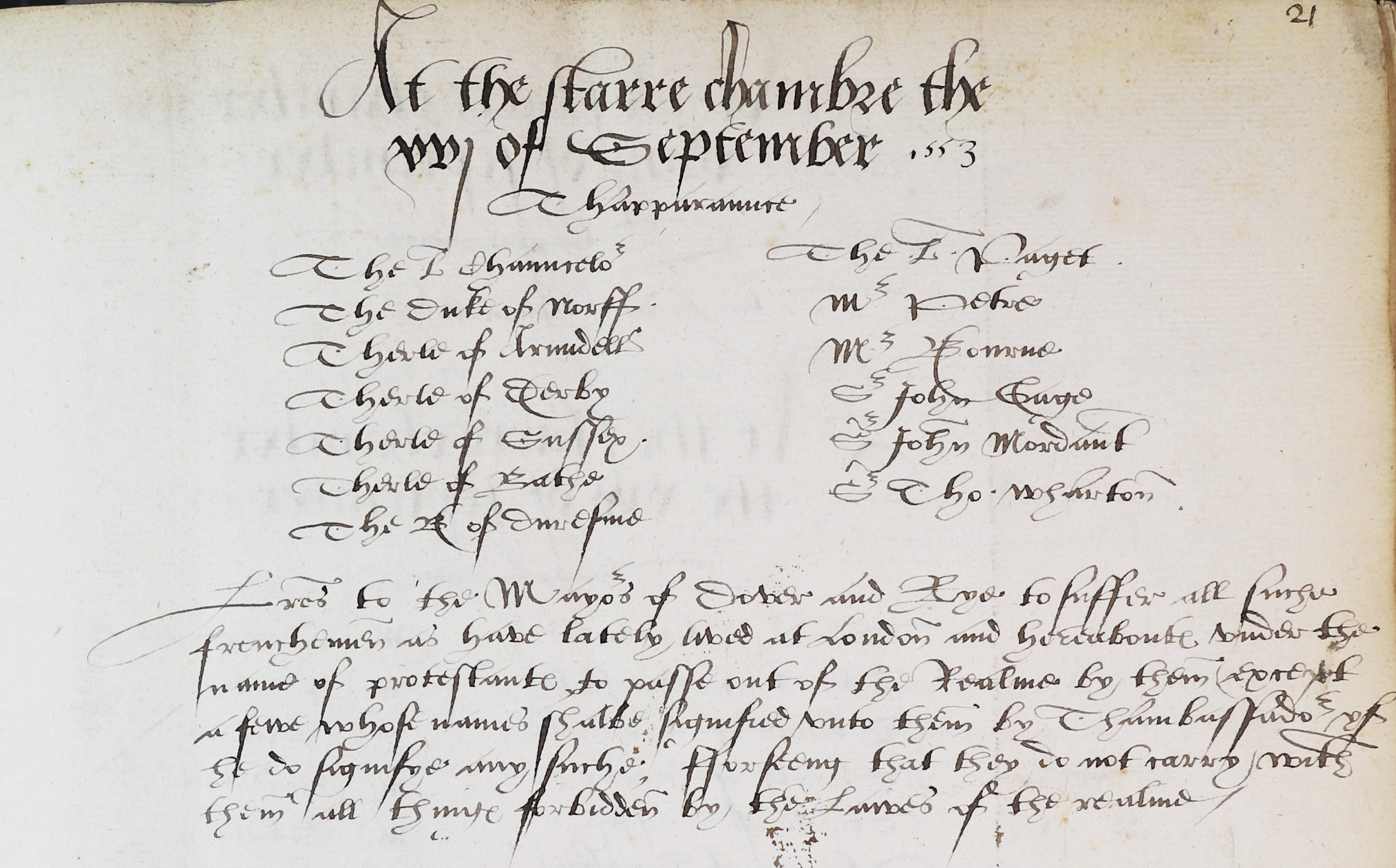
This extract comes from the Privy Council Papers, records which provide insights into the policies and issues of government, September 1553, during the reign of Mary I (1553-1558). Catalogue Ref: PC 2/7 f.21.
The Privy Council was a group of advisers to the monarch. The Star Chamber was named after the star-spangled ceiling of the room where it met in the old palace of Westminster, was effectively the judicial arm of the King’s Council. It became a separate court of law after 1485.
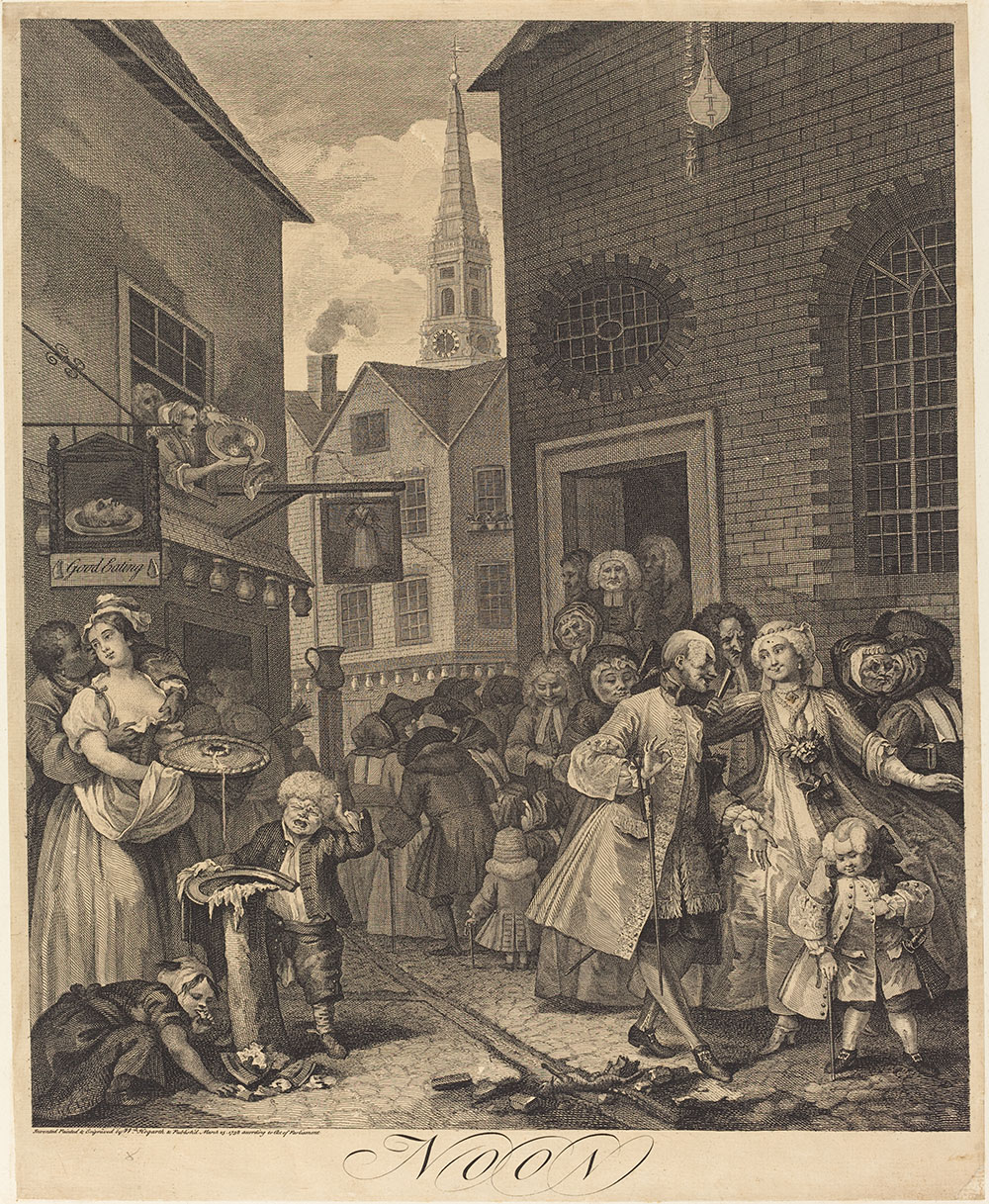
The second plate from William Hogarth’s set of four Times of Day, published in 1738 and derived from paintings made by Hogarth in 1736-7. Each of the four scenes depicts a different area of London. ‘Noon’ shown here shows elegantly dressed French Huguenots leaving the French Chapel in Hog Lane, Soho. Wikimedia Commons