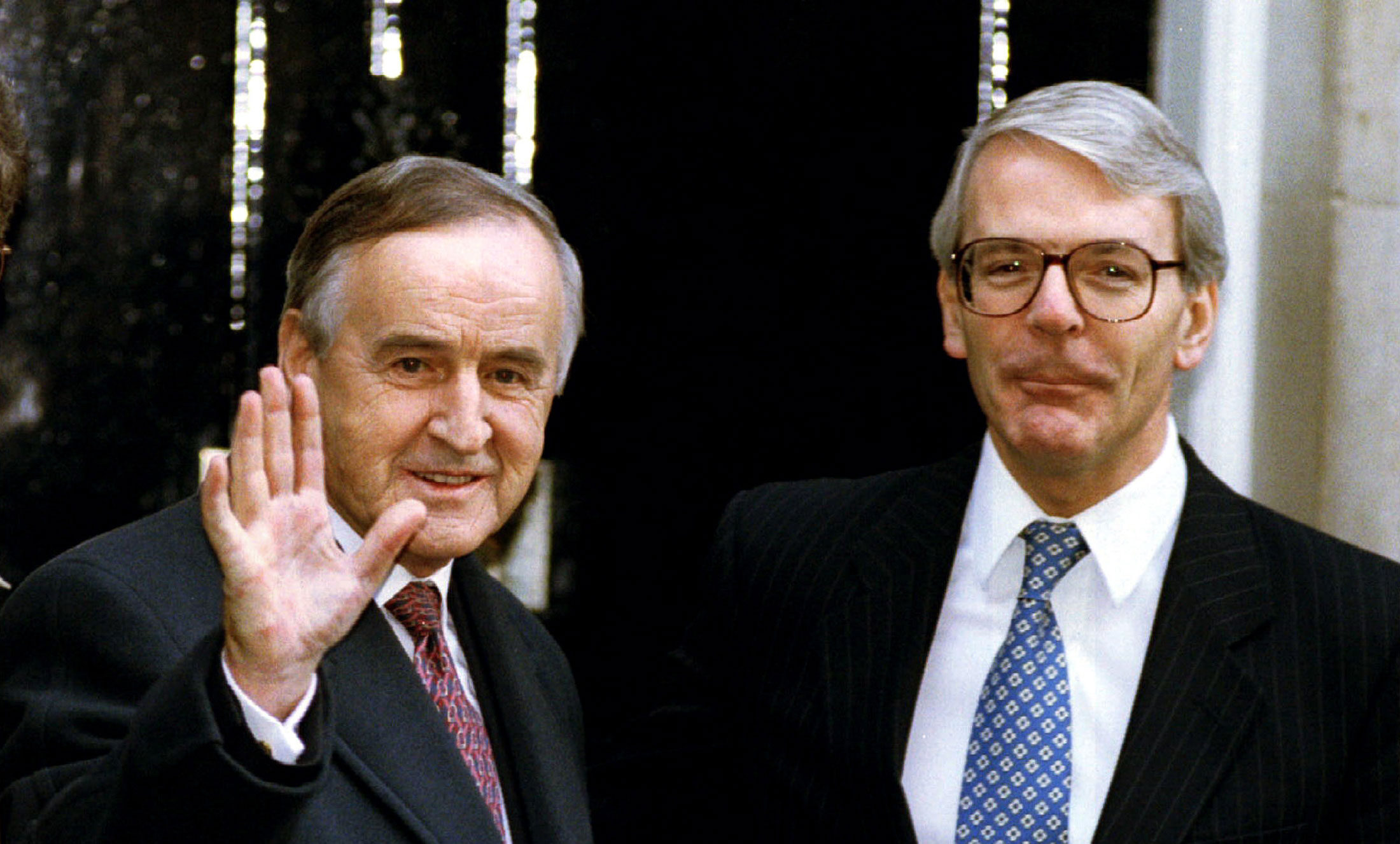
Please note, the transcripts of the resources retain any typographical errors included in the original documents.
The resource takes a twin-track approach.
Track 1: The significance of the Downing Street Declaration
The six documents raise awareness and understanding of key events, developments and processes which contributed in some way to the Downing Street Declaration and the wider peace process. The main question is :
What was the significance of the Downing Street Declaration?
In one sense the answer to this is simple: the Declaration, as Source 6 clearly states, was designed to offer the Republican movement in Northern Ireland a pathway towards an end to violent action. Of course, the process of reaching a point where the Declaration could be made was far from simple. There were many contributory factors: individuals, groups, movements; developments in Ireland and the USA. These documents provide an insight into the workings and impact of just a few of these factors.
Track 2: How historians use sources
Making effective use of sources is not some mechanical process or skill which is separate from knowledge and context. It is a craft which experts take many years to develop and constantly look to improve on. The examination paper for this part of the CCEA GCSE History course places great stock on asking students to assess how the sources they are given would be useful and/or reliable in the context of particular questions. This resource is NOT an examination practice paper. It is designed to take one step back from the exam question-based approach and to explore how historians think about documents and make use of them. The aim is that by understanding this set of fundamentals, students will be better equipped for the inevitably more limited approaches which examination conditions place on them.
Students are introduced to the two tracks in Slides 1-10 and then they can look at the documents.
Students should look at each document and complete the table, so that they are recording:
- Reasons why the Downing Street Declaration came about, why key groups or individuals were involved, why and progress was difficult;
- Impact of particular events, actions, individuals;
- Changes taking place at the time;
- How the process worked which eventually led to the Downing Street Declaration came – meetings, discussions, documents; and
- Attitudes of the various groups and individuals involved.
For each document, there are additional questions to aid students in their analysis.
Students should complete the table before discussing what they consider to be the significance of the Downing Street Declaration.
Once students have decided on a line of argument, they should develop an extended paragraph in response to the question “What was the significance of the Downing Street Declaration?” Their answer should explain why they have come to their conclusion what evidence from the sources supports their assessment.
Download the resource pack below:
Key Stage Four Resources - Lesson One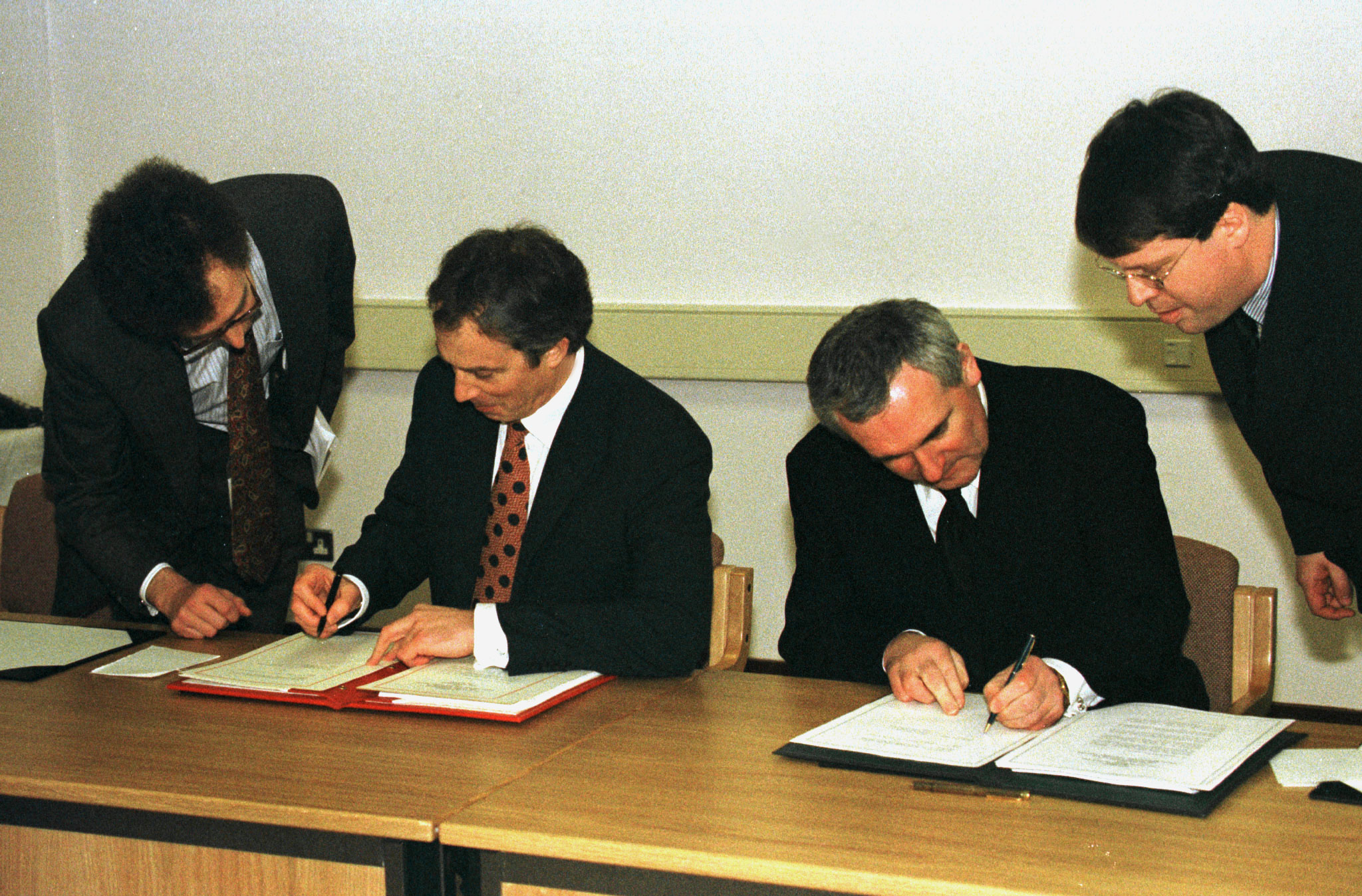
Please note, the transcripts of the resources retain any typographical errors included in the original documents.
This resource takes a twin track approach to the subject matter.
Track 1: The significance of the Belfast (Good Friday) Agreement of 1998
The Agreement was clearly an event of huge historical significance. However, it can sometimes be difficult to articulate why this was the case. This collection of documents aims to help students to meet this challenge. In the first instance, they are presented with two documents in which prominent political figures clearly think the Agreement was significant and successful. They are then asked to examine six more documents which all illuminate some aspect of the attempts to implement the Agreement and make it work. In the process the documents also provide evidence of the difficulties faced and the determination of the participants to overcome these difficulties.
Track 2: How historians use sources
This resource is NOT an examination practice paper. It is designed to take one step back from the exam question-based approach and to explore how historians think about documents and make use of them. The aim is that by understanding this set of fundamentals, students will be better equipped for the inevitably more limited approaches which examination conditions place on them. In this instance, students are introduced to the concept of a line of argument. This is a challenging idea, and it is difficult to master. With this in mind, we have provided some examples of lines of argument relating to the key issue of the significance of the Agreement for relations between Great Britain, Northern Ireland and Ireland.
The five possible lines of argument are:
- The Agreement ended all of the tensions over Northern Ireland between the UK and Ireland.
- The Agreement failed to ease tensions over Northern Ireland between the UK and Ireland.
- Some groups actively opposed the Agreement even after it was signed.
- All sides gave up on the Agreement after it was signed.
- Despite the problems, all sides worked hard to make the Agreement work and this helped to ease tensions over Northern Ireland between the UK and Ireland.
In each source we ask students to consider which argument the document could be used to support. For each document, there are additional questions to aid students in their analysis.
Students should complete the table before discussing which of the lines of argument are supported by the sources. It is possible that several are supported so they will then need to make a judgement about which has the most evidence and is the most convincing.
Once students have decided on a line of argument, they should develop an extended paragraph in response to the question “What was the significance of the Belfast (Good Friday) Agreement?” Their answer should explain why they have chosen the line of argument and what evidence from the sources supports it.
Download the resource pack below:
Key Stage Four Resources - Lesson Two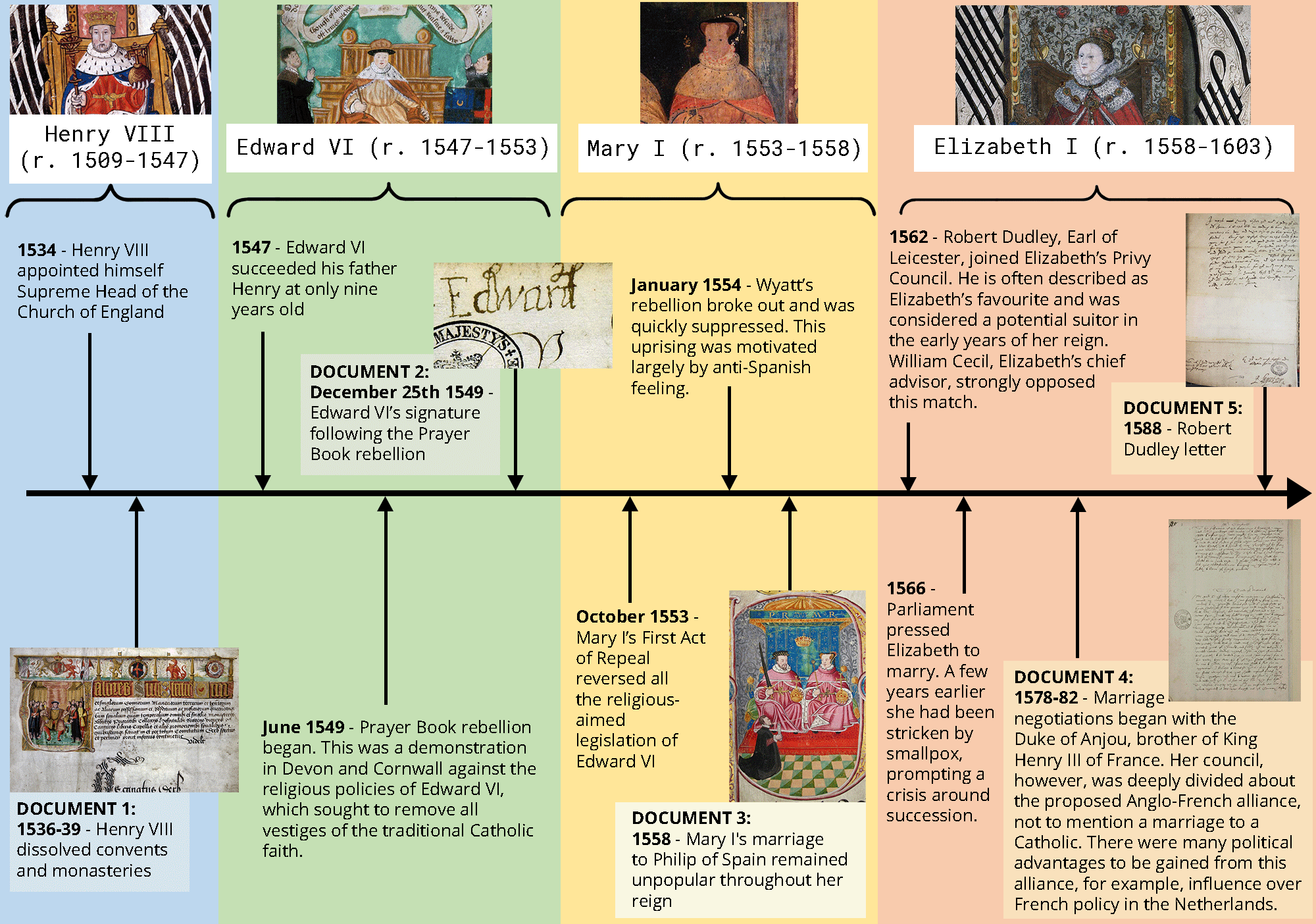

Welcome to Archives Live: D-Day! This event was broadcast live on Monday the 3rd of June 2024.
Below are links to our resource pack and accompanying slides. There are activities students can do before, during and after the event.
Download Powerpoint presentation
Introduction
This resource pack is designed to prepare and support students to take part in the Archives Live: D-Day live event. The resources and activities in this pack have been broken up into three different sections: before, during and after the live event. Before the event, there are some teacher notes for your use, including historical background information about D-Day. There is also an accompanying PowerPoint presentation which you can use with your class prior to the event, with activities and questions to facilitate pupil discussion. The resources and activities used in the PowerPoint are also included in this resource pack. These pre-event activities should last around 20 minutes, but with the possibility of extending this with further discussion. During the event, there are resources for you and your students to use and refer to in this resource pack. Please refrain from showing the ‘during the event’ resources or activities to students until the live event so as not to give anything away! After the event, there are some follow up activities for use in your classroom included at the end of this resource pack.
Resource packBy 1944 Germany occupied large parts of Europe. The Russians had been doing most of the fighting against Germany in the East and wanted the USA and the United Kingdom to launch an invasion in the West, to ease the pressure on them. Opening a second front would mean that Germany would have to divide their army, making for fewer troops in each place. The USA and the United Kingdom agreed this was necessary and in 1943 they came up with a complicated plan called Operation Overlord.
This involved landing thousands of soldiers on five beaches in Normandy, in northwest France. From there they hoped that their forces could push into France and drive out the German army.
It was the largest seaborne invasion ever assembled. Soldiers from all over the world participated. The countries included, USA, United Kingdom, Canada, Belgium, Norway, Poland, Luxembourg, Greece, Czechoslovakia, New Zealand, Australia and 177 French commandos.
On 6th June 1944, 156,115 Allied troops landed by sea and air on five beachheads in Normandy, France. The five beaches were codenamed Gold, Juno, Omaha, Sword and Utah. It was the start of Allied operations which would ultimately liberate Western Europe, defeat Nazi Germany, and end the Second World War in Europe.
Planning Operation Overlord
Planning had to be meticulous and needed to avoid the same mistakes as previous attempted invasions, such as the disastrous failed assault on Dieppe in 1942.
The careful planning involved reconnaissance of the French coast and included using mini submarines known as X-Craft. Soldiers also secretly swam ashore tasked with taking samples of the sand on the proposed landing beaches. This was to make sure the beaches could handle the weight of the tanks, trucks and other vehicles that would take part in the invasion. Major Logan Scott Bowden was part of this heroic clandestine effort, and we will explore his story more during the live event.
Deception
The Germans knew that the Allies would plan an attack, but they believed it would concentrate on other locations in France, including Calais. Calais was the closest French port to England. The Allies used various tactics to trick the Germans into thinking the landings would happen at various coastal locations. They utilised their vast spy network in Occupied France. Many of these individuals acted as double agents including Elvira Chaudoir aka agent ‘Bronx’ , whose involvement will be explored in the live event. They helped divert the German army’s attention by spreading false information about possible invasion points.
The Invasion
On 5th June a fleet of 3,000 landing craft, 2,500 other ships, and 500 naval vessels began to leave ports in England headed for France. That night thousands of men were dropped by parachute into the landing zone. Their task was to capture important towns, roads, and bridges in Normandy so that the soldiers from the beaches could make their way inland.
On the morning of 6th June, the fleet of ships arrived at the Normandy coast. The landing craft were boats that could carry soldiers and tanks. These ships could land on the beaches, drop off their soldiers and tanks, and then return to the larger ships to bring back more men.
The five beaches chosen as the sites of the landings were spread along a 30 mile (48km) stretch of coastline. British soldiers landed on Gold and Sword Beach, Canadian soldiers landed on Juno and the American soldiers landed on Omaha and Utah beaches. Ramsay Bader, a tank driver as part of the 147th (Essex Yeomanry) Field Regiment, was one of many soldiers who landed on Gold Beach.
Before the first soldiers landed on the beaches, Allied ships and planes fired at German forts. They hoped to destroy them, but some of the forts were so well built that the Germans were protected and were able to attack the Allies.
On the British beaches the soldiers made good progress, they pushed inland. The Americans faced strong defences on one of their beaches and took longer than they had planned to move off the beach. However, by the end of the day all five beaches were in the hands of the Allies.
Aftermath
The D-Day landings came at a high cost. More than 200,000 Allied soldiers had been killed or wounded by the end of Operation Overlord. The Germans suffered a similar number of casualties. There were insufficient numbers of medical staff to deal with the level of casualties. Those who were present, witnessed terrible scenes and tried desperately to save as many of the injured as they could. Iris Ogilvie (Bower) was of only two women nurses in Normandy in the aftermath of the D-Day landings. Iris arrived at the Juno beachhead on 12th June 1944. You can explore her experience further as part of the suggested post-event activities.
As the battle raged on and the Allies moved inland towards Paris, many French civilians were also killed during bombing raids and battles. Although the war would continue for another year, D-Day was the beginning of the end for Nazi Germany. It is considered one of the most successful operations in military history.
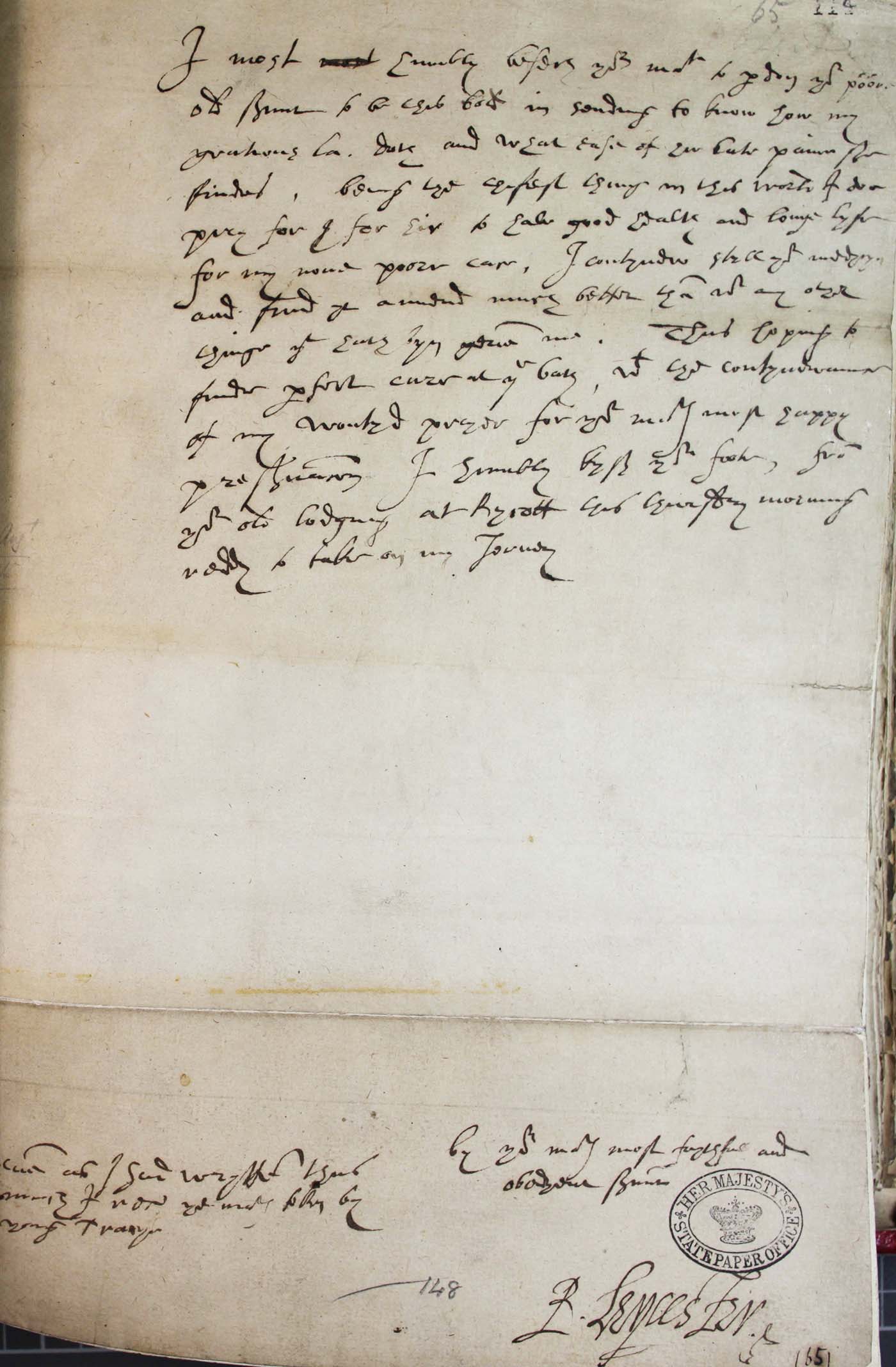
Robert Dudley letter to Elizabeth I, 1588. Catalogue ref: SP 12/215 f.114

Letter from Francis Walsingham to William Cecil, 1578. Catalogue Ref: SP 83/8, f.55
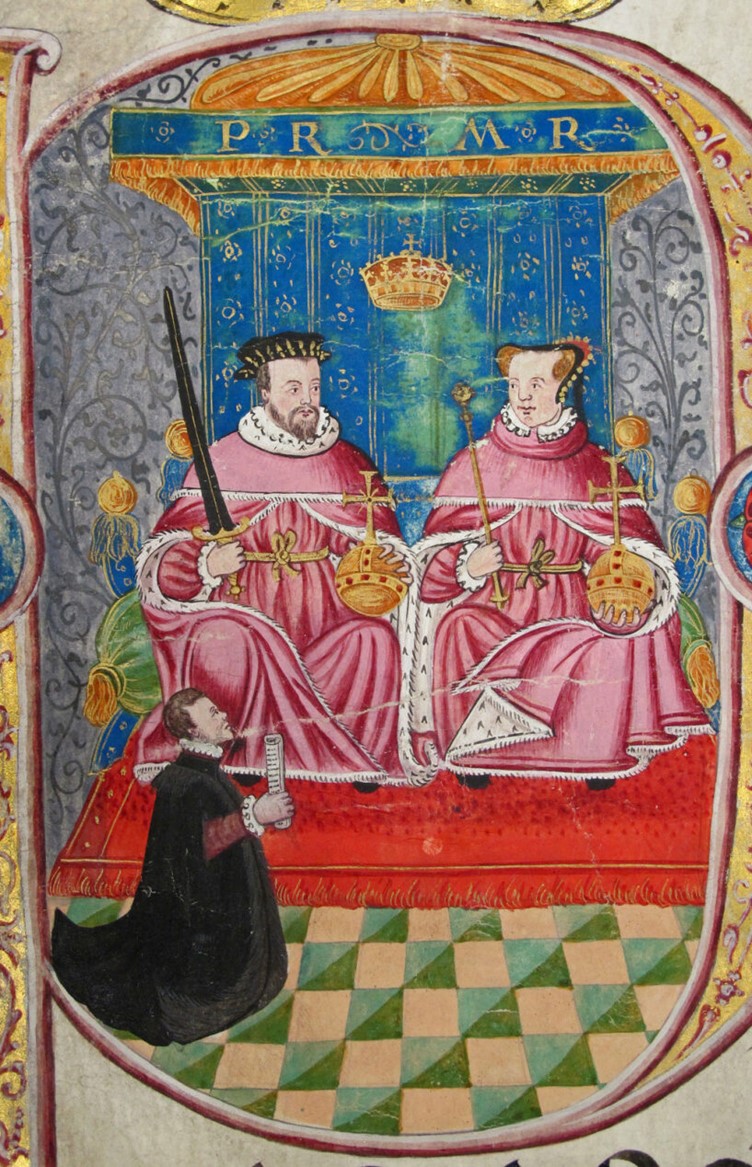
Image of Mary I and Philip, 1558. Catalogue ref: KB 27/1185
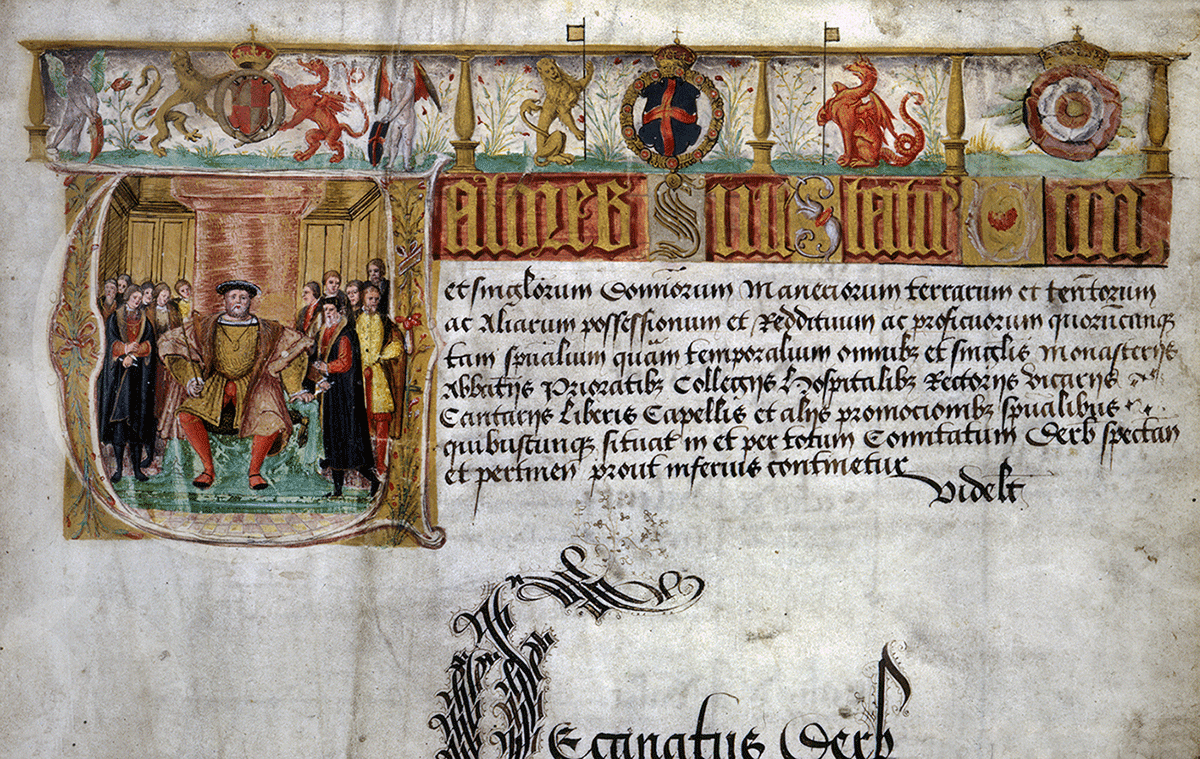
Please note, the transcripts of the resources retain any typographical errors included in the original documents.
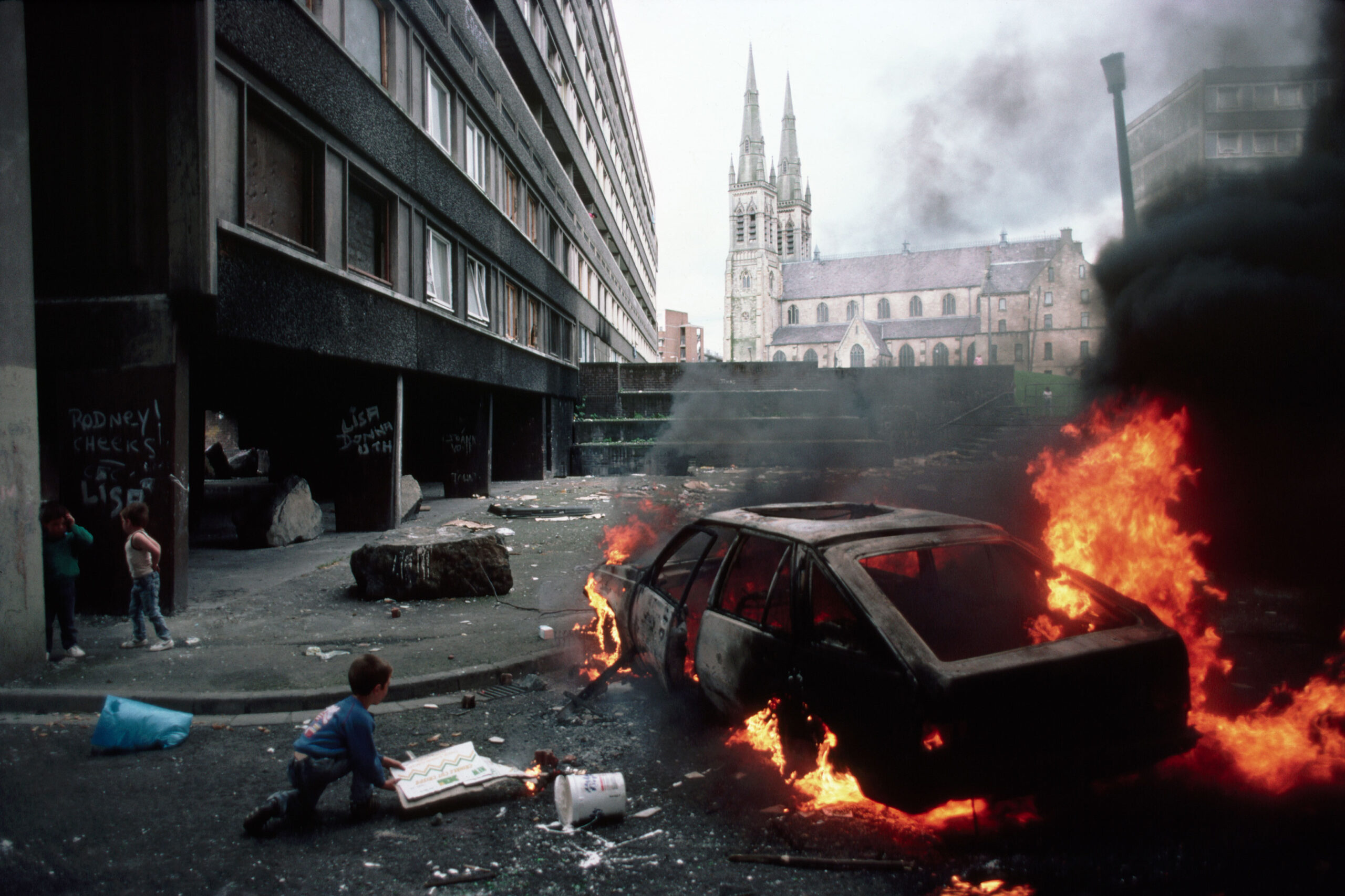
The six documents selected within this package reveal the difficulties of making peace at two selected snapshots of time in the peace process in Northern Ireland: June 1996 and June 1997, as well as how and when progress was made at these points.
Although this is ‘packaged’ as a single lesson, it is likely to take at least two lesson periods of learning time to complete if all students use all the sources. Alternatively the sources could be shared within small groups with each student working on a single source and feeding back.
Students are encouraged to analyse each document, looking for:
- any evidence that the talks are going well or that progress is being made;
- any evidence that there are still challenges or barriers to peace; and
- the reasons why making peace was difficult
Learning objectives
By the end of the session, students will:
- know two of the key moments on the road towards the Belfast (Good Friday) Agreement;
- understand why it was so difficult to make peace; and
be able to use contemporary documents to deepen their understanding of the peace process.
Download the resource pack below:
Key Stage Three Resources - Lesson One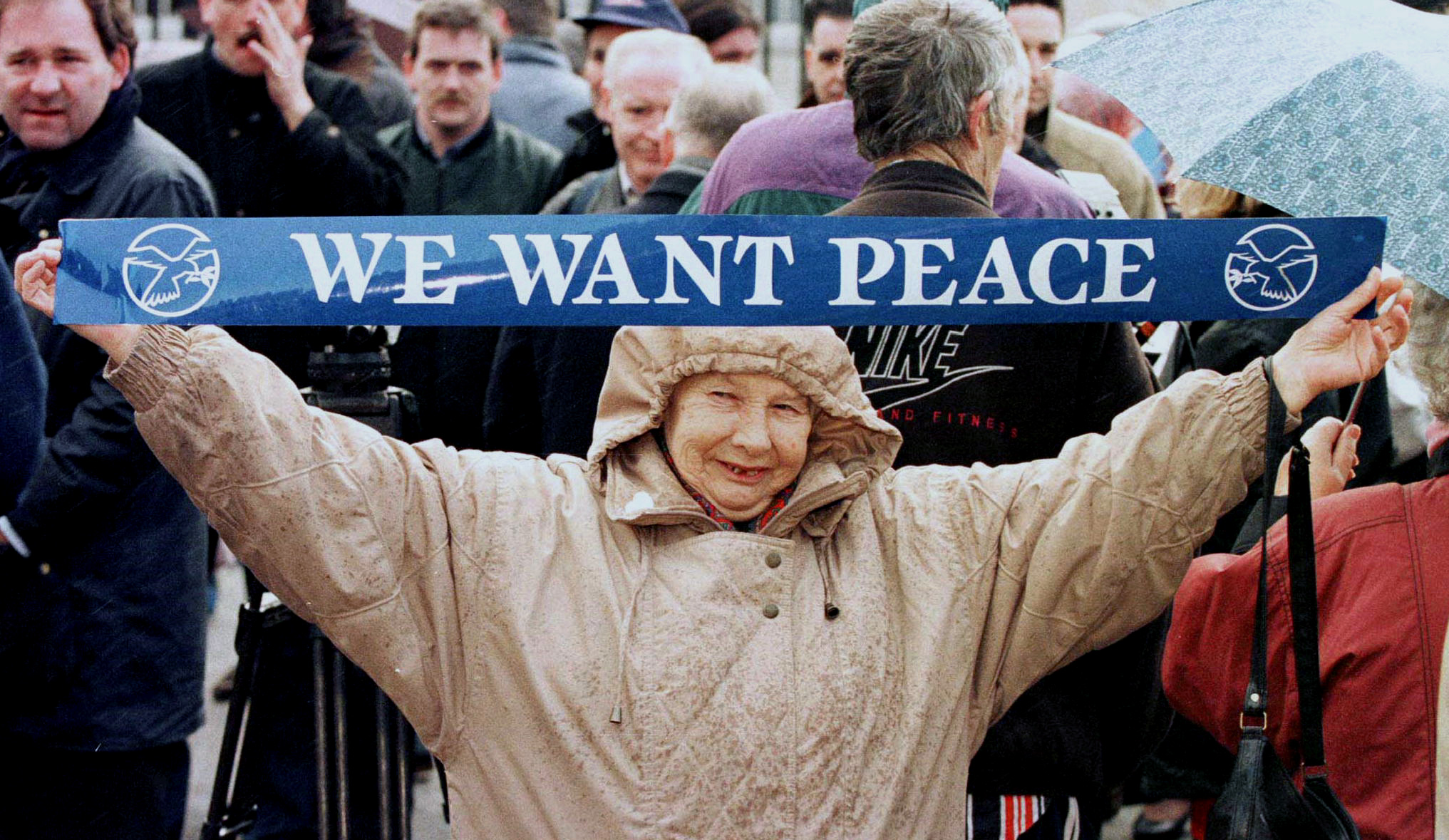
Please note, the transcripts of the resources retain any typographical errors included in the original documents.
Key Stage Three Resources - Lesson Two