
The wool merchant Laurence of Ludlow, who had become one of the richest men in England, was granted a licence to fortify his home with a stone wall and ‘crenellations’ [rectangular gaps at intervals along the wall that allowed defenders to shoot arrows/missiles from within the castle].

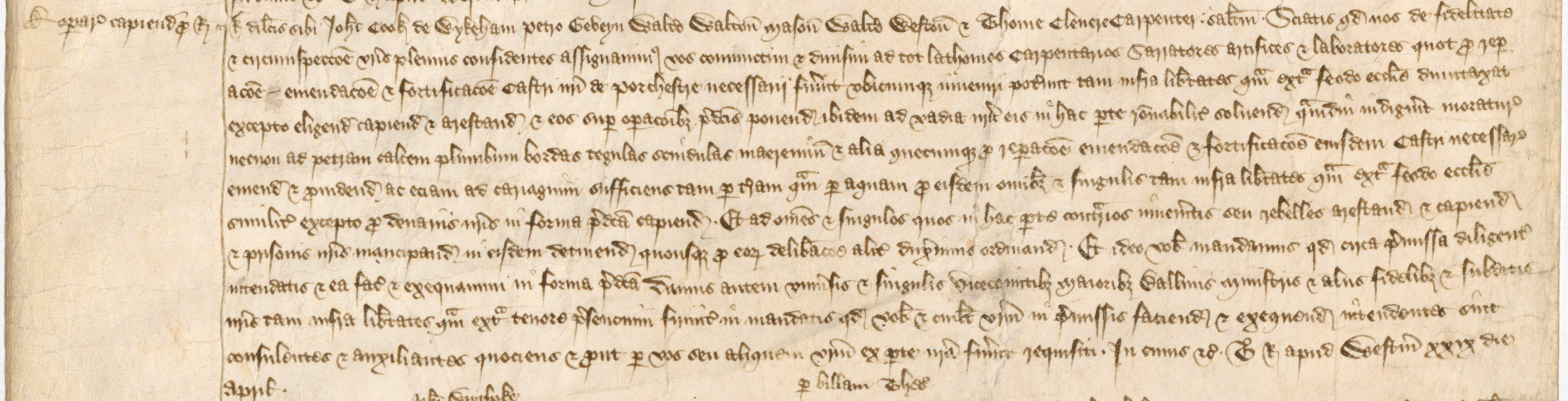
This document reveals that those given the responsibility of overseeing the repair and expansion of Portchester Castle struggled to find craftsmen and labourers to work on the project. The King gave them the authority to ‘arrest’ people and force them to work on the castle. If anybody who was arrested refused to work on the castle, they were to be imprisoned.
This document records that, during the last three years of the reign of King Richard II, at lot of building work took place at Portchester Castle. A new range of domestic buildings – hall, kitchen, chambers and offices – was constructed.

King Edward II ordered that Portchester Castle should be garrisoned with soldiers if there was any sign that England might be invaded by forces from abroad.
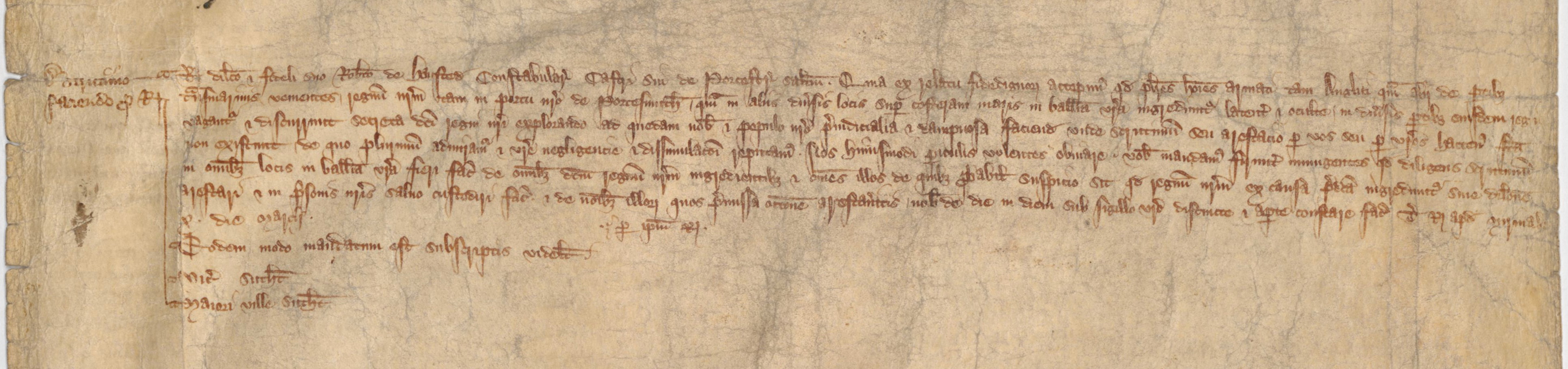
This document reveals that King Edward II ordered that Portchester Castle should be garrisoned with soldiers if there was any sign that England might be invaded by forces from abroad. If this were to happen, any people who were suspected of being spies within the castle were to be arrested.
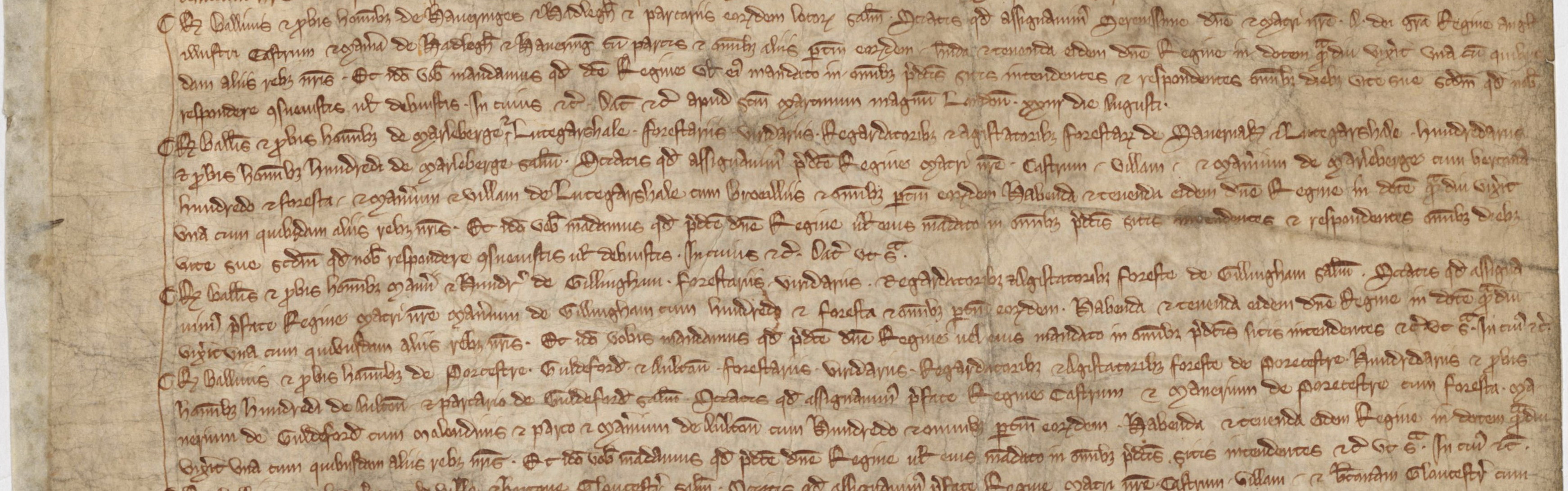
In 1273, King Edward I gave Portchester Castle to his mother.

In 1175 a group of carpenters and masons, led by Alnoth the Engineer, travelled to Suffolk to dismantle Framlingham Castle on royal orders. King Henry II ordered that the castle should be knocked down because Earl Hugh Bigod had joined a rebellion against his rule.
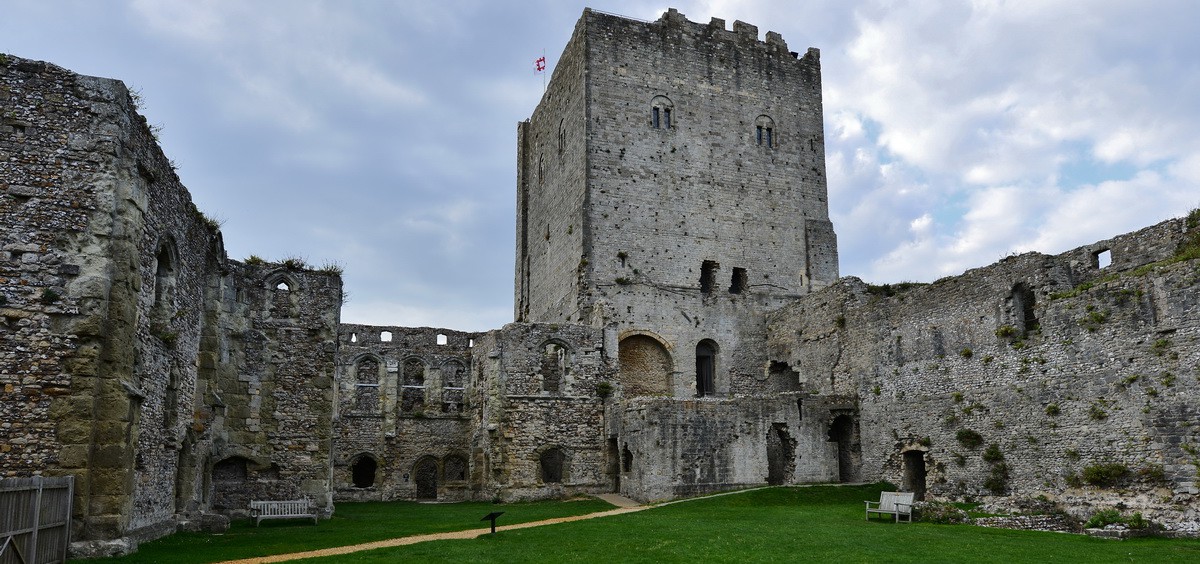
The castle as we know it today was introduced into England in 1066 during the Norman invasion led by William the Conqueror. After their victory at the Battle of Hastings, the Normans settled in England. They constructed castles all over the country in order to control their newly-won territory, and to pacify the Anglo-Saxon population. These early castles were mainly of motte and bailey type. The ‘motte’ was made up of a large mound of earth with a wooden tower on top, while the ‘bailey’ was a large ditch and bank enclosure which surrounded the motte.
These timber castles were quite cheap and very quick to build. However, the timber castles did have disadvantages. They were very vulnerable to attacks using fire and the wood would eventually start to rot. Due to these disadvantages, King William ordered that castles should be built in stone. Many of the original timber castles were replaced with stone castles.
Over time, stone castles were built in different architectural styles as builders experimented with castle-building techniques. In their infancy, castles were primarily military fortifications used to defend conquered territories from attack. The strategic location of the castle was paramount. However, once the Normans began to consolidate their control over England, castles began to take on a variety of different roles. Castles could serve as a centre for local government, administration and justice. They were also used by powerful lords to display their wealth and power through lavish architectural styles and decoration. Castles were not only built and used by the crown. In fact, the majority of castles were granted by the king to his loyal lords and nobles along with large areas of land. In return for these grants, the king expected his nobles to control and administer these lands on his behalf. The castle itself also represented a whole group of people who contributed to its function from constables, masons, blacksmiths and servants to name a few.
Use this lesson with original documents to find out more about the role of Framlingham, Portchester, Stokesay, Berwick, Alnwick, and Pevensey castles in medieval society.
What was their purpose and significance?
This document pardons a woman, who had been accused of stealing cloth and jewels from a merchant. The crime didn’t take place in Framlingham castle, but it does reveal how people born in the castle might move away. The precise details of the alleged theft and the reasons that the woman was accused in the first place remain a mystery.
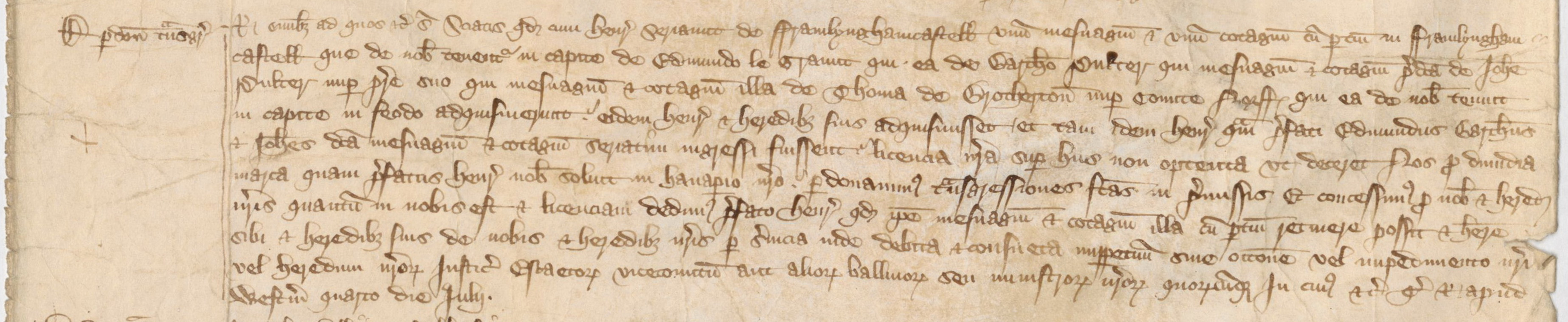
Henry, Sergeant of Framlingham Castle purchased a cottage inside Framlingham Castle which came with a messuage (dwelling house and the land occupied by it).