
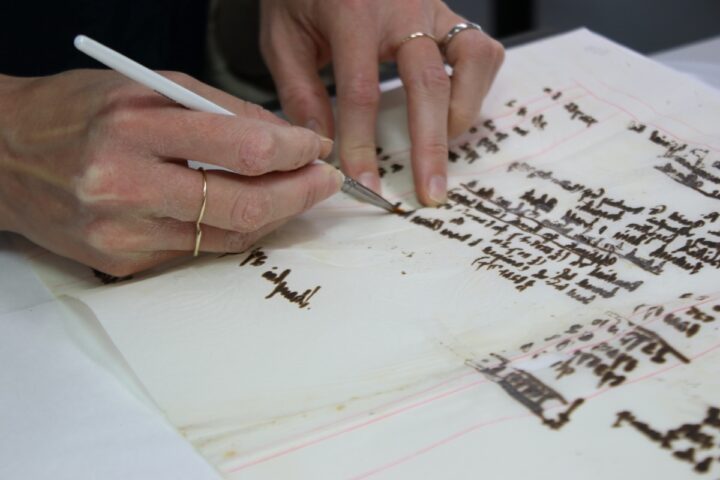
Conserving the media to ensure a clear image for digitising.
As we work concurrently across multiple large scale and time pressured projects, we take a pragmatic approach to conservation treatment. We apply treatments en-masse, conserving only when the text or image area of a document is unreadable or to ensure safe access for handling and imaging.
We undertake condition assessment surveys to inform the planning and scope of our projects, including resource allocation and costs to our publishing partners, and uncover access and condition issues within the identified record series. If issues are found, conservation treatment is applied to ensure each document’s condition is stable for handling and imaging.
Examples of access and condition issues that we come across:
Access issues
- Metal fastenings that restrict access, including, staples, pins, and other metal fastenings.
- Tight bindings causing loss of text and restrict access.
- Pages that have stuck together.
- Gummed or Pressure sensitive tape that is obscuring text.
- Creases and folds obscuring the image or text area.
- Folded and rolled items, such as very stiff folded parchment or large rolled maps and plans.
- Sealed items, such as letters. How the item has been sealed informs our decision making on what treatment to use.
- Hazards, such as historic mould or pigments that contain metals which may be harmful. Risk assessments guide us on how to handle and access these collections.
Condition issues
- Large tears that have damaged the media.
- Issues with the stability of the media, such as iron gall ink damage, and friable and delicate pigments.
- Burnt pages, mould damaged papers, and acidic and brittle pages.
- Degradation and loss to seals.
View an image in more detail by selecting it. Press the Back button in your browser to return.
-
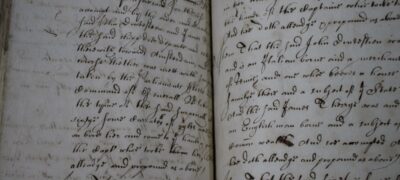
- Inaccessible text due to tight binding.
-
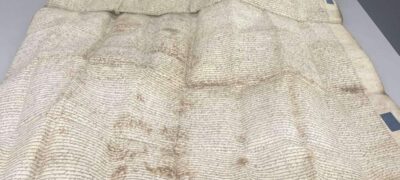
- Flattening is required for safe imaging.
-
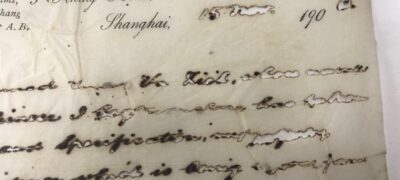
- Degraded iron gall ink which has burnt through the paper.
-
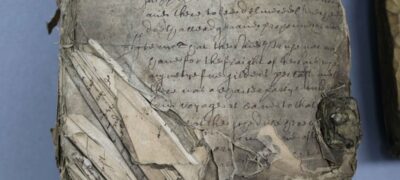
- Tears and folded edges obscure the text.
You can read more about our treatment approach to conservation for imaging in our blogs:
- Letters Unread: Opening closed letters in the Prize Papers project
- Lost in the gutter: Mitigating text loss for digitisation projects
- Introduction to conservation for digitisation
- The removal and/or care of pressure-sensitive tape from paper
- Letters of Note: Preparing the Prize Papers for digitisation
- Preparing a highly fragmented book for digitisation
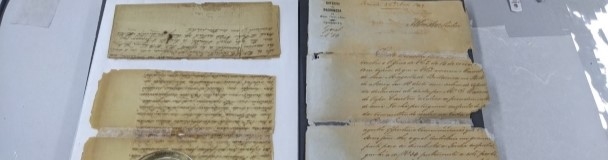
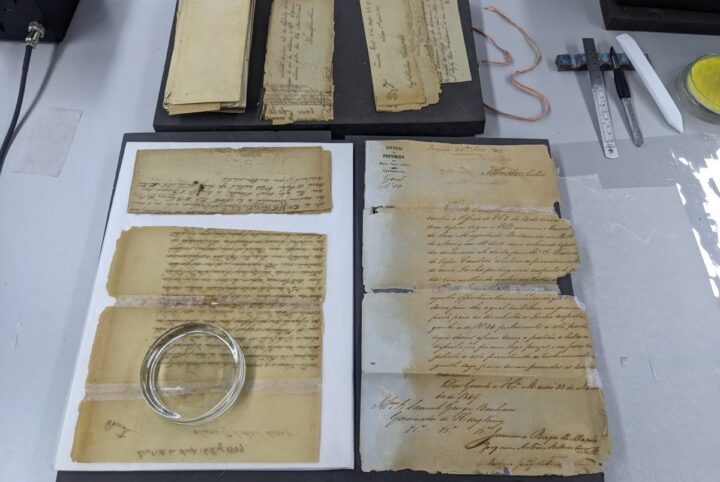
Reconstructing letters from brittle fragments with Japanese tissue to ensure their accessibility for digitisation.
Our team supports the mass digitisation programme of The National Archives’ collections, enabling access to our collections online. We deliver this support through a range of activities, which include: advice and guidance, handling training and support, condition assessments, collection surveys, and conservation treatments. By employing these various activities throughout the life cycle of the digitisation workflow, we enable access to the collections whilst ensuring safe imaging processes.
To find out more about the commercial digitisation and licensing services we offer at The National Archives, go to our digitisation and licensing pages.
Following a recent Archive Service Accreditation Panel, the UK Archive Service Accreditation Committee is pleased to announce that the following archive services have been awarded accredited status for the first time:
- Cardiff University Library
- Northamptonshire Archive Service
All accredited archive services must apply again for accreditation six years after their initial award to retain their accredited status. At the same panel, the following archive services were awarded accreditation for the second time:
- East Anglian Film Archive
- Kingston University Archives and Special Collections
- Knowsley Archives Service
- Newcastle University Library Special Collections and Archives
- Northumberland Archives
- Oxfordshire Health Archives
- Teesside Archives
- University of Bristol Theatre Collection
- University of Leicester Archives and Special Collections
By attaining accreditation, archive services demonstrate that they meet the UK standard for collections management and access to collections, showing resilience and the ability to manage changing circumstances successfully.
Archive Service Accreditation is supported by a partnership of the Archives and Records Association (UK), Archives and Records Council Wales, National Records of Scotland, Public Record Office of Northern Ireland, Scottish Council on Archives, The National Archives, and the Welsh Government through its Museums, Archives and Libraries Wales division.
View the full list of accredited archive services
Find out more about Archive Service Accreditation
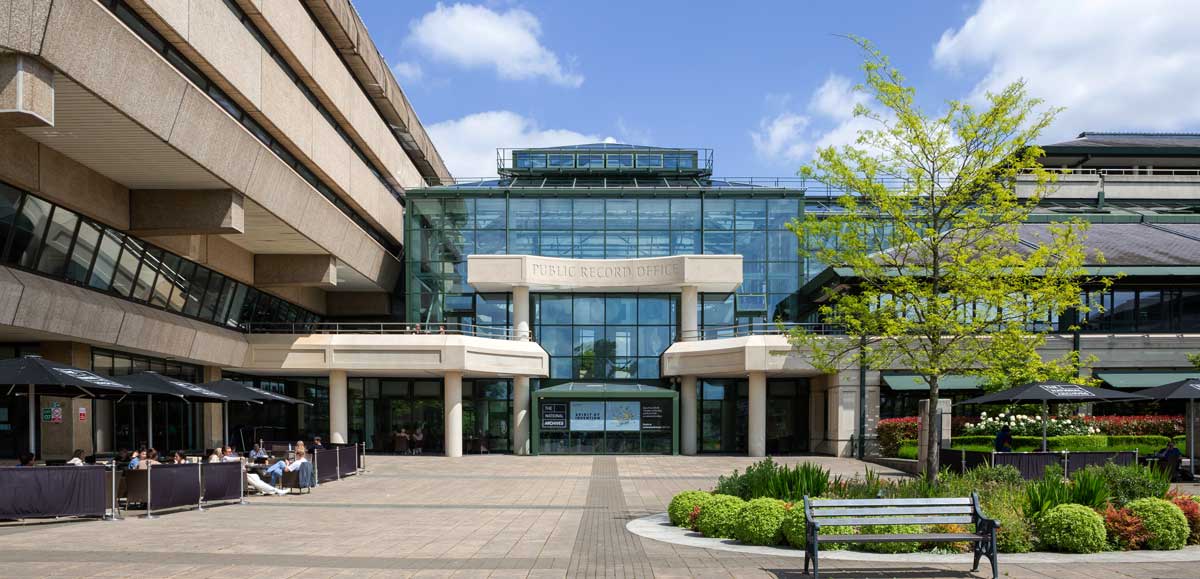


The National Archives welcomes the appointment of two new non-executive Board members, Lopa Patel MBE and Nigel Baker. They replace Baroness Ros Scott of Needham Market and Mark Richards who both step down on 30 December 2024 after highly successful 6.5 year appointments, where they supported the organisation through the pandemic and advised and contributed on the strategic direction of The National Archives and the delivery of its ambitions.
Chair of The National Archives’ Board, Professor Andrew Wathey CBE said:
“I am delighted to welcome Lopa and Nigel to The National Archives’ Board. They bring a range of skills highly relevant to the next phase of our development, as digital capability becomes ever more important to the public record, and I greatly look forward to working with them. I also take this opportunity to thank Baroness Ros Scott and Mark Richards for their outstanding service to the Board over the last six years.”
Chief Executive and Keeper of The National Archives, Saul Nassé said:
“I look forward to welcoming Lopa and Nigel to the Board, and working with them as we look to become a living digital national archive, preserving the contemporary record of government and radically widening access to our historic collection.”
Lopa Patel MBE is a Digital Entrepreneur, Chair, Non-Executive Director and Trustee with strengths in governance and risk oversight. The founder of two ventures in online media and a data-driven marketing consultancy, she is also the Chair of equality charity, Diversity UK, focussing on race and gender equity in Britain. She is an ambassador for entrepreneurship, innovation and technology and has been recognised with many accolades including an MBE for services to the creative industries and an Honorary Doctorate conferred by the Open University.
Nigel Baker is a media executive with wide experience at senior management and board level in for-profit companies and the charitable sector. His career has immersed him in creating and curating factual content with an early background as a journalist in Fleet Street and with ITN. He holds a business doctorate from Chester University, examining the impact of Big Tech’s ethics on corporate philanthropy, and a master’s from Brunel University London in multimedia computing for e-Commerce.
Both Lopa and Nigel will start on 1 Jan 2025 for five-year terms.
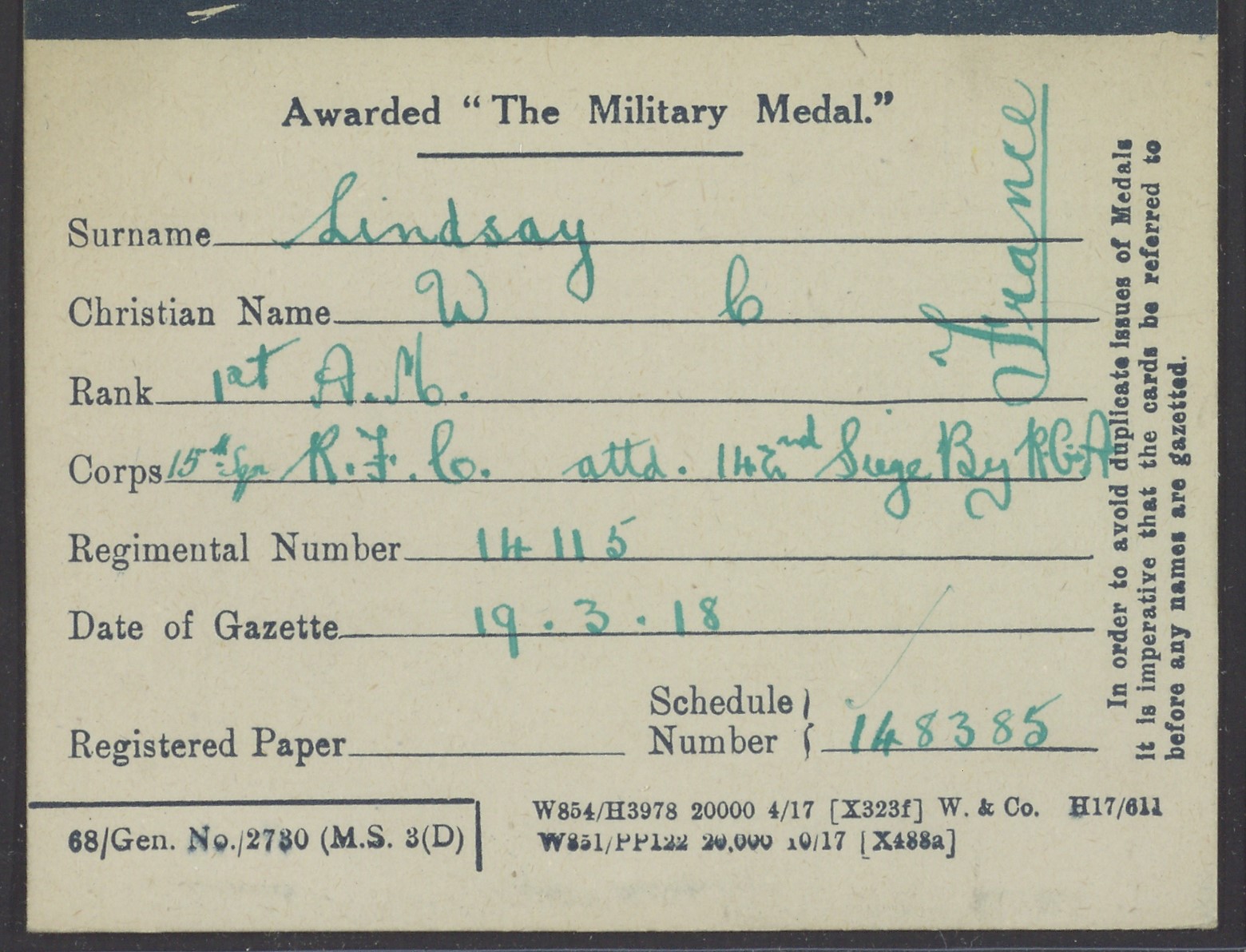
The National Archives, in partnership with Forces War Records, the leading military family history website from Ancestry®, has launched a digital collection of Royal Flying Corps and successors: World War One Gallantry Award Medal Index Cards.
The collection contains almost 12,000 cards and are a mixture of handwritten and typed records, and include a rare ‘Mentioned in Despatches’ cards that consist of members of the armed forces who were mentioned in an official report by a superior officer and sent to the high command. This mention is considered a commendation for a noteworthy act or service of gallantry.
“This collection is such an important one for Forces War Records and our community” shared Ancestry’s Military Genealogist, Simon Pearce, “because it offers a fascinating insight into the bravery and dedication to duty of those who served with the aerial forces during WWI. The war accelerated huge advances in technology and aerial warfare, and our ancestors were at the forefront of these developments. Perhaps you’ll discover a family member who was awarded the Distinguished Flying Cross or the Military Medal for their actions, or maybe they gained an award from one of Britain’s allies.”
Head of Modern Collections at The National Archives, Dr William Butler, said “this is such a fascinating collection and one which will no doubt be of great interest to those looking to uncover more about their family history, and those wishing to better understand the activities of the Royal Flying Corps and Royal Air Force during the First World War.”
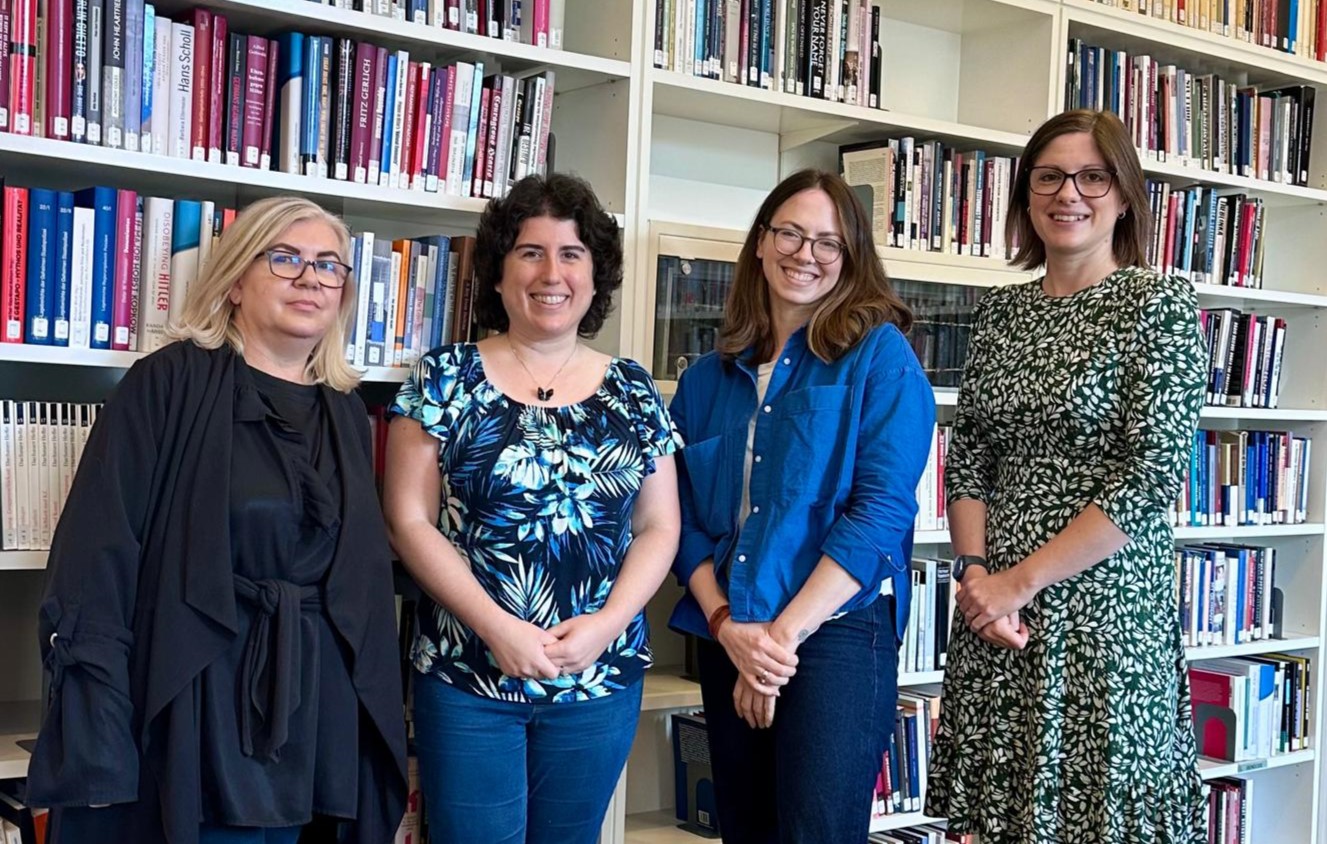
We have become a founding member of EHRI-UK – the national body representing Holocaust-related collections in the United Kingdom. The other founding members are the Wiener Holocaust Library, the Holocaust Research Institute at Royal Holloway, University of London and the Parkes Institute at the University of Southampton.
The European Holocaust Research Infrastructure (EHRI) has been supporting Holocaust research, commemoration and education on a trans-national level since 2010, with funding from the European Commission. It is now entering a new phase as a permanent legal organisation with government support from each participating nation.
EHRI-UK will strive towards the long-term sustainability of Holocaust research within the UK and beyond by representing UK institutions (and Crown Dependencies) that hold materials related to Holocaust Studies. EHRI-UK has been awarded initial funding for the first five years from the Arts and Humanities Research Council (AHRC) but hopes to secure long-term support and continue developing its work.
The partners will connect resources using a digital infrastructure named the EHRI portal. Over the coming years, there will be opportunities for UK archives with Holocaust-related collections to contribute collection descriptions to this portal.
As a partner, we will advise the project team and wider sector on all aspects of cataloguing for archives wishing to share their collections to the EHRI portal. We will also support UK archives to upload Holocaust collections to our catalogue, Discovery, and handle any data transfers from Discovery to the main EHRI collections portal, widening access to the UK’s Holocaust-related collections.
From 2025, there will be callouts for EHRI-UK National Research Fellowships. These are designed to support researchers, archivists, librarians, curators, junior scholars and PhD candidates, who might otherwise lack resources, with Holocaust research.
There will also be an EHRI-UK Regional Placement Scheme, led by archival and heritage institutions, which will aim to provide postgraduate and undergraduate students with the opportunity to work on projects in locations across the British Isles. Through this scheme, project partners will be able to provide opportunities for short-term internships that will train and upskill students in archival and heritage sciences.
You can keep up to date with this initiative, and any future callouts, by signing up to the EHRI-UK newsletter.
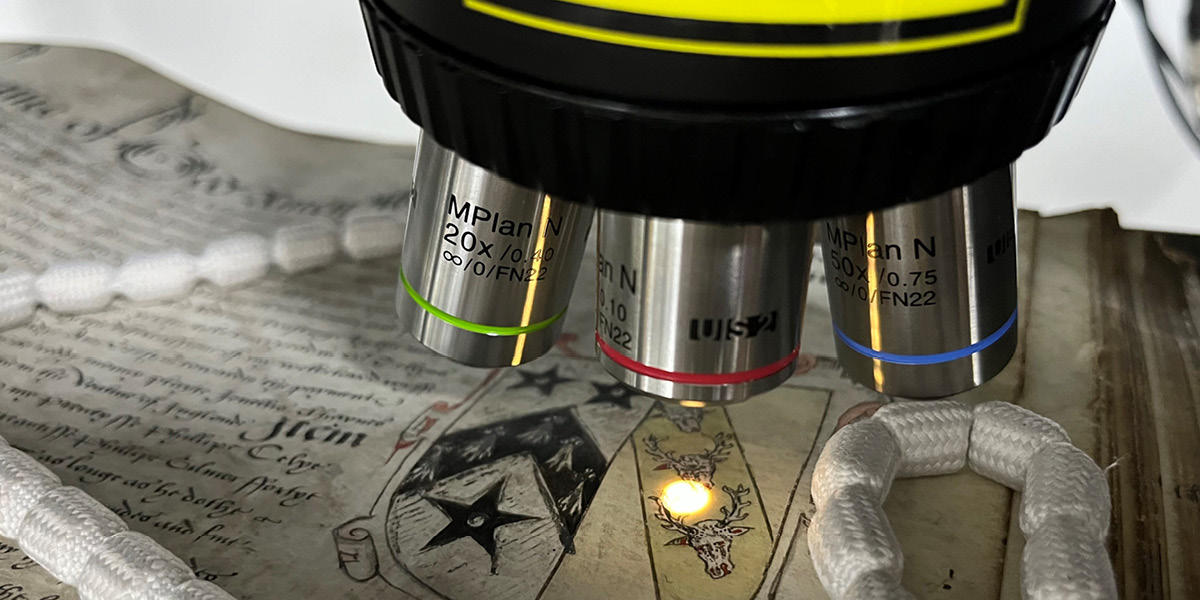
![A Raman spectroscopy technique teaking place on a medieval document , showing three metal tubes of the machine hovering over the manuscript.]](https://www.nationalarchives.gov.uk/wp-content/uploads/2024/10/Raman-spectroscopy-resized-1-720x360.jpg)
We have been awarded £1.3m to upgrade our analytical research laboratory creating a centre of excellence available to collections throughout the UK and beyond.
The award is part of the UKRI Arts and Humanities Research Council’s new Research Infrastructure for Conservation and Heritage Science (RICHeS) programme, a major £80m research and innovation investment that will support the latest technology and scientific equipment to safeguard heritage for future generations and boost the UK’s heritage economy.
£995,056 awarded will create a heritage science and conservation research laboratory to allow a wider range of cutting-edge research on paper, parchment, photographs, textiles and books. It will also enable our Collection Care Department to increase its scientific expertise by funding a new heritage scientist.
The award includes a further £323,023 to support the creation of the Heritage Science Data Service. This UK-wide digital research service will bring together heritage science and conservation research data for the first time, advancing the understanding, preservation, and management of the UK’s heritage. The HSDS development is led by the University of York, supported by a consortium of heritage partners from England, Scotland, and Wales.
The aim of the funding is to make existing expertise, facilities, and data more easily accessible to professionals across the heritage sector. It will also allow our Collection Care team to build on their existing work with ResearchSpace – an open web data management platform, making their research easier to find and reuse for the wider heritage sector.
Gemma Maclagan-Ram, Director of Research and Commercial Development, at The National Archives said: ‘This investment will help us create state-of-the-art facilities for heritage science conservation research at our Kew site, driving forward our ambitions for world-leading research in this space.
‘We’ll be able to provide equipment, expertise and resources for new users across the archive and wider heritage sectors. We’re excited to be starting this work.’

UK HSCR landscape
Heritage science and conservation research (HSCR) is multifaceted and collaborative, drawing on disciplines spanning engineering, physical and social sciences, and the humanities; it is carried out by universities, organisations responsible for managing the UK’s heritage assets, and industry. HSCR explores scientifically and ethically sound methods and materials for the long-term understanding, preservation, enjoyment, and commercial exploitation of our heritage. HSCR is strongly public-facing – able to engage large audiences with the physical sciences through heritage and to contribute to promoting the heritage economy, which in England alone added c. £30 billion to GVA and was the driver behind 218.4 million trips in 2019, as outlined by Historic England.
The potential of HSCR to contribute to developments in adjacent fields (advanced visualisation, novel materials, sensors), as well as its centrality to ensuring the preservation and access to our shared cultural heritage was formally recognised in the UK by the 2006 House of Lords Science and Heritage report. Since then, commitment to the success of HSCR in the UK has been evidenced by investments like the AHRC-EPSRC Heritage and Science Programme (£8.1M, 2009-14); the EPSRC CDT in Science & Engineering in the Arts, Heritage and Archaeology (£4.7M, 2014-22); developments like the 2010 National Heritage Science Strategy and the 2018-2023 Strategic Framework for Heritage Science in the UK produced by the National Heritage Science Forum (NHSF, formed in 2013). HSCR was again highlighted in the 2019 by the UK National Commission for UNESCO in their report Cultural Heritage Innovation: Opportunities for International Development; in the 2020 UK Research and Innovation (UKRI) Opportunities to Grow our Capacity report; and in the Arts and Humanities Research Council’s (AHRC) 2019 Delivery Plan.
Within the UK, forums for advocating and advancing the HSCR agenda include the NHSF, the Independent Research Organisation Consortium (IROC), which has several members engaged in HSCR, and E-RIHS UK, the national node of E-RIHS (European Research Infrastructure for Heritage Science), which is a European distributed infrastructure for HSCR with global ambitions. A 2019 report commissioned by The Infrastructure and Access Working Group of E-RIHS UK found that there are at least 55 active HSCR facilities in the UK across the heritage, public, and higher education sectors, though informal sources suggest there may be closer to 80 such facilities.
In 2020, the AHRC was granted more than £15M through the UKRI World Class Labs programme, to create the Capability for Collections (CapCo) fund, in order to secure the future of the UK’s galleries, libraries, archives and museums. These funds were be invested in research and conservation labs and creative learning spaces that are central in the heritage sector’s ability to generate research and create marketable products. Much of the funding granted thus far has been for urgent upgrades to heritage science laboratories throughout the UK, and the replacement or upkeep of analytical equipment therein. In addition, in 2021, the AHRC funded three Infrastructure Policy & Engagement Fellowships in Heritage Science and Conservation as a part of its drive to create a distributed but integrated national HSCR infrastructure.
Most recently, in 2021, the UK Department for Digital, Culture, Media and Sport released the report Valuing Culture and Heritage Capital: a framework towards informing decision making, which aims to create a formal approach to generating statistics and guidance that can be used to articulate ‘the value of the culture and heritage sectors in decision making.’ The framework, part of the Culture and Heritage Capital Programme, describes heritage science research as a method ‘to estimate the condition of physical assets, how this condition changes over time and how the condition affects the flow of benefits the assets produce.’ The report links the work of heritage scientists to conservation research in stating that heritage scientists are ‘best placed to estimate the impact of conserving assets and therefore rates of degradation and irreversible loss’. According to the report and the Culture and Heritage Capital Programme, to meet the above-mentioned aims, HSCR studies should be linked to economic valuation methodologies to provide evidence in decision making.
HSCR at The National Archives
Among organisations in the UK GLAM (galleries, libraries, archives, and museums) sector, The National Archives is the only archive with a fully equipped HSCR laboratory. As an AHRC-recognised IRO, we are eligible to receive funds for research, postgraduate training, and associated activities. With the support of the organisation and funds received from the Research Councils over the past decade, we have established a hub for student training and continuing professional development, and an incubator for challenge-led research, where heritage scientists and conservators work collectively to co-create projects and to address topics relevant to the conservation, preservation, and documentation of archival collections. Our studio is part of a dynamic, international network of HSC practitioner-researchers, hosting workshops and roundtables that foster knowledge exchange and enable collaboration with organisations that lack access to analytical capacity.
Our laboratory can be viewed as covering all four heritage science platforms, as defined by the international HSCR community (IPERION-CH and E-RIHS):
- MOLAB: our suite of portable, non-destructive analytical instruments.
- FIXLAB: our immobile laboratory, including our advanced imaging, analysis, and digitisation studios.
- ARCHLAB (physical archives of technical documentation, data, samples & reference collections): TNA’s collection, viewed through the collections as data lens, our documentation systems and the data acquired from our collections as they are studied and digitised.
- DIGILAB (digital archives as research resources and advanced digital tools for research): our research on HSCR documentation (AHRC Linked Conservation Data, collaboration with ResearchSpace), and the DIGILAB platform developed through our AHRC projects AI for DIGILAB and From Lima to Canton.
Over the past 5 years, we have invested more than £400,000 in new laboratory equipment purchases and upgrades, including a portable (p) XRF, an MFT, a p-FTIR, an MSI, a FORS, and an open-geometry Raman analyser. Acquisition of analytical equipment in the laboratory has been guided by four priorities: instruments should be (1) portable, so that research can be carried out in our repositories and at other GLAM organisations that lack capacity/capability; (2) non- or micro-destructive; (3) reflect our current and future research programme and collection’s needs; and (4) operable by HSCR staff, accessible to other research staff at TNA and our collaborating partners. The HSCR laboratory and Collection Care studios currently hosts a complete suite of analytical and imaging equipment for the non-destructive study of documentary collections. The equipment is detailed on the NHSF Kit-Catalogue and available for other organisations with existing expertise to borrow free of charge.
The staff in our studio are active members of the international HSCR community, undertaking original, interdisciplinary, and discovery-driven research that ensures the conservation of, and enduring access to, our cultural heritage collections, underscoring their value, and opening new avenues of research for humanists and specialists in adjacent sectors, creating a myriad of new understandings and engagement opportunities for the general public. Our HSCR team members have developed expertise in the field through working in world-leading laboratories at The Northwestern Center for Scientific Studies in the Arts, The Library of Congress, The Metropolitan Museum of Art and The Museum of Modern Art in New York, The British Museum, the Fitzwilliam Museum, Tate, The National Gallery, Washington D.C., University College London’s Institute for Sustainable Heritage and History of Art Material Studies Laboratory, and Historic Royal Palaces.
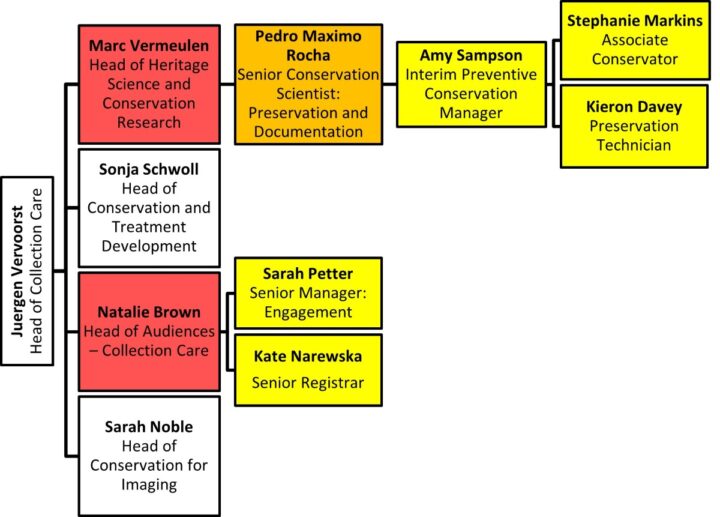
Our Team: members with a heritage science background and focus are highlighted in red, and with a preservation background and focus are highlighted in yellow. Members covering both areas are highlighted in orange. Many members of our Conservation Treatment and Conservation for Imaging teams (not included in the above organigram) undertake research independently or in collaboration with the Research team; we view our conservation staff as practitioners-researchers.
Purpose of this document:
The past three years have demonstrated the enthusiasm for, and breadth of research possible within our department, as well as the wealth of connections that forms our departmental network, within and beyond TNA. There have been many challenges, including team restructures, Covid-19-imposed limitations on working on site and constraints on our time at home, an expanding engagement programme and its requisite time commitments, creating development opportunities for staff, and finding the right balance between external and internal-facing research priorities.
Historically, our research projects and initiatives were categorised under the following overlapping headings:
- Material Analysis
- Preservation and Environment
- Imaging
- Digital
- Treatment
- Instrumentation/Technology
HSCR projects were allowed to organically emerge during assessment of collection items that need conservation attention, the environmental management needs of the collection, conversations around planned loans and exhibitions, approaches from external collaborators, historic/material interest from TNA CEE members and external partners. Funding applications have been prioritised ad hoc based on:
- Themes of current funding calls
- Staff expertise and interests
- Approaches by external collaborators
- Potential/requirements of the collection
Projects revolving around material analysis and treatment were prevalent, many include imaging and digital platform development or implementation. As our capacity and reputation for HSCR has grown, so has our involvement in funded research projects. We are commonly approached by colleagues in the sector with new project ideas, while simultaneously, conservation staff in the Collection Care are also rapidly developing new ideas that require HSCR support. A research strategy will help to visualise our current strengths and weaknesses, outline our mission and vision so that we can define research goals in line with our departmental, organisational, and professional affiliations; it will provide a framework for prioritising projects, measuring impact, and an argument for resource allocation.
HSCR Research Strategy
Mission:
The HSCR mission is aligned with that of the Collection Care Department in its aims to guarantee access and ensure the health to the collections held in The National Archives through innovative programmes of environmental management, conservation treatment, and documentation, and to enhance understanding of the collections through cross-disciplinary heritage science research.
Vision:
To establish, define, and foster the development of the field of documentary and archival heritage science and conservation research, showcasing and enabling the innovation and engagement potentials facilitated by analytical studies of documentary collections; to serve as a sector leader and international hub offering advice and developing policy around the technical study, advanced care, documentation and access of large-scale and archival collections; to become ‘digital by design’ by streamlining our data collection, management and interpretation processes and by identifying opportunities to address the needs of archival collection users through the integration of advanced digital methods with traditional heritage science research; and to develop a diverse, inclusive, and collaborative research agenda, focused on collections created by, or concerning underrepresented communities and histories.
Strategic themes and priorities
Our vision will be achieved through activity under the following four strategic themes and their underlying priorities. Existing and new projects and funding proposals will be prioritised based on their scope and benefit to our vision, through their potential to meet at least one, but preferably several of our strategic themes.
1. Collaborative
We will strengthen existing and secure new collaborative partnerships with colleagues in the HSCR sector and adjacent fields; we will explicitly seek to work with underrepresented communities; and we will put our expertise to practice in shaping national and international research priorities and policy decisions in HSCR.
Strategic priorities:
- Research initiatives that create new bonds, strengthen existing networks, and that in particular, connect us with archives and documentary collections in the UK and abroad.
- Initiatives that create opportunities to directly work with underrepresented communities through (1) employment opportunities, (2) co-creation of research projects that focus on collections created by, with or about these communities, (3) volunteering opportunities, (4) mentoring, and (5) knowledge-exchange and engagement with schools.
- Actively serving in the HSCR national and international networks by, for example, (1) maintaining our NHSF membership and serving on the Board of Trustees and Members Council, convening and participating in the working groups tasked with delivering the strategic framework for heritage science; (2) serving on the committee of The Institute of Conservation Heritage Science Group; (3) contributing to, or serving on the Royal Society of Chemistry’s Heritage Science Expert working group; (4) contributing to surveying and impact assessment exercises, meetings and discussions with the E-RIHS UK and E-RIHS; and (5) serving on the AHRC’s Heritage Science Infrastructure Advisory Group for the development of a second phase proposal to UKRI.
2. Digital
We will become ‘digital by design’ by streamlining our data collection, management and interpretation processes and by identifying opportunities to address the needs of archival collection users through the integration of advanced digital methods with traditional heritage science research.
Strategic priorities:
- Work closely with partners who are developing advanced data management and documentation methods for HSCR (e.g., Linked Conservation Data, ResearchSpace); seek out such partnerships specific to heritage science data processing and management and ensure that this information is integrated into our collection management practices.
- Ensure all existing and new HSCR data is FAIR (Findable, Accessible, Interoperable, and Reusable).
- Contribute to the development of DIGILAB platforms that allow data management and open access to our HSCR outputs and create advanced data processing and interpretation methods.
3. Unruly & Emergent
We will strive to be at the frontier of archival HSCR, defining and fostering the field and serving as a sector leader by actively liaising and sharing our expertise and ideas with other archives around the world.
Strategic priorities:
- Develop new ways of ‘reading’ the archive by demonstrating the potential of existing technologies and developing new tools and methods for uncovering artefactual or obscured information in our collections.
- Work closely with colleagues in the field of Digital Humanities to explore the cross-over between heritage science research and collections as data; develop and define the field of Computational Archival Heritage Science.
- By working closely with the conservation team and colleagues in the sector, contribute to mapping the current state of archival conservation practice, rethinking the concept and consequences of scientific conservation, and actively participating in breaking down barriers between siloed conservation and preservation cultures (e.g., archival vs book, paper, and modern material conservation, physical vs digital preservation).
- Explore research possibilities at the intersection of archival preservation practice and environmentally sustainable operations.
4. Integrated & Impactful:
We will prioritise research that creates opportunities for knowledge exchange, learning and development, and advancement of our conservation team as practitioner-researchers who identify and steer research in their own collection care practice.
Strategic priorities:
- Ensure that outcomes of our research are disseminated through a variety of channels, both formal (academic, professional) and social (widely accessible).
- Seek out projects and initiatives that allow for mentoring and supervision, working at all education levels, from school age to Early Career Researchers.
- Work to advance apprenticeship opportunities for HSCR.
- Engage with the entire Collection Care team to create learning and development opportunities and knowledge-exchange initiatives that ensure the benefits of HSC research reach all of our team members.
- Seek out projects that generate opportunities for wider knowledge-exchange and ideation with the HSCR community through workshops and roundtables that can be hosted at The National Archives.
Outcomes
The aim of this strategy is to create a framework that promotes connections between ideas that at first may seem disparate; to aid in project planning and implementation through highlighting a set of themes and priorities that can guide our decision-making and resource distribution. Success will take form in the realisation of research projects that harness and focus our team’s expertise, allow for further growth and development in areas that we are less comfortable, and create opportunities for knowledge exchange within our department, our organisation, the broader HSCR community, and beyond.
An outcome may be, for example, securing funding for a collaborative project, which connects us to new and/or existing partners (especially archives and libraries) to co-create avenues of research on collections related to under-represented communities, with, and led by the needs of members of those communities, and with implications for the conservation, access to, or material understanding of these collections. Through the framework established here, we would seek to achieve the aims of the project with members from that community, be they conservators, early career researchers, volunteers or apprentices; we would ensure that all data produced during the project is FAIR and managed through our new database (e.g., ResearchSpace), and if relevant, makes use of, or aids in the development of Digilab platforms. The research might showcase new and unforeseen ways of ‘reading the archive’ or employ and foreground local practices of care and access. The progress and findings of the work would be communicated through social and formal means, through engagement with school groups and professional workshops. Finally, the relevance of new practices or understandings that emerge through the research would be related back to our organisational strategy or professional strategic frameworks.

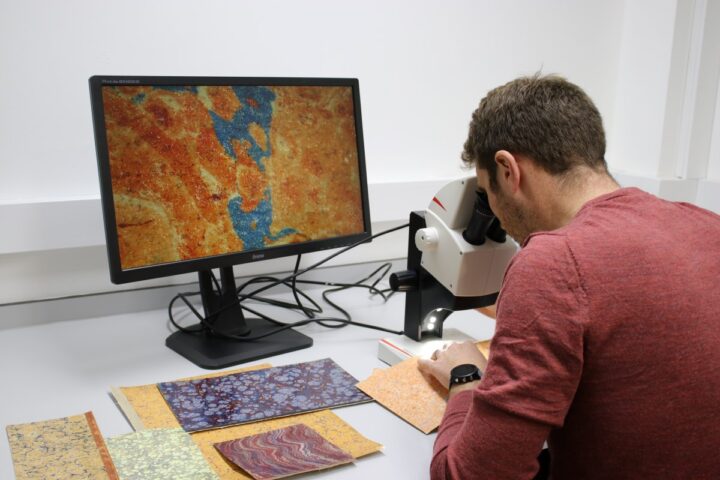
Investigating the printing techniques of historic marbled paper using microscopy.
What we can do
We use science to analyse our archival collection, which enhances our knowledge and understanding of our archival materials for research, preservation and access decision-making.
We are building our scientific infrastructure and capacity so we can offer our expertise and provide external access to our cutting-edge scientific instruments and equipment to the archive and wider heritage sector. In doing this, we aim to support and strengthen the written heritage sector’s ability to safeguard collections.
We are developing several models to provide external access to our expertise and equipment:
- From April 2026 we will be able to provide access to our expertise and analytical capabilities through the Research Infrastructure for Conservation and Heritage Science (RICHeS) programme.
- We are improving our process of offering external science clinics to help small archives enhance their preservation capabilities through a greater understanding of the materiality and degradation of their collections.
RICHeS
What is RICHeS?
The Research Infrastructure for Conservation and Heritage Science (RICHeS) programme is a significant investment in the UK’s heritage sector, funded by the UKRI Arts and Humanities Research Council.
The programme has enabled the development of a distributed heritage science infrastructure across the UK and supported innovative investments in the latest scientific equipment. The purpose is to provide access for the wider heritage sector to heritage science facilities at 17 host institutions across the UK, of which The National Archives is proud to be one. The catalogue of the various services offered by the institutions is available here.
As part of the RICHeS funding, The National Archives were awarded two strands covering the access to our physical infrastructure (Facilities) and the development of a catalogue of data to feed into a national repository.
Our scientific instruments and infrastructure
To provide state-of-the-art infrastructure and best possible access to RICHeS participants, we have upgraded our laboratories, enlarged our strong-room facilities to accommodate incoming collection materials for analysis, and acquired new imaging equipment to enhance and complement our existing research capability and engagement services. Explore the full list of our scientific instruments and our analytical capabilities.
Heritage Science Data Service
We document and keep important records of the condition, conservation treatments and heritage science analysis results of documents in our collection. Our vision is to share our conservation and heritage science data and knowledge base with the wider archive and heritage sector. To this end we are further developing our data to feed into a national heritage science data repository (HSDS). This is part of a gigantic effort to make heritage science and conservation research data findable, accessible, interoperable, and reusable. Search the catalogue and learn more about the contributing partner organisations.
Our aims
As The Written Heritage Science Laboratory (WHSL) within RICHeS, we are dedicated to the scientific study of written heritage materials. Our work focuses on the physical materials that make up our written heritage, including works on paper, parchment, photographs, inks, pigments and book bindings. These documents are the carriers of recorded knowledge and cultural expression, encompassing both textual and visual materials. WHSL represents a long-term commitment to understanding and caring for these materials. It brings together heritage science, conservation research, archival expertise, and public access, fostering innovation and collaboration across the archive and library sectors.
Our three core aims are:
- Deepening understanding of materials to reveal how historical objects were made, used, and experienced
- Advancing conservation strategies through scientific insight
- Supporting safer and more meaningful access to archival materials
Our work supports inclusive access, evidence-based decision-making, and interdisciplinary collaboration.
How to get involved
To get involved in the RICHeS programme and receive funding for scientific analysis on your collection by one of the host institutions, apply through the RICHeS website.
Case studies
We approach our research using a range of non-invasive scientific techniques. These include X-ray fluorescence (XRF), Fourier-transform infrared spectroscopy (FTIR), Raman spectroscopy, microfade testing, reflectance spectroscopy (FORS), and multi- and hyper-spectral imaging. These methods allow researchers to study the chemical and physical properties of documents.
This work helps:
- Reveal how materials were made, used, and altered over time
- Inform treatment decisions for complex or hazardous items
- Enhance the legibility and interpretive potential of damaged or obscured content
Explore case study examples of our work here.

Our heritage science research projects involve collaborative working with researchers across multiple disciplines.
Enhancing the readability of archival documents
Enhancing the readability of archival documents through scientific techniques is a dynamic and evolving field of research. By using advanced methods, we can reveal text and images that were previously obscured or faded. This improves our ability to read and interpret historical documents without causing damage.
These techniques can make illegible writing legible, visualize the content of sealed letters, and probe the insides of books and rolls that cannot be physically opened. By minimizing the need for direct handling, these innovations help preserve the integrity of delicate documents.
Our ongoing research continues to refine and expand these innovative methods. This work is crucial for preserving the materiality within our collection, whilst at the same time ensuring its contents are accessible and comprehensive for future generations.
Relevant published materials:
- Advanced Microspatially Offset Raman Spectroscopy for Noninvasive Imaging of Concealed Texts and Figures Using Raman Signal, Fluorescence Emission, and Overall Spectral Intensity
- Advanced imaging to recover illegible text in historic documents: The challenge of past chemical treatments for ink enhancement
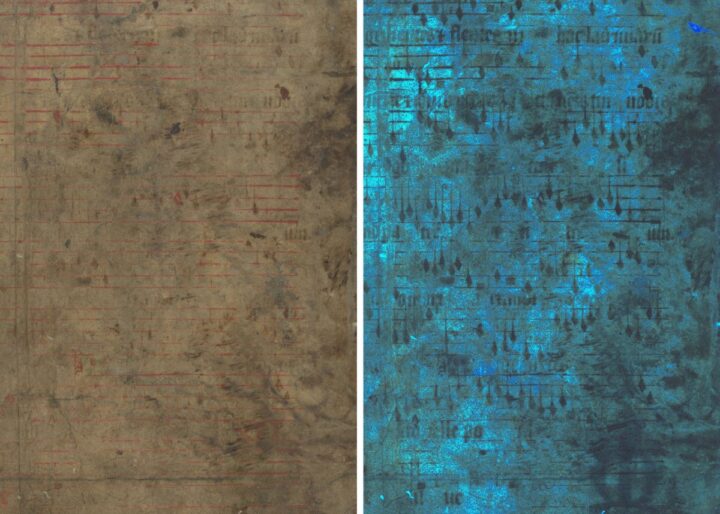
UV-induced visible luminescence imaging used to enhance the readability of illegible music sheets on parchment.
Hazards and poisonous materials
The National Archives’ collection includes materials that can pose a risk to access and safe handling. These include toxic pigments and hazards used in past conservation interventions, such as the application of pesticides. By researching and understanding these risks, we can develop safer handling protocols and conservation techniques.
Our ongoing research focuses on both identifying and mitigating these hazards. Future research projects will explore innovative methods for detecting and neutralising harmful substances. This area of study is vital for preserving the integrity and accessibility of our archival collections as well as ensuring that conservators, researchers and the public can interact with these documents safely.
By prioritizing safety in our conservation efforts, we protect not only the documents themselves but also the health and well-being of those who study and preserve them. This commitment to safety ensures that valuable historical collections can be accessed and enjoyed by future generations without compromising their preservation.
You can read more on the types of hazards that can be found in archival collections here:
- The use of ‘poisonous insecticidal solutions’ in bookbinding: coping with historic pesticide treatments in the archive
- Identification, transformations and mobility of hazardous arsenic-based pigments on 19th century bookbindings in accessible library collections

A collection of labels indicating insecticide in bindings.
Understanding history through materiality
Through scientific research and analysis of the materials and techniques used in the creation of objects within our collection, we can uncover valuable information about the cultural, technological, and economic contexts of different historical periods. Using advanced techniques, such as spectroscopy, microscopy, and chemical analysis, we are able to precisely identify materials including pigments, inks, paper, and textiles. This knowledge helps historians understand the origins, trade routes, and technological advancements of past societies.
Material analysis can additionally reveal details about previous conservation methods, which offers insights for current and future preservation efforts. Moreover, understanding the material composition and degradation processes aids the development of informed and innovative conservation strategies, ensuring the longevity of these objects.
Through these scientific investigations, we help preserve historical objects as well as enriching our understanding of the narratives they embody. Our interdisciplinary approach bridges the gap between science and history, allowing us to explore the material culture of the past with unprecedented depth and accuracy.
Find out more in our blogs and published materials:
- The pannotype mystery: Part 1 – historic photographic processes in Design Registers
- The pannotype mystery: Part 2 – identifying rare historic photographic processes
- Beautifully wrapped in silk: Medieval seal bags unravelled
- Medieval Seal Bags Unravelled
- Minimally Invasive Vacuum-Aided Extraction Technique for the Lipid Analysis of Historic Parchment
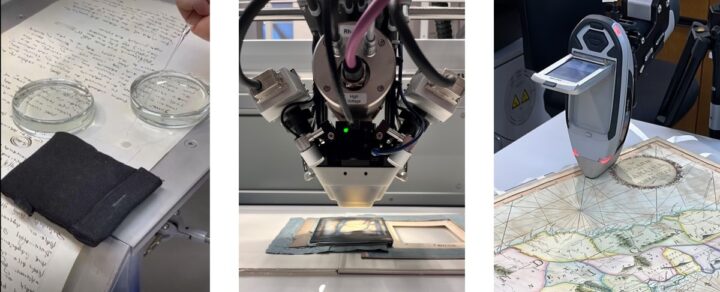
Material characterisation through scientific analysis.