Digital Heritage Displays
Words by Kate Jarman, Trust Archivist
Project summary
The Trust Archives care for thousands of documents, objects, and images from the history of the five hospitals in the Barts Health group, and many other current and former hospitals and institutions. The collections are available via the archives search room at St. Bartholomew’s Hospital, with a searchable online catalogue. However, patients and staff at the Trust hospitals are often unaware of these amazing collections and the stories they can tell as there has been limited opportunity to engage with archives and heritage on the hospital sites.
The Bringing the Collections Closer project (2024) aimed to promote staff and patient wellbeing through active engagement with heritage, by providing new ways for patients, staff, and visitors to engage with the historic collections of the Royal London Hospital in Whitechapel. The Royal London is the largest of the Trust’s hospitals and has been providing care to diverse communities in the heart of London’s East End for nearly three centuries. Through the project, we planned to use the collections to develop content for new interactive digital display kiosks located in patient waiting areas at the hospital; to provide a means of animating and improving patient and visitor waits as well as ‘bringing the collections closer’ to the communities who use the hospital.
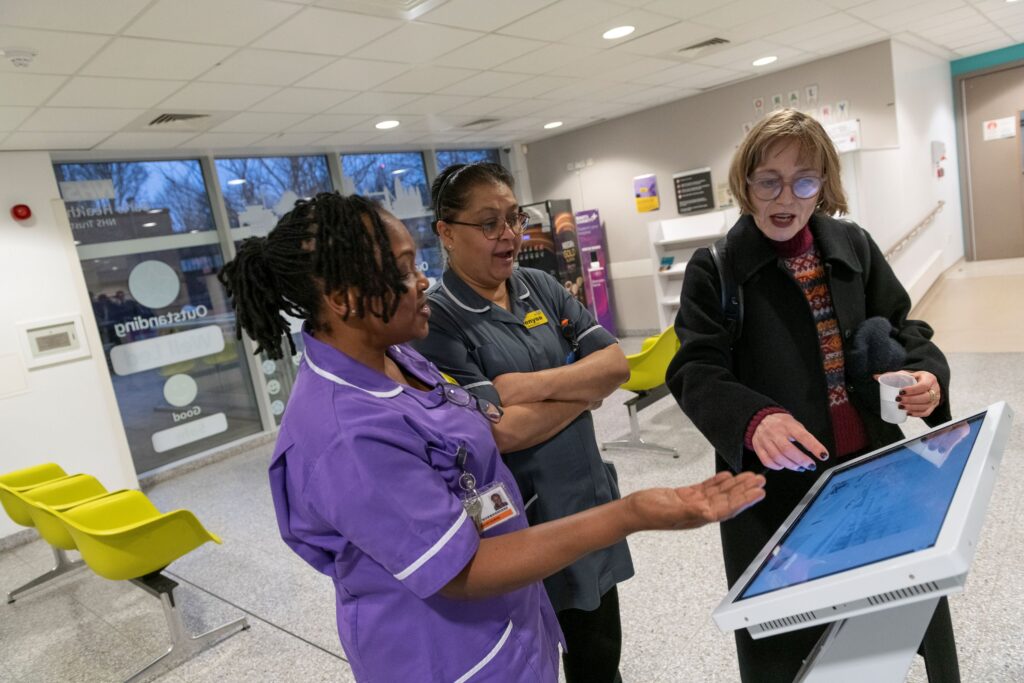
Using the digital display in the hospital
A key theme for the project was to bring new stories to the fore through co-curation and represent people and perspectives of the hospital’s current hospital communities in the digital content.
The archive team ran workshops over a five-month period with ‘Community Curators’ – a group comprised of local residents, staff, and patients of the hospital, who were recruited through local and hospital networks. Most of the Community Curators had not visited archives before, so the workshops provided an introduction to archives and the collections and an opportunity to explore a range of material from the collections. Each person selected an item or items that they connected with or found interesting, to be included in the displays. They were then photographed with the items by archivist Ginny Dawe-Woodings. Their photographs and the connections and stories that they shared were used as part of the digital content, alongside historical and collections information.
By working with communities to select and interpret the collections the team aimed to achieve a diverse, multi-layered, personal, and relatable way in to the collections that allowed patients and visitors to the current hospital to feel part of the story. Choice, and simple puzzles to discover content, aim to ensure that general users are rewarded with a breadth of content to explore and that younger users can enjoy visual exploration.
The outputs of the workshops were used to develop the visual and textual content of the displays, as well as a series of fun activities linked to the collection items, including puzzles and quizzes, allowing visitors to interact with the material in different ways. The text content was presented in English, Bengali, Polish and Somali – the four languages most frequently spoken in Tower Hamlets, the borough in which the hospital is located. The team undertook user testing in the final period of content development, allowing for translations to be refined and the user journey to be improved.
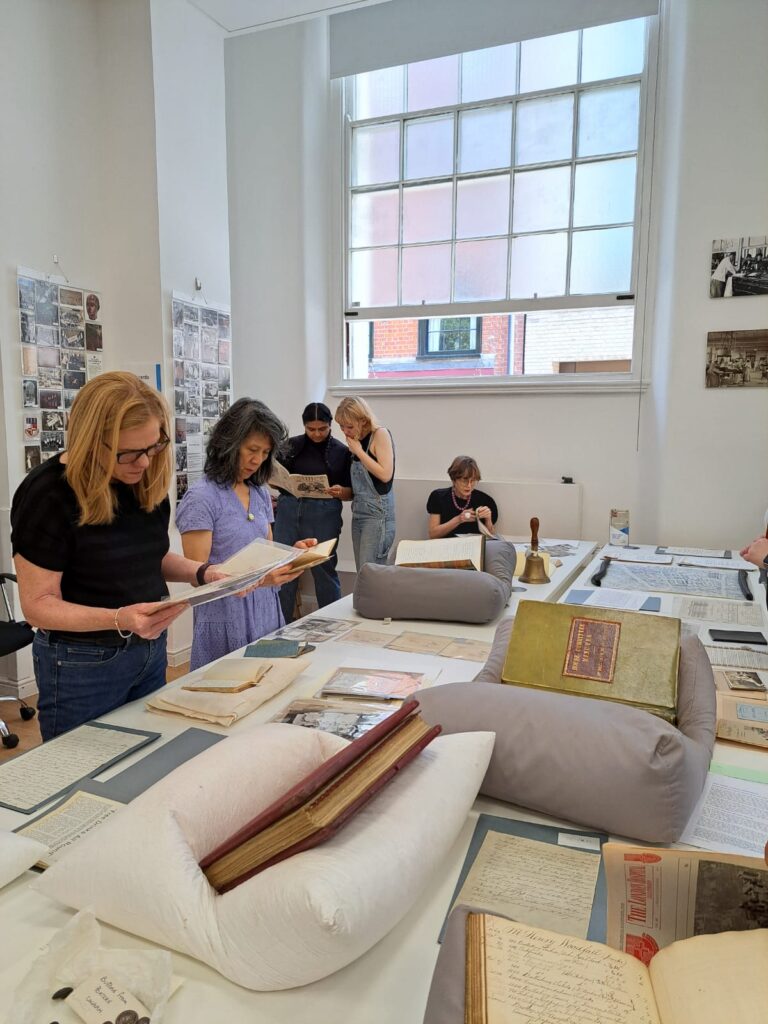
A trust-building archives workshop
Please describe any challenges or opportunities you faced and how you responded to those challenges and opportunities
We prioritised sensitivity in selecting material from health and hospital collections to use in displays. The Community Curators aimed at creating interpretation with a ‘caring and careful’ approach, avoiding presenting material or interpretation that could be disturbing or heighten anxiety about approaching treatments. The Curators were asked to consider this when selecting materials. With this approach the Curators were also able to present more challenging items (such as a report on mistreatment of patients in the early twentieth century) in a way that was still positive in outlook and not seen by the audience testers as confrontational or upsetting. For example, the interpretation focused on the hospital structures which made whistleblowing possible, and on the positive outcomes of the investigation for patient care.
What were the outcomes for service users or the parent body?
The main physical outcome has been the four new digital display units, located in patient waiting areas at the Royal London Hospital. Giving patients and visitors new ways of exploring the hospital’s history through the archive collections has helped them understand their own place in the story. This approach has also made waiting a little more fun and interesting and helped to positively impact day-to-day life at the Trust’s largest hospital. This supports Barts Health NHS Trust’s aim to provide the best possible patient experience, a key strand of the Trust’s Quality Strategy, as well as a key aim for Barts Charity, the funders of the project.
The project has also been hugely beneficial for us. We have developed new skills and documented approaches for community engagement and community-focused interpretation which we hope to use in future projects.
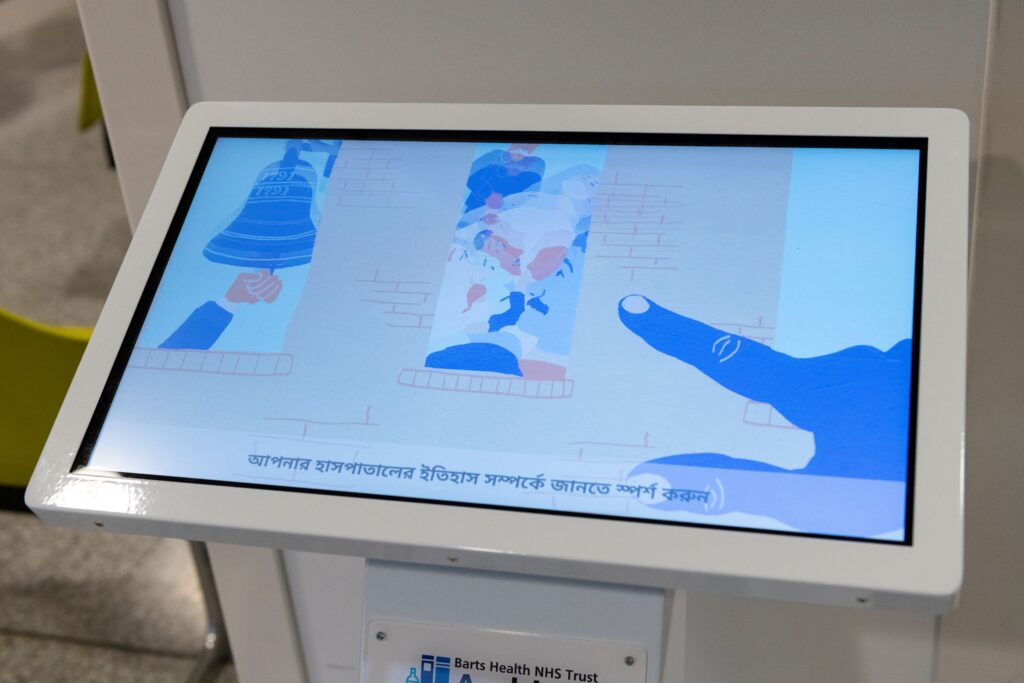
Multiple languages were available through the digital display
Describe what you learned from the process: What went well? What didn’t go quite as well?
The engagement in the project from the local community was really positive from the start. Recruitment of participants can sometimes be a challenge for community-focused projects, but the team were able to spend time with Anna Ravenscroft, the Project Facilitator, who planned the community engagement aspects of the project in detail. This enabled a good take up, resulting in rewarding and genuinely fun workshop sessions with the Community Curators. The project workshops were the first workshops offered by the archives service – until a few years ago, we did not have a space suitable for holding workshops, and had only run student sessions in the new space. The Bringing the Collections Closer project has therefore functioned as a successful pilot for future engagement workshops.
If the project were started over again, one idea would be for us to schedule in more staff time for editing and upload of content into the system. Most of the content work was done in-house by the archives team, including the photography and photo-editing, as well as the upload of all the translated content into the software, which all took time to complete.
If someone was thinking about taking on a similar project, what would be the one piece of advice you would give them?
I would say, to ensure that participants are recognised and rewarded for their time and the expertise they bring to the project. Also, to ensure that engagement activities are as inclusive as possible. Although we could not pay the Community Curators directly, we were able to give them vouchers equivalent to a fair hourly rate to show that their time and commitment was valued. Time commitment from Community Curators was a careful consideration and so project workshops were offered on a variety of days and times, as well as budgeting for interpreters to attend workshops, to make the project as inclusive as possible.
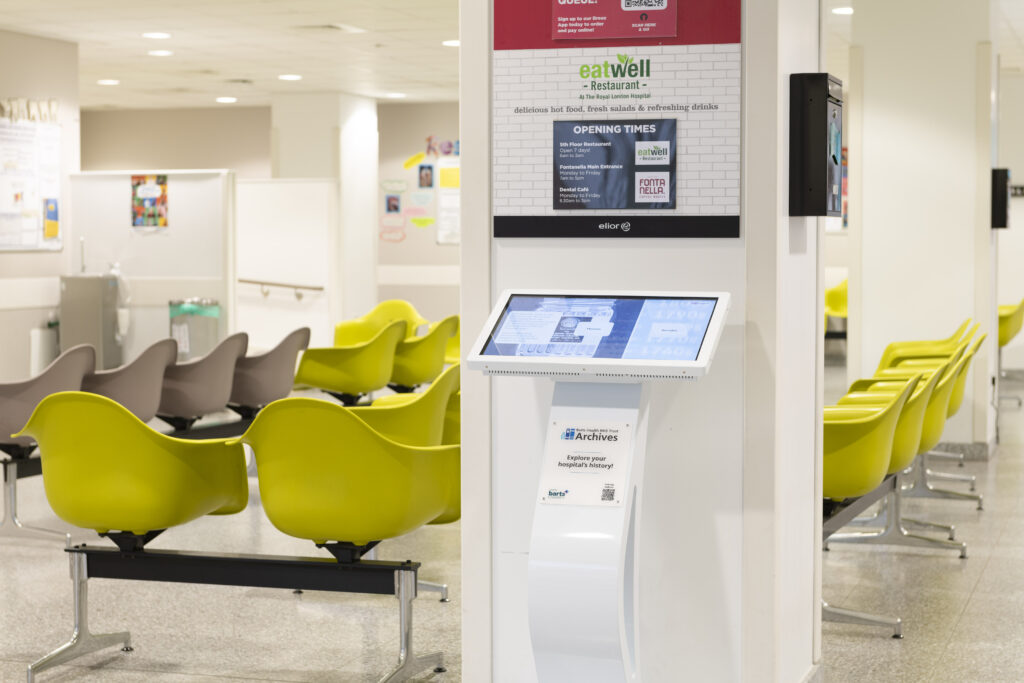
The digital display next to a waiting area
How will this work be developed in the future?
We plan to apply for further funding from Barts Charity to purchase more display units to bring content to more spaces at the Royal London Hospital. We also want to explore the potential for similar projects, focusing on other hospitals in the Trust.
We would like to build on the great new contacts made through the project with colleagues across the Trust. For example, working on participatory projects with the local community, work which has already resulted in new activities. This includes the visit of a group of young carers and young people with life-limiting conditions to the archives, and the recruitment of new members to the organisation’s governance committee.