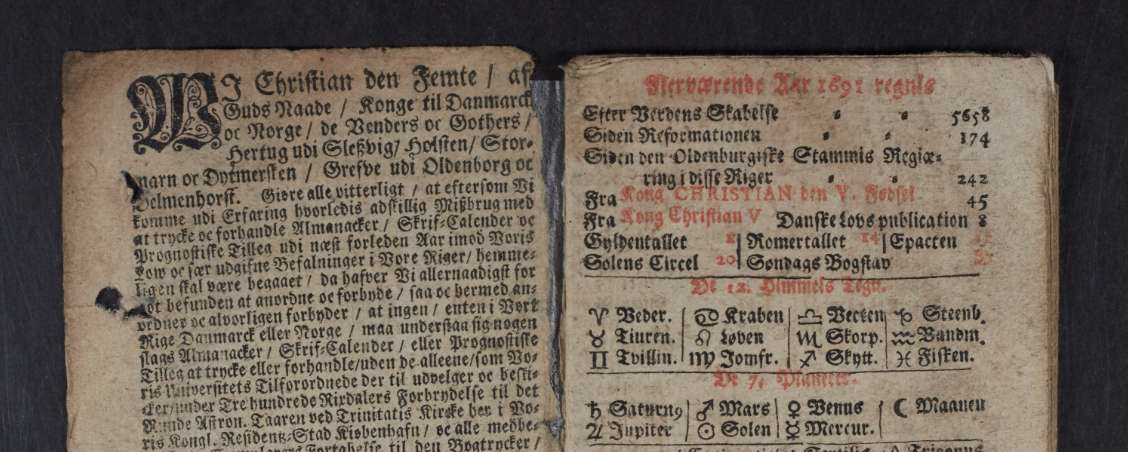
Records from a lesser-known conflict
From 1688 to 1697, large parts of Central and Western Europe were embroiled in what became known as the Nine Years’ War, or in Scandinavia, the Palatinate War of Succession. The conflict saw fighting spread across the Low Countries (modern-day Belgium, the Netherlands and Luxembourg) and the Rhineland (in modern-day Germany), drawing in the major powers of the age in an effort to contain the expansion of King Louis XIV’s France.
During my placement, I worked on papers that came from ships captured by the English during the Nine Years’ War, that all had a very particular journey to The National Archives. During wartime, privateers and naval vessels captured enemy shipping and had to then prove the legality of their captures. For English ships they had to present evidence before the High Court of Admiralty in London. Every document found aboard a captured vessel could serve as potential evidence of ships and cargo belonging to enemy nations.
As a result, papers from ships captured by the English were meticulously preserved and are still kept at The National Archives today as part of a collection called the Prize Papers (a prize being a captured ship). These records date from 1652–1815 and include as many as 500,000 documents in over 20 languages, including letters sent as mail, ships’ papers and even small objects. They are being digitised and made available to all by the Prize Papers project, conducted in partnership between The National Archives and the University of Oldenburg.
In pictures
The Prize Papers

This vast collection of letters, papers and objects came from ships captured around 1600–1860. It is a unique source on seafaring and many other areas of life.
While on placement, I spent many hours in The National Archives' reading rooms. Although many of the documents are photographed and available digitally, there was something special about being able to access the originals. I could take in documents with all senses – unravelling carefully-folded-up letters, seeing remnants of wax seals, and smelling the musty, earthy smell of old paper. It was especially complicated to fold back letters within letters within letters, as people would sometimes enclose several letters within one envelope.
Most of the documents were written by hand, and the feel of the author was transmitted through more than merely the words on the page. Splotches of ink, drawings and sketches, typos and crossed-over words, add-ons squeezed into the margins and ends of the text – all showed individual flair and temperament.
At first, my placement served as an opportunity to learn new skills and knowledge beyond the scope of my PhD thesis, which is about rural transition in the Andalusian Sierra. However, working with these papers showed me how they illustrate the circulation of people, goods, and labour by sea in the era of emerging modern capitalism. As my own thesis concerns themes like economic change, artisan trade, and global migration, the papers reveal the foundations of exactly the sort of dynamics I now study, almost 400 years later.
Neutral ships in hostile waters
The connection between the Nine Years War and Scandinavia might seem tenuous at best, as Denmark-Norway (as it was at the time) and Sweden were just about the only European powers not directly involved in the conflict. Yet the war significantly affected their trade relations with the continent.
Many merchants used neutral ports like Gothenburg or Copenhagen to circumvent wartime embargos. Scandinavian ships traversing French, Dutch, and English waters could then be captured as prizes if suspected of trading with the enemy. The Prize Papers we have from Scandinavian ships provide particularly rich insights into the everyday lives of sailors aboard these vessels, since the English court preserved everything from crucial commercial contracts to letters, notebooks, and seemingly insignificant scrap paper.

A list of cargo (mostly wine and brandy) onboard the Swedish ship The City of Armsburgh, in Dutch. On the right-hand side are the marks of individual merchants, with one incorporating a star of David, possibly from a Jewish merchant. Catalogue reference: HCA 32/1863/19, SP 26
Many of these documents concern the day-to-day administration of the ships themselves. They include bills of lading, which are receipts for cargo, that detail the trading of French wine and liqueurs that were highly sought after in the rest of Europe. Receipts show payments made to sustain French lighthouses, while customs documents bear signatures of officials, including counts and other nobility.
With England at war with France, it was awfully difficult for Swedish and Danish ships to deny that they traded with France when they had all of these documents aboard. As such, the papers were grounds for both ship and cargo to be awarded to their English captors for eventual sale. To us today, they show the sinews of how overseas trade was conducted – its investors, beneficiaries and the day-to-day transactions that kept ships moving.
Scandinavian languages in the Prize Papers
I am originally from Norway, so it might seem strange that I should be able to work with papers from Denmark and Sweden. However, the Scandinavian languages are just about mutually understandable. Danish and Swedish letters were sometimes strenuous to read, but in this context, they were just as strange and wordy as Shakespearean English might be to a British university student now.

A notebook belonging to a sailor containing a French-German vocabulary list (on the right-hand page). Catalogue reference: HCA 32/1860/5, SP 3/9
The formal documents I worked with, like customs documents or royal charters, would be written in Swedish or Danish, with Danish being the official written language in Norway as well at the time. However, more informal documents, like personal notes, letters, and scribbles, bear witness to a Norwegian language existing centuries before it was brought into law. Sailors and other commoners would often write phonetically in their own dialect, as many Norwegians still do when they text or chat. I also found letters in Dutch, German, and French, reflecting the international character of maritime trade.
Papers from captured vessels
Alongside these commercial documents lie traces of the sailors' personal lives. Letters from crew members to their siblings, parents, friends, and wives survived the captures. Scrap paper bears scribbles, drawings, and calculations that offer glimpses into the daily routines and preoccupations of life at sea. The Prize Papers are made up of material that would have otherwise been lost or thrown away, all illustrating the everyday lives of people often not centred in most histories.

A letter to Booll Antonissdotr in Copenhagen from Jonss Jansson, who was stuck in Plymouth after his ship’s capture, dated 17 December 1695. Written in Kurrent, an old Germanic script, it includes a drawing of two hearts intertwined. Catalogue reference: HCA 32/1889/3 A1
These ships also carried post to and from their ports, acting as vital communication links between Scandinavia and the wider world. One example is the ship St Jacob from Copenhagen, captured in early 1696. It contained over 100 personal letters, all in Swedish, describing the same event – their ship being captured by the English and brought into Plymouth. At the time of these letters, the sailors had been stuck in Plymouth for over a month due to unfavourable winds. Piecing together different accounts, I managed to understand what had come to pass.
It was especially interesting to see how the sailors explained the same event differently according to their recipient. Some wrote agonising letters home to their families, perhaps looking for sympathy. Others understated the situation, assuring their parents they were in good health and would be home shortly – even as the wind showed no signs of changing.
As I finished up the letters, one thing struck me: they were only preserved because they are part of the Prize Papers, but this means that they were never delivered. I can only hope that these sailors eventually managed to send another letter, or, even better, return home to their loved ones.

Another letter found onboard the St Jacob, in which Jens Jensen is writing back home to Copenhagen. The ink has bled through, making the letter difficult to read. To sign off, he has drawn a flower. In lieu of a standardised address, Jens has written a lengthy description of the location of his family’s house in Copenhagen. Catalogue reference: HCA 32/1889/3 A8
Other times, entire archives belonging to an individual on a ship flesh out a character. One example is the personal archive of Lieutenant Henrich Herman Von Crantzenburg Cornet, an officer in the Danish army. His papers were on board the ship Little African, captured in 1695.
Through his letters, dating back to 1691, we trace his career in the Danish army. He starts out as simply Monsieur Lansberg, but through various military successes, including dealings with the Norwegian Earl of Jarlsberg and Gyldenløve, general of Norway, he rises to the rank of Lieutenant. To suit his new status, he gradually starts using – and being referred to as – Henrich von Crantzenburg, with the 'von' prefix indicating genteel origins.
His personal archive also hints at his personality. Among formal letters I could also find personal notes and scribbles – like a love poem about 'cupid’s arrows', psalms, shopping lists, and the recipe for a herbal remedy against chronic constipation!

Poem found in the private collection of Henrich Herman von Crantzenburg. Cupid (called Amor in Danish) and his gaze and arrows are mentioned throughout, and the poem might be romantic in nature. Catalogue reference: HCA 32/1899/21 SP B/5
Preserving sailors' stories
The stories of these Scandinavian sailors have left their mark in the archives, even when the individuals themselves left little trace elsewhere. They lived rich lives that may have seemed unfathomable to their families at home, saw distant ports, met people from across Europe and beyond, and engaged in international trade that shaped economies on multiple continents.
These sailors lived and died over three hundred years ago, yet their stories are preserved in the Prize Papers collection. Working with these documents has been a privilege, offering the chance to bring these voices back to life. Their stories live on through the letters they wrote, the calculations they made, and the drawings they sketched during long voyages across dangerous seas.
About the author
Kaia Sollie is a PhD student in the Department of Anthropology at the London School of Economics, funded by the London Arts and Humanities Partnership.
Her research uses long-term ethnographic fieldwork in a Southern Spanish mountain village to study contemporary rural economic– and social – life especially through changing demographics and migration, and the impact of local artisan industry.