Important information
The last section of this blog mentions violent raids against the LGBT+ community.
Love in the government archive
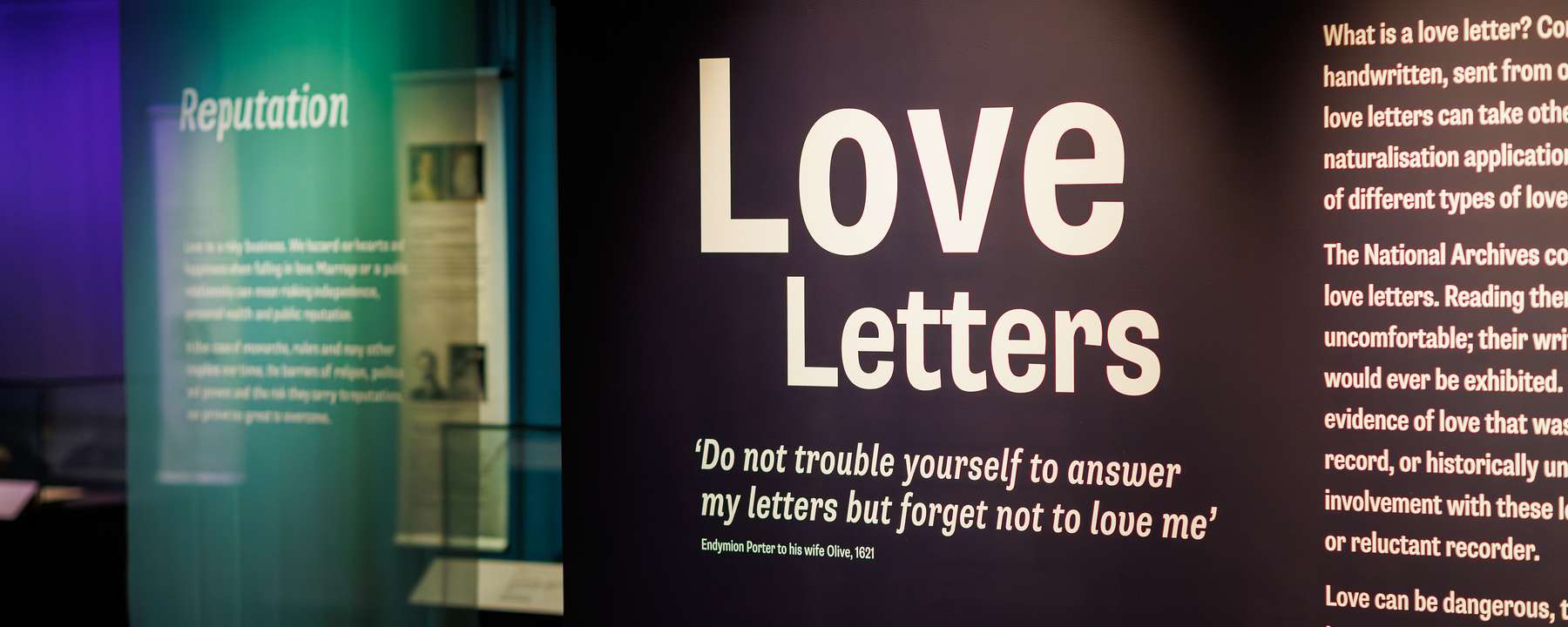
The National Archives is not the most obvious place to look for personal correspondence, including love letters. However, during people’s interactions with the state, items we can read as love letters have been created, captured and stored in our archive. As a result, personal moments can be unexpectedly preserved in collections shaped by government and legal records, offering a unique view into people’s lives.
In this blog, three of our records specialists and one of our dedicated volunteers share the journeys of discovery they have made about specific items featuring in the Love Letters exhibition. They consider both the careful process of, and unexpected discoveries that come from, archival research. They also explore the thrill of uncovering heartfelt emotions from hundreds of years ago.
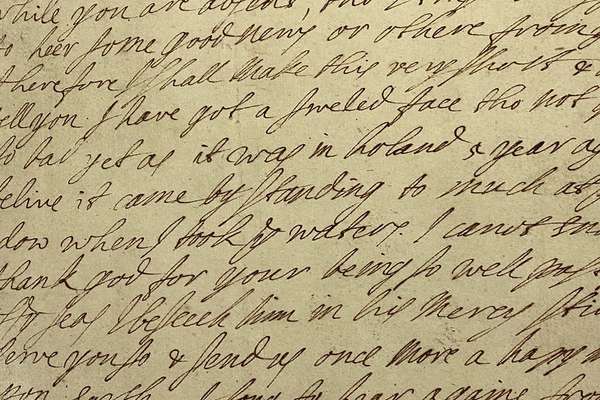
Letter from Mary II to William III, 19 June 1690
being apt to flatter myself I will hope you will be as wiling to read as I to write, & indeed tis the onely comfort I have in this world
Mary's letter to William, catalogue reference: SP 8/7/73, f.108b
The ongoing task of cataloguing the 1,000 years’ worth of documents held at the National Archives in Kew can be daunting. However, for our small army of volunteers who work alongside professional staff, it is a labour of love.
Our catalogue, Discovery, contains descriptions of 22 million records. Despite this large number, most of our collection is described in little detail. Whole boxes of records might only be known by a single description and approximate date range. Due to this, their contents are largely inaccessible to researchers. It is the work of our volunteers to bring them within reach.
While cataloguing these records, rare displays of intimate emotion can be found. Often, these are the records our volunteers love most of all.
An example of these rare finds was uncovered in the private letters of Queen Mary II to her husband William III. These were found in our collection known as ‘King William’s Chest’ (Catalogue reference SP 8) alongside official state papers.
Touching and tender, these love letters are as heartfelt as the script of any Hollywood romance – except that, unlike the endearments whispered between Hugh Grant and Julia Roberts in ‘Notting Hill,’ Queen Mary’s sweet nothings to her ‘dearest,’ are official government record. We found that the royal couple’s clear and devoted love for each other goes beyond historical value to a deeply moving read.

Whitehall, June ye 29/19 1690
You will be weary of seeing every day a leter from me
It May be, yet being apt to flatter myself I will hope
you will be as wiling to read as I to write, & indeed
tis the onely comfort I have in this world, besides is
of trust on god, I have nothing to say to you at present
that is worth writeing & I think it unreasonable
to troble you with my griefe wch must continue
while you are absent, tho I trust every post
to heer some good news or othere from you,
therefore I shall make this very short & onely
tell you I have got a sweled face tho not quite
so bad yet as it was on holand 5 years ago, I
belive it came by standing to much at ye win-
dow when I took the waters. I canot enough
thank god for your being so well past the dangers
of ye seas I beseech him in his Mercy still to pre-
serve you so & send us once more a hapy meeting
upon earth, I long to hear againe from you
how ye aire of Irland agrees with you for I
must own I am not without my fears for ye loving
you so intirely as I do & shall
till death.
Handwritten letter from Mary II to William III, 19 June 1690. Catalogue reference: SP 8/7/73, f.108b
By Richard Knight, Volunteer, and Ralph Thompson, Records Adviser.
The story of
Mary II’s love letters to William III
Buried among a collection of official documents curated by William III are an unusual find: expressions of love.
Draft of a love letter from Isaac Church, ship’s mate, to Rosanna, 10 June 1772
I must Inform that All the Comforts of human Life Which I am Capable of Enjoying are Totally Destroyed By the Passionate Love I Bear to You
Catalogue reference: HCA 32/304/18/SP30
In 1772, ship’s mate Isaac Church wrote a letter to the woman who had just rejected his marriage proposal and copied it into his journal as his farewell to her.
'I can No More Cease to Love you than I can Cease to Love my Self, & am Reduced to the Dismal Extremity of Leaving all those who are Very Near & Dear to me, & Entering into the Midst of a Wide World full of Trouble & Temptations to such Courses of Life as my Soul Detests.'
I found the letter while cataloguing the papers of the American whaler ship Desire. The ship left Nantucket in April 1775 and was captured off the coast of Brazil by the British navy in January 1777. During this time, all papers found on this, and other captured ships, were exhibited in courts to prove enemy status.
The Desire was detained in Brazil for months: papers in Portuguese show that the British authorities were unsure what to do with an American ship, unaware that war had been declared against America. Looking through Isaac’s journal provided a pleasant break from unpicking these complex accounts.
To me, Isaac’s journal reads as the work of an educated, thoughtful and emotional man. For instance, when the Desire hunted whales off the coasts of West Africa and Brazil, Isaac wrote a poem, being moved by the experience.
‘A creature once beneath the heavens did dwell, as sacred writers undisputed tell’.
He also struck me as a man who felt a deep sense of 18th century sensibility, who now found himself living a different life from the gentle one he had imagined. Accordingly, through Isaac’s writings and heartbreak, we can learn a lot about the complexity of life for sailors during this period.
This letter was catalogued as part of the Prize Papers Project. This collection of records is a vast and unique set of documents that track the daily lives of people around the globe in the time of the European colonial expansion and resistance. The objects in the Prize Papers Collection were taken by the High Court of Admiralty of the English and later British Royal Navy between 1652 and 1815. We now hold them at The National Archives

Madan before you Commit this Paper to the flames, I Earnestly Intreat you would Carefully Read it over as it Contains Nothing But Truth & Sincerity Being Now about To take Leave of friends & Relations Which by an unaccountable Turn of Providence I am Constrained To Do In Search of Some Peace of mind, which I have Not the Least Glimpse of hope To obtain at home, I must Inform that
All the Comforts of human Life Which I am Capable of Enjoying are Totally Destroyed By the Passionate Love I Bear to You, & That you are Not Disposed to Entertain Any Tender Sentiments Towards Me. I am Not Writing with a View to Work on your Affections, as it is not Likely I shall Ever See you again, Nor Even any of my friends and Relations at home, unless time & absence shall wear off those Impressions you have made upon my mind – not to say your Beauty, for I never was weak as to be inspired with so Tender a Passion from that alone – But it is your Virtue, and the Qualifications of your Mind, that hath made so Deep an Impression on my Soul &, insensible, Betray me into a Passion of Love That Knows No Bounds. Yours Is Interwoven with my frame, that I can No More Cease to Love you than I can Cease to Love my Self, & am Reduced to the Dismal Extremity of Leaving all those who are Very Near & Dear to me, & Entering into the Midst of a Wide World full of Trouble & Temptations to such Courses of Life as my Soul Detests; [...]
Isaac Church’s draft love letter preserved among the captured ‘Prize Papers’ from the ship Desire, 1772. Catalogue reference: HCA 32/304/18
By Amanda Bevan, Head of Legal Records
Letter from Cyril to ‘My Darling Morris’, 1934
I only wish that I was going away with you, just you and I to eat, sleep and make love together.
Catalogue reference: DPP 2/224 (5)
This letter, written between two queer men in the 1930s, remains strikingly relevant and relatable – full of affection, and unreturned emotions.
I first encountered this item through Matt Houlbrook’s Queer London, a book based on archival research and rich with references to The National Archives. While specialists often discover items independently, this is a reminder of how secondary sources can also guide our research. Houlbrook explores the vibrant possibilities of queer nightlife in 1920s and 1930s London, including the Caravan Club. This venue opened in 1934 on Endell Street and styled itself as ‘London’s Greatest Bohemian Rendezvous’.
This encouraged me to immerse myself in the world of the Caravan Club, piecing together records to understand the underground space. I also explored the surveillance and policing that created these records, and the risks queer people took to socialise and love. The files are full of lengthy descriptions of interactions in the space; there are floor plans and even rare interior photographs. I’ve researched the Caravan Club on and off for years – but I’m always drawn back to it.

AFTER THE DAY'S ROUTINE SPEND YOUR EVENING AT
the caravan
81 ENDELL ST.
ENTRANCE IN COURT.
(Corner of Shaftesbury Avenue, facing Princes Theatre)
Phone: Temple Bar 7665
London's Greatest Bohemian Rendezous said to be the most unconventional spot in town
ALL NIGHT GAIETY Dancing to Charlie
PERIODCAL NIGHT TRIPS TO THE GREAT OPEN SPACES, INCLUDING THE ACE OF SPADES, ETC.
Card advertising the Caravan Club. Catalogue reference: MEPO 3/758
This letter between Cyril and Morris is a particularly moving part of these records. After just six weeks of operation, the Caravan Club was raided. Cyril was there that night, having written this letter to Morris expressing his disappointment that he wasn’t at the club. Cyril then tore the letter up, aware of how vulnerable these words made him, but police recovered the torn pieces and typed them for their records. Like many of the letters in our collection, it was never seen by its recipient.
The risks of daring to love freely in the 1930s are starkly evident here – tender words are marked with ‘Exhibit 4.’, attempting to weaponise private feelings. When I first read the letter, I felt intensely conflicted: moved by the expressions of emotions, angry that this love was policed, yet grateful that such rare evidence of queer love survives, even in these circumstances.
I feel a profound sense of duty to share this item with audiences today. Often, people respond to the letter with a sense of deep connection to Cyril and Morris, seeing themselves reflected in the archives from documents almost 100 years old.
Working with records that carry such intimate emotions can be challenging but it is also a great privilege. I am delighted to be able to share Cyril and Morris’s story with more audiences through our ‘Love Letters’ exhibition, along with commentary in our audio tour by Matt Houlbrook.

Exhibit 4.
My Darling Morris,
Just a note which I feel I must write or should I say type to you. I was very very disappointed to find out that you were not coming to the Club to-night, as ever since I phoned you on Monday and made arrangements, I just lived for to-night when I was to have seen you darling, as a matter of fact I stayed in bed all day yesterday, didn’t even get up to eat and just thought of you, and counting the hours until I should see you, and then the terrible shock, of not being with you after all, I had a terrible feeling that I should be disappointed so that is the reason I telephoned.
I always feel so embarrassed when we meet as the terrible thought of your trouble keeps ringing in my ears, and I hate myself and cried for hours when I lay and thought it all, especially when I love you, Morris darling, honestly I do, it is two years almost since we first met, then I was crazy about you, but you just seemed to disappear and I never saw you for months and I tried to forget, and now since seeing you, it has all started again
[...]
Well Morris darling I must ring off now and pray that I may see you on Saturday.
I only wish that I was going away with you, just you and I to eat sleep and make love together, perhaps when you are away you will think of me sometimes and even write me, I, sincerely hope so.
Well Morris darling until we meet,
I am Yours with all my love for ever and always,
Cyril's letter to Morris, re-typed by police to use as evidence. Catalogue reference: MEPO 3/758
Metropolitan Police Service. Material in The National Archives is reproduced by permission of the Metropolitan Police Authority on behalf of the Crown.
By Vicky Iglikowski-Broad, Principal Records Specialist – Diverse Histories