





Medical and welfare history at The National Archives
From rules and orders that respond to outbreaks of plague and cholera, to more recent HIV and COVID-19 health campaigns, our records document changing attitudes and responses towards diseases. Collections at The National Archives reveal the increasing involvement of the state in regulating and coordinating health prevention and emergency medical schemes.
What follows is a short journey through four key moments in time, when the state had to respond to the spread of epidemics and diseases.
Responses to plague
When we think of plague in England, two major epidemics might come to mind: the Black Death of 1348–1349 and the Great Plague of 1665–1666. These two outbreaks occurred during the centuries-long second plague pandemic caused by the bacterium Yersinia pestis. Records held in our collections shed light on the impromptu responses to outbreaks, such as a letter directed from Edward III to the sheriffs of London in 1349, ordering them to clean the streets of faeces and filth which were causing disease to spread.
From 1517, England introduced quarantine for the first time, prompted by Henry VIII’s personal fears about the spread of disease. The earliest state‑led measures were enforced at Windsor Castle. Anyone leaving to obtain food, drink, or other necessities had to carry a white staff to signal distance, and a pole fixed to the house warned others of infection. These restrictions remained in place for forty days after the last sign of illness.
These longer-term measures were soon copied in London and Oxford in 1518. In Oxford, however, the implementation of quarantine regulations was controversial. It became the subject of debate among the King’s Council (a group of the king's advisers). In particularly the Council reviewed whether the annual Austin Friars’ fair (due to take place a fortnight later) should continue as normal. Concerns about an influx into Oxford of infected persons from London were balanced against open hostility from certain merchants, who felt the rules limited their trading activity. Ultimately, the fair was allowed to go ahead as planned.

The king’s grace commanded his council here to debate this matter among themselves, whether it should be best that the fair in the Austin Friars in Oxford, which after the old custom shall be now within14 days, should be stopped or not, for it is thought that for the resort of people as well from London as from other infect places [w]hether Oxford shall be in as evil case by the beginning of the next term as London. Also, it was said in the said council that in stopping and letting of the said fair there should ensue grogs and murmurs among the king’s subjects, specially in London, when they would think that men went about utterly to destroy them, if with other their misfortunes they should also be kept from their fairs and markets.
Letter among the State Papers discussing concerns around rules to restrict infection, including whether fairs and markets in Oxford should be cancelled or allowed to proceed, 1518. Catalogue reference: SP 1/16, f. 244
Over the course of the 16th and into the 17th centuries, regulations became stricter, and were often controversial, but the idea of quarantine would persist as one tool in the state’s responses to infectious disease.

- You are to take care, that no stranger be permitted to lodge or abide in any city, town, or village without a sufficient certificate of health and the consent of the next Justice of Peace or Chief Magistrate…
- That no household goods whatsoever be received into any city, borough, town, village or hamlet, coming from any place suspected to be infected with the plague, without sufficient certificate.
- That all public meetings and concourses of people, as much as may be (especially to funerals, wakes, or revels) be prohibited where there is any suspicion of the plague
- That no vagabonds nor beggars be permitted to go and wander about the country, or in any other city or place, and that you appoint watching and warding to that end, and that all public places (especially streets and passages) be kept sweet and clean, and that all laystalls, dunghills, and slaughter houses near any dwellings be removed to places more remote.
- That order be given to all householders to keep their dwelling houses sweet and clean, and to keep shut all windows opening towards infected houses.
Rules and Orders for preventing the spread of the plague in 1666. Catalogue reference: SP 29/155, ff. 142-3
In pictures
Plague

Efforts to guard against the spread of historic pandemics can be found in the records of our collection, from individuals and the state.
Smallpox in the late 18th and 19th centuries
The state’s response to smallpox in the late 18th and 19th centuries combined emerging scientific knowledge with administrative innovation. Smallpox was one of the most lethal diseases of the period, killing an average of around 3,000 people per million annually in England between 1700 and 1797.
The first significant medical intervention was variolation, an early form of inoculation, introduced to the UK in the early 18th century. This involved inserting matter from a smallpox pustule into the skin of an uninfected person. Though risky, inoculation sharply reduced mortality compared to natural infection and was seen as a statistical breakthrough. Its early use was experimental and controversial. Six prisoners at Newgate were offered reduced sentences in return for undergoing the procedure, all of whom survived. Nevertheless, inoculation remained expensive and inaccessible to the poor, limiting its wider impact. As a result, smallpox continued to be a major killer throughout the 18th century.
A decisive breakthrough came in the late 1790s with British physician Edward Jenner’s development of vaccination, using cowpox virus. This was a global scientific first. Parishes increasingly adopted vaccination programmes, contracting doctors to vaccinate the poor and funding this through the rates raised by the Elizabethan poor law (Poor Law Act, 1601). For the poorest sections of society, this marked a major advance in public health provision. The founding of the National Vaccine Establishment in 1808 further promoted widespread uptake.

'An Acte for the Releife of the Poore', 1601. This act, popularly known as the Elizabethan Poor Law, formalized poor relief distribution in England and Wales. Catalogue reference: YHL/PO/PU/1/1601/43Eliz1n2

Vaccination return under the Vaccination Extension Act for Llanfyllin, Monmouthshire, for the year ended 29 September 1849. Shows the names of vaccinators and the number of people vaccinated, 21 January 1850. Catalogue reference: MH 12/16545/267
Following the creation of the centralised New Poor Law in 1834, vaccination became fully integrated into the state welfare system. A series of parliamentary acts made vaccination compulsory and free, while banning inoculation altogether. Boards of Poor Law Guardians employed vaccinators, often their own medical officers, to vaccinate local populations at a set cost per head. Vaccination cases were formally reported and recorded, creating a growing body of administrative and medical data.

RICHMOND UNION.
COMPULSORY
VACCINATION.
It is requested that Parents of Children and all other Persons will Take Notice of the provisions made by the several Acts of the 3rd & 4th and 16th & 17th years of the reign of Queen Victoria, for the Extension of Vaccination with the Cow Pox, and the Prevention of the Spread of Small Pox; and to Make Compulsory the Practice of Vaccination upon the Parents and Guardians of Children.
Richmond Union smallpox vaccination poster, 1856. Catalogue reference: MH 12/12599
The effectiveness of vaccination lay in the combination of scientific observation, repeatedly measurable health outcomes, and the administrative machinery provided by central law making and local government units (Poor Law Unions). Between 1857 to 1866, at a time of compulsory vaccination, average smallpox deaths per million per year fell to 214. Nevertheless, an anti-vaccination movement was active in the late-Victorian period, setting up a mirror image of the British experience of COVID-19 in the 2020s.

REPTILE
THIS IS TO give you warning
THAT IF YOU DO NOT give up
your ABOMINABLE OFFICE
you will not Live To see next
Summer: you mean skulking
venomous TOAD you WILL
wade through THE BLOOD OF
innocient CHILDREN FOR THE
SAKE OF A FEW pounds i hope
THAT EVERY pound you get
WILL SINK you a THOUSAND
Miles FARTHER INTO HELL
And Heat it TEN Thousand
Times hotter
Extract from an anonymous anti-vaccination letter sent to John Gott, Vaccination Officer, Keighley Poor Law Union in late 1882. Catalogue reference: MH 12/15177
The 1918–1919 influenza pandemic
The 1918–1919 influenza pandemic was among the deadliest disease outbreaks in modern history, killing an estimated 50 million people, far more than the First World War. Around 250,000 people in Britain died, with every part of society affected. Wartime overcrowding and poor sanitation in military camps and trenches contributed to the virus’s spread.
Early signs of the outbreak appear in government records, such as a May 1918 Cabinet Office report noting over 200 influenza cases aboard H.M.S. Weymouth. Much of the early scientific work on the virus was conducted by the Army Pathology Advisory Committee, which collaborated closely with the Medical Research Committee.

Medical Research Committee pamphlet, Studies of Influenza in Hospitals of the British Armies in France, 1918 (1919). Catalogue reference: FD 4/36
At the time, national health responsibilities sat with the Local Government Board, but most practical measures were carried out by local authorities. During the severe second wave of influenza in autumn 1918, Medical Officers of Health introduced a number of measures. They restricted entry to theatres, cinemas, and dance halls, isolated the sick, and issued advice through newspapers urging people to stay home when feverish and ventilate rooms. Schools often closed briefly, though no national directive was issued.
The unknowns surrounding the flu meant that there was a lack of agreement in the medical community about how best to treat it. Doctors were only able to treat its symptoms. This led to a reliance on commercial remedies for prevention and treatment such as Condy’s Fluid (a sore throat treatment using permanganate potassium), throat lozenges, medicated wines, carbolic vaporizers (a device to kill airborne bacteria), and portable Turkish (vapour) baths.

Example of an influenza vapour bath, dating from 1848. Catalogue reference: BT 45/7/1396
In early 1919, as a third wave appeared, medical practitioners had to report any cases of primary pneumonia and acute influenza pneumonia, amid fears that soldiers returning home from the war would worsen the outbreak. Public information efforts continued. Arthur Newsholme, Chief Medical Officer of the Local Government Board, commissioned the silent film Dr. Wise on Influenza. The film promoted ventilation, rest, and hygiene measures such as gargling and nasal douching.
youtube.com
Watch Dr. Wise on Influenza (1919)
Public information film on the Influenza pandemic (18 minutes, 10 seconds).
The pandemic highlighted weaknesses in Britain’s health administration and contributed to the creation of the Ministry of Health in November 1919. This reform was widely supported in the press as public interest in health surged after the crisis.
Healthcare in the 1920s continued to be shaped by a society still recovering from the First World War and the deadly influenza pandemic.
In pictures
Health in the 1920s
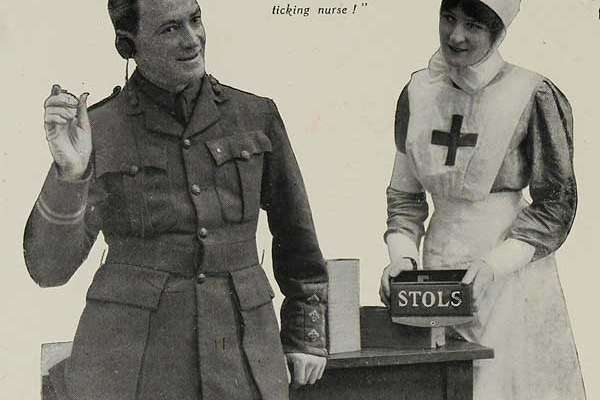
The ever-shifting role of the state in public health is revealed in our records from the 1920s, drawn from material from across government departments.
The HIV pandemic (1981 to early 1990s)
HIV emerged globally in the early 1980s and reached the United Kingdom by 1981–82. By the mid‑1980s, rising case numbers and growing public concern prompted the government to act, investing in medical research and measures to limit transmission. In 1986, it launched the nationwide ‘Don’t Die of Ignorance’ public health campaign. This was designed to make people aware of the risks of HIV, quickly deliver clear, accessible information on how it is spread, how to reduce risk, and how to respond to possible exposure. Although mass‑media health messaging had precedents, nothing matched the scale, visual impact, and international resonance of this campaign.
Records about the commissioning of the campaign expose internal tensions, political sensitivities, and the challenges of crafting effective messaging during a period of scientific uncertainty and public anxiety. Among these is a 1986 memo from David Willetts, of the Policy Unit, urging swift action. Margaret Thatcher’s handwritten annotation, 'Do we have to have the section on risky sex? I should have thought it could do immense harm if young teenagers were to read it', illustrates political discomfort around sexual content, and the broader clash between public health necessity and social conservatism.

Norman Fowler is proposing to place explicit and distasteful advertisements about AIDS in all the Sunday papers. The AIDS problem is now so serious that we must do as he proposes, though his advert could open with more facts about the spread of AIDS.
We have so far had 275 cases of clinical AIDS in this country. But approximately 20,000 people are known to be carrying the virus. The Chief Medical Officer estimates that perhaps 25% of these people go on to develop clinical AIDS. But he may be optimistic - it is possible that they will all develop AIDS over the coming years.
The cost of treating someone with clinical AIDS is very cautiously estimated at £10,000-£20,000. That represents a bill between £50m and £100m just for the people currently with the virus who can be expected to catch the disease. The number of people with the virus is doubling every year.
The virus is mainly transmitted between homosexuals and between drug addicts who share contaminated needles. In Edinburgh 50% of drug addicts have the virus (as against 10% of addicts elsewhere) because pharmacists clamped down on providing needles for addicts. The challenge is to achieve proper public health supervision of addicts without encouraging drug-taking. AIDS isn't just transmitted between drug-takers and homosexuals. It can also be transmitted by normal intercourse. The following causal chain is perfectly possible: a drug-taker who finances her addiction by prostitution transmits the virus to a male client who passes it on to his wife who gives birth to a baby with the virus. These are the sorts of mechanism whereby AIDS can spread out to the population at large.
David Willetts
Letter by David Willetts to Prime Minister Margaret Thatcher on the urgency of an AIDS public health campaign. Catalogue reference: PREM 19/1863
Storyboards for the ’Monolith’ television and cinema advert (shown below), unused newspaper designs, and proofs of the household leaflet demonstrate how campaign designers navigated limited scientific knowledge, public fear, and stigma. The prominence of stark imagery and frank language signalled a new, fear‑based marketing strategy. This marked a turning point in late‑20th‑century public health communication, highlighting the growing power of mass media to shape national understanding and influence behaviour during a public health emergency.

AIDS. Monolith. 40 secs.
There is a disease today that is potentially more deadly...
...than the deadliest bomb.
This virus can be passed during sexual intercourse, so anyone can get it male or female, gay or straight.
The numbers who are already infected are rising,
be very careful who you have sex with. Protect yourself, and use a condom,
and read this leaflet when it arrives.
Today AIDS is the fact of life you cannot ignore
ignore it and it could be the death of you.
Storyboard for the AIDS ‘Monolith’ advert, 1986. Catalogue reference: JA 235/57
In pictures
HIV and AIDS

We hold an extensive range of material related to the HIV and AIDS epidemic of the 1980 and 1990s. Explore them here.
COVID-19 (2020–2023)
The outbreak of COVID-19 was the most documented pandemic in history, owing to it being one of the first global pandemics since the invention of the world wide web in 1989. The first cases of coronavirus were reported in 2019, and the virus was first found in the UK on 31 January 2020. By 16 March 2020 the Prime Minister began daily briefings, with a nationwide lockdown announced the following week, on 23 March.
Archived page
Prime Minister Boris Johnson’s speech announcing lockdown
Boris Johnson gives an important update on COVID-19.
During the COVID‑19 pandemic, the UK Government Web Archive (UKGWA) team, responsible for capturing and preserving online government information, archived at least 71.5 million more web documents than usual. They created an extensive record of how the crisis unfolded and how official advice rapidly evolved.
On the UKGWA site, timeline pages make it possible to track how any specific URL changed over time. The COVID-19 dashboard and the NHS COVID-19 page are two particularly valuable examples for understanding the progression of COVID‑19. These pages allow users to follow the spread of the virus and the growing complexity of the government’s digital response.
The earliest version of the COVID-19 dashboard from 14 April 2020 was extremely simple, displaying only one graph and a few key figures. By late 2020 it featured an interactive map and by mid‑2021 it included data on infections, hospitalisations and vaccination.

GOV.UK Coronavirus dashboard showing data as of 14 April 2020.

GOV.UK Coronavirus dashboard showing data archived on 6 March 2024.
Archived page
Timeline of the Government COVID-19 dashboard
UK Government Web Archive of the COVID-19 dashboard.
The NHS website reveals how advice related to COVID-19 changed throughout the pandemic. The page was first created in February 2020 when the risk to individuals was reported to be low.

The first NHS COVID-19 webpage, archived on 13 February 2020.
You can follow the progress of the pandemic across these sites up until 2023, with the ongoing COVID-19 Inquiry website also forming part of the collection. To see the most recent capture of the Inquiry website and how it has progressed over the years, view the Inquiry timeline.
The National Archives' collections shed light on official responses to public health emergencies across the centuries. This research reveals the increasing involvement of the state in health education, disease prevention and data capture.
Archived page
COVID-19 Public Inquiry Archive Timeline
UK Government Web Archive for the COVID-19 Public Inquiry.


