













Teaching resource
The career of Dr James Barry
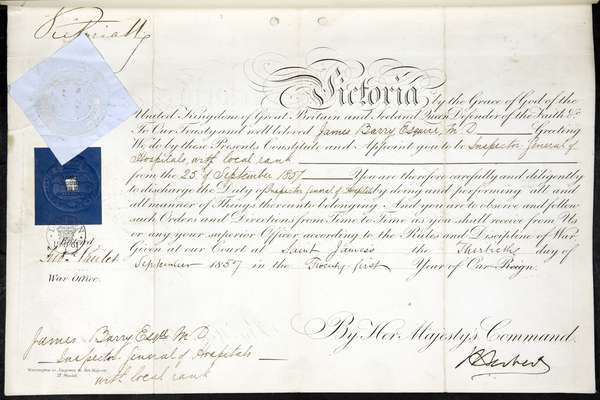
This resource traces the military and medical career of 19th-century transgender surgeon Dr James Barry.
Teaching resource
The history of lesbian, gay, bisexual, transgender, and queer (LGBTQ+) people in the UK is a complex mixture of pain, resistance, and progress. Use this lesson to find out about LGBTQ+ rights and lives from the 1700s to the present day. Developed in collaboration with the Bishopsgate Institute.

A group of likely-gay men having a beach day.
Emmanuel Cooper Archive, Bishopsgate Institute.
This resource features records containing homophobic language and references to the oppression and criminalisation of LGBTQ+ people, including capital punishment. Original language and legal terms are preserved here to accurately represent our records and help us fully understand the past. Some of these sources contain non-explicit references to sex and sexuality.
How have changes in laws and attitudes affected LGBTQ+ people in Britain?
Charles Worrell was a crew member on a ship. He was spotted by another crew member, Jenkin Williams, having sexual relations with another man. This document shows how he survived through blackmailing his captain.
Note: A sodomy law is a law that defines certain sexual acts as crimes.

What I have to say in reference to Mr Worrell is that upon the nineteenth of August last 1701 I out of my cabin heard Mr Worrell aforesaid use very kind expressions to Mr Sandys being then both in Mr Price’s hammock as: my dear, my life and my soul. Upon which I softly opened the door and saw Mr Worrell making the usual motions a man does when in carnal copulation and heard Mr Sandys say, fye upon you, you beast, I can endure it no longer, upon which Worrell desisted and turned on his back. This happened about half an hour before it was dark, the day about written.
Dated December 2nd 1701.
Jenkin Williams
On August the 23rd last past 1701 I showed Captain Laton a letter I had written in order to acquaint Captain Vinient of what I had seen and heard on the 19th of the month aforesaid between Charles Worrell and Thomas Sandys … Charles Worrell earnestly entreated me to desire the Captain Laton would be pleased to let him the said Worrell speak with him in my cabin that evening before Captain Vinient should see the letter, which Capt. Laton condescended to, and after his arrival in the cabin read the letter upon which the said Charles Worrell very much [word unclear] Capt Laton not to expose the letter to Capt Vinient and after much entreaty the aforesaid Capt Laton yielded to [word unclear] the letter, and immediately tore it all to pieces, for which the said Worrell gave Capt Laton a thousand thanks, and told him [word unclear] he did believe his [word unclear] was not as good as he should wish, and that if he had occasion for any money, what he could conveniently spare – should be at his service, and desired the said Capt Laton to make use of those three guinneys which he there delivered Capt Laton upon which Capt Laton thanked him and told him that if at any for the future Capt Vinient should be informed of anything to his prejudice, he would use his interest to have it suppressed and to this effect, and after a little more discourse upon that subject parted.
…
But in the interim by the investigation of some ill persons Capt Laton was mightily incensed against me, and for his revenge alleged I had unjustly detained his stuffs – and moreover told Charles Worrell I had forced a letter against him, upon which the said Worrell threatened me with a court martiall by calling me rogue and villain and that he would have my ears off which occasioned me in vindication of my own reputation, to give Capt Vinient my Commander the same relation I here lay down before your honours humbly desiring that the honours would be pleased to take it into your serious consideration.
Papers related to trial of Charles Worrell for sodomy. Catalogue reference: ADM 1/5262/169 ff. 164-168
James Pratt, aged 30, and John Smith, aged 40, were the last two Englishmen to ever be executed for sodomy.

This offence I allow is a very heavy one against God, and shows a most degraded nature, but surely, My lord, is it not a crime against society of such a description as to call for the spilling of blood, that punishment should be reserved for terrifying crimes, for those offering violence to the lives or persons of others: and I am convinced that the only reason why the punishment of death has been retained in this case, is the difficulty of finding any one hardy enough to undertake what might be represented as the defence of such a crime. A disgraceful punishment would, I am sure, be more agreeable to the feelings of mankind, as well as more effectual in checking the offence. …
But besides this, there is a shocking inequality in this law in its operation upon the rich and poor. It is the only crime where there is no injury done to any individual and in consequence it requires a very small expense to commit it in so private a manner and to take such precautions as shall render conviction impossible. It is also the only capital crime that is committed by rich men but owing to the circumstances I have mentioned they are never convicted. The detection of these degraded creatures was owing entirely to their poverty, they were unable to pay for privacy, and the room was so poor that what was going on inside was easily visible from without.
Letter from police magistrate Hensleigh Wedgwood to the Home Secretary Lord John Russell about two prisoners condemned to be executed for having had sexual relations with each other. Catalogue reference: HO 17/120/60
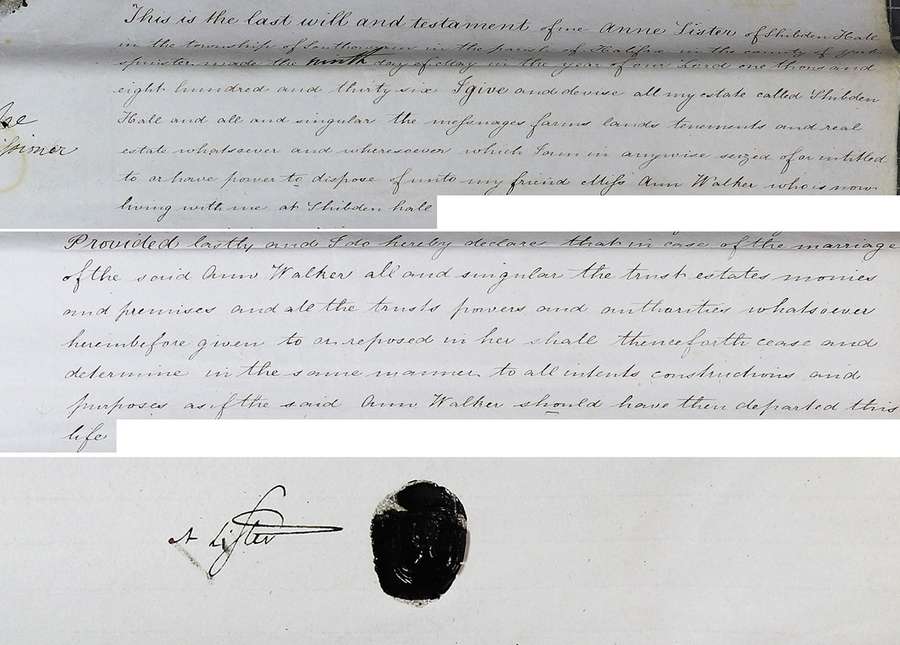
Anne Lister is famously known as ‘the first modern lesbian’, due to the extensive diaries she left behind detailing her relationships with women. She married Ann Walker in 1834. However, this wasn’t an ‘official’ marriage in the eyes of the law. This wouldn’t be possible for same-sex couples until 2013. Both women inherited estates from wealthy families, allowing them some freedom in living their lives.

This is the last will and testament of me Anne Lister of Shibden Hall in the township of Southowram in the parish of Halifax in the county of York, spinster, made the ninth day of May in the year of our Lord one thousand eight hundred and thirty six. I give and devise all my estate called Shibden Hall and all and singular the messuages farms lands tenements and real estate whatsoever and wheresoever which I am in anywise seized of or entitled to or have power to dispose of unto my friend Miss Ann Walker who is now living with me at Shibden Hall. …
Provided lastly and I do hereby declare that in case of the marriage of the said Ann Walker all and singular the trust estates monies and premises and all the trusts proven and authorities whatsoever hereinbefore given to as or reposed in her shall thenceforth cease and determine in the same manner to all intents constrictions and purposes as if the said Ann Walker should have then departed this life. …
A Lister
Anne Lister’s will, in which she leaves her estate, Shibden Hall, to her wife Ann Walker. Catalogue reference: PROB 10/6000
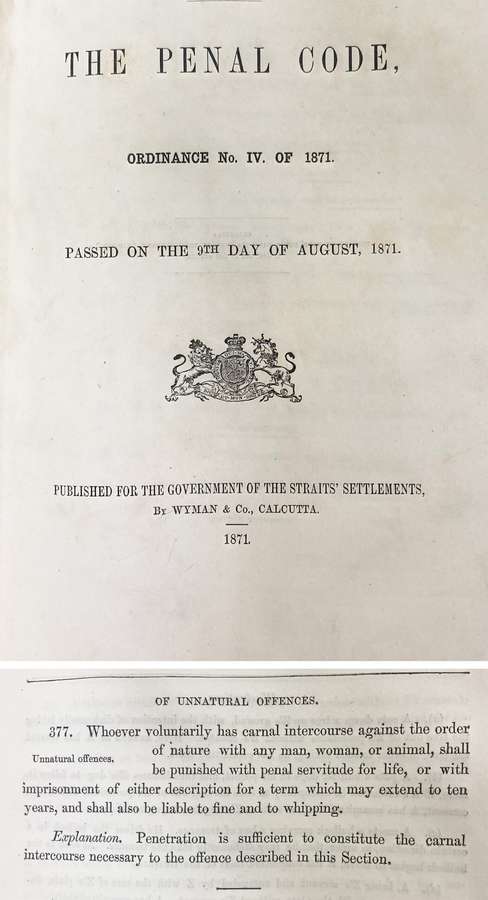
Section 377 of the Indian Penal Code, criminalised homosexual intercourse (it was considered an ‘unnatural offence’). The Indian Penal Code, created in 1860 for Britain’s Indian colonies, was applied to other colonies in the British Empire. Here, it is applied to the Straits Settlements (today’s Malaysia and Singapore).
Section 377 still exists today in several countries that were formerly British colonies, including Malaysia.

THE PENAL CODE
ORDINANCE No. IV of 1871
PASSED ON THE 9TH DAY OF AUGUST, 1871.
PUBLISHED FOR THE GOVERNMENT OF THE STRAITS SETTLEMENTS,
By WYMAN & CO, CALCUTTA.
1871.
OF UNNATURAL OFFENCES.
377. Whoever voluntarily has carnal intercourse against the order of nature with any man, woman, or animal, shall be punished with penal servitude for life, or with imprisonment of either description for a term which may extend to ten years, and shall also be liable to fine and to whipping.
Explanation. Penetration is sufficient to constitute the carnal intercourse necessary to the offence described in this Section.
The Indian Penal Code, 1871. Catalogue reference: CO 274/2
The Labouchere Amendment of the Criminal Law Amendment Act 1885 made it illegal for any man to commit an act of ‘gross indecency’ with another man. Sexual acts no longer had to be proven. Oscar Wilde was convicted under this act in 1895.
On 18 February 1895 the Marquis of Queensbury – also known as Sir John Sholto Douglas – left his calling card at the Albemarle Club, labelled ‘For Oscar Wilde posing Sodomite’ (misspelt as ‘somdomite’). He took issue with Wilde’s ongoing relationship with his son Alfred. Wilde accused Lord Queensbury of libel. However, during the ensuing trial, evidence was brought up that eventually got Wilde convicted for gross indecency. Witness statements from male sex workers, for example, were forwarded to the crown prosecution and resulted in his trial for gross indecency.

"B"
Oscar Wilde Esq
For Oscar Wilde
Posing somdomite [sic]
Marquis of Queensberry
A
The calling card left by the Marquis of Queensbury calling Oscar Wilde a ‘posing somdomite’ (presumably intending to spell ‘sodomite’). Catalogue reference: CRIM 1/41/6
This text shows the discussion around a clause that was proposed to be added to the Criminal Law Bill in 1921.
The clause would criminalise female same-sex relationships, similar to how male same-sex relationships were criminalised. This source shows how it was ultimately rejected by the House of Lords.

After clause 3 insert a new clause:
Any act of gross indecency between female persons shall be a misdemeanour, and punishable in the same manner as any such act committed by male persons under section eleven of the Criminal Law Amendment Act, 1885.
…
LORDS REASONS for disagreeing with certain of the AMENDMENTS made by the COMMONS.
The Lords disagree with the Amendment made by the Commons to insert clause A after clause 3, for the following Reason:
Because the Amendment introduces a new offence which may lead to unlooked for and evil results, and which should not be introduced without the fullest consideration.
Criminal Law (Amendment) Bill, 1921. Catalogue reference: LCO 2/469
The Shim Sham Club was an unlicensed club on Wardour Street in London. It was heavily associated with African-American culture, described as ‘London’s miniature Harlem’. It was also frequented by the LGBTQ+ community. All of this caused the police to keep the club under surveillance. This document shows a surveillance report from an undercover police officer.
The Shim Sham Club was one of a small number of underground clubs where LGBTQ+ people in 1930s Britain could gather.

At 2:16 AM, two women both of the Lesbian type left and walked to Shaftesbury Avenue where they entered a cab. As they passed me, one said to the other: “That was a dear dance for ten bob”.
At 2:17 AM the boy on the cycle left.
At 2:19 AM a man of colour entered.
At 2:23 AM a man under the influence of drink left. He was wearing a fancy hat and blowing a squeaker.
At 2:30 AM three men left and entered a cab.
At 2:34 AM one man and two women in evening dress arrived in a cab and entered.
At 2:37 AM a man entered, following by a boy carrying a bottle, who arrived on a cycle.
At 2:42 AM three women left.
At 2:44 AM a boy, and the cycle left.
At 3:1 AM five men left, all very rowdy, they walked towards Coventry Street.
At 3:8 AM three men of colour left.
At 3:20 AM two prostitutes entered.
At 3:38 AM four women left.
At 3:50 AM two women left.
Police observations on the Shim Sham Club. Catalogue reference: MEPO 2/4494
This photo, taken between 1928 and 1931, is from a series of photos of a group of men having a day out on the beach somewhere in the UK. It was collected by potter, art historian and LGBTQ+ activist Emmanuel Cooper when he was writing his book Photographing the Male Nude. Unfortunately, there is no further information on who the men were or where the photos were taken.

A group of likely-gay men having a beach day.
Emmanuel Cooper Archive, Bishopsgate Institute.
Patrick Nelson was born in Jamaica and came to the UK in 1938, where he – potentially at a venue like Shim Sham – met painter Duncan Grant, a member of the Bloomsbury Group. The two started a romantic relationship.
After fighting for the British military during the Second World War, Nelson returned to Jamaica in 1945. He once more came to London in the early 1960s, where he died in 1963. This portrait of Nelson near the end of his life was painted by Grant.

Portrait of Patrick Nelson by Duncan Grant, 1960-63.
Christie’s Images / Bridgeman Images
The Wolfenden Report was released in 1957, based on an inquiry into the state of laws against homosexuality. It recommended that homosexual acts in private between men over the age of 21 should be made legal. It took ten years for these recommendations to be implemented in the 1967 Sexual Offences Act.
The papers from 1954 in Source 10a shed light on some of the debates happening within the Committee putting together the Wolfenden report. The section asking the general public for their opinions comes from a Gallup poll in 1957, after the report was published.
The table in Source 10b covers the period directly before and after the Sexual Offences Act 1967.

Surely the point of view of the Committee comes to this: that if a man … is doing wrong the law must not intervene to stop him unless he is harming someone else; and that if two or more men are doing wrong together, neither coercing the other nor taking advantage of his weakness, they must not be interfered with by the law unless their behaviour is harmful to a third party or parties. … Again, I ask: can we accept this doctrine? By and large, though it is for each Member of the House to decide for himself, I believe we can.
…
Or must we consent to the very powerful reservation attached by Mr. Adair to the Wolfenden Report?
He says: “The presence in a district of, for example, adult male lovers living openly and notoriously under the approval of the law is bound to have a regrettable and pernicious effect on the young people of the community. … The more serious phases of such conduct have been recognised by our law as criminal for a continuous period of not less than 400 years, and a very heavy onus therefore rests on the advocates of the change now proposed to demonstrate by cogent evidence that the withdrawal of hitherto criminal conduct from the realm of criminal law is clearly justified.”
…
Most of us who have been at boarding schools or had adult experience of living for long period in purely masculine society, must know that if we do that, we are saying something of some whom we have known and liked at various stages of our lives. We must be aware, if we live in the present century, that there are men, some of them genuinely idealistic, who pass a life of agony in trying to resist these sinful impulses, and that some of these unfortunate people are denied by nature the normal fulfilment or marriage. Some of them, at least … might be prepared to seek medical or spiritual assistance, if the criminal taint were withdrawn, whereas at present they feel unable to lay bare their secret.
…
People were told of the Wolfenden recommendations and asked if they agreed or disagreed. Their answers are in percentages:
“Homosexual behaviour between men ages 21 and over should NOT be a criminal act provided that it is carried out in private.”
Discussions about The Wolfenden Report. Catalogue reference: LCO 2/5762

Figure 1
Number of offences of Indecency between Males recorded as known to the police, England and Wales 1946-76
[Vertical axis:]
Number of offences
500 – 1000 – 1500 – 2000 – 2500
[Horizontal axis:]
1946 – 1951 – 1956 – 1961 – 1966 – 1971 – 1976
Table showing the number of offences of ‘indecency’ between males in England and Wales 1946-76. Catalogue reference: HO 522/7
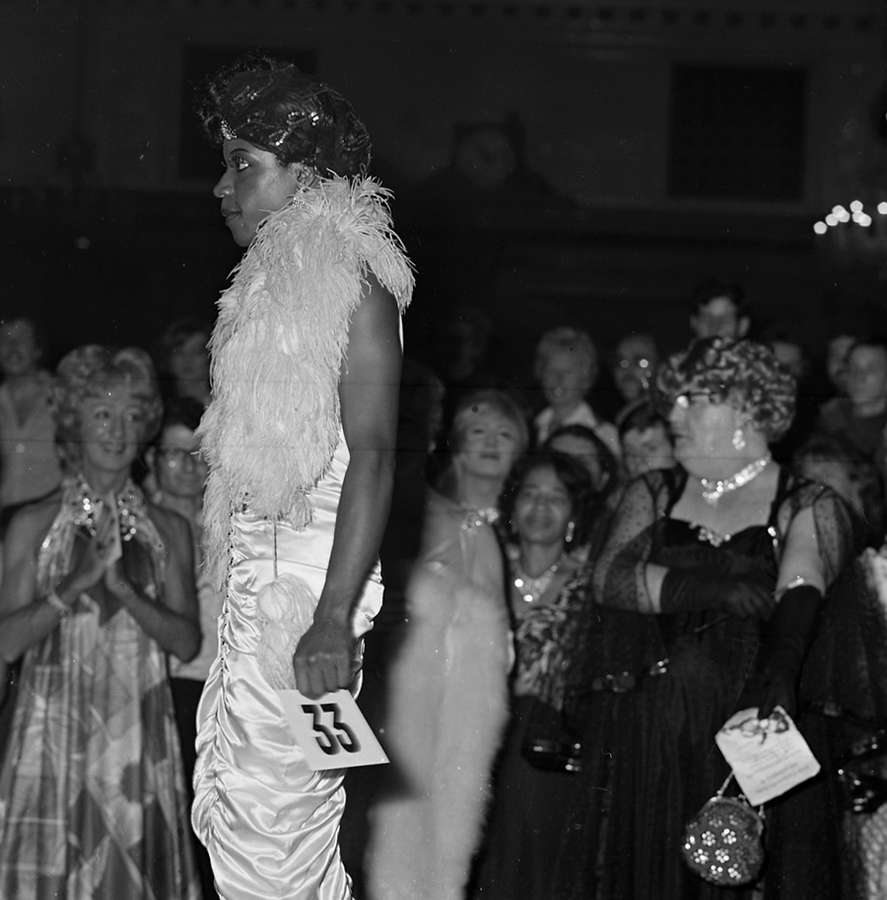
Modern Ballroom culture developed in late 20th-century New York as a Black and Latino underground LGBTQ+ subculture in which participants dress up and walk according to different categories, getting points based on their look and performance. In London, the Porchester Hall Drag Balls were originally run by drag entertainer and musician Jean Fredericks.

Photo from a Drag Ball at Porchester Hall in West London.
Robert Workman Archive, Bishopsgate Institute.

Photo from a Drag Ball at Porchester Hall in West London.
Robert Workman Archive, Bishopsgate Institute.

Photo from a Drag Ball at Porchester Hall in West London.
Robert Workman Archive, Bishopsgate Institute.

Photo from a Drag Ball at Porchester Hall in West London.
Robert Workman Archive, Bishopsgate Institute.
The Committee on Obscenity and Film Censorship was a Home Office Committee in the 1970s who were tasked with reviewing laws around obscenity, indecency, and violence in published media.
This letter was written to the committee from the organisation The Campaign for Homosexual Equality, which aims to promote legal and sociality equality for LGBTQ+ people.

To: The Home Office Committee on Obscene, Indecent and Violent Publications
From: The Colchester Group of the Campaign for Homosexual Equality
…
In brief, we hold that homosexuality is a legitimate and ordinary variant of human behaviour, and that homosexuals have a valid claim to equality under the law; but this position is still so far from general acceptance that it is necessary for us to keep a close watch on all laws relating to sexual matters and do what we can to modify them in a civilised direction.
At the same time, we are well aware that reform of these particular laws will not, of itself, bring about a complete transformation of the homosexual predicament, any more than the 1967 Act did. Insofar as they affect homosexuals, the obscenity laws are simply a part of a much larger pattern of harassment. The root cause of homosexual unhappiness is the enormous pressure to conform to heterosexuality and its patterns that characterise contemporary British society. Plainly, a reformed obscenity law could not do much about that, even if it encouraged freer discussion and expression of homosexuality, which might improve the self respect of gays and the attitude of society towards them.
…
Male homosexuals cannot, without some legal risk to themselves, at present kiss, hold hands, cuddle or dance together in public. Certainly, this law too should be reformed in the direction of equality; but we are not sure if it comes within the Committee’s terms of reference, unless under the head of obscene displays.
…
The Committee will no doubt receive many representations as to the importance of protecting children and adolescents from obscene or indecent material. In our opinion, as we have already stated, this concern can be and often is overstated and hypocritical. It is at least as important to try and lift the fog of guilt, shame and ignorance from the subject of sex. This may be done if responsible public discussion of sex, including homosexuality, is as free and honest as possible. The laws ought not to impede such discussion. We hope the Committee will make recommendations in this spirit.
Letter to the Home Office Committee on Obscene, Indecent and Violent Publications from The Colchester Group of the Campaign for Homosexual Equality. Catalogue reference: HO 265/3
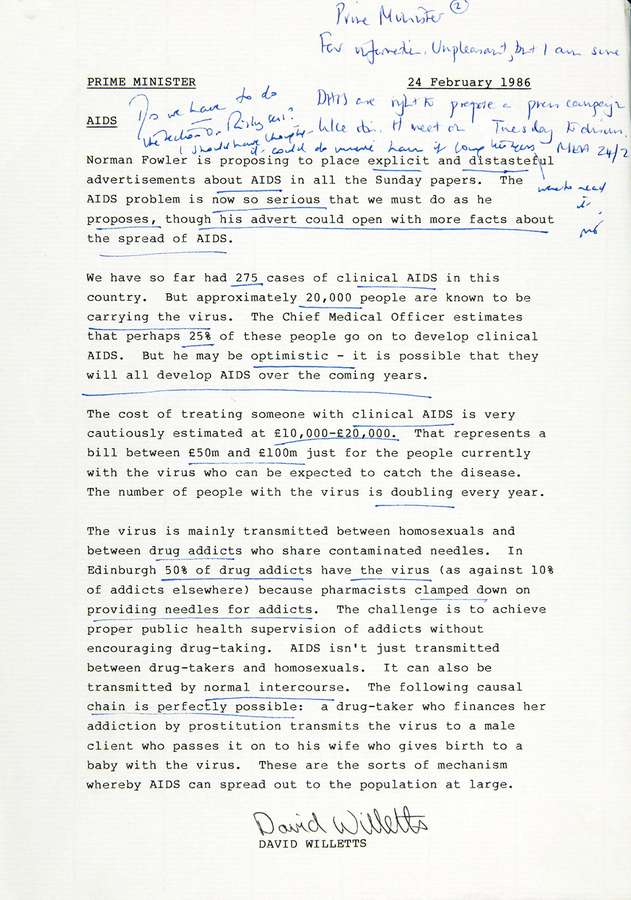
This letter was written during the height of the HIV/AIDS epidemic in Britain during the 1980s. HIV/AIDS is a disease mainly spread through unprotected sexual contact. When the disease was first reported on in the 1980s, little was known about how to treat it and it was extremely dangerous for the people who caught it. A lack of sexual education for LGBTQ+ people contributed to AIDS mainly affecting men who had sex with other men.
By the mid-1980s in the UK, the AIDS epidemic had grown so severe that the government launched campaigns that aimed to educate the public about the disease, many of which are still widely remembered.

[Handwriting of a Private Secretary]:
Prime Minister
For information. Unpleasant, but I am sure DHSS are right to propose a press campaign like this. H meet on Tuesday to discuss. MEA 24/2
[DHSS = Department of Health and Social Security, H = Home Affairs Cabinet Committee]
[Thatcher’s handwriting]:
Do we have to do the section on risky sex? I should have thought it could do immense harm if young teenagers were to read it.
[Printed]:
PRIME MINISTER 24 February 1986
AIDS
Norman Fowler is proposing to place explicit and distasteful advertisements about AIDS in all the Sunday papers. The AIDS problem is now so serious that we must do as he proposes, though his advert could open with more facts about the spread of AIDS.
We have so far had 275 cases of clinical AIDS in this country. But approximately 20,000 people are known to be carrying the virus. The Chief Medical Officer estimates that perhaps 25% of these people go on to develop clinical AIDS. But he may be optimistic – it is possible that they will all develop AIDS over the coming years.
The cost of treating someone with clinical AIDS is very cautiously estimated at £10,000-£20,000. That represents a bill between £50m and £100m just for the people currently with the virus who can be expected to catch the disease. The number of people with the virus is doubling every year.
The virus is mainly transmitted between homosexuals and between drug addicts who share drug contaminated needles. In Edinburgh 50% of drug addicts have the virus (as against 10% of addicts elsewhere) because pharmacists clamped down on providing needles for addicts. The challenge is to achieve proper public health supervision of addicts without encouraging drug-taking. AIDS isn’t just transmitted between drug-takers and homosexuals. It can also be transmitted by normal intercourse. The following causal chain is perfectly possible: a drug-taker who finances her addiction by prostitution transmits the virus to a male client who passes it on to his wife who gives birth to a baby with the virus. These are the sorts of mechanisms whereby AIDS can spread out to the population at large.
DAVID WILLETTS
Letter to Margaret Thatcher, then Prime Minister, about the AIDS government health campaign, 24 February 1986. From David Willetts of the Policy Unit. Catalogue reference: PREM 19/1863

[Top banner:]
BAN DISCRIMINATION AGAINST PEOPLE WITH AIDS/HIV
[Bottom banner:]
PEOPLE WITH AIDS/HIV DEMAND ACTION
Die-in, UK AIDS Coalition March from Hyde Park to Trafalgar Square, 28 August 1993.
Gordon Rainsford Archive, Bishopsgate Institute
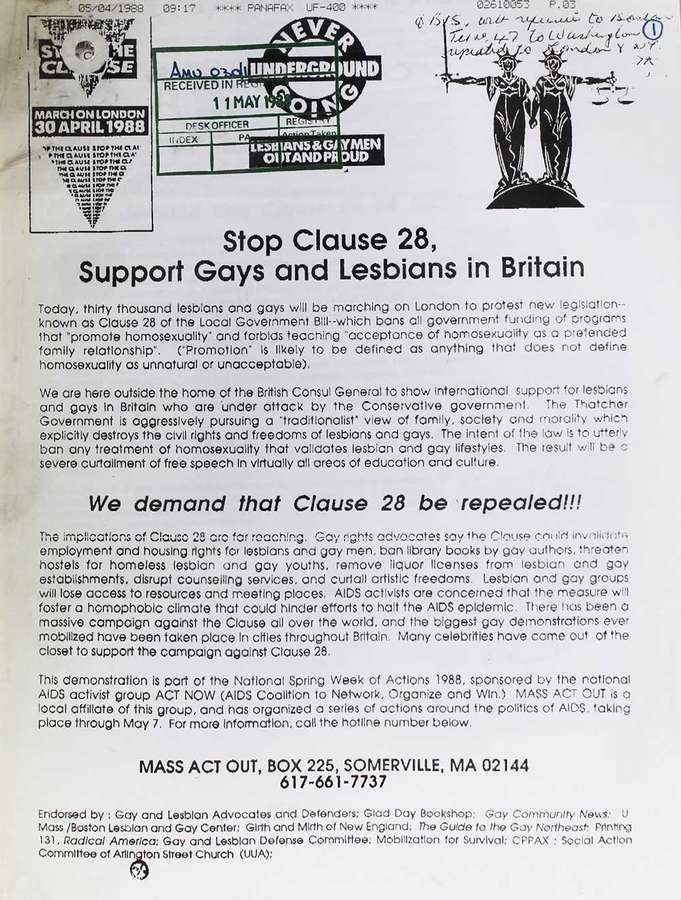
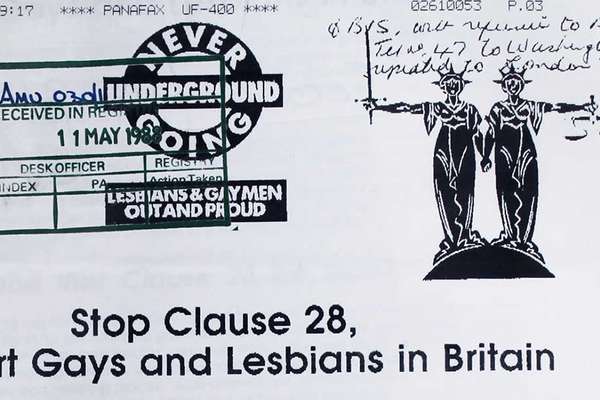
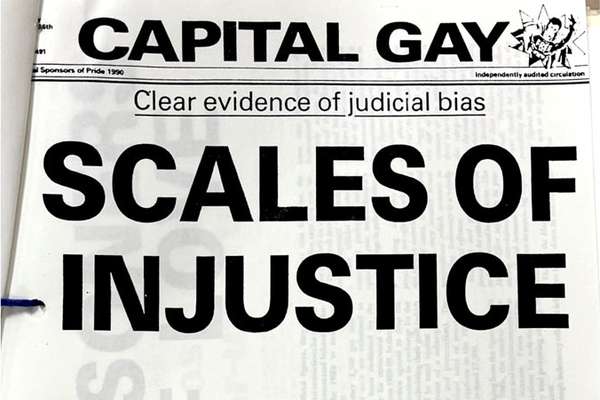
Clause 28, or Section 28 of the Local Government Act, was a law introduced by Margaret Thatcher’s Conservative Government in 1988. It followed controversies about sex education and objections, mainly from Conservative MPs, about the championing of gay causes by Labour-led councils. LGBTQ+ people were becoming more confident and visible in the worlds of pop music, television and film, but there was still a great deal of prejudice present in the national discourse.
This law banned local authorities from ‘promoting homosexuality’. This meant for example that state schools and local councils could not teach about or discuss LGBTQ+-related topics.
Clause 28 was in place until 2003.

NEVER GOING UNDERGROUND
LESBIANS & GAY MEN
OUT AND PROUD
Stop Clause 28, Supporting Gays and Lesbians in Britain
Today, thirty thousand lesbians and gays will be marching on London to protest new legislation – known as Clause 28 of the Local Government Bill – which bans all government funding of programs that “promote homosexuality” and forbids teaching “acceptance of homosexuality as a pretended family relationship.” (“Promotion” is likely to be defined as anything that does not define homosexuality as unnatural or unacceptable).
We are here outside the home of the British Consul General to show international support for lesbians and gays in Britain who are under attack by the Conservative government. The Thatcher Government is aggressively pursuing a “traditionalist” view of family, society, and morality which explicitly destroys the civil rights and freedoms of lesbians and gays. The intent of the law is to utterly ban any treatment of homosexuality that validates lesbian and gay lifestyles. The result will be a severe curtailment of free speech in virtually all areas of education and culture.
We demand that Clause 28 be repealed!!!
The implications of Clause 28 are far reaching. Gay rights advocates say the Clause could invalidate employment and housing rights for lesbians and gay men, ban library books by gay authors, threaten hostels for homeless lesbian and gay youths, remove liquor licenses from lesbian and gay establishments, disrupt counselling services, and curtail artistic freedoms. Lesbian and gay groups will lose access to resources and meeting places. AIDS activists are concerned that the measure will foster a homophobic climate that could hinder efforts to halt the AIDS epidemic. There has been a massive campaign against the Clause all over the world, and the biggest gay demonstrations ever mobilized have been taken place in cities throughout Britain. Many celebrities have come out of the closet to support the campaign against Clause 28.
This demonstration is part of the National Spring Week of Actions 1988, sponsored by the national AIDS activist group ACT NOW…
Clause 28 protest leaflet. Catalogue reference: FCO 82/1979
The Black Lesbian and Gay Centre opened in 1985 to address issues facing LGBTQ+ people of colour. It provided a telephone helpline, advice and counselling, a library, a social space, and other community resources. It also produced the magazine Blackout along with newsletters such as the one shown here. The Centre was active into the 1990s.

Saturday 11th February 1989
BLACK LESBIANS AND GAY PEOPLE OF FAITH 11th Feb 2-4:30pm
Black lesbians and gays of any religion welcome. Details Hong on 01-485 6756.
Saturday 12th February 1989
SHAKTI (SOUTH ASIAN LESBIAN AND GAY NETWORK) MEETING (3-6pm)
For lesbians, gays and bisexuals of Indian / Pakistani / Bangladeshi / Nepalese / Sri Lankan descent, London Friend, 86 Caledonian Road, N1. Access and other details 01-837 3337; or write to Shakti, c/o BL6C, BM Box 4390, London WC1N 3XX.
Thursday 16th February
Live recording of Lesbian and Gay Asian TV programme. Studio audience wanted! Asian parent and relatives willing to appear in the programme still being sought. More information contact BLGC.
Friday 17th February 1989
9pm – 3am BHANGRA / ASIAN Disco at London Lesbian and Gay Centre, 67-69 Cowcross St, EC1. Organised by Shakti; South Asian lesbians and gays and their friends welcome. Access details 01-608 1471; other information 01-837 3337. Charge into centre 30p – Cons 15p. £2.00 disco. Late Bar!
LESBIAN AND GAY BLACK GROUP This and every THIRD FRIDAY in the month is WOMEN ONLY. L6BG meetings held at Marchmont St Community Centre, 62 Marchmont St, London WC1. Tel: BL6C for more details (01-885 3543).
[poster]
NATIONAL BLACK GAY & LESBIAN CONFERENCE
FEBRUARY 17-20, 1989
Sponsored by Black Gay and Lesbian Leadership Forum in USA
[end of poster]
USA *** LOVING OURSELVES HEALING OURSELVES – PREPARING FOR THE 21st CENTURY is the headline call for participation in the Second Annual National Black Gay and Lesbian Leadership Forum’s Conference and AIDS Institute. Date: February 17-20, 1989; Venue: The University Hilton Hotel, Los Angeles, California. Nearly 1000 people expected to register for this year’s conference. “The conference will present a series of workshops designed to inform, empower and inspire Black Lesbians and gay men. Our ambition is high; to provide the present and future Black leaders of the Lesbian/Gay world with the means to efficiently develop and effectively implement their own personal objectives, professional game plans and political agendas. These are to be workshops for victors, not victims”. Headlines to suggest workshop topics include: “AIDS! What Does It Mean to Black Gays and Lesbians?”; “Creating and Strengthening Black Gay & Lesbian Institutions”; “Building a Stronger Political Voice”; “The Quality of Our Lives & Relationships”; “Black Gay and Lesbians Enterprises & Financial Stability”; “Creating Coalitions & Networks?” Conference suggested sub-headings (of note to me, Ed.) Living with AIDS/Caring for PWA’s; Eroticizing and Affirming Safer Sex for Black Gay Men and/or Lesbians; Alternative Therapies for HIV+, PWARC’s, PWA’s; Knowing When and How to Move On; Out of the Closet & On With Your Career!; Disciplined & Organised? Me? Yes You!; Taking Ownership and Leadership in Traditional Black Institutions; Sexism and Homophobia: What’s the connection? London’s BLGC holds copies of the registration forms for this important international event which we will despatch on request.
Saturday 18th February 1989
Self Defence for lesbians with disabilities
All-London Lesbian Mothers Group Social 18th February 7-10pm at Camden Lesbian Centre (see Access details 31st Jan).
Self-Defence for Lesbians with Disabilities Camden Lesbian Centre (see Access details 31st Jan) 18th February 10am-4pm, Call Sharon on 383 5405.
Sunday 19th February 1989
Lesbian Incest Survivors Group meeting (19th February: 2-5pm) for lesbians who were sexually abused, in any way in childhood by relatives/adults in positions of authority and trust. Central London venue, wheelchair accessible. For further information ring 837 1600 or write to BOX LISG, Sisterwrite, Upper St, London N1.
Tuesday 21st February 1989
LESBIANS WITH DISABILITIES GROUP. 21st Feb 7-10pm, with sign language interpreter – Camden Lesbian Centre (see Access details 31st Jan).
Wednesday 22nd February 1989
PACE NEEDS VOLUNTEER COUNSELLORS: The project for Advice, Counselling and Education (PACE), based at the London Lesbian and Gay Centre is keen to invite Black lesbians and Black gay men to join their team of volunteer counsellors. In extending their counselling services they are focusing on the counselling needs of Black lesbians and Black gay men and how the project might be accessible to them. Their counsellors work with a range of counselling perspectives on both a short and a long-term basis and offer one to three one-hour sessions per week. [...]
Page from the Black Lesbian and Gay Centre newsletter showing community activities.
LGBTQ+ Archives, Bishopsgate Institute.
This lesson provides a chronological overview of the shifting laws and attitudes that have applied to the LGBTQ+ community in Britain and the former British Empire since 1701, and how they have affected the community. Owing to the number of sources, teachers may wish to break this lesson down into two parts or assign small groups to work on different sources and report back.
‘LGBTQ+’ is used as an umbrella term to describe people historically who were either not cisgender or heterosexual. These individuals would have used a variety of different language to describe themselves in their own lifetimes.
Source 1 is a trial record from 1701 concerning a man named Charles Worrell who was convicted for sodomy. It consists of notes from Jenkin Williams, who worked on the same ship as Worrell and was witness to a tryst between Worrell and another man. His notes recount how, after going to the captain with this information, the captain instead entered into a blackmail scheme with Worrell, who provided him with gifts and money in exchange for his silence. The source shows how fluid 18th-century social practices could be even in the face of restrictive attitudes and laws.
Source 2 is a letter from 1835 about James Pratt and John Smith, the last two Englishmen ever hanged for sodomy. The letter is from Hensleigh Wedgwood, magistrate at the Police Office Union Hall. He argues that death is too harsh a punishment for the two men, on the basis that no one was harmed. He also points out that the only reason for the death sentence is that no lawyer wanted to defend such a shameful crime. Finally, he points out the class inequality in sodomy convictions, noting that richer men can more easily get away with the crime. This source helps students explore the nuance in attitudes towards homosexuality in the 19th century, as well as how issues of class may intersect with issues of sexuality.
Source 3 is Ann Lister’s will from 1841. Ann Lister is famously known as the ‘first modern lesbian’, as her diaries document her relationships with women and marriage to Anne Walker. In her will, Lister leaves her estate to her ‘friend’ Anne Walker – with the stipulation that Walker never marries. The source can be analysed to show how official documents may reveal evidence of LGBTQ+ histories, but in ways that had to be coded and hidden to avoid persecution.
Source 4 is Section 377 of the 1871 penal code in the Straits Settlements (a collection of British colonies that today consist mainly of Malaysia and Singapore). It comes from Section 377 of the Indian Penal Code. The Indian Penal Code, created in 1860 for Britain’s Indian colonies, was applied to other colonies in the British Empire. This code was inspired by the 1533 Buggery Act, intended to transfer British values to their Indian colonies. This act was not only spread throughout the British Empire, but also spread to Britain as well, inspiring the legislation against sodomy in the 1861 Offences Against the Persons Act, which dropped the death penalty and replaced it with life imprisonment. When studying this source, students should be encouraged to get an understanding of how this law affects countries that were formerly British colonies today – for example by looking at how recently it was repealed in India and how many countries still have it in their laws.
Source 5 is the calling card left by Marquis of Queensbury calling Oscar Wilde a ‘posing sodomite’. Students can be encouraged to explore why it would have been dangerous to be accused of something like this. This source could also be paired with an exploration of the story of Fanny and Stella, who were on trial for sodomy in 1870. They were deemed not guilty as the act of sodomy couldn’t be proven. This indirectly led to the ‘Labouchere Amendment’ of the Criminal Law Amendment Act 1885, which made it illegal for any man to commit an act of ‘gross indecency’ with another man. Sexual acts no longer had to be proven. This was the act Oscar Wilde was convicted under in 1895.
Source 6 shows the attempted introduction in 1921 of a clause intended to criminalise sexual and romantic relationships between women. However, it was rejected by the House of Lords. Students can question why it was rejected, why relations between women were never criminalised, and what the attempted introduction of the clause says about attitudes towards lesbianism in the 1920s.
Source 7 is a police log of people coming in and out of the Shim Sham club, a London club frequented both by Black and LGBTQ+ communities. Students can interrogate why police were watching this club, and why this log was written in the way that it was. This source is paired with Source 8, a photograph of presumably gay men having a fun day at the beach around 1928-31. These sources together can be used to encourage explorations of what life was like in the 1930s for LGBTQ+ people, showing joyful community gatherings but also police surveillance.
Source 9 is a portrait of Patrick Nelson by Duncan Grant in 1960-63. Patrick Nelson is a rare historical example of a Black gay man whose life is well documented, both through military records and ship logs contained in our collection, and through the love letters sent between him and Duncan Grant contained in the Tate archives. This painting is also a rare example of a depiction of an LGBTQ+ man by another LGBTQ+ man. This source can be used as a start point for students to further explore the life of Patrick Nelson, as well as the Bloomsbury Group, and to also find examples of other LGBTQ+ people of colour in British history. Students should be encouraged to recognise how rare historical depictions of Black LGBTQ+ people are, and to question why that might be.
Source 10a is a discussion from 1954 from the committee putting together the Wolfenden report, which was published in 1957. This report famously laid out the recommendations that homosexual acts between men over 21 in private should be made legal. The recommendations weren’t implemented until ten years later in the Sexual Offences Act 1967. This source reveals for students the debates that went on behind the scenes, highlighting the negative attitudes towards LGBTQ+ people in the late 1950s. However, it also reveals the arguments that led to the recommendations being made.
Source 10b is a table showing the number of offences of ‘indecency’ between males in England and Wales 1946 – 76. It covers the period directly before and after the Sexual Offences Act 1967, in which homosexual acts were legalised. It shows how, contrary to what we might think, arrests actually went up after this act. This is because, while homosexual acts were now legal, it was under very strict circumstances – only in private and only between men over the age of 21. Both the public and the police were now better informed about these strict conditions and more primed to be on the lookout for anyone breaching them. Homosexual acts would not be on the same legal standing as heterosexual acts until 2004.
Source 11 consists of photos from a 1976 Drag Ball at Porchester Hall in West London. These photos show an example of British ballroom culture. Taken together with Source 12, they can provide a more nuanced view of what life for LGBTQ+ people was like in the 1970s. These photos can also be paired with Source 7 to show the evolution of LGBTQ+ spaces in London.
Source 12 is a letter from the late 1970s from the Campaign for Homosexual Equality. It was written because of a review of obscenity laws taking place, arguing for better representation of LGBTQ+ people in these laws. It reveals the limits of the Sexual Offences Act 1967, how negative attitudes remained prevalent, and lets students hear directly from activists writing at the time.
Source 13 is related to a government-run public health campaign about HIV/AIDS in 1986. At the time, AIDS had infected over 20,000 people in the UK, mostly men having sex with other men. The government wished to stop the disease from spreading and ease the pressure this was putting on hospitals with a public health campaign to inform the public about how to protect themselves from AIDS. Students can examine the language used in this letter, as well as Thatcher’s handwritten notes on the page, to explore government attitudes towards the LGBTQ+ community and AIDS at this time. This is paired with Source 14, a photograph of a ‘die-in’ protest by activists, reflecting the community response to government policies around AIDS.
Source 15 is a protest leaflet against Clause 28 from an organisation of LGBTQ+ British people residing in the United States. This source shows the argument from the LGBTQ+ community against Clause or Section 28, introduced by Margaret Thatcher’s Conservative government in 1988. This leaflet shows the large protest movement that was happening against the clause, both in Britain and overseas. It’s also important to point out that this piece of legislation came after many years of the AIDS crisis during which homosexuality was increasingly stigmatised and associated with disease. The clause was not repealed until 2003 – teachers may want to explore with students how LGBTQ+ issues are talked about in school nowadays, and how different it may have been only a few decades ago.
Finally, Source 16 is a page from a 1989 newsletter from the Black Lesbian and Gay Centre. It showcases the range of community activities that were present at this time and gives a different view of what life was like for LGBTQ+ people during the AIDS crisis and Section 28.
Create a timeline of LGBTQ+ laws in the UK. Plot each of these sources on the timeline. What kind of laws are affecting the people in each source?
People have always existed who engaged in same sex relationships, defied conventional gender norms, or lived as a different gender to the one they were assigned as at birth. The social climate these individuals lived in, and the language they had available to them, has changed significantly over the last 1,000 years – the span of The National Archives’ collections. The history of lesbian, gay, bisexual, transgender, and queer people in the UK is a complex mixture of moments of pain, resistance, and progress.
The National Archives has a unique view of LGBTQ+ history – our records reflect the state perspective, relating to UK government departments and major courts of law. Our archives give a valuable insight into how government interacted with and viewed LGBTQ+ communities in the past, through police, criminal, policy and legislation records. For most of our collections there has been significant criminal or social risk in LGBTQ+ people recording their lives, our collection therefore offers rare material evidence into lives in this period before decriminalisation. Other archive collections are more likely to reflect personal documents relating to LGBTQ+ lives, such as the photographic and campaigning collections held at the Bishopsgate Archives.
The challenges of being an LGBTQ+ person are and historically have been significant, but even more so when intersected with other factors, such as race, disability and class. These intersectional experiences are underrepresented in the history that is told and in the surviving records. At The National Archives we actively work to find these voices and redress this balance.
Until recent decades, people who challenged sexual or gender norms were seen as a ‘threat’ to the ‘natural order’ of society. It has never been illegal, as such, to be gay, but the associated sex acts between men have been punishable at various times throughout history. Changing the gender you presented as has not been regarded a criminal act, but the law and society could make it very difficult.
In the Early Modern and Medieval period, the church and ecclesiastical courts determined the approach to homosexuality, seeing it as at odds with Christian values of heterosexual marriage and procreation. In 1533 the Buggery Act was introduced under Henry the VIII. For the first time in England sex between men was formally criminalised, with a potential penalty of the death sentence. The last two Englishmen to be hung for sodomy were James Pratt and John Smith at Newgate prison in 1835.
Domestic legislation also had an impact beyond the UK. The British colonial government introduced Section 377 of the Indian Penal Code, which outlawed ‘carnal intercourse against the order of nature’ in 1860. This was loosely modelled on the 1533 Buggery Act. Similar legislation spread to other parts of the British Empire. When countries gained independence, they inherited colonial legislation, and in some Commonwealth countries these laws continue to exist.
In 1885 the Criminal Amendment Act, including the controversial Labouchere Amendment, became law. This amendment actually extended the acts that were criminalised between men.
The law was thought to have been influenced by the case of Fanny and Stella in 1870. Theatrical performers, the duo presented as women both on stage and off, and records held at The National Archives reveal that they used he/she pronouns and their masculine/feminine names interchangeably among family and friends. They were accused of the ‘abominable crime of buggery’, but the physical act of sodomy could not be proved. Such cases influenced the broadening of the law, to criminalise a wider range of acts relating to homosexuality.
Homosexuality was increasingly visible in society and the press; there was a moral panic. The Cleveland Street scandal had seen a male brothel hit the headlines, as lots of high-profile individuals were rumoured to be involved. Oscar Wilde decided to fight public accusations of his homosexuality in the courts. He was made an example of receiving the harshest sentence of two years hard labour for gross indecency. The Wilde trials influenced public attitudes for many years.
Sex between women was never criminalised, but was socially unacceptable. In 1921 a Parliamentary Bill to criminalise ‘gross indecency between females’ failed to become law. It was feared that it would lead to a greater visibility of lesbians. Women who loved women are present in our collections, but the law’s focus on policing same sex acts between men means that their lives can be harder to trace. These come to us through wills, census records, divorce files and censorship cases. Not long after this bill went to parliament was the headline grabbing trial of Radclyffe Hall’s the Well of Loneliness, which was controversial for its depiction of lesbian relationships. Censorship of LGBTQ+ literature and arts was a reoccurring way of attempting to control and restrict the public image of same sex relationships between women.
Despite the role of the law in policing gay and bisexual men’s lives, there was an everyday home life that was possible for some LGBTQ+ people. From 1841 to 1921 census records reveal the same sex units people were living in. Gender non-conforming artists Gluck and E M Craig were listed as living together at 30 Tite Street, Chelsea in 1921, while author and free love advocates Edward Carpenter and George Merrill can be seen living together across many decades of census forms in their home Milthorpe, near Sheffield. Author Radclyffe Hall and sculptor Una Troubridge are listed as ‘joint head of household’ in their 1921 census record.
LGBTQ+ people have always found ways to gather, meet and create their own spaces. The 1920s and 1930s particularly saw a network of underground clubs develop that cultivated a queer clientele. The National Archives has a rich collection relating to some of these spaces, from the Harlem inspired Shim Sham club to ‘London’s greatest bohemian rendezvous’ the Caravan Club. These spaces were a haven for, particularly working class, men to meet other men, but they were also vulnerable to police raids. Public spaces were also policed.
Men would meet in parks and cottages (public toilets). Police used controversial methods of undercover policing to catch men engaging in homosexual acts.
The 20th century increasingly saw a shift from a criminal view of homosexuality to a medicalised one, seeing it as an illness. In 1952 Alan Turing, famed codebreaker and computer scientist, was arrested under the Labouchere Amendment and later prosecuted. He was given oestrogen injections, rather than a prison sentence, in attempt to ‘cure’ his sexuality. Turing committed suicide not long afterwards. The prevalence of such cases, and several high-profile incidents in the press, led to a desire for legal reform. The result was the 1957 Wolfenden Report, which recommended the partial decriminalisation of homosexuality.
There have always been individuals living as a different gender from the one they were assigned at birth or expressing a non-normative gender. By the 1950s gender affirming surgery was increasingly available. In 1961 April Ashley’s assigned sex at birth was revealed by the press as she went through a divorce case, known as Corbett v Corbett. An annulment was granted on the grounds that Ashley was considered legally male. Corbett v Corbett set a legal precedent, preventing trans people from changing their gender on legal documents for several decades.
The 1967 Sexual Offences Act finally acted on Wolfenden’s recommendations a decade later and decriminalised sex acts between men. However, it did not grant homosexual men a parity with heterosexual couples. There was a higher age of consent, the Armed Forces and Merchant Navy were exempted, and acts were only decriminalised ‘in private’. Arrests actually increased – the police and public were more aware of the parameters of the law. It only applied in England and Wales. Equivalent law changes did not happen in Scotland until 1980, and Northern Ireland until 1982.
But, while only partial, the 1967 Act was a huge step forward and galvanised LGBTQ+ campaigns for greater equality. The 1970s saw a shift in political consciousness towards pride and equal rights; in the UK it was the decade of the first Gay Pride parade, the opening of Gay’s the Word bookshop, and the launch of Switchboard, one of the first LGBTQ+ helplines. Campaign groups such as the Campaign for Homosexual Equality and the Gay Liberation Front were increasingly active.
LGBTQ+ individuals were greatly impacted during the 1980s by the rising number HIV infections and the subsequent AIDS crisis. It was a traumatic time, marked by ignorance and misinformation. The government instigated TV and cinema adverts to reinforce awareness about preventing the spread of AIDS, and took the unprecedented step of sending educational leaflets to every household in the country. In 1988, Section 28 was introduced, under the Local Government Act, prohibiting the ‘promotion of homosexuality’. It was feared this would hamper the gains made around LGBTQ+ rights and stop AIDS education reaching the population. This attempt to supress LGBTQ+ lives fuelled a fight back, including the founding of the campaigning organisation Stonewall.
The 2000s saw the age of consent lowered to the same age for homosexual and heterosexual acts, the UK Government lifted the ban on lesbians, gay and bisexual people serving in the Armed Forces and Section 28 was repealed. This was followed by a raft of progressive legislation, including the Civil Partnership Act 2004 and Marriage (Same-Sex Couples) Act 2013. The Gender Recognition Act also came into force in 2005, enabling trans people to change their legal gender. April Ashley was finally able to have legal documentation that matched her gender identity.
The shift in LGBTQ+ rights over the last few centuries is significant. Where our records about the UK government were once dominated by criminalisation and ostracization, they now reflect equality legislation, Civil Service LGBTQ+ staff networks and presence at Pride parades. However this history also shows that progress is not always linear, and it is important to recognise that these changes were hard fought for. Whether it was through collective campaigns or individual acts of resistance LGBTQ+ people have repeatedly strived for, and continue to fight for, change and acceptance.
Teaching resource
This resource traces the military and medical career of 19th-century transgender surgeon Dr James Barry.
Education session

In this session students explore stories from LGBTQ+ clubs and spaces in the 1920s and 30s.
The story of
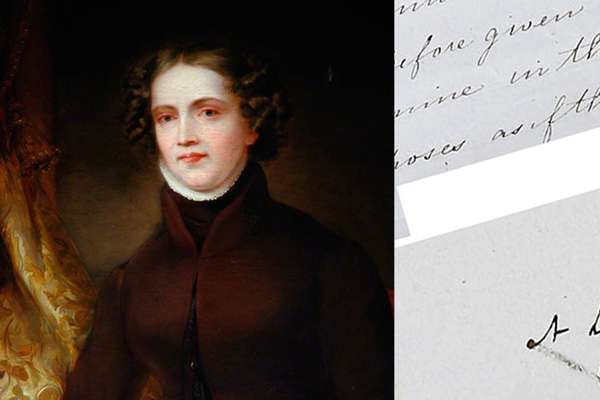
Anne Lister and Ann Walker's romantic relationship defied societal norms of their time, as we can encounter through the archival material they left behind.
In pictures

How did a libel case lead to the downfall of Oscar Wilde? Learn more through The National Archives records.
The story of
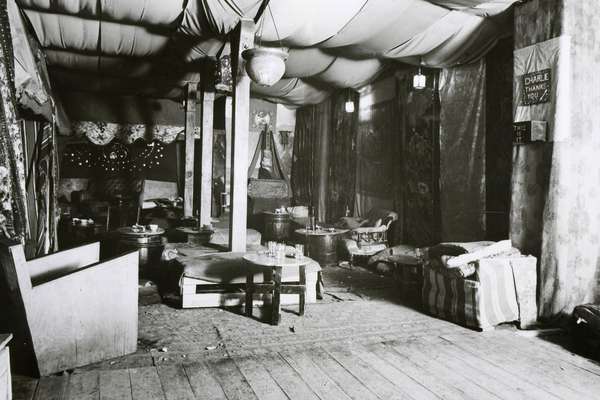
The police raid on a secret queer nightclub in 1933 gives an insight into the lives of gay men in interwar London and their defiance in the face of persecution.
In pictures

We hold an extensive range of material related to the HIV and AIDS epidemic of the 1980 and 1990s. Explore them here.
Focus on
Section 28 of the 1988 Local Government Act negatively affected LGBTQ+ lives for decades. How did such a seismic piece of legislation come about?
Focus on
What was the everyday reality for LGBTQ+ people in the 80s and 90s living under the infamous Section 28, and how was it eventually repealed?
bishopsgate.org.uk
One of the most extensive collections on LGBTQIA+ history in the UK covering the late 19th century onward.
queerbritain.org.uk
Queer Britain is the UK’s first national museum about the LGBTQ+ community.
Bishopsgate Institute

