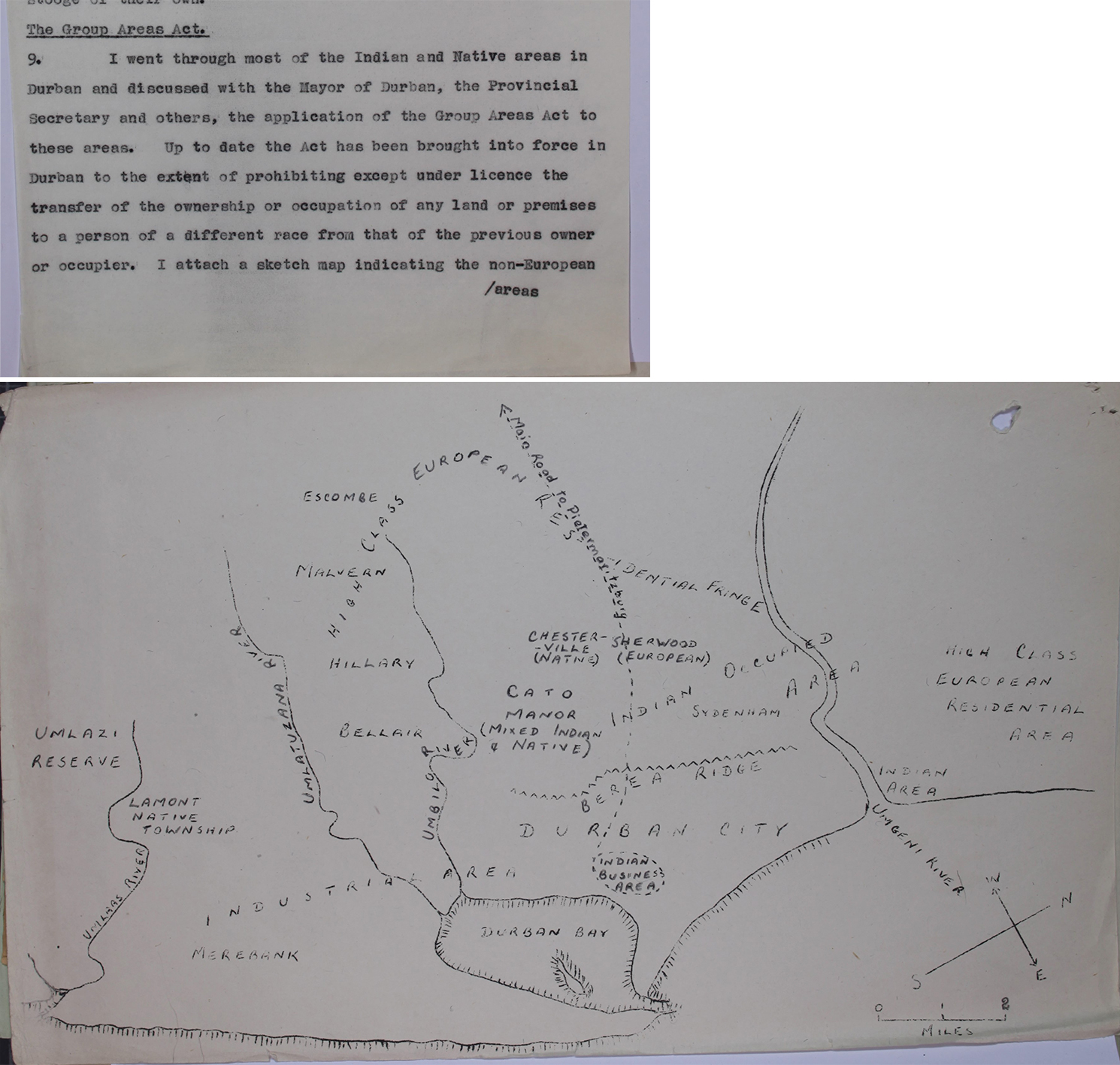
Extract from the High Commissioner’s report on Durban with map and a caption, June 1951, Catalogue Ref: DO 35/3260
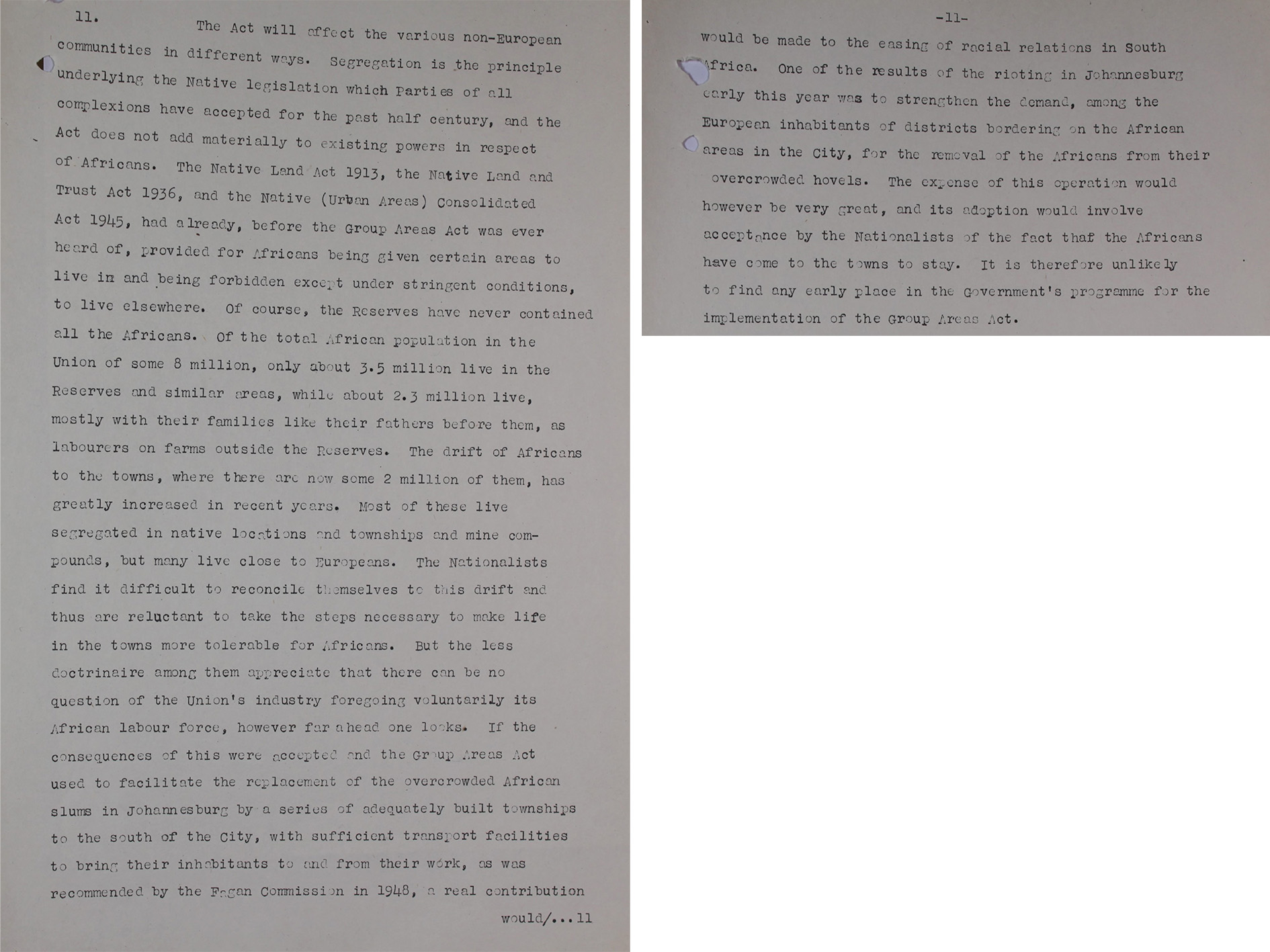
Extract from a report by the High Commissioner to the Commonwealth Relations Office, 13 December 1950, Catalogue Ref: DO 35/3260
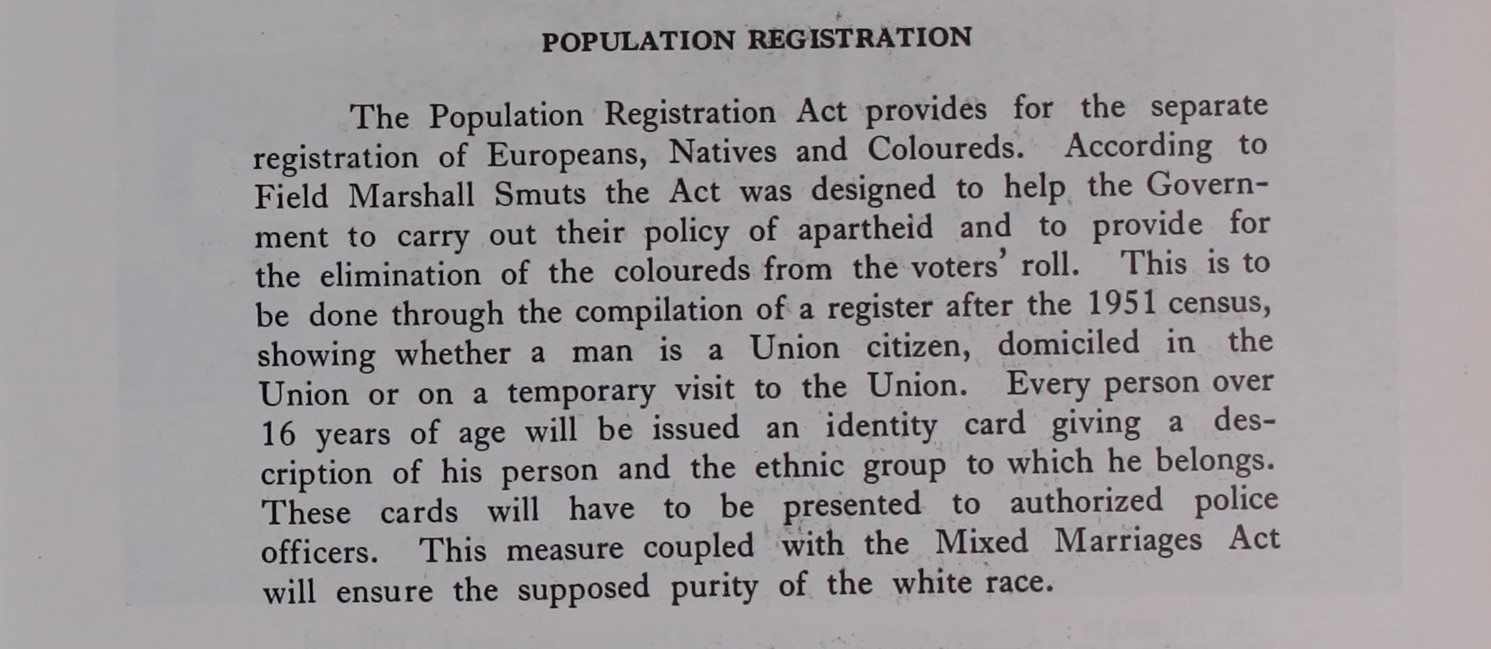
Extract from booklet entitled ‘Apartheid: Racial Discrimination’ published on behalf of the Indian Government by the Foreign Relations Society of India, circa 1951, Catalogue Ref: DO 35/3837
The Population Registration Act 1950 defined exclusively in terms of appearance and perception. People had to be identified and registered from birth as belonging to one of three racial groups: white, ‘native’ (Black African), or ‘coloured’ (neither white nor ‘native’). Identity documents were issued to each person and the Identity Number included their assigned race.
Field Marshal Jan Christiaan Smuts successfully led troops against Britain in the South African War. Smuts went on to command the South African Defence Force fighting alongside British soldiers in various First World War campaigns. From 1939 to1948 Smuts was also the leader of the United Party and Prime Minister in South Africa.
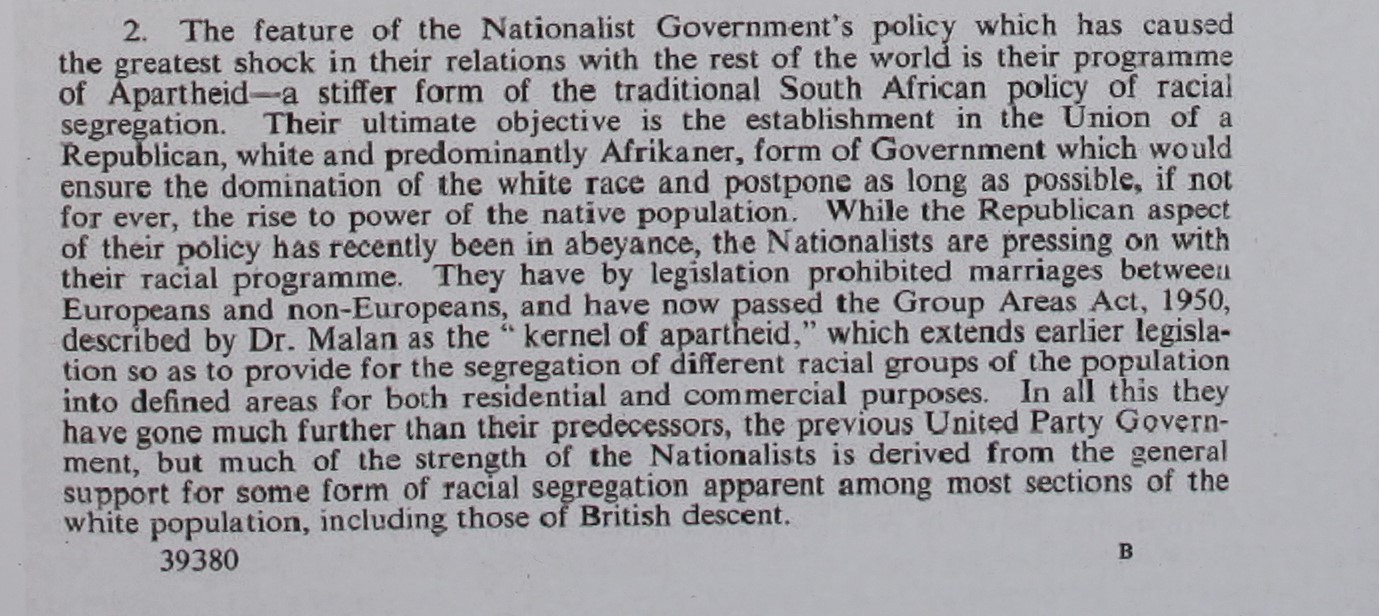
Extract from a Cabinet memorandum by Patrick Gordon Walker, Secretary of State for Commonwealth Relations, 25 September 1950, Catalogue Ref: CAB 129/42
Republic: Government by elected representatives of the people rather than government by a king or queen.
Segregation: keeping different groups separate from each other, using social pressures and laws.
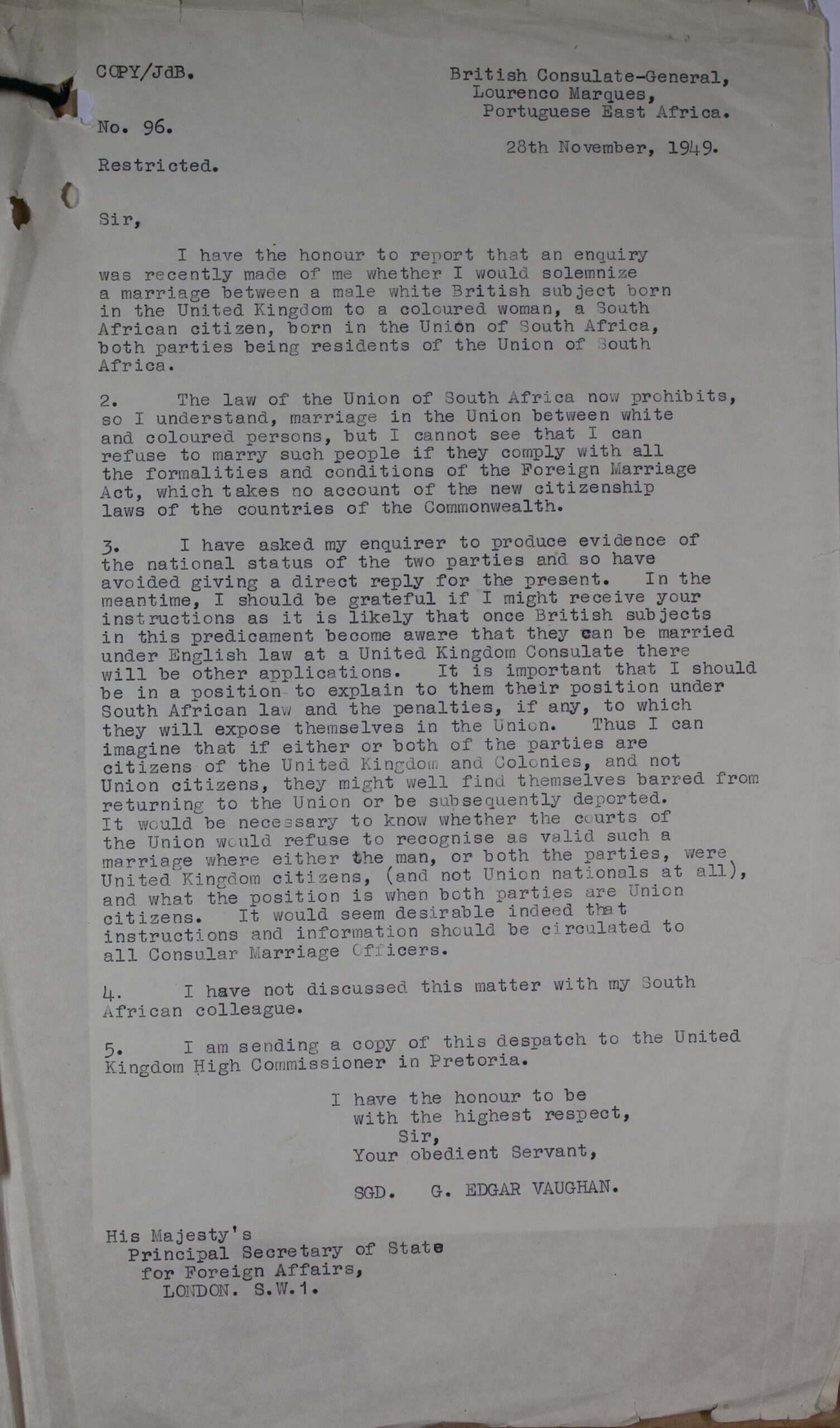
Letter from Lourenco Marques, British Consulate General, Portuguese East Africa (Mozambique) to the Foreign Office, 28 November 1949, Catalogue Ref: DO 35/2229
This letter relates to the Mixed Marriages Act 1949 that forbade marriages between people of different racial groups. The Foreign Marriages Act 1892 mentioned in this letter allowed British officials abroad to perform marriages.
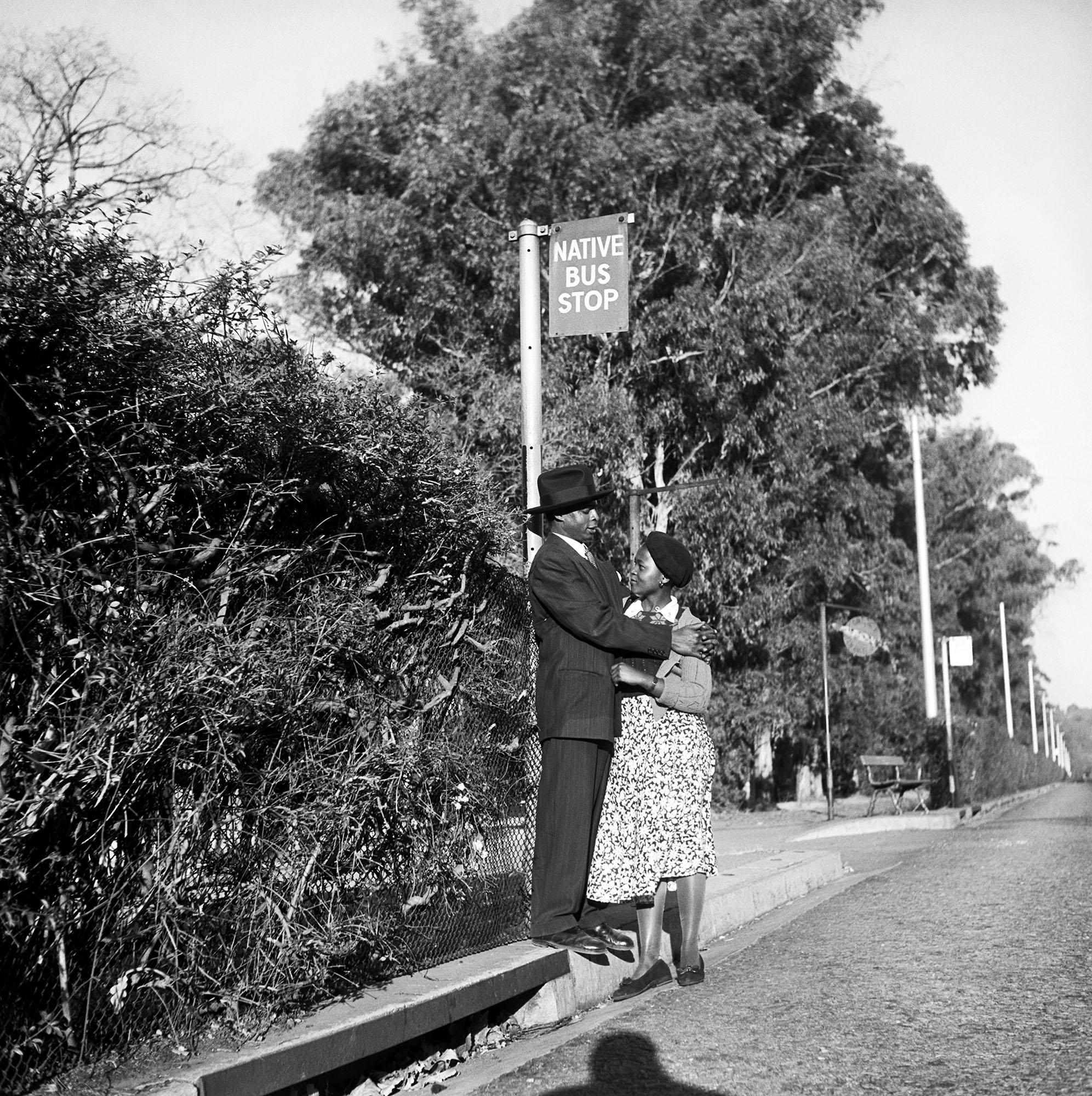
The term apartheid comes from the Afrikaans word meaning ‘separation’. This system implemented political, social, and economic segregation on racial grounds in South Africa. It ensured domination by the white minority population and discrimination against the non-white majority.
D.F. Malan, Prime Minister of the Union of South Africa (1948-1954) for the National Party, introduced apartheid in 1948. It meant that white citizens held the highest status, then ‘Coloureds (mixed-race)’ and ‘Black Africans’. Apartheid was contrary to all notions of equality. It was the intention of the government to separate and divide different tribal groups, confining them to specific areas or Bantustans.
This lesson uses original documents to consider some of the main legislative steps taken to create a system of apartheid in South Africa. What was the impact and consequences of apartheid for Black, White and ‘Coloured’ South Africans?
Please note that the language used in these sources is often inappropriate and offensive. We have included it as part of the historical record.
How far was a system of apartheid implemented in the period 1949-1959?South Africa became a Union with independence from the British Empire in 1910. It consisted of two Afrikaner (Dutch dominated republics) the Transvaal and Orange Free State and the British dominated Cape Colony and the Natal Province. The Afrikaners and the English speakers (roughly 60 and 40 percent respectively) controlled the country. It meant that given the aspirations of the vast Black majority together with other races, including an Indian population, were completely ignored in the new Union.
With the Union, the South Africa Act removed Black people’s right to vote in Parliament and the Pass Regulations Act denied them the right to vote. Only the Cape Colony insisted on retaining voting rights for Black people and others on a basis of a property qualifying franchise. The Afrikaner republics granted no political rights for Black people and Natal was scarcely less conservative. After 1910 what little rights remained for Black South African peoples began to be chipped away. The 1913 Natives Land Act severely restricted Black South Africans from owning or renting land outside of designated “native reserves”, laying the groundwork for racial segregation and apartheid (separateness). A 1923 Act (Native (Urban Areas) Act created an internal passport system restricting movement of Black South Africans. Successive onslaughts on Black rights increased with the growth of Afrikaner Nationalism under the Nationalist party of J.B.M. Hertzog, who realised that Afrikaners formed 60% of the White community and could exploit white conservatism to control the country. Afrikaner nationalism developed confidence in the inter-war period emboldened by their Dutch Reform Church faith and Broederbond (brotherhood) emphasising the alleged racial superiority of Europeans over Black South Africans. Many Afrikaners also opposed South Africa’s entry on the allied side during the Second World War.
In law, apartheid began long before 1948 and the election of the National Party. Although clauses of the 1910 Constitution regarding voting rights for ‘Coloureds’ (people with a Mixed race background) were not amended until the 1950s, the 1936 Native Trust and Land Act expanded existing restrictions on Black land ownership by establishing the South African Native Trust to manage land for Black people, limiting where they could live and own land. Moreover, the Asiatic Land Tenure Act 1946 sought to confine Asian ownership and occupation of land to certain clearly defined areas of towns. By the late 1940s such legislation led to the growth of shantytowns on the outskirts of White cities occupied by poor Black people dependent upon jobs in the cities. The National Party campaigned to protect White Afrikaans ‘purity’ and eliminate the already meagre rights of Black South Africans through legislative separation so what happened automatically before, became law.
To preserve racial ‘purity’, the Apartheid government passed the Prohibition of Mixed Marriages Act 1949 preventing marriage between people of different races. The Population Registration Act (1950) created a national system of racial classification: ‘white’, ‘native’, ‘coloured’ and later ‘Indian’ that determined which rights an individual would be able to enjoy. This included where a person could live, if they had to carry a passbook to travel and the education available to them.
The Group Areas Act 1950 was the nationalist government’s first attempt to increase the separation between White and Black urban residential areas. The law was both a continuation of earlier laws of segregation but also a realisation of an apartheid ideal that cultures should be allowed to develop separately. The new law declared many historically Black urban areas officially white, forcing people to move out of a specific area. The act also controlled the transfer of land/property and only allowing people to buy land from people of the same race. The act also restricted trading licences prohibiting Asians from trading in white areas. Later legislation (Native Resettlement Act 1954) authorised the government to force out residents and demolish buildings to make room for white owned residences and businesses. However, White South Africans relied upon cheap Black labour and the removal of millions of Black workers would be expensive according to the government sponsored Tomlinson Report of 1954.
The Separate Amenities Act 1953 legalised the racial segregation of public premises, vehicles and services. Part of the act stated that facilities for the different races did not need to be equal and that some services could be completely excluded based on their race. Public Toilets, buses, railway carriages, Post Office entrances as well as parks and beaches were typically segregated.
The Passbook system regulating where Black South Africans could travel from and to already existed before 1948, it was now expanded and formalised. An act of 1952 repealed regional passes and instituted one nationwide pass law, making it compulsory for all Black South Africans males over the age of 16 to carry the passbook whilst within white areas. This internal passport (containing a photograph and details of employment) stipulated where, when and for how long a person could remain. The passbook provided the authorities with the excuse to detain Black people at will.
Other pieces of apartheid legislation were enacted to enforce separation of the races such as the Bantu Authorities Act (1951) and Bantu Self Government Act (1959) creating “homelands” for black South Africans, known as Bantustans, giving the appearance of self-government but stripping them of their national citizenship.
Thus by 1959 the system of Apartheid was consolidated. In response to such oppression the Black South African population of South Africa began to resist, by agreeing a Freedom Charter for all South Africans embracing equality, which would lead to a “Treason Trial” of those opposing apartheid doctrine.
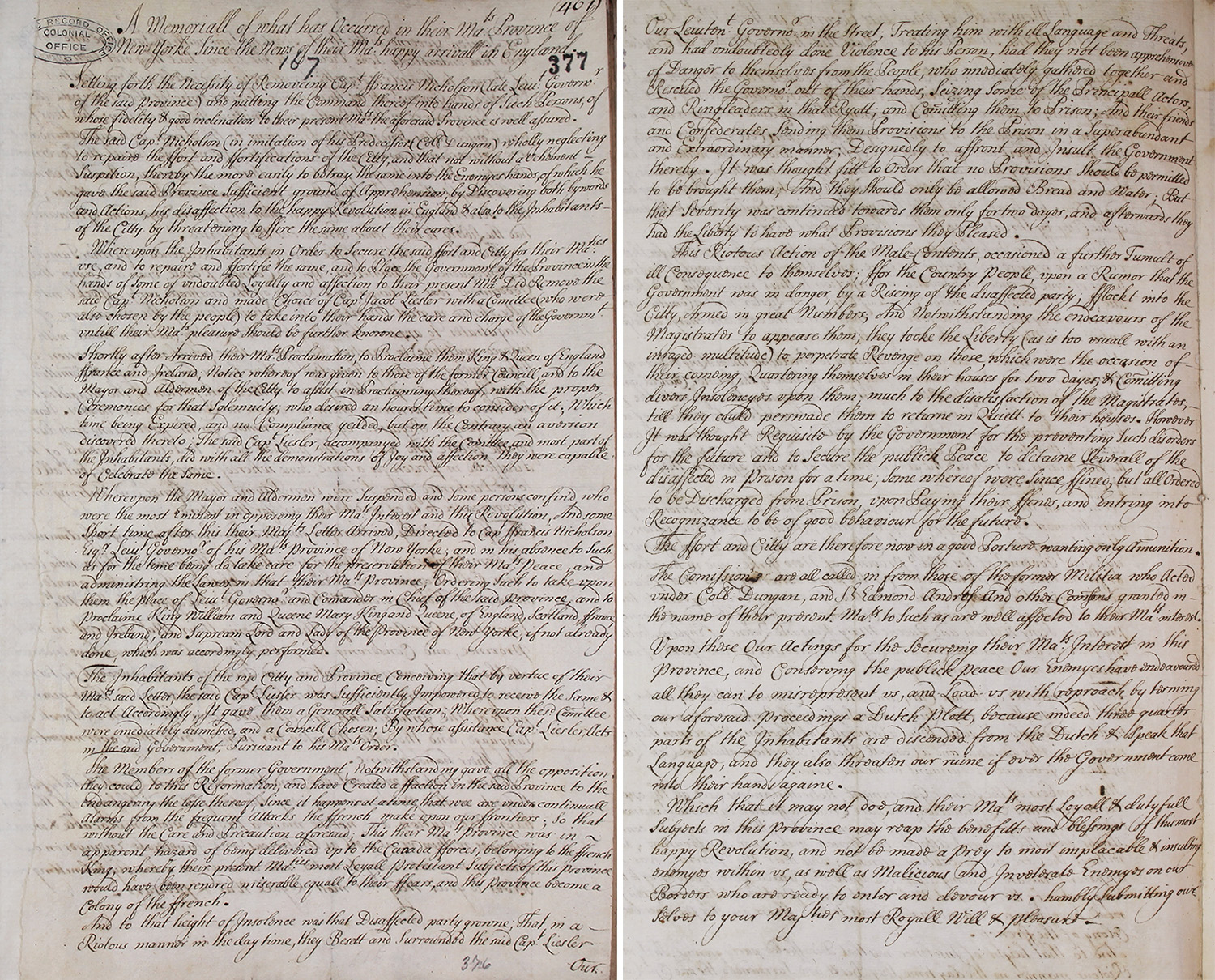
Document entitled: ‘Memorial from New York on the replacement of Governor Nicholson with Governor Leisler’, June 1690. Catalogue ref: CO 5/1081 f.377-8.
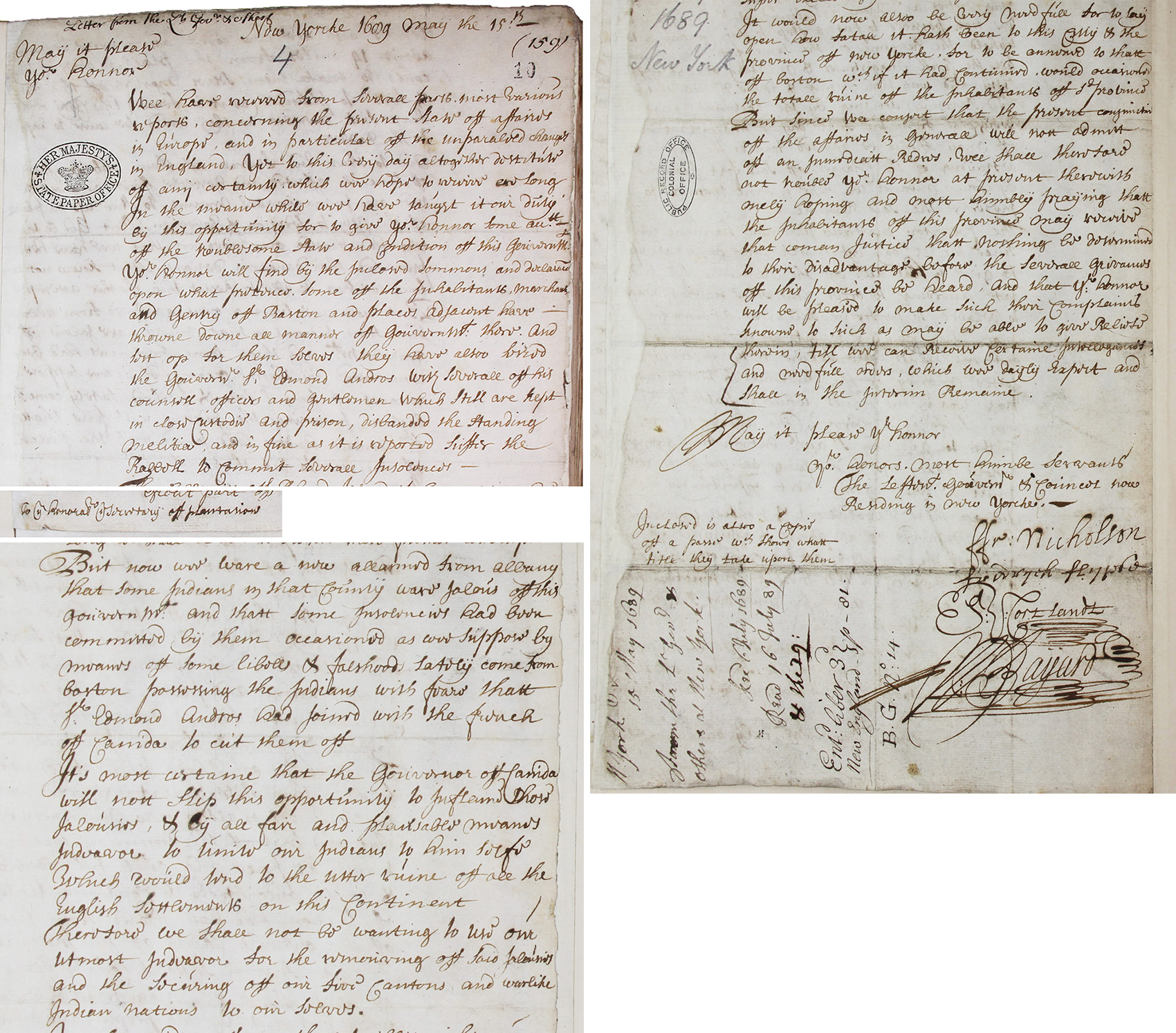
Extracts from a ‘Letter concerning responses to the Glorious Revolution and the unrest in the colonies’, May 15 1689. Catalogue ref: CO 5/1081 f.10-11
Events in England impacted the colonies in the Americas. The consequences of the Glorious Revolution varied in each colony from a peaceful transfer of power to civil war, as royal governors previously appointed by James II were replaced by new representatives who were loyal to William III. This letter is written by the governors in New York who had been loyal to James II.
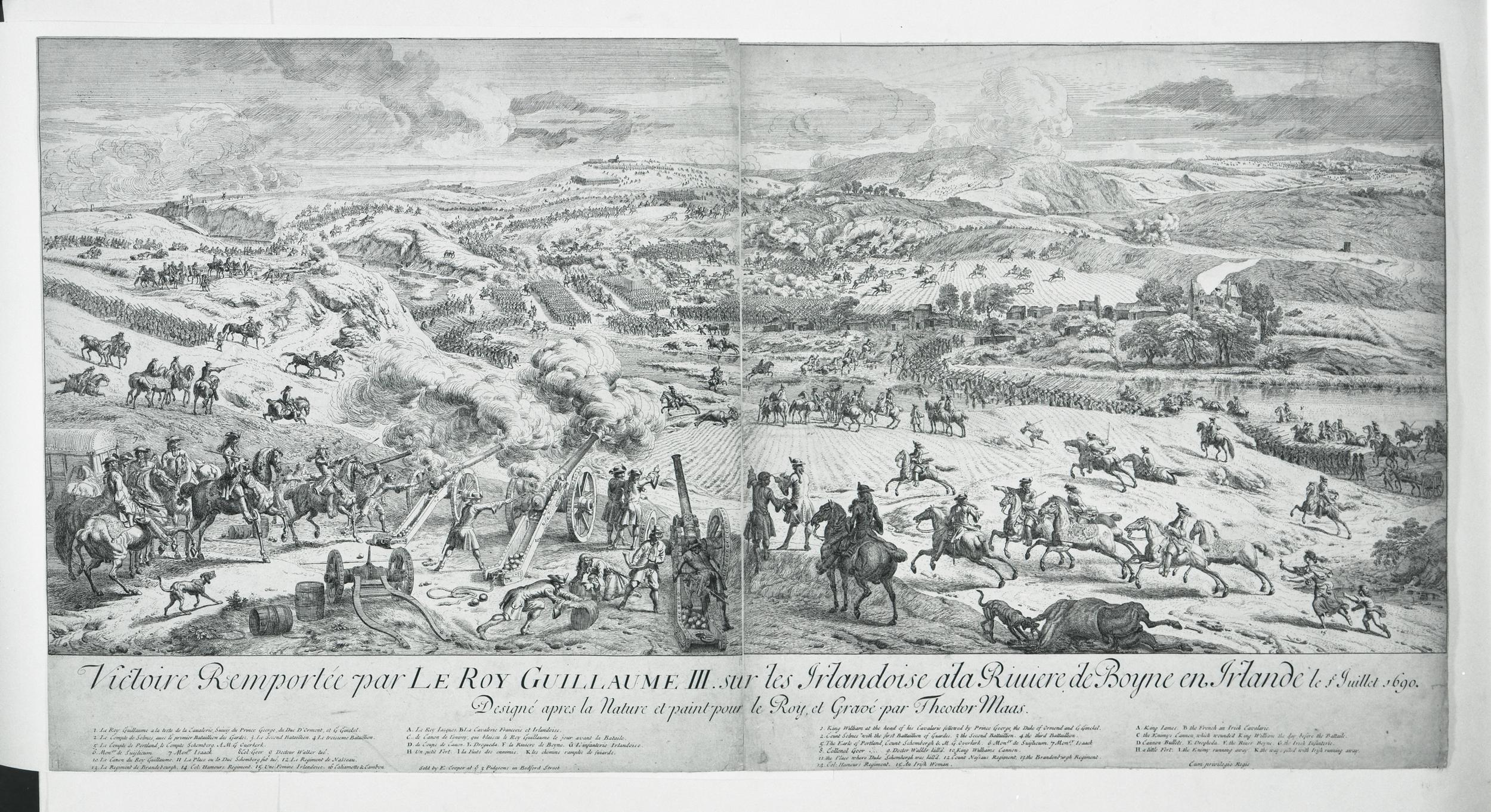
Source 5b: Panoramic view of the Battle of the Boyne, and the victory of King William III, 1691, etching. Catalogue ref: MPHH 1/34.
This etching was made by Dirck Maas, William III’s official Dutch battle painter, who was present with William at the Battle of the Boyne. Published by Edward Cooper, 1791.
© The Trustees of the British Museum. Shared under a Creative Commons Attribution-NonCommercial-ShareAlike 4.0 International (CC BY-NC-SA 4.0) licence.
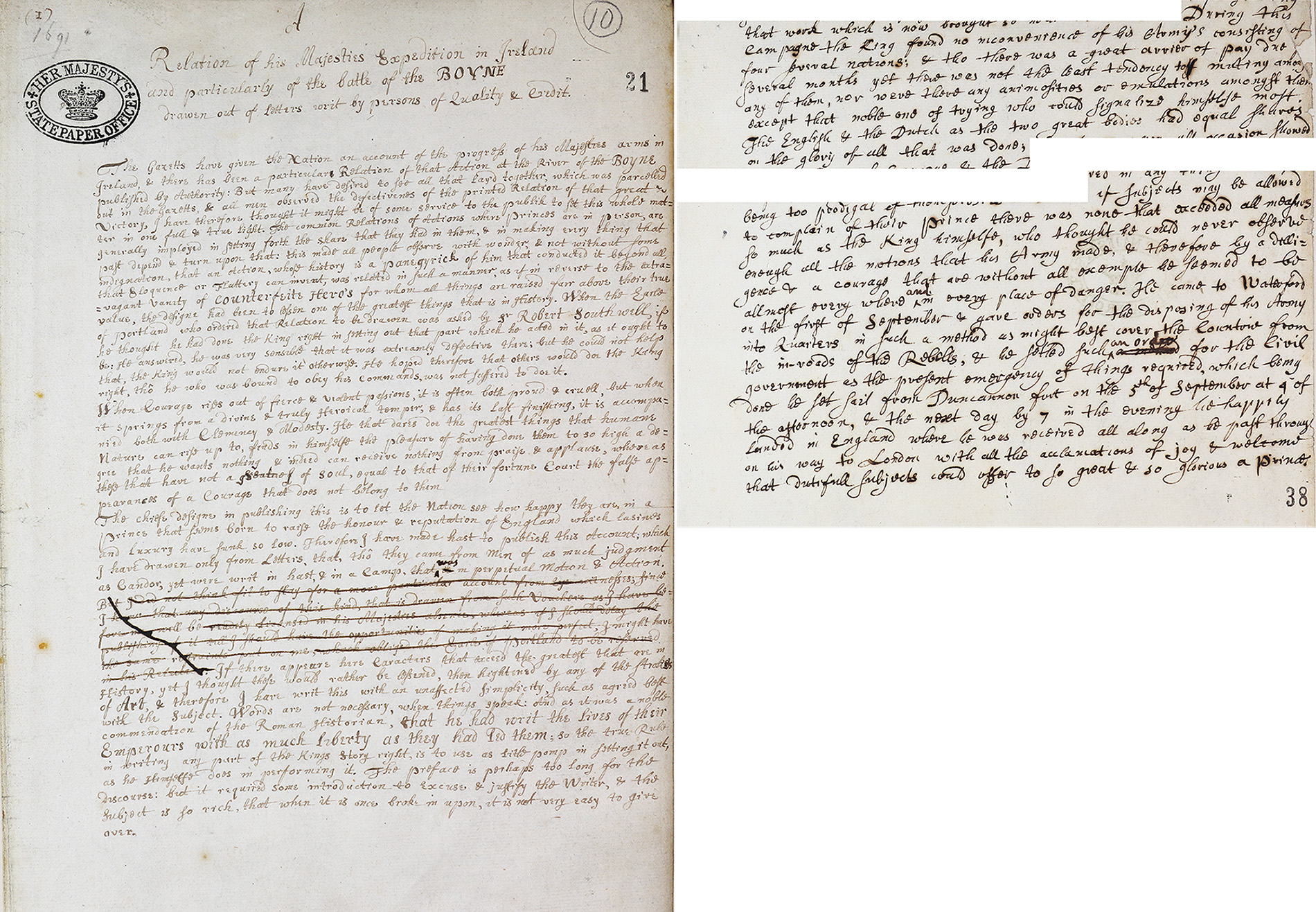
Extracts from a report entitled ‘Relation of his Majesty’s Expedition in Ireland and particularly of the Battle of the Boyne drawn out of Letters writ by ‘Persons of Quality’. Catalogue ref: SP 8/11/11 f21& f39
This document provides a substantial account of William of Orange’s expedition in Ireland and the Battle of the Boyne on 1 July 1690. When William arrived in England in 1689, James II fled to France. However, he was determined to take up the conflict in Ireland, arriving in the country in March 1689. James II was supported by a population who were largely Catholic. An army sent by William III arrived in Ireland in August 1689 to regain control. Fighting ensued until the Battle of the Boyne, after which James fled from Ireland, and William consolidated his rule there in the following twelve months. Historically, the Battle of the Boyne has been seen as a decisive moment in Irish history that secured the domination of Anglican Protestantism in Ireland.