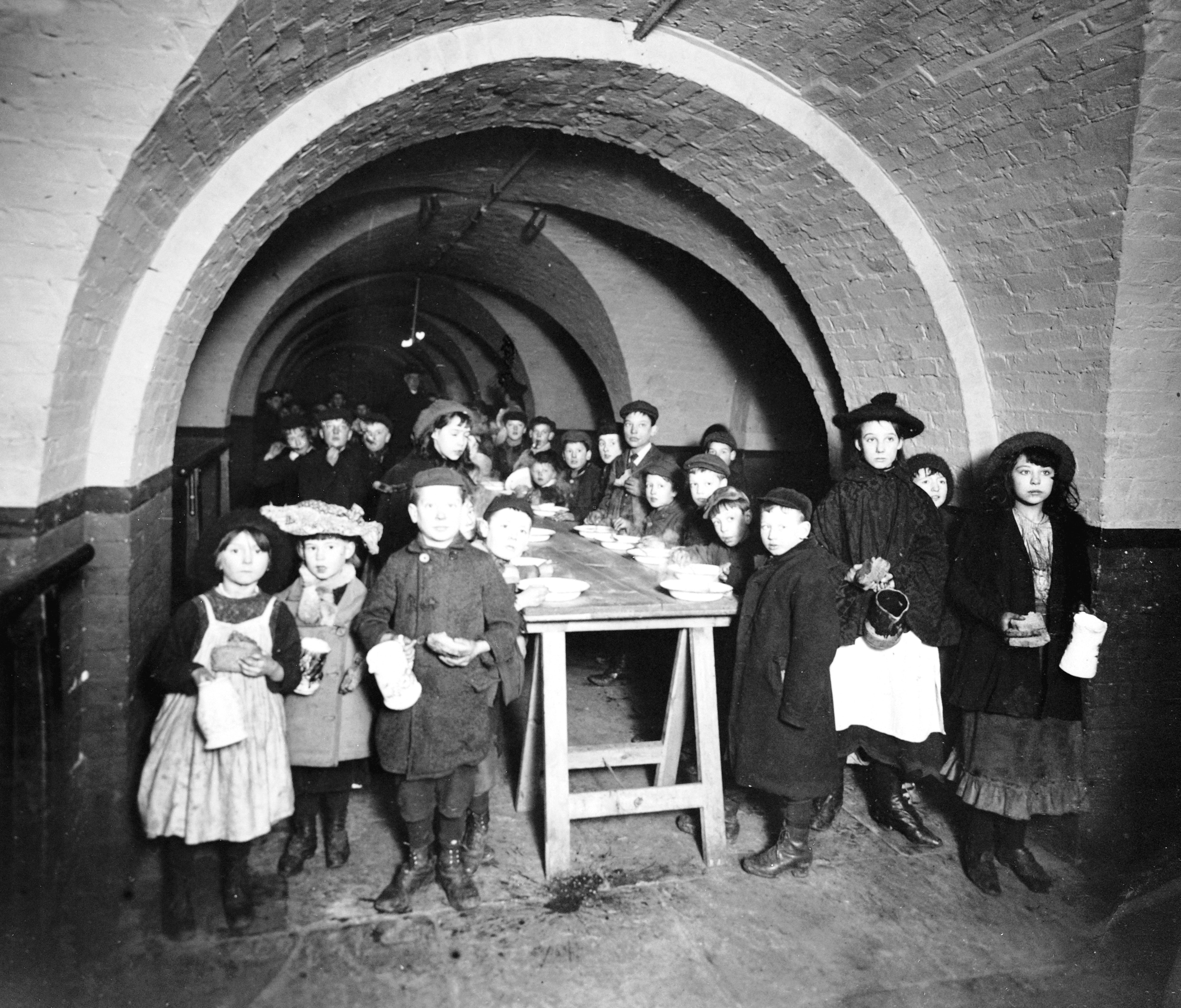
This lesson sequence for Year 12 and 13 students was written by Debbie Bogard from City & Islington Sixth Form College in London.
Overall enquiry question
Poverty c1904: Attitudes and action – what can sources tell us about poverty in 1904?
Learning objectives
- develop source skills through analysis of contemporary sources, identifying reasons for similarities and differences between sources
- examine why the government was concerned about levels of poverty in the beginning of the 20th century and how it understood the causes
- think critically about the nature of acquiring data and the extent to which a data set can help historians understand how poverty was experienced in the early 20th century
- compare the 1904 inter-departmental report with the 1904 survey and assess the degree to which the survey corroborates the findings of the report
Resources
Download the teacher’s notes, contextual essay and lesson plans (ZIP, 11.73Mb)

The Dawn of Affluence: how did living standards change? 1900-1960
These teaching resources are free to download and use in the classroom. We hope that they will inspire and support the use of archival material and datasets for teaching early 20th century social and economic history.
The resources were produced by teachers participating in The National Archives and University of Sussex Teacher Scholar Programme – ‘The Dawn of Affluence’ in 2013. This teacher education programme ran as part of the ESRC funded project, The Living Standards of Working Households in Britain, 1904-1960, which developed datasets based on government household expenditure surveys conducted in 1904, 1937-1938 and 1953-1954. These datasets are now providing academic historians at Sussex with a much deeper insight into Edwardian, inter-war and post-war living standards and are available to teachers and students as well. Full details of the project are available at the project website.
Each of the seven teachers has developed a series of lessons which focuses on different aspects of the Living Standards, and provides complete classroom-ready teaching rationale, lesson plans and resources, as well as a supporting contextual essay which sets the teacher’s work in the wider context of the historiographical debate about living conditions in the UK between 1900 and 1960.
We have combined the expertise of our education team with that of university academics and record specialists to produce groundbreaking opportunities for teachers to develop their skills. See resources from our past projects in the pages below.
Our professional development programme gives teachers access to our unique collections and supports them in developing new source based activities.