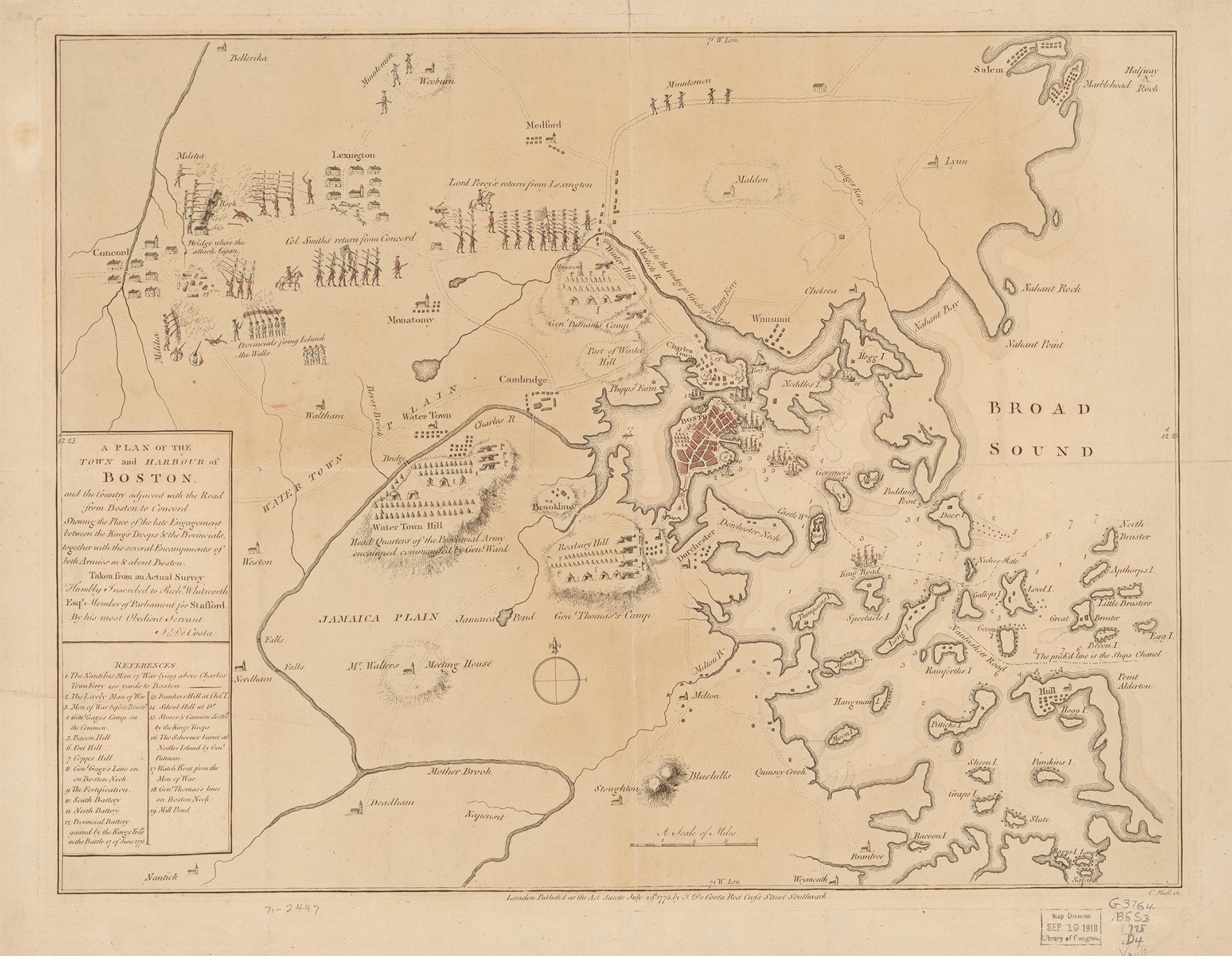
Map showing ‘A plan of the town and harbour of Boston’, John De Costa, Charles Hall, 1775. Credit: Library of Congress Prints and Photographs Division, Washington, D.C.
The American Revolution was fought across many different terrains. In the early battles, guerrilla warfare was used, with the colonists taking advantage of the fact that they knew their way around the hilly, rough terrain of the countryside. This took the British by surprise, making it far more difficult to suppress the rebellion than initially expected.
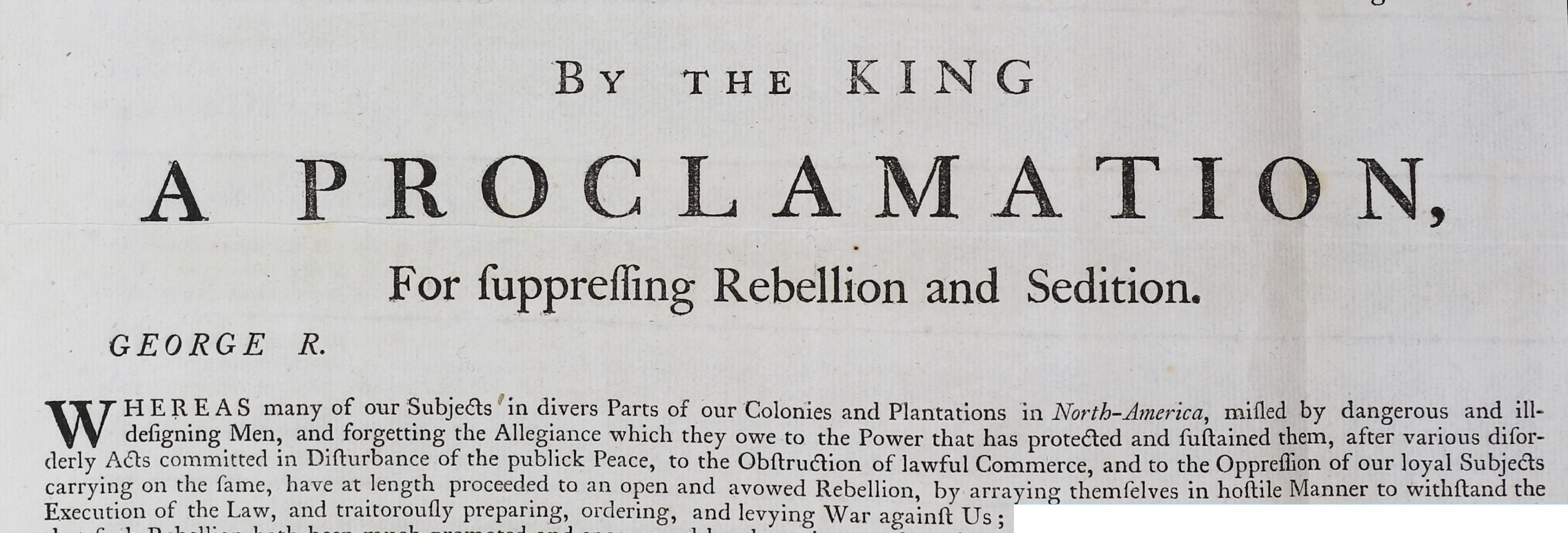
Extract from a proclamation issued by King George III on the 23 August 1775, Catalogue ref: CO 5/993 f.7
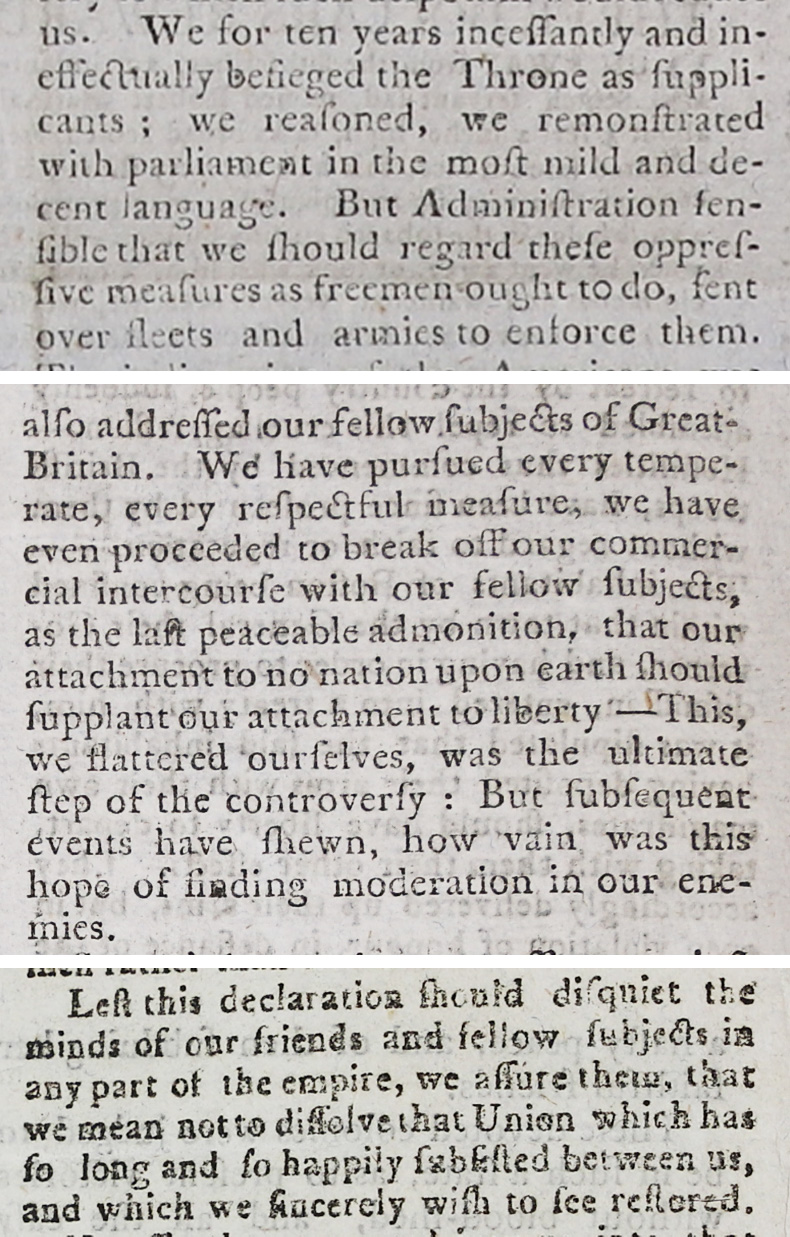
Extracts from a ‘Declaration agreed to by the General Congress in Philadelphia’, on the 6 July 1775. This established “the Causes and Necessity of their taking up Arms”. It was printed in a New Jersey newspaper on the 2 August 1775. Catalogue ref: CO 5/992 f161-162.
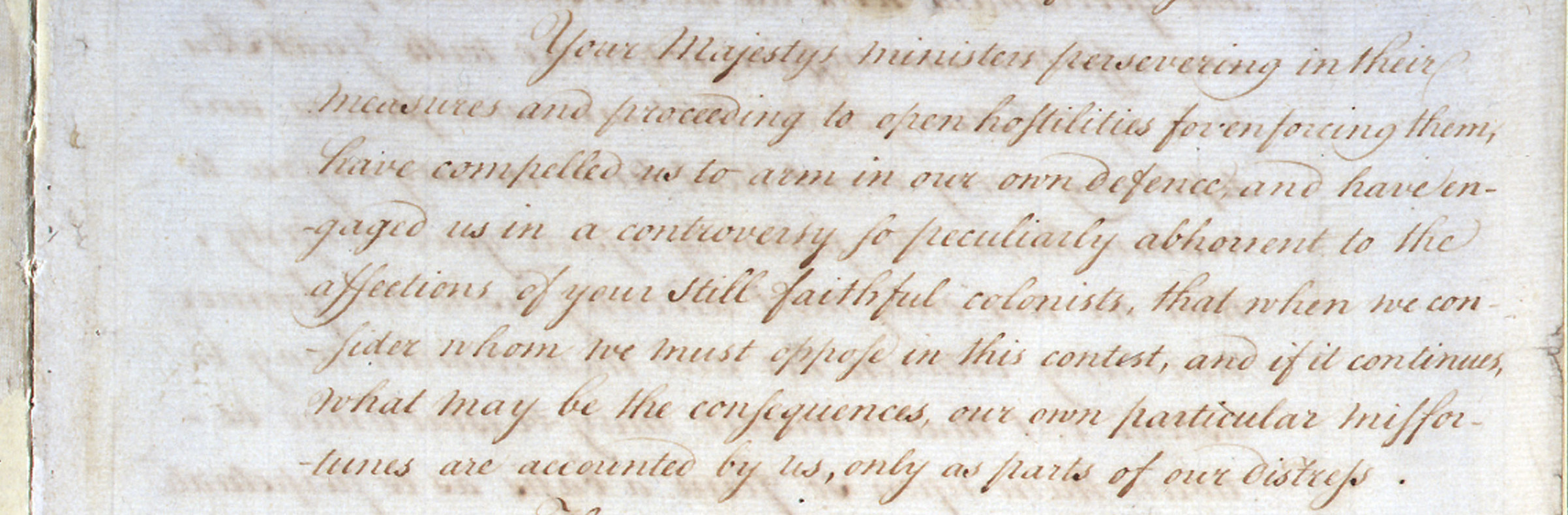
Extracts from the Olive Branch Petition, 5 July 1775 issued 8 June, Catalogue ref: CO 5/76 f.253
Following the outbreak of hostilities at Lexington and Concord in June 1775, the Second Continental Congress assembled to debate how best to respond to ongoing British hostilities. In July, they issued two documents, addressed to King George III of Great Britain. Firstly, on 5 July, they signed the Olive Branch Petition to prevent the growing hostilities and show George III that they were still loyal. This was sent to the King on 8 July. On 6 July they also issued a Declaration of Rights and Grievances, justifying their reasons for taking up arms against the British and outlining the grievances that they wanted to be addressed. The King did not respond directly to these petitions, but issued his own proclamation in August, criticising the colonists for their rebellion and treason. This led them to believe that there was no potential for reconciliation, and ultimately independence became the only course of action.
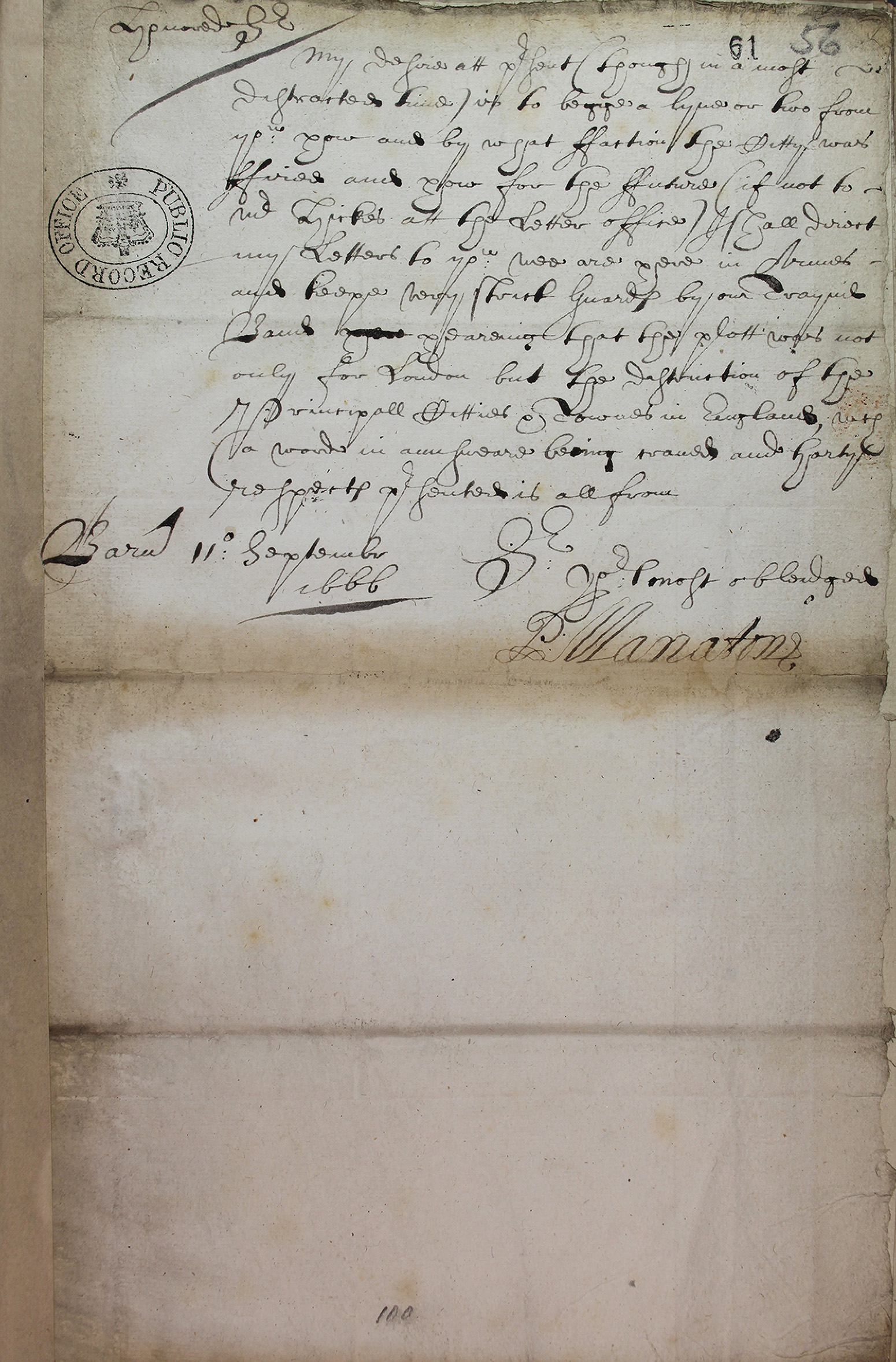
P. Manton from Barnstaple to Jospeh Williamson, 11 September 1666. Catalogue ref: SP 29/171 f56.
Joseph Williamson (1633-1701) was the Under-Secretary of State 1660-74 and Keeper of the State Papers which he reorganised from 1661-1701. He also started the ‘Oxford Gazette’ at the time of the Great Plague in 1665, which later became established as the ‘London Gazette’.
- Why did Manton write this letter?
- What does he believe about the cause of the fire?
- Why was the town of Barnstaple under armed guard
Transcript
Barnstaple
My desire at present (though in a most distracted time) is to beg a line or two from you: How and by what faction the city was fired and how for the future (if not to Master Hickes? at the weather office). I shall direct my letters to you: we are here in Arms and heap very strict guards by our trained band hearing that the plot was not only for London but the destruction of all cities and towns in England, such a word in answerance being craved and heartily respected presented is all from
Yours most obliged,
P. Manaton
Simplified transcript
My current desire is to beg a line or two of you, even in this most distracted time: how and by who was the city fired and what of the future? I shall direct my letters to you: we are here in arms and are keeping strict guard, hearing that the plot was not only for London but for the destruction of all the principal cities and towns in England, such a word or answer from you being craved an respected at this time.
P. Manaton
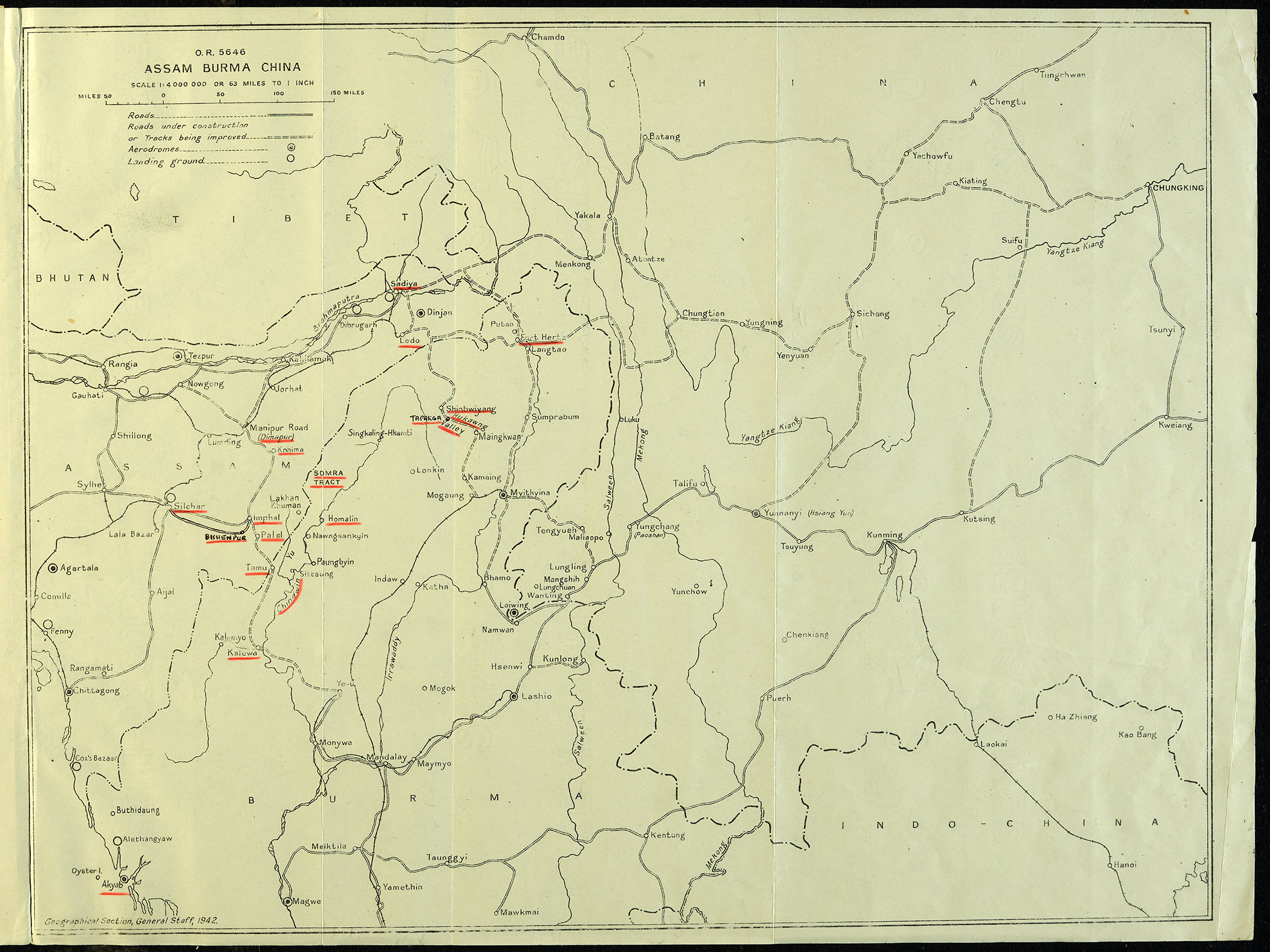
Map showing the routes taken by refugees travelling from Burma to India after Japanese bombing December 1941-February 1942, Catalogue ref: WO 106/3710
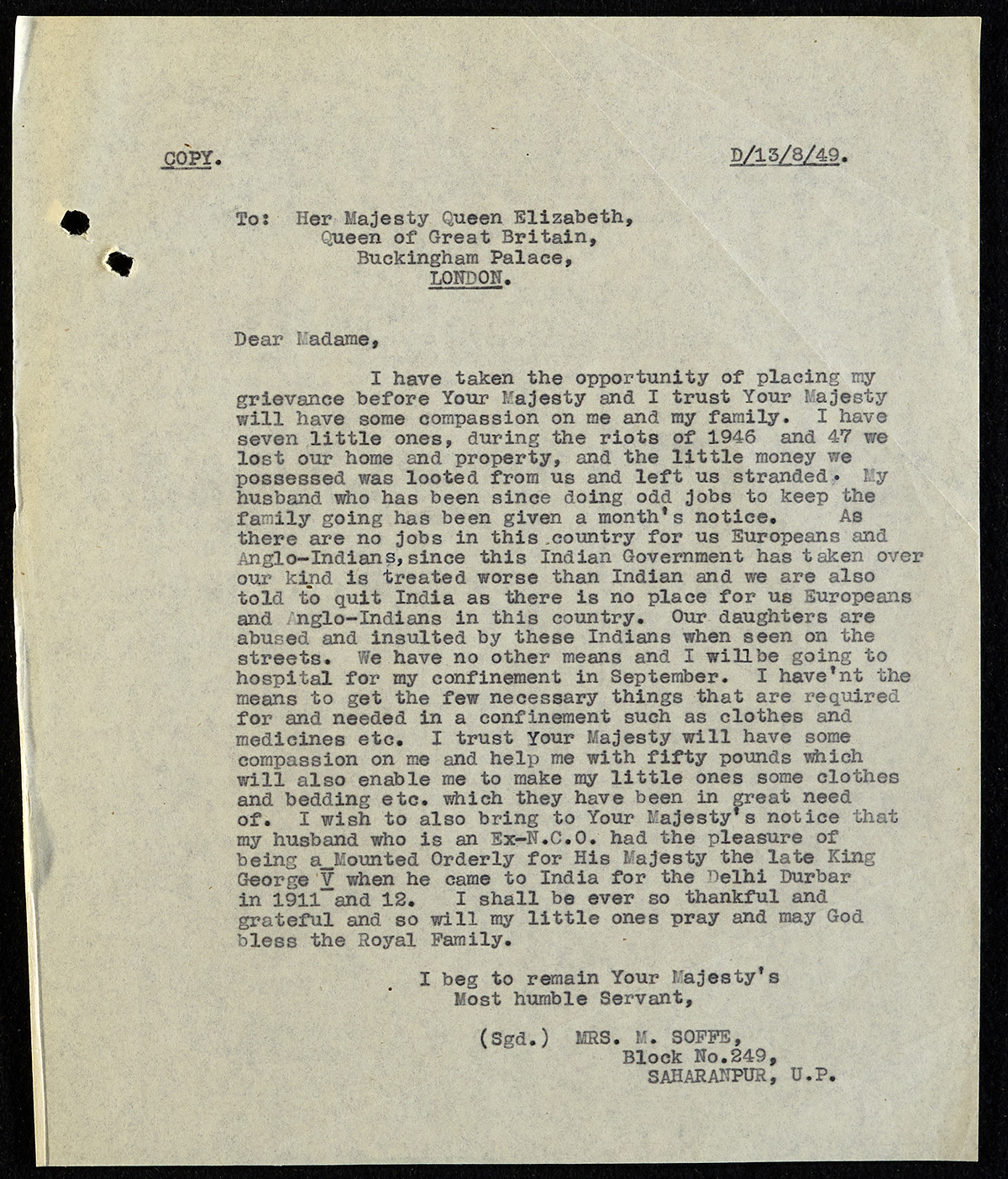
Letter to Queen Elizabeth II from Mrs Soffe in Saharanpur, Uttar Pradesh, India, 13 August 1949, Catalogue ref: DO 35/4191.
The Delhi Durbar of 1911 was a coronation ceremony held in Delhi on 12 December 1911 to mark the coronation of King George V and Queen Mary as Emperor and Empress of India.
N.C.O: An officer who does not hold a commission. He will have entered the ranks and earned his position through promotion, On the other hand, commissioned officers usually enter directly from a military academy or after some kind of training.
Mounted Orderly: A commissioned office assigned to an officer as a person man servant. In this case a member of the cavalry.
The period after the Second World War saw the rise of mass movements across India, reflecting the growing demand for independence.
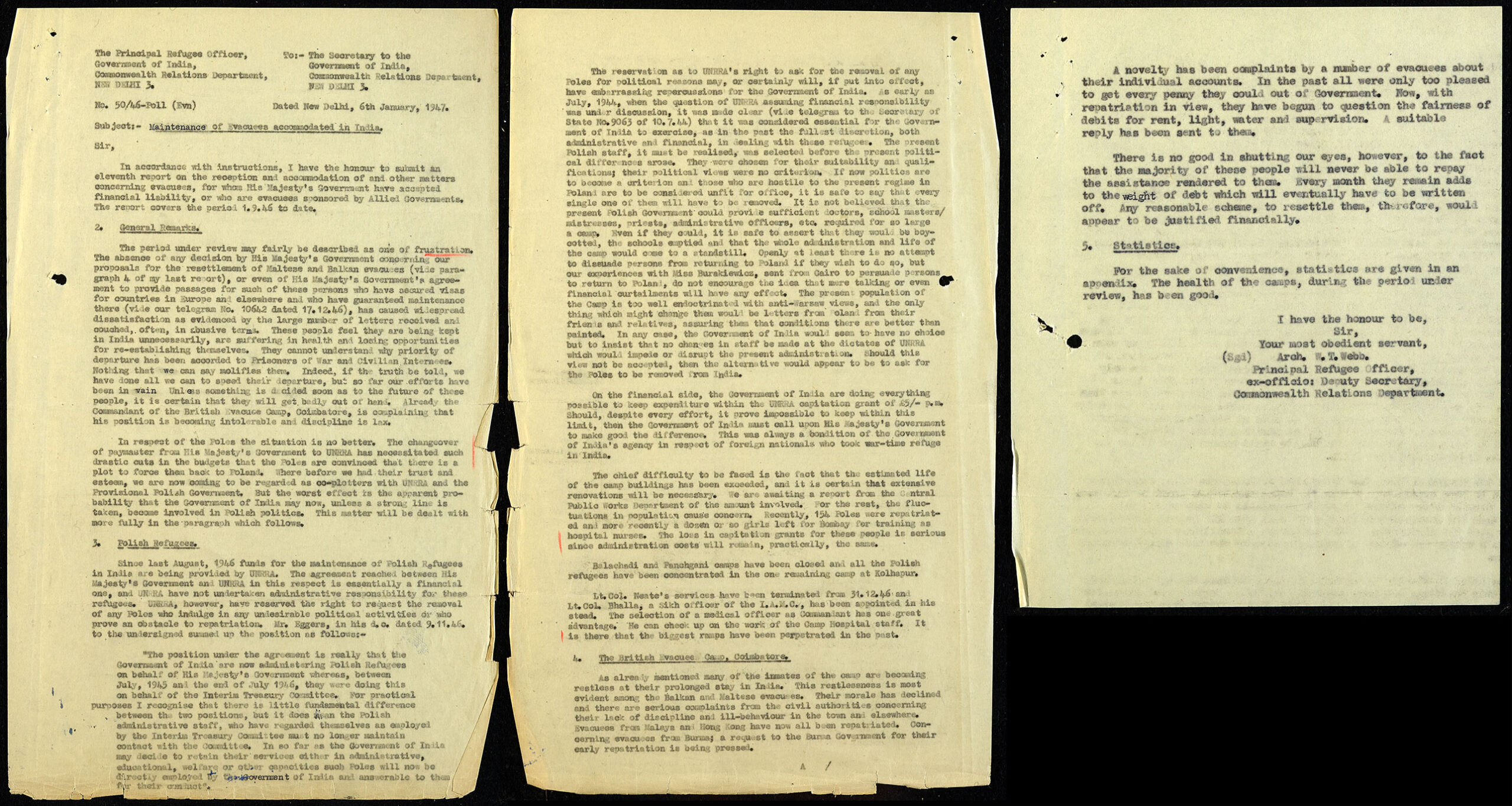
Report from the Principal Refugee Officer in New Delhi to the Secretary of the Government of India at the Commonwealth Relations Department, 6 January 1947, Catalogue ref: HO 213/1190
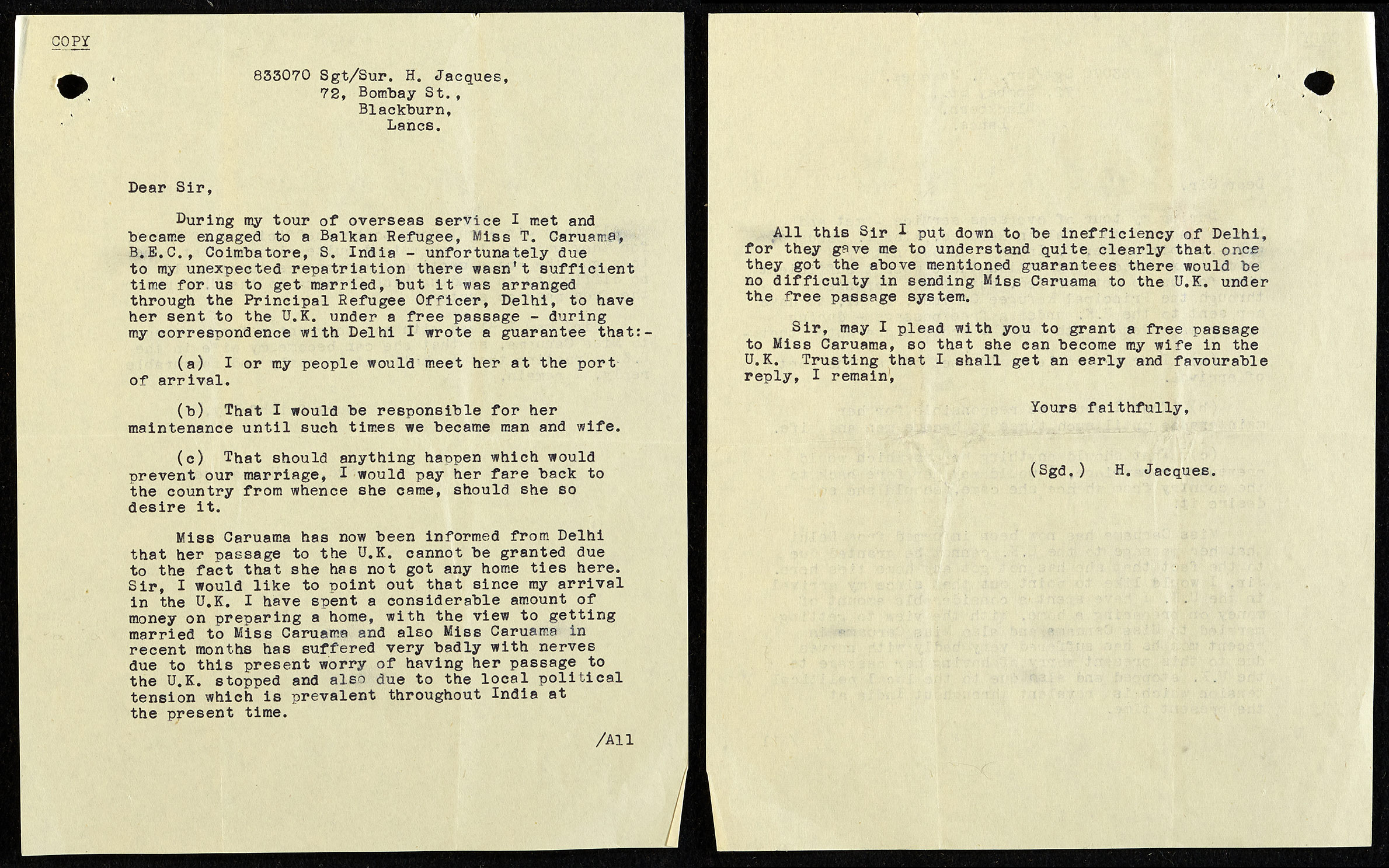
Letter from H. Jacques to the Foreign Office, 1946 Catalogue ref: FO 371/57815
[The ‘free passage system’ meant free passage by boat was provided by the Colonial Office. Balkan peoples today would include Greeks, Albanians, Macedonians, Bulgarians, Romanians, Serbs, Montenegrins, and Bosnian Muslims.]
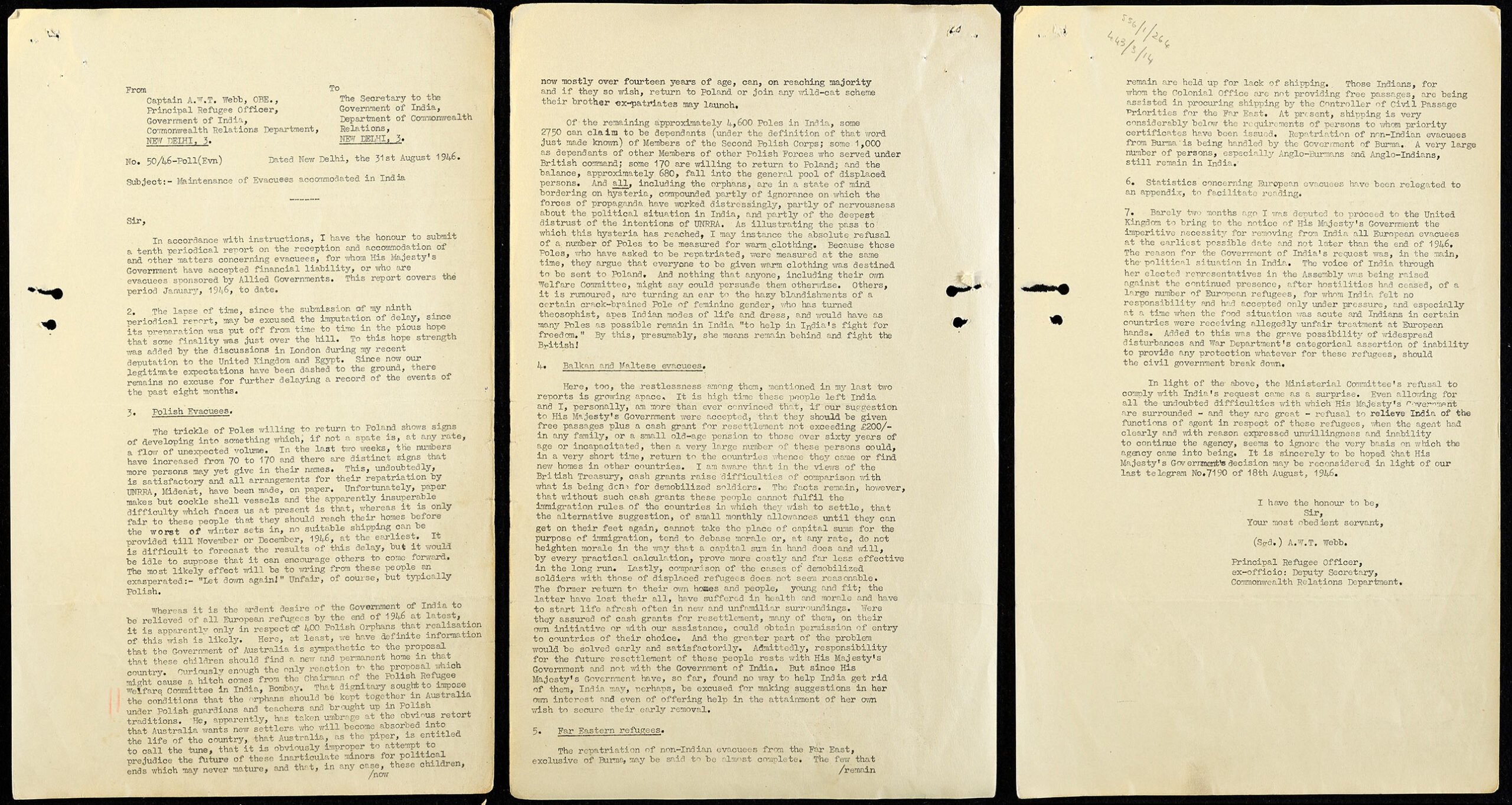
Report from A.W.T. Webb, Principal Refugee Officer, Government of India in New Delhi (who holds the role due to his status/another position) sent to the Secretary of the Government of India, Department of the Commonwealth, 31 August 1946, Catalogue ref: HO 213/1190