Handling tagged files

Learn how to handle tagged documents safely and prioritise their conservation.
Most records hold by The National Archives are made from paper. Learn how to handle them safely and prioritise their conservation.
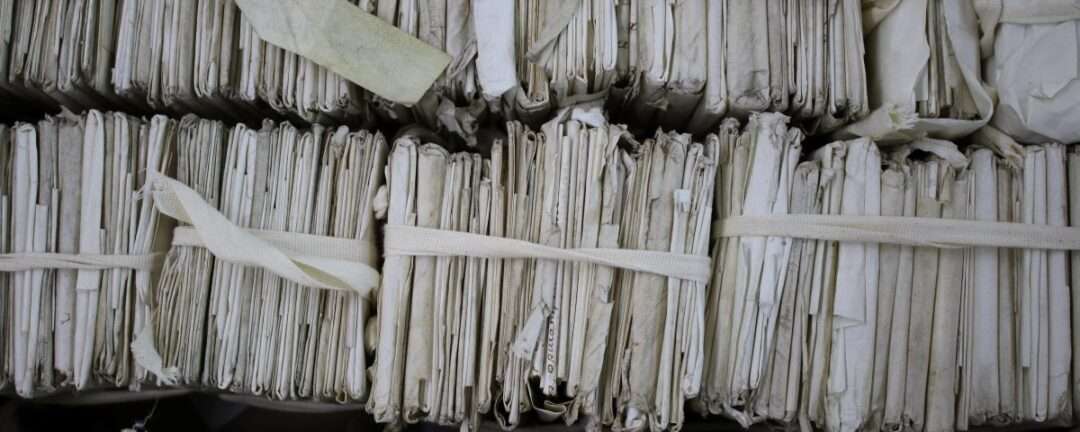
More than 81% of The National Archives’ collections are made from paper. This includes tagged files, flat maps and plans, rolls, bundles, volumes and artworks. During manufacture, wood or other plant-based materials such as cotton or linen are broken down, or pulped, into their basic fibres. This process can be undertaken by hand, by machine, or chemically. How paper is made will affect its quality and durability, which in turn can impact handling considerations.
Please note: other materials and formats may be found within paper documents, including photographic materials, folded maps, pamphlets, and seals.
In our collections, we most commonly find:
Paper made from cotton or linen rags became popular in Europe from the 16th century onward. The hand manufacturing process resulted in long fibres, meaning that the paper is strong, resistant to tearing, absorbs ink well and is chemically stable.
Wood pulp paper dates from the mid-19th century onward and became widespread as the manufacturing process was industrialised. This paper has shorter fibres because of its manufacturing process, which included grinding or chemical “cooking” to break down the wood pulp. Because of this, the paper is weaker, highly acidic and of poorer quality; it is easy to tear, discolour and becomes brittle relatively quickly.
Our paper documents can be found in many different forms. These include:
Tagged files are typically comprised of paper, but may also contain other materials and formats, such as photographs, booklets, folded maps or loose objects.
Learn how to handle tagged documents safely and prioritise their conservation.
Volumes – or books – come in a wide variety of sizes, shapes, weights and materials. Find out how to safely handle volumes in our collection.
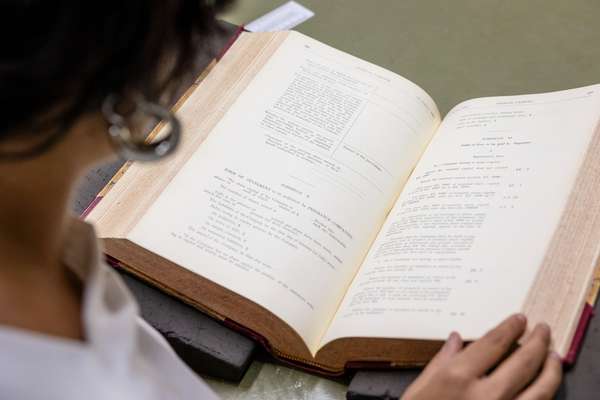
Learn how to handle volumes (books) safely and prioritise their conservation.
Large-format documents include maps, plans and artworks. They may be flat or folded and can be made of a variety of materials and media.
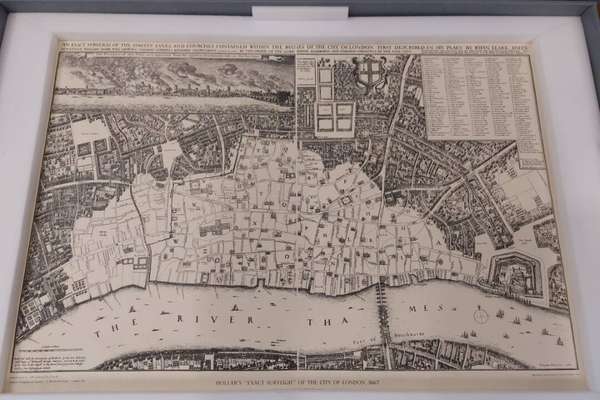
Learn how to handle large flat and folded documents safely and prioritise their conservation.
Rolled maps and bundles come in a range of sizes, weights and materials, which can present handling issues.
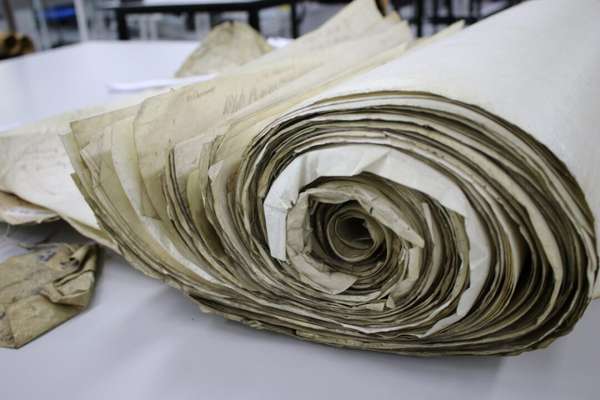
Learn how to handle rolled maps and paper bundles safely and prioritise their conservation.