youtube.com
Archives Revealed funding announcement
Watch a recording of this webinar from August 2024.
Archives Revealed is the only grant programme in the United Kingdom (UK) dedicated to the cataloguing and unlocking of archival collections. The programme is funded by The National Lottery Heritage Fund, the Pilgrim Trust, the Wolfson Foundation and The National Archives.
The mission of Archives Revealed is “to ensure that significant archive collections – representing the lives and perspectives of all people across the UK – are made accessible to the public for research and enjoyment”.
The six strategic priorities of Archives Revealed, with their aims and outcomes, are:
Aim: to make significant collections accessible to national and local audiences which would otherwise remain hidden.
Outcome: Archive services identify and prioritise the cataloguing of collections representing significant people, organisations, communities, events and cultures in the UK to make them more accessible to audiences.
Aim: To be an inclusive and responsible funder that supports diversity across the archive sector.
Outcome: Archive services of all types and sizes, and from all regions and nations of the UK, are more accessible to people for research and enjoyment. Archives Revealed has a reputation for equitable decision-making and enables a wide variety of projects from across the UK to be supported with funding.
Aim: To increase the visibility and use of archive collections across varied audiences, revealing the stories and experiences of people, communities and events.
Outcome: Archives make connections with relevant audiences, building relationships of trust based on engagement with archive collections. Archives engage audiences with archive collections in creative ways that make a difference to people’s lives. Audiences see their backgrounds, experiences and perspectives represented in the archive. Archives can communicate the results of their projects to highlight archive collections to relevant audiences, communities and the wider public.
Aim: To highlight the value of archives in making a difference to people’s lives.
Outcome: Archives can advocate for their service and collections to ensure continued support from within their own organisations and beyond – and secure matched resources for the catalogued collections. Heritage and archive funders are engaged in the Archives Revealed programme, understand its value, and contribute to funding to ensure its continued success. The archive sector can draw on a body of evidence to advocate for their service and adjust their engagement work accordingly.
Aim: Fund projects that represent examples of excellence in cataloguing and discovery.
Outcome: Appropriate and effective cataloguing methods are utilised that meet archive standards and best practice guidance, and that result in collections being highly accessible and usable by audiences.
Aim: Build fundraising skills and confidence through the application process.
Outcome: Archive services have the knowledge and skills to secure funding to support engagement activity for catalogued collections.
The need for funding and expert support to enable the cataloguing of significant collections in the UK has been recognised by the funders of Archives Revealed for almost two decades. Archives Revealed began as The National Cataloguing Grants Programme in 2006, which was relaunched as Archives Revealed in 2016. In 2024, Archives Revealed was delighted to welcome The National Lottery Heritage fund as a funding partner to the programme. Archives Revealed continues to meet the needs the of the heritage sector, and its audience, researchers and wider society in the UK and beyond.
As detailed in the UK Government’s strategy for archives, Archives Unlocked, without archives and their custodianship of heritage:
We could not trace our ancestry, explore our collective and individual identities, or challenge established views of the past. Without this collective memory – the evidence store for our histories – we could not hold governments and organisations to account. The impact of archives is felt across society: inspiring art and literature; influencing product design and branding; enabling insightful and pioneering research; and informing decision-making in organisations of all types. In short: Archives Matter.
Archives Unlocked, The National Archives
Archives and their custodianship of heritage matter. Key to accessing collections is the process of cataloguing, describing and ordering a collection in a way that makes it accessible and usable. It is only through the cataloguing of collections, and through making them available to people, that the benefits of archives can start to be realised. The cataloguing of collections remains of foundational importance to the archives sector, to the sustainability of our documentary heritage and to the accessibility of our historical record. Without the means of describing, finding and connecting documentary heritage, its management is impossible, condition unknowable and engagement with it unachievable. For further guidance about cataloguing please visit ourCataloguing Grants page.
The mission of Archives Revealed is “to ensure that significant archive collections, representing the lives and perspectives of all people across the United Kingdom, are made accessible to the public for research and enjoyment.” It is the only funding programme in the UK providing grants exclusively for the cataloguing and scoping of archive collections, as well as the opportunity for archives to collaborate in consortiums on large-scale cataloguing projects.
The first iteration of Archives Revealed was inspired by a 2002 survey of archives conducted by the Historical Manuscripts Commission, which in 2003 was merged with the Public Record Office to become what is known today as The National Archives. This survey estimated that the UK held a backlog of uncatalogued archives that would take archivists many hundreds of years to clear, and that this backlog was ever-growing as archives acquired new collections. The report created a case for funding, and the first iteration of a grant programme for cataloguing was created.
The Pilgrim Trust were the initial advocates for funding for cataloguing and approached The National Archives with the concept of grants for archives to catalogue outstanding collections to make them accessible to the public. A two-year pilot programme was launched in 2006 funded by the Pilgrim Trust and the Esmée Fairbairn Foundation, with The National Archives providing administration and access to expert support.
The pilot was a success and demonstrated the scheme’s potential. The full National Cataloguing Grant Scheme was launched in 2008, with funding from the Pilgrim Trust, The National Archives and other funders. From 2006 to 2015, the National Cataloguing Grant Scheme supported 116 projects across England, Scotland and Wales with almost £3.6 million of funding provided.
The programme has been continuously evaluated to understand lessons learnt from projects and iteratively improve its design and delivery. In 2016, an evaluation of the National Cataloguing Grant Scheme was conducted. This evaluation identified a need for a rebrand and for the programme to become more accessible, with a greater diversity of recipients from all parts of the sector being awarded funding and support for their work. A key recommendation from this report was to offer two streams of funding, introducing Scoping Grants that the programme continues to this day. In 2017 the programme was relaunched with its current name, Archives Revealed.
Since 2017, further evaluations were conducted in 2020 and 2023. Each evaluation recognised the valuable impact the programme has made, and recommended that further investment and funding partnerships be sought to enable the programme’s expansion and increase the amount of projects funded. In 2024 Archives Revealed was delighted to welcome The National Lottery Heritage Fund as a funding partner to the programme, with a five-million-pound investment, taking the fund’s total value to £6 million, of which over 85% will be provided directly to the sector in the form of grants. This was announced at a webinar.
youtube.com
Watch a recording of this webinar from August 2024.
Archives Revealed is currently funded by The National Lottery Heritage Fund, the Pilgrim Trust, the Wolfson Foundation and The National Archives. With increased investment in the programme, we have been able to hugely increase the number of Scoping and Cataloguing Grants awarded, to introduce Consortium Grants, to fund public engagement activities for the first time, and to provide a comprehensive training and skills programme celebrating the achievements of our grantees and building the sector’s capacity now and for the future. The programme will enable far more people to engage in heritage and to explore the unique knowledge which archives hold.
This page takes you through those of our team that are involved in the Archives Revealed programme. However, if you would like to get in touch with us, either about Archives Revealed or another one of our grants schemes, you can find our contact details here.
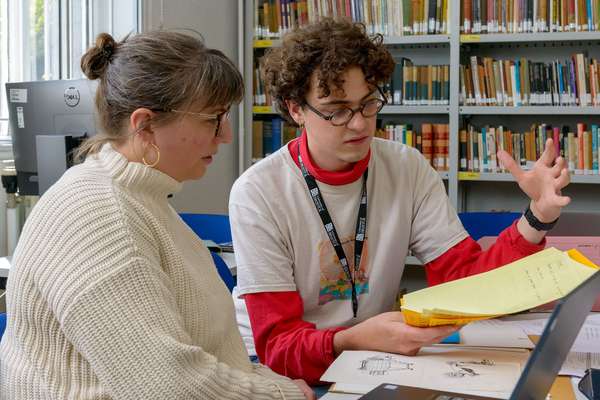
Find the right person from our archive sector Grants and Funding team to help you with your funding enquiry.
The Archives Revealed programme is led by a Steering Group with responsibility for the governance of the programme and its strategic direction. Its members are:
Sue joined the Pilgrim Trust in 2020 from the National Lottery Heritage Fund, where she was most recently Director of Investment and Head of The National Heritage Memorial Fund. She has worked in the heritage and grant giving sectors throughout her career. Starting at the Museums and Galleries Commission, she then worked in local government before joining the Heritage Lottery Fund in 1994. Sue has a MA in Museum and Gallery Management, is a Fellow of the Royal Society for the Arts, and sits on the Grants Panel of the Football Foundation. Sue chaired the Archives Revealed Panel 2020 to 2023.

Paul Ramsbottom is Chief Executive of the Wolfson Foundation, a charity which funds widely across research and education in the UK. Paul takes a wider interest in issues relating to philanthropy in the UK as a speaker and writer. He has undergraduate and postgraduate degrees in History from the University of Oxford.
Outside of philanthropy, he has an interest in international development which includes founding the Savannah Education Trust – a charity which works in West Africa – and sitting on the Board of Mercy Ships UK. He acts as a judge for the World’s Best School Prizes. His hometown university, the University of Bedfordshire, awarded him an honorary doctorate in 2013. In January 2020 he was awarded an OBE for services to charity.

Alistair Brown leads the Heritage Fund’s policy on archives, museums and libraries and across the UK, and has supported the Heritage Fund’s delivery of a wide range of projects in the sector, including their Dynamic Collections campaign. Prior to working at the Heritage Fund, Alistair was the Policy Manager for the Museums Association where he led on a range of policy initiatives including the review of the Code of Ethics for Museums, the delivery of the Museums Change Lives campaign, and a series of successful sector advocacy campaigns. He has also previously worked in cultural and regional policy roles for the Scottish Government and the European Commission.

As Keeper of Public Records, Saul is responsible for overseeing the integrity of the public records system of England, Wales and the United Kingdom. Saul leads a team of over 500 people, providing strategic vision for the organisation as it carries out its vital role as guardian of over 1,000 years of iconic national documents.
Saul has had an extensive career in education and media, having previously served as Group Chief Executive of Cambridge Assessment, the University’s examinations business, and as Chief Executive of Cambridge Assessment English. Prior to that, he was Controller of BBC Learning, running the department that commissioned and produced educational content including BBC Bitesize, Stargazing Live and BBC Food. During his time at the BBC, Saul oversaw the Domesday Reloaded project – inspired by one of our most famous documents – which brought online a vast multimedia archive from 1986, contributed by over a million members of the public.
Saul studied Natural Sciences at Robinson College, University of Cambridge and was a Fellow there from 2019 to 2024. He began his career at Cranfield University, before joining the BBC Science Department. In 1997, he became Editor of prime-time science show Tomorrow’s World, before moving on to be acting Head of Religion & Ethics and later General Manager of BBC Worldwide Productions in Mumbai, where he was responsible for the Indian version of Strictly Come Dancing.

Home Nations Representative.
Jack is Head of Research, Grants and Academic Engagement at The National Archives, and the project lead for Archives Revealed. He is responsible for The National Archives’ research strategy and its engagement with its academic audiences, the higher education sector and other Independent Research Organisations. He also leads The National Archives’ grant fundraising for research, public engagement, digitisation and capital works programmes, and our funding programmes for the wider archives sector.
He is a research and research management professional, who has worked as the project manager of several large clinical studies in the UK and Africa, and latterly as Department Manager of the Department of Global Health and Development at the London School of Hygiene & Tropical Medicine, leading professional services for a department of 135 academic staff with over £35 million in total grant funding. He joined The National Archives in 2021 to establish a new Grants and Funding Office, before adding the Research and Academic Engagement teams to his brief in 2023.
Jack has an MA in Music from Trinity College, Cambridge, and away from his desk, still performs regularly as a choral singer and as the organist of All Saints’ Church, Orpington.

James has led the operations of the Archives Revealed programme for the last three years, including the design and delivery of our strategic funding review in 2022-23. James has over 15 years’ experience working on and managing international projects in the NGO sector, funded by the Government and other multinational institutions, including working in Cambodia, Rwanda, Tanzania, Kenya, Ghana, Uganda, Burundi, the United States of America and Australia.

Deborah joined The National Archives in 2024 to support the expansion of the Archives Revealed programme. She previously worked on the Arts Council England/V&A Purchase Grant Fund helping regional museums and records offices to secure some excellent acquisitions. Deborah has taken a circuitous route to The National Archives, having started her career in art-focused university library services, followed by working in higher education quality, regulation, and admin management for well over a decade. An advocate for lifelong learning, Deborah decided to undertake an MA in the History of Art and Photography in her spare time, made the leap to the arts and heritage sector, and has not looked back.

Jess joined the Archives Revealed team following a career in the archives sector. She started at the BBC and has worked in lead roles for archive services in the private sector and local authorities, managing teams and working on service development and accreditation.

Holly supports the compliant management and delivery of The National Archives’ grants. She is a qualified project and programme manager with wide experience of grants in a government and charity context, including a £26 million grant scheme within the Department for Business, Energy & Industrial Strategy. She likes football, gardening and running.

Isobel supports the work of our grant teams, working to fund the archive sector as well as win bids to enable innovative internal research. Isobel holds an MPhil in English Literature from Cambridge University.

The delivery of Archives Revealed is supported by The National Archives' Archive Sector Leadership department, who provide advice and guidance to the sector.