Important information
This blog references the contemporary views of our records across the last 1,000 years, including prejudice and institutional bias. Records featured here relating to sexuality and gender identity can be depersonalising, use offensive language, and include sensitive issues that remain relevant for LGBTQ+ people today.
State archives and LGBTQ+ lives
Researching LGBTQ+ histories can be rewarding and powerful but also challenging. Many of our records related to these histories have been historically under-researched and we are now working to address this imbalance.
Historically the state has had negative relationships with people whose lives didn't fit the norms of the time, including those relating to sexuality and gender identity. This presents challenges when working with collections of government records, meaning it is often necessary to engage with records relating to policing, legal action, censorship, medical regulation, public health, or policy debates. Over time our collections are expanding to cover more recent progressive legislation and campaigning-related documents.
Additionally, the reasons these records were created are often not the same as the reasons we want to research them now, which means we need to use them in creative ways. For example, many of the LGBTQ+ related records held at The National Archives were created from everyday work done by the police and courts and reflect the historic attitudes of these institutions. Meanwhile, a researcher may want to use these records to get a better understanding of how members of the LGBTQ+ community met and socially engaged with each other.
Explore our records
Find UK government records on Discovery, The National Archives' online catalogue.

Police photograph of the public toilet in Brixton, 1932. Catalogue reference: CRIM 1/617.
Using our guidance
The National Archives has a Sexuality and Gender Identity research guide to support you through potential research avenues – this is the best starting point for your research.
Our research guide has recently been updated with the support of a lived-experience focus group to help prepare researchers to navigate these records and to expand the types of material it covers. We are deeply grateful to everyone who contributed to this process.
You can also use this blog on my research process when looking into Section 28 as a practical example and reflections by PhD student Garfield Campbell on the challenges of this work.
Sexuality and gender identity history research guide
This guide will help you find records relating to sexuality and gender identity history at The National Archives.
Start with your question: What are you trying to understand?
The archive often works best when you start with specific questions. Rather than trying to explore the whole catalogue at once, start with a topic, person, organisation or moment.
Ask yourself: what is the focus of my research? Naming your focus will help you choose the right place to look, use the right search tools and identify sections of our guidance to help you.

Death duty record (1941–1942) of Virginia Woolf, showing who she left her most important possessions to, including her lover, Vita Sackville-West. Catalogue reference: IR 59/805.
What parts of government will be interested?
The National Archives primarily holds government records rather than personal papers. Due to this, LGBTQ+ lives appear where the state had reason to interact and document them.
When looking for relevant records for your research, ask:
- Why would government be interested in my topic?
- Which areas of government are likely to be interested?
It may be that The National Archives isn’t the best place for your selected topic. In which case you can explore other archives collections using our Find An Archive search.
If you’re researching a person:
- Use life records to trace state-registered milestones, such as census returns or divorce records.
- Think about moments they were involved in that might be linked to the work of government departments, such as events or campaigns.
- Consider whether they may have encountered the police or legal system at times when their sexuality or gender expression was effectively criminalised.
If you’re researching a moment or event:
- Who was involved? Try to search by individuals or organisations.
- Take a wider approach: did it relate to government policy or practice? Look for broader subject-related records that might have something relevant within them.
If you’re researching a place or organisation:
- Ask why the government would have been interested in that space. This might include policing, licensing, surveillance, regulation, or public order concerns.
- Think about why the organisation may have interacted with government in the first place. This could include campaigning, registering as a charity or providing expertise on LGBTQ+ issues.
You can use these prompts to help assess which sections of our collections, and research guidance, might be most helpful to you.

From 25 June 1891.
A53622
Unnatural Offence Cases.
Name and age
Thomas Burnes
Date and Court of Conviction
N. London Adjd sess [adjourned session] Clarkenwell, 19 May 1891.
Sentence
18 c mos.
Judge
G.D. Warry, Esq., Q.C.
Remarks
Indecent assault on a male person with intent to commit unnatural offence.
H.O. Number
[tick]
Name and age
George Neal (23)
Date and Court of Conviction
Bedford Co. Assizes, Bedford, 26 June ‘91
Sentence
6 c mos. H.C.
Judge
Williams, J.
Remarks
P.G. attempting to commit an abominable crime with a cow.
H.O. Number
[tick]
List of ‘unnatural offences cases’, including cases of ‘sodomy’ and ‘bestiality’ side by side,1891. Catalogue reference: HO 144/243/A53622.
Build a set of search terms
Historically, LGBTQ+ people are rarely discussed in modern terminology or using their preferred terms. Additionally, sexuality was largely described as something a person did, rather than what a person was, until the Victorian period and the introduction of the word homosexuality. Due to this, using contemporary language and labels may limit the success of your searches.
Original titles written by record creators are often used when producing descriptions for our catalogue entries. This is to ensure accuracy and reflect the lived reality of people historically but often means working with language that may be offensive or difficult.
Our approach to offensive terminology

Explore our approach to catalogue descriptions with offensive language.
It can be hard to engage with these terms, but it's important to remember that they are your research tools and can help you find records.
Finding historical terms
Our guidance has extensive lists of terminology that you can chose to view in the appendix.
I recommend creating and continuing to update a glossary for your research. This can help you build up a list of useful and relevant search terms as you discover them.
These keywords can be used with contextual search terms (such as locations) to help narrow down your search.

Example search results, using keywords and filters on Discovery.
Alternatively, you can also use your search terms with Discovery’s search filters, to narrow them by specific government departments or dates.
You can also combine this with broader searches. Sometimes useful records can be found where we least expect them.
For example, Section 28, which restricted the ‘promotion’ of homosexuality under local governments in the UK, may seem like a domestic issue. However, two British students studying in America sent a letter of protest through their embassy. Attached was a protest leaflet entitled 'Stop Clause 28 Support Gays and Lesbians in Britain'. By doing a broad search, this item was found in a Foreign and Commonwealth Office document.

NEVER GOING UNDERGROUND
LESBIANS & GAY MEN
OUT AND PROUD
Stop Clause 28, Supporting Gays and Lesbians in Britain
Today, thirty thousand lesbians and gays will be marching on London to protest new legislation – known as Clause 28 of the Local Government Bill – which bans all government funding of programs that “promote homosexuality” and forbids teaching “acceptance of homosexuality as a pretended family relationship.” (“Promotion” is likely to be defined as anything that does not define homosexuality as unnatural or unacceptable).
We are here outside the home of the British Consul General to show international support for lesbians and gays in Britain who are under attack by the Conservative government. The Thatcher Government is aggressively pursuing a “traditionalist” view of family, society, and morality which explicitly destroys the civil rights and freedoms of lesbians and gays. The intent of the law is to utterly ban any treatment of homosexuality that validates lesbian and gay lifestyles. The result will be a severe curtailment of free speech in virtually all areas of education and culture.
We demand that Clause 28 be repealed!!!
The implications of Clause 28 are far reaching. Gay rights advocates say the Clause could invalidate employment and housing rights for lesbians and gay men, ban library books by gay authors, threaten hostels for homeless lesbian and gay youths, remove liquor licenses from lesbian and gay establishments, disrupt counselling services, and curtail artistic freedoms. Lesbian and gay groups will lose access to resources and meeting places. AIDS activists are concerned that the measure will foster a homophobic climate that could hinder efforts to halt the AIDS epidemic. There has been a massive campaign against the Clause all over the world, and the biggest gay demonstrations ever mobilized have been taken place in cities throughout Britain. Many celebrities have come out of the closet to support the campaign against Clause 28.
This demonstration is part of the National Spring Week of Actions 1988, sponsored by the national AIDS activist group ACT NOW…
Clause 28 (later known as section 28) protest leaflet, 1988. Catalogue reference: FCO 82/1979.
Reading with and against the grain of state records
Reading items with and against 'the grain' of their original purpose is a core queer history research method.
Are you interested in the state’s historic approach to LGBTQ+ lives, or are you trying to learn about those lives themselves? The answer shapes how you search and read the archive.
Government records can show community language, social spaces and everyday life. Records about restricting queer venues, for example, might reveal who visited the space, how they presented, or what those spaces looked like. Through this we can learn more about queer spaces and community, even though that was not the record creator’s intention.
Reading records for their original purpose can be just as valuable, depending on your research question. The amount of legal attention given to censoring lesbian literature, for instance, can reveal wider social and governmental anxieties.
The story of
Radclyffe Hall
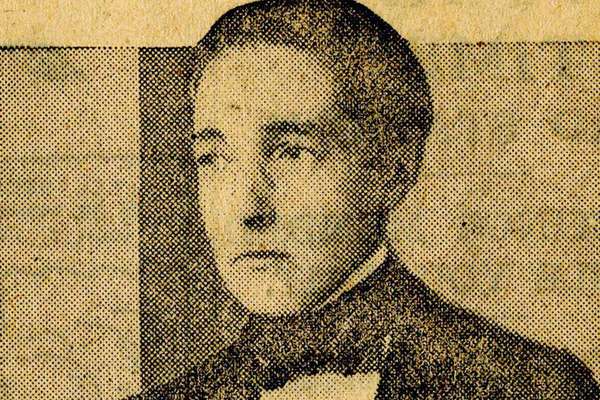
Explore how Hall's ground-breaking queer novel triggered an obscenity trial by the State.
It’s important to remember that these records do not directly reflect queer people’s lived realities because of their state context. Where possible, it is important to balance government records with other sources, such as oral histories or personal diaries.

LADY MALCOLM'S SERVANTS BALL
in aid of the West End Hospital for Nervous Diseases
Wednesday, 20th November, 1935, 9 p.m. to 3 a.m.
FANCY DRESS OPTIONAL—PRIZES
This ticket is sold subject to the following conditions :
(a) The holder shall not bring food, liquor or any other refreshments into the Hall under any circumstances whatever.
(b) Smoking is prohibited on the Ball Room floor.
(c) NO MAN IMPERSONATING A WOMAN, AND NO PERSON UNSUITABLY ATTIRED WILL BE ADMITTED OR PERMITTED TO REMAIN.
Ticket for the 1935 Lady Malcolm’s Servants Ball, at which some individuals challenged ideas of gender and wore drag. Catalogue reference: MEPO 2/3281.
Looking after yourself while researching
Working with LGBTQ+ history can be joyful and affirming, but it can also mean engaging with painful or distressing material. Caring for yourself is an essential part of the research process.
Some helpful approaches include:
- Pace yourself: take regular breaks, especially when reading difficult material. If possible, alternate research topics to provide balance; some ‘lighter’, some more intense.
- Set boundaries: give yourself emotional space from the material. Step away if it feels too much. Schedule activities to help you decompress and do things you enjoy while researching.
- Connecting with others: talk to a friend, peer or mentor. Having an informal space where you can reflect together can help you share challenges and process your feelings.
- Seek support: if material feels overwhelming, organisations like Mind, Switchboard, or other LGBTQ+ charities offer listening services.
- Celebrate the positive moments: notice and hold on to moments of connection, joy, discovery or affirmation in your research. They can help sustain you through more difficult material.
Government archives will never tell the whole story, but they can offer surprising and important insights into past LGBTQ+ lives. As a relatively new field of history, there is still much to uncover. Our guidance is always there to support you in making the most of the records and navigating the research process.