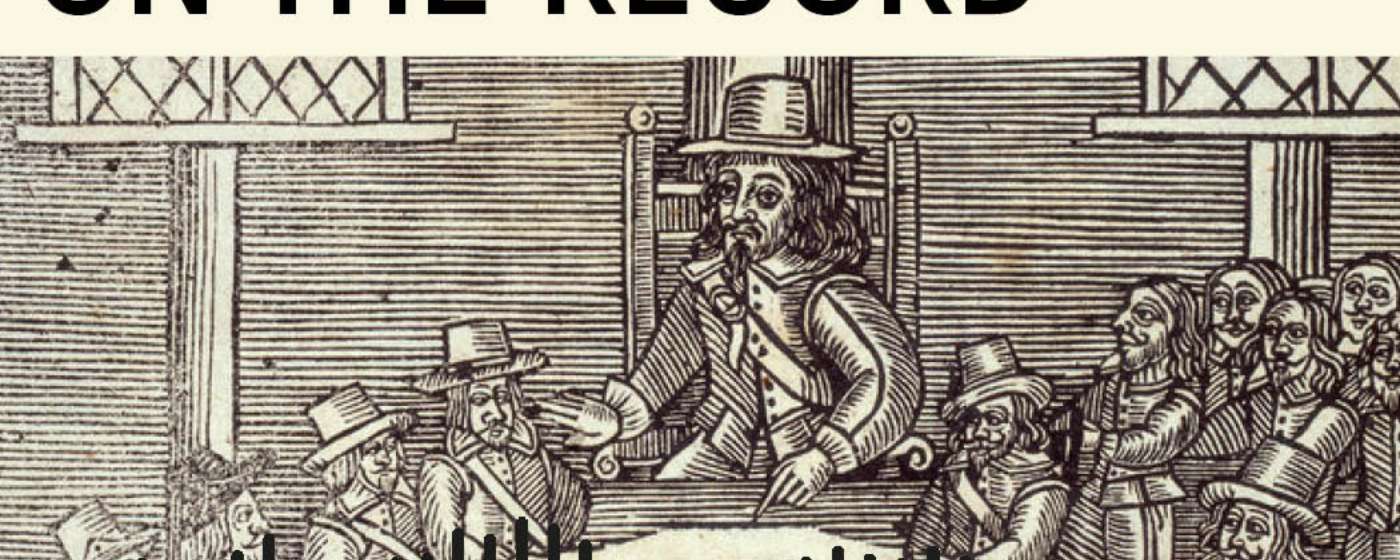
In 1647, inside St Mary’s Church in Putney, army generals sat alongside ordinary soldiers to debate nothing less than the future of the nation. Should political power remain in the hands of property owners, as it always had? Or could it be a birthright - something every man possessed simply by being born?
In this episode, we step into the Putney Debates, where soldiers, radicals, and reformers wrestled with bold, world shaping ideas about rights, representation, and how society should be governed.
This is part two of People and Power, our miniseries exploring how people across British history have challenged authority and fought for their voices to be heard. Our guests are Dr Neil Johnston, historian at The National Archives, and Dr Erica Canela, a public historian.
Listen to the episode
Listen
On the Record: Putney Debates
Audio transcript for "On the Record: Putney Debates"
Chloe Lee: "The poorest he that is in England hath a life to live as the greatest he."
These words were spoken in October 1647, in a humble church in Putney, during one of the most remarkable political debates in English history.
I'm Chloe Lee, a records specialist at The National Archives.
This is On the Record at The National Archives, uncovering the past through stories of everyday people.
This is the second episode of our mini-series, People and Power, on how people have challenged ideas about power and fought for their voices to be heard in Britain.
In St. Mary's Church, Putney, in 1647, army generals sat alongside common soldiers to debate the future of the nation. Should power belong to those who owned property, as it always had? Or could it be a birthright - something every man possessed simply by being born?
These weren't abstract philosophical discussions. Soldiers who had risked their lives, radicals who saw a chance to reshape society, and conservatives desperate to maintain order - they all wrestled with big, consequential ideas for how society should be run.
Today, I'm joined by two specialists who'll guide us through these revolutionary debates and the remarkable documents they produced.
Dr. Neil Johnston is a historian and records specialist here at The National Archives with expertise in this turbulent period of English history.
And Dr. Erica Canela is a public historian whose work explores how trauma, hope, and fear shaped the ideas of this era.
Together, they'll help us understand the Putney Debates - a moment when ordinary people dared to imagine a completely different kind of society.
Neil, Erica, welcome to the studio.
Neil Johnston: Thank you so much.
Erica Canela: It's a pleasure to be here.
Chloe: Great to have you here. So I want to start by setting the scene, Neil. It's October, 1647, what's just happened?
Neil Johnston: The king is in custody. That's what we need to start with. Charles. The first civil war broke out in England in 1642 after years of political tensions between the king and the English Parliament, who believed he was severely jeopardising their rights and liberties, and they were very animated about this. War broke out in August 1642 between the parliamentarian side and the royalist side, and they were duking it out for several years. There were victories on both sides, but in 1645 Parliament took the decisive step of creating the New Model Army, which was a professional, fully funded army who fought for Parliament against the king. And that turned the tide. By 1647, where we are now in Putney, the king is in custody, and the army and Parliament are trying to decide on a settlement. What are they going to do? How are they going? How is the future going to look?
Chloe: I see
Erica: We have a parliamentary victory here, right now, in October 1647, but really, peace has not, has not arrived. The New Model Army, which is, of course, the force that secured that victory, they are kind of waiting on the sidelines. These soldiers are not happy because they're owed months of back pay. So instead of a reward, Parliament is proposing to disband them without settlement. And this is no surprise. So the men, I mean, they have been hardened by years of battle, so naturally, they refuse.
Chloe: Sure
Erica: They're not going to just after what they've been through. They're not going to just vanish and walk into poverty, essentially. And so, of course, the army is a bit restless, and then this discontent is growing into something a bit larger and sort of it's a demand. It's really a demand for a political settlement that reflects the sacrifices that they've made.
Neil: From 1645, the crucible of war had started to draw out ideas about how people would… how people's lives should be lived, and they became increasingly more radical. Civilians were influencing the army, and the army was influencing civilians, and they've come together now in the autumn of 1647 in Putney. Fairfax, the General, has started to consult his officers and his rank and file, and he's convened what's called the General Council of the Army, and they meet every Thursday to debate these ideas. That starts to happen in late August, early September 1647, and the idea is that… how will they deal with the king? What will they do with him? At this point, no, well, very few people are saying the king should be overthrown. It's how will we curtail his power? How will we curtail his authority? How will we challenge him, and how will we get him to agree with us? Because the king didn't want to agree with anybody. He, as far as he was concerned, he was above the law because he was the law. So, he was God's anointed in the kingdom.
Chloe: So why are we in Putney?
Neil: We’re in Putney for a very practical reason. Thomas Fairfax commands the New Model Army, and he's been threatening for the summer of 1647 to march on London, to seize control, to seize it, to instrument it - a coup, really. And he does march into London in the middle of the summer 1647 but he then retreats outside London, and he retreats to Putney. So he headquarters at Putney, just outside the city, not too far from where we are now, in Kew, and he is waiting, and he's watching to see what happens.
Erica: So at St Mary's Church in Putney, we have a meeting of what, well, what is going to be called for the well… They're called The Grandees, and so this is where you have Oliver Cromwell, Henry Ireton and other senior officers. They are, they are determined to preserve order and property. And on the other side of this proverbial table, we have, I guess, what would be known as agitators. So these are, these are, we're including the radical Levellers here, and also rank and file elected officers. And so these people who are referred to as Agitators. They're the people who are speaking for ordinary soldiers and citizens and so. So, just to kind of like, I guess, when we're talking about scene setting, you can imagine, you know, the church, it's autumn, it's going to be cold, possibly austere. It's all there's a bit of tension in the air. So Colonel Thomas Rainsborough, who is a Leveller sympathiser, he rises to speak. And we can imagine, sort of like these, these words, these words are going to cut through the tension. And really, kind of, it's like, you know what? Let's get to business.
Chloe: So this is a mic drop moment.
Erica: This is a mic drop moment. And so Rainsborough says, he asks, “What hath the soldier fought for?” And I mean, that is a very, that's a very heavy and loaded question. And so for Rainsborough, the answer is clear. The poorest man has as much right to a voice in government as the richest. The war was fought for liberty, and liberty must mean equality. I mean this is, this is radical stuff. And so Henry Ireton, who's, who is Cromwell's son-in-law, and a leading Grandee, again, on the other side of the table. So he responds quite firmly to this, and he says, “I will tell you what the soldier of the kingdom have fought for. First, the danger that we stood in was that one man's will must be a law.”
Chloe: So there's a bit of a distinction there. He kind of almost tries to calm that potential demand that might come from the Agitators and the Levellers.
Erica: But then there's also the risk of the king having unchecked power. It's like wait a second…
Chloe: So is he asking, what's the best? What's the great evil in this case, was that his argument, potentially in the debates?
Erica: I think that's a really great way to sum it up. It's, it's kind of try. It's trying to find the middle ground, really, and so, but, you know, I think that for Ireton and for The Grandees, you know, this wasn't; they weren't trying to sort of have this social upheaval at all, and they certainly weren't trying to grant political rights to those who don't have property. And so, I mean, we'll get into, we'll get into that a little bit later. But so these debates, like, you know they, you know they, they unfold over, over days, and they're quite fiery. They're impassioned. You know, this is, these are, these are big ideas that are being bandied about.
Chloe: So what records are we looking at Neil?
Neil: We're looking at small volumes, bound volumes of pamphlets, which are kind of like early newspapers. They are ideas, like analogue blogs from 1647, if you want to think of them like that. They are people putting ideas out into the world. They're small, like small envelope size. They're printed on very cheap paper, like newspaper.
Chloe: okay
Neil: And they're now part of a series here at the National Archives called SP 116/530. What that means is, they're part of the state papers series 116, and volume and they're just bound volume 530 there are hundreds upon hundreds of these.
Chloe: And these would be pamphlets that people would have on their person?
Neil: Yeah, they were disposable in many ways, like a newspaper would be. People read them, people argue them. Some people collected them. That's probably why we have them. It would have gone into the Royal Government, or what was left of it at this point, might have been collecting them, or men, who eventually became part of the Royal Government in subsequent years, collected them, so they made their way into the State Papers Office in Whitehall and eventually became part of the collection here at The National Archives.
Chloe: I see, and what were the establishment or the authority doing about these papers being in circulation?
Neil: Well, they couldn't do much, because the licensing laws that had kept all these radical ideas suppressed had lapsed. So a whole coterie of printers emerged across London who were very, very quickly printing and publishing these documents. And they were being discussed in coffee houses, in taverns, in Parliament, in the House of Commons. They were being addressed to MPs. They were being addressed to the House of Lords, and similar was coming from those.
Chloe: So you're getting kind of a leaky exchange of ideas across intimate spaces, public spaces too. What are the two sides that form them?
Erica: So I would say it's sort of the agitators. They're very much led by Thomas Rainsborough. So when we're looking at the document and ‘An Agreement of the People’, this is a big document with big ideas. So kind of trying to summarise it is a little bit tough, but I would say that it's it was intended. Intended is the key word here. It was intended as a new constitutional foundation. It was one that was going to bind parliament to protect individual rights and really to prevent tyranny from returning in any form. You know, the idea is that the government derives their power and authority from the people, not from the monarch or parliament.
Chloe: And what about property in that then, did you have to have property?
Erica: According to the Agitators and Levellers, the agreement sets out several key principles. And first, it demands regular parliaments elected on a fixed cycle, so that way government would always remain accountable to the people, like when we hear so when we hear this nowadays, it's kind of like, oh, well, yeah, of course, obviously, this is, this, is this is these are...These are new, crazy ideas.
Chloe: But this was a radical position at this time,
Erica: Absolutely, absolutely. And so, second, ‘An Agreement of the People’. It is insisting that laws must apply equally to everyone. And so we're stripping away, within reason, privilege and special exemptions and then it sort of it. It looks at declaring a freedom of conscience and religion that should be guaranteed. So we're trying to they're trying to end persecution and allow individuals to worship as they chose. And so when Neil is talking about sort of these radical ideas being disseminated by the printing press at this time, because essentially, there's not really any censorship happening. It's in terms of the printing press, it's very much an anything goes situation. And so not only are we getting at this time period, are we getting radical political ideas, but there are a lot of radical religious ideas knocking about at this time as well. So that's very important to them. And then, and then, it's sort of what this agreement is doing is it's trying to it's trying to limit the powers of Parliament itself and sort of making it clear that certain fundamental rights, like equality before the law, liberty of conscience, could never be infringed.
Chloe: So what I'm getting is that this is a moment where lots of ideas are kind of spilling out, and they're trying to gather them all into kind of one overall position. I don't know, Neil, I mean, we've heard a bit about the ‘An Agreement of the People’ that the more radical position, could you maybe speak to the conservative position a little bit more for us? So the Grandees?
Neil: So it's called, the ideas were called the ‘Heads of the Proposals’ that were put forward. Now they weren't as radical. I think you could just consider them more restrained. They were still going to fundamentally alter how England was governed and how… what the king's relationship with his people was. But over the summer of 1647, the leadership of the New Model Army had worked out this set of proposals that were to form a basis of a negotiated settlement with the king, who was still their effective prisoner.
Chloe: So more of a compromise. Can we call it that?
Neil: I don't think it's unfair to say that. And you know, they're mainly written by Henry Ireton, who we've heard of Cromwell's son-in-law, Oliver Cromwell's son-in-law. Fairfax was a brilliant general, and he was held in great respect by his officers. But he was not a political animal. Somebody else had to step into that world, and that was Ireton. So, the heads were published as the new model. I think you need to remember, this is advancing towards London over the summer. So this settlement with that is proposed with the king is being put out into the world while the army is advancing, threatening the advancing, you know, and people in London were very worried about what was going to happen on the 16th of July, the first meeting of the General Council of the army was held, and the following day, Ireton reads a draft, these ‘Heads of Proposals’. That's an early modern term for a draft of a document. So the heads are like bullet points, kind of as well. So they were working out their ideas as they went over the summer.
Chloe: and as they were physically… getting towards parliament, but there's also this, these ideas developing as they move forward.
Okay, so we've heard about those two sides that formed and their leaders, the ‘Heads of Proposals’, but also the ‘An Agreement of the People’, both actually quite radical for the time. So I really want to return to this franchise question. You kind of hinted a bit at it earlier. Erica, so who does get to vote?
Erica: So like you said, the franchise question is very important, and I think it is very much at the heart of the Putney debates. Is, you know, like you said, who should have the right to vote? And so for Levellers, the agitators, and the answer is clear, the army's sacrifice, their sacrifices gave them the moral authority to demand a say in the nation's future. And so political power, they argued, was not a privilege tied to land or wealth. It was a natural right. And so their proposal it was, when it comes to franchisement. It was bold. And I feel like I'm seeing that a lot in this episode. But this is…
Chloe: But it's good to emphasise, because for us, that seems like the state of play today, but in this time, that wasn't the case.
Erica: Like when you think of these, you know, these, these great ideas, sort of like just knocking about in Putney church, in St Mary's Church in Putney, it's, it's just crazy. So the Levellers, Agitators, like I said, their proposal was bold, and they felt that all men should have the right to vote simply by virtue of being born free in England. And so, of course, there are caveats. There are always caveats when it comes to franchisement. So servants no, paupers, those dependent on others, they were excluded.
Chloe: Women? Erica what about women?
Erica: I mean, Chloe, oh, I love that. I love that you asked, no, no, no, no, not women, but even so, even just this idea of sort of, you know, all freeborn Englishmen being entitled to vote like that is a very radical departure from this property-based system that really has had defined politics for centuries.
Chloe: I mean I think it's really interesting what you said just at the top there, this idea of moral authority and virtue, that's something we're coming across repeatedly in this series, who has this kind of almost spiritual ability to make decisions for the rest of us effectively. Neil, I don't know if you can talk a little bit more to the Grandee position?
Neil: So the Grandees wanted to reflect the status quo. Those who were landowners would continue to have the say, and the franchise wouldn't be expanded to all freeborn English men. (I think we need to emphasise). And then their position was almost more technical about how they would deal with the king, how they would corral his power, how they would create a new central executive. So they were, they were thinking technically. And you can absolutely say that the radical ideas were much more emotional and that were being debated. And actually the radical ideas were carrying the day. At times, at the Putney Debates, people were being swayed towards the possibility of a new settlement for England, just the possibility of it.
Chloe: That's really interesting that you say that it's really emotionally driven in this setting of the church, Erica would you agree with that?
Erica: Yeah, absolutely. And I think so. So it's a good time to sort of bring out another Rainsborough mic drop from the debates. I think probably the most popular words/ quote from, from the Putney Debates, come from Rainsborough at this time. And he says, “the poorest he that is in England hath a life to live as the greatest he and therefore truly, Sir, I think it is clear that every man is to live under a government, ought first, by his own consent, to put himself under that government.”
Chloe: I mean, you can imagine people, would they be clapping? Would they be stamping their feet? What kind of reaction to the room with that?
Erica: I don't know. Neil, what kind of reaction do you think it would be?
Chloe: I mean, I'm, see, I'm, I'm imagining it's like a group of lots of soldiers.
Neil: Quite raucous, pretty hot and heavy.
Erica: So I mean, the Levellers, agitators. I mean they, they are pressing their case with a lot of urgency, like this is their moment, and they are taking it, and you've got, you've got to respect that. You've got to respect that.
Chloe: Neil, can you expand a little bit more on the Grandee position?
Neil: Yeah, of course. So they were about genuine reform, and they're really only considered conservative because of what they're being compared to. But the parliament was to be dissolved, and the new one would be elected. It would only sit for between 120 and 240 days a year. They would be elected every two years, which was harking back to the 1630s when the king refused to call parliament and ruled without it. So now it was going to become a permanent political fixture in the landscape. Constituencies would be redrawn because of the frustration with taxes and how they were being levied, and Parliament, not the king, would appoint the great officers of state, like the senior judges and the Lord Chancellor. So they were, they were reducing the king's power.
Chloe: So they weren't just the king's friends who would support the king in things like that.
Neil: Very much so. Royalists would be debarred from sitting for two parliaments, but then could seek elections. So there was some sort of accommodation being proposed. And they also suggested a new religious settlement whereby ‘The Book of Common Prayer’ would be permitted but not imposed upon worshipers, so people could enjoy their liberty of conscience.
Chloe: So these debates are also about religion too, when you refer to ‘The Book of Common Prayer’ giving people a bit more religious freedom.
Neil: A lot of people want to dismantle the ecclesiastical authority, so archbishops and bishops didn't want intermediaries in how they worshipped God. But the whole structure of government was tied up in the king ruling true Lords of Commons and his Church. He was the supreme head of the church. So dismantling this is again reducing his power.
Chloe: Part of that, that dismantling, okay, I see.
Okay, so let's, let's, let's go to this sovereignty question. Then something that I can imagine is quite contentious in the room who holds ultimate power?
Neil: The traditional view was that the king ruled through lords and Commons and his government dispensed justice as he or the monarch saw fit. He or she, as monarch saw fit, and this was being heavily challenged now. Whereas the Levellers were saying, we can withdraw our consent from this position, and we can change the style of government; it doesn't necessarily have to be a monarchy, or it can be a monarchy with constraints. It is we, the people of England, are sovereign, not the king, whereas Charles himself, he couldn't, he couldn't imagine a world without him in it.
Chloe: Sure and I can imagine this is all being debated, Erica, while the king was being held captive.
Erica: This is, this is probably my favourite part of the story is that while all of this is happening, all of these ideas are, are, are being bandied about. I mean, Charles I is being held captive at Hampton Court. And he's quoted as saying that he called his situation, “tolerably good”.
Chloe: I mean, Hampton Court.
Erica: He's in quite plush surroundings. He's essentially holding court, and friends and family are able to visit him. He has artists coming in to paint him like it's, it's a very, you know, it's a different kind of captivity.
Chloe: Sure and is he getting any sense of what's going on in Putney at this time, through all of his visitors and his social calendar.
Neil: Very much. While he might be a captive, he was still their king and understood to be their king, and he was treated with sufficient respect, but he was kept abreast of what was happening. Actually, some of the senior commanders visited him and presented the ‘Heads of the Proposals’.
Chloe: I don't think I would want to be that, to have that job.
Neil: Well, he missed his chance. He didn't engage with it, and it's quite likely that if he had engaged with the ideas, Parliament would have been dissolved, a new one would have been called that would have fully endorsed the ideas. And he would have remained king with constraints on his authority and power, but the subsequent events where he was eventually put on trial, were very unlikely to happen. So he did have a moment in September 1647, when he knew what the proposals were. He could have engaged with them, and he chose that escape was the better route for him, and that's what he did in November.
Erica: He can see that Parliament is divided, and he's like, okay, he's sussing out the situation. And he's like, you know what? Like Neil said I'm gonna make a run for it. Like, these guys are having a lot of, there's a lot of infighting going on,
Chloe: Sure, and I can imagine, obviously, you have got that impending movement of people coming towards the centre, right?
So broadly, we've got these two sides. Should power reside in people's representatives, the level of view, or be balanced with king and lord - the Grandee view?
Erica: So, I mean, this is a very, I mean, this is a stark question, right? Who holds ultimate power? And so on one side, we, you know, like you said, we have the Levellers. You know, they argue that sovereignty should rest with people's representatives alone. And so their proposal is radical. They're saying, let's abolish the House of Lords, since peers were appointed by the king, and in its place, let's establish a single chamber of government where people could give their consent to be governed. So the king might remain, but stripped of real authority, his power would be massively curtailed, and it would be a very, very symbolic…
Chloe: Symbolic head of state?
Erica: Exactly, exactly. And so then on the other side, on the other side, you know, we have the Grandees. They, you know, like they're trying to compromise. They're favouring a balance. They're favouring this balance of power shared between the king, the lords, and the commons. So for them, monarchy and aristocracy were essential pillars of stability, and that is really important right now, and that's something we…
Chloe: Keep the peace.
Erica: We’ve got to be stable. We're rebuilding here. And so to about to abolish them overnight was just what was going to descend into chaos. They were not interested in overturning the social order that had really anchored this country for centuries. The debates at Putney made this divide. It was quite vivid. The Levellers are pressing for this new political settlement that's rooted in popular consent. The Grandees are insisting that the war had been fought to restrain tyranny, not to dismantle this ancient constitution. Sure. And so really, I think that the question at the heart of the struggle is, is the future going to be shaped by the people or preserved by the old balance of king, lords and commons?
Chloe: Okay, so we've had these raucous debates in the church in Putney. How did the debates actually end Neil?
Neil: Well, Cromwell and Ireton, and Fairfax are getting very worried. They're coming under pressure on one side of the army for trying to deal with the king, and they are accused of stalling and giving him too much time to organise himself. And on the other side, they're being accused of not being radical enough. So it becomes apparent that they need to clamp down on this. Now, while the high point was the 29th of October, when Rainsborough appeared, they do. They do carry on for another 10 days or so, nearly two weeks, but they start to peter out and they become aware there's part, there's potential for a mutiny. So Fairfax says, I want to address all regiments of the Army, but he won't do it all at the same time because he doesn't want to bring all of these ideas. Yeah. So he does. He proposes they do it over several days. And that moves people out of Putney again and out of that centre.
Chloe: So, so physically, physically disbands?
Neil: Physically disbands and Fairfax goes, who's quite he still, as I said, he is whole. He really commands his troops. He was a brilliant soldier and officer, and so they listened to him. But then Charles makes a run for it, right? And that shifts. That immediately shifts the political landscape and they now need to deal with a king on the run again. The Army had been dismantling its defences around London. And there had been talk of people being cashiered in that, and now they need to come back together again and begin to ramp up for what becomes the brief, but no less second civil war in England.
Chloe: Right so Erica, the king, he does escape and then tries to start the war?
Erica: Yeah. I mean, there we go. I mean, it's kind of like all these great ideas, all these people brought together these ideas, and then it just sort of essentially, kind of fizzles a bit and, you know, they get distracted by the very immediate problem at hand.
Chloe: Of the king making a run for it?
Neil: Yeah, and he's trying to form an alliance with the Scots. So the Royalists, are trying to form an alliance with Scotland who were intended to invade. So the New Model Army has a new enemy to deal with, as opposed to creating a settlement.
Chloe: Okay, and then eventually he's put on trial.
Neil: Well, the ideas that emerge at Putney were very much part of that. Nobody seemed to be really talking about putting the king on trial in 1647, but 12 months later, your parliament is purged in December 1648 of those who refused to put the king on trial. So it becomes extremely radical all of a sudden by the king's actions.
Chloe: Okay, that's really helpful to kind of give us that 12-month run-up. How do we begin to look back at the Putney debates now? I mean, it seems like, to me, a really highly emotive moment where people who have really put their lives on the line for their voices to be heard, you know, really comes to a head. Erica, can you speak to that?
Erica: Yeah, absolutely. I think when we look at, when we look at the Putney debates now, which I think, are they becoming sort of more popular? With historians, are we? Are we starting to get a little bit more commentary on the Putney debates? Feels like it a little bit to me. You see a tension between hope and fear. The documents they capture both they capture the trauma of civil war, but also a radical hope for a different and better future. I think this is really important.
Chloe: I think that's clear from the amount of documents that are produced right in that state, in the state papers, volumes, the amount in there signals that idea of hope.
Erica: Yeah, absolutely. And so I think that there was, you know, it was an opportunity and sort of, as I said earlier, they jumped on it, you know, on one side of this debate, you know, we have caution from those who had witnessed violence firsthand. So the Grandees are very wary of unleashing chaos.
Chloe: And they've got that top view.
Erica: Exactly they know, you, they kind of, they can see, I think, that they can see a few steps ahead. But on the other hand, there's this boldness that comes from those who had risked everything. So, you know, the Agitators, the Levellers, and they're insisting that these sacrifices they have got to mean change. And so these are the debates they're shaped by lived experience. You know, soldiers who had fought and bled demanding recognition for this, officers who feared that too much liberty might unravel this very delicate, fragile order, and so that clash, you know, between restraint and possibility, hope and fear. I think that's what makes Putney so compelling.
Chloe: It's really, I'm really seeing it as almost like a tug of war, tug of war, tug of ideas. Neil, have you got anything more to say on that?
Neil: Yeah, the Levellers lost the short game, but they maybe won the long game.
Chloe: Okay.
Neil: As we can see it now, as we look back under ideas, they were probably the most important non-parliamentary debates in English history. But they really influenced the short term, and then the ideas fell away, and they resurged every now and again. In 1659, after Oliver Cromwell's son Richard died and the protectorate has dissolved, that had placed Cromwell as all but king in name. The soldiers start to fight again for the good old cause. And they were very much looking back to this period, then into the 18th century. The Levellers. Are these really influenced the enlightenment, which bubbles into France and bubbled into the American colonies, which becomes the United States. And then the ideas are rediscovered in the 1890s because of William Clark's (who was the secretary to the council of war) his notes are found in Worcester College in Oxford. And historians start to grapple with them again in a very modern sense, and can see that these are radical ideas about democracy and liberty and a type of, if not extensive, universal suffrage.
Chloe: So can we say that these ideas really laid the groundwork for those moments that would later come back to surface?
Neil: Yes.
Chloe: So we've talked about how these papers, pamphlets, were, you know, not made of great material, maybe shoved into pockets. How did the documents even survive? And, I mean, we've talked a bit about how they've ended up here at The National Archives.
Neil: There was someone that seems to be assiduously collecting them. I have a guess. It's a man called Joseph Williamson, who was a young man in the 1640s but by 1660s he is a senior official in government, and he collected. He was a rabid collector, a complete hoarder, and his work formed so much of the papers we hold from this period. He was under Secretary of State in the State Papers Office, so they probably found their way into Whitehall this way, and the papers that were in those collections eventually became part of The National Archives collections now.
Chloe: Great, and I guess without them, we wouldn't know what was said at these pivotal debates
Neil: Correct, particularly William Clark's notes from the debates and his shorthand notes.
Chloe: Erica, have you got any reflections on the documents?
Erica: They are extraordinary, and I think that for me, what was most striking is, it is the portability of these documents. I mean, when they're certainly with ‘An Agreement of the People’, I mean, they were short. They were small enough. I mean, they're roughly, I would say, roughly hand-sized. I mean, they were small enough that they could be tucked into a hat and widely distributed that way. And so when you see them, when you see them in person here at The National Archives, like you're really quite struck by, like I said, the size, the quality of the paper, which means that it was, you know, these were produced cheap and quick.
Chloe: Yes.
Erica: But also it's just, it's, it's extraordinary. It's extraordinary that these documents have survived in the really quite beautiful condition that they have.
Chloe: I mean, it's always really fascinating to understand how our collection works in practice, you know, like you said, being tucked into clothing and and the I think what strikes me is the kind of secrecy, but then the also surveillance that happens later through the collection of these materials and archiving of them.
So thank you, Neil and Erica, for joining me today.
Neil: Thank you so much. Great stuff. Thank you.
Chloe: The Putney Debates lasted only a few weeks before being shut down. The men who argued for male suffrage didn't achieve their aims in their lifetimes. Many were arrested - not just by monarchists, but by those they'd fought alongside.
But their words survived. These small pamphlets, about the size of paperbacks, preserved ideas that would reshape the world.
The question they asked echoes across the centuries: is political power something you earn through property and station, or is it a birthright - something you possess simply by being human?
They couldn't have known that their debates in a modest Putney church would one day be seen as a moment that led to the democratic freedoms we enjoy today. But they dared to imagine something different, and their courage opened possibilities for all who came after.
In our next episode, the third and final part of our mini-series, People and Power, we’ll hear about Britain’s first mass political movement, and The People's Charter of 1838.
Thanks for listening to On the Record from The National Archives. To find out more about The National Archives, follow the link from the episode description in your podcast listening app. Visit nationalarchives.gov.uk to subscribe to On the Record at The National Archives so you don't miss new episodes, which are released throughout the year.
Listeners, we need your help to make this podcast better! We need to know a bit more about you and what themes you're interested in. You can share this information with us by visiting smartsurvey.co.uk/ontherecord, that's smartsurvey.co.uk/ontherecord.
We'll include that link in the episode description and on our website. You can also share your feedback or suggestions for future series by emailing us at OnTheRecord@nationalarchives.gov.uk.
Finally, thank you to all our experts who contributed to this episode. This episode was written, edited, and produced by Tash Walker and Adam Zmith of Aunt Nell, for The National Archives.
This podcast from The National Archives is Crown copyright. It is available for re-use under the terms of the Open Government Licence.
You'll hear from us soon!
Records featured in this episode
-
- From our collection
- SP 116/530
- Title
- The Putney Debates
- Date
- 1645–1647
Subscribe to On the Record
pod.link
Find the podcast on your preferred service
On the Record is available wherever you get your podcasts.
Tell us what you think
smartsurvey.co.uk
Fill in our survey
Listeners, we need your help to make this podcast better! We need to know a bit more about you and what themes you’re interested in.
Copyright
If you wish to re-use any part of a podcast, please note that copyright in the podcasts and transcripts in some cases belongs to the speakers, not to the Crown.