In this episode, we explore two medieval documents that shaped ideas about power in society – Magna Carta and the 1265 summons list for a parliament led by the charismatic baron Simon de Montfort.
This is the first instalment of our three-part miniseries People and Power, which looks at how people have challenged authority and fought to have their voices heard in Britain. Our guests are Paul Dryburgh and Jessica Nelson, historians at The National Archives.
Listen to the episode
Listen
On the Record: Magna Carta
Audio transcript for "On the Record: Magna Carta"
Chloe Lee: When King John sealed a document that became known as Magna Carta, or ‘great charter,’ in 1215, it was meant to end a civil war.
Instead, it sparked an idea that still echoes today, 800 years later.
I'm Chloe Lee, a records specialist at The National Archives.
This is On the Record at The National Archives, uncovering the past through stories of everyday people.
This is the first episode of our mini-series, People and Power, exploring how people have challenged power and fought for their voices to be heard in Britain.
Today, we're looking at two medieval documents that laid down principles about how power should work in society. These weren't democratic documents - the people involved were kings, barons, and knights. But they established something revolutionary, that rulers must govern within limits, not by whim.
We'll explore the Magna Carta reissued in 1225 and the summons list for a parliament in 1265 led by Simon de Montfort, a charismatic baron who held the king captive and tried to reshape English government.
To guide us through these medieval power struggles, I'm joined by two specialists. Paul Dryburgh is a medieval records specialist here at The National Archives. And Jessica Nelson is another historian here, whose expertise includes medieval politics and power.
Paul, Jess, welcome to the studio.
Jessica Nelson: Hello, Chloe. It's great to be here.
Paul Dryburgh: Hi Chloe. Great to join you. And hello to all our listeners.
Chloe: So let's start with the document everyone's heard of. Paul, what record are we looking at today?
Paul: So what we're looking at is the Magna Carta from 1225 and this particular engrossment, as it's called. This piece of parchment is, we think, the one that was issued to Lancashire, okay, in 1225. It's around, sort of three and a half 1000 words of Latin, quite heavily abbreviated, and it lays out in, or, I think, around 37 chapters, as they're called, the rights and privileges that the king is granting to his people.
Chloe: I see, and is it a big document? Is it a volume we're looking at?
Paul: It's probably what, sort of slightly bigger than A3 size. It sort of portrait style. It's longer vertically than it is across horizontally. And there is a wax seal impression attached to the bottom, although the wax seal is slightly damaged now.
Chloe: I see, I see, and why was the original Magna Carta created in 1215?
Paul: So Magna Carta is essentially a peace treaty between King John and his party and the barons of England. Magna Carta effectively limits royal power. Kind of holds out the promise of justice, and it aims to protect baronial rights.
Chloe: Right.
Paul: The Magna Carta's sealed in June 1215, within 18 months, though, King John has died, leaving his nine-year-old son Henry as heir. The elite of society had been disaffected by John's arbitrary rule over sort of his 16-year reign, but also some of the issues that had gone back into the previous century, arbitrary kingship.
England had until 1204 had territory in France, so from 1066 when William the Conqueror invaded England. The King of England had also been Duke of Normandy. And throughout the 11th and then 12th century, more territories had accrued to the crown as sort of royal marriages had taken place. So for example, in 1154, Henry the second brings Aquitaine in southwestern France to the Crown through his marriage to Eleanor of Aquitaine and in 1204, all that is lost (with the exception of Gascony in southwestern France). You've then got a situation where John spends a decade trying to recover those lands. He needs to raise money for it. And John's reign is noted for some of the really kind of vindictive, ruthless policies that he enforces, or he tries to enforce, against his people. So, for example, you know, large, what are called fines are levied for people to enter an estate. So if, if you know, if somebody dies, somebody holding from the king dies, their heir is supposed to pay what's called a relief, and John would exact enormous sums of money for baronial heirs to enter their lands. If a woman's husband died, for example, John would enforce or force her to pay large sums of money, either to marry the person that she wanted to or to remain unmarried, and then have to be able to live as a widow, as she saw.
Chloe: I see so the kind of barons we're talking about. They sit at the very top of. Society, but they're still having, not a great time under the king.
Paul: Well, they believe that the king, the king is ruling in a way that is not by their counsel. He's ruling arbitrarily of his own whim. The baronial, the magnates in the kingdom. So for both the senior churchmen and the senior sort of nobles of the country, believe that this sort of counselling function. You know that the kingdom should be ruled by consent, counsel, conciliation; it shouldn't be one man's arbitrary rule which they feel under. John, that's the way it's gone.
Chloe: So Paul, what makes the 1225 version more significant than 1215?
Paul: Okay, well, I guess there are numerous ways in which it's more significant. Principally, I suppose one of the main things is that it was issued in 1215, to free men. That's already quite limited. And in 1225, it was granted to in Latin ‘omnes’, so everyone. So that's peasantry, women, etc.
Jess: We should probably mention, as well, Paul, that the 1215 version was annulled by the pope quite shortly after the original grant. So it was, it was really a failure, wasn't it? It was, it kind of didn't last very long in its own terms, whereas the 1225 version is the one that actually went on to become embedded in English law. Yeah. So it's kind of gone the distance in the way that the 1215 one didn't.
Paul: Yes, indeed, so John, we can argue John was never really sincere. He'd already taken papal soundings about whether he could annul this, whereas in 1225, it's actually an agreement made with the common consent of the people.
Jess: And Henry says that, doesn't he? He says that he's granting it from his own spontaneous and free will, rather than it being forced upon him.
Paul: Exactly yeah. There had been previous discussions in the interim about Magna Carta's condition being forced upon the king and therefore being potentially null and void.
Chloe: And you mentioned earlier, Paul about those clauses. Were they the same in 1225?
Paul: No, there's actually a lot that's different. So many of the what, what the barrel thought, what the king would describe as weighty and doubtful clauses from 1215, were removed. Some of them included things like debt recovery, the scutages and aide, so like sort of taxation, things, things on local government had changed. There were changes to some of the rights around the forests. And of course, that's one of the things we'll come on to talk about. Is that all of the forest clauses are removed into a separate Charter, which is why Magna Carta is the Great Charter, and what became known as the Charter of the Forest in 1217.
Chloe: Okay, so that's done a great kind of setting the scene for the Magna Carta in 1225, can we push a bit more into those key ideas that are captured in the Magna Carta?
Paul: So I mean really, and this is why it resonates down through the generations. It really enshrines the idea, the ideas of justice and liberty, that no one is above the law, not even the divinely ordained King, and that the king himself and his government must rule fairly, the protection for the church, the church in its liberties, which is still kind of on the statute book today, that there be no kind of excessive taxation without consent, which, again, is an idea which lasts to the modern day. But also, more esoterically, the rights to kind of fish and hunt, which were matters for ordinary people, not just the elite, but of course, the elite wanted to have managed those sorts of economic assets. The key clause, and the one that's still kind of on the statute now, is that no free man is to be arrested or imprisoned or deceased (so have his lands taken off him or outlawed or even exiled or in any other way, ruined, nor, (and this is Henry) nor will we go against him or send, send against him, except by the lawful judgement of his peers and by the law of the land. And then tacked on today, it was a separate clause in 1215 but in 1225, and subsequently it's been, these have been tacked on together to no one shall we sell or deny or delay right or justice?
Chloe: That's really interesting. Jess, I wonder if you can just comment on how on how radical that is at the time for us, I know we're going to be hearing more in in the later episodes.
Jess: The most radical element of the 1215 Magna Carta, has been removed, and that's the security clause, which was supposed to put the king, really almost under the control of a small group of barons.
Chloe: To make him accountable?
Jessica: To make him accountable to this small group of barons, and that was called the security clause, or we call it the security clause. And in 1215 that was absolutely revolutionary, but that's been removed from the 1225.
Chloe: Okay, so you get a scaling back slightly, and we mentioned earlier about free men and this idea of ‘omnes,’ Paul. Can you talk to the Magna Carta? Does it really cover everyone, that kind of idea of ‘omnes’?
Paul: Oh, in theory, yeah. So everybody can take something from Magna Carta. There are clauses which relate to tenure, local government. They're not really in favour of people who are unfree, peasantry, because this is effectively a baronial document. It's, it's a document which speaks to, even though it says everyone, it speaks to an elite part of society, really.
Chloe: A small section of society?
Paul: Lordly rights are kind of being protected against subjects as also vis a vis the king.
Jessica: But I think there is still some radicalism in there. Absolutely, it's about protecting baronial rights, but the fact that they've used the word omnis everyone, you know, those words were chosen carefully in these charters…
Chloe: So they weren't at the table, but they were being imagined?
Jessica: Absolutely, and I think it's, it's sort of created a framework that can be built on later, which is something we'll, I'm sure we'll talk about a little bit later on. And it does establish that there are kind of limits to the King's power, but it's also a practical document that something that the king and the Barons can work with together, whereas the 1215 charter was very much imposed upon John, and therefore it really didn't get very far. So I think we can kind of see it. It's not instantly radical. It doesn't give everybody it doesn't introduce democracy and give everybody those rights. But I think the principles are there, and they are important, and we see as well (which I think is really important) is that provisions are made for the charter to be proclaimed around the kingdom, so that people know about it.
Chloe: So people hear about it, and so how did Magna Carta then inspire people?
Jessica: There's lots of evidence here at The National Archives of people who are familiar with Magna Carta, even if they're not familiar with its individual clauses. Of course, if somebody proclaims a document, reads it out in the town square, or reads it out at the church door, you're going to hear it, but you're not going to remember every single detail. But we have, for example, petitions here at The National Archives where people are sort of ordinary people, or ordinary communities are petitioning the king and the Royal Government, asking for their rights. And some of those reference Magna Carta. So we've got clear evidence in the 13th century of people being cognizant of Magna Carta, even if they don't know every single detail.
Chloe: So they're invoking its symbolic power. Would that be accurate Paul?
Paul: I think so. I mean, we've even, think going into the 17th century, I think there's one that, like the people of King’s Lynn asking for their port rights to be protected under what they perceive to be Magna Carta's jurisdiction,
Jess: Absolutely, so what begins as a kind of Latin document is being proclaimed in the 13th century, certainly in French, probably in English, okay, so that people are becoming familiar with it, and it's kind of becoming over time. It does become kind of part of England's political DNA. Certainly in the in the kind of crisis of Henry III's reign in the mid-13th century, where there's this explosion of violence and controversy, with this kind of conflict between Henry III and Simon De Montfort (and we're going to talk more about him later) but some of Simon de Montfort's initial actions, are justified by the claim that he says that Henry III has violated Magna Carta.
Chloe: Interesting. Okay, okay, and Paul, do we see the Magna Carta inspiring people a bit later on?
Paul: Yeah, absolutely. So obviously, the Magna Carta survives well into the 14th century. Edward I reissues it twice, effectively as part of some of the political machinations at his court; he's trying to wage war. But then, most famously, I guess, towards the end of the 14th century, after the horrors of the black death had been inflicted on the population in 1381, I guess many of our audience will have heard of something that's known as the Peasants Revolt. This is where there's a series of risings, particularly in south and eastern England, where a group of, let's face it, a lot of them are the lowest level of society. They are rising up against their lords, attacking strongholds. They are burning, they are stealing muniments and burning documents which enshrine lordly rights. Because they that that gives that will remove them, remove their power. But they're also invoking ideas from Magna Carta, so demanding, for example, the end of serfdom, their own rights at that time. Of course, again, it's quite similar to the 12th, early, early 13th century. Taxation is a big issue…
Chloe: And taxation for normal people, let's say?
Paul: For everybody. This is particularly controversial, because in the late 1370s and early 1380s Richard II of his government introduced what are called poll taxes. So it's a tax on everybody, literally a head tax. Everybody pays at the same rate. You know, your Baron pays at the same rate as your peasant. In theory, there's also a lot of anger at the officials who would have to go around and collect this, that some of those are physically assaulted. Some even are executed by the by the rebels. And there are complaints about working conditions, because obviously, after the Black Death, workers are fewer, and you can kind of barter your labour at higher wages, which, of course, the Lords didn't like, and the crown introduced statutes against transferring labour. So in the summer of 1381 a mass protest explodes, as I say, generally, sort of Kent, Essex, but in spreads out from there, the rebels attack the Tower of London, for example. And it's not just, it's not just peasants. We should imagine. They're returning soldiers, urban workers as well. There are some quite unsavoury attacks on migrant communities. Flemish weavers, for example, in London are attacked. There's, you know, there's elements of xenophobia in this as well as claims for rights and freedom. They march on London in June 1381, they are granted a meeting with the King, and the King, you know, basically, kind of takes charge and says, okay, we are going to do what you like. Charters are supposedly drawn up for the end of serfdom and for granting various other rights. But unfortunately for the Rebels, at least they are crushed.
Chloe: Paul, what’s ‘serfdom’?
Paul: Okay, so I mean really, it's sort of enforced labour on the lands of their particular Lord. So it might be like reaping services, harvesting that kind of thing.
Whether they were misguided or not, the rebels saw Magna Carta as guaranteeing their liberties or the liberties of the kingdom, which was interesting, because, as Jess said earlier, that means that, you know, a document which is now over 150 years old, it is being repeatedly reissued. It's obviously been circulating around the country. We know that there are statute books and statute books that are being created. You know, local lawyers, local worthies around the country are taking a note of what's being issued by the government and writing it down.
Chloe: It's quite an interesting idea, really, because you've got those concepts of justice and liberty, as you said, 150 years later, and many of these people wouldn't have been literate in the way that we understand it now, right Jess?
Jess: Absolutely. So it's really impressive that they are, that they're conscious of these kinds of liberties and as Paul said, whether or not they've got the finer details right. They, you know, this is one of the things that they're standing on, that the Magna Carta has guaranteed them these liberties, and that that's been violated, and therefore they have a right to revolt.
Paul: Because one of the things they do is that, as I say, they went into lordly manor houses or castles, whatever, they broke open document chests, took them out and burnt them, believing that that would end the rights that were enshrined in these written documents. Of course, it wouldn't have done necessarily, but then the law wouldn't have been able to prove.
Chloe: Sure so interesting, where, even at this time, documents like that hold so much power and authority, and the serfs, let's say, were aware of that broadly.
Chloe: Okay, so Jess, you referenced this character, Simon De Montfort, a bit earlier and hinted at some drama, potentially, between Simon and the king. He features in our second document. What are we looking at?
Jess: Our second document is a writ of summons to a parliament, which is a great deal more exciting than it sounds. And yes, it was issued by Simon De Montfort, although it was issued in Henry III’s name, and at this time, Simon De Montfort is in effect, ruling through Henry the third, and he's summoning people to a parliament. And the way that they did that was to send out little writs of someone, so send out little, little small documents telling people that they needed to come to the Parliament, or that they needed to send representatives to the Parliament. And the document that we're talking particularly here is what's called a close roll. So it's a huge kind of roll of parchment which goes on for metres and metres, if you were to unroll it completely, and it records all the sorts of orders that have gone out from the Royal Government. Because, of course, if you're issuing an order, you need to take note of it, so you know what you've told people to do. And this particular section is recording all the summons that have gone out to tell people to come to the Parliament that's going to be held in 1265, so it's the record of the formal invitation. So the document itself it's probably about half a metre long. It's just mostly it's got a little bit of blurb at the top explaining what the parliament's about. It's all in Latin, very small writing, very closely written. And then there's just kind of columns of information saying who the writs have gone out to. In fact, our listeners will be able to access pictures of it if they click on the link in the episode description. And there's also pictures on our website of the 1225 Magna Carta that Paul was talking about earlier. So I'd really urge people to have a little look, and then they can see them for themselves. But yes, although it sounds like quite a dry document, this parliament was really important, and these writs of summons are really, really good evidence, which tells us about the makeup of the Parliament,
Chloe: And when we last heard about Henry, he was a young child, so who was Simon De Montfort, and what was his relationship with Henry?
Jess: Great question, Chloe. Yeah, so this is the kind of crunch point of Henry III’s very long reign. So when we first met him, he was a child. His father dies, and then he grows up a little bit, and the 1225, Magna Carta is issued at a fairly early point of his reign, when he's a teenager. He's kind of coming of age, and he wants to go forward in a very positive way. At that kind of point in his teenage years, Henry's reign is going quite well, okay, but over the next few years, things sort of get a little bit more difficult for him. Henry's quite an interesting character. He's very kind, he's extremely pious, and he's very generous. He gives lots of money to the church, but he also gives lots of money to his family. Particularly he's got some foreign relations, the family of his wife, and also his half siblings by his mother, Isabella of Angoulême, who had, in her second marriage, after John's death, married a French Baron, and he these, all these relatives come over to England, and he gives them all money and offices. And that really rubs the English barons up the wrong way. So they're getting very, very cross about this.
At the same time, Simon De Montfort is, in fact, a foreign Baron who comes to England to seek his fortune. He's about Henry's age. He's the son of a really famous crusader. His father is incredibly famous in the Western world. He's a real kind of heroic figure in the crusading world, and he died on crusade as well.
Chloe: So he comes with some reputation.
Jess: Absolutely. So Simon arrives with this amazing kind of family reputation. He's about Henry's age. He's really charismatic. He's got a bit of a way with words. He's also very pious, although his piety is much more kind of internal. He's a sort of hair shirt staying up all night praying, kind of piety, rather than giving huge amounts of money away, kind of piety.
Chloe: Good to make that distinction.
Jess: Absolutely. And Henry seems to really like him. And I wonder if perhaps Henry hadn't had very many friends growing up as a young king, it's potentially quite an isolating position. And he and Simon really seem to get along. So Simon is claiming the Earldom of Leicester, to which he's got a sort of vague family connection, and Henry grants it to him, because they do seem to really get along. Simon then marries Henry's sister, which is quite contentious, because she was a widow. She was married as a child and widowed in her teens, and then she had pledged chastity, but for whatever reason, perhaps simply that they fell in love, she goes back on that pledge, and she marries Simon De Montfort. So Simon very quickly becomes a very kind of prominent figure at Henry's court. And he is one of the people, slightly ironically, who is very against Henry's generosity to his kin, to his foreign kin that are coming over. And this kind of, this sort of builds up, and Simon becomes, sort of the leader of a particular baronial faction who are really unhappy.
Chloe: So the Barons are unhappy again, again, and you've got this. Can we call it a frenemy relationship between Simon and Henry? Absolutely.
Jess: Absolutely. I think to begin with, they really were friends. And then over time, things go very wrong indeed, as well as we'll get on to. But yes, absolutely, it's, it's sort of, I think frenemy is kind of a good word for to begin with, absolutely.
Chloe: And so how did Simon end up in control? Was the aim to become king?
Jess: Well, I think we should, we should sort of rewind a little bit to 1258, when the kind of tensions between the king and Simon and his kind of baronial allies really come to a head, and there's an argument between them, an actual kind of shouting match, and swords are drawn. So Simon and his allies insist that Henry needs to expel these hated relatives, and that Henry needs to rule, basically, with some, with some kind of impositions put on him, which Simon and his allies have devised. And these are really interesting, because they kind of turn Henry into, effectively, a puppet King. Similarly to the 1215, Magna Carta, sort of slightly harking back to it, there's a council of barons which are there to give Henry advice. And it's this council of barons who are in charge of appointing some of the key officers of state. So Henry can't kind of appoint his own key people anymore, and also, (and this is different to Magna Carta, so this is a really, really important point) these impositions that are forced upon Henry, which are called the provisions of Oxford, say that there's going to be a parliament three times a year, whether the king wants it or not. So rather than these great assemblies, these parliaments are something that the king calls when he wants it, at his whim. At his whim. Exactly the provisions of Oxford say that these are going to be things which are going to happen, whether the King likes it or not.
Chloe: So would it be accurate to say, then that Henry is being held captive of Simon's at this time?
Jess: He's not a captive at this stage. So at this stage, he is, in effect, a kind of puppet ruler. On the face of it, he is consenting to it, so it all kind of goes along okay for a little while. And these parliaments do meet, and this, this actually does happen. But unsurprisingly, Henry isn't really happy with it underneath, and it's also being looked at from abroad, because this is something that's really making kings abroad and the Pope very uneasy, kind of putting out of sorts the natural order of things. So there's various kind of machinations. The Pope gets involved. He gets involved in everything. The King of France gets involved. He happens to be Henry II's brother-in-law. Their wives are sisters, so that goes in Henry's favour. And after lots of backwards and forwards in Henry, at one point, he regains control, and Simon has to go to France. But then Simon is kind of comes back from France. Some of the Barons call him back. Lots of toing and froing. But then I'm going to get to the point, I promise, in 1264, in the spring of 1264, there is a battle at Lewes, which is a pitched battle between the forces of Henry III and the forces of Simon De Montfort. And Simon wins that battle, categorically. He's a brilliant general, and he takes captive Henry III, Henry III’s brother and Henry III’s son, the Lord Edward. So the key members of the royal family are now Simon's captives. And of course, this is, this is a completely different situation, because Simon can no longer, he can't pretend that he's ruling, that this council is kind of ruling with Henry's consent. Because anybody knows that Henry is a prisoner, sure. So it's a kind of rather different situation. So he really kind of needs to think about how to legitimise his power. If he can't pretend that Henry is really on side, if everybody knows that Henry is a captive, then how is he going to kind of get around this problem? How is he going to get legitimacy for his government?
Chloe: Otherwise, he's just another ruler, a ruler at win.
Jess: Otherwise, he's another kind of he's not, he's a usurper. And he's, and he's absolutely, you know, this is, this is really problematic. So he calls this parliament to legitimise his power.
Chloe: And so, so then we get this invite. Everyone, everyone gathers, what makes the 1265 parliament? I mean, I think we've just heard but what makes it so significant then, who's on the invite list?
Jess: That's a great question, because it's the people who are on the invitation list who really make this a really important moment in history. Previously, with parliaments, the barons were certainly there and senior churchmen, and there might have been a few parliaments where there were knights, which are the kind of sort of local county big leagues, but quite low down the scale. But we're not really sure about whether knights were there or not. But in these writs of summons, we see very clearly that Simon pretend, you know, in Henry's name, but we know the list is, Simon, is summoning representatives from the county, so knights from the county, and then burgesses, so townspeople from each of the towns, and also townspeople from the sink ports, which were sort of particular strategically very important ports on the south coast. And the writ of summons commands that two of the more law-worthy, honest and prudent of these knights and burgesses from the Shires and the counties should attend the parliament. So he's really trying to broaden his base of support. Beyond the barons and the senior churchmen. He wants there to kind of be ordinary people. There, relatively ordinary people who then potentially going to go back to their localities and basically talk about how great Simon is, and kind of be a bit of a PR machine for him.
Chloe: I see, I see. And so Paul is this more revolutionary than Magna Carta in some ways?
Paul: Oh, I think so. I mean, it's this is, this is potentially, it does. It opens the franchise, so to speak, to a much broader section of society. So as Jess mentioned, bringing townspeople in, it gives those with a voice and a role in trade across not just the country, but internationally, an important say to how government is run, how people how income is raised, for example.
Chloe: But Jess did Simon also use Magna Carta?
Jess: He absolutely did, yes. So we've already mentioned how initially, when he rebelled against Henry, he believed that Henry had violated the terms of Magna Carta, and then at the 1265 Parliament, which took place in London, and with this wider representation, one of the things that he did was reissue Magna Carta, and he uses the same text as was the as the issue in 1225. So he's harking back to that 1225 version of Magna Carta. And that's reissued. And this sort of idea that he's kind of, you know, because he's putting that forward, and people are familiar with it. And again, it's giving him legitimacy, and it's reaffirming that kind of bond between him and the people. Of course, he again reissues it in Henry's name, but everybody knows that this is Simon. Yeah, Henry himself is probably at that Parliament, as is his son, the Lord Edward. But it seems like they're there and they're not even allowed to speak.
Chloe: So there was there as a kind of symbol, absolutely
Jess: Absolutely, and totally humiliating for them. And that kind of comes back to bite Simon A little while later, because he really does humiliate them.
Chloe: And I think it's really interesting this way that the Magna Carta seems to be repeatedly invoked. You kind of get into this political memory happening.
Jess: Absolutely, and one of the things that we can see in the various reissues of Magna Carta is the differences in the witness lists. So in the 1225 Magna Carta, there's a really long witness list, which brings together people who were on King John's side in the Civil War, and also people who weren't on King John's side in the Civil War. So the witness list of the 1225 Magna Carta really shows the kingdom coming together again, trying to move forward in a positive way. The 1265, version of the Magna Carta does have a witness list, but there's only one Earl witnessing it. The Earls being the most senior people, the most senior secular people in the kingdom other than the king himself, and the only Earl that witnesses it is Simon himself, because he's already beginning to alienate some of the other major barons, and this is something that we see in Simon's career, is that he does inspire incredible loyalty, particularly from people a little bit lower down than the social scale, but he's also really good at making enemies and really good at annoying people. So he gets them on side, but then he loses them again.
Chloe: He struggles to keep them along for the ride, and they don't end up putting their name to it.
Jess: It's clear from the witness list that you know, a lot of the big beasts of the kingdom, as we might call them now, hadn't shown up to his parliament. So he got the task, the burgesses on the Knights there, but some of the really major figures in the kingdom had stayed away.
Chloe: Okay, so how did it all go wrong then for Simon.
Jess: The first thing that went wrong for him was that Lord Edward, who was his captive, escaped. So the Lord Edward escapes from custody, and therefore is free to kind of basically raise an army himself and kind of be the figurehead of an army, because so we know that Simon had already alienated lots of the barons. There are lots of people who are uneasy about the situation. We might want to talk later about what Simon's endgame was, but whether or not he wanted to be king himself, yeah, but, and of course, if you're a senior Baron like you don't want no the Henry III, to be an arbitrary ruler, but you don't want Simon to be an arbitrary ruler either. That's maybe worse in some ways. So there's this kind of baronial there is already baronial opposition, and when the Lord Edward escapes from captivity, he's the obvious figurehead for it. He's very different to his father. He's warlike, he's antagonistic, you know, whereas Henry is kind of calm and pious. So Edward is very different.
Chloe: You get a very proactive leader coming in. Absolutely.
Paul: He's quite similar to Simon in some ways, though, in that he does inspire incredible loyalty. He actually instantly, within a few months, gathers lots of the senior men around him, absolutely. And actually, then can start the comeback against absolutely the final comeback.
Jess: So Simon and Edward were kind of well matched on the battlefield, and in August of 1265, so only a few months after this Parliament, which was this high spot of Simon's career. Only a few months later, there is another pitch battle, the battle of Evesham, between, on the one side, Simon De Montfort and his forces, and on the other side, the Lord Edward and his baronial allies. And it's, it's an incredibly vicious, bloody battle, bearing in mind in the kind of 200 years before. So post the Battle of Hastings in 1066, most battles involving nobles hadn't resulted in very many nobles dying. It was considered the norm that people would, you know, posh people, effectively, would fight in battles, but if you were, if you were one of the elite, you would surrender instead of being killed, and then you'd be ransomed back to your own side. Okay, so there's some protection. So barons didn't die in battles. It was really unusual. The Battle of Evesham was completely different. As I mentioned, Simon had really humiliated Edward and Henry, and Edward was not forgetting that he'd also treated Edward's wife quite badly while Edward had been in captivity.
Chloe: So you’ve got a personal as well as of a broader political aim.
Jess: Absolutely. And so during the Battle of Evesham, a squad was sent out with a specific aim to kill Simon De Montfort, to find him and kill him. And they did that, and they mutilated his body, and they also killed a number of other major barons. And they also that, I mean, there was a huge death hole amongst the ordinary soldiers as well. So it was a really, really bloody battle.
Paul: But there was another sort of personal aspect too. There wasn't there? The leader of this death squad, supposedly on the battlefield, is a chap called Roger Mortimer, who's Lord of Wigmore in Herefordshire. And it's alleged that there was some kind of assault on Roger's wife in the year before the battle, and so that after the battle, Simon's mutilated body is sent to Roger's wife as some kind of awful trophy. Yeah, there's there is another element to this, which we might come on to, is that Simon instantly, kind of a cult develops around Simon, and parts of his body are taken from the battlefield and become also venerated in other parts of the country. He becomes a political martyr, as well as somebody who was personally and nationally hated by people.
Chloe: So high drama on the battlefield, did Simon die a heroic death?
Jess: Thinking about Simon's motives is really interesting. He came from a crusading family. A number of his relatives, including his father, had died in the crusade. He certainly wasn't afraid of dying on the battlefield. Whether he wanted to die on the battlefield, it's perhaps he did. You know, it's, I think it's one of those situations where once Henry was his captive, he's in. This is what he wants, but it's also a difficult situation for him. Henry behaves very well in captivity. He doesn't give Simon the excuse to depose him and therefore make himself king. He just he continues to exercise his piety. He continues to be calm, he continues to be gentle. So Simon's a little in some ways, Simon's a little bit stuck. And I wonder if Simon hoped that this pitched battle would go in his favour, go in Simon's favour, but that might resolve the issue once and for all.
Chloe: I think it's fair to say that neither Magna Carta nor Simon's Parliament created democracy.
Jess: Absolutely not.
Chloe: How then, Paul, should we think of their legacy?
Paul: So Magna Carta and Simon's parliament, they really laid down principles that later generations could build on. Okay? And that was both within the 13th century, because obviously there are, there isn't just one issue of Magna Carta, sorry, in 1215 and then one in 1225 there are multiple reissues throughout the 13th century, all the way to the final one in 1300. And as we've discussed, there are multiple implications which cascade down the centuries since so that they've established the principles of limited power that rulers and or government should seek consent. So that's obviously the building blocks of democracy that there should be consistent, fair justice, it shouldn't be arbitrary.
Chloe: So, could you say then Jess, that the Magna Carta created expectations?
Jess: I think you absolutely could. And as we've talked about, it was proclaimed around the kingdom, proclaimed in the county, so people were familiar with it. So it absolutely did create expectations. And as Paul's already mentioned a little bit after this, in the 14th century, Magna Carta starts to appear at the beginning of statute books, which are the sort of, sort of little books which are put together for lawyers to learn the law from, in effect. So it really is becoming very commonly known. In 1297, it was reissued by the government of Henry III's successor, when Edward became king. And that reissue actually goes on to the statute role, so it goes into the kind of the written law of the land as well. So I think you absolutely say that it could, that it did, sort of create these expectations. And although people didn't necessarily have a terribly clear understanding of every single detail, they did understand these ideas about the king not being able to rule arbitrarily, and about their kind of right to justice and their right to be treated under the law of the land.
Paul: I guess for most people, it was the practical effects on their daily life that they were concerned about. But they did have this broader knowledge of what kind of liberties were enshrined and what they could, what kind of claims they could make against that.
Jess: Absolutely and the parliament question, thinking about the writs of summons is perhaps a little bit less clear. You certainly can't draw a straight line from the 1265 parliament to modern-day parliamentary democracy, yeah, but the Victorians considered Simon De Montfort to be the kind of father of Parliament. Interesting, because they, you know, they certainly looked back and saw the colonel there. But it did show that representation could be broader, and potentially, the representation should be broader. So I think, you know, we can, even though I don't think it would be appropriate to see it as you know, the absolute moment when Parliament got started. But nonetheless, it still was a very important, it was a very important moment when we shouldn’t overlook.
Chloe: Where does this leave us then, when we're thinking through people and power?
Paul: Well, I mean, change is difficult. It doesn't just come from asking nicely. It's kind of a mixture of conflict and conciliation.
Chloe: Magna Carta didn't create democracy. Simon de Montfort's Parliament didn't give ordinary people the vote.
But they did something crucial, they challenged the idea that kings could rule however they wanted. They said power must have limits. Rulers must seek consent. Justice must be consistent.
That's the golden thread we'll follow through this mini-series, ideas about power and people echoing across centuries.
In our next episode, we'll leap forward four centuries to another moment of crisis, the aftermath of England's Civil War, when common soldiers dared to ask who should hold power and why.
Chloe: Thanks for listening to On the Record from The National Archives. To find out more about The National Archives, follow the link from the episode description in your podcast listening app. Visit nationalarchives.gov.uk to subscribe to On the Record at The National Archives so you don't miss new episodes, which are released throughout the year.
Listeners, we need your help to make this podcast better! We need to know a bit more about you and what themes you're interested in. You can share this information with us by visiting smartsurvey.co.uk/ontherecord, that's smartsurvey.co.uk/ontherecord.
We'll include that link in the episode description and on our website. You can also share your feedback or suggestions for future series by emailing us at OnTheRecord@nationalarchives.gov.uk.
Finally, thank you to all our experts who contributed to this episode. This episode was written, edited, and produced by Tash Walker and Adam Zmith of Aunt Nell, for The National Archives.
This podcast from The National Archives is Crown copyright. It is available for re-use under the terms of the Open Government Licence.
You'll hear from us soon!
Records featured in this episode
-
- From our collection
- DL 10/71
- Title
- Magna Carta reissued in 1225
- Date
- 1225
-
- From our collection
- C 54/82
- Title
- Close Roll for 49 Hen III
- Date
- 1264–1265
Further information
In pictures
Magna Carta
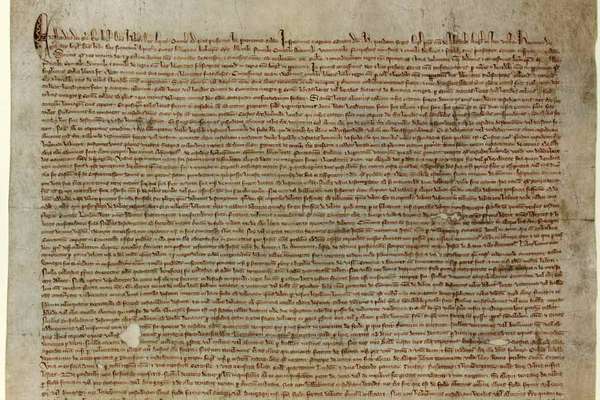
Magna Carta has symbolised citizens’ rights to liberty since its sealing by King John in 1215. We hold copies of key versions in its early history.
Record revealed
List of people summoned to the 1265 Parliament
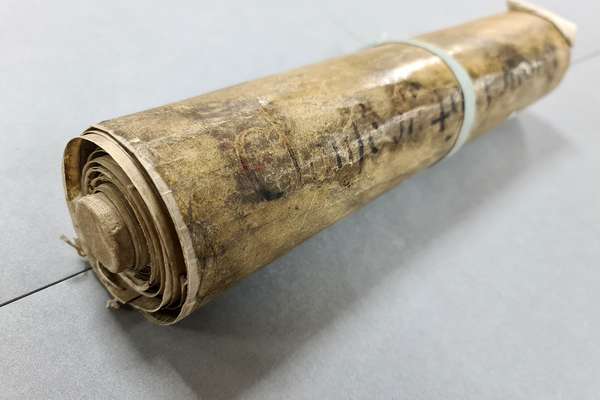
This document records the first time that citizens outside of the elites were invited to join an English parliament – without being asked to support new taxes.
Browse our Magna Carta shop selection
Explore Magna Carta gifts and books in our online shop.
Subscribe to On the Record
pod.link
Find the podcast on your preferred service.
On the Record is available wherever you get your podcasts.
Tell us what you think
smartsurvey.co.uk
Fill in our survey
Listeners, we need your help to make this podcast better! We need to know a bit more about you and what themes you’re interested in.
Copyright
If you wish to re-use any part of a podcast, please note that copyright in the podcasts and transcripts in some cases belongs to the speakers, not to the Crown.