From heartfelt declarations to calculated proposals, intimate notes and secret exchanges, these records reveal the deeply human emotions captured in the nation’s documents.
As we open Love Letters, a free exhibition at our Kew site, running until 12 April 2026, showcasing correspondence from royalty, parliamentarians, relating to literary icons and to everyday people, this episode shares some of the stories behind these captivating records.
Featuring specialists Sean Cunningham, Vicky Iglikowski-Broad and Mollie Clarke, we explore how these letters survived, what they reveal about relationships shaped by power, distance and circumstance.
Listen to the episode
Listen
On the Record: Love Letters
Audio transcript for "On the Record: Love Letters"
Chloe Lee: "My dear Bob, I have today taken stock of all my friends and I hold you foremost amongst the few dear friends which I hold. There is nothing finer in this whole universe than sincere friendship."
Words written from San Francisco to London in 1923. A declaration of friendship, love and loyalty that travelled thousands of miles - and nearly a century through time.
I'm Chloe Lee, a records specialist at The National Archives.
This is On the Record at The National Archives, uncovering the past through stories of everyday people.
Love letters might not be what you'd expect to find in a government archive. The National Archives holds the official records of the state - legislation, legal cases, government correspondence. But woven through these documents are intimate, personal expressions of love that are now preserved within the public record.
We’ve just opened a new, free exhibition, "Love Letters", at The National Archives in Kew, which will run until April 12th 2026. So we want to share some of the exhibits in this podcast episode. Love letters that survive for complicated reasons. Some were seized during police raids. Others were kept as evidence in trials. Still others were found in the personal papers of monarchs and public figures. In each case, the state's interest in these private relationships tells us something powerful about who was watched, who was prosecuted, and whose love was deemed dangerous or subversive.
Vicky Iglikowski-Broad will tell us about letters between Bobby and Macnamara - queer friends whose transatlantic correspondence was seized in a 1927 police raid on a London flat.
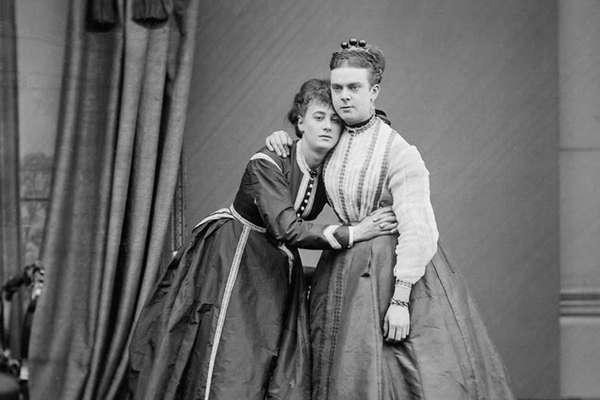
Mollie Clarke will introduce us to Fanny and Stella - two Victorian performers whose letters to friends and family reveal love enduring even as they faced prosecution.
But first, Sean Cunningham will share the final letter between Queen Elizabeth I and the Earl of Leicester. A relationship that defined both their lives, kept by Elizabeth until her death.
Hi Sean, welcome back to the studio.
Sean Cunningham: Hello Chloe, great to be here.
Chloe: I'm looking forward to our conversation today, Sean. Can you tell us about the letter we're looking at?
Sean: Yes, this is an unusual survival in that we know from it the inside information on Elizabeth's relationship with Robert Dudley, which isn't something we'd normally expect to be able to see after so many centuries. And this is a private letter. It's not something that was ever considered to be in the public sphere. And it's only one half of the correspondence, so her letters to him have not survived, but we have his to her in some of these survivals.
Chloe: It's quite interesting that we've only got that one half.
Sean: But what it tells us is this is a lifelong friendship which moved in and out of love over the decades, and it's very difficult to not feel the connection between these two people over the centuries.
Chloe: I see and this particular letter, where is it set? Where are we?
Sean: So this is written right at the end of Robert's life. He'd been working very hard in the weeks before he wrote this, preparing to resist the Spanish Armada. And so he'd been organising Elizabeth's tour of Essex, where he was taken a bit ill, and then he came to try and get to the spa at Buxton in Derbyshire. And on the way there, he was taken really ill, possibly with malaria, and wrote this final letter to her to say he was still receiving her medicine, and it was working really well, and he was kind of apologising in a way, for all the troubles he'd caused her over the years by being a good servant. But also being this familiar friend, and so his final words are really just to say, you know, he kisses her feet in admiration. He says he's on his journey, which could mean he's on his journey to Buxton, but it also could mean that he knows he's on his final journey. So this is a kind of recollection of their relationship in a few coded words.
Chloe: Interesting. But so what's the context of this relationship? You said that it lasted years.
Sean: Yes, I guess they were friends from childhood, probably from the age of eight, as Robert said one of his earlier letters, and they were both probably brought up at court, because obviously Elizabeth wasn't destined to be queen when she was a child, but Robert's father was a high ranking courtier. He was Duke of Northumberland, and his role in politics, and Robert's introduction to high politics, was really around Jane Dudley, Lady Jane Grey his daughter in law. Who he tried to put on the throne after Edward VI died in the 1550s and because he was executed after that, Robert and his brothers were all locked up in the Tower of London in the summer of 1553.
Chloe: So quite a rocky start.
Sean: Yeah, and Elizabeth, because of her relationship to Henry VIII, and Queen Mary, as stepsister, half-sister. She was locked up as well for a few months, and we think they might have spent some time there together. And certainly, Robert seems to have had his first introduction to court life serving Edward VI as a young boy.
Chloe: It's such an interesting way to grow up together.
Sean: But there must be a reason for their kind of lifelong bond, and it's probably this connection. Through just associating at the court, we can't really see any of the moments when they would have been together long enough to establish this relationship. So from that point, despite all the different movements that come afterwards, there seems to be a real connection between the two.
Chloe: And Robert married?
Sean: He did when he was about 18. He seemed to have married for romance. His father had him up in Norfolk learning his job, I guess, as a courtier and as a representative of the Crown. And he seems to have met Amy Robsart, the daughter of a Norfolk gentleman, a knight, and fallen in love with her. And they seem to have had quite a good married life together, but obviously, in the background was Robert's relationship to Elizabeth.
Chloe: And how did she feel about this?
Sean: Well, we suddenly see this manifested when Elizabeth becomes queen in 1558, and Robert is suddenly thrust straight back into the centre of things. He becomes master of her horses, which is a really important job, because horses are everything about communication and travel and transport, and it's how people moved around. So that's a key role which connects him to the queen formally. And so he's working alongside the queen then, and Amy is basically left at Cumnor House in Oxfordshire. She doesn't share his courtly life. And so Robert and the queen are then spending all this time together, and their relationship deepens, and obviously, we ask questions about what that might have actually been, because later on, Robert is defamed in pamphlets as being the queen's lover and using that relationship to push himself up the social scale. Elizabeth is also caught up in various things as a result of this relationship because she presents herself as the virgin queen, married to England. Clearly, she's carrying on, potentially behind the scenes, with a married man. So this risks her reputation as well. So it's important to kind of separate these strands in the evidence we can actually see, which is very difficult because we know a lot of the stories from this defamation against Robert, which is in the 1580s, you know, a lot, a lot later than these events actually happened. So it's trying to colour things retrospectively. And a lot of historians have kind of dragged these stories into the modern age. And it might not be completely true that they're all accurate.
Chloe: Of course, and it does feel a little bit like we're opening someone's bedside drawer and looking into it to find this letter, bearing in mind that their relationship was kind of publicly scrutinised.
Sean: Yeah, and that's literally true in that this letter was kept in a cabinet or a casket by her bedside for the last 15 years of her life. After Robert had died, a bundle of his letters, and they were picked up at her death in 160,3 and she's written on the back ‘his last letter’. So she's still thinking of his presence, his relationship with her.
Chloe: It's very illustrative, right?
Sean: And then we can see a little code between them. She, she calls him ‘eyes’. He has a nickname from the 5th, from about 1570. This nickname, ‘eyes’. And she does a little, both of them draw little doodles, over the double O in any word with double O in it.
Chloe: And what did the eyes and what did that mean?
Sean: Don't really know. It's obviously some sort of hidden nickname. It might be that he's got beautiful eyes, or that he's her eyes and ears. Okay, so she does wear a dress with eyes and ears on at the time of the Spanish Armada. So the idea of spying on information is deeply ingrained in this relationship. And Elizabeth's relationship with the country, she's obviously a protestant queen. He's up against catholic Europe at this time, so she needs to be protecting herself in all kinds of ways. But Robert is one of those people who absolutely looks out for her, yeah, and he works himself to the point of death to kind of see that set up protecting her against this Spanish threat in the 1580s.
Chloe: That's so interesting. Let's hear from the letter now, shall we?
AUDIO CLIP - excerpt from Leicester's letter
Transcript: Letter from Robert Dudley to Elizabeth Tudor
29 August 1588
Catalogue reference SP 12/215
I most humbly beseech your Majesty to pardon your poor old servant to be thus bold in sending to know how my gracious lady doth, and what ease of her late pain she finds, being the chiefest thing in this world I do pray for, for her to have good health and long life. For my own poor case, I continue still your medicine and find that (it) amends much better than with any other thing that hath been given me. Thus hoping to find perfect cure at the bath, with the continuance of my wonted prayer for your Majesty’s most happy preservation, I humbly kiss your foot. From your old lodging at Ryecote, this Thursday morning, ready to take on my journey, by your Majesty’s most faithful and obedient servant,
R. Leicester
[He added a postscript:]
Even as I had writ thus much, I received Your Majesty’s token by Young Tracey
Chloe: It really is an intimate letter. But what makes it so significant Sean?,
Sean: Well it is that friendly kind of tone, and they are obviously reflecting on a deep association and lots of correspondence between them over the years. So it's not really the letter you'd expect from a subject or a servant and a queen. You know, it cuts through that hierarchy, that status, and it's very much just about individual connection. And knowing that this is a final or one of the final letters he'll be able to send. It's charged with quite a lot of that, that feeling about their history together, although it doesn't say very much explicitly. We know from some earlier ones, in this same sort of period, how Elizabeth has been pleading with him not to go overseas to the Netherlands. She wouldn't let him leave her side, and he spends the night with her just before he goes to Holland in 1585, so it's, it's a symptom of that kind of connection that really, it's, it's so heartfelt and deep. She doesn't mean you need to be explicit.
Chloe: And can we roll back slightly? So, so what happened to Robert's first wife, and why couldn't Elizabeth… why couldn't they marry?
Sean: Well, I suppose the relationship might have suggested that he was a servant of lesser status than the Queen, but that hadn't stopped kings marrying gentlewomen and nobles in the past. So I guess the problem was that Robert married Amy early on in life, and the pressure to have that relationship between the two of them grow makes it difficult to see how… I suppose Elizabeth could ever think about marrying while he was still married to somebody else. But yes, tragically, in September 1560 Amy dies in an accident at her house. She's found the bottom of the staircase with a broken neck and head wounds, having dismissed the servants from the house that day. So Robert was at Windsor Castle. He wasn't there, but one of these pamphlets later on suggests Elizabeth and Robert had engineered this to free him from the relationship so that they could marry. And it was a difficult thing to kind of cope with. I suppose Robert had to go, and Robert had to go into a period of mourning, and that's what was suggested, that was just to cover to get him out of the way for the accusations that he'd engineered this. The coroner said it was misadventure and suicide might have been considered, which could be suggestive that Amy was so distraught by this lack of attention she was getting from her husband and his role at court and links to the queen that she flung herself down the stairs. But Robert's enemies really suggested that the Queen had something to do with this, because her intimacy was so strong she needed him to be with him.
Chloe: And he does marry again, right?
Sean: He does, but not for a while. And obviously, the Queen would have been free to marry Robert at this point, but the nature of Amy's death really makes that impossible, because it stains both their reputations and characters to some extent.
Chloe: Okay, so we know that Robert is unable to marry the queen. What kind of impact did that have on him Sean?
Sean: I think what he realised is that he begins to look for other women to have relationships with. So he has an affair with the daughter of a lord, unusually, called Douglas Sheffield. So I think she's named after a Scottish Countess, and she has an illegitimate child. And that boy is called Robert Dudley and grows up to have a career. That means Robert really wants legitimate heirs to pass on his estates and, his title and his line. Yeah, as he knows he can't marry the Queen, he then looks for a proper marriage.
Chloe: So a legitimate way to have a family.
Sean: His second marriage is to a widow who's a Countess of Essex, Lettice Knollys, who's a relation of the Queen. She's a great niece of Anne Boleyn, Elizabeth's mother. So in that sense, he's moved into the higher nobility, and he does marry her in secret, which causes the Queen a lot of anger.
Chloe: Yes, that thing of eyes again comes up, doesn't it?
Sean: Eyes on you this time. Why are you betraying me in this way? And then they have to take depositions to prove the marriage is legitimate, because any children that come out of a suspect arrangement, again, raises this question about legitimacy and passion.
Chloe: Yeah, certainly an interesting decision to marry in secret.
Sean: So then the queen is very angry, and then Lettuce Knollys. This is basically banished from court into one stead in Essex, where they live. And then they do have a legitimate child, another boy called Robert, who sadly only lives for three years. And I think Robert's grief at losing his heir and all these plans for the future throws him into this kind of role as representing the queen in her political problems in Holland, where she's working. He's working with her allies to sort of put the Spanish away from England. But it kind of triggers this reaction of him working especially hard to protect the Queen and work for the Queen, knowing that he's lost that chance to have children as well. So it's really the manifestation of love in the future, and how that tension in the relationship with the Queen kind of dictates this behaviour for him. It's really, it's quite poignant, you know, that so many things can hang on these individual tragedies.
Chloe: Yeah, and what's dictating that pull and push as well?
Sean: That's right.
Chloe: I mean, what does this letter reveal about love and power, considering its context, which is not what an ordinary person endures in their normal lifetime?
Sean: Yes, it shows that human beings get connected, become connected, regardless of their status, and sometimes love cuts through. That and the power that's associated, especially in this period where a queen or a king actually has to wield power, it means that love impacts on all of that. So part of the problem for Elizabeth was Robert's relationship with her, did to some extent undermine her regal position, her authority. And so he has to separate himself from that, and she is so reluctant for him to leave her side, but she knows that he has to have an independent role to free herself from him so that she can rule in the way she has to, because these threats are very real. She doesn't want the country to be invaded. So Robert volunteers to go to the Netherlands to help resist the Spanish over there, and protect the kind of Spanish, sorry, protect the Dutch from the Spanish, which might then lead to the invasion of England. And in doing that, you know, their relationship shows all these strains from the absence. She's also reluctant for him to actually go to his own estates in England. So she wants him at court. She wants him almost to be a husband in everything but name, and we don't know whether, at the bottom line, he was actually a husband to her.
Chloe: Course, of course. And it just reminds me of love duty and how, also, how she was so tightly bound to the state and the love of the state. Sean, I know it's very difficult to project here, but what do you think of Robert and Elizabeth's relationship?
Sean: I think the fact that we can see quite a lot about it suggests that it was this loving relationship, short of any kind of sexual relationship. And although Elizabeth's reputation is difficult to assess because of this very strange and unusual position she puts herself in as married to the nation. So we kind of pull out any human passion and desires from that. But actually, this reveals this relationship, reveals a very passionate and intimate person who is quite capable of forming these relationships, who has those needs that anybody else would do as a human being. So the fact that these little snippets in the letters lift the lid on that kind of personality is really fascinating, because it gives another dimension to the stoic Virgin Queen we kind of know about from media and film.
Chloe: Yes, of course. Thank you. That's, that's, that's great to hear such a powerful reminder of how duty reputation can constrain even royal love.
Welcome back to the studio Vicky.
Vicky Iglikowski-Broad: It's great to be here. Thank you.
Chloe: I want to turn to a very different kind of love, friendship across distance between working-class queer men in the 1920s. You've been researching letters that survived because they were seized in a police raid. Can you tell us about them?
Vicky: Yeah, so we have these really amazing range of records, actually, from our Central Criminal Court record, so they're depositions from 1927, and what we have because of that is letters between Bobby Britt and his friend, who's based in America at this point McNamara. And what they reveal is this really kind of intimate network of friends and lovers, notably men who had relationships with other men. But as you mentioned, they were seized from this raid on 25 Fitzroy Square in Fitzrovia in London in January 1927, so it's a really interesting case we can get into.
Chloe: Intriguing. Can you say a little bit more about Bobby Britt and why the police raided his private flat?
Vicky: Yeah, it's interesting being a private flat being raided. But Bobby was a working-class dancer living with a woman, a French woman, Constance Carr, and he actually performed on the west end at the time. And they would host these really amazing parties, really good fun from what we can see from the records, there was a gramophone often playing. There was a piano, there was dancing, and there was singing. It's a really kind of lively space to be in. And essentially, they were kind of cultivating their own sanctuary in this private home in this flat, away from the kind of publicity of the streets, because at the time, same sex acts between men were illegal, so this kind of gathering was kind of problematic in the eyes of the law. And so they were kind of taking great risks in creating this space, but it was also a space of safety for them, and these were working class people, so really, we know the risk was greater for them. They didn't maybe have the same protections of private members clubs or more grand private homes. For some working-class men, they would have been meeting in parks, public spaces and these kinds of homes that they had, like this flat at Fitzroy Square.
Chloe: Can you tell us about the raid itself?
Vicky: Yeah, absolutely. So what we know is that there were actually weeks of surveillance on this flat. So there'd been men spotted outside holding hands, going into the flat, and kind of other things that had been picked up on, that led to this kind of surveillance. And the police watched the flat, and so we know they even did that from another building, looking into the basement.
Chloe: So a lot of work into this little community that had been built up around this flat.
Vicky: Yeah. I'm kind of amazed by the amount of police surveillance for consenting same sex acts at this time. The resource is really quite intense, but they do observe this space, and eventually it then turns into an actual raid. And that was on January 16th, 1927, it's actually 99 years to the day that we're recording this episode, which I think feels very powerful and poignant. And so they burst into this house or flat during this party, and they observe what's going on. They arrest people, they take photographs of people present, and it's really rare for those to survive in our collection. So we do have raids of other kinds of clubs and venues, but what we don't have are photographs of people actually present. Some were taken, but they don't generally survive. In this case, they do survive, and we see these individuals in their kind of quite radical clothes for the time, looking quite subversive, wearing kind of 1920s flapper dresses and other kinds of things that were signifiers of that kind of slightly being outsiders, I guess, in the era and going against conventions. And we can see they're kind of looking away defiantly from the camera. They look quite bold. And so these photos that do survive are quite, quite powerful, but we also see on them names, and the names are written by the police. So we see this evidence very, very literally in what survives.
Chloe: I see, so that we know that those, those police that raided the flat, they were asking for names, and they were labelling those, those people in the photos that they subsequently took.
Vicky: Yeah, absolutely.
Chloe: Okay, so let's hear from one of these letters that were seized during that raid. This is from Bobby's friend, McNamara, writing from America.
AUDIO CLIP - Macnamara's letter about friendship
Transcript: Macnamara to Bobby
Apt 205 1091 Bush St San Francisco California New Years Day 4 p.m.
My dear Bob I have today taken stock of all my friends and I hold you foremost amongst the few dear friends which I hold. There is nothing finer in this whole universe than sincere friendship and I do trust that ours may prove so as long as we live.
/
Jack Pickford is wonderful and his - oh boy you’d walk for miles to get a glimpse. You see I know you, you brazen harlot.
/
My dear sister, one day you must come over. If you do you’ll never want to return.
Chloe: What makes these letters so remarkable?
Vicky: So we can see in these recordings why they were of concern to police, because there are these kinds of references that would have been related to kind of gender or same sex acts. But what to me, makes them really remarkable is the sense of community, friendship, this kind of spirit that comes through them. They're quite funny, they're quite humorous.
Chloe: They're affectionate. He says, ‘oh boy’
Vicky: Yeah, I would use the kind of term camp sometimes, like they say phrases like Lady of the Camellias, old Auntie Aggie, my dearest camping Bessie. They use these wonderful phrases to refer to each other. And one of them does refer to Bobby as the campest thing between London and San Francisco, which I think he would love. I think that's a great way to refer to someone. And so, McNamara also talks about his own relationship in America. So he has someone that he relates to, he regards as a husband. Talks about marriage and honeymoon, and he's talking about another man. And so the idea that people at the time are conceptualising their relationships in this framework, this kind of conventional framework, I think, is really powerful from this period in 1927.
So essentially, what we see from these letters, because there are a series of them, is that they're corresponding over quite a bit of time. McNamara is actually moving around different bits of America. So they're corresponding from San Francisco with that letter, but actually also kind of New York at certain points and other places. And so we see that their friendship kind of continues throughout these series of letters. So we get, then get McNamara talking about his life, talking about his experiences of New Year's Day, but also experiences of his relationship. And asking Bobby about London, what's going on, where's he going out to, how are these people, and so what we see from that are these really kind of international networks.
Chloe: They're super lively. There's like they're fervent letter writers it seems.
Vicky: They're really lively, and we can see that these are people that are living their lives to the full. And I think sometimes when we think about people, queer people in the past, we think of these repressed lives, and these are vivid and vibrant and really fun.
Chloe: And so what about the other letters that were seized in the raid?
Vicky: Yeah, so there were nine letters and one Christmas card overall. And so some are between Bobby and McNamara. But we also have other individuals, some of whom were present in the raid represented. So we have a letter from Eric to Burt. It's intense and heartfelt, but unrequited. So, as well as these letters of friendship, there are letters of love as well. In this one, we have a phrase:
“I must confess that I don't see how I can keep love out of my side of the friendship. It's a simple, true fact that I love you, baby, dear.”
And there's also this lovely phrase in one that says, “I want to shout to the whole office that was in love with you.” And we can imagine in that era, the frustration of not being able to be open about your love and not being the same as other people and maybe sharing their emotions in these kinds of more open settings.
Chloe: Yes, and I'm sure lots of our listeners can identify with those feelings. So tell me what happened at trial?
Vicky: So at the trial, it was really quite a high-profile case. So we can see that it took place at the Central Criminal Court in February 1927, so it shows something that was in a very small private flat, being actually put on a big stage. So that tells us a lot about how this was considered by the state at the time. And so there were various elements of the charge. So Bobby was charged with tippling, whoring, using obscene language, and behaving in a lewd manner. And essentially, one of the key things that it all hooked onto was the idea of whether a private flat, not so much a public space, could be considered a disorderly house, so a kind of location for public nuisance or outraging public decency, because this was Bobby's home, Bobby and Constance’s home.
Chloe: And Vicky that other examples of disorderly house? Can you explain a bit more about what that term means?
Vicky: Yeah, it was kind of often used against brothels, places where sex workers would gather. We have other kinds of locations, queer locations, for the time that were also policed under this idea of disorderly houses. So the Caravan Club from 1934 was one of them. So normally, in general, it was more public spaces. And this is why it was a point of contention, really, in the courts.
Chloe: Yeah, effectively, these people are having parties.
Vicky: Yeah, they were having parties. They were having parties where people were engaging in same sex acts. But beyond that, you know, it was, it was in a private space. And so essentially, these letters, these really rich, amazing letters that we have, were presented as evidence in the case, and police had underlined pronouns in terms of endearment, anything to do with gender, what they would perceive as gender non-conforming kind of language. So Bobby being referred to as sister, those kinds of things, and any kind of suggestions about same sex relationships as well. And we know that in the photographs, Bobby was wearing quite gender transgressive clothes, a transparent skirt, painted eyebrows, powdered face, and so all these concerns around gender as well as sexuality were really quite key in what the police were concerned about.
Chloe: And what was the outcome of the trial?
Vicky: So we know that it's very likely from the newspapers at the time that the letters were dismissed as evidence. So although they were gathered, they referred to people that weren't present at the raid, and some of them predated it. They were just found at the property. So they were dismissed, but ultimately Bobby was found guilty, and he was sentenced to 15 months' hard labour.
Chloe: And was that charge the keeping of the disorderly house?
Vicky: Yeah it was, and it was quite a harsh sentence for the time as well.
Chloe: Okay, so these records survive because of state persecution. How does that affect how we read them?
Vicky: I think it can leave us feeling quite uncomfortable about them. They survive for such problematic reasons. These people's love shouldn't have been policed in this way, and yet we have these really powerful testimonies of joy and community and of space making. And so when I came across them, I felt deeply conflicted really about their survival, but also the value that they bring. And it's this irony that the government that was policing them historically now holds those records and allows us to learn about these people now.
Chloe: Yes, and effectively, the archive is telling those stories, or maybe not the archive, but certainly us who are in that space. So what happened to Bobby after 1927?
Vicky: We actually see that Bobby and his nephew, Bert, both travelled to New York in 1929, so not long after he would have been released from prison, and my dream is that he was going to visit McNamara, say hello, at least following in his footsteps and feeling inspired by him. So we can see that they continue to travel and they continue to live their lives. We also know that Bobby was born in 1900, and he lived to the age of 100, so he would have seen so much change in his lifetime, including the partial decriminalisation and eventual kind of full decriminalisation of homosexual acts. So really incredible. And he also remained a professional dancer his whole life, which I think is really poignant as well to know that he continued his career.
Chloe: It's great to hear. Thank you Vicky, those letters really bring home the creativity and resilience of people creating community and expressing love even when their identities were criminalised. Thank you.
Vicky: Thank you, Chloe.
Chloe: Mollie welcome to the studio.
Mollie Clarke: Hi, Chloe.
Chloe: It's great to see you. I want to go a bit further back in time to Victorian England and another kind of family love and acceptance. You've been looking at letters connected to Fanny and Stella. Who were they?
Mollie: So Fanny and Stella were theatrical performers who were born in the mid-1800s. They were born Frederick Park and Ernest Bolton, so male, but they performed as men and women, both on and off the stage. They were quite popular, but not necessarily because of their theatrical abilities. In fact, it was a court case that they were both part of that made its way into the newspapers, and it was widely sensationalised, and that's why they became very popular.
Chloe: I see. So how did their letters end up in the archive?
Mollie: Well, Fanny and Stella were under surveillance by the police for a really long time before they were arrested in April 1870 in the female toilets at the Strand Theatre. So they were arrested and tried in court for three offences. These were offences against public morals, basically for cross-dressing as women, for conspiracy to commit prostitution, and then for buggery, which was same sex relations or sex with men. Their letters and interviews were then used as evidence after their arrest.
Chloe: Can you tell me a little bit more about Victorian Britain at this time and their ideas of morals and morality?
Mollie: Definitely. So the middle-class Victorian today, and back in the time, were very well known for these sorts of separate sphere ideologies. You have the angel at home. So a woman was supposed to be a mother and a wife and therefore presenting in a very feminine way. And men were expected to be husbands, the providers, they were out there dressing as gentlemen in a very masculine fashion. So anyone who existed beyond these spheres or within the middle were definitely deemed as being outsiders. And there were different ways in which the Victorians were looking to prosecute this kind of difference
Chloe: I see, I see, so Fanny and Sarah really disrupting that and also putting it on stage, right?
Mollie: Yeah, most definitely. And I think what's quite ironic is the fact that they were popular as performers on the stage.
Chloe: People enjoyed going to their shows?
Mollie: People loved to go and watch them performing as women. They would sing. They would dance. It was pre-pantomime, but it was very pantomime-esque. It was comedic, and people really enjoyed it. And other than the sort of ruling classes, the wealthy gentlemen, even people on the streets would find it quite amusing to see them performing off stage as women.
Chloe: So this cut across class?
Mollie: Definitely it cut across class. They were a working-class duo themselves, their family were very working class, and it looked as though that kind of fluidity was far more accepted by the community within which they lived.
Chloe: Interesting. So I would love to hear a letter now...
AUDIO CLIP - to Ernie from John
My darling Ernie
I had a letter last night from Louis which was charming in every respect except in the information it bore that he is to be kept a week or so longer in the North. He tells me that you are living in “drag” - What a wonderful (?) it is! I have 3 minds to come up to London and see your magnificence with my own eyes - Would you welcome me? Probably it is better that I should stay at home and dream of you but the thought of you, Louis and (?) in me is ravishing
(...) You see I keep on writing to you and expect some day an answer to some of my letters - In any case with all the love in my heart I am. Yours, John S. F.
Chloe: The letter is so full of life. But what makes these letters so important, Mollie?
Mollie: Well, as we've just discussed about sort of public morals and what was expected in Victorian Britain, these letters reveal a far more fluid perception of gender identity at the time. We have a huge file here at The National Archives from lots of different letter writers that show not only their acceptance of this kind of fluidity, but of a sense of community at the time. They were included by prosecutors because of the level of affection that was shown between men, but also between family members.
Chloe: Fascinating that that gets caught up in the case, as well as just, you know, their own personal letters, but it's of their wider communities, like you say.
Mollie: Definitely, and it's ironically really rich in this level of affection, in that they were used to prosecute the two. And yet, what it actually demonstrated was both this sort of beautiful depth of diversity among their community, but also that more generic support that even the newspapers that sensationalised the two and the people that were present in court cases they supported Fanny and Stella. And I think what's so great about these letters and the community that is demonstrated in sort of these retelling of them or showing them an exhibition is that it reveals not only, yes, historic attempts to criminalise gender and sexuality, but also this rich, lesser-known side of queer history that we don't hear too much about from the state archive.
Chloe: Yeah, in one sense, the state is so invested in these what we might consider intimate kind of portrayals of love. But actually, these are public portrayals of things that go against the norm, right? But they're surrounded and uplifted by community, it seems, from these letters.
Mollie: Definitely and so diving in deeper as well, these are some of the first documented uses, like public usage, of queer terms, also sort of outside of queer culture.
Chloe: So these are terms that we might consider quite contemporary?
Mollie: Yeah, so drag and campish in relation to sort of someone's behaviour or their dress. These were picked up by newspapers, and actually, in sort of the Oxford English Dictionary, they're acknowledged as being the first time that we see these in the popular consciousness, beyond being used in queer conversations.
Chloe: I think we're going to hear another letter now.
AUDIO CLIP - Mama
My Darling,
Let me have a line by return of post to say if I am to have my boy home on Friday and what time as I should like to meet you at the station, it is such a horrid place to find unless you have a cab which if you have luggage of course you will.
/
it will be a Gala day to your Mother, she wants to kiss her boy so baddaly [badly]
/
Good bye till Friday my own beloved Child. God bless and keep you on your journey
Mama.
Chloe: Can you tell me a little bit more about what happened at trial?
Mollie: I can. So the two couldn't be found guilty of sodomy, or buggery, as they called it, as there was no physical evidence to support this charge. Instead, they were only found guilty of the offences against public morals, so for dressing publicly as women. The courtroom was reported in newspapers to have rejoiced at the acquittal, but politicians and moralists, who were mostly men, given that it was the Victorian Period, were said to be outraged, so they set out to change the law. This led directly to what is known as the Labouchère Amendment in 1885. And this meant that physical evidence was no longer a requirement in cases such as these. This was also the law that later saw the prosecution of Oscar Wilde and Alan Turing, for example. So it had tragic consequences for queer people, while also, on the other side, being the celebration, not only of queer community, but of community in general. The court rejoiced at their acquittal. They weren't demonised by the public, but they were demonised by the state.
Chloe: So interesting that that is the response of the state and the lawmakers of the time. What do you think that tells us about Victorian attitudes and that wider context? Why such a… we've talked about surveillance before on the podcast? Can you talk to me a little bit more about that?
Mollie: What I find so fascinating about Fanny and Stella, and I think what is so interesting about these documents is that the Victorian attitudes to gender and sexuality are way more complex than we might assume. We've talked about it a bit just now, but this idea of persecution but also acceptance. It's really common to consider that sexual and gendered fluidity didn't exist before labels such as gay and trans that we're more familiar with now, they're considered quite a modern concept, but actually, the 19th century was a time when sexology, which is like the study of sexual difference, began, and that's when those labels started to form. But Fanny and Stella's case existed before this terminology. So not only are we looking back through a modern lens, we ourselves are sort of guilty of that persecution, of saying that queer histories didn't exist, we're putting a queer lens on history. But these letters, this affection, this love, this love between men, this love between communities, this gendered fluidity, it's right there in the state documents, and it existed before those labels at the end of the century, which were an attempt to criminalise and demonise difference, started to appear in the popular consciousness. The attitudes are considered to be very harsh. The Victorian Period is considered to be quite prudish and sexless, actually looking beyond this dominant narrative, you can see there's far more richness to the community and culture of the time.
Chloe: Of course, and I think that's evident so clearly through the letter from Mama, in the way that it's so effervescent and effusive, this kind of real outpouring of affection and love, I can't help getting away from that. These are records of the state that are collected within that particular context.
When you're reading through those documents, how do you try to distance yourself and disconnect from that? Or do you at all?
Mollie: No, it's very difficult. And I think you have to remind yourself that we have such joyful and rich and beautiful histories because of this attempt to criminalise difference, the power now in exhibiting these, for example, in Love Letters [exhibition] or speaking about them in the podcast, is highlighting both that, for this example, queer people have always existed. And that now it is our duty to show that richness and to celebrate that history. Both to acknowledge the existence of queer lives that have preceded ours, but also to support those who are struggling today.
Chloe: Thank you, Mollie. I think that finishes off the episode so beautifully and in a really joyful way that often, you know, we see through the records, if we can read against the grain, sometimes.
Mollie: Thanks so much, Chloe. It's great to talk about Fanny and Stella with you.
Chloe: None of these letters were meant for us. They were private expressions - declarations, confessions, everyday news between people who cared for each other. The fact that we can read them today tells us as much about the state's interest in regulating love as it does about love itself.
But these letters also remind us of something powerful: throughout history, people have found ways to love, to create family, to build community - even when the world around them said it was impossible or illegal.
The letters exist in our archive because of complicated, often painful histories. But the love in them? That transcends the circumstances of their survival.
You can see these letters and many more in our free exhibition "Love Letters" at The National Archives in Kew, running until April 12th, 2026. We'll include details in the episode description.
Thanks to our letter readers from Smartify, and to Tash Walker for reading To Ernie from John.
Thanks for listening to On the Record from The National Archives. To find out more about The National Archives, follow the link from the episode description in your podcast listening app. Visit nationalarchives.gov.uk to subscribe to On the Record at The National Archives so you don't miss new episodes, which are released throughout the year.
Listeners, we need your help to make this podcast better! We need to know a bit more about you and what themes you're interested in. You can share this information with us by visiting smartsurvey.co.uk/ontherecord, that's smartsurvey.co.uk/ontherecord.
We'll include that link in the episode description and on our website. You can also share your feedback or suggestions for future series by emailing us at OnTheRecord@nationalarchives.gov.uk.
Finally, thank you to all our experts who contributed to this episode. This episode was written, edited, and produced by Tash Walker and Adam Zmith of Aunt Nell, for The National Archives.
This podcast from The National Archives is Crown copyright. It is available for re-use under the terms of the Open Government Licence.
You'll hear from us soon!
Records featured in this episode
-
- From our collection
- SP 12/215
- Title
- The final letter from the Earl of Leicester to Queen Elizabeth I
- Date
- August 1588
-
- From our collection
- CRIM 1/387
- Title
- Bobby and Macnemara's letters
- Date
- 1927
-
- From our collection
- KB 6/3
- Title
- Letter from Stella’s supportive mother
- Date
- 1870
Further information
Past exhibition
Love Letters

This free exhibition showcased 500 years of devotion, longing, sacrifice and passion, covering royalty and parliamentarians, literary icons and unknown scribes.
Focus on
Queer love and friendship: 1920s Fitzroy Square

Though surveillance documents, we can learn about vibrant gatherings in the 1920s, the people involved and the passionate, intimate letters that survive.
Focus on
The queer Victorian origins of the word 'camp'
Did you know that the word ‘camp’ was used by members of the LGBTQ+ community as early as 1868?
Subscribe to On the Record
pod.link
Find the podcast on your preferred service.
On the Record is available wherever you get your podcasts.
Tell us what you think
smartsurvey.co.uk
Fill in our survey
Listeners, we need your help to make this podcast better! We need to know a bit more about you and what themes you’re interested in.
Copyright
If you wish to re-use any part of a podcast, please note that copyright in the podcasts and transcripts in some cases belongs to the speakers, not to the Crown.