In pictures
HIV and AIDS
We hold extensive material on the HIV and AIDS epidemic of the 1980s and 1990s. As government records, these rarely capture lived experiences but show the perspective of those in power on the crisis, and how charities and grassroots organisations engaged with the state.
Important information
Some of these records include references to sex and highlight institutional prejudice and ignorance towards HIV/AIDS.
Letter by David Willetts to Prime Minister Mrs Thatcher on the urgency of an AIDS public health campaign

- Date
- 24 February 1986
- Catalogue reference
- PREM 19/1863
In early 1986 the Home and Social Affairs Committee proposed a public health campaign on HIV/AIDS. Norman Fowler, the then health secretary, was a member of this group. The planned campaign was aimed at raising awareness on the severity of the virus and to share accurate information with the public to prevent the illness spreading. Fowler wanted this to move beyond prejudice and push the message that AIDS could affect any sexually active person, regardless of sexuality.
However, Prime Minister Mrs Thatcher expressed various concerns on the language and content of the campaign. On this memo from David Willett her annotations can be seen in blue felt tip pen. Regarding the proposed newspaper adverts, her comments read as follows: 'Do we have to have the section on risky sex? I should have thought it could do immense harm if young teenagers were to read it'.
'AIDS: Don't Die of Ignorance' leaflet

- Date
- 1987-1989
- Catalogue reference
- PREM 19/2775
Despite initial opposition, the Cabinet committee eventually approved Norman Fowler's campaign and proposed wording. The campaign was then launched by the Department of Health and Social Security (DHSS) in 1986.
This included the delivery of a leaflet in a sealed envelope titled ‘AIDS. Don’t die of ignorance’ to all households in Britain. Important information, such as why people were receiving it and why they should be concerned about AIDS was included. It also explained how people could get infected, how to try to protect themselves, and what to do in case of a suspected infection.
At the time information on the virus was limited and this is reflected in the text, which, for example, never mentions HIV, only referring to AIDS.
Storyboard for the AIDS ‘Monolith’ advert

- Date
- 1986
- Catalogue reference
- JA 235/57
Norman Fowler was keen to extend the campaign to other media. This included adverts for TV and cinema distribution.
This resulted in the ‘Monolith’ advert which, shocked the public. It features a sequence showing the creation of a gigantic tombstone which points to the risk of death associated (at the time) with AIDS. At the same time, by displaying a copy of the leaflet distributed at the time, it also shows the importance of awareness and prevention. The video can be accessed on the BFI YouTube video archive.
This record shows the proposed storyboard for the advert. The first frame with the blaring civil defence siren wasn’t included in the final video as it was considered overdramatic.
Mock-up of adverts targeting gay men that were never used

- Date
- 1986
- Catalogue reference
- JA 235/57
While designing this campaign, other ideas were proposed. Some of these included explicit bias and were rejected. As Malcom Gaskin, the designer of the agency TBWA that made the 'Don’t Die of Ignorance' advertising campaign, stated in an interview for The Guardian in 2017, ‘The big problem was that nobody knew anything about it. It was like an alien plague. Where did it come from? How big would it get? Panic and speculation was spreading’.
This picture shows a discarded proposal for a campaign titled ‘We’ve all got to live with AIDS’. The artwork shows three men and suggests that they are unaware of their HIV status (HIV-positive or HIV-negative). This highlights the limits of knowledge and biases that were originally considered for the campaign's design.
AIDS Advertising Evaluation: 1986-87 dataset

- Date
- 1986-1987
- Catalogue reference
- BN 97/1
The AIDS Advertising Evaluation survey ran in parallel to the public health campaign four times between February 1986 and 1987 to monitor people’s knowledge and perception of HIV.
The sample population was around 700 people. Interviews were held at home or at gay venues. Answers were then registered on paper forms, which were later transferred to punch cards and digitised.
The questions were designed to cover different areas. For example, people were presented with some common ideas around HIV and asked to order them in order of importance. This survey also helped researchers understand which information channels (like TV and newspapers) were being used by the public to gain knowledge around HIV.
The dataset can be downloaded from our catalogue, Discovery. The screenshot shows a partial reconstruction done by the Digital Research Team
Material on sex workers and government HIV/AIDS policy

- Date
- 1987-1988
- Catalogue reference
- JA 235/10
Sex workers were one group at risk from HIV.
By the 1970s, sex-worker-led organisations had emerged, and during the HIV crisis the government and charities looked to work with them.
For example, records from 1986 show the English Collective of Prostitutes met officials to raise their concerns around HIV/AIDS. This included fears surrounding condoms being used as criminal evidence for sex workers' soliciting. They feared that this could make sex workers less likely to use protective measures when they were most needed.
Other community initiatives produced DIY leaflets like ‘Smart Susie’, which seems to be a midlands-based campaign. This leaflet used a traffic light system of advice related to safer sex acts, condom use, and avoiding needle sharing.
These materials reflect a mixture of activism, cooperation and advocacy during the epidemic.
Selection of Terrence Higgins Trust pamphlets sent to the Charity Commission

- Date
- 1990-1992
- Catalogue reference
- CHAR 19/235/2
Terry Higgins was one of the first people in the UK to die of an AIDS-related illness, aged 37, on 4 July 1982. In his memory, his friends founded the Terrence Higgins Trust, the UK’s first charity responding to the epidemic.
In 1992, several of the charity’s posters attracted press criticism as 'indecent', featuring the slogan ‘Safe Sex – Keep It Up’. These were aimed at gay and bisexual men already practising safe sex and distributed to gay pubs, clubs and organisations that requested them.
The Trust defended its approach as the most effective way to reach its audience. It also shared educational pamphlets with the Charity Commission, which ultimately dismissed the complaints. These materials demonstrate how the Trust provided education to ‘all sections of the community affected by HIV and AIDS’, including prisoners, the Jewish community, drug users, and parents and carers of children.
Rubber Stuffers seek funding to supply safer sex packs across Greater London

- Date
- 1993
- Catalogue reference
- JA 235/273
The Department of Health engaged with various other groups fighting HIV/AIDS. One was Rubber Stuffers, initially a volunteer group that grew into a small business distributing safer sex packs across Greater London. Their literature said they were ‘pissed off at not being able to get cheap rubber and lube in pubs and clubs 10 years into the HIV/AIDS epidemic’. They aimed to provide condoms at the lowest price, working with volunteers to supply 22 London pubs.
They faced government resistance when seeking their support. Their booklet (pictured) expressed a wish to revive ‘enthusiasm, energy, humour and irreverence’ that had galvanised many during HIV’s early years.
British Medical Association press statement on lowering consent age and HIV/AIDS campaign impact

- Date
- 1993-1994
- Catalogue reference
- JA 235/334
Age of consent campaigns were crucial during the AIDS crisis. Without legal change, safe sex messaging could not target those under 21, as this was legal age of consent for gay men at the time.
This file includes letters from organisations advocating for reform. For example, the British Medical Association voted to lower the age, stating new transmissions data showed that younger men were ‘disproportionately affected’.
The following year there was an attempt to equalise the age of consent to have parity with heterosexual couples. This was partially successful; the 1994 Criminal Justice and Public Order Act lowered the age of consent for gay men from 21 to 18, and in 2001 it was further lowered to 16. In response a range of HIV/AIDS campaigns were created focusing on younger audiences.
Image credit: © British Medical Association (1994)
Research into sexual health

- Date
- 1 January 1988 - 31 December 1990
- Catalogue reference
- ED 273/79
In 1989, following a feasibility study involving nearly 1,000 interviews, the Economic and Social Research Council (ESRC), Social and Community Planning Research (SCPR), and the Health Education Authority (HEA) approached the Department of Health to co-fund a national survey on sexual attitudes and behaviour as part of the UK’s AIDS prevention strategy.
Despite various attempts to secure the requested £200,000, the Department –under direction from Prime Minister Margaret Thatcher– had to decline support, delaying the project’s launch. In 1990, the Wellcome Trust stepped in with £900,000 in funding, enabling the first National Survey of Sexual Attitudes and Lifestyles (NATSAL). The survey is now conducted every decade.
To learn more about prevention and treatment for HIV/AIDS, please visit the NHS website.
Featured article
Focus on
‘Not acceptable’: Gay Switchboard’s attempts to become a charity
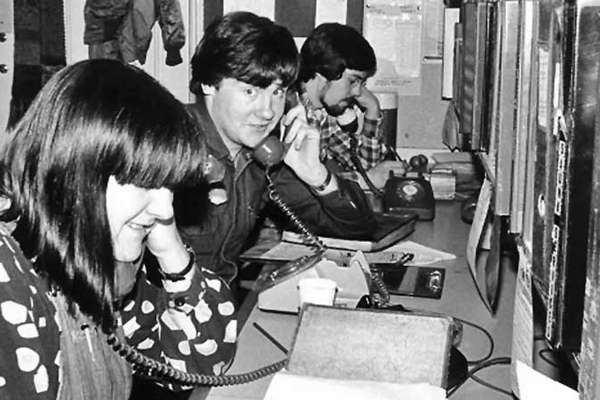
LGBT+ Switchboard is one of the oldest telephone helplines supporting queer communities in the UK. Its journey to register as a charity was not easy.