

sketchfab.com
Bag of Secrets 3D model

Explore the interactive model of the Bag of Secrets.
Teaching resource
Around midnight on Monday 4 November 1605, Sir Thomas Knyvette was ordered to carry out a search of the rooms below the Houses of Parliament. There he found Guy Fawkes and 36 barrels of gunpowder.
See if you can unravel the secrets of these original documents about the gunpowder plot.

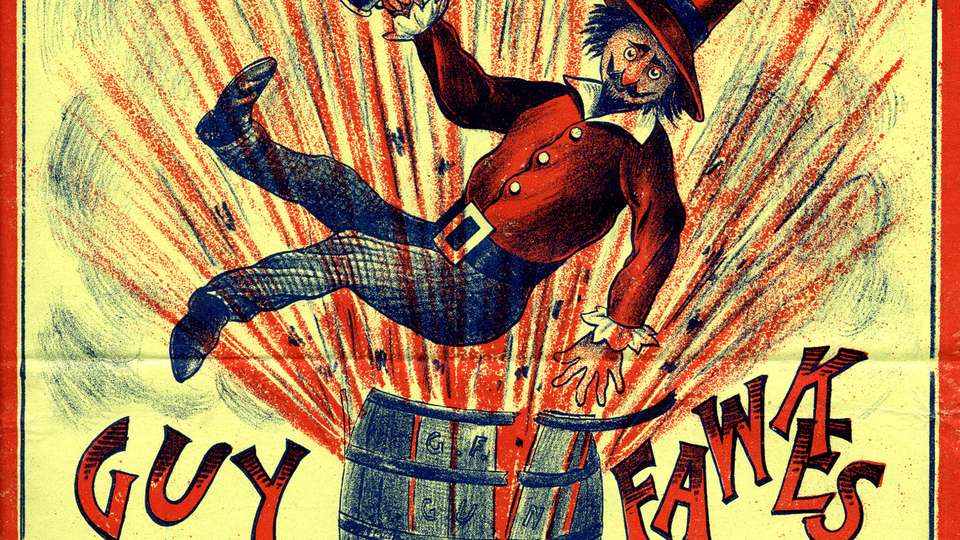
Brock's Fireworks Guy Fawkes poster, 1908. Catalogue reference: COPY 1/272/1.
Can you uncover the plans of the plotters?
The documents in this lesson are all taken from one record in our collection, SP 14/216, or the ‘Gunpowder Plot Book’. It is a collection in three volumes of the most significant government documents relating the plot.
Watch
Hello, my name is Rachel and I work in the Education Team at The National Archives.
We are going to be opening one of our 11,000,000 document boxes today to reveal the document inside.
Let's find the box I'm looking for.
As you can see, every document box in our collection has a unique reference.
With so many, that's important.
A reference is a special group of numbers and letters used as a label so we can find documents in the archives, a bit like the references used to find books on a library shelf.
These letters are not chosen at random and reveal clues about the document inside.
For example, HO stands for Home Office.
Our box has the code COPY. Remember that and we'll come back to it later.
Before we open the box and find out what document is inside, I want you to think about the questions you should ask about a historical document that you have never seen before.
For example, what type of document is it?
Could it be a photograph or a newspaper reports or even a letter?
Sometimes this is obvious, but at other times it can be trickier to work out.
I'm going to give you 30 seconds to come up with as many other questions we should ask.
Start thinking in 3 2 1. Off you go.
Well done. How did you get on?
Let's see if we came up with similar questions.
So what is it about or what is its content? When was it made?
Is there a clear date or do we need to use other clues from the document to help us work this out? Who made it? Who is it for?
These might be clear or we might need to try and work them out.
Why was it made or what is its purpose?
And the last question, why do we have it here at the National Archives?
Why has the government kept this record?
We might be able to make some suggestions about that connected to the reference code that we saw earlier.
The document had the reference code COPY. What do you think COPY stands for?
Well, we won't be able to look at all of these questions today, but we'll work together on some of the most relevant ones.
Now we are going to find out what is inside this box.
At first, I am only going to give you ten seconds to answer two questions.
What can you see and what can you infer?
Here's our document ready go.
Welcome back.
Now I've been slightly misleading and have only shown you a section of the document.
Looking at this close up part of the document with the timer going, it's tricky to spot every detail, but you might have noticed some of the following things.
The main image is an illustration of a man.
Could this help us to date the document or might we need to see more of the document to work out the date?
On closer observation, the figure doesn't look very lifelike.
He looks more like a doll or a scarecrow with his limbs pointing in unusual directions and his positioning is also quite interesting.
He's not standing upright or lying down, but looks like he's been positioned in a pose in mid air.
How is the figure dressed as his clothing isn't contemporary, Does this help us to date this character?
In the document, this man is wearing an unusual conical hat with some kind of band or buckle around it.
He has a tightly fitted jacket with buttons down the front and a shirt underneath, and he has a wide collar and decorative cuffs on his sleeves.
The trousers that he's wearing seem to be closely fitted around the ankle.
He also has collar length hair, a moustache and a short pointed beard.
What's he holding?
I think he's holding some type of lantern.
Again, this could perhaps help us to date the character and possibly the document.
In the background there are some brightly coloured lines, perhaps suggesting fire or some kind of explosion.
This would explain the mid air pose that the figure has taken.
OK, let's look at the whole document now to see if there are any further details that can tell us more about the age of the document and its nature or content.
I'm going to give you another ten seconds to spot as much as you can this time.
See what additional detail you can spot and what this can tell us about this record.
OK well done.
How did you get on from looking at the whole document?
Did you manage to work out what type of document this is?
I initially spotted the heading at the top CT Brock & Co.
I then spotted the reference to the price of something. One penny sold here.
I immediately inferred that this must be a type of poster or an advertisement for something.
But what's being advertised?
I then spotted the name Guy Fawkes and the words most terrific explosion.
I also saw the name of a place in London, Crystal Palace at the top of the page and just below that the word fireworks.
So this source seems to be a poster, but what is it advertising and when was it made?
I think that it's safe to say that the man shown here is supposed to be Guy Fawkes.
We can tell this from his old0fashioned type clothing, the buckle on his hat, his Lantern and the wooden barrel we can see exploding behind him.
But this is where it gets a bit trickier.
To date the documents, we know that Guy Fawkes was alive in the early 1600s, so does that mean that this poster comes from the 17th century?
How can we work out if this is true?
Well, reference has been made in the poster to a place in London called Crystal Palace and Fireworks.
This poster seems to be advertising a type of firework called Crystal Palace for night and day.
The cost of this type of firework is one penny, which is around the equivalent of 33 pence in today's money.
Possibly these fireworks were sold at Crystal Palace as the poster says sold here, or perhaps there was a fireworks display at Crystal Palace that gives these fireworks their name.
This is a poster made during Edwardian times when King Edward VII was on the throne at this time.
Similar to today, Bonfire Night, November the 5th, the day of the Gunpowder Plot when Guy Fawkes was stopped from blowing up the Houses of Parliament in 1605, was celebrated with bonfires, fireworks and food.
Crystal Palace was originally built in Hyde Park to house the Great Exhibition of 1851.
This was to showcase the great technology and advancements of the Industrial Revolution during Queen Victoria's reign.
By the time this poster was made in 1908, Crystal Palace had been rebuilt in an area of South London known as Penge Common.
It hosted exhibitions and events such as Christmas pantomimes, flower shows and even the world's first cat show and events to commemorate the 5th of November in its grounds.
So what can we learn from posters like this as historical sources?
Well, they can reveal a lot about people's leisure activities, the things that they found enjoyable and were interested in participating in and paying for.
The poster suggests the wish to celebrate events like Bonfire Night in places like Crystal Palace.
There must have been a demand for companies to make and sell fireworks.
So now we know what the poster is, when it was made and what it's about, I'd like you to think about the following question.
Why do we still commemorate and remember the 5th of November today?
Pause the video here for a couple of minutes to jot down your ideas.
OK, well done.
How did you get on?
What happened on the 5th of November and why do we still commemorate events today?
In November 1605, Guy Fawkes and others intended to carry out their plan to kill King James I by blowing up the Houses of Parliament.
They wanted to bring back Catholicism with a Catholic monarch.
Guy Fawkes, along with some of the plotters he didn't manage to escape, was arrested in the Parliament Cellars with the gunpowder.
He was tried, convicted and executed.
Parliament declared the 5th of November, the day of thanksgiving, celebrating that King James had been spared.
They passed the observance of the 5th of November Act called the Thanksgiving Act, ordering prayers to be said and church bells to be rung to mark the events.
The 1st celebration of this Gunpowder Treason Day took place in November 1606.
Some historians argue that the plot itself may have been a government strategy to reduce the power of Catholics in society.
Even today we remember Guy Fawkes Night with bonfires and fireworks.
In some places, children make an effigy called a guy which is burned on the bonfire.
Historians still grapple with questions like, was Guy Fawkes actually the key plotter?
Why is he singled out to be remembered on November the 5th and is this why he is seen as significance?
The document we've been looking from came from a box with the reference COPY.
I'm sure you had your ideas about this and what it stood for.
Well the reference copy stands for Copyright Office.
These images are designs registered at the Stations Hall under the Copyright Acts in force.
At this time.
CT Brock & Co had registered their design in order to print their posters and promote their event or fireworks.
So now you've found out what this document is and what it reveals about the significance of the Gunpowder Plot in Edwardian times.
You've even considered the significance of this event today.
In the following lesson you'll find out more about the plan of Fawkes and his co-plotters and how they were discovered.
Well done for making such great progress already and enjoy the rest of the lesson.
Bags of Secrets or ‘Baga de Secretis’ were used from the 15th century to keep court records from the most serious crimes, such as treason.
The bag in this model once held the records related to the Gunpowder Plot.
sketchfab.com
Explore the interactive model of the Bag of Secrets.
This is the letter sent to Lord Monteagle a few days before the State Opening of Parliament on 5 November.

My lord, out of the love I beare to some of youere frends, I have a care of youre preservacion, therefore I would aduyse you as you tender your life to devise some excuse to shift youer attendance at this parliament, for God and man hath concurred to punishe the wickedness of this tyme, and thinke not slightly of this advertisement, but retire yourself into your country, where you may expect the event in safety, for though there be no apparance of anni stir, yet I saye they shall receive a terrible blow this parliament and yet they shall not seie who hurts them this cowncel is not to be contemned because it may do yowe good and can do yowe no harme for the dangere is passed as soon as yowe have burnt the letter and i hope God will give yowe the grace to mak good use of it to whose holy proteccion i comend yowe.
My lord, out of the love I bear to some of your friends, I have a care of your preservation, therefore I would advise you, as you tender your life, to devise some excuse to shift off your attendance at this Parliament, for God and Man have concurred to punish the wickedness of this time, and think not slightly of this advertisement but retire yourself into your country where you may expect the event in safety; for though there be no appearance of any stir, yet I say they shall receive a terrible blow this Parliament, and yet they shall not see who hurts them: this counsel is not to be contemned, because it may do you good and can do you no harm, for the danger is passed as soon as you have burnt the letter, and I hope God will give you the grace to make good use of it, to whose Holy Protection I commend you.
The Monteagle Letter, 1605. Catalogue reference: SP14/216/2

D. He saith, that he knows not but by generall report and by making ready of the kings barge, that the king was coming thither the first day of this parliament, But confesseth that his purpose was to have blowne upp the upper house whensoever the king was there.
E. And being demanded if his purpose had taken effect, what would have ben done with the Queenes Majesty and her royall issue, saith that if they hadd ben there he wuld not have helped them,
F. And being demanded if the king and his royall issue had ben all taken away whom would have ben published or elected king, Saith Percie never entered into that consultation.
G. And being demanded when the king, his royal issue, the Nobles, Bishops, Judge, and of the principall of the Comons, were all destroyed what government would have ben, Answereth we were not growne to any determination therein, and beeing but a fewe of them the could not enter into such conforsation, but that the people of themselves would decide a head.
H. He confesseth that he hath knowne Mr Percy two or three years but served him not, but about three moneths before the house was hired as is aforesaid, I. Being demanded what noble men were warned, that they would not be there at that time, Answereth, wuld durst not forewarn them for feare wich should be discovered , And being asked why he would be a partie to any acte that might destroy any that was of his owne relligion, Answereth, we meant principally to have resported [regarded, seen] somme safely, and would have prayed for them.
D. He said he did not know, except from rumours and from the Kings barge being made ready, that the king was coming here on the first day of this parliament, but he did confess that his job was to blow up the upper house when the King was there.
E. And, being asked what would have happened to the Queen and her children if his plan had been carried out, he said that if they had been there, he would not have helped them.
F. And, being asked who would replace them if the King and all his heirs had been killed, he said Percy never asked that question.
G. And being asked, when the King, his heirs, the Nobles, Bishops, Judge and the leader of the commons were all destroyed, what kind of government would there be, he answered that the people themselves would elect a head.
H. He confessed that he has known Mr Percy two or three years, but hasn’t worked for him, however about three months ago the house was hired as is already mentioned.
I. Being asked what Noble men were advised to stay away from parliament at that time, he answered that he wouldn’t date warn them for fear that they should be discovered. And asked why he would be a part of any act that might kill someone of his own religion [Catholic], he answered that some would have been seen safe and they would have prayed for them.
Extract from the examination of ‘John Johnson’, 5 November 1605. Catalogue reference: SP 14/216/6
This is a proclamation (royal demand) made after the plot was discovered.

Whereas one Thomas Percy, a Gentleman Pensioner to his Majesty, is discovered to have been privy to one of the most horrible Treasons that ever was contrived, that is, to have blown up this day, while his Majesty should have been in the upper House of the Parliament, attended with the Queen, the Prince, all his nobility and the Commons with Gunpowder (for which purpose a great quantity of Powder was conveyed into a vault under the said Chamber, which is this morning there found) the Chamber where they should be assembled, which Percy is sithens fled: These are to will and command all our Officers and loving Subjects whatsoever, to do that which we doubt not but they will willingly perform according to the former experience we have had of their love and zeal towards us, That is, to make all diligent search for the said Percy, and to apprehend by all possible means, especially to keep him alive, to the end the rest of the Conspirators may be discovered. The said Percy is a tall man, with a great broad beard, a good face, the colour of his beard and head mingled with white hairs, but the head more white than the beard, he stoopeth somewhat in the shoulders, well coloured in the face, long footed, small legged. Given at our Palace of Westminster, the fifth day of November, in the third year of our reign in Great Britain. Anno Domini 1605.
Whereas one Thomas Percy, a bodyguard to the King is found to have been involved in one of the most horrible acts of Treason ever planned, that is, while the King, Queen, Prince, all the nobility and the commons were in the upper house, it was to be blown up with gunpowder (and for this purpose a great deal of powder was moved into a cellar under the house which was found there this morning), and Percy has now run away. These commands call our Officers and loyal subjects to willingly search for Percy and arrest him using all possible means, but keeping him alive, so we can discover the rest of the plotters. Percy is a tall man with a great broad beard and a good face. His beard and head is sprinkled with white hairs, however his head is whiter than his beard. He stoops slightly and has a good colour in his face as well as big feet and short legs. Given at the Palace of Westminster, the fifth of November 1605.
Proclamation for the arrest of Thomas Percy, 5 November 1605. Catalogue reference: SP 14/73/67
Soldiers tracked Thomas Percy to Holbeach House in Staffordshire. This is a statement given by Thomas Wintour, another one of the plotters who was there.

When I came I found Mr. Catesby reasonable well, Mr. Percy, both the Wrights, Mr. Rokewood and Mr. Grant. I asked them what they resolved to do. They answered “We mean here to die”. I said again I would take such part as they did. About eleven of the clock came the company to beset the house, and as I walked into the court was shot into the shoulder, which lost me the use of my arm. The next shot was the elder Wright struck; after him the younger Mr. Wright, and fourthly Ambrose Rokewood. Then, said Mr. Catesby to me (standing before the door they were to enter), “Stand by, Mr. Tom, and we will die together.” “Sir,” quoth I, “I have lost the use of my right arm and I fear that will cause me to be taken.” So as we stood close together Mr. Catesby, Mr. Percy and myself, they two were shot, and then the company entered upon me.
When I came I found Mr. Catesby reasonably well. Mr Percy, both the Wrights, Mr Rokewood and Mr Grant were also there. I asked them what they planned to do. They answered “We mean to die here”. I said again that I would do the same as them. At about eleven o’ clock the house was raided by soldiers and as I walked into the courtyard, I was shot in the shoulder, which lost me the use of my arm. The next shot struck the elder Wright, and after him the younger Mr Wright, then fourthly Ambrose Rokewood. Mr Catesby then said to me (standing in front of the door they were about to come through) Stand by Mr Tom, and we will die together.” “Sir,” I said “I have lost the use of my right arm and think that means I will be captured.” So as we stood close together, Mr Catesby and Mr Percy were shot and I was arrested.
Thomas Wintour’s Confession, 23 November 1605. Catalogue reference: SP 14/216/114
Guy Fawkes/John Johnson has been questioned and given more information.

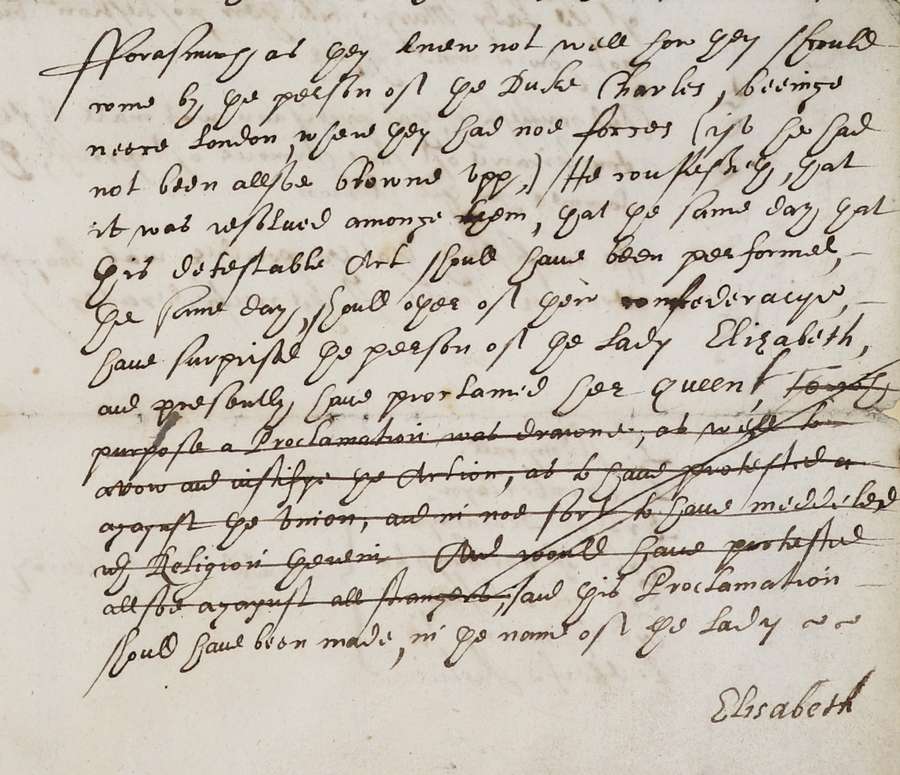
Forasmuch as they knew not well how they should come by the person of the Duke Charles [the future King Charles I, aged 5], being near London, where they had no forces (if he had not been also blown up) he confesseth that it was resolved among them that, the same day that this detestable act should have been performed, the same day should other of their confederacy have surprised the person of the Lady Elizabeth [the King’s eldest daughter, aged 9] and presently have proclaimed her Queen, [crossed out portion: to which purpose a proclamation was drawn, as well to avow and justify the action, as to have protested against the Union, and in no sort to have meddled with religion therein, and would have protested against all strangers,] and this proclamation should have been made in the name of the Lady Elizabeth.
They did not know how they would be able to get Duke Charles [son of King James] if he had not also been blown up as they did not have any forces (soldiers) near London. He confessed that it was decided amongst them that, on the same day that this horrible act was carried out, one of their group should kidnap the Lady Elizabeth [eldest daughter of King James] and declare her Queen, and a statement made in her name which justified this step and that it was her wish not to interfere in religion of the country.
This lesson contains a History Hook starter video to hook students into the lesson.
This lesson introduces students to the famous plotter’s letter sent to Lord Monteagle warning him not to attend Parliament. It is worth getting students to try and read the document, however transcripts and additional simplified transcripts are also provided. The second source is an extract from the examination of John Johnson, also known as Guy Fawkes. A government proclamation then details the search for the plotters and the last source explains what happened to some of them. Teachers may wish to use the lesson for a group-based activity or pair working.
attacked
agreed
estate
bodyguard
safety
said
now
An event beyond living memory that is significant nationally; Significant people.
The development of Church, state and society in Britain 1509-1745
During the reign of Queen Elizabeth I, followers of the Roman Catholic religion in England had faced serious difficulties including harsh fines and the risk of imprisonment or violence. Catholic priests, vital to the practice of the religion, were banned and government spies tried hard to round up those who were secretly working in the kingdom.
When James I came to the throne Catholics in England thought that things would get better for them, but James kept all of Elizabeth’s tough laws against Catholics. Very early in his reign a group of Catholic noblemen decided that the King would have to be killed for things to change.
King James was due to open Parliament on Monday 4 November. In an undercroft beneath Westminster Hall, which would have been crammed with MPs and Lords, the plotters had hidden 36 barrels of gunpowder – enough to blow up the entire Palace of Westminster and everyone in it.
After the explosion, the plan was that certain plotters would lead an uprising in the Midlands. They would kidnap Princess Elizabeth, James I’s nine-year-old daughter from her household at Coombe Abbey. Using her as a figurehead, they would rule the country and restore the rights of Catholics.
On 26th October 1605 Thomas Ward, a servant of the Catholic Lord Monteagle, was given a letter by an ‘unknown man’ to give to his master. When Monteagle read the letter he found it was a warning to stay away from the opening of Parliament, due in a few days. He gave the letter directly to the Privy Council and the King in Whitehall.
Although the conspirators knew the letter had been passed to the government they decided to go ahead as planned, trusting that their explosives expert was unknown to the authorities.
After receiving the warning letter, King James’ men, led by Sir Thomas Knyvett, decided to search the Palace. There, they apprehended a man leaving a room packed with firewood, who gave his name as John Johnson. Barrels of gunpowder were found hidden in the firewood, and the fuses and timer carried by the Johnson revealed him to be Guy Fawkes, the conspirators’ explosives expert. He was taken straight to the Tower of London for questioning.
Following Fawkes’ confession, the remaining 12 conspirators were tracked down. Four, including the ringleader Robert Catesby, were killed in a shootout with the authorities. One died while imprisoned in the Tower of London.
The trial of the eight surviving conspirators, including Fawkes, was held in the same room they had tried to blow up: Westminster Hall, within the Parliament building. All eight were found guilty and by the end of January 1606, all eight had been executed. The plotters were hung, drawn and quartered. Their heads were then set upon poles as a warning to others.
As result of the plot, James I became more popular having survived an attempt on his life. However, it became harder for Catholics to practise their religion or play a part in society. Finally, there is no doubt that Guy Fawkes is remembered incorrectly as the main plotter, a myth perpetuated as generations of children celebrate Bonfire Night.
Record revealed
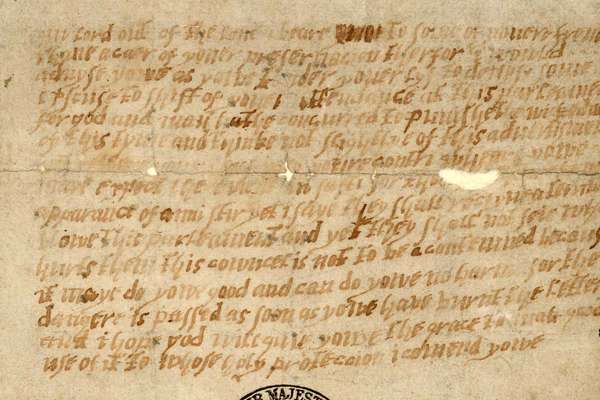
Is this the most famous anonymous letter in British history? Perhaps it should be. Without it, the Gunpowder Plot might have succeeded.
In pictures
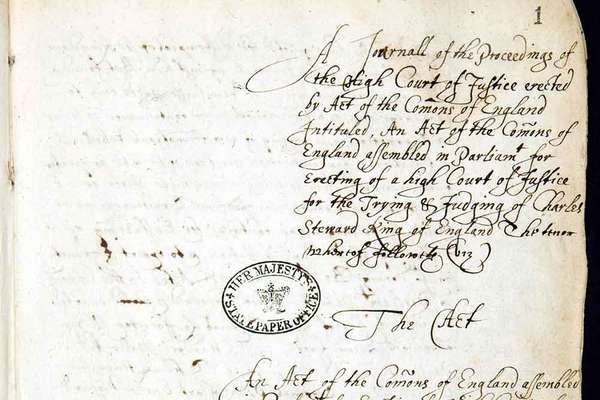
First defined by the 1352 Treason Act, our collections detail centuries of treasonous plots, described in statute rolls, legal records, and state papers


