




bbc.co.uk
BBC Learning Zone
Watch these videos from BBC Curriculum Bites on the French Revolution.
Teaching resource
Use primary source material from 1789 in this lesson including a London newspaper report, together with both official and personal letters sent from Paris, to investigate how the British government reacted to news of the French revolution.

Plan of La Bastille, Paris 1789. Catalogue reference: FO27-32
How did the British government respond to news of the French Revolution?
These are extracts from the London Gazette from Saturday 18 July to Tuesday 21 July, 1789

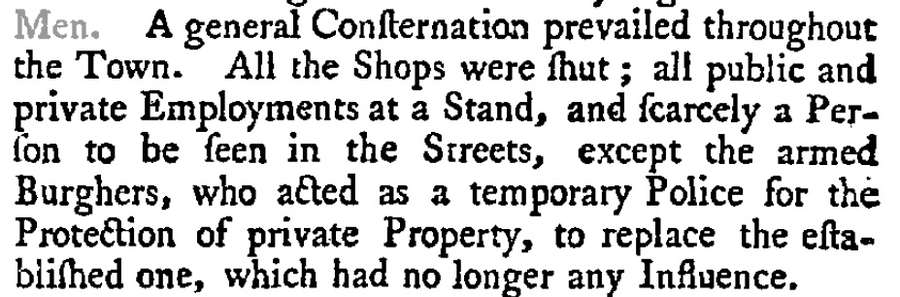
A general Consternation prevailed throughout the Town. All the Shops were shut; all public and private Employments at a Stand, and scarcely a Person to be seen in the Streets, except the armed Burghers, who acted as a temporary Police for the Protection of private Property, to replace the established one, which had no longer any influence.
Transcript of The London Gazette, Saturday 18 July – Tuesday 21 July 1789. Catalogue reference: ZJ 1/85

In the Evening a Detachment with Two Pieces of Cannon went to the Bastile, to demand the Ammunition deposited there. A Flag of Truce had been sent before them, which was answered from within; But nevertheless, the Governor (the Marquis de Launay) ordered the Guard to fire, and several were killed. The Populace, enraged at this Proceeding, rushed forward to the Assault, when the Governor agreed to admit a certain Number, on Condition that they should not commit any Violence. A Detachment of about Forty accordingly passed the Drawbridge, which was instantly drawn up, and the whole Party massacred. This Breach of Faith, aggravated by so glaring an instance of Inhumanity, naturally excited a Spirit of revenge and Tumult not to be appeased. A Breach was soon made in the Gate, and the Fortress surrendered. The Governor, the principal Gunner, the Jailer, and Two old Invalids, who had been noticed as being more active than the Rest, were seized, and carried before the Council assembled at the Hotel de Ville, by whom the Marquis de Launay was sentenced to be beheaded, which was accordingly put in Execution at the Place de Grêve, and the other Prisoners were also put to Death.
Transcript of The London Gazette, Saturday 18 July – Tuesday 21 July 1789. Catalogue reference: ZJ 1/85

The whole Way from the Entrance at the Barrier at Passy to the Hotel de Ville was lined on each Side with armed Citizens, and the most perfect Tranquillity was observed. After his Majesty had entered the Hotel de Ville, he declared that he appeared there to gratify the Wishes of the Citizens of Paris, and to assure them of his Readiness to do every Thing in his Power to quiet their Minds, and restore Tranquillity to the City. On his Majesty’s Return he received every Testimony of Loyalty and Affection from a most numerous and orderly Populace; and it is computed that this Day there were not less than 150,000 Men bearing Arms in Paris.
Transcript of The London Gazette, Saturday 18 July – Tuesday 21 July 1789. Catalogue reference: ZJ 1/85

The Bastille made some Resistance but was taken yesterday Evening. The Governor and sub-Governor had their Heads cut off, which were carried in Triumph around the City. … the King was at first very resolute. The thoughts however of the Danger he was in have this Evening induced him to recant all his former words & to submit in everything. Deputies have arrived this afternoon from Versailles with this goodnews, and it is reported that the King will be here himself tomorrow, but I own I very much doubt it. The Consternation that has prevailed in Paris for the last two days, is beyond all power of description. Few People have gone out of their doors, & all Public Amusement for the first time have been stopped. I however have seen every thing of importance from the first Entrance of the Troops to the taking of the Bastille which I was present at yesterday Evening & indeed the whole sight has been such, that nothing would have tempted me to miss it.
A letter from a Mr Jenkinson in Paris, dated 15 July 1789. Catalogue reference: FO 27/32.

The numerous printed accounts, which daily appear, of all that passes, both at Paris & Versailles (for the liberty of the Press seems at present to have no bounds) leave but little, of a public nature, for me to communicate to your Grace.
Extract from a confidential report from the British Ambassador, 30th July 1789. Catalogue reference: FO 27/32.

Your Grace receives, among other Papers a Récit of the taking of the Bastille, which I have reason to believe gives a pretty exact detail of the operations against that fortress, excepting that it greatly exaggerates the number of persons killed; not more than seven or eight having lost their lives during the whole of that affair. The plan herewith enclosed, which I am told is very accurate, serves to illustrate the account that is given of the attack and subsequent advances. Either the misconduct or the pusillanimity of the Garrison (which indeed consisted of not more than eighty invalids) rendered the capture of the Bastille a work of no great difficulty nor of long duration. The fate of the Governor M.de Launay, is generally lamented, for he was an Officer of great merit and always treated the prisoners committed to his charge with every degree of levity & humanity of which the nature of their situations would admit : it may be observed that the mildness of the present reign is strongly characterised by the small number of persons who were discovered in confinement in the Bastille: yet these considerations were not sufficient to check the fury of the populace, animated by the success of the Enterprise and heated with the spirit of vengeance.
Extract from a confidential report from the British Ambassador, 30th July 1789. Catalogue reference: FO 27/32.

No less than seven Princes of the House of Bourbon & one Princess, have fled in consequence of the troubles, but it is scarcely possible to imagine that the Nation will not, when the violence of it’s resentment begins to subside, be desirous of seeing these august Personages reinstated in their respective situations of dignity, especially too upon the motive of policy, when it is considered what immense sums of money will be thrown into the hands of Foreigners, during their absence from this Kingdom.
Extract from a confidential report from the British Ambassador, 30th July 1789. Catalogue reference: FO 27/32.
This lesson encourages students to investigate the British reaction to the outbreak of the French Revolution. To begin with, students consider three extracts from the contemporary newspaper, the London Gazette. They subsequently compare these extracts to some private correspondence from the time and three extracts from a confidential report from the British Ambassador. In light of all of the evidence, students are asked to decide how seriously the British government took the events of 1789. They should be encouraged to evaluate the tone, attitude and perspective contained in all these extracts as they work through the questions. Why were these accounts produced? Who would have seen them? What is their value to the historian?
All documents are provided with transcripts. Students can work through the questions individually or in pairs and report back to the class.
1789 is one of the most significant dates in history – famous for the revolution in France with its cries of ‘Liberté! Egalité! Fraternité!’ that led to the removal of the French upper classes. The French Revolution didn’t just take place in 1789. It lasted for six years, with far more violent and momentous events taking place in the years after 1789. In this lesson we examine the British reaction to the events in France 1789; were the British government extremely worried or did they see it as merely a few minor disturbances?
King Louis XVI needed money but had failed to raise more taxes when he had called a meeting of the Estates General. Instead, this turned into a protest about conditions in France. On July 14, 1789, the Paris mob, hungry due to a lack of food from poor harvests, upset at the conditions of their lives and annoyed with their King and Government, stormed the Bastille fortress (a prison). This turned out to be more symbolic than anything else as only four or five prisoners were found.
In October 1789, King Louis and his family were moved from Versailles (the Royal palace) to Paris. He tried to flee in 1791 but was stopped and forced to agree to a new form of government. A ‘legislative assembly’ which governed from October 1791 to September 1792, replaced the power of the king and was later replaced by the ‘National Convention’. The Republic of France was declared, and soon the King was put on trial. The Revolution became increasingly radical and violent. King Louis XVI was executed on January 21, 1793. In the six weeks that followed some 1,400 people who were considered potential enemies to the Republic were executed in Paris.
Many historians now regard the French Revolution as a turning point in the history of Europe. However, in North America many of the same concepts had influenced the earlier Declaration of Independence and the American Revolution. The famous slogan ‘Liberty, Equality and Fraternity’ called for every person’s right to freedom and equal treatment. Across France and the rest of Europe the consequences of the Revolution were huge. There were many new developments including the fall of the monarchy, changes in society with the rise of the middle class, and the growth of nationalism
bbc.co.uk
Watch these videos from BBC Curriculum Bites on the French Revolution.