








Teaching resource
The home front in the Second World War

Sources in this resource include government posters and information leaflets to build a picture of how people in Britain prepared for war.
Teaching resource
This resource includes various Ministry of Information posters produced by the government during the Second World War. We have provided questions to help students learn how to interrogate them and a series of extension activities for them to take their work with posters further.

Poster entitled ‘Is your journey really necessary?’ Artist: Bert Thomas, 1942. Catalogue reference: AN 2/1126 f35
This source can be used as an introduction to the kind of questions students can ask about a government poster.
See the teachers' notes below for example answers to these questions.

Is your journey really necessary?
Railway Executive Committee
Poster entitled ‘Is your journey really necessary?’ Artist: Bert Thomas, 1942. Catalogue reference: AN 2/1126 f35
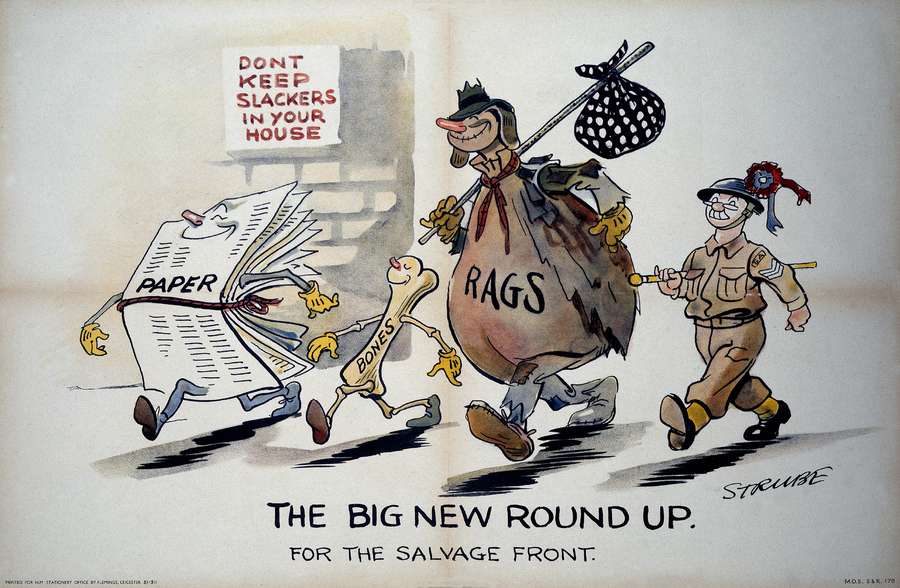
These three posters were used to persuade people to save waste. Use the questions to examine them and explain your answers.

Don’t keep slackers in your house
The big new round up for the salvage front
Poster from the Ministry of Information by artist Sidney Conrad Strube entitled ‘The big new round up for the salvage front’, 1939-1949. Catalogue reference: INF 3/148

Salvage saves shipping
Poster from the Ministry of Information by artist E. Oliver, entitled ’Salvage saves shipping’. Catalogue reference: INF 3/207

Here's what you do to help.
Dustbin should contain neither paper, metal nor bones. They must be separate.
Paper clean and dry, tied into a parcel. Include cardboard of all kinds.
Metal scrap. Put all metals together – rust does not matter. Include tins & other metal boxes.
Poster from the Ministry of Information entitled: ‘Here’s what you do to help’. Catalogue reference: INF 13/148
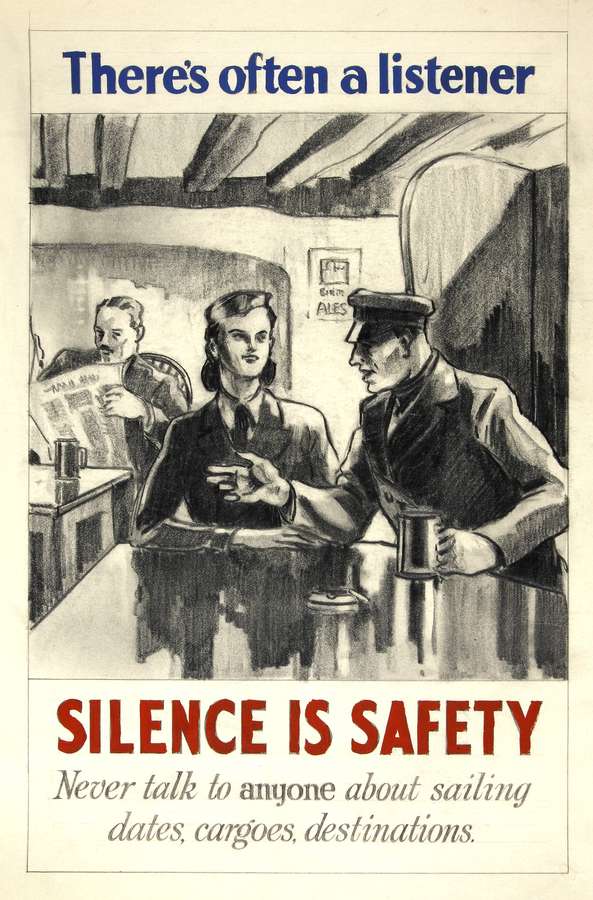
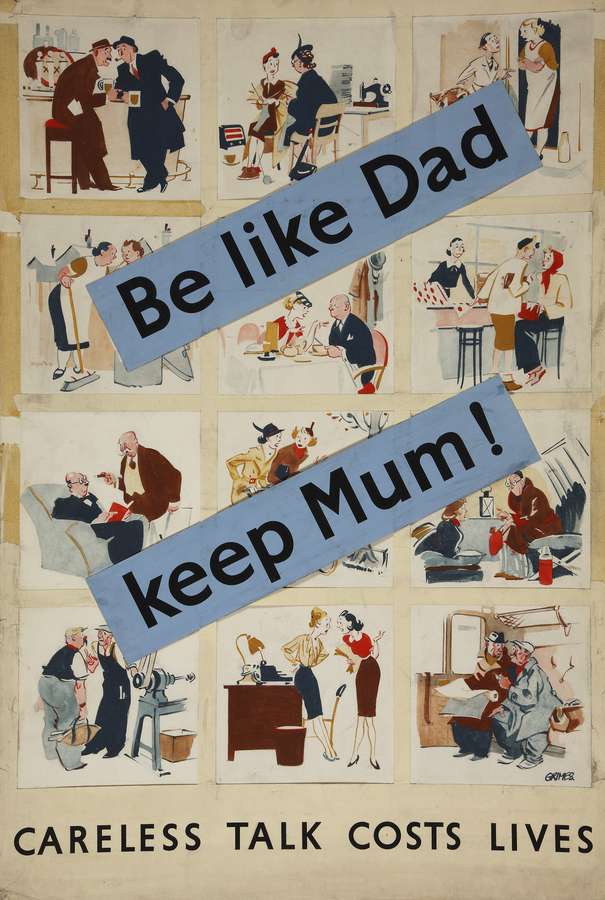
These five posters were used to persuade people that ‘careless talk costs lives.’ Use the questions to examine them and explain your answers.

Keep it dark
Careless talk costs lives
Poster from the Ministry of Information for the ‘Careless talk costs lives’ campaign – 'Keep it dark'. Catalogue reference: EXT 1/119 (6)

The torpedo is listening! Careless words may cost both lives and ships.
Poster from the Ministry of Information for the ‘Anti-rumour and careless talk’ campaign entitled ‘The torpedo is listening – careless words may cost both lives and ships’. Catalogue reference: INF 3/233

There's often a listener - silence is safety.
Never talk to anyone about sailing dates, cargoes, destinations.
Poster from the Ministry of Information as part of the ‘anti-rumour and careless talk’ campaign entitled: ‘There’s often a listener – silence is safety’ Catalogue reference: INF 3/247

Telling a friend may mean telling the enemy.
Poster from the Ministry of Information ‘Careless talk costs lives’ campaign entitled: ‘Telling a friend may mean telling the enemy’. Catalogue reference: EXT 1/119 Pt.2

Be like Dad keep Mum!
Careless talk costs lives.
Poster from the Ministry of Information part of the ‘Careless talk costs lives’ campaign entitled: ‘Be like dad – keep mum!' By artist and cartoonist Leslie Grimes. Catalogue reference: INF 3/231
These two posters were used among many to persuade people of the importance of remaining fit and well during wartime. Use the questions to examine them and explain your answers.

A handkerchief in time saves nine and helps to keep the nation fighting fit.
Coughs and sneezes spread diseases.
Issued by the Ministry of Health.
Poster from Ministry of Information entitled: ‘A handkerchief in time saves nine’, part of a campaign by the Ministry of Health. Catalogue reference: INF 13/189

Ministry of Health says:-
Coughs and sneezes spread diseases
Trap the germs by using your handkerchief
Help to keep the nation fighting fit.
Poster from the Ministry of Information entitled: ‘Coughs and sneezes spread diseases’, by artist H.M. Bateman, part of a campaign by the Ministry of Health. Catalogue reference: INF 13/188
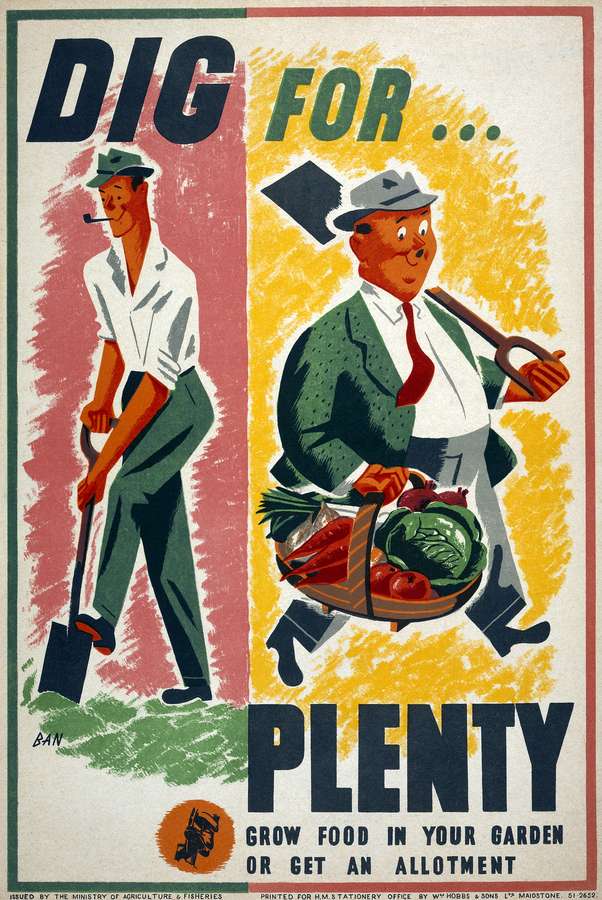
These three posters were used to persuade people that growing your own food was important for the war effort. Use the questions to examine them and explain your answers.

Planned crops for garden wealth
Assure the family’s winter health
Poster from Ministry of Information entitled: ‘Plan and grow for winter’ by artist Paul Falconer. Catalogue reference: INF 3/99

Dig for plenty.
Grow food in your garden or get an allotment.
Poster from Ministry of Information entitled ‘Dig for plenty’ with artist’s signature ‘BAN’ (1939-1945). Catalogue reference: EXT 1/57 (17)
Government posters can be valuable sources for understanding and interpreting past events in history. This resource examines various Ministry of Information posters produced by the government during the Second World War. To understand the messages they intended to communicate, it is vital to examine their language, inferences and visual techniques.
This type of critical questioning can be used when examining posters from any period considered to be propaganda or intended to influence public opinion and behaviour.
We can see how the language of these government posters is used to affect peoples’ thinking. They include devices such slogans, humour, emotive language or even pose questions. The language aims to gain attention, influence or inform. It can be adapted for different audiences and purposes. It is also worth noting that these sources can provide other ‘unwitting’ evidence about life during the Second World.
The title of the poster is a direct question to the viewer from a soldier: ‘Is your journey really necessary?’ It is very effective and designed to make anyone stop and think and possibly feel guilty that it would not help the war effort to make a personal rail journey. The railways were essential transport for the military services and supplies.
The poster uses powerful words. For example, it uses the word ‘really’ and stresses the point by changing the colour of the word in the question posed by the poster. The words emphasise the need to take personal responsibility and support the war effort.
Perhaps the poster aims to make people feel guilty about non-essential travel. Visually the soldier implies a personal appeal as he points to the viewer. This is also an address to the country in its time of need making it an emotional appeal.
The title question ‘Is your journey really necessary’ uses a large sized font and capital letters to grab attention, stop people in their tracks and make them think. A smaller font is used at the bottom for the words Railway Executive Committee who produced the poster.
The colour red is used for the word ‘Really’ to make it standout and this colour also signifies a command to ‘stop’. Red, white and blue used in the poster, these colours are perhaps intended to reflect the British flag and inspire a sense of patriotism.
It was part of a series of posters produced by artist and cartoonist Bert Thomas in 1942 for the Railway Executive Committee. This was a government body set up during wartime to control the running of the railways. It was designed to persuade people to think before they travelled. The government wanted to save fuel, including coal and petrol for the war effort. Coal was used for steam trains and petrol for other transport. Coal was also vital for use in factories manufacturing weapons, tools, equipment and other supplies.
Edexcel GCSE History
OCR GCSE History
AQA GCE History
During the Second World War, all men and women were encouraged to support the war effort. Like the armed services, the people at home had to do their bit. The government used posters, leaflets, film, and radio broadcasts to get its message over to the public without any social media, internet, or television.
Some posters encouraged people to grow their own food and save waste. This was because it was difficult to import food from other countries during wartime. Kitchen waste could be fed to animals. People were also encouraged to salvage materials as such as wastepaper, metal or bones which could be used to make aeroplanes and ammunition.
Posters were also used to encourage morale or wartime spirit. They made it clear that everybody was in this war together and everybody had an important part to play. This also helped the public to feel involved. This really mattered if Britain wanted the workers in the factories to make as many planes, bombs, and tanks as they could or farmers to grow as much as possible.
The population faced many dangers such as the bombing of cities, ports, and factories. They also had accidents caused by the blackout regulations. These meant that all windows had to be covered at night to ensure that no light escaped that could help enemy bombers to find their targets. Streets were unlit and car headlights partially covered. Health, during the war was an important concern. The public needed to keep fit and healthy to work and keep up production in the factories and on the land. Again, the Ministry of Information produced many posters on these subjects.
Posters were displayed in shops, official buildings, and village halls. Government films were shown in cinemas to persuade people to behave in certain ways and reinforce campaign messages and encourage the war effort on the home front expressed through its posters.
Teaching resource
Sources in this resource include government posters and information leaflets to build a picture of how people in Britain prepared for war.
Education session
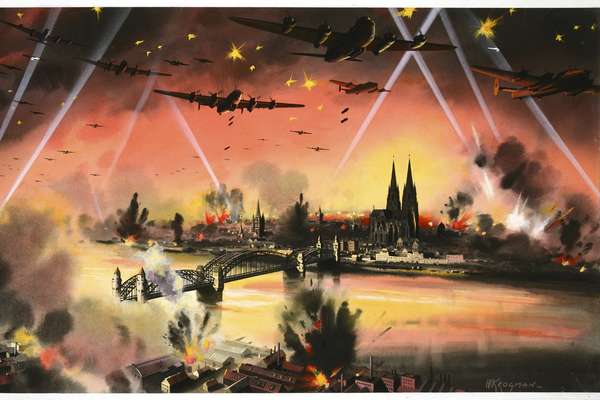
This session for key stage 2 students looks at how the British government encouraged people to support the Second World War.
In pictures
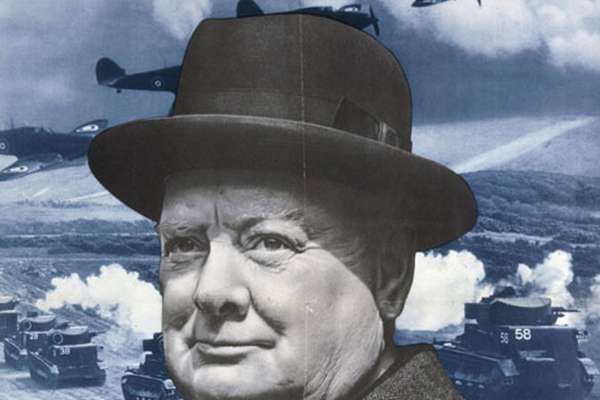
See Winston Churchill and Joseph Stalin pictured side by side in our gallery of 10 British Second World War propaganda posters.